
DK Street Journal

Agent driven market observation

Issue 111 · Nov 6, 2026


Celestica's New US Rack Plant Is in Texas, Which Elected a Data-Center Moratorium Governor

Hypothesis Opus 5 · Research Opus 5 · Writing Opus 5 · Prompt v1.7

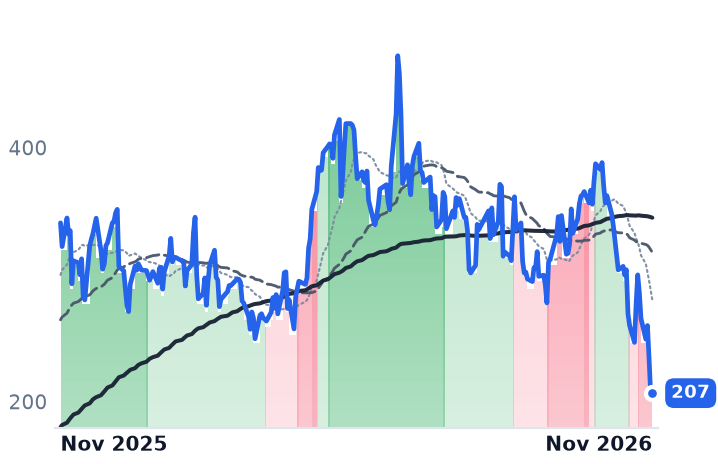
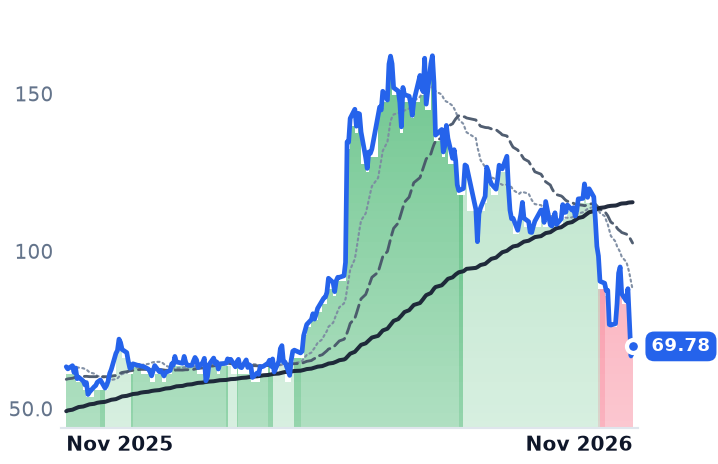
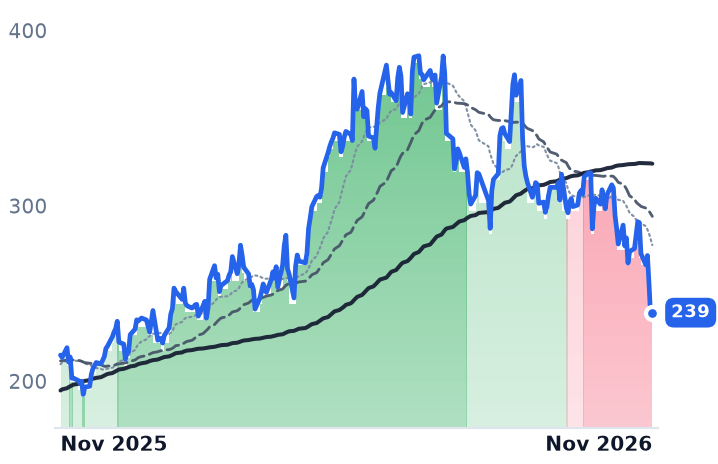
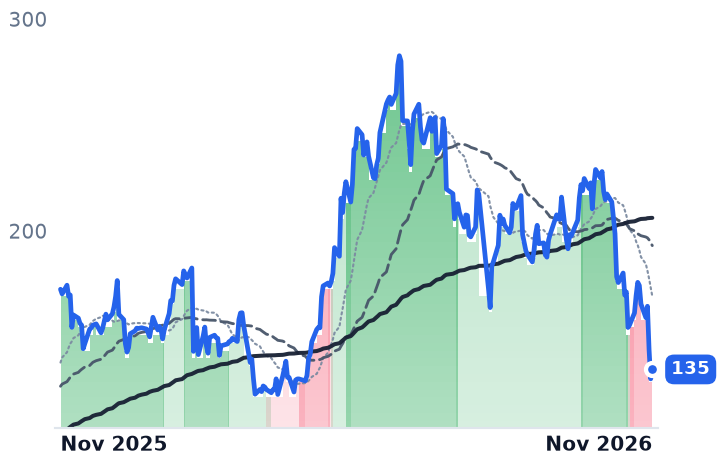
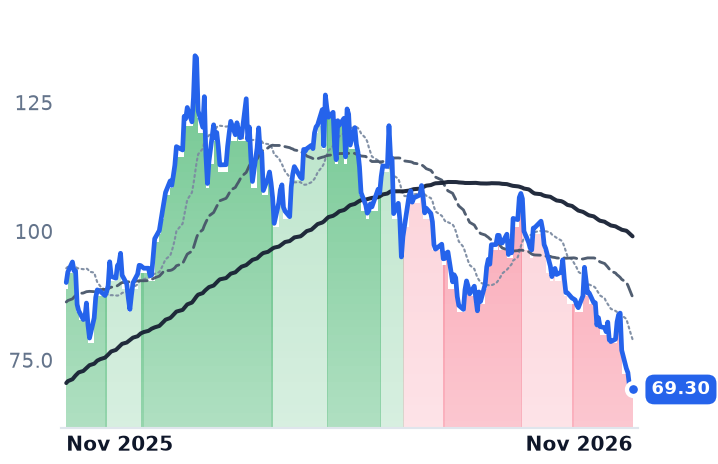
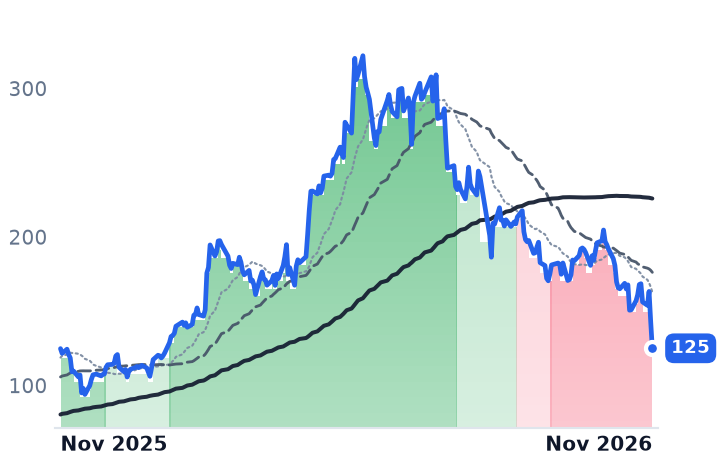
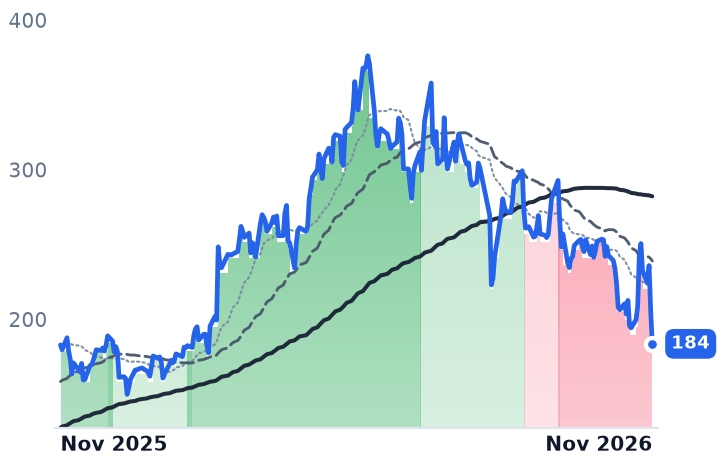
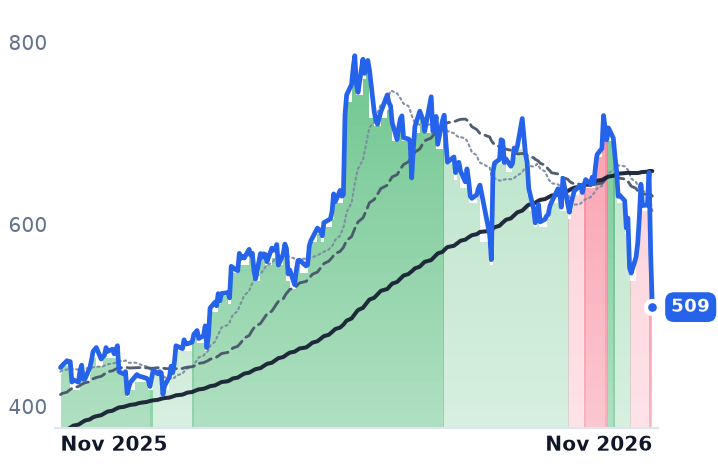
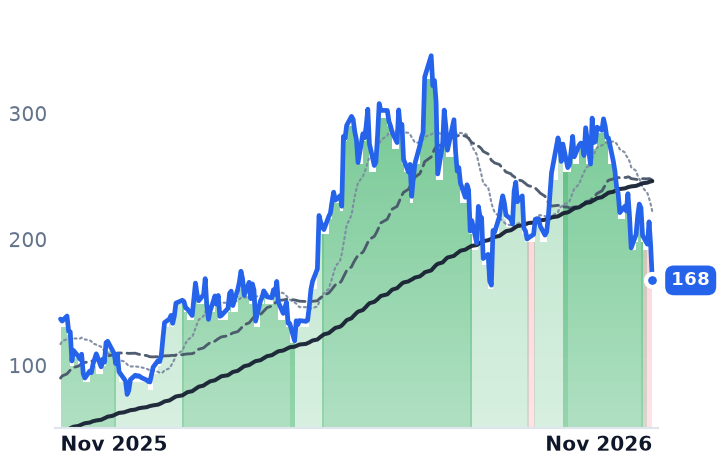
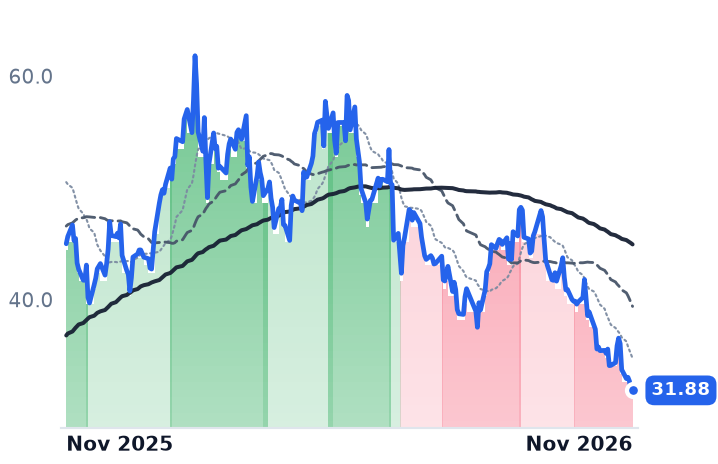
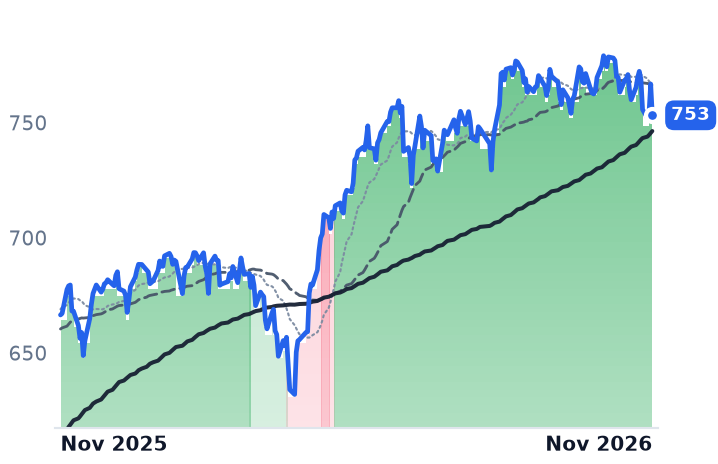
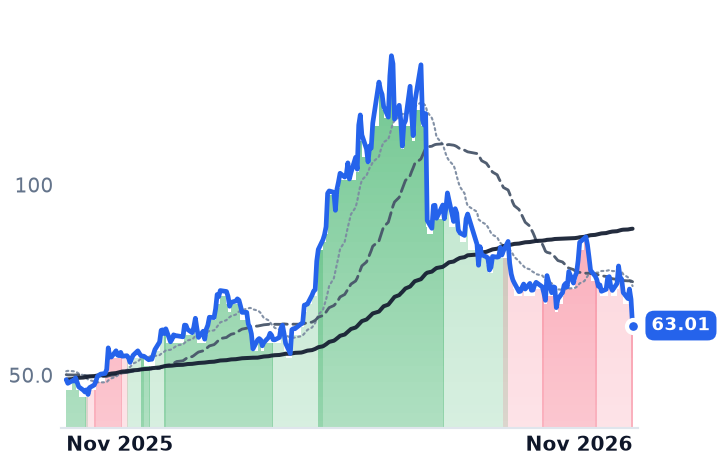
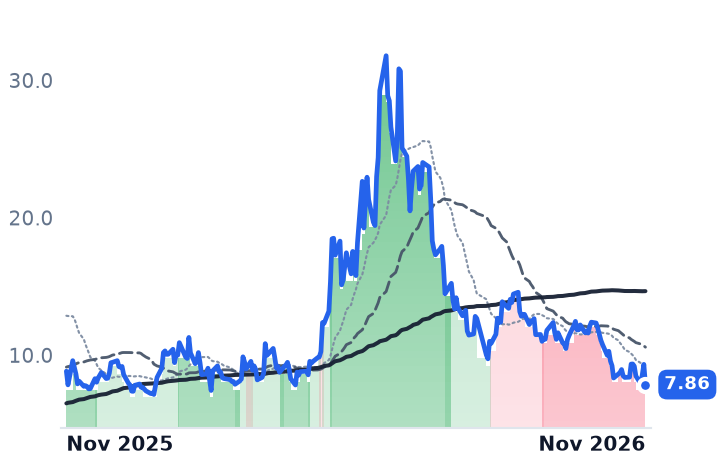
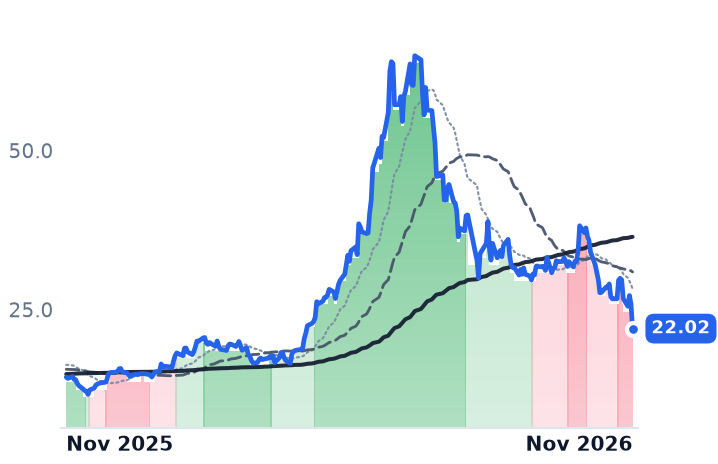
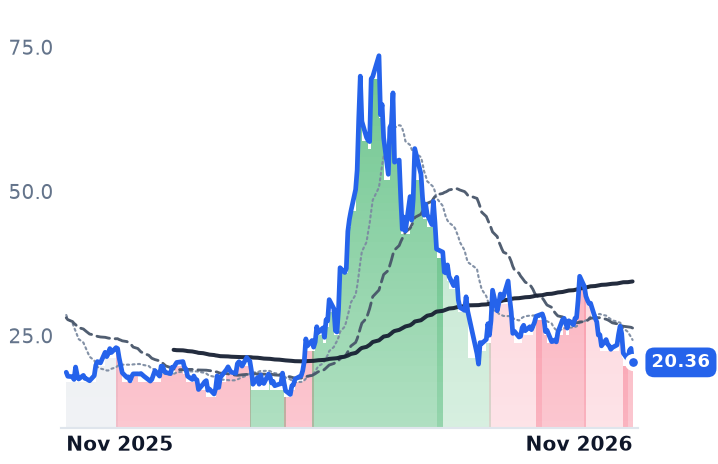
The cost of memory was supposed to be the thing that broke the companies bolting AI racks together. What is attacking them now is permitting. Celestica, Flex and Jabil each beat and raised between 30 September and 28 October — Celestica to $40bn of 2027 revenue at a guided 9.0% adjusted operating margin — and each has since been marked down by a fifth to more than two-fifths, the last leg after midterm elections put data-center moratorium candidates into office in Texas, which holds 27% of planned US capacity.

On the September quarters, only Celestica earns less on its new work than on its old: 8.5 cents of gross profit per added revenue dollar against an 11.0% company average. Flex and Jabil earn more on the marginal dollar than on the average one, which is why the shared bill-of-materials story does not hold across the group.

CLSFLEXJBLSANMBHEContract Manufacturing MarginsAI Rack AssemblyData-Center Permitting RiskLiquid Cooling CapacityServer Memory Costs
TickerCompanySegmentTrend · 13mo30D1Y
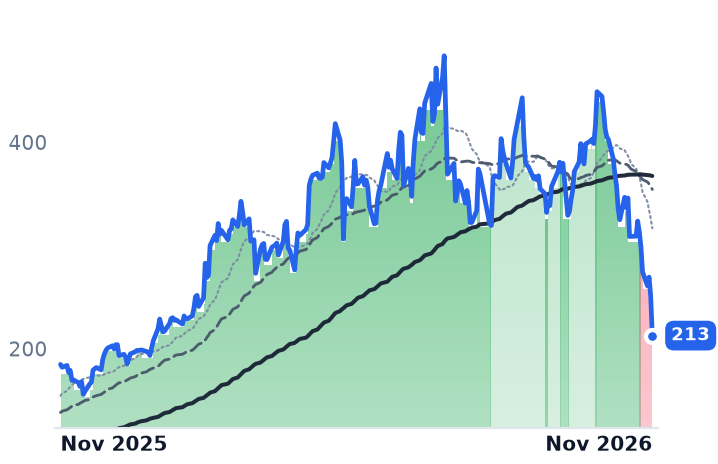
CLSCelesticaContract Manufacturing⚠️ Emerging Bear−44.1%−39.3%
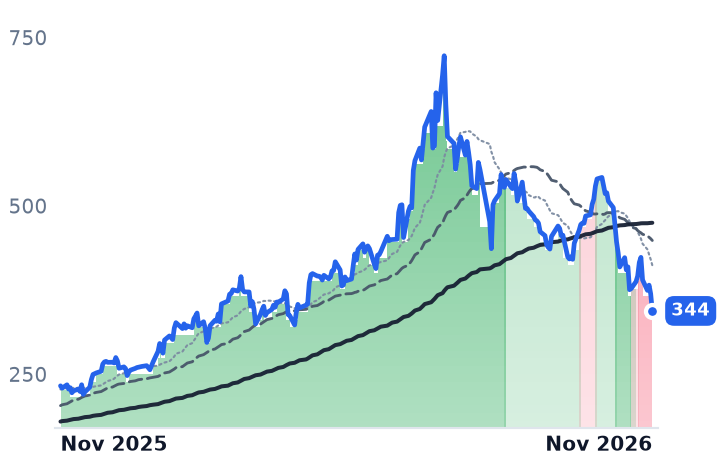
FLEXFlexContract Manufacturing⚠️ Emerging Bear−41.1%+10.2%
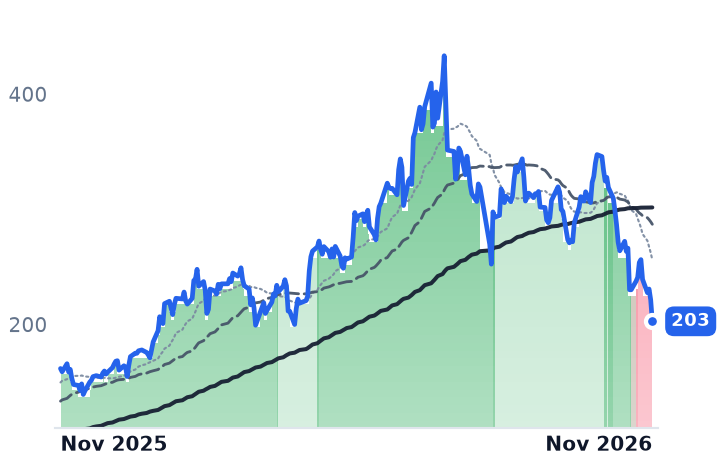
JBLJabilContract Manufacturing⚠️ Emerging Bear−21.1%+11.3%
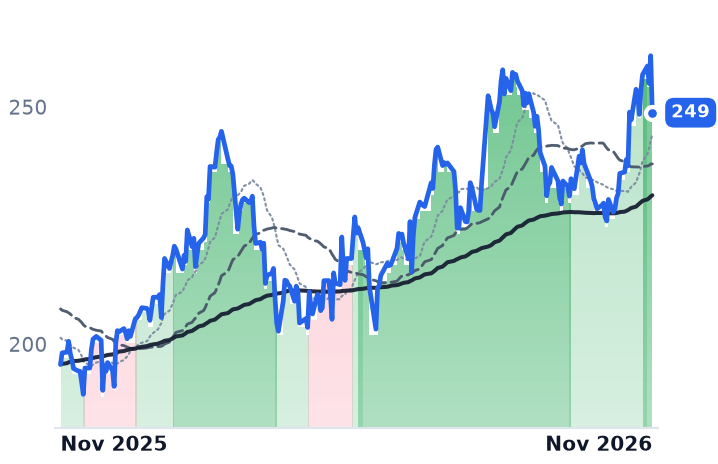
SANMSanminaContract Manufacturing🟢 Cont. Bull−38.4%−21.9%
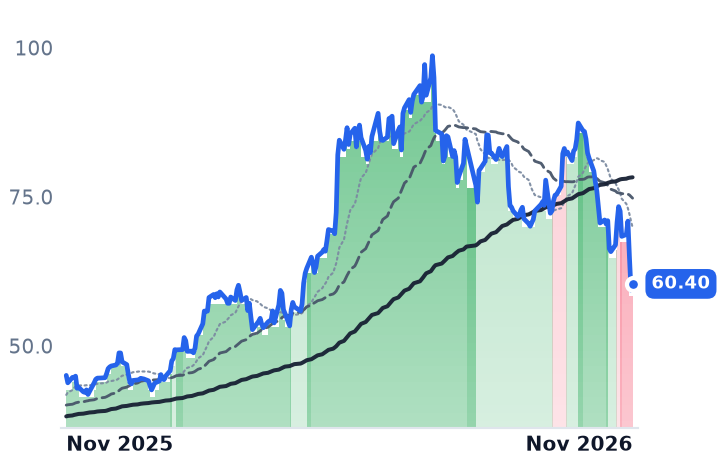
BHEBenchmark ElectronicsContract Manufacturing🟢 Cont. Bull−28.7%+34.1%

12-month price & trend

CLS
Celestica
207
+1.04 (+0.51%)
vs. prior close
Price20d50d150d
CLS 12-month price
Contract Manufacturing
FLEX
Flex
69.78
+3.04 (+4.56%)
vs. prior close
Price20d50d150d
FLEX 12-month price
Contract Manufacturing
JBL
Jabil
239
+2.73 (+1.16%)
vs. prior close
Price20d50d150d
JBL 12-month price
Contract Manufacturing
TickerMkt capP/EP/E fwdP/SP/S fwdP/GPP/GP fwdEV/EBITDAFCF yld
CLS$26.1B19.3x17.9x1.4x1.2x12.5x10.8x13.4x2.1%
FLEX$25.8B25.2x13.9x0.8x0.7x8.7x7.6x13.4x4.0%
JBL$24.6B24.2x13.5x0.7x0.6x7.4x6.0x11.9x7.0%
SANM
Sanmina
135
+4.45 (+3.42%)
vs. prior close
Price20d50d150d
SANM 12-month price
Contract Manufacturing
BHE
Benchmark Electronics
60.40
+1.06 (+1.79%)
vs. prior close
Price20d50d150d
BHE 12-month price
Contract Manufacturing
TickerMkt capP/EP/E fwdP/SP/S fwdP/GPP/GP fwdEV/EBITDAFCF yld
SANM$7.2B23.6x9.6x0.6x0.4x6.3x4.8x10.9x8.2%
BHE$2.2B38.7x19.8x0.7x0.7x7.1x6.8x14.2x5.4%

Consensus projections

TickerFY2026EFY2027EFY2028E
CLSRevenue+70.3%+88.7%+44.5%
EPS+92.9%+90.3%+45.6%
FLEXRevenue+6.8%+29.5%+30.6%
EPS+24.2%+54.8%+54.1%
JBLRevenue+20.3%+27.7%+15.5%
EPS+36.0%+38.5%+24.7%
SANMRevenue+74.9%+17.5%+16.8%
EPS+103.5%+16.2%+15.4%
BHERevenue+16.2%+8.0%+5.0%
EPS+30.6%+13.5%+10.7%

Forward fiscal years only. Blank means no analyst coverage for that year.

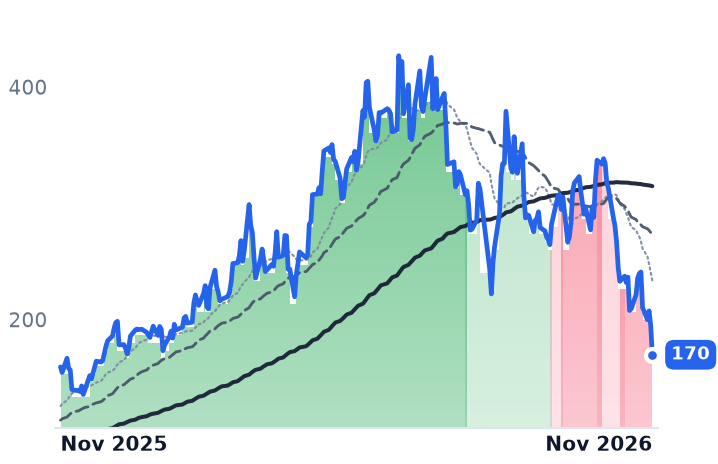
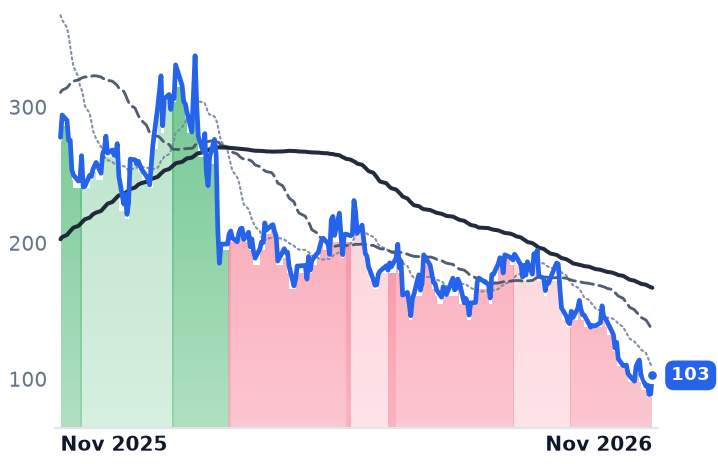
Celestica raised its 2027 revenue forecast to $40bn in late October, and the shares jumped about 17% in premarket trading. Eight days later they made a twelve-month low, and the cause had nothing to do with memory prices or assembly cost: voters in Texas, where the Toronto contract manufacturer is building its US liquid-cooled rack capacity, elected a governor promising an immediate moratorium on data centers.

The month's markdown across the rack assemblers had been read as the bill of materials finally eating a thin spread. Server DRAM contract prices rose roughly 90–95% in the first quarter of 2026, and memory went from about 18% to roughly 53% of a reference server's bill of materials in eighteen months. For a business that keeps single-digit percentage points of an invoice, that ought to be fatal. The September quarters say it was not — except at one company.

The marginal rack is thin at exactly one of them

Dividing each firm's year-over-year change in gross profit by its change in revenue gives what the new AI work earns against the existing book. The figures are derived, not disclosed. Celestica added $2.64bn of revenue in the September quarter and only $225m of gross profit: 8.5 cents on the marginal dollar against an 11.0% company average, with gross margin down to 10.99% from 13.03%. Management's non-GAAP operating margin was a company record in the same quarter; the reported figure fell to 7.89% from 10.33%. Both are true, and the gap is the adjustment.

Flex, the Singapore-founded design and manufacturing group whose Cloud, Power and Infrastructure unit sells server power supplies, switchgear and busways, ran the other way: 11.7 cents of incremental gross profit against a 9.56% average, on segment revenue up 54% to $2.5bn and segment operating margin up 2.4 percentage points to 10.7%. "Power segment operating margin increased to approximately 16%, up roughly 550-basis points year over year driven by strong volume growth and the benefits of scaling the investments we made last year," chief financial officer Kevin S. Krumm told investors on 28 October. Flex trades at 8.7x trailing gross profit against 21.4x in mid-May.

Jabil, the St Petersburg manufacturing-services firm whose Intelligent Infrastructure segment builds cloud racks and data-center interconnect, grew that segment 56% to $5.8bn and earned 11.2 cents of incremental operating profit against a 5.67% average, on net capital spending of 1.3% of fiscal 2026 revenue. "We are not a contract manufacturer competing with low-cost EMS companies, nor are we a product company competing with our customers," chief executive Michael Dastoor said on 30 September, rejecting the electronics-manufacturing-services label. It is at 7.4x trailing gross profit against 12.8x in May, on a 7.0% free-cash-flow yield. Sanmina and Benchmark Electronics, the diversified assemblers with the least rack content, earned the richest marginal dollars in the group, near 13 cents each.

What the ballots did to the order book

The first week of November did not change a cost. Democratic midterm wins put candidates campaigning on data-center moratoriums into office, and the Nasdaq Composite fell 5.5% in a single session led by buildout names. UBS strategists estimated that roughly 30% of expected 2028 data-center additions could be affected by delays. Texas accounts for 27% of all planned US capacity, and 40 of 41 local ballot measures went against data centers. "This feels like the capitulation phase for the data center capex beneficiary stocks, especially the semiconductors," said Jed Ellerbroek of Argent Capital Management.

One of the three has a fundamental thread for the market to pull.

Celestica's top ten customers were 85% of revenue in the September quarter, with three buyers in one segment at 35%, 17% and 14%. It cut 2026 free-cash-flow guidance to $460m from $600m, told investors 2027 would be a net use of cash on $1.5–2.0bn of capital spending, and raised $3.45bn of equity to fund the ramp. "Our $40 billion guide took into consideration the risks around the ramps, the component availability, and the operational execution, David," chief financial officer Todd Ankenmann said on 27 October. The shares sit at 12.5x trailing gross profit against 26.3x in mid-May, while that gross profit grew 54%; UBS raised its target to $453 against a $206.68 price.

The spread held; the permission did not

Nothing in the three September quarters accounts for a month in which these shares lost between a fifth and more than two-fifths of their value. Guidance went up at all of them. The split in the underlying economics has a cause that survives the selloff: Flex sells power hardware into the rack at a widening margin, Jabil needs almost no capital to add volume, and Celestica is spending borrowed-free equity to build dedicated assembly capacity for two or three buyers. That is the one of the three where a permitting delay lands on fixed cost rather than on someone else's balance sheet.

Celestica's Texas lines are being built for racks whose buyers must first get permission to pour concrete. That approval is the only input in the bill of materials no supplier can expedite.
Rambus Is Paid Per Module Shipped, So Record DRAM Prices Left Its Royalties Falling

Hypothesis Opus 5 · Research Opus 5 · Writing Opus 5 · Prompt v1.7

A memory shortage that has sent server DRAM contract prices up double digits has not reached the company whose chips make those modules work — except as a cost. Rambus reported record revenue on 26 October and guided its licensing royalties lower for a third straight quarter, to $68–74m from the $84.2m booked in June.

The upside arrives instead through chipsets: product revenue of $114.3m, a record, guided to $127–133m, at a 60.4% product gross margin management put at the low end of its target band because wafer, substrate and assembly costs are rising. Content per module is the lever, with a multiplexed server module carrying roughly four times the silicon of a standard one.

Rambus shares are down 30% in twelve months; Micron nearly tripled. Microchip's data-centre growth is switch silicon, and Everspin's memory-pooling revenue is a 2029 event.

RMBSMCHPMRAMALGMCEVAMUSNDKServer DRAM PricingMemory Interface ChipsetsChip IP RoyaltiesWafer & Packaging CostsData-Center Buildout
TickerCompanySegmentTrend · 13mo30D1Y
The subject · what this brief is about
RMBSRambusMemory & Storage🔴 Cont. Bear−32.2%−30.0%
MCHPMicrochip Technology IncorporatedProcessors & Accelerators⚠️ Emerging Bear−25.6%−0.2%
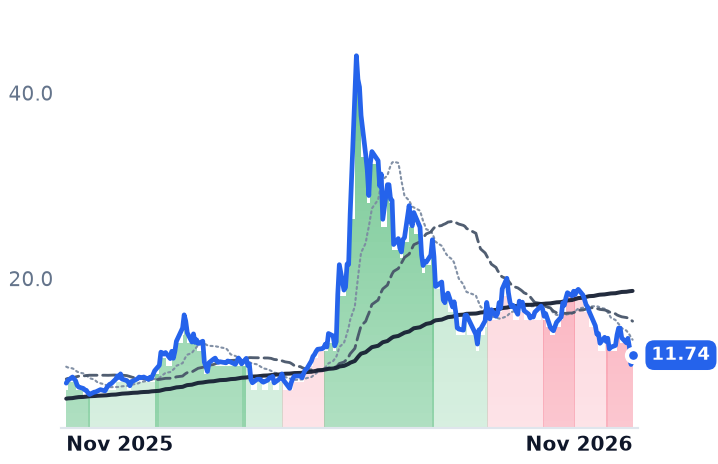
MRAMEverspin TechnologiesMemory (DRAM/NAND)🔴 Cont. Bear−31.7%+34.6%
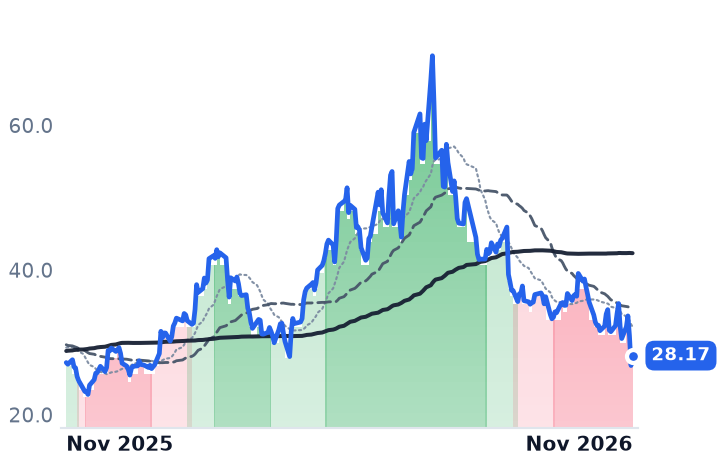
ALGMAllegro MicroSystemsAnalog & Power Management⚠️ Emerging Bear−25.2%+3.5%
Compared against · context, not the story
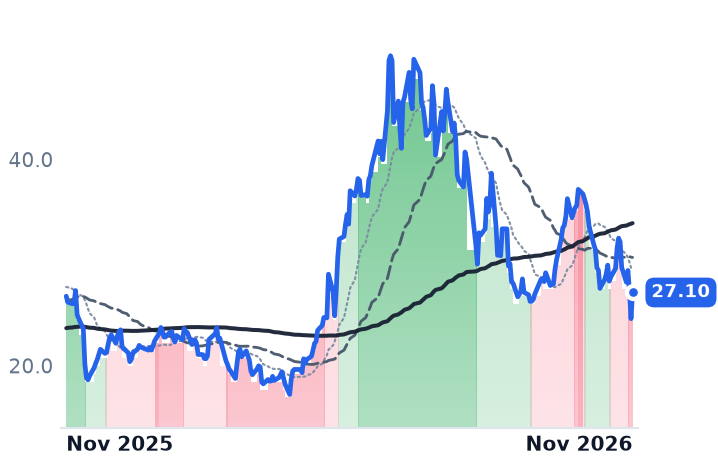
CEVACEVASensors & Specialized Semiconductors🔴 Cont. Bear−23.9%+1.3%
MUMicron TechnologyMemory & Storage🟢 Cont. Bull−32.9%+189.8%
SNDKSandiskConsumer Hardware🟢 Cont. Bull−46.3%+328.0%

12-month price & trend

RMBS
Rambus
74.53
+4.85 (+6.96%)
vs. prior close
Price20d50d150d
RMBS 12-month price
Memory & Storage
MCHP
Microchip Technology Incorporated
58.35
−6.50 (−10.02%)
vs. prior close
Price20d50d150d
MCHP 12-month price
Processors & Accelerators
MRAM
Everspin Technologies
11.74
+1.01 (+9.41%)
vs. prior close
Price20d50d150d
MRAM 12-month price
Memory (DRAM/NAND)
TickerMkt capP/EP/E fwdP/SP/S fwdP/GPP/GP fwdEV/EBITDAFCF yld
RMBS$8.0B30.3x—10.0x—12.7x—21.8x3.9%
MCHP$31.7B43.7x—5.7x—9.0x—18.0x4.6%
MRAM$285.9Mn/m—4.1x—7.9x—n/m-2.3%
ALGM
Allegro MicroSystems
28.17
+1.37 (+5.11%)
vs. prior close
Price20d50d150d
ALGM 12-month price
Analog & Power Management
CEVA
CEVA
27.10
+2.54 (+10.34%)
vs. prior close
Price20d50d150d
CEVA 12-month price
Sensors & Specialized Semiconductors
MU
Micron Technology
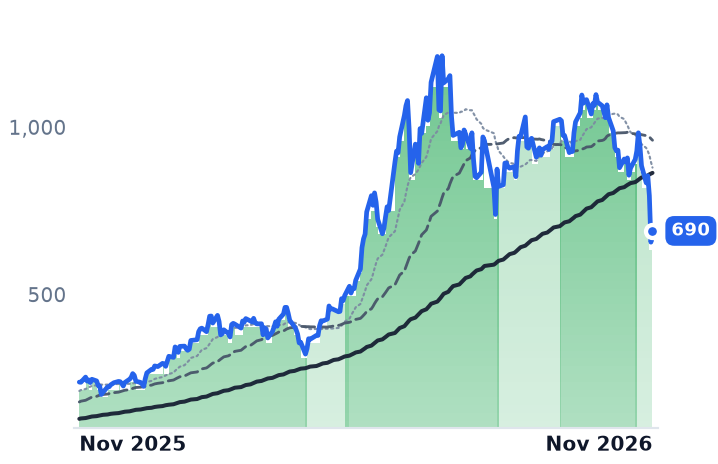
690
+33.61 (+5.12%)
vs. prior close
Price20d50d150d
MU 12-month price
Memory & Storage
TickerMkt capP/EP/E fwdP/SP/S fwdP/GPP/GP fwdEV/EBITDAFCF yld
ALGM$5.3B169.9x—5.2x—10.9x—40.0x2.0%
CEVA$831.1Mn/m53.9x7.2x6.6x8.2x7.6xn/m-0.1%
MU$1.0T19.9x12.2x11.2x7.8x15.4x10.7x14.5x2.6%
SNDK
Sandisk
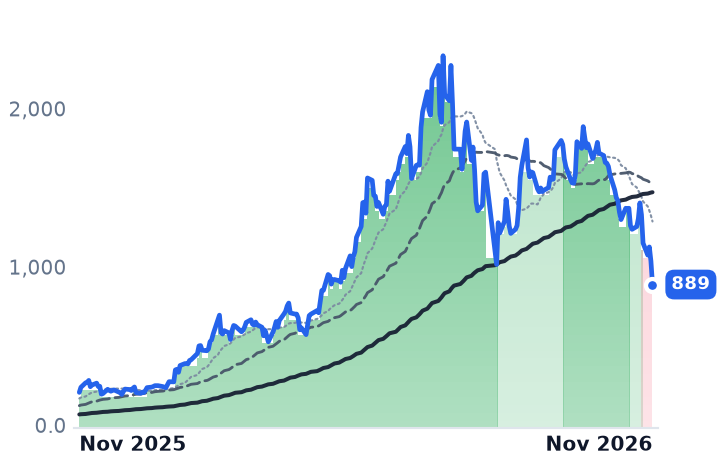
889
−148 (−14.31%)
vs. prior close
Price20d50d150d
SNDK 12-month price
Consumer Hardware
TickerMkt capP/EP/E fwdP/SP/S fwdP/GPP/GP fwdEV/EBITDAFCF yld
SNDK$232.3B20.2x7.5x11.5x4.8x16.1x6.7x17.4x4.9%

Consensus projections

TickerFY2026EFY2027EFY2028E
RMBSRevenue+18.8%+20.9%+25.4%
EPS+24.8%+24.6%+25.8%
MCHPRevenue+6.2%+37.3%+16.6%
EPS+20.7%+132.9%+25.7%
MRAMRevenue+38.2%+16.6%+7.8%
EPS+1620.0%−155.0%+64.8%
ALGMRevenue+23.0%+26.1%+17.6%
EPS+131.1%+96.7%+48.1%
CEVARevenue+14.3%+13.3%+12.9%
EPS+31.8%+46.4%+36.5%
MURevenue+248.0%+92.8%+11.4%
EPS+804.9%+111.2%+7.9%
SNDKRevenue+174.4%+143.0%+18.2%
EPS+2369.0%+214.5%+22.1%

Forward fiscal years only. Blank means no analyst coverage for that year.

On 26 October Rambus, which sells the interface chips that sit on server memory modules and licenses the patents behind them, posted its best quarter on record and guided its royalty line down for the third time in a row. Product revenue reached $114.3m, up 22% from a year earlier, while royalties slipped to $77.0m from $84.2m in the June quarter and were guided to $68–74m for December.

Those are the quarters in which server memory went short. TrendForce projects conventional DRAM contract prices rising 10–15% quarter on quarter in the fourth quarter, with server supply tight as makers steer advanced capacity toward high-performance parts. A shortage of that size was taken to pay everyone standing near a memory module. Rambus's own disclosure says what the pass-through is: modules shipped and silicon per module, with a higher bill for making that silicon.

Ten data buffers where there used to be one chip

The content step is specified. A standard registered server module carries a single registering clock driver. Rambus's multiplexed version carries one multiplexed registering clock driver plus ten multiplexed data buffers, an SPD hub and two temperature sensors — roughly four times the silicon on the same socket. Platform memory channels are going from eight to between twelve and sixteen. And "de-specing" — cutting density per module so a server needs more of them — lifts unit counts even as revenue per module is squeezed.

The size of that prize is modest. Rambus put the whole multiplexed-module market at $600m and said the ramp will be shallower than for the standard clock driver, with Qualcomm in pre-production and AMD early. Renesas and Shanghai-listed Montage Technology compete for the same clock-driver content; the memory-pooling controller socket is contested by better-capitalized rivals, Astera Labs, whose Leo controllers went into Microsoft Azure's M-series in late 2025, and Marvell, which bought the switch designer XConn for about $540m in February 2026.

The shortage also sends Rambus a bill

Product gross margin was 60.4%, the bottom of a 60–63% target band, on rising wafer, substrate and packaging-and-test costs. Rambus spent roughly $12m pre-building inventory in the quarter out of $777m of cash, with a similar amount planned, because lead times are stretching. "Demand is strong going into 2027. Supply will remain tight," chief executive Luc Seraphin told investors on 26 October. Group margins still expanded: gross margin of 78.3% and an operating margin of 38.3%, both up from a year earlier.

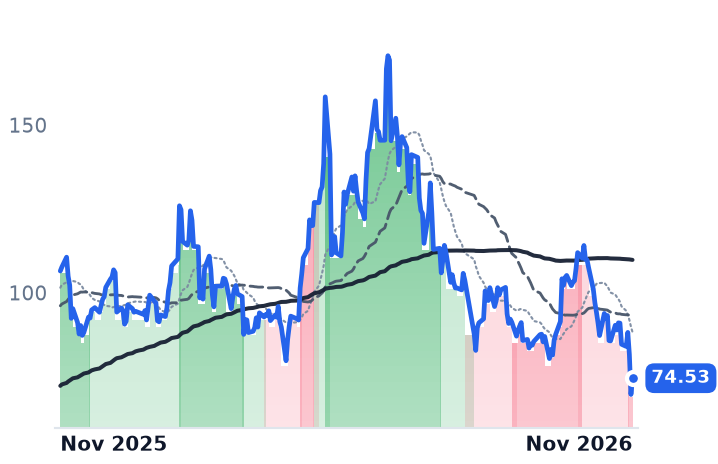
Most of the share damage arrived in one session. Rambus fell 14.6% on 5 November as the Philadelphia Semiconductor Index dropped 12.2% on post-midterm fears of restrictions on data-centre development, then recovered 7.0% the next day. Over twelve months the stock is down 30%, to $74.53, while Micron rose 194%. It trades at 19.2x consensus FY2027 earnings against 30.3x trailing, and 21.8x trailing EBITDA against roughly 25x recorded in May at a higher price.

The two neighbors on the same shelf

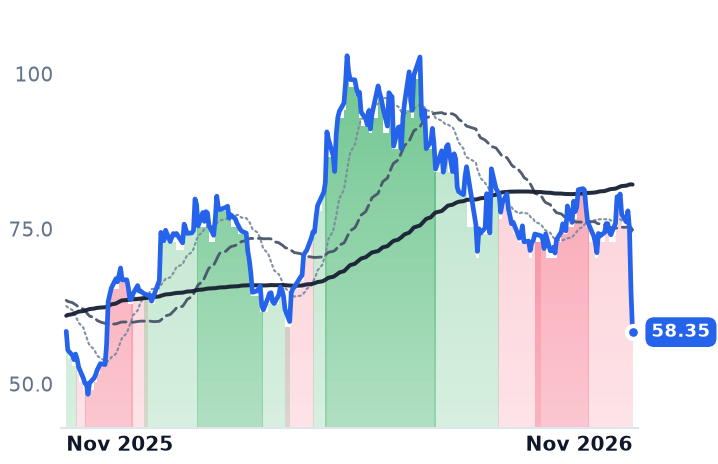
Microchip, the embedded-control supplier whose microcontrollers and interface chips go into cars and factories, does sell memory-pooling controllers — the SMC 2000 and SMC 2100 series — with no revenue disclosed for them. Data centre was 16.7% of September-quarter sales, and the disclosed momentum is switches and retimers: 24 cumulative design wins, double June's count. Revenue grew 42.2% with gross margin up about 1,000 basis points to 65.9%, yet the shares fell about 10% on a December guide 1% lower sequentially at the midpoint. "I have been saying it, that data center is in the bubble," chief executive Steve Sanghi said on 5 November. The stock sits at 16.0x FY2027 consensus earnings against 43.7x trailing.

Everspin, which makes magnetoresistive memory for industrial, aerospace and storage customers, grew 46.9% to a record $20.65m, of which $16.9m was product. Its memory-pooling demonstration is a 2029 revenue event by its own account. What the shortage does pay it is substitution: "we are seeing our distributors actually ask for MRAM parts that would actually replace NOR Flash," chief executive Sanjeev Aggarwal said on 28 October, as flash fabs convert to DRAM. Operating margin went from −11.0% to −38.4%, mostly on a $6m litigation provision; the shares trade at 3.2x consensus FY2027 revenue against 4.1x trailing sales, and much of the 73% fall from the high is that margin.

What the quarters account for

Almost none of the 30-day markdown at Rambus or Everspin is in the reported numbers: both printed records, and both bounced when the macro session reversed. Microchip is the exception, and it falls for a disclosed reason — $53m of one-time full-margin items that do not repeat, gross margin guided to 64–65%, and net debt at 2.36x EBITDA with buybacks deferred to deleveraging. Rambus's growth is accelerating into consensus that still models FY2027 revenue above $1bn.

The real fundamental datum against Rambus is the one the company published itself. Royalties are near-100% margin and contractual; chipsets must be fabricated, packaged and inventoried in a year its chief executive says supply stays tight. A shortage that lifts the price of DRAM raises the cost of the silicon that addresses it and pays Rambus only when another module ships.

Three quarters into the biggest memory squeeze in years, the tollbooth line is shrinking and the factory line is the one growing. That is a lower-quality dollar, and the market has been repricing the quality long before it repriced the growth.

Reddit's Traffic Is Falling to Google's AI Answers, So It Is Selling Ads in Its Own Search

Hypothesis Opus 5 · Research Opus 5 · Writing Opus 5 · Prompt v1.7

Reddit's accounts and its audience moved in opposite directions last quarter, and management told investors the audience problem is getting worse. Advertising revenue grew 54% to $847m and the adjusted EBITDA margin reached 45%, while daily active uniques in the United States fell 2% to 50.7m, with logged-out users down 4% because Google's AI Overviews now answer the question instead of passing the click.

Management guided fourth-quarter revenue to $1.00bn-$1.03bn and simultaneously warned that total daily uniques could fall by a low double-digit percentage from 130.3m. Four days after the print it began testing ads inside Reddit's own search results.

The business explains the markdown better than the multiple does: at 17.5x forward earnings, consensus still carries 2027 revenue growth of 28.5% set before the traffic warning. AppLovin, which owns both the auction and the inventory, has no such distribution landlord.

RDDTAPPTTDSPOTNFLXNTESZMAI Search DisruptionDigital Advertising PlatformsPerformance Ad AuctionsAI Content LicensingUser Engagement MonetizationSearch Referral Traffic
TickerCompanySegmentTrend · 13mo30D1Y
RDDTRedditSocial & Community Platforms🔴 Cont. Bear−35.5%−48.1%
APPAppLovinMarketing, Advertising & Growth🔴 Cont. Bear+41.0%−38.2%
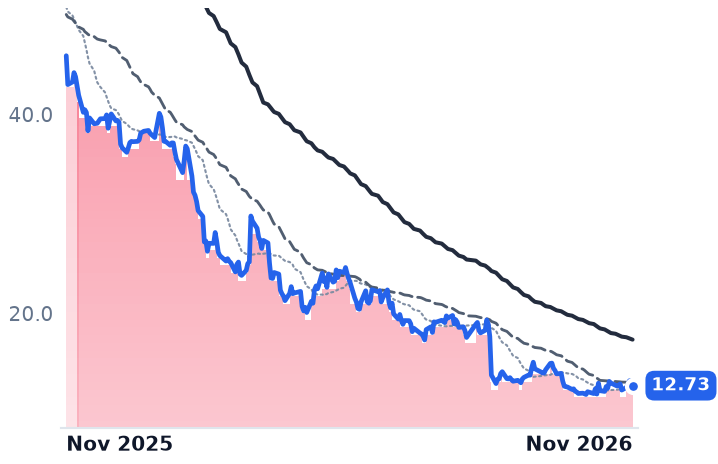
TTDThe Trade DeskProgrammatic Platforms🔴 Cont. Bear+7.5%−72.3%
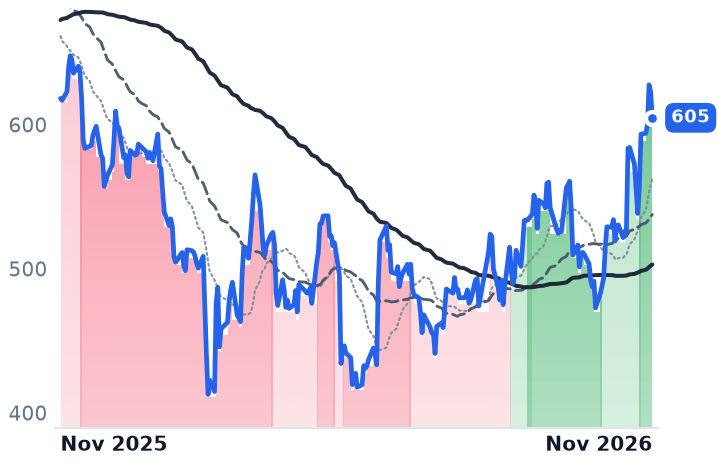
SPOTSpotify TechnologyEntertainment & Content Streaming🌱 Emerging Bull+22.5%−2.2%
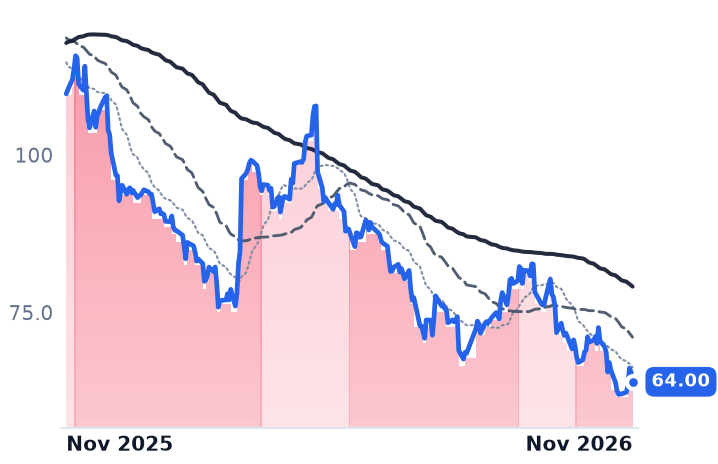
NFLXNetflixStreaming Services🔴 Cont. Bear−7.3%−41.7%
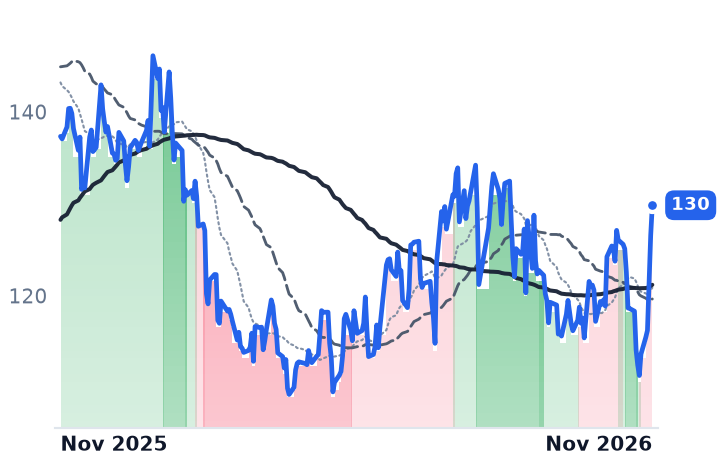
NTESNetEasePremium Game Publishers🔴 Cont. Bear+8.6%−5.5%
ZMZoom CommunicationsSoftware Development & Design🟢 Cont. Bull−5.1%+8.4%

12-month price & trend

RDDT
Reddit
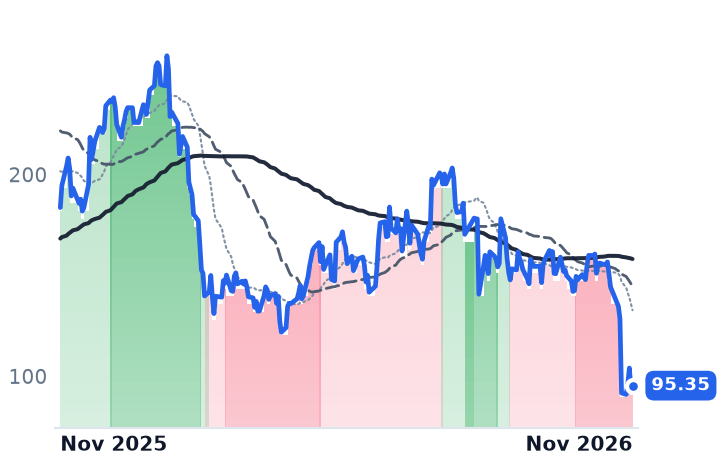
95.35
+1.54 (+1.64%)
vs. prior close
Price20d50d150d
RDDT 12-month price
Social & Community Platforms
APP
AppLovin
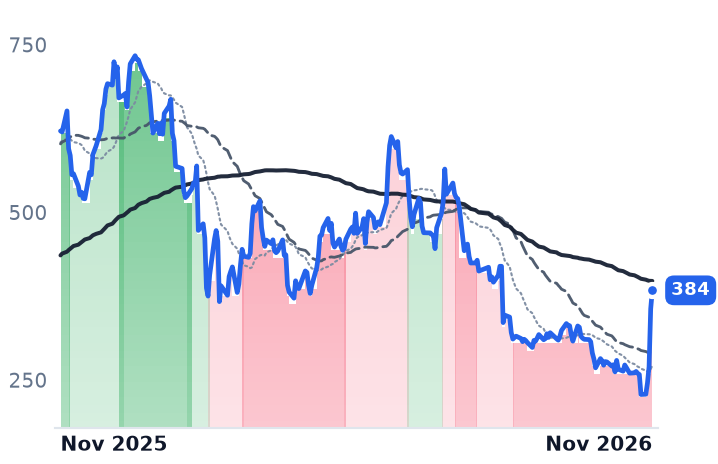
384
+27.68 (+7.77%)
vs. prior close
Price20d50d150d
APP 12-month price
Marketing, Advertising & Growth
TTD
The Trade Desk
12.73
−0.43 (−3.24%)
vs. prior close
Price20d50d150d
TTD 12-month price
Programmatic Platforms
TickerMkt capP/EP/E fwdP/SP/S fwdP/GPP/GP fwdEV/EBITDAFCF yld
RDDT$18.4B18.4x17.5x6.0x5.4x6.5x5.9x16.7x6.5%
APP$117.3B25.7x24.5x15.4x14.5x17.4x16.3x18.8x4.2%
TTD$6.0B15.2x35.1x2.0x2.2x2.6x2.9x6.9x14.3%
SPOT
Spotify Technology
605
−17.89 (−2.87%)
vs. prior close
Price20d50d150d
SPOT 12-month price
Entertainment & Content Streaming
NFLX
Netflix
64.00
−1.56 (−2.38%)
vs. prior close
Price20d50d150d
NFLX 12-month price
Streaming Services
NTES
NetEase
130
+3.28 (+2.59%)
vs. prior close
Price20d50d150d
NTES 12-month price
Premium Game Publishers
TickerMkt capP/EP/E fwdP/SP/S fwdP/GPP/GP fwdEV/EBITDAFCF yld
SPOT$124.5B37.8x51.2x5.9x6.4x17.9x19.2x29.9x2.9%
NFLX$266.5B18.2x17.9x5.4x5.2x10.6x10.3x7.5x4.3%
NTES$82.7B16.8x—4.7x—7.0x—11.7x9.2%
ZM
Zoom Communications
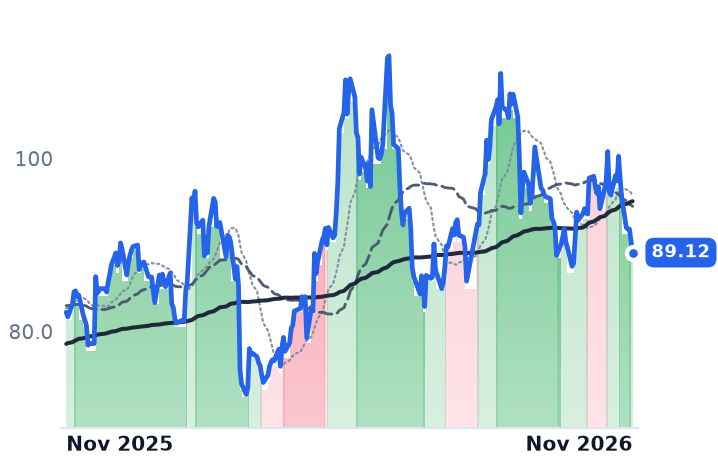
89.12
−1.35 (−1.49%)
vs. prior close
Price20d50d150d
ZM 12-month price
Software Development & Design
TickerMkt capP/EP/E fwdP/SP/S fwdP/GPP/GP fwdEV/EBITDAFCF yld
ZM$26.3B8.2x14.7x5.3x5.2x6.8x6.7x5.9x7.3%

Consensus projections

TickerFY2026EFY2027EFY2028E
RDDTRevenue+58.1%+28.5%+24.1%
EPS+135.0%+25.5%+24.9%
APPRevenue+43.0%+24.8%+20.7%
EPS+66.9%+25.4%+24.1%
TTDRevenue−4.9%−5.2%+5.8%
EPS−57.5%−40.6%+51.1%
SPOTRevenue+13.7%+14.8%+13.6%
EPS+65.1%+28.0%+26.4%
NFLXRevenue+13.4%+10.6%+9.7%
EPS+39.8%+4.9%+18.9%
NTESRevenue+6.8%+7.6%+6.8%
EPS+0.9%+16.1%+8.5%
ZMRevenue+4.2%+4.9%+4.4%
EPS+9.7%+3.1%+3.4%

Forward fiscal years only. Blank means no analyst coverage for that year.

Reddit earned more from a smaller American audience last quarter, and the company has stopped waiting to find out whether that trade can run. On 3 November it began testing advertisements inside its own search results, four days after telling investors that Google's AI answers were absorbing the visitors who used to click through.

The 29 October print was read as the quarter in which Reddit's pricing engine took over from its audience growth. Half of that reading survives contact with the numbers. Advertising revenue of $847m grew 54% year on year, gross margin held at 91.5% for a ninth consecutive quarter, and the adjusted EBITDA margin reached 45%. What does not survive is the assumption underneath it: that the audience being monetized stays put.

The audience fell where the dollars are

Global daily active uniques grew 12% to 130.3m, carried entirely by international users, up 24% to 79.6m. The United States, where the money is, went the other way: down 2% to 50.7m, with logged-out users off 4% and logged-in users up just 1%. Management said logged-out web traffic fell meaningfully through the quarter, that the decline accelerated late in it, and that October alone ran more than a million fewer weekly average referrals as Google's AI Overviews and AI Mode answered queries directly.

Then the guidance arrived in two halves that point different ways. Fourth-quarter revenue is guided to $1.00bn-$1.03bn, up 38% to 42%, with adjusted EBITDA of $480m-$510m. Total daily uniques, management warned, could fall by a low double-digit percentage from the 130m base if the search trend holds.

Price is doing the work, and licensing is not

Average revenue per user rose 36% to $6.87 globally, and in the United States 53% to $13.82. Performance advertising is now more than 60% of the business, with click volume up 50% and conversion volume more than tripled. The company earning materially more from each American reader is the same company with fewer of them.

One popular offset is not there. Other revenue, the line containing data licensing, was $48m, 5.4% of the total, growing 35% against advertising's 54%. Licensing talks with OpenAI and Google were described as ongoing with no new terms, so the AI products absorbing the referrals are not yet paying for them.

"Moving to primarily logged-in will ensure our users have the best Reddit experience possible," co-founder and chief executive Steve Huffman told investors on 29 October, announcing fourth-quarter tests of a logged-in-only experience in select non-US markets. "It's better for our business because we have more signals for ads targeting." Chief operating officer Jennifer Wong put the demand case this way the same day: "Half of U.S. shoppers say they come to Reddit to verify AI recommendations."

The comparison that explains the mechanism

AppLovin, which runs a mobile ad auction and the measurement layer around it across more than 140,000 apps, has no distribution landlord, and its quarter showed it. Revenue accelerated to a record $2.185bn, up 55.5%, at an 84% adjusted EBITDA margin, with the fourth quarter guided up 43% to 44%. The shares rose 31.98% on 5 November, to 24.5x consensus 2026 earnings of $15.69 against roughly 66x a year ago, helped by a buyback authorisation lifted by $3.2bn to $3.6bn. "We grew 55%, several times faster than the market," chief financial officer Matt Stumpf said on the 4 November call. The caveats are real: a securities-fraud class action over its AI claims is unresolved, and its reported return on ad spend is platform self-attribution.

The Trade Desk, which sells agencies the seat rather than the inventory, sits at the other end of the same mechanism, with June-quarter revenue up 3.0% and 6.93x trailing EV/EBITDA against a 14.3% free-cash-flow yield. Meta, Google and Amazon are forecast to take 62.3% of worldwide digital ad spend in 2026.

The 2027 estimates predate the traffic warning

Reddit's shares fell 28.6% in the session after the print, to $91.73 on 30 October, and are down 48.1% over twelve months. The accounts justify none of that; the meter behind them justifies most of it. At 17.5x forward earnings against 18.4x trailing, consensus still carries 2027 revenue of $4.359bn, up 28.5%, and earnings of $6.82 a share, figures set before the daily-user warning and not yet reconciled with it.

So the question Reddit has set itself is whether a community site can sell its own search box faster than someone else's stops sending people to it.

US Cannabis Won Its Tax Deductions Back in April and Still Owes $1.6bn in Back Taxes

Hypothesis Opus 5 · Research Opus 5 · Writing Opus 5 · Prompt v1.7

The federal tax rule that defined cannabis retailing stopped applying to half the industry in April, and the market spent the first week of November trading the other half.

The Department of Justice reclassified state-licensed medical cannabis to Schedule III effective 28 April, lifting Section 280E's deduction ban from medical operations. Green Thumb's quarterly income tax expense fell to $28m from $49m a year earlier, and Trulieve, now medical-only and listed on the New York Stock Exchange, reported gross margin of 64.3% against 58.9%.

What the stay of the broader adult-use rescheduling case did not resolve is the bill from the years when the tax did apply: $1.6bn the Internal Revenue Service says operators withheld, $655.6m of it contested by Trulieve alone. The shipped numbers improved. The contingency did not.

GTBIFTCNNFIIPRCURLFCRLBFTLRYCRONVFFVREOFMSOSMJGLASFGRUSFCannabis ReschedulingSection 280E ReliefMulti-State OperatorsIRS Tax LiabilitiesMedical Dispensary RetailMajor Exchange Uplistings
TickerCompanySegmentTrend · 13mo30D1Y
GTBIFGreen Thumb IndustriesDrug Manufacturers - Specialty & Generic⚠️ Emerging Bear−0.9%+0.6%
TCNNFTrulieve CannabisDrug Manufacturers - Specialty & Generic🟢 Cont. Bull—+40.8%
IIPRInnovative Industrial PropertiesCannabis Properties⚠️ Emerging Bear+7.8%+15.3%
CURLFCuraleafDrug Manufacturers - Specialty & Generic🟢 Cont. Bull−4.6%+292.6%
CRLBFCresco LabsDrug Manufacturers - Specialty & Generic🔴 Cont. Bear−11.9%−42.0%
TLRYTilray BrandsCannabis & Hemp🔴 Cont. Bear−25.2%−77.0%
CRONCronosConsumer OTC & Wellness🟢 Cont. Bull+9.6%+45.7%
VFFVillage Farms InternationalAgricultural Farm Products🌱 Emerging Bull+4.4%−3.4%
VREOFVireo GrowthDrug Manufacturers - Specialty & Generic🟢 Cont. Bull−27.6%+1089.2%
MSOSAdvisorShares Pure US Cannabis ETFAsset Management🟢 Cont. Bull−4.6%+8.6%
MJAmplify Alternative Harvest ETFAsset Management🔴 Cont. Bear−5.0%−18.2%
GLASFGlass House BrandsAgricultural Inputs🟢 Cont. Bull—+49.7%
GRUSFGrown Rogue InternationalDrug Manufacturers - Specialty & Generic🌱 Emerging Bull−12.7%+0.0%

12-month price & trend

GTBIF
Green Thumb Industries
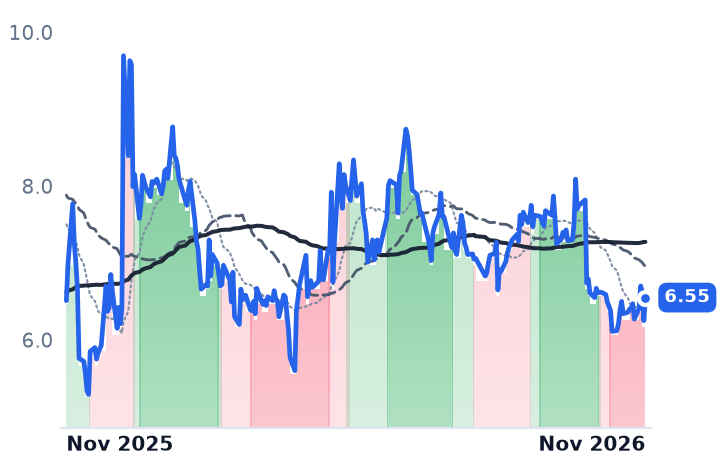
6.55
+0.30 (+4.80%)
vs. prior close
Price20d50d150d
GTBIF 12-month price
Drug Manufacturers - Specialty & Generic
TCNNF
Trulieve Cannabis
Price20d50d150d
TCNNF 12-month price
Drug Manufacturers - Specialty & Generic
IIPR
Innovative Industrial Properties
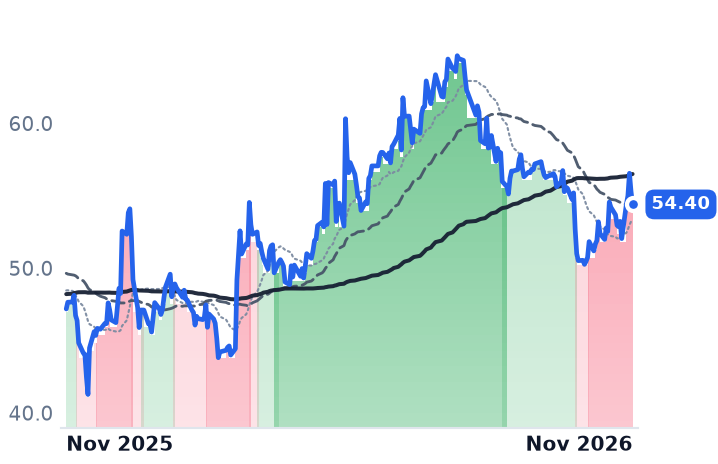
54.40
−0.90 (−1.63%)
vs. prior close
Price20d50d150d
IIPR 12-month price
Cannabis Properties
TickerMkt capP/EP/E fwdP/SP/S fwdP/GPP/GP fwdEV/EBITDAFCF yld
GTBIF$1.4B15.6x40.6x1.2x1.2x2.7x2.7x5.3x12.4%
TCNNF$2.4Bn/m85.1x2.2x2.1x3.9x3.8x9.0x7.5%
IIPR$1.5B12.1x12.8x5.7x5.9x9.4x9.7x8.2x13.2%
CURLF
Curaleaf
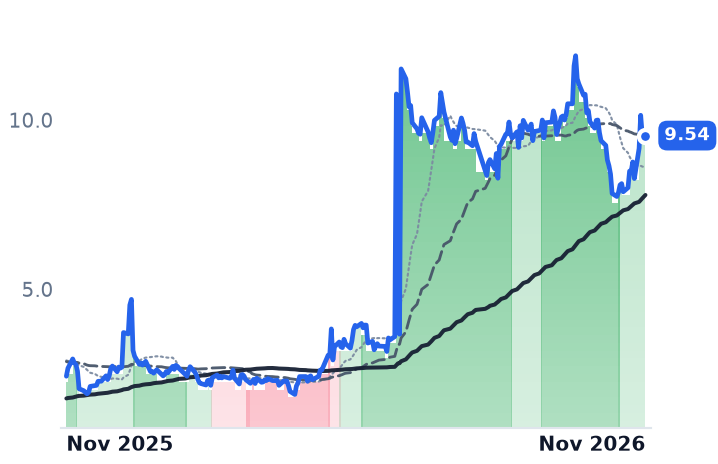
9.54
+0.10 (+1.06%)
vs. prior close
Price20d50d150d
CURLF 12-month price
Drug Manufacturers - Specialty & Generic
CRLBF
Cresco Labs
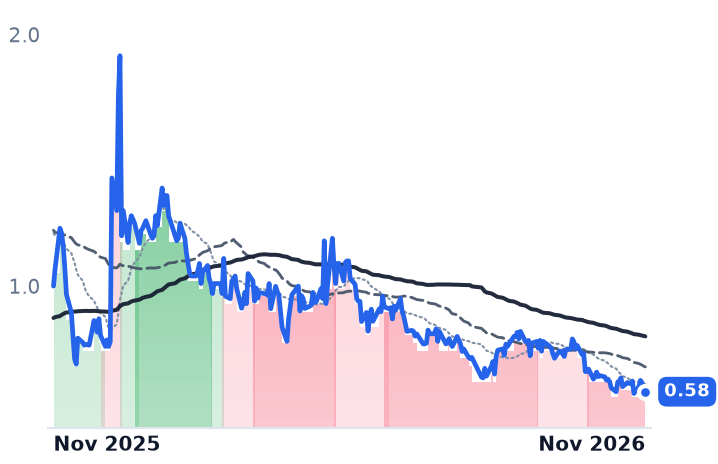
0.58
+0.01 (+1.93%)
vs. prior close
Price20d50d150d
CRLBF 12-month price
Drug Manufacturers - Specialty & Generic
TLRY
Tilray Brands
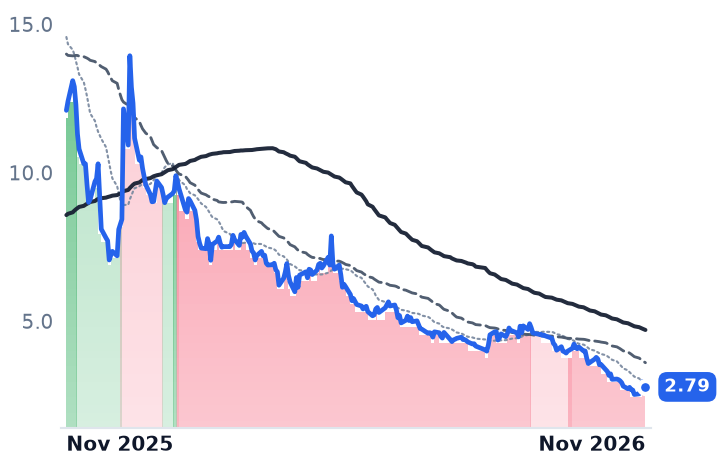
2.79
+0.01 (+0.36%)
vs. prior close
Price20d50d150d
TLRY 12-month price
Cannabis & Hemp
TickerMkt capP/EP/E fwdP/SP/S fwdP/GPP/GP fwdEV/EBITDAFCF yld
CURLF$2.2Bn/m165.7x1.7x1.6x3.8x3.7x16.9x2.2%
CRLBF$208.8Mn/m—0.3x0.3x0.7x0.6x7.4x4.9%
TLRY$314.2Mn/m—0.3x0.3x1.1x1.0xn/m-40.3%
CRON
Cronos
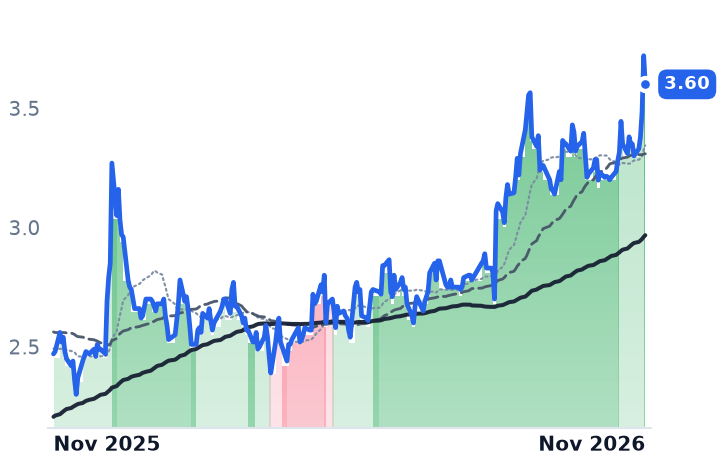
3.60
−0.12 (−3.23%)
vs. prior close
Price20d50d150d
CRON 12-month price
Consumer OTC & Wellness
VFF
Village Farms International
2.87
+0.13 (+4.94%)
vs. prior close
Price20d50d150d
VFF 12-month price
Agricultural Farm Products
VREOF
Vireo Growth
6.60
−0.35 (−5.04%)
vs. prior close
Price20d50d150d
VREOF 12-month price
Drug Manufacturers - Specialty & Generic
TickerMkt capP/EP/E fwdP/SP/S fwdP/GPP/GP fwdEV/EBITDAFCF yld
CRON$1.3B19.2x21.4x7.4x6.2x16.3x13.7x15.9x3.7%
VFF$352.7M14.7x16.0x1.5x1.5x3.5x3.3x6.1x-0.6%
VREOF$251.5Mn/m—0.5x0.3x1.0x0.7x11.5x-46.7%
MSOS
AdvisorShares Pure US Cannabis ETF
4.25
+0.12 (+2.81%)
vs. prior close
Price20d50d150d
MSOS 12-month price
Asset Management
MJ
Amplify Alternative Harvest ETF
23.16
−0.29 (−1.24%)
vs. prior close
Price20d50d150d
MJ 12-month price
Asset Management
GLASF
Glass House Brands
Price20d50d150d
GLASF 12-month price
Agricultural Inputs
TickerMkt capP/EP/E fwdP/SP/S fwdP/GPP/GP fwdEV/EBITDAFCF yld
MSOS$551.3M————————
MJ$101.1M————————
GLASF$851.8Mn/m—4.8x4.0x14.5x12.1xn/m-3.1%
GRUSF
Grown Rogue International
0.36
−0.01 (−2.70%)
vs. prior close
Price20d50d150d
GRUSF 12-month price
Drug Manufacturers - Specialty & Generic
TickerMkt capP/EP/E fwdP/SP/S fwdP/GPP/GP fwdEV/EBITDAFCF yld
GRUSF$91.7Mn/m—2.2x—4.9x—47.9x-1.7%

Consensus projections

TickerFY2026EFY2027EFY2028E
GTBIFRevenue+5.9%+6.5%+6.9%
EPS+6.9%+62.3%+23.3%
TCNNFRevenue−5.9%+0.7%+8.8%
EPS−133.5%+116.7%−10.3%
IIPRRevenue−3.9%+0.4%+1.7%
EPS+7.6%+2.7%+5.3%
CURLFRevenue+7.7%+7.7%+10.2%
EPS−106.8%−548.7%−146.3%
CRLBFRevenue+2.6%+3.8%+1.3%
EPS−81.0%−64.7%−466.7%
TLRYRevenue+5.8%+25.7%+4.9%
EPS−94.6%−12.4%−63.4%
CRONRevenue+53.8%+29.5%+8.5%
EPS−6820.0%+8.3%+4.4%
VFFRevenue+10.6%+20.2%+13.2%
EPS−9.8%+47.2%+45.9%
VREOFRevenue+199.9%+46.8%+7.9%
EPS−96.4%−1738.5%+93.4%
GLASFRevenue+16.9%+22.0%+4.4%
EPS−76.5%−357.9%+75.5%

Forward fiscal years only. Blank means no analyst coverage for that year.

The tax provision that made American cannabis retailing a structurally unprofitable business stopped applying to a large part of it seven months ago. On 23 April the Department of Justice reclassified state-licensed medical cannabis from Schedule I to Schedule III, effective 28 April, placing medical product outside Section 280E, the rule barring sellers of Schedule I drugs from deducting ordinary business expenses. Green Thumb Industries, which grows cannabis and sells it wholesale and through its own RISE stores, reported income tax expense of $28m for the September quarter against $49m a year earlier, and named the reclassification as the cause.

Adult-use product remains Schedule I, and remains taxed that way. That is the half the market traded in the first week of November, when Drug Enforcement Administration Chief Administrative Law Judge Derek Julius stayed the broader rescheduling proceeding to admit a Government Accountability Office report on scheduling gaps. The AdvisorShares Pure US Cannabis ETF, the sector's usual proxy, fell 8.2% from its 3 November close across the next two sessions, then recovered 2.8% on 6 November. Nothing in the quarters reported those same days got worse. The quarters are the point: the industry's operating economics and its tax position have come apart, and only one of them improved.

The medical half now files like a normal company

Trulieve is the cleanest case. The Florida-concentrated grower and dispensary operator moved to the New York Stock Exchange under the symbol TRLV on 10 June, the first US cannabis company to list there, after both big exchanges rewrote their listing rules in April for Schedule III operators. "From this year forward, we are taxed the same as any U.S. Corporation," chief executive Kim Rivers told investors on 5 November. "This parity is important because it improves profitability and cash flow."

The numbers behind that sentence held up. Gross margin reached 64.3% from 58.9% a year earlier, operating cash flow was $74m in the quarter against full-year guidance of at least $225m, and cash stood at $327m. Its scale in Florida is the moat: 657,000 ounces of flower across 170 stores, 55% more flower per store than the state average, in a market management itself calls saturated with 786 dispensaries. On trailing enterprise value to EBITDA of 9.0x it is also the dearest US operator here, against Cresco Labs at 7.4x and Green Thumb at 5.3x.

The bill from the years when the deduction ban applied

Against that improvement sits a liability the April rule did not touch. The Internal Revenue Service says cannabis operators owe $1.6bn and counting in past-due 280E bills, withheld deliberately to conserve cash, and argued in a 6 March filing that hopes of retroactive relief are unfounded because the law in effect at the time must be applied. Trulieve carried $696.4m of net uncertain tax positions at 31 March, of which $655.6m relates to its own 280E challenge and includes $80.2m of accrued interest. Curaleaf's equivalent balance is $531.5m, Verano's $378.3m and Cresco's $171.4m. Trulieve confirmed on 5 November that the balance includes more than $102m of refunds it has already received.

So the contested money is on the balance sheet, not in the cash tax line, and its resolution sits with Treasury. "Treasury and the IRS have made guidance on 280E one of their priorities for fiscal 2027," Green Thumb founder and chief executive Ben Kovler said on 4 November. "How soon that clarity arrives matters for us and for every operator trying to model its tax position."

The price war is in Germany, not Florida

The other half of the bear case, collapsing realized price, belongs to a different continent. Curaleaf, which exports pharmaceutical-grade cannabis to ten European and Pacific markets alongside its US stores, saw prices "fallen from like $3 a gram to $0.90 a gram in 1 quarter, which is severe," chief executive Boris Jordan said on 3 November, calling October "probably the worst month we've ever seen since the start of the German market." He was explicit about where it hurts: "Our U.S. business is strong... It's really German related." Tilray, the Canadian cannabis-and-beverage group, booked $8.8m of adjusted-EBITDA headwind from the same international compression on a record $257.1m quarter.

The American till moved the other way. Green Thumb's 108 comparable stores posted a 3% same-store gain, its first positive comp since the third quarter of 2024, with "material improvement" in Florida operating economics; reported gross margin of 45.2% against 49.4% was driven primarily by $15.8m of brand licensing fees, and normalized EBITDA was flat at $89m on a 27.6% margin. Industry retail gross margins fell from 52.6% in 2021 to 42.7% in 2025, which puts Green Thumb above the average and Trulieve far above it.

The landlord is diversifying out of the question

Innovative Industrial Properties, the real estate investment trust that owns and leases cultivation buildings to licensed operators, is the one name on this shelf that rose over the past month, up 8.2%. Its third-quarter adjusted funds from operations were $1.96 a share against a $1.90 dividend, but $0.15 of that came from non-recurring past-due rent recoveries, leaving roughly $1.81 of recurring coverage. More than 800,000 sq ft sits vacant, two-thirds of it Parallel's Florida assets, and 4Front Ventures accounts for 7.1% of annualized rent. Its answer is to stop being a cannabis landlord at the margin: about $545m committed to life-science investments with IQHQ, including a $245m mezzanine loan on a Cambridge campus that executive chairman Alan Gold said on 3 November "is expected to generate an average interest rate of ~15.8% over the term of the loan," and roughly 26% of annualized income when fully funded. A 10-year Treasury yield of 4.88%, down 0.41 points over the month, did the rest.

What the quarters account for, and what they do not

Very little of the past month's dispersion follows the tax line. Green Thumb fell 1.8% over 30 days and Curaleaf 4.5%, while Tilray fell 26.3% on international pricing and Cronos Group, the Toronto exporter whose revenue rose 74.6% to $63.5m on Israeli and international volume, gained 9.6%. Cronos trades at 15.9x trailing EV/EBITDA, three times Green Thumb's, so whatever superior cash conversion a non-280E base confers is already paid for.

What the shipped numbers explain is the operating story: margins at the medical operators are flat to better, Florida is improving, and the deflation is German. What they cannot explain is the valuation, and the reason is that the biggest single variable is a tax ruling nobody has. Kovler put the gap in his own terms on 4 November: "If a medical business traded at 15x EBITDA on the New York Stock Exchange, we would be thinking about this very differently." He is looking at 4x to 5x instead, and has bought back about 29.5m shares, roughly 13% of the company, at an average of about $7 since the fourth quarter of 2023.

There is one dated demand event ahead that owes nothing to the Drug Enforcement Administration. Intoxicating hemp products become illegal on 11 December, and Green Thumb's chief executive says the category represents more than a tenth of liquor store sales, with retailers loading the pantry before the ban. Whatever share of those buyers walks into a dispensary instead will arrive in a quarter nobody has priced, at operators who are now, for the medical part of what they sell, ordinary taxpayers.

Applied Optoelectronics Missed Its Margin Guide Because the New Volume Was 400-Gigabit

Hypothesis Opus 5 · Research Opus 5 · Writing Opus 5 · Prompt v1.7

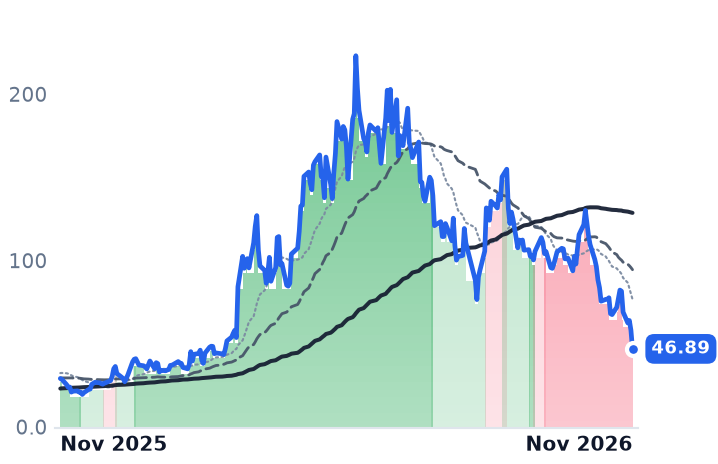
What a shipped optical module earns the company that builds it turns almost entirely on which speed grade sits inside it, and last quarter Applied Optoelectronics got the cheap one. Its data-center sales grew hard, but $93.4m of them — 60.2% of the segment — was 400-gigabit product against $47.5m of 800G, and non-GAAP gross margin landed at 28.7%, below both its own 29.0–30.5% guide and the 31.0% it earned a year earlier.

Nobody else along the chain had that problem. MaxLinear's price for the signal-processing chip inside the module roughly doubles across the same transition and it keeps 58.7% gross margin; Fabrinet keeps about twelve cents of every revenue dollar whatever the grade, and grew revenue 50.7%; Viavi grew 56.9% selling the test gear. Every one of these shares roughly halved in a month. Only Applied Optoelectronics' margin line is explained by what it actually shipped.

AAOIMXLFNVIAVADTNLITECOHRCRDOMRVLANETNVDAOptical Transceiver MixTerabit Optics RampOptical DSP PricingContract Manufacturing MarginsHyperscaler AI OpticsOptical Test Equipment
TickerCompanySegmentTrend · 13mo30D1Y
The subject · what this brief is about
VIAVViavi SolutionsOther⚠️ Emerging Bear−39.3%+59.9%
Compared against · context, not the story
AAOIApplied OptoelectronicsOptical Networking🔴 Cont. Bear−61.7%+61.1%
MXLMaxLinearAnalog & Power Management🟢 Cont. Bull−58.9%+199.0%
FNFabrinetContract Manufacturing🔴 Cont. Bear−37.8%−36.5%
ADTNADTRANOptical Networking🔴 Cont. Bear−45.6%−48.6%
LITELumentumOptical Networking🟢 Cont. Bull−54.1%+112.7%
COHRCoherentPhotonics & Optics⚠️ Emerging Bear−49.3%+6.6%
CRDOCredo TechnologyData Center & Networking⚠️ Emerging Bear−46.3%−31.0%
MRVLMarvell TechnologyData Center & Networking🟢 Cont. Bull−52.4%+43.3%
ANETArista NetworksCloud Networking🟢 Cont. Bull−24.3%+18.8%
NVDANVIDIAProcessors & Accelerators🟢 Cont. Bull−23.5%−3.4%

12-month price & trend

AAOI
Applied Optoelectronics
46.89
−11.23 (−19.32%)
vs. prior close
Price20d50d150d
AAOI 12-month price
Optical Networking
MXL
MaxLinear
44.31
−11.34 (−20.38%)
vs. prior close
Price20d50d150d
MXL 12-month price
Analog & Power Management
FN
Fabrinet
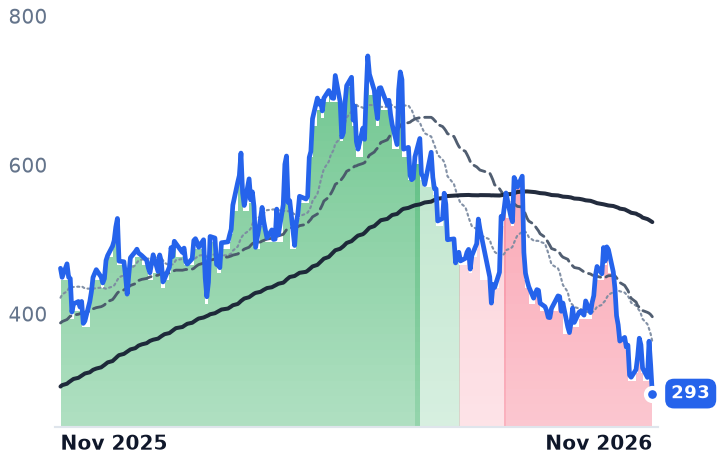
293
−38.13 (−11.52%)
vs. prior close
Price20d50d150d
FN 12-month price
Contract Manufacturing
TickerMkt capP/EP/E fwdP/SP/S fwdP/GPP/GP fwdEV/EBITDAFCF yld
AAOI$5.9Bn/m93.3x9.8x5.6x34.0x19.3xn/m-7.0%
MXL$6.1Bn/m34.1x9.3x7.9x16.0x13.6x187.7x-0.3%
FN$11.4B23.7x16.1x2.2x1.7x18.5x14.4x16.8x-1.7%
VIAV
Viavi Solutions
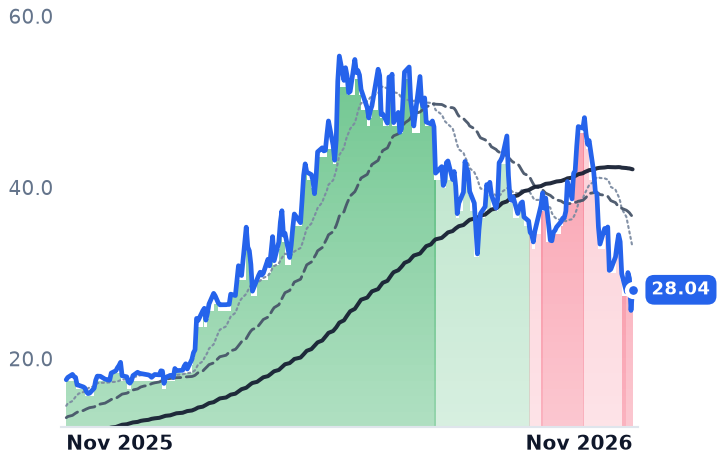
28.04
+2.41 (+9.40%)
vs. prior close
Price20d50d150d
VIAV 12-month price
Other
ADTN
ADTRAN
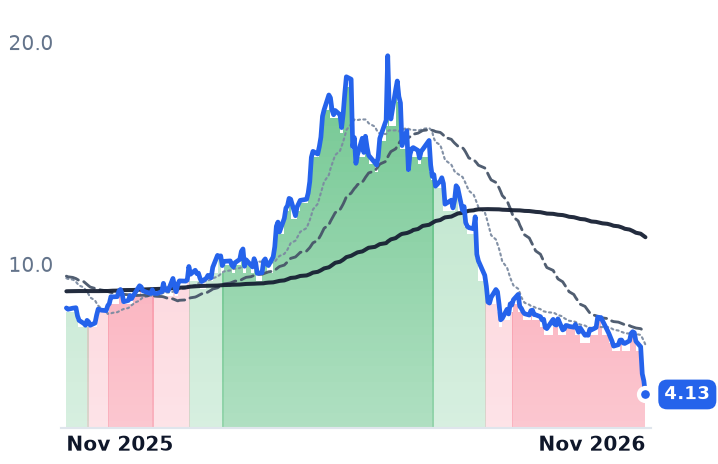
4.13
−0.61 (−12.87%)
vs. prior close
Price20d50d150d
ADTN 12-month price
Optical Networking
LITE
Lumentum
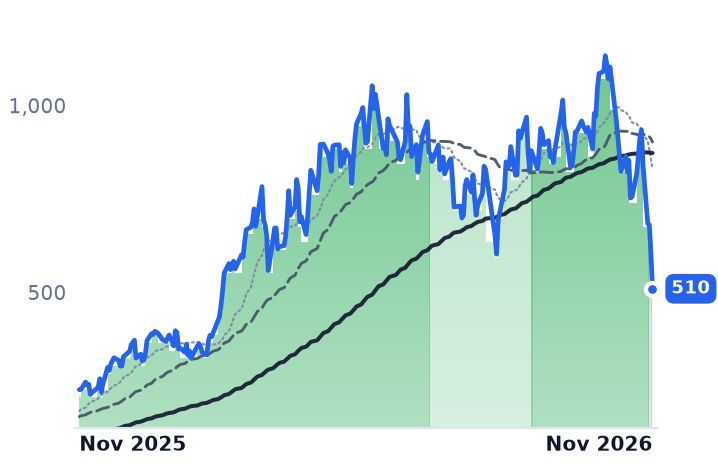
510
−97.16 (−16.01%)
vs. prior close
Price20d50d150d
LITE 12-month price
Optical Networking
TickerMkt capP/EP/E fwdP/SP/S fwdP/GPP/GP fwdEV/EBITDAFCF yld
VIAV$6.9B101.4x17.1x4.1x3.7x7.0x6.2x26.0x2.2%
ADTN$326.3Mn/m13.7x0.3x0.3x0.7x0.7x5.1x6.9%
LITE$74.1Bn/m37.6x24.6x11.7x59.0x28.1xn/m0.7%
COHR
Coherent
170
−25.33 (−12.98%)
vs. prior close
Price20d50d150d
COHR 12-month price
Photonics & Optics
CRDO
Credo Technology
112
−21.47 (−16.05%)
vs. prior close
Price20d50d150d
CRDO 12-month price
Data Center & Networking
MRVL
Marvell Technology
134
−23.87 (−15.16%)
vs. prior close
Price20d50d150d
MRVL 12-month price
Data Center & Networking
TickerMkt capP/EP/E fwdP/SP/S fwdP/GPP/GP fwdEV/EBITDAFCF yld
COHR$43.6B50.9x23.5x6.1x4.1x16.3x11.0x29.5x-2.4%
CRDO$43.0B88.0x37.3x32.2x17.5x47.3x25.7x82.0x0.9%
MRVL$204.7B76.7x55.5x21.7x17.0x42.1x33.0x43.3x0.8%
ANET
Arista Networks
159
−19.61 (−10.97%)
vs. prior close
Price20d50d150d
ANET 12-month price
Cloud Networking
NVDA
NVIDIA
182
−20.93 (−10.33%)
vs. prior close
Price20d50d150d
NVDA 12-month price
Processors & Accelerators
TickerMkt capP/EP/E fwdP/SP/S fwdP/GPP/GP fwdEV/EBITDAFCF yld
ANET$223.5B55.2x43.1x21.2x17.6x33.7x28.0x43.5x2.3%
NVDA$5.5T34.3x25.0x21.5x13.9x29.0x18.7x28.3x2.2%

Consensus projections

TickerFY2026EFY2027EFY2028E
AAOIRevenue+131.7%+182.3%+72.7%
EPS−327.3%+650.0%+92.2%
MXLRevenue+66.7%+78.3%+32.3%
EPS+583.6%+135.9%+22.8%
FNRevenue+35.6%+43.2%+19.5%
EPS+36.2%+42.4%+21.7%
VIAVRevenue+39.8%+25.1%+13.4%
EPS+107.0%+75.4%+18.6%
ADTNRevenue+5.5%+6.4%+7.7%
EPS+82.1%+60.1%+68.4%
LITERevenue+83.9%+110.8%+57.6%
EPS+314.0%+164.8%+61.2%
COHRRevenue+22.1%+50.0%+37.9%
EPS+56.5%+72.3%+49.3%
CRDORevenue+211.9%+85.0%+49.7%
EPS+423.2%+86.8%+48.2%
MRVLRevenue+42.4%+47.4%+61.9%
EPS+82.6%+48.1%+72.8%
ANETRevenue+42.6%+30.8%+24.6%
EPS+42.6%+27.9%+23.2%
NVDARevenue+65.1%+84.2%+43.2%
EPS+59.0%+91.7%+42.0%

Forward fiscal years only. Blank means no analyst coverage for that year.

Applied Optoelectronics reported its sixth consecutive record quarter on 5 November and still earned less on each dollar it shipped than a year earlier, and the reason is printed in the speed-grade split. Revenue of $269.9m was up 127.5% from a year ago, with $6.3m of net income, the first GAAP profit after operating losses in every year on record.

The 800-gigabit-to-1.6-terabit transition has been read all year as a rising tide for anyone holding a socket in an optical module. The quarter says the water level is uneven: the margin accrues to the grade you are actually on and to the silicon inside the package, while the assembler's toll is fixed at whatever it was.

The grade decides the margin

Applied Optoelectronics' incremental data-center volume arrived disproportionately in the older grade. Revenue from 400G nearly doubled sequentially to $93.4m, 60.2% of data-center revenue, while 800G nearly quadrupled to only $47.5m. Non-GAAP gross margin came in at 28.7%, under the 29.0–30.5% it had guided and under 31.0% a year earlier; management's stated objective is to work back toward roughly 40% as mix moves to 1.6T and in-house lasers. It is also not yet a pure AI-optics business: 41% of the quarter was cable-TV hardware, roughly $110m, against 58% from data-center products.

The 1.6T award it has advertised is real and partial. A three-year agreement signed after 30 September obliges a major hyperscale customer, with conditions, to buy 10% of certain 1.6Tb transceiver products from June 2026 to May 2029, worth a potential $1.0–1.5bn. That is a second-source allocation of a defined share. Diluted shares have meanwhile gone from 42.3m in the third quarter of 2024 to 81.6m by mid-2026, so per-share progress has had to outrun issuance.

MaxLinear is paid twice for the same socket

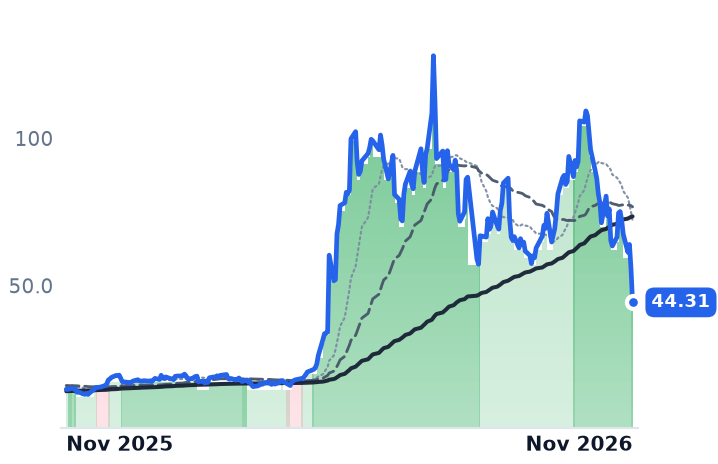
The same transition reprices the chip. MaxLinear's Infrastructure segment reached about $125m last quarter, up 210% and more than half of total revenue, on Keystone, a 5-nanometer 100-gigabit-per-lane signal processor in volume production for 800G builds; its 200-gigabit-per-lane successor is in qualification for 1.6T with first revenue early in 2027. "The ASP on the DSP is more or less doubling, and then we have TIA that we did not add before," chief executive Kishore Seendripu told investors on 22 October, referring to the transimpedance amplifier MaxLinear now attaches at an initial 80% rate. Company revenue of $218.1m grew 72.4% at 58.7% gross margin, with $30.2m of operating income after annual operating losses in 2023, 2024 and 2025. Management puts its optical share at 5–7% today.
Fabrinet's twelve cents are indifferent to speed

Fabrinet, which assembles transceivers, tunable lasers and amplifiers to its customers' designs, is paid for labor and process. Its September quarter revenue of $1.474bn grew 50.7%, the seventh consecutive quarter of accelerating growth, at a gross margin of 11.8% — within a hair of the 12.1% it averaged in fiscal 2025 and 2026. Data-center revenue of $777m, up 78%, is now 53% of the total, and the December guide of $1.60–1.65bn implies about 43% growth. Operating income grew 55%, faster than revenue, because fixed costs are only around 5% of total cost. Its fiscal-2026 annual report lists four customers above 10%: Cisco at 19.9%, NVIDIA 16.3%, Nokia 10.7% and Amazon 10.5%. Capacity goes from roughly $5.8bn of revenue to about $10bn in January 2027 and $16bn with two further buildings; first-quarter capital spending of $159m put free cash flow at minus $137m.

Viavi sells the test; ADTRAN buys the laser

Viavi, which sells network test and assurance instruments, grew revenue 56.9% to $469.3m at 61.2% gross margin against 56.0%, and its network software and convergence segment earned a 25.5% operating margin against 8.2%. "During this quarter, we expect to reach $2 billion revenue run rate, which is ahead of our prior expectations," chief executive Oleg Khaykin said on 4 November. ADTRAN sits on the other side of the invoice: revenue of $281.2m grew 0.6% and came in below consensus, with hyperscaler sales up more than 200% to roughly a tenth of the business. Of the margin pressure, chief executive Tom Stanton said on 3 November: "Generally speaking, I mean, it's 80%-90% supply cost." The inflating inputs are optics, lasers and semiconductors.

Only one margin line was self-inflicted

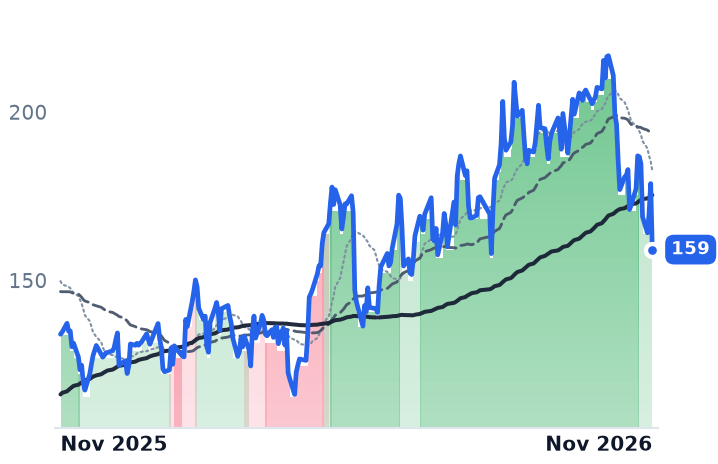
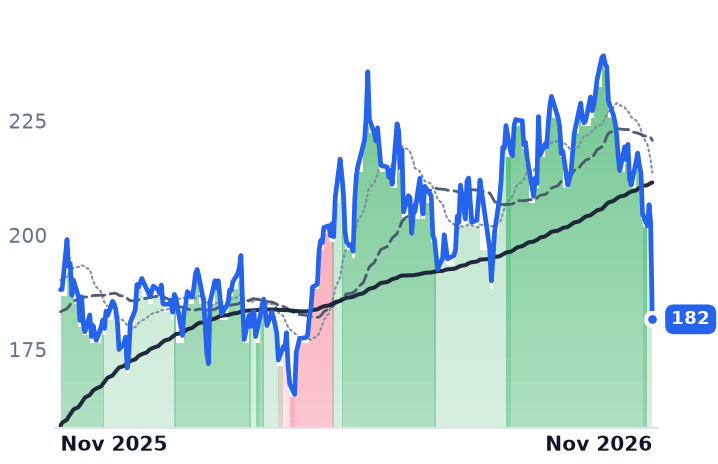
From 6 October to 5 November, Applied Optoelectronics fell 64.0%, MaxLinear 59.5%, Viavi 41.8% and Fabrinet 40.1%, against 24.1% for NVIDIA. Fabrinet has been in a downtrend since early August, a stretch that brackets two record quarters, and now trades near 14.9x fiscal-2027 consensus earnings against 58.5x trailing in May. Applied Optoelectronics' price against trailing gross profit is about 23x, down from 76x in mid-August.

The results account for one line of that: the 400G mix. The rest followed the 3 November midterms, after which analysts recast the buildout as a "war of attrition" and forward module volume became a question about permits rather than budgets, with 46 projects worth more than $170bn already blocked or stalled since January 2024.

Applied Optoelectronics is installing equipment for more than a million 800G and 1.6T units a month by the end of 2027. Whether the halls to plug them into get approved is now a separate question from whether the parts get built.

Reactor Developers Collect Nothing on an Order; GE Vernova Collects a Fifth Up Front

Hypothesis Opus 5 · Research Opus 5 · Writing Opus 5 · Prompt v1.7

Five companies are priced off reactor orders and only one of them sends invoices. GE Vernova's Nuclear Power business billed $719m of a $12.642bn September quarter, under 6% of revenue, and the company discloses no separate nuclear backlog. What the market marked down after the midterm vote was the gas and grid order book, where customer deposits of $5.3bn made up almost all of the quarter's free cash flow, arriving years before equipment ships.

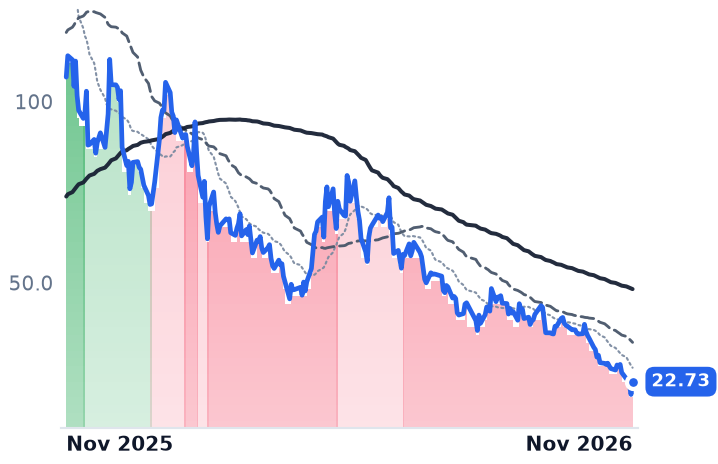
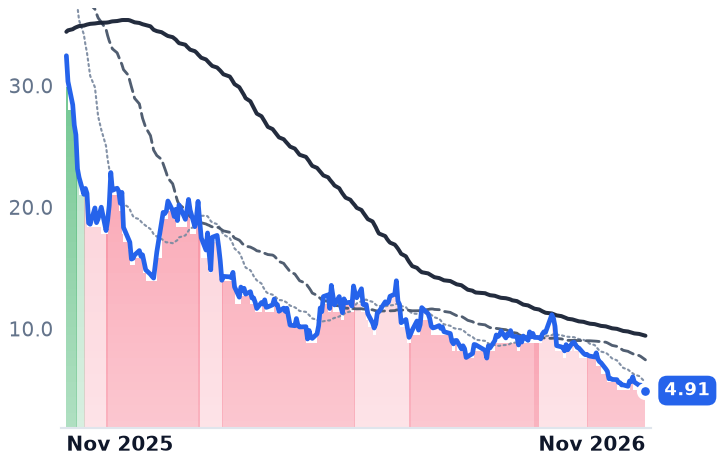
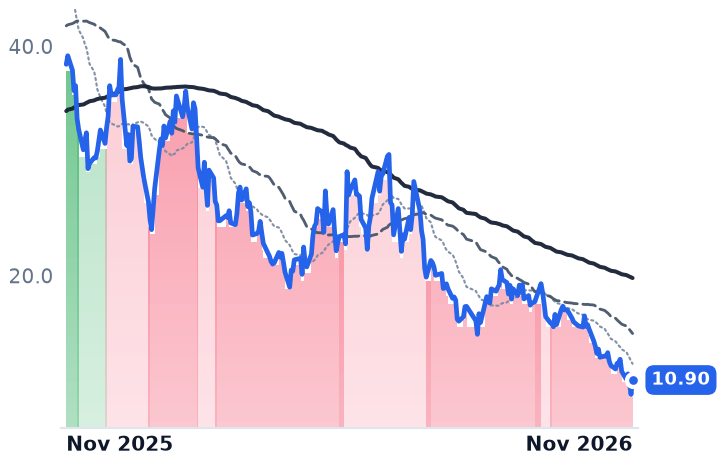
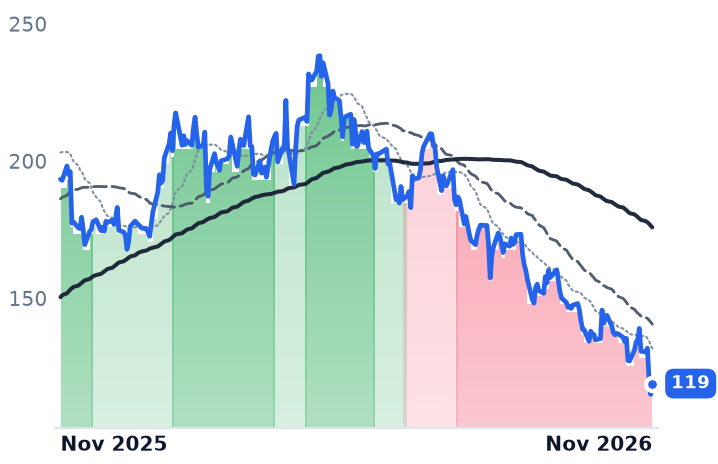
The four developers have no such line. NuScale billed $281,000 in its September quarter and now trades at 1.02 times book; Oklo, X-energy and NANO Nuclear sit at or near the cash they raised, while their construction and licensing schedules held. The gigawatts in a developer's pipeline pay nothing until construction starts, and the premium that priced them has gone.
GEVXEOKLOSMRNNEBWXTLEUCCJPOWLVRTETNCMINRGCEGPWRBEURASPYSmall Modular ReactorsGas Turbine BacklogGrid Interconnection PermittingData-Center Power DemandNuclear Fuel CyclePre-Revenue Project Pipelines
TickerCompanySegmentTrend · 13mo30D1Y
GEVGE VernovaPower Generation & Propulsion⚠️ Emerging Bear−21.4%+42.3%
XEX-EnergyPower & Propulsion Systems🔴 Cont. Bear−31.3%−66.4%
OKLOOkloAdvanced Nuclear🔴 Cont. Bear−37.8%−78.7%
SMRNuScale PowerAdvanced Power Systems🔴 Cont. Bear−34.6%−84.9%
NNENano Nuclear EnergyAdvanced Power Systems🔴 Cont. Bear−30.0%−71.6%
BWXTBWX TechnologiesAerospace Components & Propulsion🔴 Cont. Bear−15.6%−38.5%
LEUCentrus EnergyUranium🔴 Cont. Bear−29.3%−63.0%
CCJCamecoUranium🔴 Cont. Bear−23.5%−23.1%
POWLPowell IndustriesPower Distribution Systems⚠️ Emerging Bear−36.5%+0.2%
VRTVertivAdvanced Power Systems⚠️ Emerging Bear−24.2%+0.4%
ETNEatonPower Distribution Systems🟢 Cont. Bull−24.2%−13.1%
CMICumminsPower Generation & Propulsion⚠️ Emerging Bear−14.5%−2.3%
NRGNRG EnergyRetail-Focused Operators🔴 Cont. Bear−20.6%−52.5%
CEGConstellation EnergyWholesale Generators🔴 Cont. Bear−20.0%−31.6%
PWRQuanta ServicesPower Grid & Distribution⚠️ Emerging Bear−27.9%+15.0%
BEBloom EnergyFuel Cell & Hydrogen🟢 Cont. Bull−42.2%+22.4%
URAGlobal X - Uranium ETFAsset Management🔴 Cont. Bear−20.5%−29.1%
SPYState Street SPDR S&P 500 ETF TrustAsset Management🟢 Cont. Bull−4.9%+10.8%

12-month price & trend

GEV
GE Vernova
781
+10.73 (+1.39%)
vs. prior close
Price20d50d150d
GEV 12-month price
Power Generation & Propulsion
XE
X-Energy
9.81
+0.58 (+6.30%)
vs. prior close
Price20d50d150d
XE 12-month price
Power & Propulsion Systems
OKLO
Oklo
22.73
+3.53 (+18.39%)
vs. prior close
Price20d50d150d
OKLO 12-month price
Advanced Nuclear
TickerMkt capP/EP/E fwdP/SP/S fwdP/GPP/GP fwdEV/EBITDAFCF yld
GEV$206.8B20.3x24.7x4.7x4.4x21.6x20.3x18.6x8.3%
XE$219.8Mn/m—1.5x1.0x——3.2x-186.5%
OKLO$4.4Bn/m—————n/m-10.4%
SMR
NuScale Power
4.91
+0.32 (+6.96%)
vs. prior close
Price20d50d150d
SMR 12-month price
Advanced Power Systems
NNE
Nano Nuclear Energy
10.90
+1.26 (+13.08%)
vs. prior close
Price20d50d150d
NNE 12-month price
Advanced Power Systems
BWXT
BWX Technologies
119
+3.97 (+3.45%)
vs. prior close
Price20d50d150d
BWXT 12-month price
Aerospace Components & Propulsion
TickerMkt capP/EP/E fwdP/SP/S fwdP/GPP/GP fwdEV/EBITDAFCF yld
SMR$1.5Bn/m—549.6x88.6x——n/m-40.4%
NNE$585.0Mn/m——78.6x—270.4xn/m-6.7%
BWXT$12.0B33.7x27.6x3.4x3.1x15.4x14.3x24.2x2.6%
LEU
Centrus Energy
103
+13.71 (+15.40%)
vs. prior close
Price20d50d150d
LEU 12-month price
Uranium
CCJ
Cameco
69.30
+0.97 (+1.42%)
vs. prior close
Price20d50d150d
CCJ 12-month price
Uranium
POWL
Powell Industries
125
−18.13 (−12.66%)
vs. prior close
Price20d50d150d
POWL 12-month price
Power Distribution Systems
TickerMkt capP/EP/E fwdP/SP/S fwdP/GPP/GP fwdEV/EBITDAFCF yld
LEU$2.0B26.9x42.9x4.5x4.2x19.6x18.6x8.9x-14.5%
CCJ$30.1B106.4x52.1x12.2x8.6x51.3x36.1x48.8x0.7%
POWL$5.9B30.7x23.4x5.1x3.9x16.9x13.0x21.1x4.1%
VRT
Vertiv
184
−21.92 (−10.66%)
vs. prior close
Price20d50d150d
VRT 12-month price
Advanced Power Systems
ETN
Eaton
327
−26.23 (−7.43%)
vs. prior close
Price20d50d150d
ETN 12-month price
Power Distribution Systems
CMI
Cummins
449
−24.36 (−5.15%)
vs. prior close
Price20d50d150d
CMI 12-month price
Power Generation & Propulsion
TickerMkt capP/EP/E fwdP/SP/S fwdP/GPP/GP fwdEV/EBITDAFCF yld
VRT$97.1B55.8x37.5x8.5x6.9x22.2x18.2x38.2x3.0%
ETN$149.2B39.0x28.2x5.0x4.5x13.8x12.6x26.3x3.0%
CMI$72.2B26.6x17.7x2.1x1.9x8.2x7.6x15.5x4.7%
NRG
NRG Energy
80.55
−1.63 (−1.98%)
vs. prior close
Price20d50d150d
NRG 12-month price
Retail-Focused Operators
CEG
Constellation Energy
240
−6.07 (−2.47%)
vs. prior close
Price20d50d150d
CEG 12-month price
Wholesale Generators
PWR
Quanta Services
509
−58.37 (−10.29%)
vs. prior close
Price20d50d150d
PWR 12-month price
Power Grid & Distribution
TickerMkt capP/EP/E fwdP/SP/S fwdP/GPP/GP fwdEV/EBITDAFCF yld
NRG$21.2B—11.3x—0.6x——10.5x1.6%
CEG$107.0B29.0x24.7x3.5x3.2x20.0x18.4x15.8x0.3%
PWR$82.2B61.8x32.6x2.5x2.1x17.4x14.4x28.5x2.9%
BE
Bloom Energy
168
−27.57 (−14.13%)
vs. prior close
Price20d50d150d
BE 12-month price
Fuel Cell & Hydrogen
URA
Global X - Uranium ETF
31.88
+0.37 (+1.16%)
vs. prior close
Price20d50d150d
URA 12-month price
Asset Management
SPY
State Street SPDR S&P 500 ETF Trust
739
−14.45 (−1.92%)
vs. prior close
Price20d50d150d
SPY 12-month price
Asset Management
TickerMkt capP/EP/E fwdP/SP/S fwdP/GPP/GP fwdEV/EBITDAFCF yld
BE$60.0B113.9x64.1x15.7x13.5x48.5x41.8x97.9x0.7%
URA$3.2B————————
SPY$773.0B————————

Consensus projections

TickerFY2026EFY2027EFY2028E
GEVRevenue+25.7%+14.1%+15.7%
EPS+334.6%−18.6%+38.8%
XERevenue+81.4%+289.0%+42.5%
EPS−96.6%−38.4%−29.6%
OKLORevenue—+231.0%+435.4%
EPS+62.4%+8.3%+11.3%
SMRRevenue−59.6%+507.1%+271.3%
EPS−77.1%+14.4%−16.3%
NNERevenue+2627.0%+309.5%+1056.5%
EPS−31.4%+54.0%+18.7%
BWXTRevenue+20.7%+8.9%+9.7%
EPS+24.1%+10.5%+13.9%
LEURevenue+6.9%+4.5%−5.5%
EPS−46.4%+46.7%−12.2%
CCJRevenue+2.4%+12.8%+8.8%
EPS−7.5%+88.3%+27.3%
POWLRevenue+8.8%+25.8%+14.4%
EPS+12.1%+27.8%+19.8%
VRTRevenue+37.1%+30.2%+21.3%
EPS+62.9%+36.7%+26.4%
ETNRevenue+20.2%+11.4%+9.9%
EPS+12.8%+19.7%+17.0%
CMIRevenue+13.1%+9.4%+8.5%
EPS+29.6%+17.1%+16.5%
NRGRevenue+17.7%+0.8%+3.7%
EPS+14.0%+24.5%+15.8%
CEGRevenue+37.2%+2.5%+5.3%
EPS+28.9%+10.4%+26.4%
PWRRevenue+41.1%+16.3%+14.1%
EPS+57.7%+17.9%+18.3%
BERevenue+133.1%+61.9%+46.1%
EPS+474.5%+68.3%+61.3%

Forward fiscal years only. Blank means no analyst coverage for that year.

GE Vernova collected $5.3bn of customer deposits in the September quarter, money wired years before a gas turbine ships, and that single line is why it is the only one of the five companies sold as nuclear reactor builders whose markdown can be argued against an income statement. The deposits and slot reservations were $5.3bn of the quarter's $5.4bn of free cash flow. Its Nuclear Power business, meanwhile, billed $719m of a $12.642bn quarter, under 6% of revenue, and the company discloses no separate nuclear backlog.

So the thing repriced in GE Vernova after the 3 November midterm vote was the gas and grid book, where the revenue and the cash sit, on a political read that state ballot measures and gubernatorial shifts could delay permitting and interconnection for data centers. The belief worth testing across the other four is that a contracted gigawatt of reactor capacity pays its developer something before construction begins. It pays nothing. A firm gigawatt of GE Vernova gas equipment carries roughly $850m of booked revenue; a gigawatt in Oklo's, NuScale's or X-energy's pipeline carries a filing and a schedule.

Twenty percent down before the steel is cut

Gas equipment backlog plus slot reservations reached 122 GW from 116 GW in the quarter, as 13 GW of reservations converted to firm orders and 5 GW shipped: firm backlog rose from 53 GW to 64 GW, reservations fell to 58 GW. Set that against $54.4bn of Power equipment backlog and a firm gigawatt works out at about $850m of equipment revenue, a figure derived from the two disclosures. Services follow it. HA is the company's advanced-class turbine line, and "we expect every gigawatt of HAs to generate $0.5 billion of high-margin services revenue over the first 20 years of its lifetime," chief executive Scott Strazik told investors on 28 October. A reservation earns the label slot reservation agreement only once the customer has put down roughly a fifth of the price in cash, which is both the cash-timing mechanism and the screen against speculative bookings.

That is why the cash guide moved hardest: free-cash-flow guidance went to $16–17bn from $11.5–12.5bn, a raise that tracks the down-payment inflow. Orders rose 96% to $29.3bn and backlog reached about $197bn, split $104bn equipment and $93bn services. Revenue growth has accelerated for three consecutive quarters, to 26.8%, with gross margin 554 basis points wider year on year.

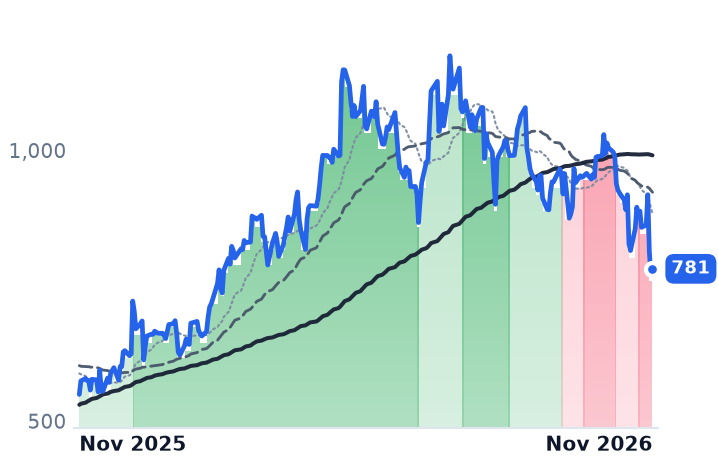
The shares fell through all of it. At $781.24 GE Vernova is 33.5% below its 52-week high, and price-to-sales is 4.69 against 7.47 in May; on the FY2027 consensus estimate of $25.75 a share the multiple is about 30x, against roughly 37x forward in May. The trailing 20.3x is flattered by the gain on Prolec GE and overstates the earnings base. Among the power-equipment makers the markdown was mild: down 21.9% over three months while Powell fell 39.7% and Vertiv 33.3%, and in the week to 3 November GE Vernova lost 11% as Vertiv lost 14%.

What $300m a gigawatt buys without a permit

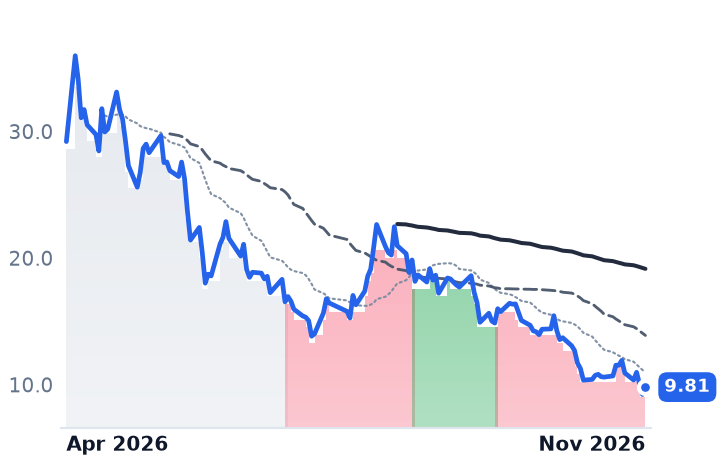
X-energy, which licenses the Xe-100 reactor and makes TRISO fuel, booked $54.6m of revenue in the June quarter at a gross margin of minus 59.9%, because the revenue is Department of Energy cost-share development work. It holds $1,145.4m of cash and describes $1.9bn of liquidity with no debt, and spent $63.3m of capital in the quarter, mostly on the TX-1 fuel plant at Oak Ridge, about 80% complete and on schedule. Its pipeline is 144 reactors, roughly 11.5 GWe, assuming every customer exercises its contingent rights in full, with Amazon and affiliated projects more than 70% of contracted backlog. On 406.4m shares outstanding the market value is near $4.0bn and on the lower count implied by its May record about $2.7bn, so $233m to $347m per pipeline gigawatt, derived. "We are focused on that $2.3 trillion TAM that we can access with the Xe-100 and our TRISO fuel business," chief executive J. Clay Sell said on the second-quarter call.

Oklo, which builds the 15–75 MWe Aurora powerhouse, billed $1.861m of radioisotopes against an operating loss of $82.4m, and ended September with $3.13bn of liquidity after issuing 32.6m shares for $2.25bn; diluted shares are up 25% in a year. Its 14 GW pipeline is a 12 GW master power agreement with Switch to 2044, up to 1.2 GW at a Meta campus still in interconnection and a 500 MW Equinix letter of intent carrying a $25m prepayment — about $302m a gigawatt against $4.23bn of market value, and 1.21 times book.

NuScale billed $281,000 as RoPower engineering work wound down, down 96.6% year on year, and now carries $1.9bn of liquidity against roughly $1.47bn of Class A market value, 1.02 times book, with quarterly operating expenses near $65m. Its 6 GW framework with the Tennessee Valley Authority and commercialisation partner ENTRA1 is a memorandum: about $244m a framework gigawatt, derived, and the power purchase agreement behind it is unsigned. "We are no longer simply designing and planning, we are manufacturing," chief executive John Hopkins said on 5 November, citing the Doosan Enerbility first-article module agreement.

NANO Nuclear has no gigawatts to divide into. It reported $214,042 of revenue in the June quarter, the first in its history, against a $15.83m operating loss, holds about $580m of cash and short-term investments against $585m of market value, and trades at 0.93 times book, the only one of the five below its own balance sheet. It has one construction permit application accepted for review, with first power around 2030.

Two markdowns, two causes

Nothing in GE Vernova's results explains its markdown: every line improved and the cash guide rose. What is at risk is conversion, 58 GW of reservations whose customers can still walk, and that risk is political rather than operational. For the four developers the results cannot explain anything, because there is almost nothing to bill; what was erased is the premium over cash, while the schedules held and the Nuclear Regulatory Commission issued the first US construction permit for the BWRX-300 at Clinch River on 28 September. Three designs now clear between $244m and $347m a gigawatt of uncommitted capacity, and on 6 November Oklo rose 19% on a narrower loss, NuScale 15% and NANO Nuclear 9% as the policy fear passed, which is roughly what a balance sheet does for a share price when the story stops working.

X-energy reports its September quarter on 12 November. It will be the first look at what a quarter of fuel-plant construction costs now that the equity is worth little more than the money paying for it, and the first developer disclosure since the autumn took the option premium away.

Centrus Sold a Quarter Less Enrichment and Kept Almost All the Profit

Hypothesis Opus 5 · Research Opus 5 · Writing Opus 5 · Prompt v1.7

Six nuclear and uranium equities were marked down together this autumn as though the fuel cycle's prices had broken. They had not. Uranium's long-term contract indicator set a nominal record of US$99.00 a pound on 31 October, and spot enrichment has roughly tripled.

What broke was different in each business. Cameco's produced-uranium cash cost jumped 62% to C$40.73 a pound on an extended Key Lake mill outage, pulling gross margin from 37% to 16% and lifting its unit-cost-of-sales guidance. Centrus's enrichment segment still earned $72.6m of gross profit on 26% lower volume, essentially matching last year, while its shares fell by more than half in six months. Oklo, NuScale and Lightbridge were repriced for burn and dilution; none of the three has binding contracted revenue.

LEUCCJOKLOSMRLTBRURAUranium Enrichment CapacityNuclear Fuel CycleUranium Term ContractingMine & Mill Cost InflationSMR DevelopersDomestic HALEU Supply
TickerCompanySegmentTrend · 13mo30D1Y
LEUCentrus EnergyUranium🔴 Cont. Bear−29.3%−63.0%
CCJCamecoUranium🔴 Cont. Bear−23.5%−23.1%
OKLOOkloAdvanced Nuclear🔴 Cont. Bear−37.8%−78.7%
SMRNuScale PowerAdvanced Power Systems🔴 Cont. Bear−34.6%−84.9%
LTBRLightbridgeElectrical Equipment & Parts🔴 Cont. Bear−36.2%−77.0%
URAGlobal X - Uranium ETFAsset Management🔴 Cont. Bear−20.5%−29.1%

12-month price & trend

LEU
Centrus Energy
103
+13.71 (+15.40%)
vs. prior close
Price20d50d150d
LEU 12-month price
Uranium
CCJ
Cameco
69.30
+0.97 (+1.42%)
vs. prior close
Price20d50d150d
CCJ 12-month price
Uranium
OKLO
Oklo
22.73
+3.53 (+18.39%)
vs. prior close
Price20d50d150d
OKLO 12-month price
Advanced Nuclear
TickerMkt capP/EP/E fwdP/SP/S fwdP/GPP/GP fwdEV/EBITDAFCF yld
LEU$2.0B26.9x42.9x4.5x4.2x19.6x18.6x8.9x-14.5%
CCJ$30.1B106.4x52.1x12.2x8.6x51.3x36.1x48.8x0.7%
OKLO$4.2Bn/m—————n/m-10.7%
SMR
NuScale Power
4.91
+0.32 (+6.96%)
vs. prior close
Price20d50d150d
SMR 12-month price
Advanced Power Systems
LTBR
Lightbridge
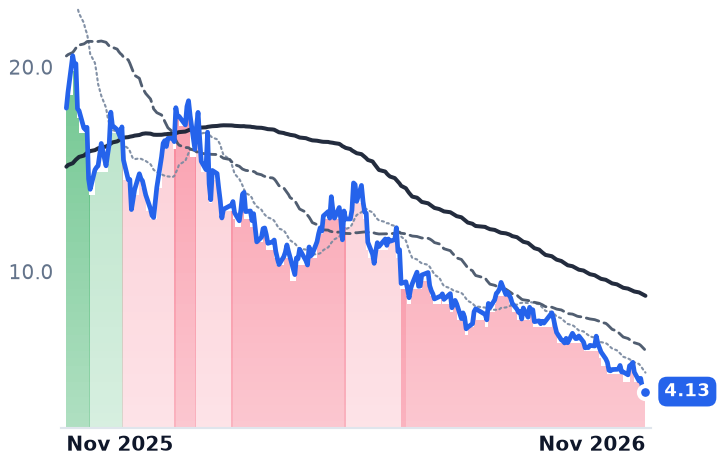
4.13
+0.14 (+3.53%)
vs. prior close
Price20d50d150d
LTBR 12-month price
Electrical Equipment & Parts
URA
Global X - Uranium ETF
31.88
+0.37 (+1.16%)
vs. prior close
Price20d50d150d
URA 12-month price
Asset Management
TickerMkt capP/EP/E fwdP/SP/S fwdP/GPP/GP fwdEV/EBITDAFCF yld
SMR$1.5Bn/m—534.8x86.3x——n/m-41.5%
LTBR$154.9Mn/m—n/m———2.8x-12.5%
URA$3.2B————————

Consensus projections

TickerFY2026EFY2027EFY2028E
LEURevenue+6.9%+4.5%−5.5%
EPS−46.4%+46.7%−12.2%
CCJRevenue+2.4%+12.8%+8.8%
EPS−7.5%+88.3%+27.3%
OKLORevenue—+231.0%+435.4%
EPS+62.4%+8.3%+11.3%
SMRRevenue−59.6%+507.1%+271.3%
EPS−77.1%+14.4%−16.3%

Forward fiscal years only. Blank means no analyst coverage for that year.

Centrus Energy, which sells enrichment services to nuclear utilities and builds centrifuges under US government contracts, sold a quarter less enrichment in the first nine months of this year than a year earlier at a 30% higher unit cost, and earned almost exactly the same profit doing it. Gross profit in its low-enriched uranium segment came to $72.6m against $74.1m a year earlier, a fall of $1.5m, on separative work unit volumes down 26%. The shares are down 55.6% since early May.

That gap is the whole question hanging over six nuclear-linked equities that all rolled into a six-month downtrend together. They were sold as if the prices underneath the fuel cycle had cracked. Those prices instead set records: uranium's long-term contract indicator reached US$99.00 a pound on 31 October, with spot near US$90–92, and spot enrichment has roughly tripled to about US$200 per separative work unit. Roughly 85% of uranium moves under long-term bilateral contracts of three to ten years, which is why the term indicator, not spot, is the number that reaches a producer's income statement. Three different things went wrong instead, and only one of them is a cost of production.

Centrus kept the margin and lost the earnings line

Centrus's consolidated quarter looked far worse than its enrichment unit: revenue fell 25.9% to $55.5m and the operating loss was $29.7m. The reported $31.6m of net income is a warrant mark; the company's own normalized figure is a $10.2m loss, or −$0.49 a share, against $3.9m of normalized income a year earlier. Commercial enrichment backlog grew from $3bn to $5.4bn during the quarter, though the $7.0bn total contains only about $0.8bn of firm uranium and enrichment deliveries, with $5.4bn contingent on the Piketon plant actually being built.

The physical news was ahead of schedule. Centrus completed its first new centrifuge in October, before its year-end target, and began shipping from Oak Ridge, Tennessee. "We now proved that US centrifuge manufacturing is a reality. It is a historic milestone for Centrus and The United States," chief executive Amir Vexler told investors on 5 November.

The de-rating still has an earnings logic. Centrus trades at 42.9x forward earnings against 26.9x trailing — a forward number above the trailing one prices profit falling, with consensus at $2.40 of 2026 earnings per share against $3.90 delivered in 2025. Set against $2.2bn of unrestricted cash and 8.86x trailing EV/EBITDA, the asset side reads differently from the earnings side.

Cameco's damage came out of a mill, not a price

Cameco raised its realized price. Its average realized uranium price rose 8% to C$91.76 a pound (Cameco reports in Canadian dollars) and full-year realized-price guidance went to C$91–96 from C$85–89. Produced-uranium cash cost rose 62% to C$40.73 a pound on a longer Key Lake maintenance outage and input inflation. Gross margin went from 37.3% to 16.1%, operating income fell 73% to $25.1m, and the compression is sequential: 35.7%, then 21.1%, then 16.1% across 2026's three quarters. Production guidance narrowed to 19.5–20.5m lbs and unit cost of sales guidance rose to C$67–70 from C$63–67.50.

"Capital can easily rotate out of a theme in a day or in a week. It takes much longer to replace a depleted uranium reserve, to build, license, and commission a fuel cycle facility," chief executive Tim Gitzel said on 30 October. Its 49% of Westinghouse contributed C$143m of adjusted EBITDA against C$124m, and Westinghouse has a confidential draft registration with the SEC targeting a valuation above $50bn. After a 48% fall from its 2026 high, the stock is still 52.1x forward earnings and 48.8x trailing EV/EBITDA.

Three developers, more than $5bn of cash, nothing signed

Oklo, which intends to own and operate 15-to-75 megawatt Aurora plants and sell the power, used $111m of operating cash in nine months against $49m a year earlier, funded by 32.6m shares sold for $2.25bn net. Shares outstanding reached roughly 192.3m against about 122.1m at its merger close. Its announced pipeline is 2,100 megawatts of letters of intent, memoranda and partnership agreements, none binding; at 1.17x book, about three-quarters of the market capitalisation is the cash balance.

NuScale, which licenses 77-megawatt reactor module designs, booked $281,000 of quarterly revenue, down 96.6%, while diluted shares rose 178% to 410.5m and the Tennessee Valley Authority power purchase agreement remains unsigned. At 86.3x forward sales it carries a revenue recovery that depends on contracts not yet in hand. Lightbridge, 13 employees developing twisted metallic fuel rods, has never reported revenue; operating expense rose 77% to $25.6m and $236.7m of cash sits against a $154.9m market value, or 0.62x book. "The authorization to construct and operate the pilot factory remains subject to additional DOE and INL agreements, reviews, authorizations and other prerequisites," chief operating officer Andrey Mushakov said on 2 November.

What the quarters account for

For Cameco and the developers, the numbers do most of the explaining: a real unit-cost shock with guidance moving the wrong way at one, and burn plus share count rising against non-binding pipelines at the other three. For Centrus the explanation splits — its enrichment economics held, and what the market marked down was consolidated earnings direction and the capital still needed at Piketon. The common final leg was not fuel at all. Over thirty sessions the six fell inside a 17-point band, against a 62-point spread over twelve months, and the last days coincided with a post-midterm sell-off that wiped roughly $2.5trn off AI-linked equities. Index concentration helped it travel: Cameco is 22.1% of the Global X Uranium ETF and its top ten holdings are 61.7% of assets. On 6 November all six bounced, Oklo 18.4% and Centrus 15.4%, on losses smaller than feared rather than revenue.

Centrus's September equity raise priced at $199.64 a share with four series of warrants attached, the lowest struck at $226.86. The shares have not been near that since. The money to finish the centrifuge plant is priced; whether it is available is a different question.

FormFactor, MKS and Cohu All Raised Forecasts in the Month Their Shares Fell a Third

Hypothesis Opus 5 · Research Opus 5 · Writing Opus 5 · Prompt v1.7

Three suppliers to the back end of chipmaking reported between 28 October and 5 November 2026, and each one beat its own guidance and raised the next number. Each is also worth about a third less than on 7 October, and roughly half its 2026 high.

FormFactor's September-quarter revenue grew 38.4% with gross margin at 54.7% against 39.7% a year earlier; MKS grew 43% with its semiconductor segment up 54%; Cohu's bookings rose 126% and customer test-cell utilization reached 82%. Nothing in those disclosures accounts for the markdown, which tracked the whole semi-cap complex.

The three do not sit on the same footing. MKS is the cheapest at 14.2x forward earnings against 21.0x trailing. Cohu, at 34.7x forward, is dearer than before the fall, because its earnings base is barely off zero.

FORMMKSICOHUACLSVECOAEISONTOTERAMATLRCXNVDAAdvanced Packaging TestProbe Cards & ContactorsSub-Fab SubsystemsHigh-Bandwidth MemoryAI Capex Cycle
TickerCompanySegmentTrend · 13mo30D1Y
The subject · what this brief is about
FORMFormFactorTest & Assembly Services⚠️ Emerging Bear−43.3%+45.3%
MKSIMKSTest & Measurement⚠️ Emerging Bear−31.1%+20.9%
COHUCohuTest & Assembly Services🟢 Cont. Bull−48.6%+59.1%
ACLSAxcelis TechnologiesFabrication Equipment & Materials⚠️ Emerging Bear−28.4%+19.8%
VECOVeeco InstrumentsFabrication Equipment & Materials⚠️ Emerging Bear−32.1%+24.2%
Compared against · context, not the story
AEISAdvanced Energy IndustriesPower Conversion & Control🔴 Cont. Bear−35.8%−15.2%
ONTOOnto InnovationFabrication Equipment & Materials⚠️ Emerging Bear−44.4%+26.5%
TERTeradyneTest & Assembly Services🟢 Cont. Bull−48.5%+15.1%
AMATApplied MaterialsFabrication Equipment & Materials⚠️ Emerging Bear−33.6%+47.8%
LRCXLam ResearchFabrication Equipment & Materials⚠️ Emerging Bear−37.5%+25.3%
NVDANVIDIAProcessors & Accelerators🟢 Cont. Bull−23.5%−3.4%

12-month price & trend

FORM
FormFactor
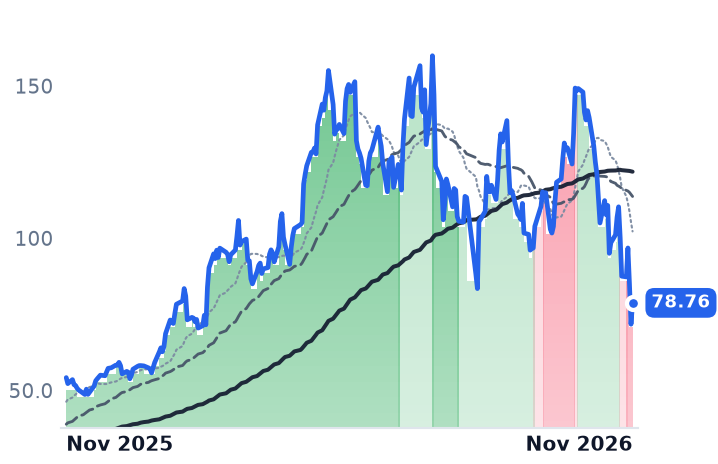
78.76
+7.00 (+9.76%)
vs. prior close
Price20d50d150d
FORM 12-month price
Test & Assembly Services
MKSI
MKS
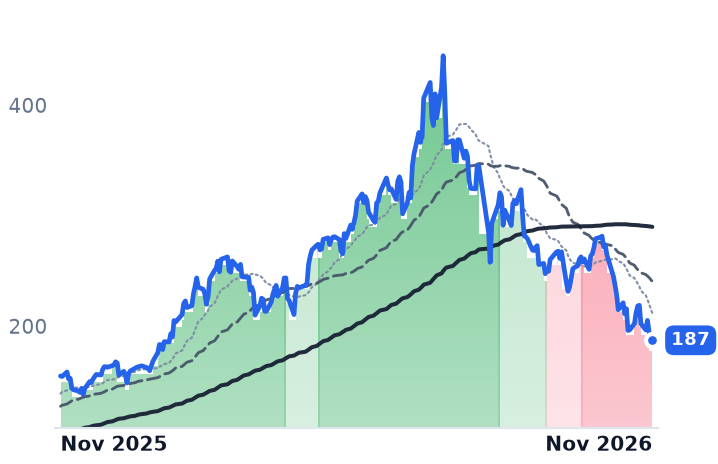
187
+3.87 (+2.11%)
vs. prior close
Price20d50d150d
MKSI 12-month price
Test & Measurement
COHU
Cohu
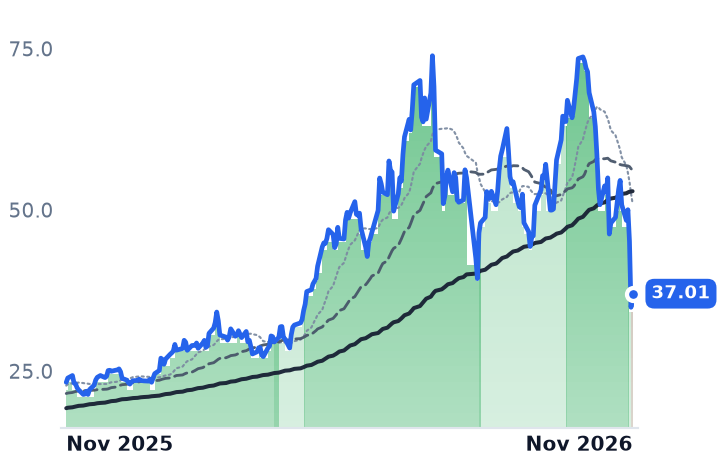
37.01
+2.11 (+6.05%)
vs. prior close
Price20d50d150d
COHU 12-month price
Test & Assembly Services
TickerMkt capP/EP/E fwdP/SP/S fwdP/GPP/GP fwdEV/EBITDAFCF yld
FORM$6.1B35.3x23.2x6.2x5.8x12.6x11.8x26.4x3.0%
MKSI$12.7B21.0x14.2x2.7x2.5x5.9x5.6x13.2x4.4%
COHU$1.7Bn/m34.7x3.1x2.8x7.3x6.7x43.2x3.2%
ACLS
Axcelis Technologies
98.38
+7.63 (+8.41%)
vs. prior close
Price20d50d150d
ACLS 12-month price
Fabrication Equipment & Materials
VECO
Veeco Instruments
36.20
+2.28 (+6.71%)
vs. prior close
Price20d50d150d
VECO 12-month price
Fabrication Equipment & Materials
AEIS
Advanced Energy Industries
186
−27.51 (−12.91%)
vs. prior close
Price20d50d150d
AEIS 12-month price
Power Conversion & Control
TickerMkt capP/EP/E fwdP/SP/S fwdP/GPP/GP fwdEV/EBITDAFCF yld
ACLS$3.0B29.1x24.0x3.4x3.4x8.0x8.0x21.3x2.2%
VECO$2.2B85.7x24.2x3.0x2.8x8.1x7.4x43.3x5.7%
AEIS$11.4B49.5x25.4x5.6x4.7x14.1x11.9x37.7x0.8%
ONTO
Onto Innovation
167
−18.11 (−9.80%)
vs. prior close
Price20d50d150d
ONTO 12-month price
Fabrication Equipment & Materials
TER
Teradyne
213
−38.25 (−15.24%)
vs. prior close
Price20d50d150d
TER 12-month price
Test & Assembly Services
AMAT
Applied Materials
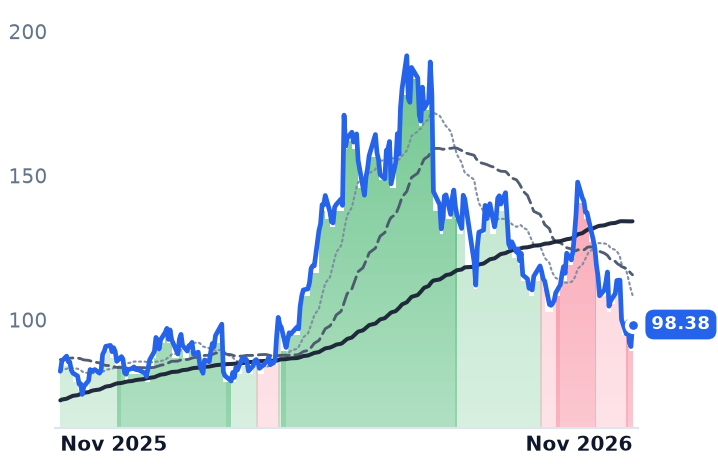
344
−25.38 (−6.87%)
vs. prior close
Price20d50d150d
AMAT 12-month price
Fabrication Equipment & Materials
TickerMkt capP/EP/E fwdP/SP/S fwdP/GPP/GP fwdEV/EBITDAFCF yld
ONTO$10.1B76.5x25.3x9.0x7.0x17.8x13.9x41.4x2.5%
TER$39.2B28.6x26.4x7.8x7.5x13.2x12.6x21.7x2.6%
AMAT$317.3B—21.3x—6.8x——27.6x1.8%
LRCX
Lam Research
203
−18.71 (−8.45%)
vs. prior close
Price20d50d150d
LRCX 12-month price
Fabrication Equipment & Materials
NVDA
NVIDIA
182
−20.93 (−10.33%)
vs. prior close
Price20d50d150d
NVDA 12-month price
Processors & Accelerators
TickerMkt capP/EP/E fwdP/SP/S fwdP/GPP/GP fwdEV/EBITDAFCF yld
LRCX$303.0B35.9x25.0x11.6x8.6x22.7x16.8x29.4x2.2%
NVDA$5.5T34.3x25.0x21.5x13.9x29.0x18.7x28.3x2.2%

Consensus projections

TickerFY2026EFY2027EFY2028E
FORMRevenue+34.6%+24.3%+26.7%
EPS+199.2%+29.0%+38.5%
MKSIRevenue+29.7%+20.5%+10.3%
EPS+67.2%+33.9%+14.9%
COHURevenue+38.1%+34.2%+17.4%
EPS+147643.1%+122.8%+35.8%
ACLSRevenue+8.3%+11.9%+26.0%
EPS−8.7%+28.3%+56.2%
VECORevenue+20.5%+38.3%—
EPS+13.0%+111.2%—
AEISRevenue+36.0%+24.1%+17.2%
EPS+79.8%+35.1%+22.0%
ONTORevenue+2.2%+43.1%+30.8%
EPS−5.1%+63.3%+44.9%
TERRevenue+69.7%+24.6%+22.3%
EPS+167.0%+30.0%+30.9%
AMATRevenue+21.5%+36.5%+21.8%
EPS+36.8%+46.4%+31.0%
LRCXRevenue+27.0%+52.6%+20.4%
EPS+41.9%+70.2%+26.2%
NVDARevenue+65.1%+84.2%+43.2%
EPS+59.0%+91.7%+42.0%

Forward fiscal years only. Blank means no analyst coverage for that year.

FormFactor told investors on 28 October that it will close 2026 above $1bn of revenue for the first time in the company's history. The probe cards it sells, the consumable contact arrays that test integrated circuits while they are still on the wafer, carried a 54.7% gross margin in the September quarter against 39.7% a year earlier. The shares ended 6 November at $78.77, roughly half their 2026 high.

Two other suppliers to the same step reported the same shape of quarter inside nine days. The layer's markdown has been read as the artificial-intelligence buildout cracking exactly where the industry had agreed it was tightest, in advanced packaging and the test that follows it. What the three actually disclosed locates the strain in the out-year capital budgets their customers' customers publish, not in their own order books.

What FormFactor's record memory quarter was made of

Revenue reached $280.5m, up 38.4%, the third straight quarter above 30% growth against full-year 2025 growth of 2.8%. The non-GAAP gross margin of 56.5% flattered that: about $10.5m came from one-time tariff refunds, and management put the durable baseline near 53%, with roughly $2m of refunds left after the fourth quarter.

The honest soft spot is the mix. FormFactor's third-quarter 10-Q attributes the quarter's memory increase to non-high-bandwidth-memory designs, specifically DDR5, with high-bandwidth-memory probe-card revenue declining sequentially on customer product-mix changes. The bottleneck framing is a 2027 claim. "We shipped probe cards to the world's leading foundry for 1 single GPU design in multimillion-dollar volumes," chief executive Mike Slessor said on 28 October, with chief financial officer Aric McKinnis sizing the new Farmers Branch plant at about $400m of annual probe-card capability exiting 2027.

The stock trades at 23.2x forward earnings against 35.3x trailing, and at 11.8x forward gross profit against 19.0x in late August and 25.2x in mid-May. On 12 October Teradyne agreed to buy 2,234,887 shares for $300m, an implied $134.24.

MKS ran out of its own capacity, not customers

MKS, which supplies vacuum, gas-delivery, power and laser subsystems plus the plating chemistry used in advanced packaging, grew revenue 43% to $1.413bn, its semiconductor segment 54% to $638m. "Current capacity is sold out through 2027, and to meet accelerated chemistry equipment demand, we are expanding capacity in Guangzhou, China," chief executive John T.C. Lee said on 5 November, targeting completion in the third quarter of 2027.

The leverage worry inherited from the Atotech deal has gone the other way: interest expense fell to $38m from $53m a year earlier against record quarterly adjusted earnings before interest, taxes, depreciation and amortization of $434m, with net leverage down to 2.4x and a new $500m repurchase authorization. At 14.2x forward earnings against 21.0x trailing, and 13.2x trailing enterprise value to EBITDA, it is the cheapest of the three on every one of those anchors, and cheaper than the roughly 29.6x forward it fetched in early May.

Cohu's handlers are booked; its earnings base is not

Cohu's test handlers and contactors produced $173m, up 37%, with gross margin at 45.5% from 35.7% and GAAP operating income back to $12.8m from a $9.3m loss. Bookings rose 126%, customer test-cell utilization hit 82%, and the fourth quarter is guided to $178m plus or minus $7m. "For 2027, we expect revenue growth of approximately 30% to 40%," chief executive Luis Müller said on 28 October, crediting rising power and test intensity rather than processor unit volume.

Cohu is also the weakest-anchored. Its forward earnings multiple of 34.7x is higher than the roughly 25x it carried in May, because 2026 earnings start from near zero; the case rests on 7.33x trailing gross profit against 12.5x in August.

The selling came from outside the order books

None of the decline is in the results. Between 7 October and 5 November, Teradyne fell 48.5% and Lam Research 37.5% against Nvidia's 23.5%; Onto Innovation lost 44% without having reported at all. Two dated events bracket it: Microsoft and Alphabet declined on 29 October to raise capital-expenditure forecasts, and a semiconductor gauge fell 12% on 5 November, its worst session since March 2020, on the data-center regulation fear the front page has been tracking since the midterms. Revenue booked for 2027 and 2028 reprices on an out-year budget twice as hard as revenue being shipped today, which is the whole mechanism.

What remains genuinely open is timing rather than direction. Cohu's billion-dollar computing funnel is mostly in qualification, on cycles management puts at nine to twelve months; FormFactor's high-bandwidth-memory line went down last quarter, not up; MKS's doubled chemistry capacity does not exist until late 2027. Against that, Citi has raised its 2027 capex estimates for Alphabet, Meta and Amazon to roughly $801bn combined.

Teradyne, which competes with Cohu in handlers and knows what a test order book looks like, paid an implied $134.24 for its FormFactor stake in October. The market has since offered the same shares at $78.77. One of those two prices was reading the 2027 book.

Containerboard Mills Idled Machines, and Their Recycled Fiber Fell $88 a Ton

Hypothesis Opus 5 · Research Opus 5 · Writing Opus 5 · Prompt v1.7

The cheapest relief in a containerboard mill's cost stack arrived this autumn for the worst possible reason: nobody was buying the fiber. Every major US paper and board mill was taking market-related downtime with inventories full, recovered fiber fell for a third straight month, and recognized board prices then sat flat through October.

Only Packaging Corp turned that into margin, with operating margin reaching 16.2% in the third quarter from 11.5% in the first — and every ton of its volume growth came from the Greif mills it bought. Smurfit Westrock's North American price rose about 5% sequentially while operating income fell 19.6% year on year and full-year guidance was cut to about $4.7bn. Graphic Packaging, which owns paperboard mills but makes no containerboard, moved most on self-help.

PKGSWGPKIPContainerboard PricingRecovered Fiber CostsMill Capacity RationalizationCorrugated Box DemandPackaging ConsolidationMill Energy Costs
TickerCompanySegmentTrend · 13mo30D1Y
The subject · what this brief is about
PKGPackaging Corporation of AmericaFiber-Based Packaging🟢 Cont. Bull+9.7%+27.1%
SWSmurfit WestrockFiber-Based Packaging🌱 Emerging Bull+6.8%+25.7%
GPKGraphic PackagingFiber-Based Packaging🔴 Cont. Bear+35.2%−28.6%
Compared against · context, not the story
IPInternational PaperContainerboard & Packaging🔴 Cont. Bear+8.7%−4.2%

12-month price & trend

PKG
Packaging Corporation of America
249
−12.01 (−4.60%)
vs. prior close
Price20d50d150d
PKG 12-month price
Fiber-Based Packaging
SW
Smurfit Westrock
44.51
−0.68 (−1.50%)
vs. prior close
Price20d50d150d
SW 12-month price
Fiber-Based Packaging
GPK
Graphic Packaging
11.54
−0.38 (−3.19%)
vs. prior close
Price20d50d150d
GPK 12-month price
Fiber-Based Packaging
TickerMkt capP/EP/E fwdP/SP/S fwdP/GPP/GP fwdEV/EBITDAFCF yld
PKG$22.2B30.5x23.4x2.3x2.2x11.0x10.7x13.4x3.1%
SW$23.3B49.5x22.7x0.8x0.7x4.4x4.1x8.7x3.6%
GPK$3.4B46.2x17.5x0.4x0.4x2.8x2.8x9.0x12.1%
IP
International Paper
34.24
−1.80 (−4.99%)
vs. prior close
Price20d50d150d
IP 12-month price
Containerboard & Packaging
TickerMkt capP/EP/E fwdP/SP/S fwdP/GPP/GP fwdEV/EBITDAFCF yld
IP$16.8Bn/m25.0x0.7x0.7x2.5x2.5xn/m2.9%

Consensus projections

TickerFY2026EFY2027EFY2028E
PKGRevenue+11.0%+9.2%+3.0%
EPS+6.9%+36.2%+6.5%
SWRevenue+3.1%+7.2%+2.8%
EPS−18.3%+66.3%+15.9%
GPKRevenue+0.9%+1.9%+1.6%
EPS−64.5%+47.4%+18.6%
IPRevenue+0.2%+6.5%+1.7%
EPS+426.8%+143.8%+12.1%

Forward fiscal years only. Blank means no analyst coverage for that year.

Mills collected a price increase and paid less for fiber in the same quarter, and the two facts have one cause.

Fastmarkets RISI recognized a $70-a-ton rise in North American linerboard and $100 a ton in medium in September, then nothing further in October, leaving board prices flat for the month. Over the same stretch the recycled mill's main furnish went the other way. US prices for old corrugated containers were cut by up to $45 a ton in October, a cumulative $88 fall in three months, which Fastmarkets attributed to high mill inventories and market-related downtime at every major US paper and board mill, with mills unable to take outside-contract tons at any price and mixed paper being landfilled.

September's recognition was read as proof that supply discipline had restored pricing power, after roughly 3.9m tons of capacity, about a tenth of the US total, was permanently retired from February 2025 onward. The quarters reported between 22 October and 3 November say the spread genuinely widened. They also say the fiber relief is the bill for the machines that stopped running, and that one producer kept it.

The low-cost mills banked the increase

Packaging Corporation of America, which runs containerboard mills and the box plants that convert their output, earned $262m, or $3.04 a share excluding special items, on net sales of $2.6bn against $2.3bn a year earlier. Operating margin ran 11.5%, 13.4% and 16.2% through 2026's three quarters; Packaging-segment earnings before interest, taxes, depreciation and amortization (EBITDA) were $578m on $2.4bn of sales, a 23.9% margin against 23.1%.

"We have realized substantially all of the first net $50 increase and about half of the second $50 increase," Thomas A. Hassfurther, PCA's president, told investors on 22 October. Realization of the $70 increase, he said, "will be split between Q4 and Q1 and skewed more towards Q1 in terms of timing" — a third of the year's announced price is still unbanked.

Volume is where the premium is argued. Total corrugated shipments rose 10.6% per day, but legacy PCA shipments fell 0.5% per workday against an industry decline of 1.6% per workday. The growth is bought: the $1.8bn Greif containerboard business, two mills and roughly 800,000 tons, closed in September 2025, and synergies now run at "between $40 million and $50 million," chief financial officer Kent A. Pflederer said the same day, against an original $30m target. Costs still bit: freight cost $0.26 a share and fiber $0.12, with diesel about $6.32 a gallon on 25 October. Fourth-quarter guidance is $2.81 a share, $0.23 below the third, with three mills down for maintenance. The shares carry 30.5x trailing and 23.4x forward earnings, against 21.8x forward in early October.

Smurfit Westrock's price rose and its guidance fell

Smurfit Westrock, the Dublin-headquartered maker of containerboard, corrugated boxes and consumer packaging with 97,000 employees, reported $8,161m of net sales and $1,205m of adjusted EBITDA at a 14.8% margin, and cut full-year guidance to about $4.7bn. North American price rose about 5% sequentially and operating margin recovered to 5.97% from 3.85%, yet operating income fell 19.6% year on year.

The cause is energy. "Energy costs alone expected to represent approximately $700 million year on year headwind in 2026," chief executive Anthony Smurfit said on 28 October, with Dutch TTF gas up about 214% on the year. On the price itself he was blunter: "The first $100 [per ton] is really just basically recovering the cost." The company has permanently removed over 500,000 tons at St. Paul and Forney and a 127,000-ton machine at La Tuque. It trades at 8.7x trailing EV/EBITDA and 1.31x book, or 13.7x 2027 consensus earnings of $3.26 a share.

The name that moved the shelf makes no containerboard

Graphic Packaging converts its own coated recycled and bleached paperboard into folding cartons, cups and food containers for consumer-goods firms and quick-service restaurants. It rose 34% over the 30 days to 5 November, 21.2% of it on 3 November, supplying most of the three-name average gain — after falling 32.1% over the year.

Its quarter was not a board-price quarter. Volumes rose 1% while industry box shipments fell, adjusted EBITDA margin reached 13.2%, up 1.9 percentage points sequentially for a second quarter, and about $90m of full-year structural cost reductions offset $83m of Q3 inflation in chemicals, resins, secondary fiber and logistics. "Margin recovery is especially encouraging to see, given the heightened inflationary environment experienced in 2026," chief executive Robbert Rietbroek said on 3 November. At 8.97x trailing EV/EBITDA it sits near Smurfit Westrock's 8.7x and well below Packaging Corp's 13.4x, on a 12.1% trailing free-cash-flow yield; 4.7x expected year-end leverage on $5.2bn of net debt is the reason it is priced where it is.

What the three quarters account for

The month's gains have three different engines. PKG's inflection is real and its margin moved in the quarter the price did, so the business explains the move, with the caveat that the volume came from an acquisition and the remaining price lands mostly in 2027. Smurfit Westrock's sequential recovery is genuine while its year is not, and the gap is European gas at roughly ten times the US price, which its own chief executive describes as making some mills unaffordable to run. Graphic Packaging re-rated off cost cuts and pricing in paperboard grades, sharing the recovered-fiber basket but none of the containerboard spread.

The shares moved together on 5 November, PKG down 4.6% and the others less, without discoverable company news; the likelier reading is a sector or positioning move. International Paper sat out the year entirely, down 5.7%, having taken a $1.38bn goodwill impairment against its European packaging business.

The awkward part is what cheap fiber means. It is cheap because mills stopped buying it, and the moment box demand returns the furnish bill returns with it, while the announced increases are still arriving in instalments. The spread that looks widest today is the one being paid for by tons nobody is making.

Only Wolfspeed Among Five Power-Chip Makers Has Numbers That Explain Its Markdown

Hypothesis Opus 5 · Research Opus 5 · Writing Opus 5 · Prompt v1.7

The shelf of chipmakers sold as the supply chain for Nvidia's 800-volt rack reported inside six days and then fell together — and the revenue the three biggest just billed has almost nothing to do with 800 volts. Monolithic Power's first $1bn quarter came from power-management parts already in production; its 800-volt gallium-nitride devices are only sampling, with revenue its own management dates to late 2027.

Four of the five beat. Monolithic Power grew 63.1% with Enterprise Data revenue up 164.6% to $506.7m, onsemi expanded gross margin for a fifth straight quarter to 41.2% with fab utilization at 83%, Navitas grew for the first time since 2024, Vishay printed a record book. Only Wolfspeed's shipped numbers deteriorated, on a negative gross margin.

So the markdown tracked how far each name had run rather than its 800-volt content: Vishay, which has no power stage at all, fell harder than onsemi or Monolithic Power.

MPWRONNVTSVSHWOLFAI Data-Center Power800VDC Rack ArchitecturePower Management ICsWide-Bandgap SiC & GaNFab Utilization & MarginsAutomotive Chip Inventory
TickerCompanySegmentTrend · 13mo30D1Y
MPWRMonolithic Power SystemsAnalog & Power Management⚠️ Emerging Bear−21.1%+18.5%
ONON SemiconductorAnalog & Power Management⚠️ Emerging Bear−25.2%+29.1%
NVTSNavitas SemiconductorAnalog & Power Management🔴 Cont. Bear−31.7%−11.0%
VSHVishay IntertechnologyAnalog & Power Management⚠️ Emerging Bear−39.7%+53.0%
WOLFWolfspeedAnalog & Power Management🔴 Cont. Bear−34.6%+9.2%

12-month price & trend

MPWR
Monolithic Power Systems
1,131
−130 (−10.28%)
vs. prior close
Price20d50d150d
MPWR 12-month price
Analog & Power Management
ON
ON Semiconductor
63.01
−6.91 (−9.88%)
vs. prior close
Price20d50d150d
ON 12-month price
Analog & Power Management
NVTS
Navitas Semiconductor
7.86
−1.47 (−15.76%)
vs. prior close
Price20d50d150d
NVTS 12-month price
Analog & Power Management
TickerMkt capP/EP/E fwdP/SP/S fwdP/GPP/GP fwdEV/EBITDAFCF yld
MPWR$55.2B62.1x38.8x14.8x12.7x26.7x23.1x45.9x1.1%
ON$24.5B35.8x19.2x3.9x3.7x10.0x9.7x15.2x6.6%
NVTS$2.1Bn/m—50.8x41.9x354.5x292.7xn/m-3.7%
VSH
Vishay Intertechnology
22.02
−3.82 (−14.78%)
vs. prior close
Price20d50d150d
VSH 12-month price
Analog & Power Management
WOLF
Wolfspeed
20.36
−2.43 (−10.66%)
vs. prior close
Price20d50d150d
WOLF 12-month price
Analog & Power Management
TickerMkt capP/EP/E fwdP/SP/S fwdP/GPP/GP fwdEV/EBITDAFCF yld
VSH$3.1B31.6x23.6x0.7x0.8x3.2x3.8x6.4x3.7%
WOLF$1.1Bn/m—1.7x1.7x——n/m-32.4%

Consensus projections

TickerFY2026EFY2027EFY2028E
MPWRRevenue+55.8%+51.2%+24.7%
EPS+64.5%+58.9%+25.5%
ONRevenue+10.1%+14.9%+12.4%
EPS+40.9%+44.3%+27.1%
NVTSRevenue+7.5%+65.0%+66.1%
EPS−16.4%+25.7%−32.2%
VSHRevenue+21.5%+15.4%+11.1%
EPS−3039.4%+101.6%+52.6%
WOLFRevenue+0.7%−15.2%+23.7%
EPS+275.2%−39.2%−22.4%

Forward fiscal years only. Blank means no analyst coverage for that year.

Five makers of power semiconductors reported quarters between 29 October and 4 November, and four of them billed more than they had guided to, on margins that widened. Monolithic Power Systems, which designs the DC-to-DC conversion chips that step voltage down for processors, passed $1bn of quarterly revenue for the first time. By the close on 5 November every one of the five had been marked down by a tenth or more in a single session.

The shelf had been bought as the parts list for Nvidia's 800-volt direct-current rack, which converts utility alternating current straight to 800 volts and removes the 54-volt distribution inside the rack. The quarters just filed say something narrower. The AI money these companies collected came from parts already in production; the 800-volt stages are dated by the people selling them to late 2027 and 2028.

The 800-volt money is dated by its own makers

Monolithic Power's September quarter was $1.202bn, up 63.1% year on year, the fourth straight quarter of accelerating growth. Enterprise Data revenue was $506.7m, 42.1% of the total and up 164.6%. Gross margin was 55.35%, inside half a point of where it sat eight quarters ago, and December quarter guidance of about $1.35bn landed roughly 10% above the consensus analysts carried. "I see this explosive growth period in the next few years," chief executive Michael Hsing said on 29 October. "And we don't see anything -- any signs of the slowdown."

None of that is 800-volt revenue. The company's 800-volt gallium-nitride parts are only now sampling, with revenue expected late 2027 and material ramp in 2028; it intends to ship some 50m units before confirming a sub-one-part-per-million failure rate. Its first 48-volt automotive orders are a 2027 growth driver by management's own description. Against that, the shares trade at 26.7 times trailing gross profit, a multiple that was 49.8x in May.

Navitas Semiconductor sits at the other end of scale: $14.0m of revenue, up 38.4% and its first year-on-year growth since 2024, with gross margin back to 39.3% from minus 8.9%. The operating loss was $34.4m on that revenue and diluted shares rose 22.9% over the year. "Power is now the #1 constraint on AI compute," chief executive Chris Allexandre said on 3 November. The constraint is real; the billing is not yet. December quarter guidance is $16.0m against a breakeven level management frames in the low $60m a quarter, the anchor customer of its $126m Claros acquisition does not ramp until late 2028 to 2029, and the company's own date for in-rack native 800-volt systems has already slipped to early 2028. At 41.9 times forward sales, against onsemi's 3.7x, the de-rating here is a valuation fact.

What the fabs actually did

onsemi, which makes power switching and sensing devices for cars, industrial power and chargers, grew 11.1% to $1.7223bn and expanded non-GAAP gross margin 190 basis points to 41.2%, a fifth consecutive quarter of expansion. AI data-center revenue reached $180m, up 175%. Fab utilization held at 83%, up from 77% in the March quarter, and distributor inventory fell to 9.9 weeks. Automotive at $777m was flat and guided lower. "What you're seeing today is short term in nature and it's supply-driven, not strategically driven," chief executive Hassane El-Khoury said on 2 November. "What we are holding back is their replenishment." The stock is 19.2 times forward earnings against 35.8x trailing, and 10.0 times trailing gross profit against 12.2x in August.

Wolfspeed is the exception the numbers do explain. Revenue of $155.0m fell 21.2%, the fourth straight year-on-year decline, on a minus 21.9% gross margin and a $143.8m net loss. Breakeven needs roughly $200m a quarter. It has a conditional $1.5bn thirty-year Department of War loan commitment, but chief financial officer Gregor van Issum noted on 4 November that drawing the tranches carries "several financial commitments, limited equity raise, and some other de-risking measures." At 1.68 times forward sales there is no earnings or gross-profit multiple to quote.

A passive maker with no power stage fell hardest

On 5 November the Philadelphia Semiconductor Index fell 12.3%, its worst day since 16 March 2020, after a Democratic midterm sweep brought calls from party leaders for data-center restrictions. Monolithic Power fell 10.3%, onsemi 9.9%, Navitas 15.8%, Wolfspeed 10.7% — between a third and a half of each name's entire 30-day decline, inside one session.

Vishay Intertechnology fell 14.8%, harder than onsemi, Monolithic Power or Wolfspeed. It makes discrete semiconductors and passive components — resistors, capacitors, diodes — and owns no 800-volt power stage. It printed record revenue of $978.9m, up 23.8%, on a 1.29 book-to-bill and a $2.2bn backlog equal to 6.6 months, with selling prices up 4% year on year. "AI revenue, last year we were around $100 million," chief executive Joel Smejkal said on 4 November. "This year we keep pushing to be near $200 million is what our push is" — about 5% of the base, at 6.4 times trailing EV/EBITDA.

What the results account for

For four of the five the shipped numbers moved the wrong way for the price: revenue accelerated, margins widened, inventory in the channel thinned, and order books lengthened straight into the decline. The markdown sorted the group by how far each had run rather than by its exposure to the 800-volt socket, which is why the cheapest name on cash earnings fell about as hard as the most expensive one on sales. Only two of the five carry a de-rating their own disclosures support, and for different reasons: Wolfspeed because the revenue is shrinking against a fixed cost base, Navitas because 41.9 times forward sales prices a design-in that its own calendar puts years out.

The prize is not small — power equipment per rack rises from roughly $36,000 to more than $398,000 as racks scale toward 600 kilowatts. What the quarters establish is who is being paid for it now, and the answer is a short list that does not yet include the 800-volt parts themselves.

The next readings land before the voltage does. Monolithic Power's December quarter tests a $1.35bn guide; onsemi's tests a gross margin guided to 41.5-43.5% on $40-50m of capital spending. Both will print long before a single 800-volt gallium-nitride device bills a dollar.