

US Cannabis Won Its Tax Deductions Back in April and Still Owes $1.6bn in Back Taxes
Hypothesis Opus 5 · Research Opus 5 · Writing Opus 5 · Prompt v1.7
The federal tax rule that defined cannabis retailing stopped applying to half the industry in April, and the market spent the first week of November trading the other half.
The Department of Justice reclassified state-licensed medical cannabis to Schedule III effective 28 April, lifting Section 280E's deduction ban from medical operations. Green Thumb's quarterly income tax expense fell to $28m from $49m a year earlier, and Trulieve, now medical-only and listed on the New York Stock Exchange, reported gross margin of 64.3% against 58.9%.
What the stay of the broader adult-use rescheduling case did not resolve is the bill from the years when the tax did apply: $1.6bn the Internal Revenue Service says operators withheld, $655.6m of it contested by Trulieve alone. The shipped numbers improved. The contingency did not.
| Ticker | Company | Segment | Trend · 13mo | 30D | 1Y |
|---|---|---|---|---|---|
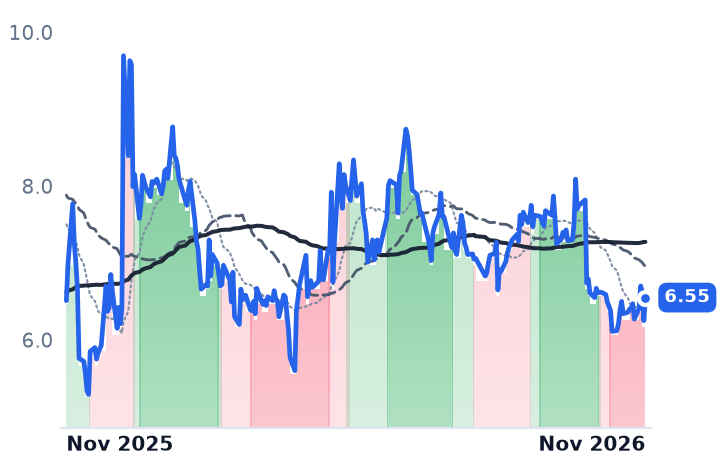
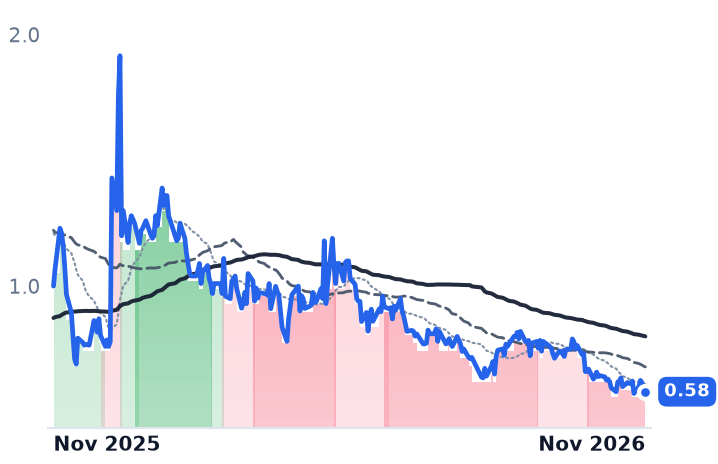
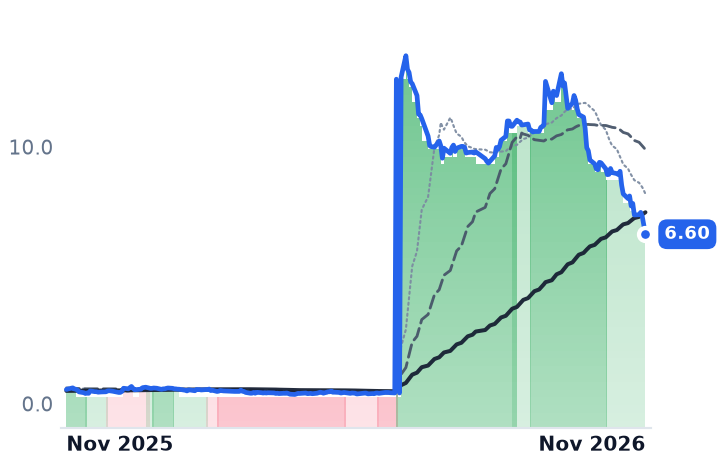
GTBIF | Green Thumb Industries | Drug Manufacturers - Specialty & Generic | ⚠️ Emerging Bear | −0.9% | +0.6% |
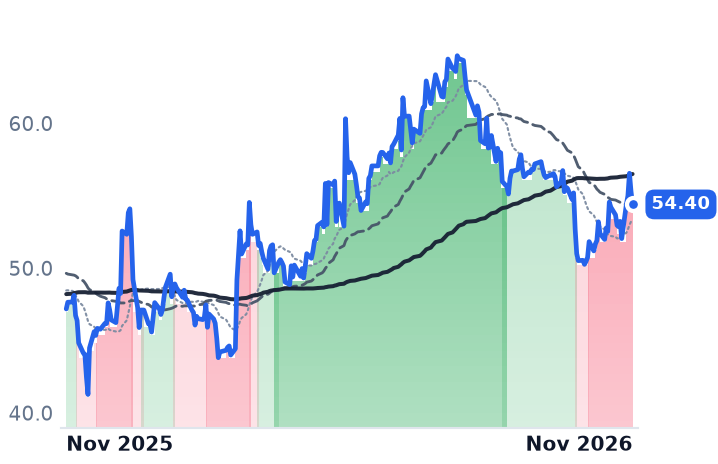
TCNNF | Trulieve Cannabis | Drug Manufacturers - Specialty & Generic | 🟢 Cont. Bull | — | +40.8% |
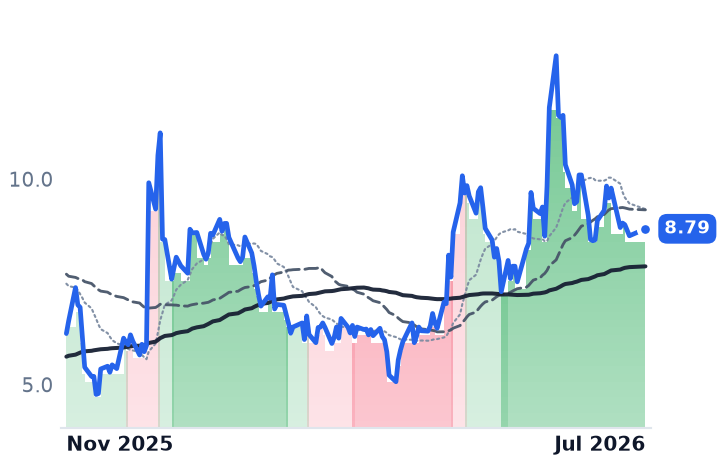
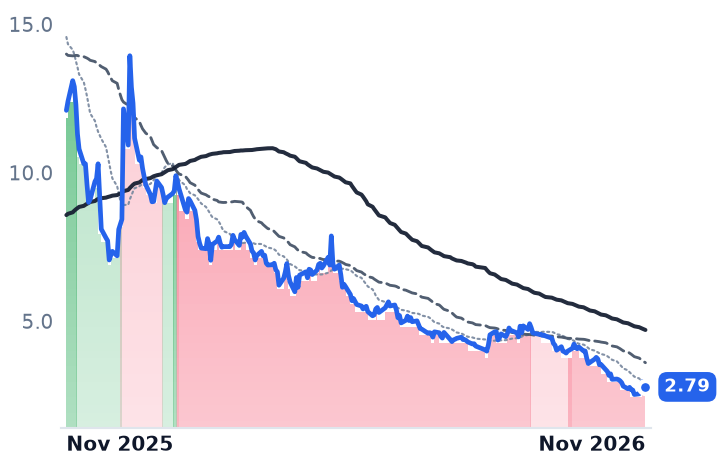
IIPR | Innovative Industrial Properties | Cannabis Properties | ⚠️ Emerging Bear | +7.8% | +15.3% |
CURLF | Curaleaf | Drug Manufacturers - Specialty & Generic | 🟢 Cont. Bull | −4.6% | +292.6% |
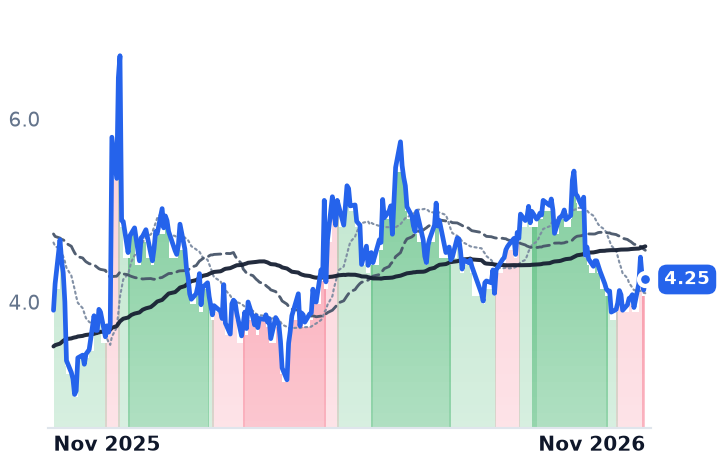
CRLBF | Cresco Labs | Drug Manufacturers - Specialty & Generic | 🔴 Cont. Bear | −11.9% | −42.0% |
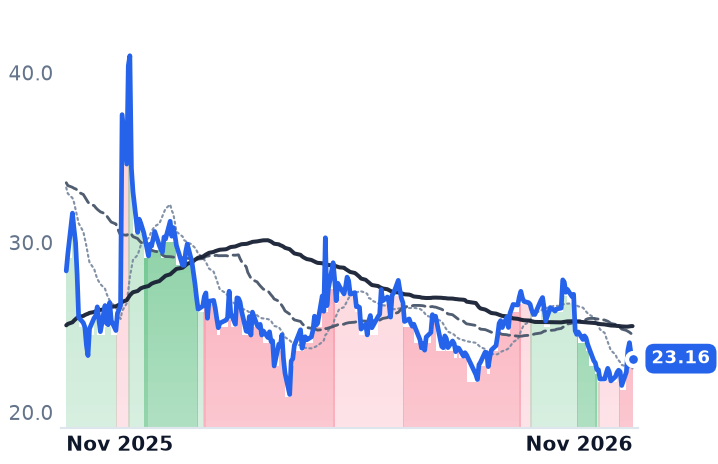
TLRY | Tilray Brands | Cannabis & Hemp | 🔴 Cont. Bear | −25.2% | −77.0% |
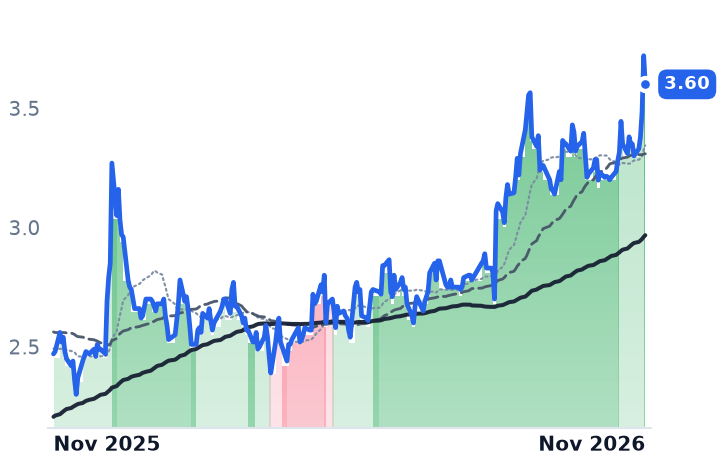
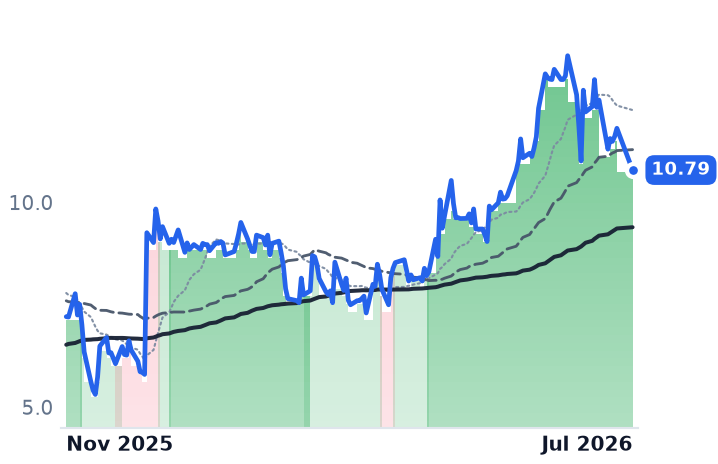
CRON | Cronos | Consumer OTC & Wellness | 🟢 Cont. Bull | +9.6% | +45.7% |
VFF | Village Farms International | Agricultural Farm Products | 🌱 Emerging Bull | +4.4% | −3.4% |
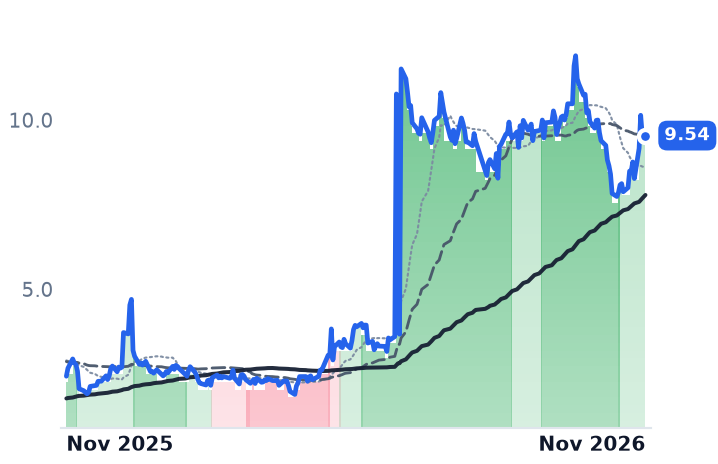
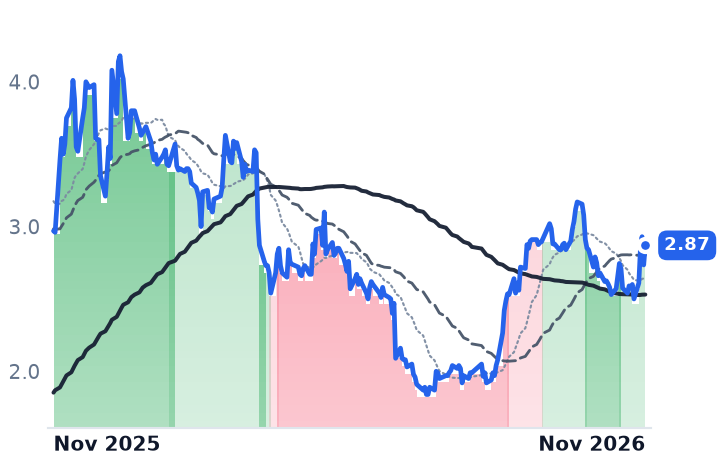
VREOF | Vireo Growth | Drug Manufacturers - Specialty & Generic | 🟢 Cont. Bull | −27.6% | +1089.2% |
MSOS | AdvisorShares Pure US Cannabis ETF | Asset Management | 🟢 Cont. Bull | −4.6% | +8.6% |
MJ | Amplify Alternative Harvest ETF | Asset Management | 🔴 Cont. Bear | −5.0% | −18.2% |
GLASF | Glass House Brands | Agricultural Inputs | 🟢 Cont. Bull | — | +49.7% |
GRUSF | Grown Rogue International | Drug Manufacturers - Specialty & Generic | 🌱 Emerging Bull | −12.7% | +0.0% |
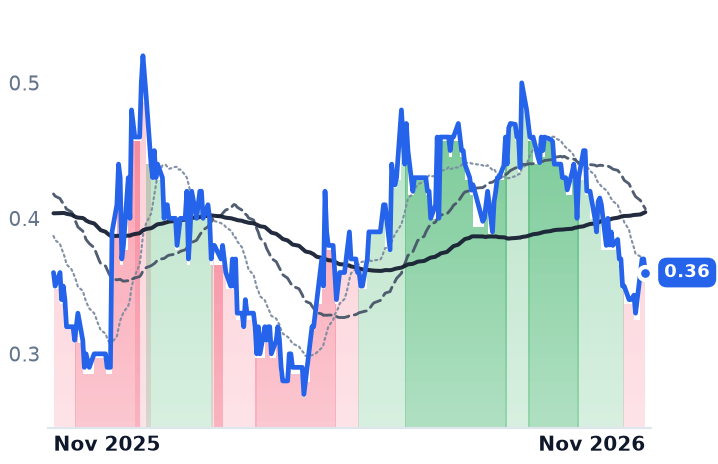
12-month price & trend
| Ticker | Mkt cap | P/E | P/E fwd | P/S | P/S fwd | P/GP | P/GP fwd | EV/EBITDA | FCF yld |
|---|---|---|---|---|---|---|---|---|---|
GTBIF | $1.4B | 15.6x | 40.6x | 1.2x | 1.2x | 2.7x | 2.7x | 5.3x | 12.4% |
TCNNF | $2.4B | n/m | 85.1x | 2.2x | 2.1x | 3.9x | 3.8x | 9.0x | 7.5% |
IIPR | $1.5B | 12.1x | 12.8x | 5.7x | 5.9x | 9.4x | 9.7x | 8.2x | 13.2% |
| Ticker | Mkt cap | P/E | P/E fwd | P/S | P/S fwd | P/GP | P/GP fwd | EV/EBITDA | FCF yld |
|---|---|---|---|---|---|---|---|---|---|
CURLF | $2.2B | n/m | 165.7x | 1.7x | 1.6x | 3.8x | 3.7x | 16.9x | 2.2% |
CRLBF | $208.8M | n/m | — | 0.3x | 0.3x | 0.7x | 0.6x | 7.4x | 4.9% |
TLRY | $314.2M | n/m | — | 0.3x | 0.3x | 1.1x | 1.0x | n/m | -40.3% |
| Ticker | Mkt cap | P/E | P/E fwd | P/S | P/S fwd | P/GP | P/GP fwd | EV/EBITDA | FCF yld |
|---|---|---|---|---|---|---|---|---|---|
CRON | $1.3B | 19.2x | 21.4x | 7.4x | 6.2x | 16.3x | 13.7x | 15.9x | 3.7% |
VFF | $352.7M | 14.7x | 16.0x | 1.5x | 1.5x | 3.5x | 3.3x | 6.1x | -0.6% |
VREOF | $251.5M | n/m | — | 0.5x | 0.3x | 1.0x | 0.7x | 11.5x | -46.7% |
| Ticker | Mkt cap | P/E | P/E fwd | P/S | P/S fwd | P/GP | P/GP fwd | EV/EBITDA | FCF yld |
|---|---|---|---|---|---|---|---|---|---|
MSOS | $551.3M | — | — | — | — | — | — | — | — |
MJ | $101.1M | — | — | — | — | — | — | — | — |
GLASF | $851.8M | n/m | — | 4.8x | 4.0x | 14.5x | 12.1x | n/m | -3.1% |
| Ticker | Mkt cap | P/E | P/E fwd | P/S | P/S fwd | P/GP | P/GP fwd | EV/EBITDA | FCF yld |
|---|---|---|---|---|---|---|---|---|---|
GRUSF | $91.7M | n/m | — | 2.2x | — | 4.9x | — | 47.9x | -1.7% |
Consensus projections
| Ticker | FY2026E | FY2027E | FY2028E | |
|---|---|---|---|---|
GTBIF | Revenue | +5.9% | +6.5% | +6.9% |
| EPS | +6.9% | +62.3% | +23.3% | |
TCNNF | Revenue | −5.9% | +0.7% | +8.8% |
| EPS | −133.5% | +116.7% | −10.3% | |
IIPR | Revenue | −3.9% | +0.4% | +1.7% |
| EPS | +7.6% | +2.7% | +5.3% | |
CURLF | Revenue | +7.7% | +7.7% | +10.2% |
| EPS | −106.8% | −548.7% | −146.3% | |
CRLBF | Revenue | +2.6% | +3.8% | +1.3% |
| EPS | −81.0% | −64.7% | −466.7% | |
TLRY | Revenue | +5.8% | +25.7% | +4.9% |
| EPS | −94.6% | −12.4% | −63.4% | |
CRON | Revenue | +53.8% | +29.5% | +8.5% |
| EPS | −6820.0% | +8.3% | +4.4% | |
VFF | Revenue | +10.6% | +20.2% | +13.2% |
| EPS | −9.8% | +47.2% | +45.9% | |
VREOF | Revenue | +199.9% | +46.8% | +7.9% |
| EPS | −96.4% | −1738.5% | +93.4% | |
GLASF | Revenue | +16.9% | +22.0% | +4.4% |
| EPS | −76.5% | −357.9% | +75.5% |
Forward fiscal years only. Blank means no analyst coverage for that year.
The tax provision that made American cannabis retailing a structurally unprofitable business stopped applying to a large part of it seven months ago. On 23 April the Department of Justice reclassified state-licensed medical cannabis from Schedule I to Schedule III, effective 28 April, placing medical product outside Section 280E, the rule barring sellers of Schedule I drugs from deducting ordinary business expenses. Green Thumb Industries, which grows cannabis and sells it wholesale and through its own RISE stores, reported income tax expense of $28m for the September quarter against $49m a year earlier, and named the reclassification as the cause.
Adult-use product remains Schedule I, and remains taxed that way. That is the half the market traded in the first week of November, when Drug Enforcement Administration Chief Administrative Law Judge Derek Julius stayed the broader rescheduling proceeding to admit a Government Accountability Office report on scheduling gaps. The AdvisorShares Pure US Cannabis ETF, the sector's usual proxy, fell 8.2% from its 3 November close across the next two sessions, then recovered 2.8% on 6 November. Nothing in the quarters reported those same days got worse. The quarters are the point: the industry's operating economics and its tax position have come apart, and only one of them improved.
The medical half now files like a normal company
Trulieve is the cleanest case. The Florida-concentrated grower and dispensary operator moved to the New York Stock Exchange under the symbol TRLV on 10 June, the first US cannabis company to list there, after both big exchanges rewrote their listing rules in April for Schedule III operators. "From this year forward, we are taxed the same as any U.S. Corporation," chief executive Kim Rivers told investors on 5 November. "This parity is important because it improves profitability and cash flow."
The numbers behind that sentence held up. Gross margin reached 64.3% from 58.9% a year earlier, operating cash flow was $74m in the quarter against full-year guidance of at least $225m, and cash stood at $327m. Its scale in Florida is the moat: 657,000 ounces of flower across 170 stores, 55% more flower per store than the state average, in a market management itself calls saturated with 786 dispensaries. On trailing enterprise value to EBITDA of 9.0x it is also the dearest US operator here, against Cresco Labs at 7.4x and Green Thumb at 5.3x.
The bill from the years when the deduction ban applied
Against that improvement sits a liability the April rule did not touch. The Internal Revenue Service says cannabis operators owe $1.6bn and counting in past-due 280E bills, withheld deliberately to conserve cash, and argued in a 6 March filing that hopes of retroactive relief are unfounded because the law in effect at the time must be applied. Trulieve carried $696.4m of net uncertain tax positions at 31 March, of which $655.6m relates to its own 280E challenge and includes $80.2m of accrued interest. Curaleaf's equivalent balance is $531.5m, Verano's $378.3m and Cresco's $171.4m. Trulieve confirmed on 5 November that the balance includes more than $102m of refunds it has already received.
So the contested money is on the balance sheet, not in the cash tax line, and its resolution sits with Treasury. "Treasury and the IRS have made guidance on 280E one of their priorities for fiscal 2027," Green Thumb founder and chief executive Ben Kovler said on 4 November. "How soon that clarity arrives matters for us and for every operator trying to model its tax position."
The price war is in Germany, not Florida
The other half of the bear case, collapsing realized price, belongs to a different continent. Curaleaf, which exports pharmaceutical-grade cannabis to ten European and Pacific markets alongside its US stores, saw prices "fallen from like $3 a gram to $0.90 a gram in 1 quarter, which is severe," chief executive Boris Jordan said on 3 November, calling October "probably the worst month we've ever seen since the start of the German market." He was explicit about where it hurts: "Our U.S. business is strong... It's really German related." Tilray, the Canadian cannabis-and-beverage group, booked $8.8m of adjusted-EBITDA headwind from the same international compression on a record $257.1m quarter.
The American till moved the other way. Green Thumb's 108 comparable stores posted a 3% same-store gain, its first positive comp since the third quarter of 2024, with "material improvement" in Florida operating economics; reported gross margin of 45.2% against 49.4% was driven primarily by $15.8m of brand licensing fees, and normalized EBITDA was flat at $89m on a 27.6% margin. Industry retail gross margins fell from 52.6% in 2021 to 42.7% in 2025, which puts Green Thumb above the average and Trulieve far above it.
The landlord is diversifying out of the question
Innovative Industrial Properties, the real estate investment trust that owns and leases cultivation buildings to licensed operators, is the one name on this shelf that rose over the past month, up 8.2%. Its third-quarter adjusted funds from operations were $1.96 a share against a $1.90 dividend, but $0.15 of that came from non-recurring past-due rent recoveries, leaving roughly $1.81 of recurring coverage. More than 800,000 sq ft sits vacant, two-thirds of it Parallel's Florida assets, and 4Front Ventures accounts for 7.1% of annualized rent. Its answer is to stop being a cannabis landlord at the margin: about $545m committed to life-science investments with IQHQ, including a $245m mezzanine loan on a Cambridge campus that executive chairman Alan Gold said on 3 November "is expected to generate an average interest rate of ~15.8% over the term of the loan," and roughly 26% of annualized income when fully funded. A 10-year Treasury yield of 4.88%, down 0.41 points over the month, did the rest.
What the quarters account for, and what they do not
Very little of the past month's dispersion follows the tax line. Green Thumb fell 1.8% over 30 days and Curaleaf 4.5%, while Tilray fell 26.3% on international pricing and Cronos Group, the Toronto exporter whose revenue rose 74.6% to $63.5m on Israeli and international volume, gained 9.6%. Cronos trades at 15.9x trailing EV/EBITDA, three times Green Thumb's, so whatever superior cash conversion a non-280E base confers is already paid for.
What the shipped numbers explain is the operating story: margins at the medical operators are flat to better, Florida is improving, and the deflation is German. What they cannot explain is the valuation, and the reason is that the biggest single variable is a tax ruling nobody has. Kovler put the gap in his own terms on 4 November: "If a medical business traded at 15x EBITDA on the New York Stock Exchange, we would be thinking about this very differently." He is looking at 4x to 5x instead, and has bought back about 29.5m shares, roughly 13% of the company, at an average of about $7 since the fourth quarter of 2023.
There is one dated demand event ahead that owes nothing to the Drug Enforcement Administration. Intoxicating hemp products become illegal on 11 December, and Green Thumb's chief executive says the category represents more than a tenth of liquor store sales, with retailers loading the pantry before the ban. Whatever share of those buyers walks into a dispensary instead will arrive in a quarter nobody has priced, at operators who are now, for the medical part of what they sell, ordinary taxpayers.