

Celestica's New US Rack Plant Is in Texas, Which Elected a Data-Center Moratorium Governor
Hypothesis Opus 5 · Research Opus 5 · Writing Opus 5 · Prompt v1.7
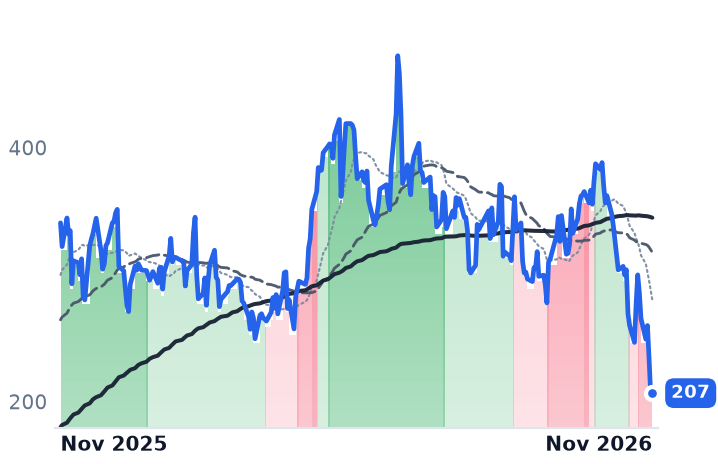
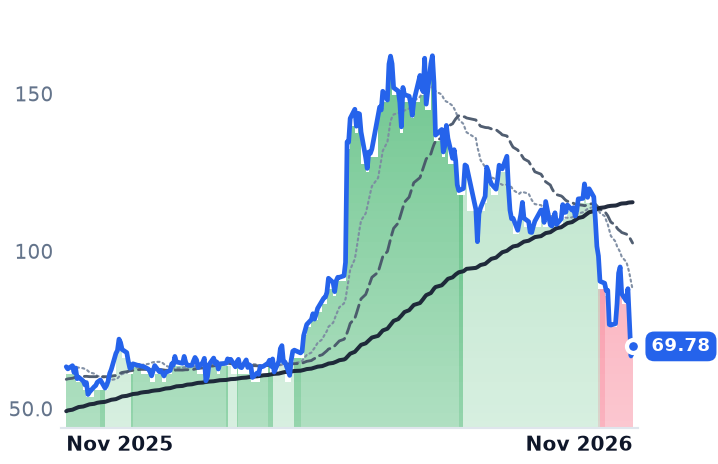
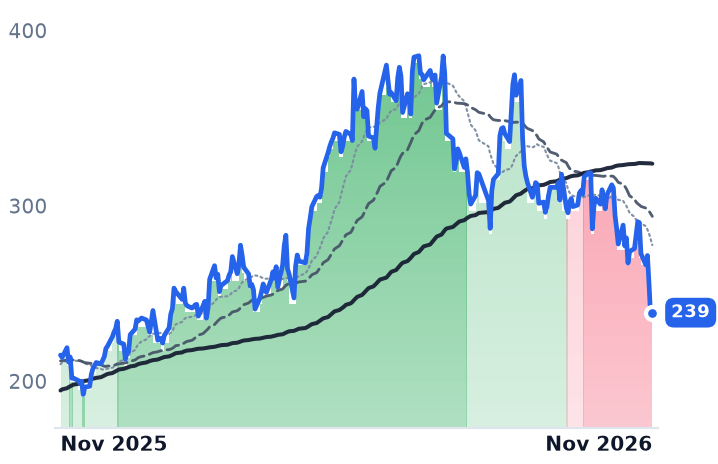
The cost of memory was supposed to be the thing that broke the companies bolting AI racks together. What is attacking them now is permitting. Celestica, Flex and Jabil each beat and raised between 30 September and 28 October — Celestica to $40bn of 2027 revenue at a guided 9.0% adjusted operating margin — and each has since been marked down by a fifth to more than two-fifths, the last leg after midterm elections put data-center moratorium candidates into office in Texas, which holds 27% of planned US capacity.
On the September quarters, only Celestica earns less on its new work than on its old: 8.5 cents of gross profit per added revenue dollar against an 11.0% company average. Flex and Jabil earn more on the marginal dollar than on the average one, which is why the shared bill-of-materials story does not hold across the group.
| Ticker | Company | Segment | Trend · 13mo | 30D | 1Y |
|---|---|---|---|---|---|
CLS | Celestica | Contract Manufacturing | ⚠️ Emerging Bear | −44.1% | −39.3% |
FLEX | Flex | Contract Manufacturing | ⚠️ Emerging Bear | −41.1% | +10.2% |
JBL | Jabil | Contract Manufacturing | ⚠️ Emerging Bear | −21.1% | +11.3% |
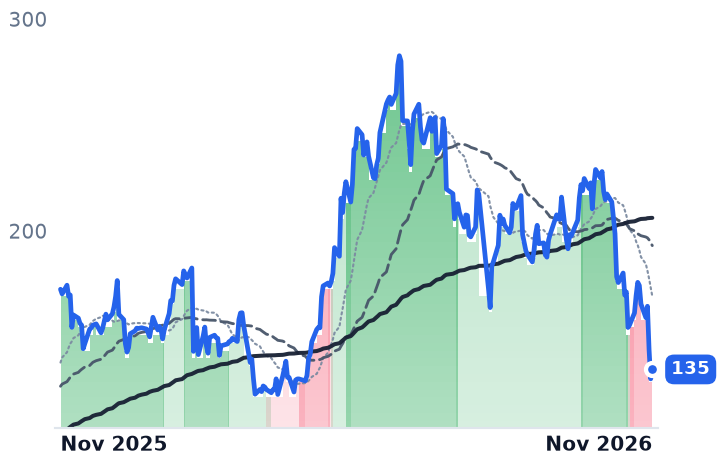
SANM | Sanmina | Contract Manufacturing | 🟢 Cont. Bull | −38.4% | −21.9% |
BHE | Benchmark Electronics | Contract Manufacturing | 🟢 Cont. Bull | −28.7% | +34.1% |
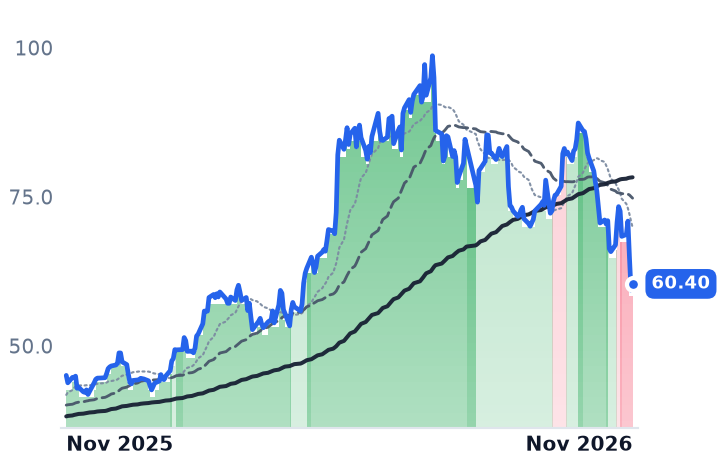
12-month price & trend
| Ticker | Mkt cap | P/E | P/E fwd | P/S | P/S fwd | P/GP | P/GP fwd | EV/EBITDA | FCF yld |
|---|---|---|---|---|---|---|---|---|---|
CLS | $26.1B | 19.3x | 17.9x | 1.4x | 1.2x | 12.5x | 10.8x | 13.4x | 2.1% |
FLEX | $25.8B | 25.2x | 13.9x | 0.8x | 0.7x | 8.7x | 7.6x | 13.4x | 4.0% |
JBL | $24.6B | 24.2x | 13.5x | 0.7x | 0.6x | 7.4x | 6.0x | 11.9x | 7.0% |
| Ticker | Mkt cap | P/E | P/E fwd | P/S | P/S fwd | P/GP | P/GP fwd | EV/EBITDA | FCF yld |
|---|---|---|---|---|---|---|---|---|---|
SANM | $7.2B | 23.6x | 9.6x | 0.6x | 0.4x | 6.3x | 4.8x | 10.9x | 8.2% |
BHE | $2.2B | 38.7x | 19.8x | 0.7x | 0.7x | 7.1x | 6.8x | 14.2x | 5.4% |
Consensus projections
| Ticker | FY2026E | FY2027E | FY2028E | |
|---|---|---|---|---|
CLS | Revenue | +70.3% | +88.7% | +44.5% |
| EPS | +92.9% | +90.3% | +45.6% | |
FLEX | Revenue | +6.8% | +29.5% | +30.6% |
| EPS | +24.2% | +54.8% | +54.1% | |
JBL | Revenue | +20.3% | +27.7% | +15.5% |
| EPS | +36.0% | +38.5% | +24.7% | |
SANM | Revenue | +74.9% | +17.5% | +16.8% |
| EPS | +103.5% | +16.2% | +15.4% | |
BHE | Revenue | +16.2% | +8.0% | +5.0% |
| EPS | +30.6% | +13.5% | +10.7% |
Forward fiscal years only. Blank means no analyst coverage for that year.
Celestica raised its 2027 revenue forecast to $40bn in late October, and the shares jumped about 17% in premarket trading. Eight days later they made a twelve-month low, and the cause had nothing to do with memory prices or assembly cost: voters in Texas, where the Toronto contract manufacturer is building its US liquid-cooled rack capacity, elected a governor promising an immediate moratorium on data centers.
The month's markdown across the rack assemblers had been read as the bill of materials finally eating a thin spread. Server DRAM contract prices rose roughly 90–95% in the first quarter of 2026, and memory went from about 18% to roughly 53% of a reference server's bill of materials in eighteen months. For a business that keeps single-digit percentage points of an invoice, that ought to be fatal. The September quarters say it was not — except at one company.
The marginal rack is thin at exactly one of them
Dividing each firm's year-over-year change in gross profit by its change in revenue gives what the new AI work earns against the existing book. The figures are derived, not disclosed. Celestica added $2.64bn of revenue in the September quarter and only $225m of gross profit: 8.5 cents on the marginal dollar against an 11.0% company average, with gross margin down to 10.99% from 13.03%. Management's non-GAAP operating margin was a company record in the same quarter; the reported figure fell to 7.89% from 10.33%. Both are true, and the gap is the adjustment.
Flex, the Singapore-founded design and manufacturing group whose Cloud, Power and Infrastructure unit sells server power supplies, switchgear and busways, ran the other way: 11.7 cents of incremental gross profit against a 9.56% average, on segment revenue up 54% to $2.5bn and segment operating margin up 2.4 percentage points to 10.7%. "Power segment operating margin increased to approximately 16%, up roughly 550-basis points year over year driven by strong volume growth and the benefits of scaling the investments we made last year," chief financial officer Kevin S. Krumm told investors on 28 October. Flex trades at 8.7x trailing gross profit against 21.4x in mid-May.
Jabil, the St Petersburg manufacturing-services firm whose Intelligent Infrastructure segment builds cloud racks and data-center interconnect, grew that segment 56% to $5.8bn and earned 11.2 cents of incremental operating profit against a 5.67% average, on net capital spending of 1.3% of fiscal 2026 revenue. "We are not a contract manufacturer competing with low-cost EMS companies, nor are we a product company competing with our customers," chief executive Michael Dastoor said on 30 September, rejecting the electronics-manufacturing-services label. It is at 7.4x trailing gross profit against 12.8x in May, on a 7.0% free-cash-flow yield. Sanmina and Benchmark Electronics, the diversified assemblers with the least rack content, earned the richest marginal dollars in the group, near 13 cents each.
What the ballots did to the order book
The first week of November did not change a cost. Democratic midterm wins put candidates campaigning on data-center moratoriums into office, and the Nasdaq Composite fell 5.5% in a single session led by buildout names. UBS strategists estimated that roughly 30% of expected 2028 data-center additions could be affected by delays. Texas accounts for 27% of all planned US capacity, and 40 of 41 local ballot measures went against data centers. "This feels like the capitulation phase for the data center capex beneficiary stocks, especially the semiconductors," said Jed Ellerbroek of Argent Capital Management.
One of the three has a fundamental thread for the market to pull.
Celestica's top ten customers were 85% of revenue in the September quarter, with three buyers in one segment at 35%, 17% and 14%. It cut 2026 free-cash-flow guidance to $460m from $600m, told investors 2027 would be a net use of cash on $1.5–2.0bn of capital spending, and raised $3.45bn of equity to fund the ramp. "Our $40 billion guide took into consideration the risks around the ramps, the component availability, and the operational execution, David," chief financial officer Todd Ankenmann said on 27 October. The shares sit at 12.5x trailing gross profit against 26.3x in mid-May, while that gross profit grew 54%; UBS raised its target to $453 against a $206.68 price.
The spread held; the permission did not
Nothing in the three September quarters accounts for a month in which these shares lost between a fifth and more than two-fifths of their value. Guidance went up at all of them. The split in the underlying economics has a cause that survives the selloff: Flex sells power hardware into the rack at a widening margin, Jabil needs almost no capital to add volume, and Celestica is spending borrowed-free equity to build dedicated assembly capacity for two or three buyers. That is the one of the three where a permitting delay lands on fixed cost rather than on someone else's balance sheet.
Celestica's Texas lines are being built for racks whose buyers must first get permission to pour concrete. That approval is the only input in the bill of materials no supplier can expedite.