

ETF Flows Pay MSCI, Bond Issuance Pays Morningstar, and Seats Pay Only FactSet
Hypothesis Opus 5 · Research Opus 5 · Writing Opus 5 · Prompt v1.7
Three investment-data companies have been marked down together for a year on the belief that an AI assistant shrinks the research subscription. Their September-quarter disclosures show only one of them still bills that way, and it is the one whose profits went backwards.
MSCI's asset-based fees rose 25% to $246.6m on a record $2.9tn of exchange-traded fund assets tracking its indexes; Morningstar's fastest line is credit ratings, up 19.1% organically on heavy debt issuance, while PitchBook seats grew 4.0%. FactSet added a record $168m of organic subscription value in fiscal 2026 and still reported operating income down 6.5%, with fiscal 2027 subscription growth guided lower.
MSCI and Morningstar earn the rally on mechanisms the AI buildout feeds. FactSet is the one name where the meter and the margin disagree.
| Ticker | Company | Segment | Trend · 13mo | 30D | 1Y |
|---|---|---|---|---|---|
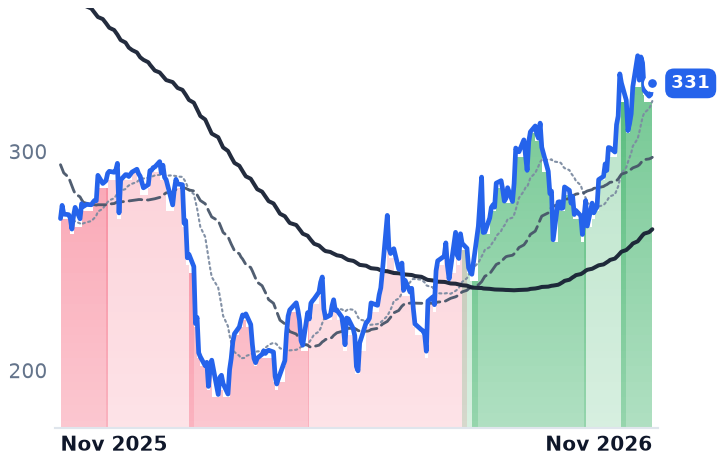
FDS | FactSet Research Systems | Investment Intelligence | 🟢 Cont. Bull | +12.5% | +22.9% |
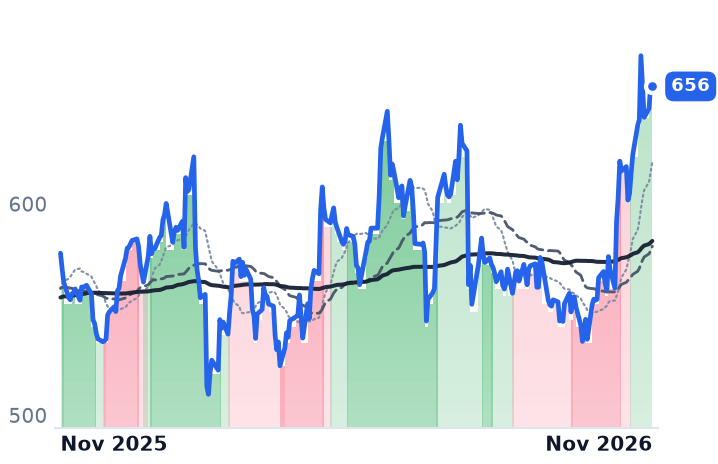
MSCI | MSCI | Investment Intelligence | ⚠️ Emerging Bear | +16.6% | +13.7% |
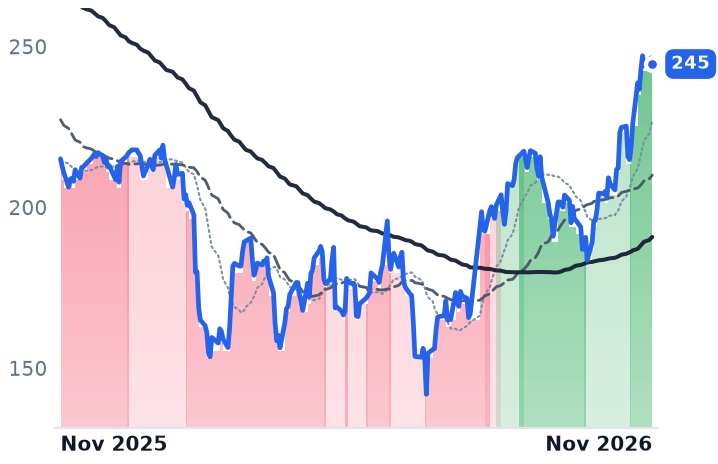
MORN | Morningstar | Investment Intelligence | 🟢 Cont. Bull | +19.3% | +13.7% |
12-month price & trend
| Ticker | Mkt cap | P/E | P/E fwd | P/S | P/S fwd | P/GP | P/GP fwd | EV/EBITDA | FCF yld |
|---|---|---|---|---|---|---|---|---|---|
FDS | $11.8B | 22.9x | 17.0x | 4.8x | 4.5x | 9.4x | 8.9x | 14.3x | 6.0% |
MSCI | $48.1B | 35.2x | 33.6x | 14.0x | 13.6x | 16.9x | 16.5x | 25.8x | 3.2% |
MORN | $9.2B | 21.6x | 19.0x | 3.5x | 3.5x | 5.6x | 5.5x | 12.3x | 5.3% |
Consensus projections
| Ticker | FY2026E | FY2027E | FY2028E | |
|---|---|---|---|---|
FDS | Revenue | +6.7% | +6.1% | +6.0% |
| EPS | +4.5% | +10.2% | +10.5% | |
MSCI | Revenue | +12.4% | +9.0% | +8.7% |
| EPS | +14.3% | +14.3% | +13.6% | |
MORN | Revenue | +10.1% | +5.8% | +5.8% |
| EPS | +39.1% | +14.0% | +13.9% |
Forward fiscal years only. Blank means no analyst coverage for that year.
FactSet closed its fiscal year having sold more new subscription value than in any year of its history, and earned less money than the year before. That is the sharpest thing to come out of the September-quarter disclosures at the three listed investment-data companies, because FactSet is the only one of them whose revenue still turns on how many people log in.
The market treats FactSet, MSCI and Morningstar as one position: research franchises discounted on the prospect that a chatbot replaces the analyst's subscription. The quarters show three incompatible revenue meters underneath that single story. MSCI is paid a basis-point fee on other people's fund assets. Morningstar's fastest-growing business rates debt, and gets paid by issuance volume. The capital-spending boom that is supposed to kill the research seat is currently feeding both.
The line that records someone else's assets
MSCI's asset-based fee revenue grew 25% year on year to $246.6m in the September quarter, on a record $2.9tn of ETF assets linked to its equity indexes, up 31%, with $76bn of net inflows in three months. The unit price is falling as the base grows: the average fee on those ETFs was 2.41 basis points at quarter end, and the filing attributes the increase to higher average assets partly offset by lower average fees. The subscription side, the part an AI assistant might actually erode, grew its run rate 9%, with retention up 30 basis points to 95%.
Chairman and chief executive Henry Fernandez told investors on 20 October that agentic delivery widens the customer base: "Instead of having 100, we now have maybe tens of thousands of users in our client organization. We can have hundreds of thousands and eventually millions of users of our content." Against fiscal 2027 consensus earnings of $22.52 a share, the stock stands at 29.1x, from 25.8x in mid-May — the smallest re-rating of the three, because MSCI never fell as far, up 12.8% over 180 days.
Morningstar's accelerant is the debt behind the buildout
Morningstar Credit contributed $107.8m of September-quarter revenue, up 19.1% organically on robust issuance, now the group's third-largest business. PitchBook, the private-markets seat business, managed $175.6m and 4.0% organic growth with softness among corporate and venture-capital clients, and total license-based revenue grew 3.7% organically. Group revenue growth has decelerated through the year, 10.8% to 9.6% to 8.9%, while operating income rose 31% to $167.4m and the GAAP operating margin went from 20.7% to 24.9%.
The issuance behind the ratings line is market-wide: KBRA projects $220bn of US collateralized loan obligation issuance in 2026, a new high-water mark, with hyperscaler bond borrowing at record volumes. Chief executive Kunal Kapoor's shareholder letter counted AI-channel usage rather than seat losses: "cumulative tool calls through the PitchBook Data Premium Connector surpassing 13 million in October, up from 1 million in July". On fiscal 2027 consensus of $14.96, the shares are at 16.4x against 11.8x in mid-May, the widest recovery — on a consensus only three analysts contribute to.
The seat meter re-accelerated and the P&L did not
FactSet's fiscal 2026 organic annual subscription value grew 7% to $2.56bn, adding a record $168m. "We generated $86 million of organic ASV during the quarter, our largest quarter ever," chief financial officer Joshua Warren said on 30 September. More than a tenth of that came from new artificial-intelligence products, exceeding the whole of fiscal 2025's AI contribution.
Against that, full-year operating income fell 6.5% to $700.0m, GAAP operating margin dropped to 28.3% from 32.2%, and fiscal 2027 organic subscription growth is guided to 5–6.5%, below the 7% delivered. Management blames one-time infrastructure and cybersecurity spending plus the timing of fast growth, and reaffirmed adjusted earnings of $19.25 to $19.65 a share at its 10 November investor day, with adjusted operating margin of at least 36% by fiscal 2029. The competitive backdrop is a share-gain argument from a small base: one 2026 comparison puts Bloomberg Terminal at 33% of the market against FactSet's 4.5%, and FactSet was absent from the data providers named when OpenAI launched ChatGPT for Financial Services on 10 September, a day its shares fell 5.3%. On fiscal 2027 consensus of $19.67, the stock is at 16.8x, from roughly 12.1x on then-forward estimates in May.
Six sessions did most of it
Over the 30 sessions to 11 November, Morningstar rose 19.7%, MSCI 15.4% and FactSet 14.7% — each name's entire twelve-month gain, earned in a month. The trend readings on all three turned up between 22 and 28 October, which brackets two earnings beats and a violent rotation: over the 20 sessions through 2 November the equal-weight S&P 500 gained more than 4% while the Nasdaq 100 fell nearly 10%. FactSet reported nothing inside the window.
How much of this the quarters carry
For MSCI the results do the work, and the rotation compounds it: money moving into value and dividend funds lands in vehicles that pay its basis-point fee, so flows show up twice. Morningstar earns its move on cost discipline and an issuance cycle, with the honest caveat that its subscription meters grow in the low single digits and the margin, not the volume, produced the earnings. FactSet is the disagreement. Its seat meter accelerated while its profits shrank, and the multiple expanded faster than either, which leaves the thesis resting on a margin recovery that has not yet appeared in a reported quarter.
None of the three has recovered the valuations these franchises carried before the AI scare. The one that sells seats has the furthest to prove: that a record year of new subscriptions and a better year of earnings can be the same year.