

Carriers Took Three-Fifths of Bandwidth's New Revenue and None of Its Gross Profit
Hypothesis Opus 5 · Research Opus 5 · Writing Opus 5 · Prompt v1.7
A fee that American wireless carriers set, not a price that software vendors negotiate, now drives the reported revenue line at both listed communications-API companies — and it arrives at zero margin, which makes the revenue growth and the reported gross margin equally misleading.
Bandwidth's September quarter added $42m of revenue year on year, of which $25m was messaging surcharge collected and remitted to carriers. Reported gross margin duly fell to 36.2%. Yet non-GAAP gross profit rose 18% to $96m and margin widened to 60.6%, and every full-year guidance metric went up. Twilio showed the same pattern in milder form: gross-profit dollars grew faster than revenue, with the per-quarter fee drag easing to $53m from $71m.
Both were sold hard after reporting on 29 October. The profit line does not explain it; decelerating fourth-quarter guides and a 2027 that laps the fee increases do.
| Ticker | Company | Segment | Trend · 13mo | 30D | 1Y |
|---|---|---|---|---|---|
| The subject · what this brief is about | |||||
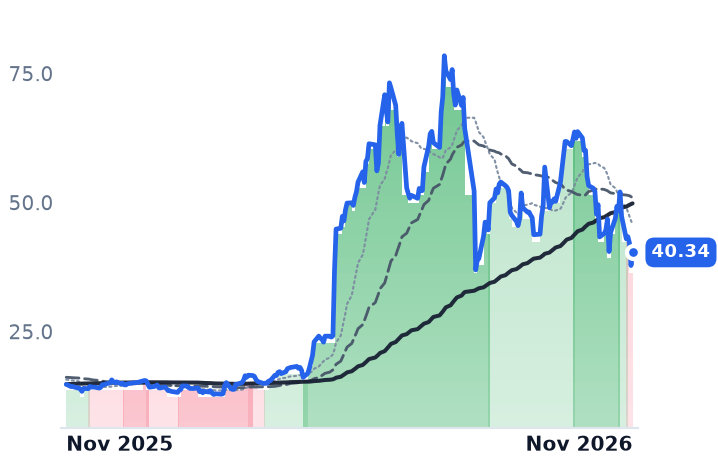
BAND | Bandwidth | Developer Platforms & APIs | 🟢 Cont. Bull | −24.3% | +173.3% |
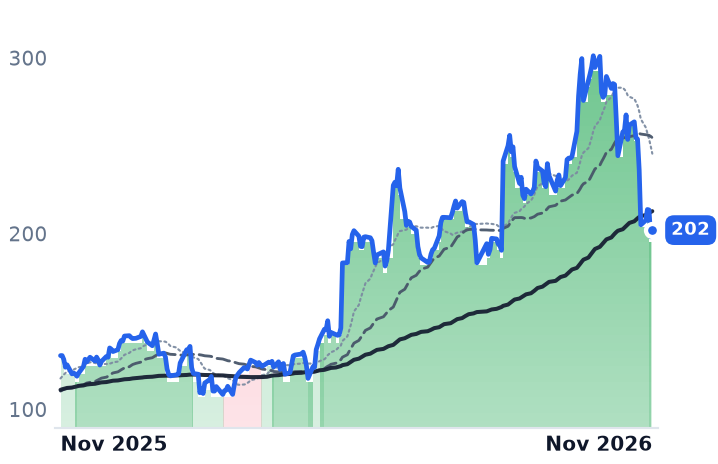
TWLO | Twilio | Developer Platforms & APIs | 🟢 Cont. Bull | −30.2% | +54.7% |
| Compared against · context, not the story | |||||
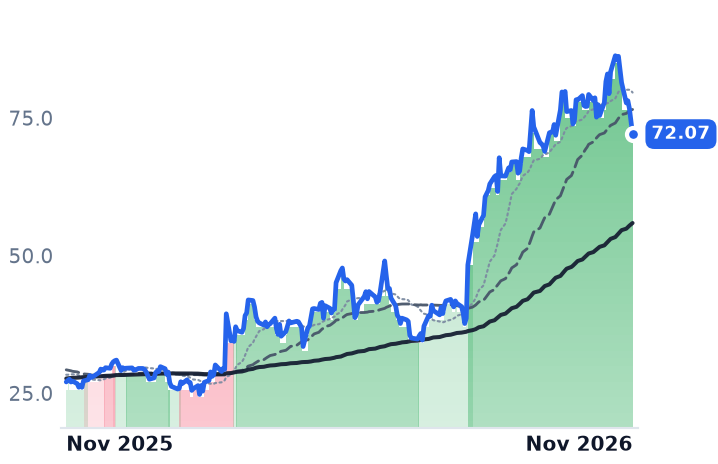
RNG | RingCentral | Sales, Service & Customer Management | 🟢 Cont. Bull | −9.1% | +166.4% |
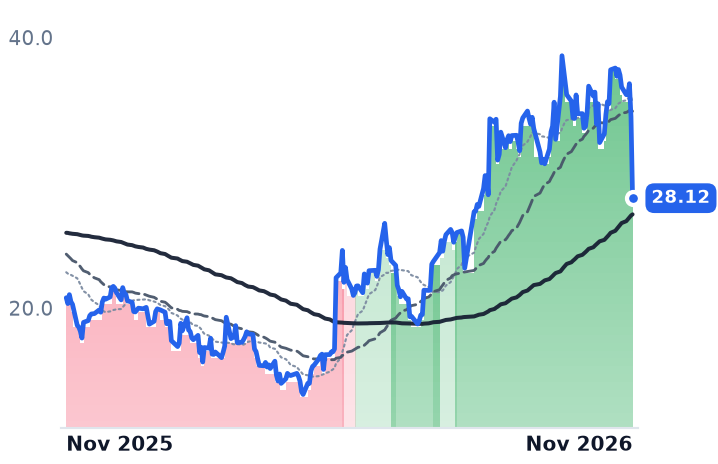
FIVN | Five9 | Sales, Service & Customer Management | 🟢 Cont. Bull | −22.7% | +35.5% |
12-month price & trend
| Ticker | Mkt cap | P/E | P/E fwd | P/S | P/S fwd | P/GP | P/GP fwd | EV/EBITDA | FCF yld |
|---|---|---|---|---|---|---|---|---|---|
BAND | $1.2B | 329.0x | 22.8x | 1.4x | 1.4x | 3.8x | 3.7x | 25.5x | 7.3% |
TWLO | $31.3B | 24.3x | 32.9x | 5.4x | 5.2x | 11.0x | 10.6x | 74.4x | 3.6% |
RNG | $6.0B | 53.8x | 13.8x | 2.3x | 2.3x | 3.2x | 3.2x | 21.4x | 11.2% |
| Ticker | Mkt cap | P/E | P/E fwd | P/S | P/S fwd | P/GP | P/GP fwd | EV/EBITDA | FCF yld |
|---|---|---|---|---|---|---|---|---|---|
FIVN | $2.6B | 45.5x | 10.6x | 2.2x | 2.1x | 4.0x | 3.9x | 15.9x | 7.5% |
Consensus projections
| Ticker | FY2026E | FY2027E | FY2028E | |
|---|---|---|---|---|
BAND | Revenue | +20.3% | +7.7% | +14.2% |
| EPS | +23.3% | +21.5% | +33.4% | |
TWLO | Revenue | +20.8% | +11.6% | +10.6% |
| EPS | +28.1% | +11.5% | +13.7% | |
RNG | Revenue | +5.1% | +4.6% | +4.4% |
| EPS | +16.4% | +11.1% | +10.8% | |
FIVN | Revenue | +9.5% | +9.9% | +10.6% |
| EPS | +10.5% | +18.0% | +16.6% |
Forward fiscal years only. Blank means no analyst coverage for that year.
America's big wireless carriers raised the fee they charge for delivering a text message repeatedly this year, and that money passes through the books of the companies that sell messaging and voice interfaces to software developers before it leaves again. It inflates revenue, deflates reported gross margin, and touches gross profit not at all. Both listed pure-plays reported on 29 October and both were sold hard afterwards, which raises a narrower question than the share prices suggest: whether the carrier is now taking the increment, or merely routing through it.
The market read the quarters as evidence that the meter is breaking — that volume is growing while the price of a delivered message falls toward the carrier's own cost. The profit lines say the opposite, and the split between the two companies is about what comes next, not about what happened.
What a message costs before anyone earns on it
The fee is set upstream. Across four pricing updates in 2026, six separate US SMS and MMS fee increases took effect: T-Mobile lifted its outbound pass-through for registered business messaging from $0.0030 to $0.0045 per segment in January, a 50% step, and Verizon raised outbound SMS on 1 May and again from $0.0045 to $0.0050 on 1 October. The blended fee went from roughly $0.0033 to about $0.0043 a segment in under a year. The increases were applied across registered campaigns, toll-free and short-code traffic alike, and Verizon's October change also lifted its rich-messaging fee.
Bandwidth's own meter is not the one that slowed
Bandwidth, which runs its own carrier network and sells voice and messaging interfaces plus session-initiation trunking to large enterprises and contact centers, reported revenue of $234.0m for the quarter ended 30 September. Cloud communications revenue — total less surcharges — rose 12% to $158.5m while surcharge revenue rose 51% to $75.6m. On the quarter's $33m of programmable messaging revenue, that is roughly $2.29 of remitted surcharge for every dollar the company keeps, on figures the desk has divided out.
Reported gross margin fell 222 basis points to 36.2%. Underneath it, GAAP gross profit grew 14.9%, an acceleration from 9.0% and 9.6% in the first two quarters; non-GAAP gross profit rose 18% to $96m and non-GAAP gross margin widened nearly 300 basis points to 60.6%, an 86% yield on the growth in cloud communications revenue. Adjusted EBITDA rose 43% to $35m and operating income turned positive at $1.8m. "We're raising the midpoint of our full year 2026 outlook across all of our guidance metrics," chief executive David Morken told investors on 29 October, adding that the company has "growing confidence in achieving double-digit cloud communications revenue growth in fiscal 2027." Bandwidth was also named the first certified bring-your-own-carrier partner for Salesforce's contact-center rollout across more than 25 countries, which management models at roughly a $20m annual run rate by end-2028.
Twilio's fee drag shrank while its expansion rate eased
Twilio, whose roughly 1,800 usage-billed interfaces let developers embed voice, messaging and email in their own applications, carried $53m of incremental US carrier pass-through fees in the quarter, below the $71m it absorbed in the second quarter. Non-GAAP gross margin of 49.2% was down 90 basis points but would have risen 80 without the fees; GAAP gross profit grew 20.3% against revenue growth of 19.9%, and free cash flow reached a record $370m. Full-year organic growth guidance went to 15% from 13–13.5%, and "we expect full year 2027 organic revenue growth of at least 10%, well above our 2025 Investor Day framework of 7% to 8%," chief financial officer Aidan Viggiano said on the same day.
The honest offsets sit in the demand data rather than the margin: dollar-based net expansion eased to 114% from 116%, organic messaging growth slipped to 17% from 18%, and the fourth quarter is guided to 11–12% organic. The AI voice business widely credited with re-pricing the category is barely visible. "The way that we characterize voice AI in our prepared remarks is that it's about 1% of what the voice interactions are so far," chief executive Khozema Shipchandler said, calling mainstream adoption something that "is going to take some time."
What the selling was actually about
Bandwidth has fallen 32.9% in the 30 days to 6 November and Twilio 27.2%, with both companies beating on revenue and earnings. Bandwidth dropped 13% because full-year guidance matched consensus rather than exceeding it, and Twilio fell on its fourth-quarter outlook and margin commentary rather than the quarter. A chunk is beta: on 5 November, the Nasdaq Composite fell 5.5% and Bandwidth lost 10.4%, Twilio 7.2%. Neighbours moved far less — RingCentral down 6.5% over the 30 days, Five9 down 15.9%.
So the quarters account for almost none of the drawdown and the forward guides account for most of it. Bandwidth's own full-year range implies fourth-quarter growth of 17–19%, against 22% in the third, and consensus has 2027 revenue growing 7.7% as the fee increases lap — the reported line deflates precisely because the pass-through stops compounding. At 3.84x trailing and 3.69x forward gross profit, the appropriate anchor when surcharges make revenue non-comparable and GAAP earnings sit near zero, Bandwidth is below the 4.9x recorded in late August and 5.9x in late September. Twilio's 11.03x trailing has unwound the entire spike to 15.6x in September but remains well above roughly 7x in February, and its gross-profit growth is guided to slow. One has de-rated past its own history on a 2027 that management says is already largely signed; the other has given back a re-rating it earned three months ago.
The fee increases are the one input neither company controls and both are indifferent to in profit terms. They will lap, the reported growth rate will halve, and the business underneath will look exactly as it does now.