

Zebra Is Paying for Memory Inflation With a 15% Price Rise, Not With Software Revenue
Hypothesis Opus 5 · Research Opus 5 · Writing Opus 5 · Prompt v1.7
Zebra's best growth quarter of the year arrived with its thinnest gross margin of the year, and the market treated the combination as a warning rather than a result. Revenue rose 22.3% in the quarter ended 3 October while gross margin fell to 45.7%, as the company's full-year memory-cost headwind grew to $145m.
The offset is price: an October increase on mobile computing worth about 1.5 points of 2027 revenue, with software still a low single-digit percentage of sales. That is a hardware business re-pricing its bill of materials and telling investors the cost pressure continues next year. Digi International, in the same corner of enterprise connectivity, books $191m of recurring revenue and expands margin as it grows; its fiscal fourth quarter lands 11 November.
| Ticker | Company | Segment | Trend · 13mo | 30D | 1Y |
|---|---|---|---|---|---|
| The subject · what this brief is about | |||||
ZBRA | Zebra Technologies | Specialized Wireless & IoT | 🟢 Cont. Bull | −15.1% | +24.1% |
DGII | Digi International | Specialized Wireless & IoT | 🟢 Cont. Bull | −14.9% | +78.6% |
ITRN | Ituran Location and Control | Regional & Specialty Operators | ⚠️ Emerging Bear | −3.8% | +35.1% |
| Compared against · context, not the story | |||||
MU | Micron Technology | Memory & Storage | 🟢 Cont. Bull | −35.3% | +190.3% |
DELL | Dell Technologies | Enterprise Servers | 🟢 Cont. Bull | −43.7% | +125.6% |
CGNX | Cognex | Test & Measurement | ⚠️ Emerging Bear | −20.7% | +22.9% |
HON | Honeywell International | Aerospace & Building Technology | ⚠️ Emerging Bear | +6.9% | +14.6% |
ITRI | Itron | Sensors & Actuators | 🌱 Emerging Bull | +16.6% | −6.5% |
SPY | State Street SPDR S&P 500 ETF Trust | Asset Management | 🟢 Cont. Bull | −4.6% | +10.7% |
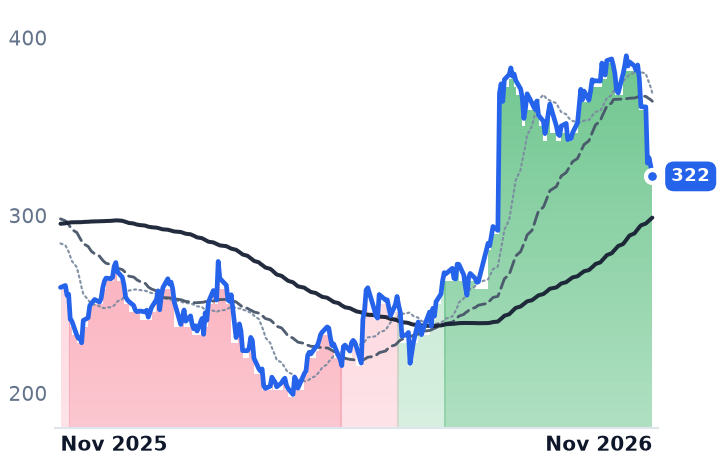
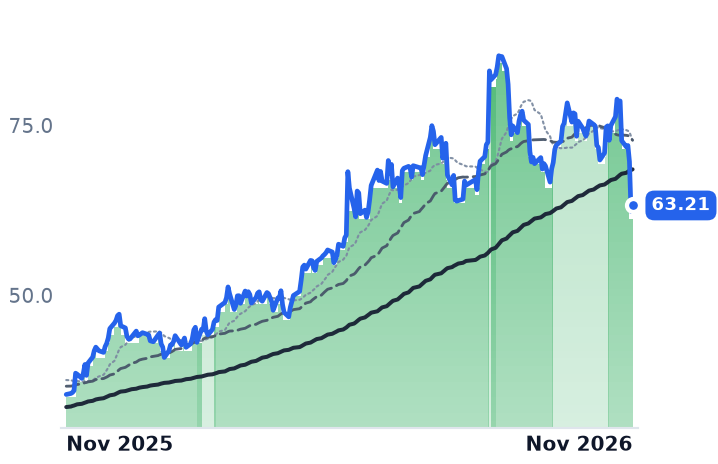
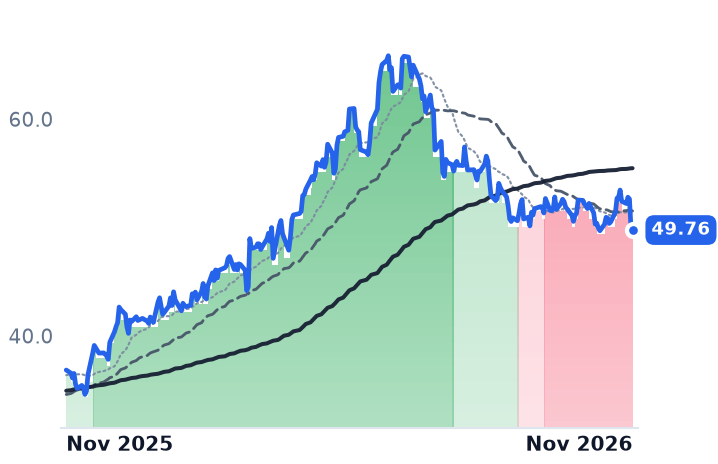
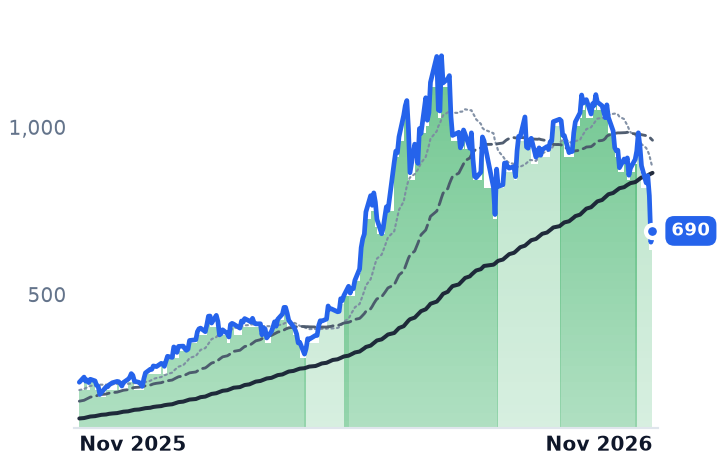
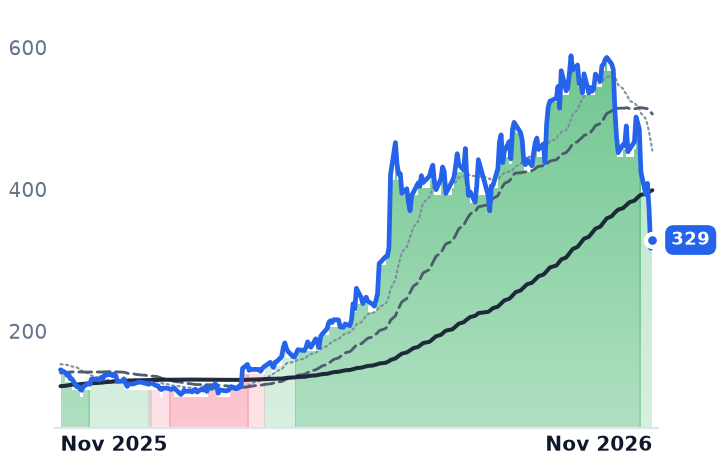
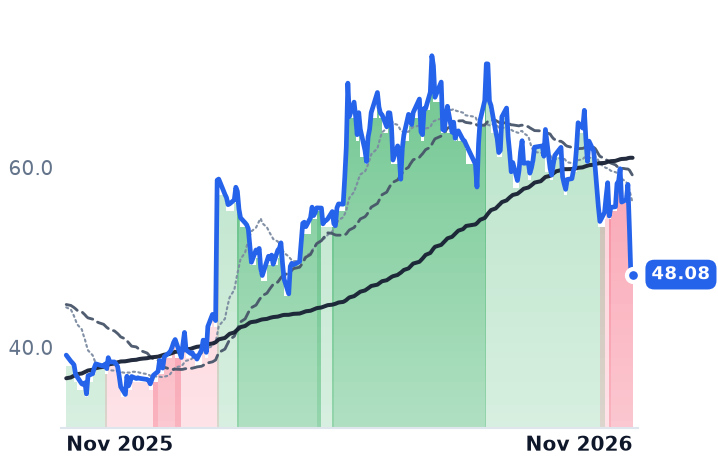
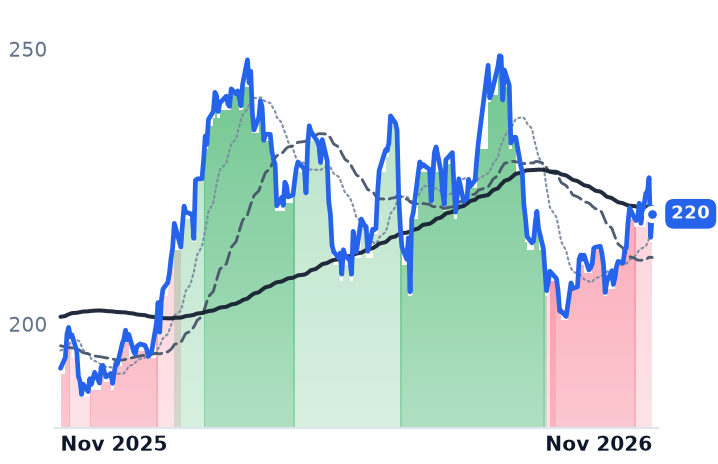
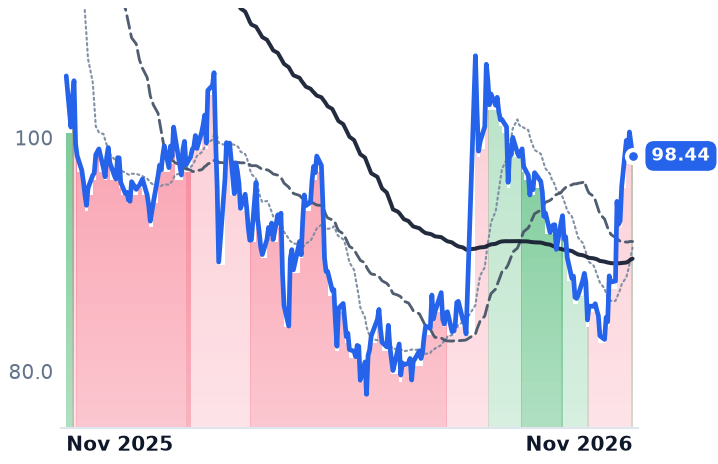
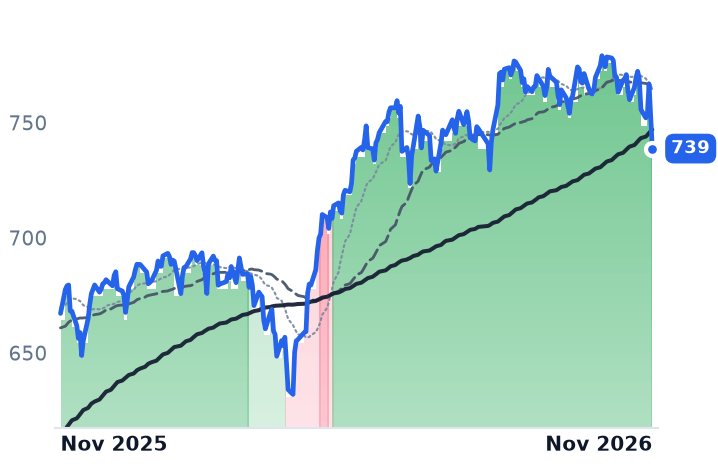
12-month price & trend
| Ticker | Mkt cap | P/E | P/E fwd | P/S | P/S fwd | P/GP | P/GP fwd | EV/EBITDA | FCF yld |
|---|---|---|---|---|---|---|---|---|---|
ZBRA | $15.2B | 26.5x | 15.2x | 2.5x | 2.4x | 5.1x | 5.0x | 15.9x | 6.5% |
DGII | $2.4B | 48.6x | 20.2x | 4.7x | 4.1x | 7.4x | 6.5x | 22.4x | 5.6% |
ITRN | $987.0M | 15.4x | 13.9x | 2.5x | 2.4x | 5.0x | 4.7x | 8.4x | 8.4% |
| Ticker | Mkt cap | P/E | P/E fwd | P/S | P/S fwd | P/GP | P/GP fwd | EV/EBITDA | FCF yld |
|---|---|---|---|---|---|---|---|---|---|
MU | $1.0T | 19.9x | 12.2x | 11.2x | 7.8x | 15.4x | 10.7x | 14.5x | 2.6% |
DELL | $373.9B | 32.2x | 21.7x | 2.5x | 1.9x | 12.5x | 9.7x | 21.6x | 2.3% |
CGNX | $8.1B | 33.4x | 28.6x | 7.2x | 7.1x | 10.3x | 10.1x | 23.9x | 3.5% |
| Ticker | Mkt cap | P/E | P/E fwd | P/S | P/S fwd | P/GP | P/GP fwd | EV/EBITDA | FCF yld |
|---|---|---|---|---|---|---|---|---|---|
HON | $65.8B | 8.1x | 25.0x | 1.8x | 3.3x | 5.0x | 8.9x | 7.0x | 6.3% |
ITRI | $3.7B | 14.1x | 13.3x | 1.6x | 1.6x | 4.1x | 3.9x | 7.9x | 10.2% |
SPY | $773.0B | — | — | — | — | — | — | — | — |
Consensus projections
| Ticker | FY2026E | FY2027E | FY2028E | |
|---|---|---|---|---|
ZBRA | Revenue | +16.5% | +6.6% | +4.6% |
| EPS | +34.1% | +5.7% | +8.3% | |
DGII | Revenue | +24.8% | +8.7% | +4.5% |
| EPS | +31.4% | +16.3% | +8.4% | |
ITRN | Revenue | +16.5% | +5.4% | +7.5% |
| EPS | +23.8% | +8.6% | +9.4% | |
MU | Revenue | +248.0% | +92.8% | +11.4% |
| EPS | +804.9% | +111.2% | +7.9% | |
DELL | Revenue | +16.2% | +73.9% | +20.9% |
| EPS | +27.3% | +159.7% | +19.4% | |
CGNX | Revenue | +16.8% | +11.0% | +10.8% |
| EPS | +74.9% | +17.9% | +14.5% | |
HON | Revenue | −48.2% | +1.8% | +5.1% |
| EPS | −21.2% | +18.4% | +13.0% | |
ITRI | Revenue | +1.3% | +6.8% | +5.7% |
| EPS | −6.4% | +9.3% | +14.6% |
Forward fiscal years only. Blank means no analyst coverage for that year.
Zebra Technologies beat its own quarter on 3 November and fell 8.8% in the session. The maker of barcode scanners, enterprise mobile computers and thermal label printers, sold to retailers, warehouse operators and hospitals, told investors memory prices would keep climbing into 2027, and that its answer is a price increase taken in October.
The shares had held an uptrend since the start of July, read as an enterprise device refresh cycle with recurring software riding on top of it. The quarter tests the second half of that. Zebra's full-year memory-cost headwind rose to $145m from a prior estimate of $120m, entirely because mobile-computing volumes came in higher, and on the call management put software revenue at a low single-digit percentage of the total. The component shock is being absorbed on the invoice, because there is no subscription meter to absorb it instead.
The memory bill became a price list
Revenue of $1.614bn in the quarter ended 3 October, reported to the SEC on an 8-K, was up 22.3%, and operating margin improved to 14.7% from 13.9%. Gross margin went the other way: 45.7%, against 48.0% a year earlier. Conventional dynamic random-access memory contract prices rose 90-95% quarter on quarter early in 2026, with memory forecast to absorb 68% of major cloud providers' capital spending in 2027 — device makers now bid for parts against hyperscalers. Of roughly $50m of memory cost in the quarter, pricing offset about $25m, with more than $55m mitigated by restructuring, productivity and currency.
"It generates about a 15% increase on our mobile computing products," Nathan Winters, Zebra's chief financial officer, said of the October action on the 3 November call. That increase is expected to add roughly 1.5 points to 2027 revenue. On the same call, chief executive Bill Burns said: "We would expect growth, as you suggested, for 2027 to be at the high end of our long-term guidance range" — a range of 5-7%. At the top of it, by that arithmetic, about a fifth of next year's growth is Zebra's own cost inflation handed to its buyers.
Demand is real, and it is hardware demand
Not all of the quarter was price. Organic growth was about 11% of the reported 22.3%, with the Connected Frontline segment up 35% in total but 15% organically after the Elo Touch acquisition, and Asset Visibility & Automation up 7%. Transportation and logistics was the fastest-growing end market, with a refresh cycle beginning in 2027. Executives said they had seen no revenue effect from customers pulling orders forward ahead of the increase, and described demand as broad-based across regions and both segments. Inventory rose about $90m on memory stocking; five new memory suppliers have been qualified against a target of five to seven sources for each memory type. Backlog and pipeline support 10-14% growth in the current quarter, and full-year sales growth guidance went to about 17%.
What none of it produces is a recurring line. Zebra's Frontline artificial-intelligence products were described as drivers of device refresh rather than as a subscription business of their own.
Digi's meter runs on its own clock
Digi International, which sells cellular routers and embedded modules alongside a cloud device-management subscription, is the counterexample in the same niche. Its annualized recurring revenue reached $191m at the end of June, up 52% from $126m and roughly a third of annualized revenue, with gross margin at 64.8% and rising. About $20m of that recurring base arrived with the Particle acquisition, so organic growth is nearer the mid-30s percent. Digi traded below its 200-day moving average on 6 November with no company fundamentals since August; results land 11 November. It trades on 20.2x forward earnings against 48.6x trailing.
What is being repriced is 2027, not the quarter
Zebra's shares fell 15.3% over 30 days against a 5% decline in the S&P 500, and almost all of it sits in two sessions: the post-earnings drop on roughly double normal volume, after Zebra warned memory prices would keep rising, and the 5 November unwind of the artificial-intelligence hardware trade that took the index down 4.4%.
At 15.2x forward earnings against 26.5x trailing, Zebra sits below its own stated five-year history of 20-25x. The gap is what consensus expects: earnings per share of $21.24 this year, then growth of 5.7% next. The forward figure already assumes 2026 does not repeat, which is also what Burns guided to.
So the results account for the direction of the business and not for the direction of the shares. Zebra converts installed devices into reorders at a price it sets, and it has just demonstrated it can set one; Digi converts installed devices into renewals it collects monthly, at a gross margin nearly twenty points higher. The first depends on when customers decide to replace equipment. The second does not.
Zebra has qualified five new memory suppliers and is hunting more. That is a procurement answer to a margin problem, and a sound one. It still leaves the top line waiting on a decision made in somebody else's warehouse.