

Data Centers Are Analog Chipmakers' Fastest-Growing Market, and the AI Selloff Found Them
Hypothesis Opus 5 · Research Opus 5 · Writing Opus 5 · Prompt v1.7
Analog chips were supposed to be the part of semiconductors insulated from the AI trade. They are not anymore: the fastest-growing end market at Texas Instruments, Analog Devices and NXP is now the data center, which is precisely what repriced on 5 November when a Qualcomm guidance miss and US election results raised the odds of tighter scrutiny of data-center construction.
None of the three cut guidance. Texas Instruments raised on 21 October and NXP on 27 October; Analog Devices guided its fiscal fourth quarter to about 74% gross margin, up roughly 150 basis points sequentially. Texas Instruments' gross margin has climbed from 55.9% to 64.2% in four quarters as internally built 300mm capacity absorbs volume.
The business explains almost none of the two-day fall. It does explain the split in what the three cost: Texas Instruments carries the strongest operating momentum and the dearest price at 18.8x forward gross profit, against NXP's 7.8x.
| Ticker | Company | Segment | Trend · 13mo | 30D | 1Y |
|---|---|---|---|---|---|
| The subject · what this brief is about | |||||
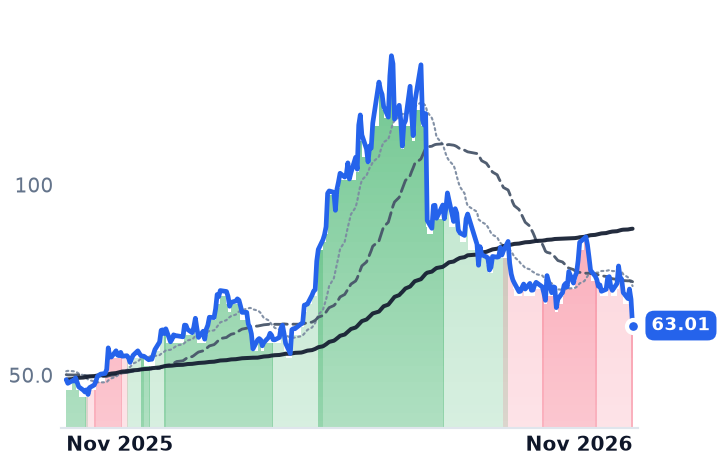
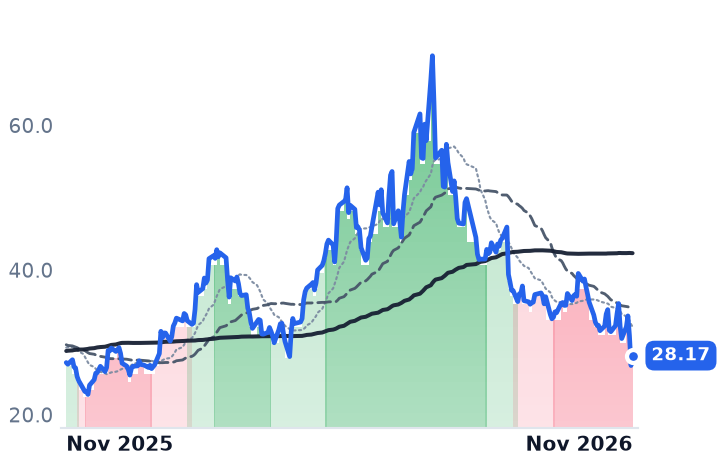
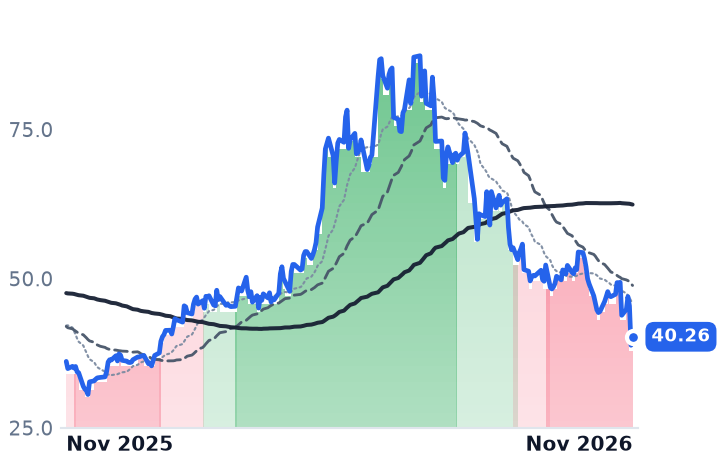
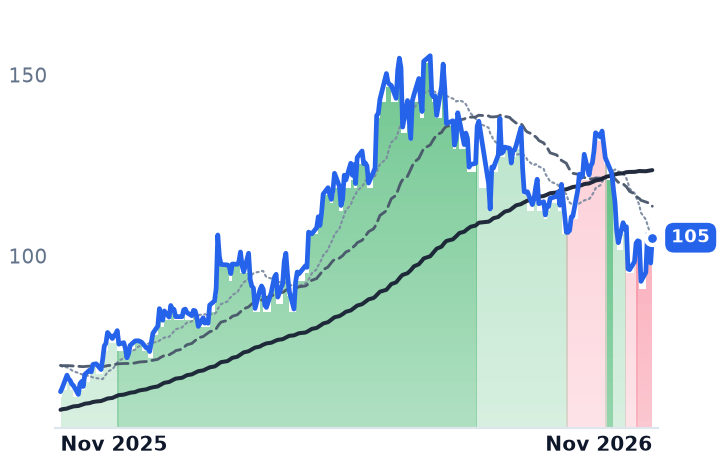
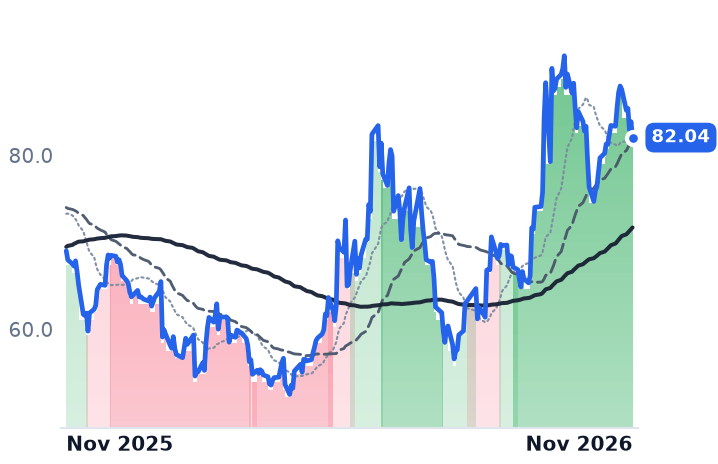
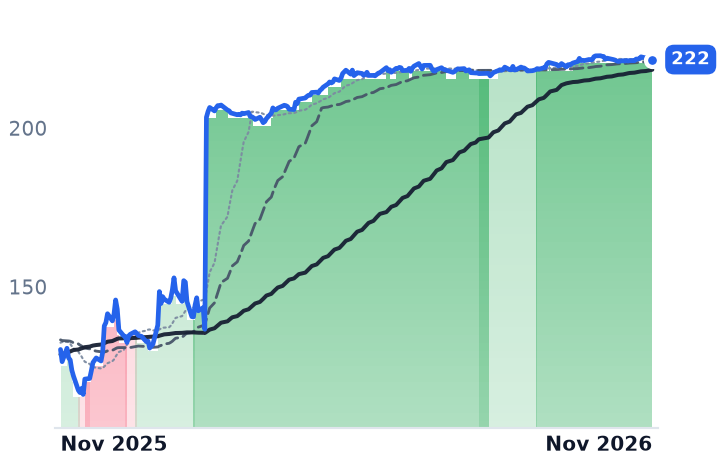
TXN | Texas Instruments Incorporated | Analog & Power Management | 🟢 Cont. Bull | −4.7% | +71.5% |
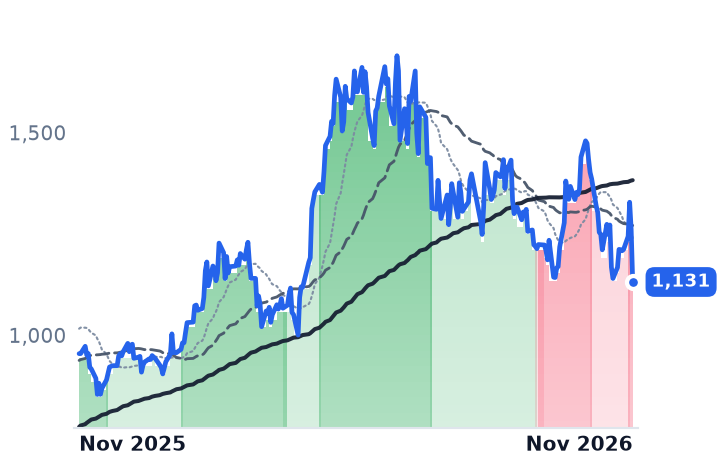
ADI | Analog Devices | Analog & Power Management | 🟢 Cont. Bull | −11.1% | +57.2% |
NXPI | NXP Semiconductors | Processors & Accelerators | ⚠️ Emerging Bear | +5.3% | +21.4% |
MCHP | Microchip Technology Incorporated | Processors & Accelerators | ⚠️ Emerging Bear | −25.6% | −0.2% |
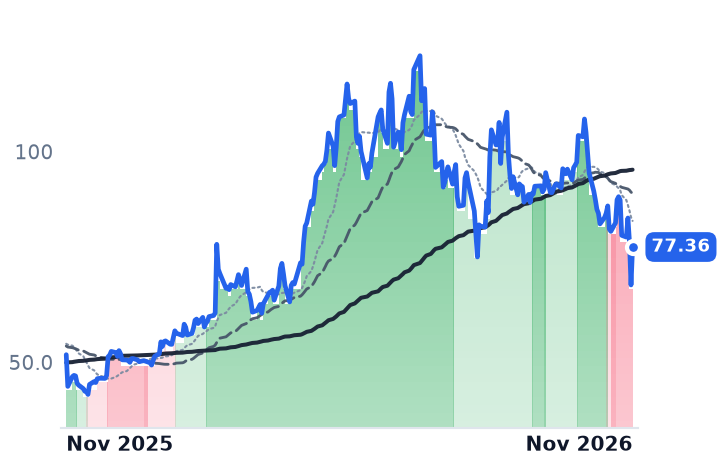
ON | ON Semiconductor | Analog & Power Management | ⚠️ Emerging Bear | −24.8% | +29.7% |
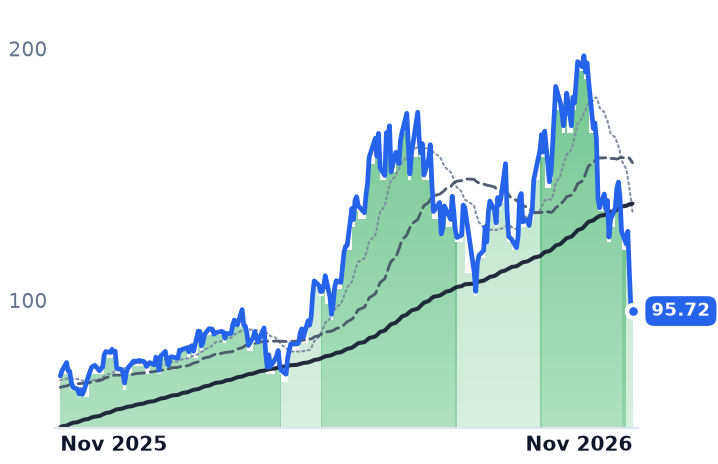
MPWR | Monolithic Power Systems | Analog & Power Management | ⚠️ Emerging Bear | −17.0% | +24.7% |
DIOD | Diodes Incorporated | Analog & Power Management | 🟢 Cont. Bull | −26.0% | +49.3% |
POWI | Power Integrations | Analog & Power Management | ⚠️ Emerging Bear | −22.5% | +11.4% |
SWKS | Skyworks Solutions | Analog & Power Management | 🌱 Emerging Bull | −1.6% | +18.9% |
SLAB | Silicon Laboratories | Analog & Power Management | 🟢 Cont. Bull | −0.4% | +70.1% |
QRVO | Qorvo | Analog & Mixed-Signal | 🟢 Cont. Bull | — | +31.0% |
| Compared against · context, not the story | |||||
SMTC | Semtech | Analog & Power Management | 🟢 Cont. Bull | −49.8% | +37.0% |
ALGM | Allegro MicroSystems | Analog & Power Management | ⚠️ Emerging Bear | −25.2% | +3.5% |
LSCC | Lattice Semiconductor | Processors & Accelerators | ⚠️ Emerging Bear | −19.7% | +68.0% |
QCOM | QUALCOMM Incorporated | Processors & Accelerators | ⚠️ Emerging Bear | −7.0% | −3.4% |
AMD | Advanced Micro Devices | Processors & Accelerators | 🟢 Cont. Bull | −30.5% | +88.9% |
MU | Micron Technology | Memory & Storage | 🟢 Cont. Bull | −32.9% | +189.8% |
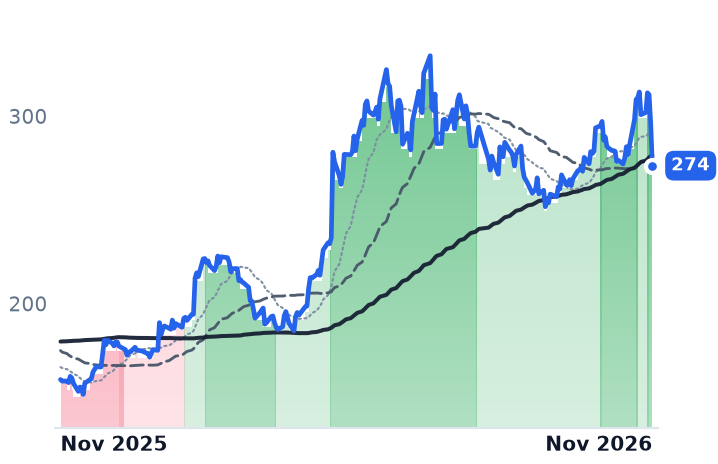
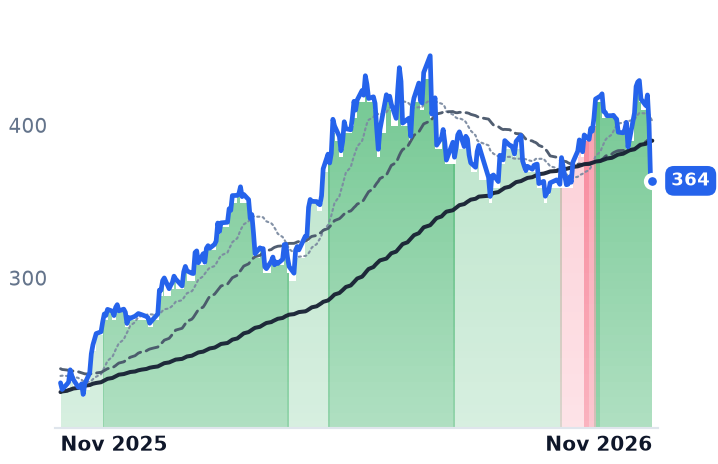
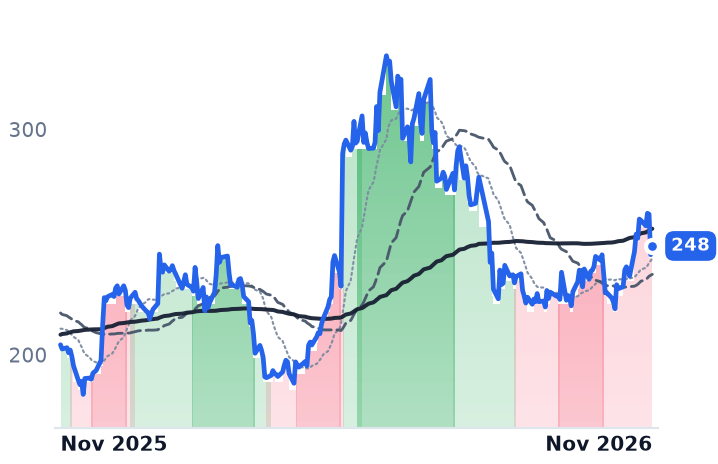
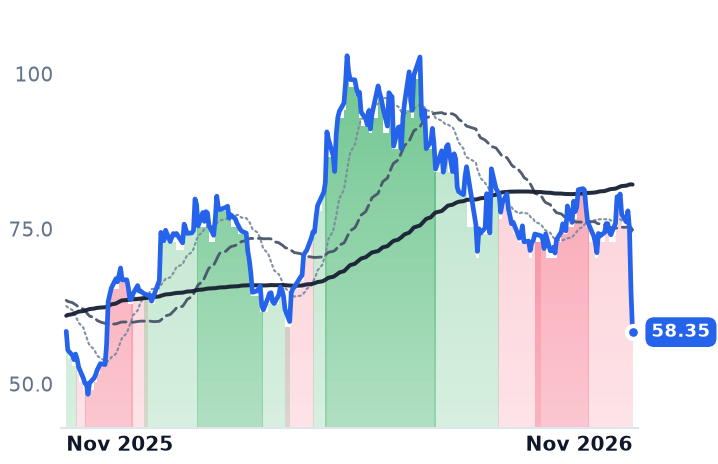
12-month price & trend
| Ticker | Mkt cap | P/E | P/E fwd | P/S | P/S fwd | P/GP | P/GP fwd | EV/EBITDA | FCF yld |
|---|---|---|---|---|---|---|---|---|---|
TXN | $253.4B | 35.9x | 30.7x | 12.2x | 11.3x | 20.3x | 18.8x | 24.0x | 2.9% |
ADI | $176.2B | 42.9x | 21.6x | 12.7x | 9.5x | 19.3x | 14.4x | 26.1x | 2.8% |
NXPI | $62.6B | 19.4x | 16.3x | 4.5x | 4.4x | 8.1x | 7.8x | 13.4x | 5.8% |
| Ticker | Mkt cap | P/E | P/E fwd | P/S | P/S fwd | P/GP | P/GP fwd | EV/EBITDA | FCF yld |
|---|---|---|---|---|---|---|---|---|---|
MCHP | $31.7B | 43.7x | 16.0x | 5.7x | 4.9x | 9.0x | 7.9x | 18.0x | 4.6% |
ON | $24.6B | 36.0x | 19.3x | 3.9x | 3.7x | 10.1x | 9.7x | 15.2x | 6.6% |
MPWR | $58.1B | 65.4x | 40.9x | 15.5x | 13.4x | 28.1x | 24.3x | 48.3x | 1.0% |
| Ticker | Mkt cap | P/E | P/E fwd | P/S | P/S fwd | P/GP | P/GP fwd | EV/EBITDA | FCF yld |
|---|---|---|---|---|---|---|---|---|---|
SMTC | $11.9B | 76.9x | 34.9x | 10.1x | 7.9x | 19.5x | 15.2x | 92.4x | 1.5% |
DIOD | $3.6B | 30.7x | 23.8x | 2.0x | 1.9x | 6.0x | 5.7x | 13.6x | 3.5% |
ALGM | $5.3B | 169.9x | — | 5.2x | — | 10.9x | — | 40.0x | 2.0% |
| Ticker | Mkt cap | P/E | P/E fwd | P/S | P/S fwd | P/GP | P/GP fwd | EV/EBITDA | FCF yld |
|---|---|---|---|---|---|---|---|---|---|
POWI | $2.2B | 49.7x | 28.2x | 4.9x | 4.7x | 9.1x | 8.7x | 31.3x | 4.1% |
LSCC | $17.5B | 484.1x | 60.1x | 26.9x | 19.1x | 39.8x | 28.2x | 200.9x | 1.2% |
SWKS | $12.4B | 71.5x | 14.6x | 3.1x | 1.7x | 7.7x | 4.1x | 17.6x | -0.1% |
| Ticker | Mkt cap | P/E | P/E fwd | P/S | P/S fwd | P/GP | P/GP fwd | EV/EBITDA | FCF yld |
|---|---|---|---|---|---|---|---|---|---|
SLAB | $7.4B | n/m | 76.2x | 8.6x | 8.0x | 14.4x | 13.3x | — | -0.1% |
QRVO | $10.1B | 26.2x | 14.9x | 2.8x | 2.9x | 5.7x | 5.9x | 13.2x | 6.4% |
QCOM | $176.0B | 18.8x | 16.3x | 4.0x | 3.9x | 7.4x | 7.2x | 13.9x | 5.9% |
| Ticker | Mkt cap | P/E | P/E fwd | P/S | P/S fwd | P/GP | P/GP fwd | EV/EBITDA | FCF yld |
|---|---|---|---|---|---|---|---|---|---|
AMD | $1.0T | 156.2x | 80.7x | 24.3x | 19.7x | 45.7x | 37.0x | 93.6x | 0.8% |
MU | $1.0T | 19.9x | 12.2x | 11.2x | 7.8x | 15.4x | 10.7x | 14.5x | 2.6% |
Consensus projections
| Ticker | FY2026E | FY2027E | FY2028E | |
|---|---|---|---|---|
TXN | Revenue | +26.4% | +17.7% | +11.3% |
| EPS | +65.2% | +28.4% | +16.3% | |
ADI | Revenue | +38.1% | +22.9% | +12.0% |
| EPS | +65.9% | +30.6% | +18.5% | |
NXPI | Revenue | +17.0% | +12.3% | +9.3% |
| EPS | +29.2% | +20.5% | +17.3% | |
MCHP | Revenue | +6.2% | +37.3% | +16.6% |
| EPS | +20.7% | +132.9% | +25.7% | |
ON | Revenue | +10.1% | +14.9% | +12.4% |
| EPS | +40.9% | +44.3% | +27.1% | |
MPWR | Revenue | +55.8% | +51.2% | +24.7% |
| EPS | +64.5% | +58.9% | +25.5% | |
SMTC | Revenue | +15.6% | +43.4% | +35.9% |
| EPS | +119.3% | +115.4% | +82.8% | |
DIOD | Revenue | +27.3% | +19.9% | +17.1% |
| EPS | +178.4% | +71.8% | +61.7% | |
ALGM | Revenue | +23.0% | +26.1% | +17.6% |
| EPS | +131.1% | +96.7% | +48.1% | |
POWI | Revenue | +7.7% | +12.3% | +25.3% |
| EPS | +18.1% | +30.1% | +54.3% | |
LSCC | Revenue | +2.3% | +76.6% | +45.1% |
| EPS | +11.9% | +103.0% | +50.7% | |
SWKS | Revenue | −1.9% | +87.9% | +6.4% |
| EPS | −11.1% | +11.6% | +34.7% | |
SLAB | Revenue | +34.2% | +18.1% | +16.8% |
| EPS | −153.0% | +220.4% | +55.0% | |
QRVO | Revenue | −0.8% | −3.9% | +4.2% |
| EPS | +21.6% | +17.4% | +5.0% | |
QCOM | Revenue | −1.5% | +4.6% | +16.0% |
| EPS | −11.5% | −4.0% | +28.2% | |
AMD | Revenue | +49.4% | +75.5% | +37.7% |
| EPS | +92.6% | +108.1% | +44.1% | |
MU | Revenue | +248.0% | +92.8% | +11.4% |
| EPS | +804.9% | +111.2% | +7.9% |
Forward fiscal years only. Blank means no analyst coverage for that year.
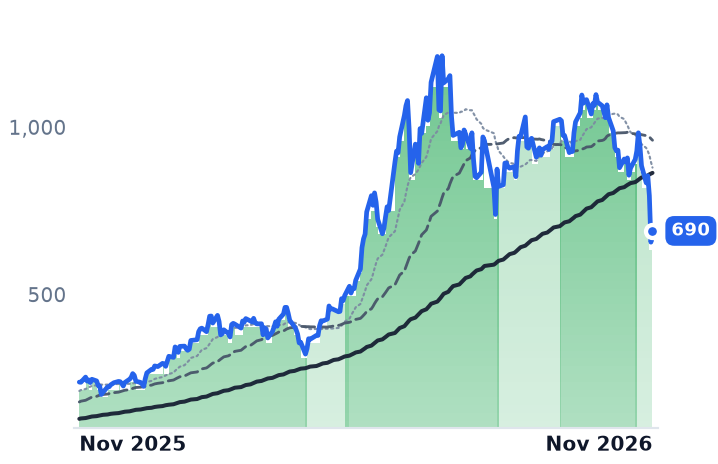
Texas Instruments told investors in October that its data center business had nearly doubled from a year earlier and now runs at about 13% of revenue. Three weeks later that was the part of the company the market wanted least.
The analog chipmakers spent two years being traded as a bet on industrial and automotive restocking, a cycle with its own clock and no particular relationship to artificial-intelligence capital spending. That belief went into November intact and came out of 5 November damaged. The Philadelphia Semiconductor Index fell roughly 9% that session, with the Nasdaq Composite down 5.5%, after Qualcomm guided current-quarter revenue below consensus and Democratic election victories raised investor expectations of tighter congressional scrutiny of data-center construction, power permitting and AI-infrastructure spending. Analog's newest socket is the one Washington was suddenly discussing.
The category's markdown was mostly the smaller companies
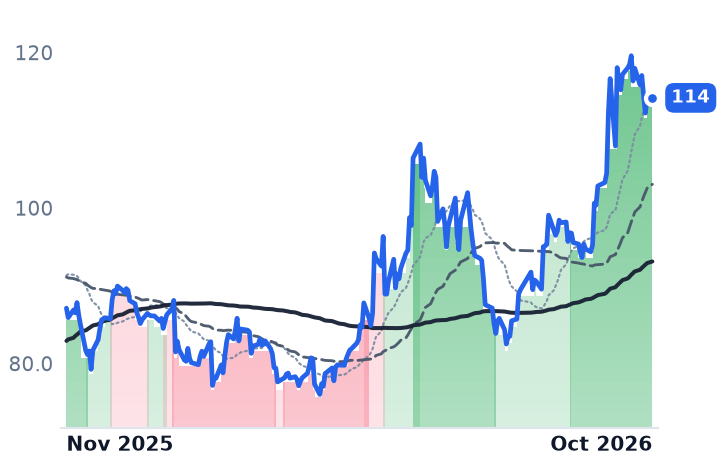
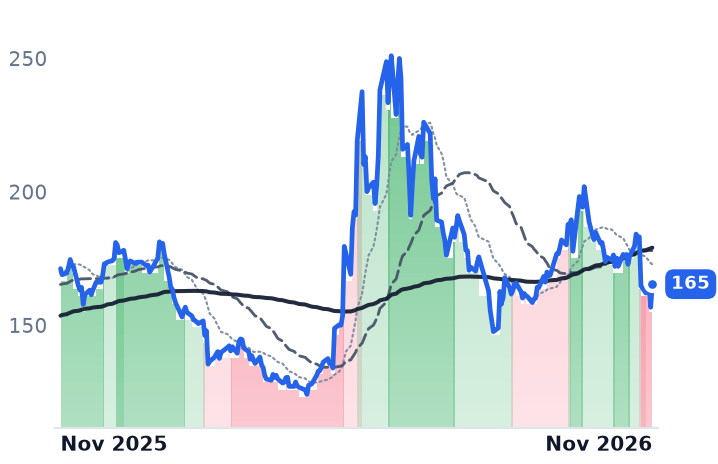
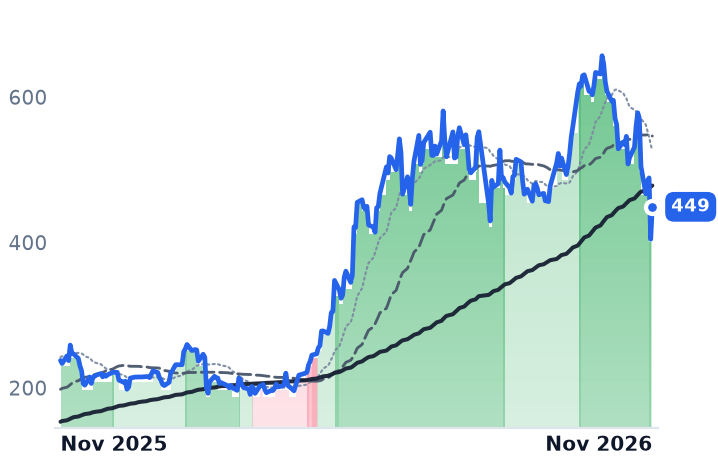
Over the 30 trading days to 6 November the analog shelf came apart by size rather than by fundamentals. Semtech fell 49.8%, Diodes 26.0%, Microchip 25.6%, ON Semiconductor 24.8% and Monolithic Power 17.0%. Texas Instruments lost 4.7% and NXP actually gained 5.3%. What hit the three big names was two sessions: between 4 and 6 November Texas Instruments fell 12.2%, Analog Devices 9.2% and NXP 5.4%, with Analog Devices trading 13.1m shares on 5 November against a typical two to four million. Analog Devices' highest close of the past 120 days was $429.25, set on 29 October.
What a 300mm wafer saves Texas Instruments
The fixed cost of the fabs built for this cycle is converting into margin right now. Texas Instruments, which sells power-management and signal-chain analog parts and embedded processors into industrial, automotive and electronics customers, has lifted gross margin from 55.9% to 64.2% across four quarters while revenue growth accelerated from 10.4% to 27.7% year on year. The company puts the cost advantage of its 300mm wafer manufacturing at roughly 40% against 200mm alternatives. Industrial revenue grew 40% in the September quarter, reaching its 2022 peak for the first time in four years.
"I do believe that systems that are being designed by our customers 4 years later than the COVID peak are much more rich with content," chief executive Haviv Ilan told investors on 21 October, the day the company guided fourth-quarter revenue to $5.8bn to $6.3bn.
The depreciation on that capacity is landing — $2.2bn to $2.4bn projected for 2026 after rising 23% in the first half, against capex cut to $2bn to $3bn — which is why trailing free cash flow inflected to $8.4bn from $2.4bn a year earlier, $1.6bn of it CHIPS Act incentives. It is also the most expensive stock of the three at 35.9x trailing earnings and 18.8x forward gross profit, so the strongest operating momentum has the least room in its price.
Analog Devices' channel is running below its own target
Analog Devices, whose data converters, amplifiers and isolators go to industrial, instrumentation and automotive customers, is accelerating too: revenue growth of 30.4%, 37.2% and 39.6% year on year across its last three quarters, GAAP gross margin up from 64.7% to 67.3%. Non-GAAP gross margin of 72.5% in the August quarter was 330 basis points higher than a year before, "driven by higher revenue, utilization, and favorable mix", and the company guided its fiscal fourth quarter to $4.3bn plus or minus $100m at about 74% gross margin and 52% operating margin.
Distributor channel inventory sits below its six-to-seven-week target and is expected to stay there. Management described book-to-bill as above one but "not in an unusually high space from a book-to-bill perspective" on its 19 August call, with no current signs of restocking. The trailing multiple has compressed from 57.9x in August to 42.9x; on consensus fiscal 2027 earnings, 30.6% above this year's, it is 21.6x.
NXP got the margin from utilization, not price
NXP's 58.6% non-GAAP gross margin in the September quarter was 160 basis points better year on year, and management attributed it to factories running in the mid-80s rather than to price increases. Pricing for 2026 was revised from a low-single-digit decline to neutral. Automotive revenue crossed $2bn for the first time, up 17% excluding sensors, on content per vehicle in a flattish production environment. "The book to bill remains well above 1 across all end markets and regions," chief financial officer William Betts said on 27 October. "Our backlog continues to grow in dollars and extend further into 2027."
Two things sit against that. NXP guided 2027 capex to 5% of revenue from roughly 2%, so its depreciation headwind is ahead of it while Texas Instruments' peaks. And 17% to 18% of revenue is China-for-China, about a third of it manufactured locally, with a local foundry partnership under way against Beijing's push for domestic automotive chips. At 13.5x consensus 2027 earnings and 7.8x forward gross profit, it is the cheapest of the three by a wide margin, and the only one up over three months.
What the quarters explain and what they do not
The results account for essentially none of the two-day fall. All three guided higher inside the markdown window, utilization is rising, channel inventory is thin and lead times at NXP have stretched so that 80% now exceed 16 weeks against 25% a year ago. What the results do explain is the gap between what the three cost. Texas Instruments is priced for the fall-through its own model promises on incremental revenue; NXP is discounted for automotive cyclicality, a capex step-up and China; Analog Devices sits between them, having given back a third of its trailing multiple since August with nothing visible broken.
The transmission mechanism is the thing to keep. Data center is the fastest-growing line at each of the three, and that leg is now valued the way AI infrastructure is valued rather than the way analog is. Analog Devices' fiscal fourth-quarter numbers are still to come, and they will be the first read on whether an election result changed any analog order at all.