

Stryker and Globus Grew Their Robot Lines Faster Than the Implants Those Robots Install
Hypothesis Opus 5 · Research Opus 5 · Writing Opus 5 · Prompt v1.7
The capital a device maker parks in an operating room is supposed to protect the implant invoice behind it. Last quarter the capital line grew and the implant line did not, and the squeeze is not coming from the price list: Zimmer Biomet put pricing at a 0.7 percentage point headwind and says implant cost as a share of the hospital's payment is at a 22-year low.
What caps a case now is approval and attachment. Globus Medical's revenue fell 0.7% with US spine up 2%; Alphatec grew procedures 20% and collected 5% less per case as biologics attachment collapsed. Three of the four makers examined here cut full-year revenue guidance in the same month the group re-rated, and the only one that raised sold its spine business years ago.
| Ticker | Company | Segment | Trend · 13mo | 30D | 1Y |
|---|---|---|---|---|---|
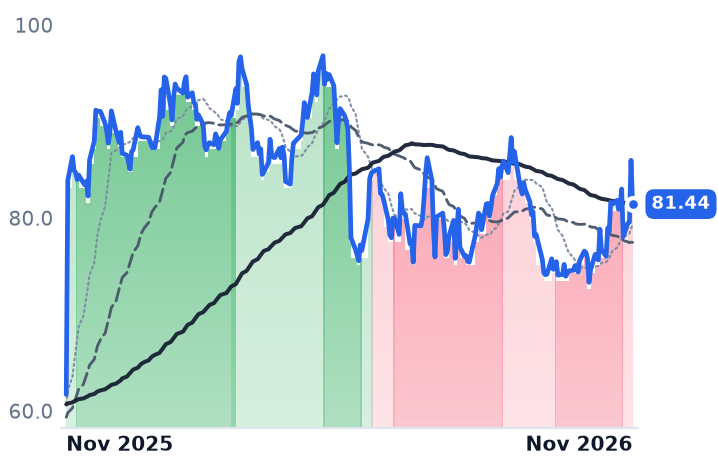
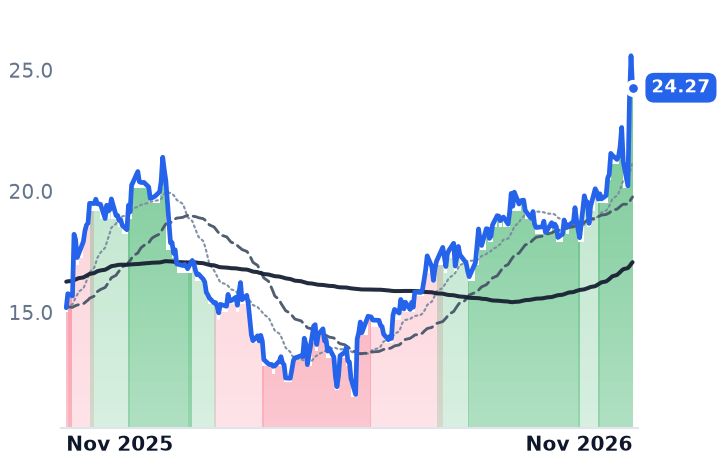
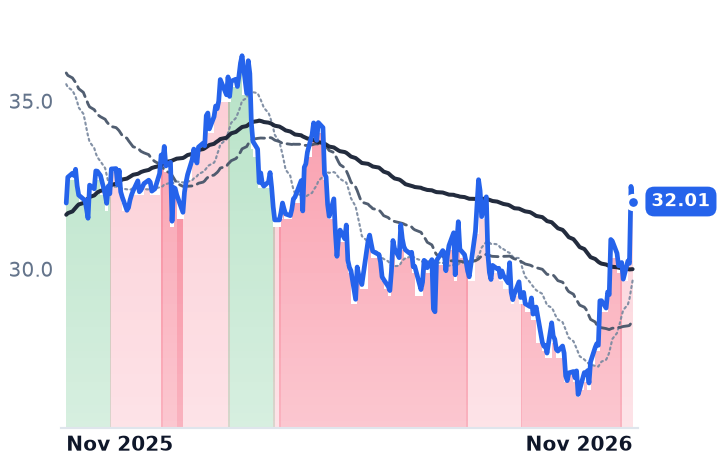
GMED | Globus Medical | Orthopedic & Spine Implants | 🔴 Cont. Bear | +7.4% | +32.0% |
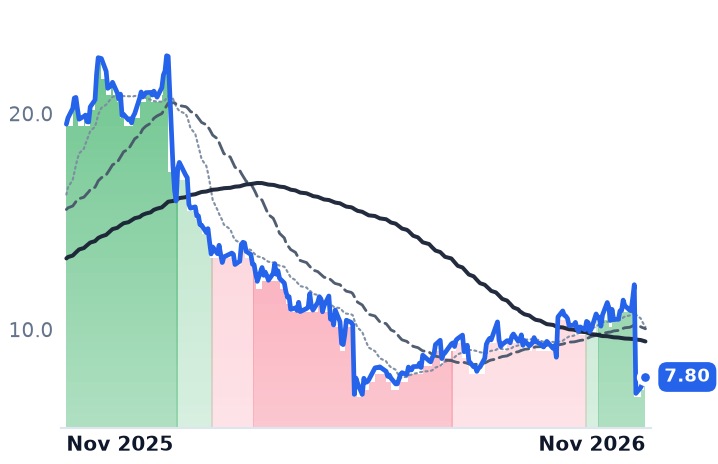
ATEC | Alphatec | Orthopedic & Spine Implants | 🌱 Emerging Bull | −26.2% | −60.0% |
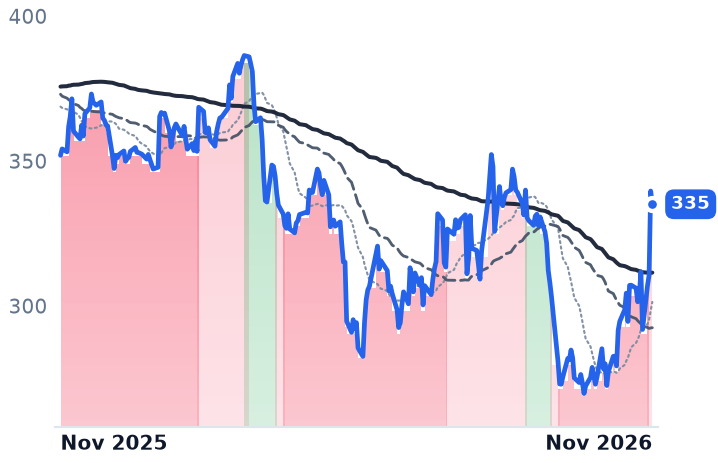
SYK | Stryker | Orthopedic & Spine Implants | 🔴 Cont. Bear | +19.7% | −4.8% |
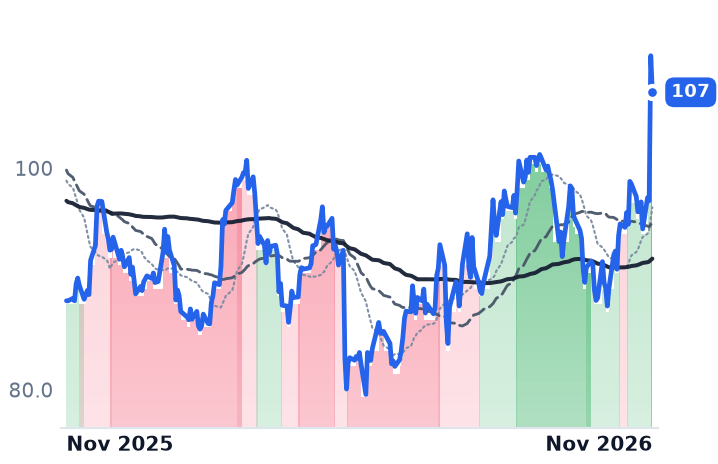
ZBH | Zimmer Biomet | Orthopedic & Spine Implants | 🟢 Cont. Bull | +19.9% | +21.4% |
SIBN | SI-BONE | Orthopedic & Spine Implants | 🟢 Cont. Bull | +24.1% | +59.8% |
SNN | Smith & Nephew | Orthopedic & Spine Implants | 🔴 Cont. Bear | +18.7% | +0.1% |
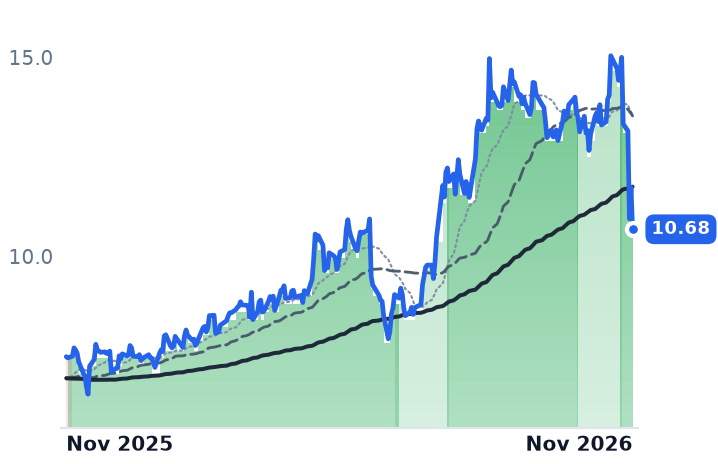
BVS | Bioventus | Orthopedic & Spine Implants | 🟢 Cont. Bull | −18.9% | +42.8% |
12-month price & trend
| Ticker | Mkt cap | P/E | P/E fwd | P/S | P/S fwd | P/GP | P/GP fwd | EV/EBITDA | FCF yld |
|---|---|---|---|---|---|---|---|---|---|
GMED | $10.9B | 19.7x | 16.3x | 3.5x | 3.4x | 6.6x | 6.4x | 11.7x | 6.9% |
ATEC | $1.2B | n/m | 26.5x | 1.4x | 1.4x | 2.2x | 2.1x | 53.3x | 0.4% |
SYK | $127.6B | 35.5x | 22.6x | 4.9x | 4.8x | 7.4x | 7.3x | 21.1x | 3.6% |
| Ticker | Mkt cap | P/E | P/E fwd | P/S | P/S fwd | P/GP | P/GP fwd | EV/EBITDA | FCF yld |
|---|---|---|---|---|---|---|---|---|---|
ZBH | $20.4B | 26.9x | 12.5x | 2.4x | 2.4x | 3.4x | 3.4x | 12.0x | 8.1% |
SIBN | $1.1B | n/m | — | 4.9x | 4.7x | 6.2x | 5.9x | n/m | -0.4% |
SNN | $13.4B | 20.4x | 14.6x | 2.0x | 2.1x | 3.0x | 3.0x | 9.6x | 6.5% |
| Ticker | Mkt cap | P/E | P/E fwd | P/S | P/S fwd | P/GP | P/GP fwd | EV/EBITDA | FCF yld |
|---|---|---|---|---|---|---|---|---|---|
BVS | $731.3M | 12.6x | 13.9x | 1.2x | 1.2x | 1.8x | 1.8x | 9.3x | 11.6% |
Consensus projections
| Ticker | FY2026E | FY2027E | FY2028E | |
|---|---|---|---|---|
GMED | Revenue | +9.9% | +6.0% | +5.8% |
| EPS | +29.8% | +7.8% | +8.9% | |
ATEC | Revenue | +13.4% | +13.3% | +13.0% |
| EPS | +880.3% | +91.5% | +43.2% | |
SYK | Revenue | +7.0% | +7.1% | +7.5% |
| EPS | +9.4% | +10.0% | +10.8% | |
ZBH | Revenue | +4.7% | +3.6% | +3.9% |
| EPS | +4.4% | +6.1% | +7.2% | |
SIBN | Revenue | +16.1% | +15.5% | +15.2% |
| EPS | −36.2% | −12.2% | −45.9% | |
SNN | Revenue | +5.3% | +5.2% | +5.5% |
| EPS | +10.4% | +9.0% | +11.8% | |
BVS | Revenue | +5.6% | +6.3% | +6.8% |
| EPS | +16.1% | +15.6% | +16.5% |
Forward fiscal years only. Blank means no analyst coverage for that year.
The capital parked in the operating room was supposed to protect the implant invoice. Last quarter it outgrew it. Stryker's orthopaedic technology line grew 18% while the US knee implants that technology helps place grew 1.3%. Globus Medical deployed 73% more robot and navigation units to book 24% more enabling-technology revenue, less money per unit than a year ago. Alphatec collected 5% less per surgical case even as its procedure count climbed.
The standing explanation for the squeeze, relentless annual price erosion, is not what these quarters show: Zimmer Biomet's pricing was a 0.7 percentage point headwind and it says implant cost as a share of the hospital's payment is at a 22-year low. What caps the case is approval and attachment. Three of the four makers here cut full-year revenue guidance in the same month the group re-rated; the one that raised sold its spine business years ago.
The industry's answer to a price list it does not set has been to put capital in the operating room: a robot, a navigation tower, an imaging system, placed with the surgeon and paid back over years through implants, disposables and service. Across four makers that reported inside eight days, the capital line is where the growth is and the implant line is where it is not. The constraint is not the price per screw. It is how many cases get approved, and how much of each case the maker actually bills.
Globus turned the robot into a rental
Globus Medical, which sells spinal implants, trauma hardware, interventional pain devices and the robots that place them, reported revenue of $763.7m, down 0.7%. Its quarterly exhibit puts Musculoskeletal Solutions at $728.9m, down 1.6%, and Enabling Technologies at $34.9m, which is 4.6% of the invoice the company sends.
That capital line grew 24% while unit deployments rose 73%, which works out at roughly 28% less revenue per unit deployed. Management calls the trade deliberate: a shift toward rentals, leases and volume-based placements that books less revenue upfront in exchange for recurring implant, disposable and service pull-through. On a unit basis that includes sales, rentals and leases, the company put the line up 45% year on year, a different population from the deployment figure.
The pull-through has not arrived. US spine grew 2% against double-digit growth a year earlier, which management attributed to product launches pushed from the second half of 2026 into 2027 and a slower pace of competitive surgeon recruiting.
Guidance for the year came down to $3.09bn from $3.18–3.22bn while non-GAAP earnings of $4.95–5.05 a share were held, and the board added $500m to the buyback. Operating margin reached 23.2% against 17.6% a year earlier, and free cash flow was a record $225m. The shares trade at 16.3x forward earnings versus 19.7x trailing, with one snag: consensus 2026 revenue of $3.20bn still sits 3.5% above the company's own cut guide.
Alphatec is winning the case and not billing it
Alphatec, a spine-only maker whose Invictus fixation, Valence navigation and EOS imaging go to a widening roster of surgeons, grew procedures 20% and added a record number of net new surgeons, up 25%. Revenue per case fell 5%. Biologics, which the company says historically contributed $15–25m of annual growth, declined by about $1m, leaving hardware to carry the quarter; management named the cause as a lack of discipline across its sales force and distributors, which let cheaper rivals win separate hospital tenders.
"We're undoubtedly earning the procedures…but not pulling through the entire procedure," chief executive Patrick Miles told investors on 29 October.
Unit economics moved the opposite way from the case. Gross margin reached 71.5%, up two points; adjusted EBITDA rose 46% to $38m; operating income turned positive at $3.2m against a $15.9m loss a year earlier. The balance sheet is the binding constraint: $80m of cash, a $55m revolver, about $10m of free cash flow guided for the year, and diluted shares up 4% to 157.4m. The stock went from $11.45 on 28 October to $7.04 two sessions later, a fall press coverage put at 36% on the print. With a $5.5m net loss there are no earnings to capitalise, so the comparable base is gross profit, where Alphatec sits at 2.1x forward against 6.4x for Globus.
The price evidence comes from the company with no spine line
Zimmer Biomet has not owned spine since spinning out ZimVie in March 2022, and ZimVie then sold that business for $375m. It nonetheless supplies the group's clearest pricing disclosure, and it undercuts the erosion premise: pricing was a 0.7 percentage point headwind in the quarter, inside a flat-to-one-point full-year guide, and the company says implant cost as a share of the hospital's payment is at a 22-year low. About a quarter of its business is exposed to ambulatory surgery centers and growing at double digits.
Its technology and data line grew 13% in constant currency, 30% in the US, with robotics, data and AI up 20%. Global knees fell 2.6%. "[K]nees, global knees is roughly 1/3 of our entire book of business… and then 2/3 of the company is something else," chief executive Ivan Tornos said on 4 November. Zimmer lifted full-year guidance to 3.0–3.5% organic constant-currency growth and $8.50–8.60 of adjusted earnings, and trades at 12.5x forward against 26.9x trailing, the widest gap of the four.
The gain landed before the numbers did
Every member of this shelf rose 6–12% between 6 and 28 October, before anyone reported. The larger leg came in a single session on 4 November, after Democrats took both chambers and analysts pointed to delayed Medicaid cuts and restored insurance subsidies: Zimmer Biomet gained 12.5%, Stryker 9.4% and Globus 8.0%, part of the post-midterm healthcare trade that lifted the insurer Centene 12.6% the same day.
Almost none of it is earnings. Three of these four cut full-year revenue guidance, and the only one that raised is the one with no spine business. Stryker carries the richest valuation of the group at 22.6x forward earnings for roughly 7% organic growth, in a market its chief executive sized plainly: "It's hard to estimate exactly, but I would say market growth is kind of in the 2.5% range this year," Kevin Lobo said on 29 October. Stryker attributes its US slowdown to affordability, with premiums, deductibles and pre-authorisation denials delaying joint patients, and says its share is flat to slightly positive.
More machines cannot fix that arithmetic. Two-thirds of Stryker's US knee procedures and a third of its hips are already robot-assisted, on an installed base of about 3,000 Mako systems at the end of 2025. Its answer for surgery centers is a different machine, the handheld Mako RPS.
The split inside the group has a cause. Globus and Stryker held profitability while case growth stalled, and their shares held with it; Alphatec's shortfall landed in the money per case, the one variable its valuation rests on, and the stock is down 26% over 30 days. Where the economics of a case genuinely improved, a payer decided it: new payment groups for multilevel spinal fusion with pelvic fixation took effect on 1 October 2026, and SI-Bone's chief executive Laura Francis said on 2 November that "[d]epending on patient diagnosis and severity, the increase in the average hospital payment could be up to $50,000 per qualifying procedure."
Zimmer Biomet's case for pulling its autonomous system forward is that 80% of US surgeons still operate without a robot. That base has to be placed somewhere, and the terms are drifting away from a sale: rented machines, leased machines, machines parked in surgery centers whose owners are themselves changing hands, as the Surgery Partners network agreed in late October to go private in an all-cash deal with an affiliate of Bon Secours Mercy Health.