

SpaceX's 9,600 Satellites Flooded the Market Viasat and Telesat Still Have to Sell Into
Hypothesis Opus 5 · Research Opus 5 · Writing Opus 5 · Prompt v1.7
The satellite operators spent a year being marked up for completed constellations and spectrum cash, and the bandwidth those assets produce is arriving in quantities none of them can sell. Viasat's ViaSat-3 constellation tripled its fleet bandwidth to roughly 3 terabits a second, under half a percent of what Starlink carries, while its US home broadband base fell to about 130,000 from 172,000 in nine months.
Telesat is the clearest case: September-quarter revenue down 20% to C$81m, Lightspeed consuming $368m in the quarter, and US$1.71bn due on 6 December against a $606m equity value. EchoStar's gain traces to spectrum sales and a $9.73bn accounting gain it says is not currently taxable. Iridium, in narrowband, is the one member still adding subscribers and still growing revenue.
| Ticker | Company | Segment | Trend · 13mo | 30D | 1Y |
|---|---|---|---|---|---|
| The subject · what this brief is about | |||||
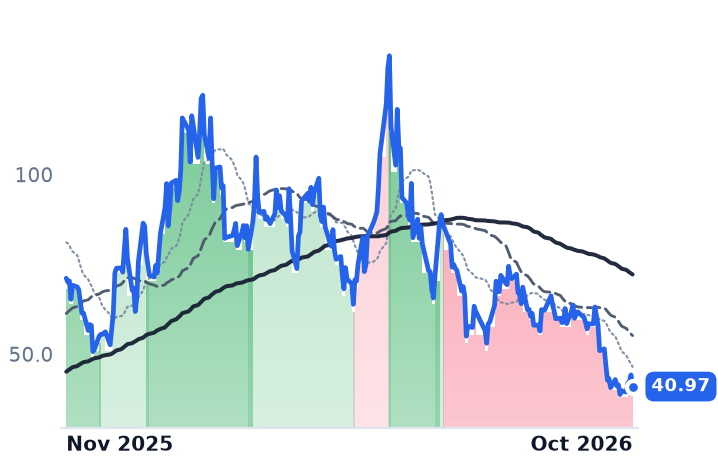
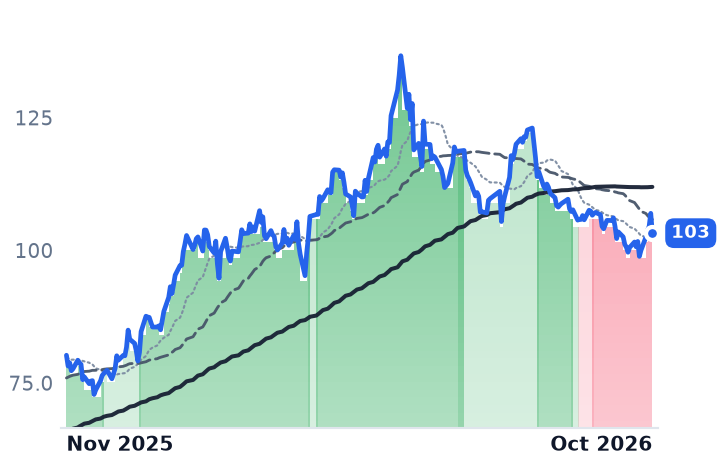
VSAT | Viasat | Broadband Service Provider Solutions | 🟢 Cont. Bull | +10.4% | +100.6% |
TSAT | Telesat | Satellite Communications | 🟢 Cont. Bull | −13.2% | +34.9% |
IRDM | Iridium Communications | Satellite Communications | 🟢 Cont. Bull | −7.3% | +148.9% |
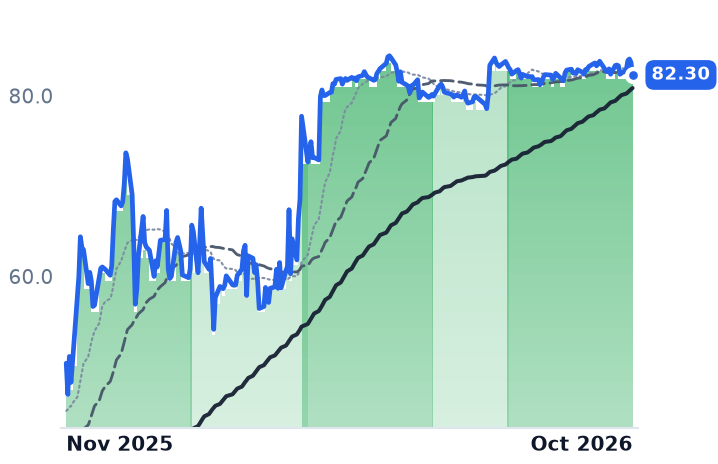
SIRI | Sirius XM | Audio Entertainment | ⚠️ Emerging Bear | +10.3% | +35.9% |
GOGO | Gogo | Niche Connectivity | 🔴 Cont. Bear | +10.3% | −73.2% |
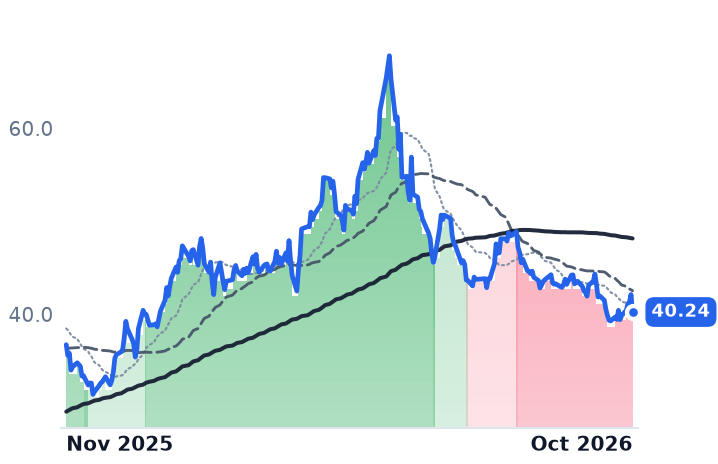
SATS | Strive, Inc. 15.00% Series A Perpetual SATS Preferred Stock | Satellite & Broadband Services | 🔴 Cont. Bear | −2.5% | +23.7% |
| Compared against · context, not the story | |||||
ECHO | EchoStar | Satellite Communications | 🔴 Cont. Bear | −1.3% | +28.6% |
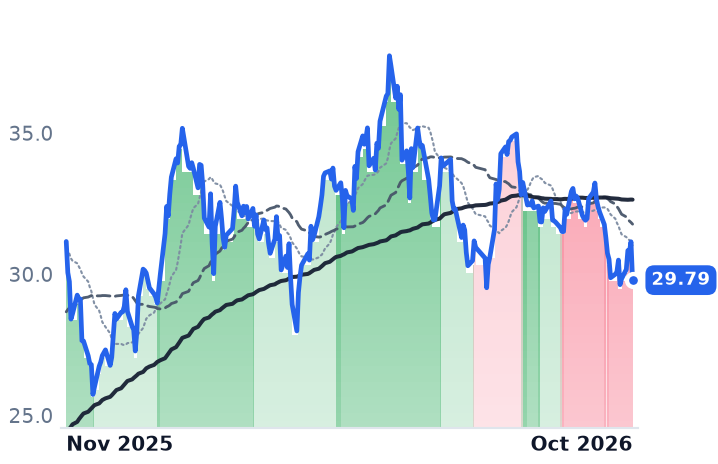
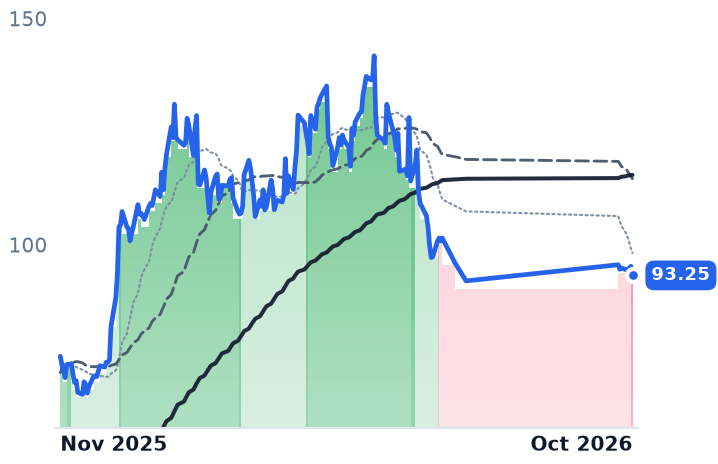
SPCX | Space Exploration Technologies | Space Systems & Launch | 🌱 Emerging Bull | −21.3% | −16.3% |
RKLB | Rocket Lab USA | Space Systems & Launch | 🔴 Cont. Bear | −25.0% | −10.8% |
ASTS | AST SpaceMobile | Satellite Communications | 🔴 Cont. Bear | −29.9% | −42.4% |
GSAT | Globalstar | Satellite Communications | 🟢 Cont. Bull | −1.5% | +63.4% |
UFO | Procure Space ETF | Asset Management | 🔴 Cont. Bear | −7.6% | +9.6% |
ARKX | ARK Space & Defense Innovation ETF | Asset Management | ⚠️ Emerging Bear | −9.5% | −4.4% |
ROKT | State Street SPDR S&P Kensho Final Frontiers ETF | Asset Management | ⚠️ Emerging Bear | −2.3% | +28.7% |
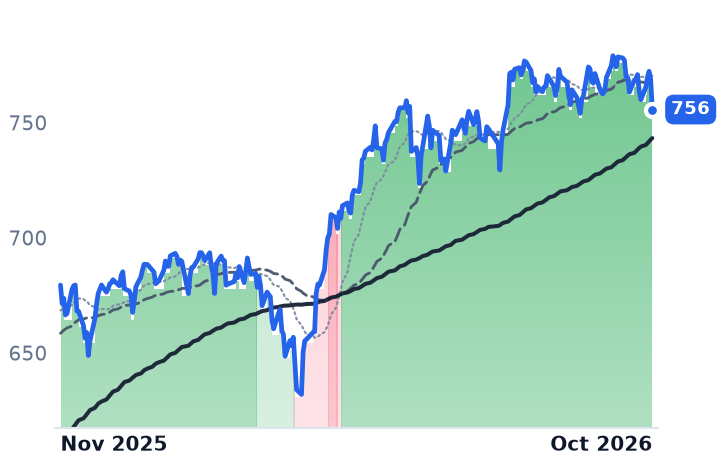
SPY | State Street SPDR S&P 500 ETF Trust | Asset Management | 🟢 Cont. Bull | −2.5% | +11.2% |
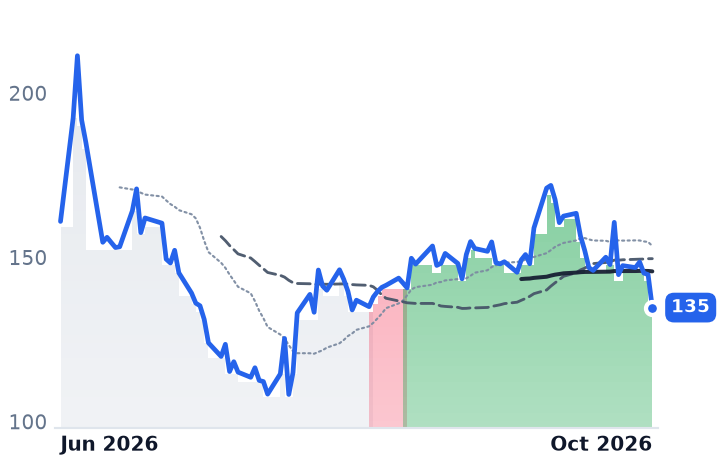
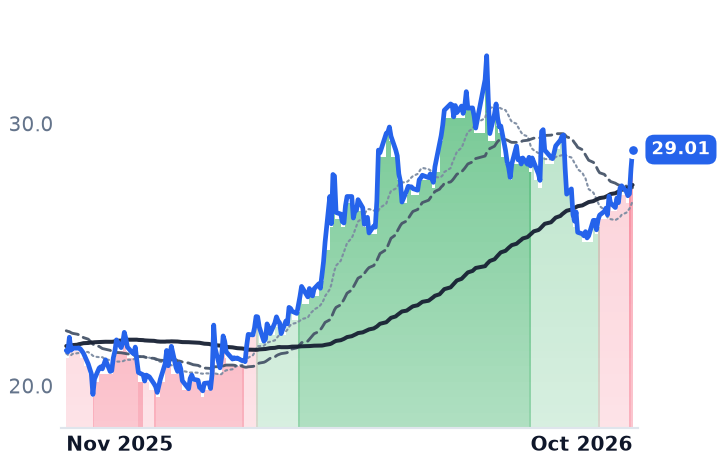
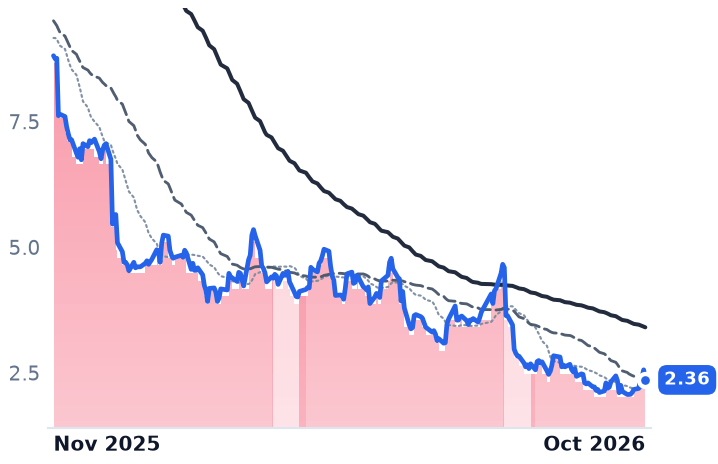
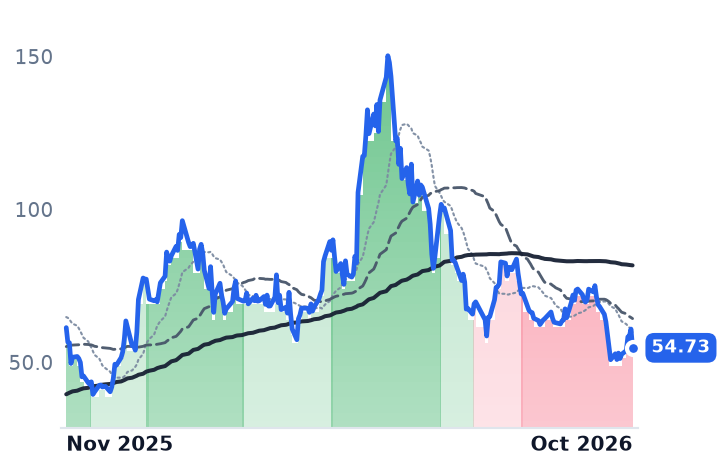
12-month price & trend
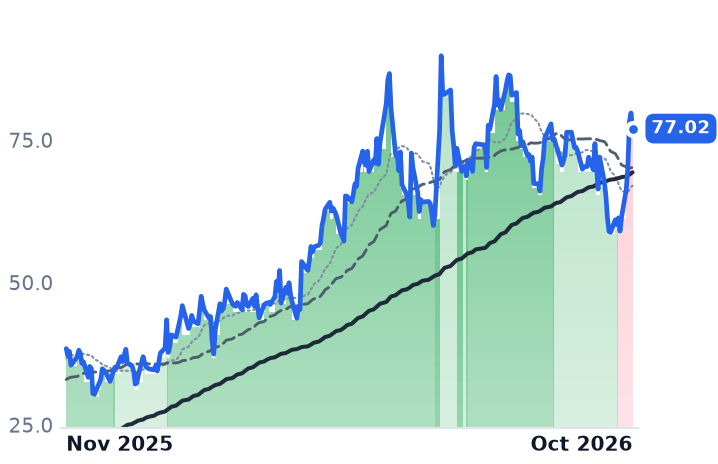
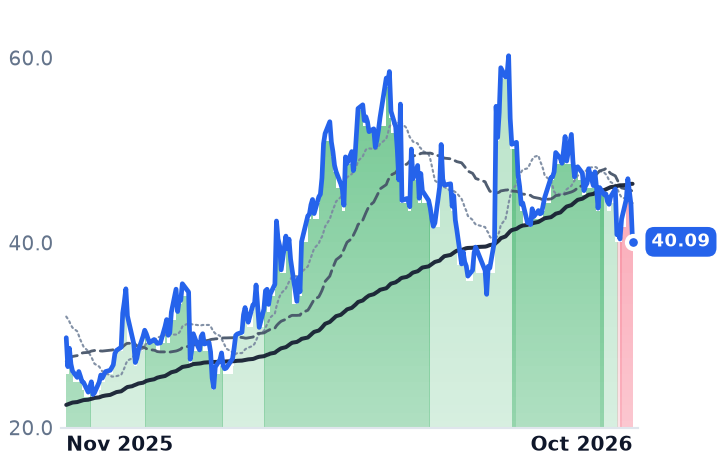
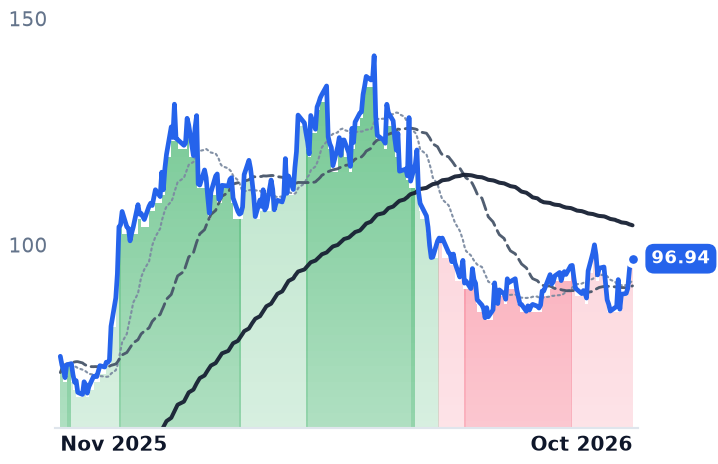
| Ticker | Mkt cap | P/E | P/E fwd | P/S | P/S fwd | P/GP | P/GP fwd | EV/EBITDA | FCF yld |
|---|---|---|---|---|---|---|---|---|---|
VSAT | $10.6B | n/m | — | 2.3x | 2.2x | 7.5x | 7.2x | 8.8x | 5.5% |
TSAT | $605.6M | n/m | — | 2.5x | 1.8x | 5.9x | 4.4x | n/m | -20.8% |
ECHO | $15.5B | n/m | 4.0x | 1.1x | 1.1x | 3.6x | 3.7x | n/m | -1.8% |
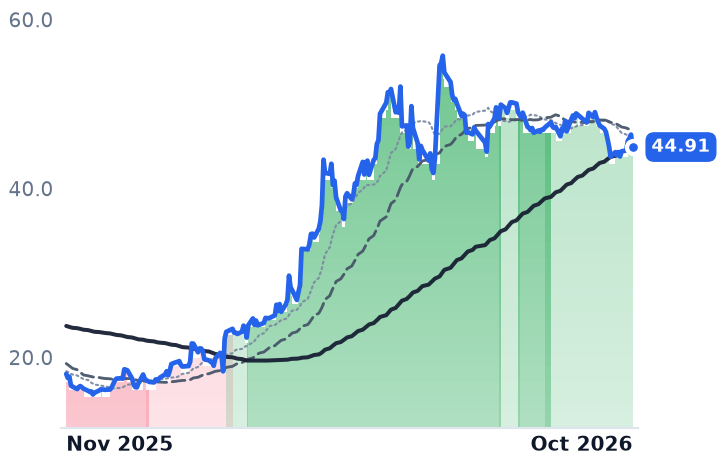
| Ticker | Mkt cap | P/E | P/E fwd | P/S | P/S fwd | P/GP | P/GP fwd | EV/EBITDA | FCF yld |
|---|---|---|---|---|---|---|---|---|---|
IRDM | $4.8B | 29.4x | 36.0x | 5.3x | 5.1x | 6.9x | 6.8x | 13.7x | 5.8% |
SPCX | $2.0T | n/m | — | 121.0x | 45.5x | 238.4x | 89.6x | 304.8x | -1.2% |
SIRI | $9.8B | 10.9x | 9.7x | 1.1x | 1.1x | 2.4x | 2.4x | 8.1x | 16.2% |
| Ticker | Mkt cap | P/E | P/E fwd | P/S | P/S fwd | P/GP | P/GP fwd | EV/EBITDA | FCF yld |
|---|---|---|---|---|---|---|---|---|---|
GOGO | $319.8M | n/m | 33.7x | 0.4x | 0.4x | 0.7x | 0.7x | 7.5x | -15.9% |
RKLB | $34.3B | n/m | — | 44.5x | 35.7x | 119.5x | 95.8x | n/m | -1.1% |
ASTS | $23.7B | n/m | — | 205.7x | 147.8x | — | — | n/m | -6.9% |
| Ticker | Mkt cap | P/E | P/E fwd | P/S | P/S fwd | P/GP | P/GP fwd | EV/EBITDA | FCF yld |
|---|---|---|---|---|---|---|---|---|---|
GSAT | $10.8B | n/m | — | 38.3x | 37.7x | 78.0x | 76.6x | 172.7x | 1.7% |
UFO | $177.4M | — | — | — | — | — | — | — | — |
ARKX | $543.3M | — | — | — | — | — | — | — | — |
| Ticker | Mkt cap | P/E | P/E fwd | P/S | P/S fwd | P/GP | P/GP fwd | EV/EBITDA | FCF yld |
|---|---|---|---|---|---|---|---|---|---|
ROKT | $44.2M | — | — | — | — | — | — | — | — |
SPY | $773.0B | — | — | — | — | — | — | — | — |
SATS | $652.8M | n/m | — | 157.0x | 55.5x | — | — | n/m | -9.9% |
Consensus projections
| Ticker | FY2026E | FY2027E | FY2028E | |
|---|---|---|---|---|
VSAT | Revenue | +3.6% | +3.9% | +4.6% |
| EPS | −66.9% | +40.3% | +1.4% | |
TSAT | Revenue | −21.2% | −12.8% | +92.9% |
| EPS | +314.1% | −55.6% | −29.5% | |
ECHO | Revenue | −5.2% | −7.0% | −6.7% |
| EPS | −153.8% | −87.8% | +11.9% | |
IRDM | Revenue | +5.5% | +4.7% | +2.9% |
| EPS | +16.3% | −18.9% | −6.9% | |
SPCX | Revenue | +128.5% | +148.6% | +81.4% |
| EPS | −102.4% | +2671.4% | +145.2% | |
SIRI | Revenue | +0.5% | +1.4% | +2.2% |
| EPS | +7.3% | +11.3% | +6.9% | |
GOGO | Revenue | −1.8% | +3.9% | +13.6% |
| EPS | −63.8% | +400.0% | +48.6% | |
RKLB | Revenue | +59.9% | +45.4% | +32.6% |
| EPS | −27.9% | −91.6% | −1346.5% | |
ASTS | Revenue | +174.7% | +344.1% | +146.7% |
| EPS | +98.2% | −45.8% | −119.7% | |
GSAT | Revenue | +4.9% | +21.3% | +48.7% |
| EPS | −1748.3% | −83.3% | −399.0% | |
SATS | Revenue | +135.9% | −4.9% | +5.1% |
| EPS | −77.9% | −323.7% | −139.2% |
Forward fiscal years only. Blank means no analyst coverage for that year.
SpaceX's broadband and mobile fleet reached roughly 9,600 satellites by the end of March, about three-quarters of all active maneuverable satellites in orbit, and the capacity they carry is now the fact every other satellite operator's income statement answers to. SpaceX's registration statement puts the constellation's cumulative downlink above 700 terabits a second and Starlink's subscriber base at 13.6 million by the third quarter, with next-generation satellites designed for a terabit each.
The operator shelf around it returned about 45% over the twelve months to 30 October, and the year was read as proof that finished constellations and sold spectrum had repaired these businesses. Built up per gigabit and per subscriber, the money says something narrower. Capacity supply, not price undercutting, is what is deflating orbital economics: Starlink's monthly revenue per user is $69, up from $66 in March but down from $99 in 2023, and it remains the dearest consumer product in this group while still taking share.
Viasat finished the constellation and the gigabits got cheaper
Viasat, the Carlsbad operator selling home broadband, in-flight connectivity, maritime service and government communications, brought ViaSat-3 F2 into service across the Americas on 17 September, and with F3 over Asia-Pacific the company says the completed constellation tripled the bandwidth available across its fleet. Revenue did not triple. Fiscal-2026 revenue was $4.640bn, up 2.7%, and June-quarter revenue fell 1.2% to $1.157bn. Taking the pre-F2 fleet at roughly a terabit, revenue per in-service gigabit-year falls from about $4.6m to about $1.5m on that arithmetic unless the new capacity sells.
It is not selling at home. Viasat's US fixed broadband base fell to roughly 130,000 at 31 March from about 172,000 nine months earlier, with consumer broadband revenue down 27%. What is working is defence: company backlog of $4.2bn, Defense and Advanced Technologies backlog up 32% to a record $1.4bn, free cash flow up 19% to $72m and net leverage down to 3.2x on $4.8bn of net debt. The nearest maturities are $600m of 5.625% secured notes due 2027 and $400m of 6.5% notes due 2028.
That remix is what the market bought, and it bought it dearly. Viasat trades at 2.19x forward sales against roughly 1.4x in May, a multiple expansion of about 56% on a revenue line that has not moved; trailing EV/EBITDA is 8.80x and trailing earnings are negative. The sharpest single day came on 28 October, when shares rose 11.3% after activist Carronade, holding 2.6%, argued the defence unit alone is worth $50 of a $77 share price. Second-quarter results land on 5 November — the first full quarter with the constellation in service.
Telesat is spending four times its revenue on a network that slipped again
Telesat's September quarter shows revenue down 20% to C$81m, adjusted EBITDA down 74% to C$12m, a net loss of C$157m, and $368m of Lightspeed investment in the quarter — about 4.3 times revenue. GEO backlog is roughly $779m against LEO backlog of $5.6bn, and global Lightspeed service moved to around mid-2028 because the first Pathfinder satellites are unfinished. Committed funding is C$2.54bn of Canadian and Quebec loans and warrants plus C$400m from a vendor against a $3.5bn programme.
The binding constraint is dated. Roughly US$2.3bn of GEO debt matures between December and October 2027, the first US$1.71bn on 6 December, against a $606m equity value; creditors tabled a C$3.2bn financing proposal on 20 October that has not been negotiated. "Trying to conduct these refinancing engagement through the newspapers doesn't seem like a good idea to us," chief executive Dan Goldberg said on the third-quarter call. At 1.85x forward sales against 2.48x trailing and a free-cash-flow yield of -20.8%, the equity is an unresolved option on that negotiation.
EchoStar's year was cash and tax treatment
EchoStar, which took the ticker ECHO in June, sold 50 MHz to AT&T for $23bn and 65 MHz to SpaceX for about $17bn. Its June quarter produced $8.46bn of net income on revenue down 4.0% to $3.576bn, driven by a $9.729bn deconsolidation gain the company states is "not currently taxable". Against that sit $2.4bn escrowed for the mandated Boost network shutdown and $5bn to $7bn of guided shutdown-and-tax cost. Boost's own economics cut both ways: ARPU rose to $38.60 from $37.40, but churn worsened to 2.88% from 2.69% and gross activations fell 20.5% to about 504,000. Hughes, the satellite-broadband arm the spectrum was meant to complement, filed for Chapter 11 in August. The reported 3.98x forward earnings multiple is the gain's artifact; on 2027 consensus of $2.99 the figure is nearer 32x, with revenue modelled down every year to 2030, and roughly 261.8m SpaceX shares marked near $38.7bn in early September still dominate any reading of the equity.
Where a subscriber still has a price
Iridium, operating a 66-satellite narrowband constellation for voice, push-to-talk and machine data, grew September-quarter revenue 8.3% to $245.7m with 2,696,000 billable subscribers, up 6%, service revenue at 76% of the total and 70.6% gross margin. Blended revenue per subscriber works out near $30 a month, well under Starlink's price, which is the point: the business sells reliability and licensed spectrum, not gigabits. Operating EBITDA was flat at $135.6m and net leverage 4.2x. Its share price has stopped reporting on any of this since Rocket Lab agreed in June to acquire it for $54; with Rocket Lab below the collar floor, implied consideration is about $48.89 against a $44.91 close.
The stall is sector-wide and traceable to the reference asset. SpaceX's listed shares closed at $134.72 on 30 October, 36.3% below their peak and under the $135 listing price, after two October lockup releases freeing over 1.6bn shares; the three space exchange-traded funds have all been in sustained downtrends while the broad market index has not. The shelf is down about 6% over three months.
So the twelve-month gain is explained by assets and one-off cash, and the three-month fade by the asset that sets the sector's price. Only Viasat has an operating story behind its re-rating, and it is a defence contractor's story — backlog and sovereign requirements — attached to a consumer and fixed-broadband business whose capacity is worth less per gigabit than before the constellation launched. Telesat's cause is simpler: a run-off GEO book funding a constellation three years from global service. EchoStar's is simplest of all: it is a holder of SpaceX stock with Boost and Hughes attached, and Hughes is in bankruptcy.
Everything in Telesat's equity now turns on a date rather than a technology. The December payment comes due before the constellation that justifies the spending carries a single paying customer.