

GE Vernova's Turbine Order Boom Became a Price Story as the Gigawatts It Signed Fell 40%
Hypothesis Opus 5 · Research Opus 5 · Writing Opus 5 · Prompt v1.7
GE Vernova's Power orders rose 178% organically last quarter to $21.8bn, and the generating capacity behind them moved the other way: 11 GW of new gas equipment contracts signed against roughly 19 GW three months earlier, by the arithmetic of the company's own disclosures.
Nothing in the shipped business got worse. Power segment margin reached 21.4% against 13.4% a year earlier, equipment pricing rose more than 20% in the quarter, and the two other makers of generating equipment for data centers reported their best quarters as well — Bloom Energy's product gross margin hit 38.4%, and Caterpillar's Power & Energy profit grew faster than its sales.
All three shares fell hard into 30 October, led by a 22 October repricing of artificial-intelligence capital spending. The single business fact consistent with that de-rating is narrow: the slot-reservation queue that feeds future firm orders shrank, while everything already booked became more profitable.
| Ticker | Company | Segment | Trend · 13mo | 30D | 1Y |
|---|---|---|---|---|---|
| The subject · what this brief is about | |||||
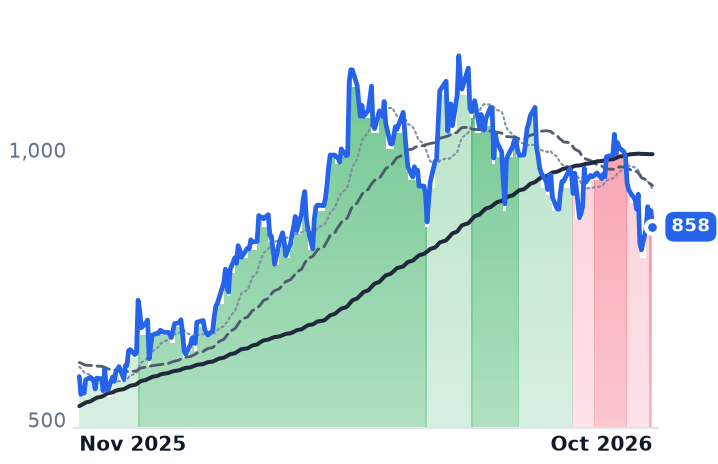
GEV | GE Vernova | Power Generation & Propulsion | ⚠️ Emerging Bear | −13.2% | +47.9% |
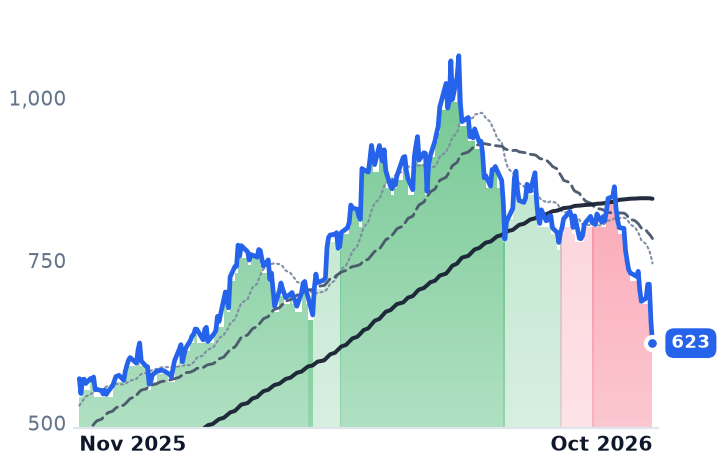
CAT | Caterpillar | Heavy Equipment & Mining | ⚠️ Emerging Bear | −26.3% | +9.6% |
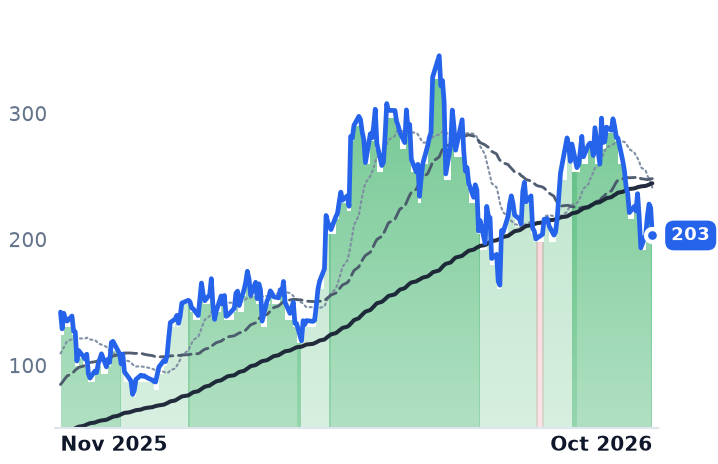
BE | Bloom Energy | Fuel Cell & Hydrogen | 🟢 Cont. Bull | −29.7% | +42.7% |
| Compared against · context, not the story | |||||
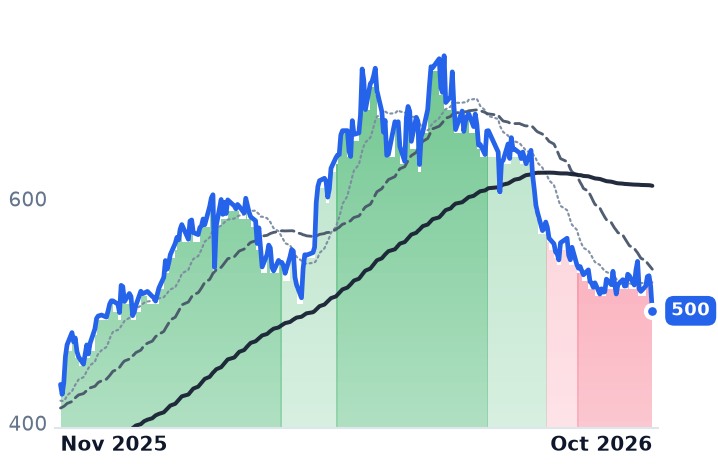
CMI | Cummins | Power Generation & Propulsion | ⚠️ Emerging Bear | −5.3% | +15.1% |
SPY | State Street SPDR S&P 500 ETF Trust | Asset Management | 🟢 Cont. Bull | −1.8% | +11.2% |
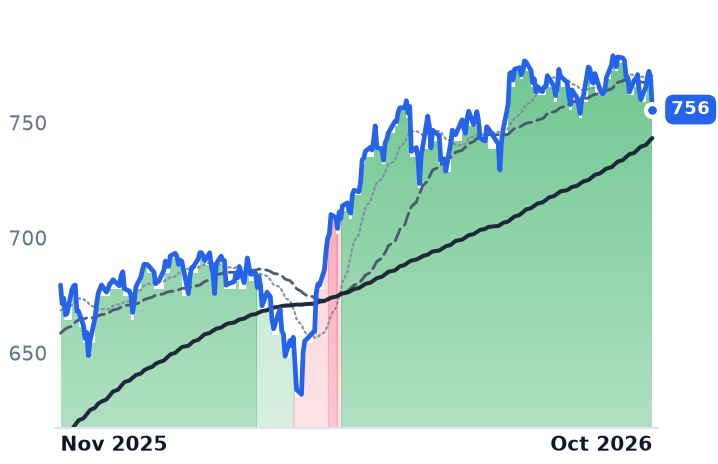
12-month price & trend
| Ticker | Mkt cap | P/E | P/E fwd | P/S | P/S fwd | P/GP | P/GP fwd | EV/EBITDA | FCF yld |
|---|---|---|---|---|---|---|---|---|---|
GEV | $227.1B | 22.3x | 27.2x | 5.2x | 4.8x | 23.7x | 22.3x | 20.6x | 7.5% |
CAT | $286.3B | 24.3x | 22.9x | 3.7x | 3.6x | 10.7x | 10.5x | 17.7x | 4.1% |
BE | $60.0B | 113.9x | 64.1x | 15.7x | 13.5x | 48.5x | 41.8x | 97.9x | 0.7% |
| Ticker | Mkt cap | P/E | P/E fwd | P/S | P/S fwd | P/GP | P/GP fwd | EV/EBITDA | FCF yld |
|---|---|---|---|---|---|---|---|---|---|
CMI | $72.2B | 26.6x | 17.7x | 2.1x | 1.9x | 8.2x | 7.6x | 15.5x | 4.7% |
SPY | $773.0B | — | — | — | — | — | — | — | — |
Consensus projections
| Ticker | FY2026E | FY2027E | FY2028E | |
|---|---|---|---|---|
GEV | Revenue | +25.6% | +14.5% | +15.8% |
| EPS | +333.1% | −18.5% | +40.1% | |
CAT | Revenue | +19.9% | +11.3% | +10.3% |
| EPS | +45.6% | +18.8% | +20.3% | |
BE | Revenue | +133.1% | +61.9% | +46.1% |
| EPS | +474.5% | +68.3% | +61.3% | |
CMI | Revenue | +13.1% | +9.4% | +8.5% |
| EPS | +29.6% | +17.1% | +16.5% |
Forward fiscal years only. Blank means no analyst coverage for that year.
GE Vernova booked $21.8bn of Power orders in the third quarter, up 178% organically, and signed fewer gigawatts of gas turbines doing it than it had three months before. The company, which sells gas, nuclear, steam and hydro generating plant to utilities, independent power producers and increasingly data-center developers, took 11 GW of new gas equipment contracts in the quarter — 8 GW of slot reservation agreements plus 3 GW of firm orders — according to its 28 October call, against roughly 19 GW of gross intake in the second quarter on the same basis. That is a derived comparison, built from contracted capacity and shipments rather than a disclosed figure.
Turbine slots sold out to the end of the decade have been read as evidence that the order line measures demand. This quarter it measured price: equipment pricing was up more than 20% year on year, and full-year 2026 pricing is running 50% above 2025. Wood Mackenzie puts gas turbine prices 195% above 2019 levels. The shipped economics improved sharply, which the selloff ignored. The reservation queue drained, which it may not have.
What five gigawatts earned
GE Vernova shipped 5 GW of gas equipment in the quarter, 32 turbines including 13 aeroderivatives, a 60% increase in units. Power revenue of $6.1bn rose 25%, and segment EBITDA margin reached 21.4% from 13.4% a year earlier on pricing and volume. Divide those disclosures by shipments and the quarter carried about $1.22bn of Power revenue and roughly $260m of Power EBITDA per gigawatt out the door — a derived upper bound, since the segment also contains services and non-gas lines.
The annuity behind the hardware is the reason pricing holds. "We expect every gigawatt of HAs to generate $0.5 billion of high-margin services revenue over the first 20 years of its lifetime," chief executive Scott Strazik told investors on 28 October, with the installed or contracted fleet of those advanced-class units heading to at least 400 by the end of 2027. Full-year Power guidance went up for a third time, to 19–21% revenue growth and a 19–21% segment margin.
The deposits land years before the turbine
Equipment remaining performance obligations stood at $104.1bn on 30 September, with 33% expected in revenue within a year and 60% within two. Contract liabilities and deferred income rose $19.8bn over nine months. A roughly 20% cash deposit converts a reservation into a slot agreement, which is how a heavy-equipment maker guides to $16–17bn of free cash flow on $46.5–47.5bn of revenue, about 35% of sales.
The queue got shorter while the book got bigger
Against 8 GW of new reservations, GE Vernova converted 13 GW of existing ones into firm orders. The pool therefore shrank by about 5 GW, and total contracted capacity rose only 6 GW, to 122 GW from 116 GW, against double-digit quarterly gains earlier in the year. Strazik said he expects solid order and reservation growth in 2027, but not at the pace of the first half of 2026. Management said it had seen no financing disruptions and no slowdown in converting reservations to backlog. In the same release the company agreed to buy high-voltage equipment maker Trench Group for $9bn, half cash and half debt, closing late 2027 with about $1.9bn of 2028 revenue attached.
Caterpillar ships faster; Bloom stopped counting megawatts
The demand being announced is also being shipped. Caterpillar, whose Power & Energy arm sells reciprocating engines, generator sets and industrial gas turbines alongside construction machines, grew that segment's revenue 18% to $8.78bn with profit up 31% and margin of 24.4%. Company backlog hit a record $78bn, 96% higher, and 58% of it converts within twelve months — a far quicker clock than GE Vernova's equipment book. Caterpillar's shares fell on about $2.2bn of full-year tariff cost and margin guided near the bottom of its range, leaving 22.9x forward earnings against the roughly 38x on next-twelve-month earnings that David Giroux flagged in June.
Bloom Energy, which sells solid-oxide fuel cell servers converting gas or hydrogen to on-site power without combustion, lifted product revenue 179% to $1.07bn at a 38.4% product gross margin, up 250 basis points. It no longer discloses megawatts accepted each quarter, so margin per megawatt cannot be computed from what it publishes. At 64.1x forward earnings, down from about 119x in May, it remains the most demanding name of the three. Wärtsilä, whose Energy arm builds reciprocating-engine plants, lifted order intake 121% to €1,421m on a record €9,876m book and its shares fell too.
How much the results explain
Very little. Over the 30 days to 30 October, GE Vernova fell 9.7%, Caterpillar 23.2% and Bloom 26.7% while the S&P 500 tracker slipped 0.9%; the worst session was 22 October, when Meta's capital-spending commentary hit everything levered to data-center construction and the Nasdaq lost 2.6%. GE Vernova's 27.2x forward earnings is the honest anchor, since its 22.3x trailing is flattered by a $4.5bn one-off gain on Prolec GE; in May the shares traded at 32.1x trailing earnings. The de-rating is wider than any disclosed deterioration, and it is global.
One business fact does point the bears' way, and it is the one Matthew Smith's July thesis predicted: gigawatt intake slowing while dollars accelerate. Mitsubishi Power said in late October that demand is pushing deliveries out to 2031, so capacity remains the constraint. But a book of orders priced 50% above last year's, converting a third inside a year, is worth less if the queue behind it stops lengthening.
Pricing power this strong is usually the last thing to break. The reservation queue, where deposits are taken years before a turbine ships, is the first — and it got shorter this quarter while every other number got better.