

A Year of an Omnipod Patient Earns Insulet Four Times What a Sensor Patient Earns Dexcom
Hypothesis Opus 5 · Research Opus 5 · Writing Opus 5 · Prompt v1.7
October was read as the moment diabetes devices turned up, but the money each company collects from one patient a year is diverging, not converging. Built from the companies' own user counts and margins, a year of one Omnipod wearer throws off roughly $3,440 of gross profit for Insulet against about $885 for a Dexcom sensor patient, with Tandem's pump-and-supplies cycle in between.
Dexcom is the problem case: its active base is growing in the upper teens while revenue per user erodes about 7%, because the 15-day G7 ships fewer sensors per patient. Insulet's per-patient revenue is flat near $4,900 and its base grew 23% — and it is the cheapest of the three on earnings, at 23.0x forward against roughly 50x the same consensus a year ago. The rises in October came from a broker upgrade and pre-earnings positioning, not from patient data.
| Ticker | Company | Segment | Trend · 13mo | 30D | 1Y |
|---|---|---|---|---|---|
| The subject · what this brief is about | |||||
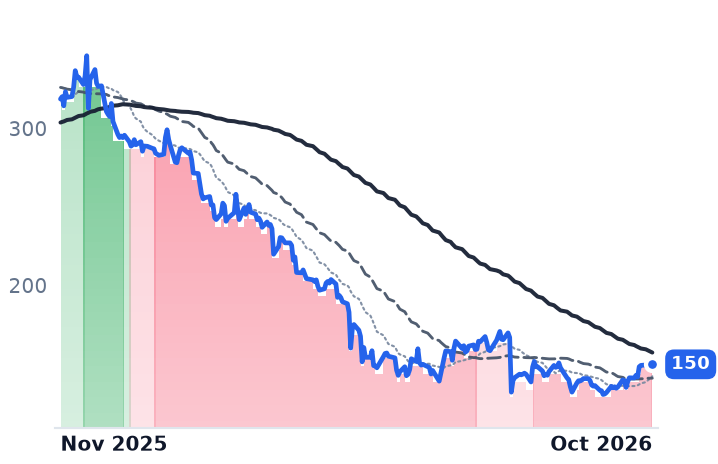
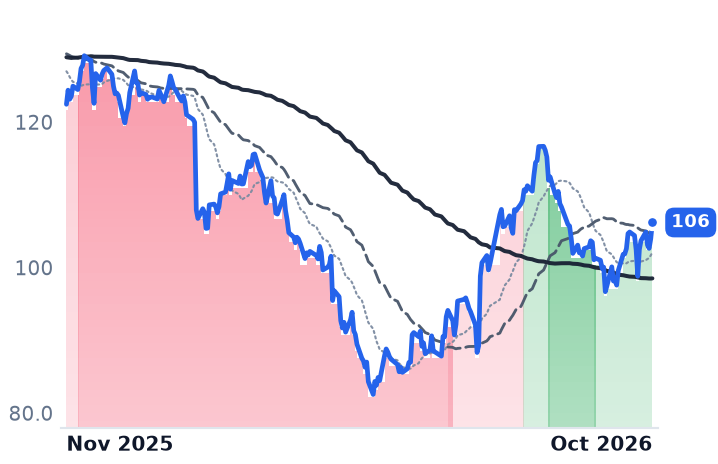
PODD | Insulet | Diabetes Management | 🔴 Cont. Bear | +13.7% | −53.0% |
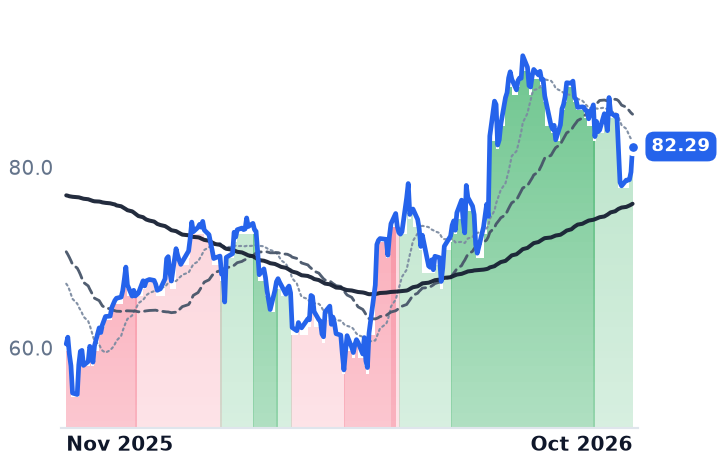
DXCM | DexCom | Diabetes Management | 🟢 Cont. Bull | −3.6% | +36.2% |
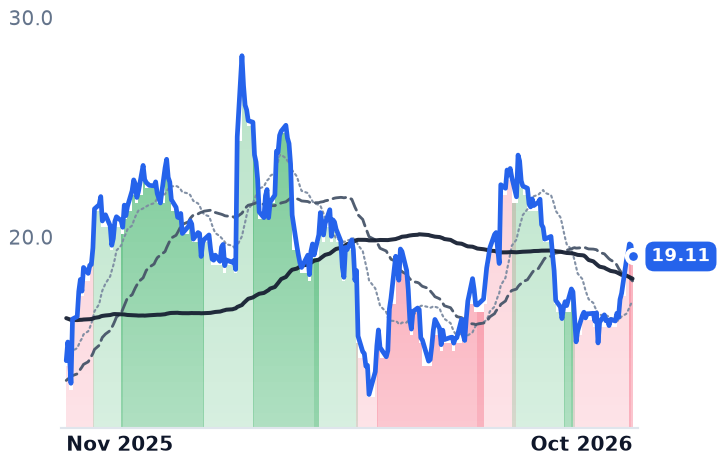
TNDM | Tandem Diabetes Care | Diabetes Management | ⚠️ Emerging Bear | +15.8% | +33.1% |
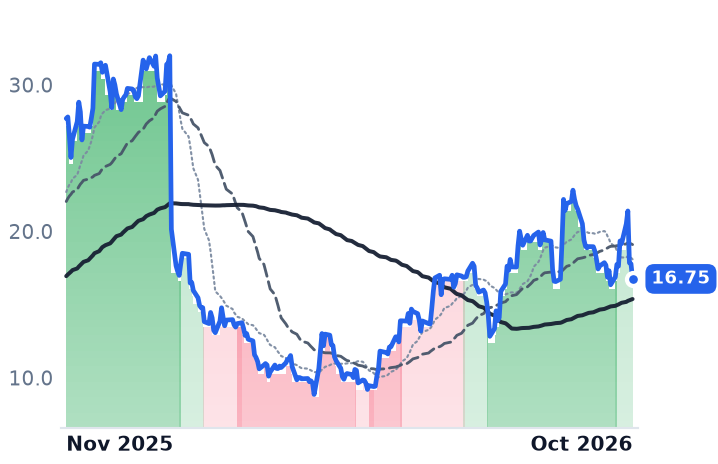
BBNX | Beta Bionics | Diabetes Management | 🟢 Cont. Bull | −11.7% | −39.5% |
| Compared against · context, not the story | |||||
ABT | Abbott Laboratories | Clinical & Molecular Diagnostics | 🌱 Emerging Bull | +8.9% | −13.3% |
12-month price & trend
| Ticker | Mkt cap | P/E | P/E fwd | P/S | P/S fwd | P/GP | P/GP fwd | EV/EBITDA | FCF yld |
|---|---|---|---|---|---|---|---|---|---|
PODD | $10.4B | 27.9x | 23.0x | 3.4x | 3.2x | 4.8x | 4.4x | 16.4x | 2.9% |
DXCM | $30.7B | 31.8x | 30.5x | 6.0x | 5.9x | 9.5x | 9.3x | 20.1x | 3.6% |
TNDM | $1.3B | n/m | — | 1.3x | 1.2x | 2.3x | 2.2x | n/m | -2.0% |
| Ticker | Mkt cap | P/E | P/E fwd | P/S | P/S fwd | P/GP | P/GP fwd | EV/EBITDA | FCF yld |
|---|---|---|---|---|---|---|---|---|---|
BBNX | $753.6M | n/m | — | 5.9x | 6.0x | 10.1x | 10.2x | n/m | -8.8% |
ABT | $183.8B | 39.3x | 19.2x | 3.8x | 3.7x | 6.7x | 6.4x | 21.8x | 4.7% |
Consensus projections
| Ticker | FY2026E | FY2027E | FY2028E | |
|---|---|---|---|---|
PODD | Revenue | +22.2% | +13.9% | +13.7% |
| EPS | +33.3% | +18.7% | +20.6% | |
DXCM | Revenue | +12.4% | +10.3% | +11.1% |
| EPS | +31.1% | +15.9% | +18.6% | |
TNDM | Revenue | +7.1% | +12.4% | +14.1% |
| EPS | −67.8% | −119.1% | +516.9% | |
BBNX | Revenue | +28.1% | +46.6% | +52.2% |
| EPS | +3.9% | +4.7% | −23.9% | |
ABT | Revenue | +11.9% | +7.4% | +6.5% |
| EPS | +7.1% | +7.6% | +9.5% |
Forward fiscal years only. Blank means no analyst coverage for that year.
A year of one diabetic patient's business is worth very different money depending on which device maker is billing for it. Over Insulet's and Dexcom's own disclosed user counts and margins, a year of one Omnipod wearer throws off roughly $3,440 of gross profit against about $885 for a patient wearing a Dexcom sensor — arithmetic derived from the two companies' disclosures, not reported by either. The company at the top of that ladder is also the fastest-growing of the three and the cheapest on earnings.
October looked like the turn for diabetes devices. Averaged evenly, the four listed American makers of insulin pumps and glucose sensors gained 3.9% in the 30 days to 30 October. Weighted by company size they gained 0.6%, because Dexcom alone is $30.7bn of the group's $43.2bn and Dexcom fell 4.6%. The rises came from the pumps: Tandem Diabetes Care, which sells the tubed t:slim X2 with the Control-IQ algorithm, up 17.2%, and Insulet, maker of the tubeless Omnipod, up 14.7%. Neither move came from a patient count.
What a pod collects that a sensor cannot
Insulet passed 600,000 active Omnipod users at the end of 2025 and has grown that base 23%. Against full-year revenue guidance of about $3.25–3.30bn, that is roughly $4,900 of revenue per patient-year, essentially unchanged from about $4,980 in 2025. Dexcom exited 2025 with around 3.5 million active customers and guides to $5.20–5.25bn: roughly $1,375 a patient, down from about $1,480. Tandem sits between the two, on about $8,000 of sales across a four-year renewal cycle — a pump once, supplies each year — or roughly $2,000 annually, about $1,140 of gross profit at its second-quarter margin of 56.9%.
Dexcom adds patients and collects less from each
Dexcom's reported growth has decelerated three quarters running, from 15.0% to 13.1% to 11.2%, while the active base grew in the upper teens. Part of the cause is engineering: the G7 15 Day extends wear from roughly ten days, so fewer sensors ship per patient per year. That lifted non-GAAP gross margin to 65.1%, the highest since the fourth quarter of 2022, and lowered what each patient pays over twelve months.
The company still raised its outlook. "We are updating our revenue guidance to be in the range of $5.20 billion to $5.25 billion, representing growth of 12% to 13% for the year," chief operating and financial officer Jereme Sylvain told investors on 29 October, and the call described no pricing headwinds. That was eight days after Abbott, whose FreeStyle Libre is Dexcom's largest sensor rival, cut full-year diabetes-care growth guidance to low-to-mid single digits from high single digits, citing international pricing pressure and type-2 coverage that has not landed. Dexcom fell 8.7% over the two sessions after Abbott spoke and recovered most of it on its own numbers. At 30.5x forward earnings against 31.8x trailing, the shares price in no re-rating against 12–13% guided growth.
Which benefit pays the bill is now the variable
Tandem rebuilt pharmacy formulary coverage from zero to roughly 40% in a single off-cycle quarter and expects 40–50% for the year. Wells Fargo upgraded it to overweight on 26 October and raised its target to $27 from $21, calling the pharmacy model "transformational and de-risking faster than we expected"; the shares rose 8.4% that session. That is the whole of Tandem's month, on revenue growing 5.8% and a quarterly operating loss still at -$13.8m, priced at 1.24x forward sales with no forward earnings multiple because consensus has it losing $0.67 a share this year.
Beta Bionics, which sells the iLet automated insulin delivery system, says pharmacy reimbursement for its Mint patch pump — cleared by the Food and Drug Administration in September for a first-quarter 2027 launch into Omnipod's tubeless niche — runs about six times iLet's medical-benefit rate. Dexcom is travelling the other way: CVS Caremark and Aetna commercial formularies switch to Libre-exclusive coverage on 1 January 2027, business Dexcom puts at under 4% of US revenue, with those patients moving to the medical benefit at a 10–20% monthly copay.
Insulet's discount and its 90-day problem
Insulet is the cheapest of the three on earnings, at 23.0x forward against 27.9x trailing and roughly 50x the same consensus a year ago. What de-rated it was reported, not rumored: US Omnipod growth guidance cut to 17–19% from 20–22% on type-2 patients dropping off in the first 90 days after setup, after type-2 passed 40% of new American customers. International guidance went up, to 30–32% from 26–28%. "As CEO, I take accountability for our reduced U.S. outlook," chief executive Ashley McEvoy said on the second-quarter call, adding that "once Type 2 customers remain on Omnipod for the first 90 days, retention rates stabilize." The fixes are operational: more staff for insurance navigation, sales pay re-weighted toward early retention.
Meanwhile revenue grew 23.5% in that quarter, gross margin held at 70.2%, and the shares are down 52% over the year.
The patients are arriving; the pricing is the argument
None of October's gain is traceable to fresh patient data, and the one company that did report into it — Beta Bionics, with revenue up 30.3% and full-year guidance raised to $124–126m — fell 11.8% over the month, including 16.6% on 28 October after disclosing it had withdrawn a software clearance application at the FDA's request, pushing that launch to mid-2027. At about 6x forward sales with negative free cash flow, that is de-rating from a demanding base.
The demand side of the hypothesis holds up. Dexcom's own type-2 report, published around the European diabetes meeting, found 58% of type-2 patients taking GLP-1 drugs pair a sensor with them against 27% of type-2 non-insulin patients overall, and 90% of US clinicians named coverage as the obstacle. What splits the group is not patient count but what each patient is worth: a pod and its supplies bill like a prescription every month, a sensor bills less each year as it lasts longer, and a pump bills once every four years and waits.
Insulet reports before the market opens on 4 November. Its pods earn more from a patient-year than anything else in diabetes care; whether the type-2 patients starting on them this autumn are still wearing one in the spring is the number that decides what that is worth.