

Airlines Flew Fewer Hours: Willis Lease's Engine Fees Fell While AerCap's Fixed Rents Rose
Hypothesis Opus 5 · Research Opus 5 · Writing Opus 5 · Prompt v1.7
An aircraft owner is paid twice over, and in the June quarter the two halves split. AerCap's fixed monthly rents widened its lease yield by about 0.3 of a percentage point, with book value per share up 16%, and the shares are slightly higher over the last thirty days.
Willis Lease's short-term maintenance reserves, billed on engine hours and cycles, fell 22% to $39.0m as airlines flew fewer hours on the older CFM56- and V2500-powered narrowbodies with jet fuel at $157 a barrel. FTAI Aviation, now mostly an engine-parts business, cut its 2026 leasing profit guidance by $100m while directing module output to outside customers.
The hour meter repriced; the rent held.
| Ticker | Company | Segment | Trend · 13mo | 30D | 1Y |
|---|---|---|---|---|---|
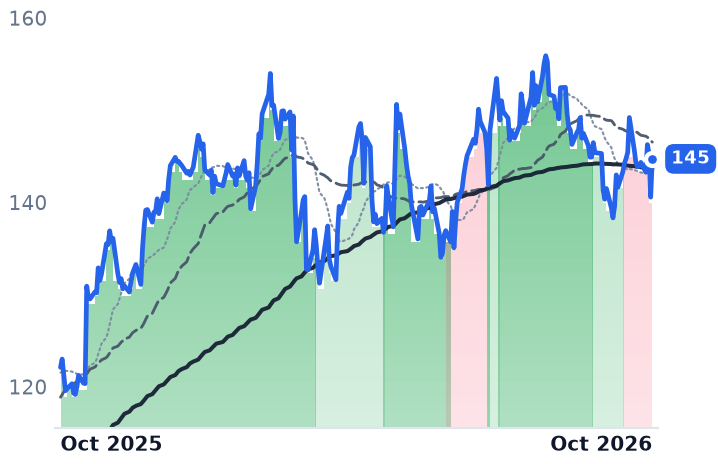
AER | AerCap | Aviation & Aerospace Leasing | 🟢 Cont. Bull | +2.3% | +18.5% |
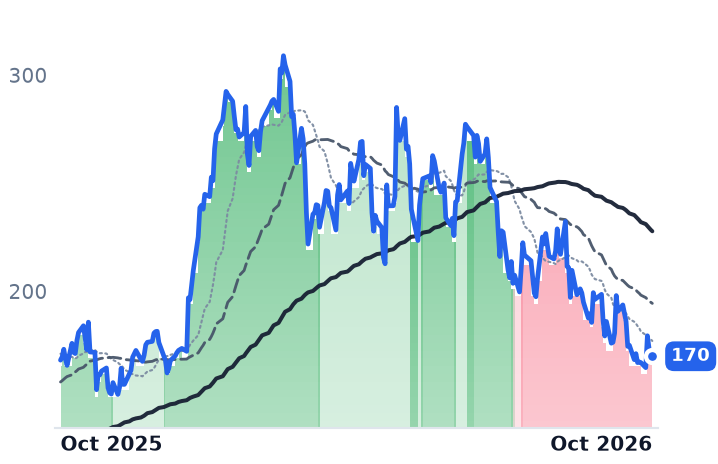
FTAI | FTAI Aviation | Aviation & Aerospace Leasing | ⚠️ Emerging Bear | −8.7% | +1.1% |
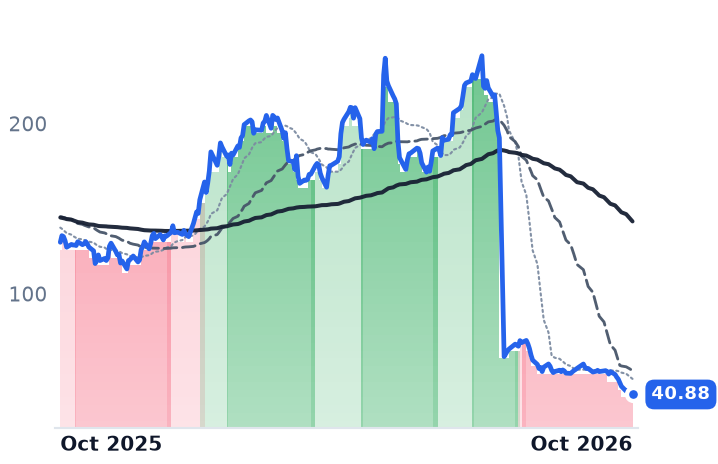
WLFC | Willis Lease Finance | Aviation & Aerospace Leasing | ⚠️ Emerging Bear | −27.2% | −68.6% |
12-month price & trend
| Ticker | Mkt cap | P/E | P/E fwd | P/S | P/S fwd | P/GP | P/GP fwd | EV/EBITDA | FCF yld |
|---|---|---|---|---|---|---|---|---|---|
AER | $22.8B | 7.0x | 7.7x | 2.7x | 2.6x | 4.6x | 4.4x | 7.8x | -1.3% |
FTAI | $17.4B | 36.5x | 29.0x | 5.6x | 4.5x | 18.4x | 14.9x | 19.2x | -7.2% |
WLFC | $864.4M | 17.8x | 6.6x | 1.1x | 1.1x | 1.9x | 1.9x | 10.2x | -12.9% |
Consensus projections
| Ticker | FY2026E | FY2027E | FY2028E | |
|---|---|---|---|---|
AER | Revenue | +2.8% | −1.9% | +0.2% |
| EPS | +28.2% | −3.6% | +8.2% | |
FTAI | Revenue | +51.7% | +69.2% | +22.4% |
| EPS | +23.8% | +122.9% | +36.7% | |
WLFC | Revenue | +20.8% | +4.2% | +8.0% |
| EPS | +44.9% | −2.1% | +8.7% |
Forward fiscal years only. Blank means no analyst coverage for that year.
Two kinds of money arrive at an aircraft owner, and only one of them weakened this summer. AerCap, the Dublin company that buys, leases and sells commercial aircraft and engines to airlines worldwide, collects a fixed monthly rent struck at signing as a percentage of the asset's value. Willis Lease Finance, the Florida lessor of spare engines, collects that too, and also bills maintenance reserves that move with engine hours and cycles. The second meter is the one that broke.
The aftermarket has been traded as a single slowing business since mid-September, when Melius Research cut five aviation names to Hold, warning that several years of exceptionally strong commercial aftermarket growth could moderate to high-single-digit percentage growth next year. The June quarters locate the damage precisely, in the hour-based dollar, while contractual rents widened. That leaves the three owners of the metal on different sides of one slowdown.
The rent does not know whether the aeroplane flew
AerCap booked $1,677m of basic lease rents in the quarter plus $177m of maintenance rents and other receipts. Against flight equipment carried at $57.886bn, the rent line alone implies a book yield near 11.6% annualized, by our calculation. Revenue rose 10.1%. On the call, management put lease yield up about 0.3 of a percentage point year over year and net spread up about 0.5, after several flat quarters.
The second earnings engine is disclosed in full. Net gains on asset sales were $223m on 38 owned assets, a 20% unlevered margin, and 2026 guidance of about $16.80 of adjusted earnings per share splits into roughly $14 excluding gains plus $2.80 banked in the first half: about 17% of the year. Book value per share reached $119.21, up 16%, and the board added a $1bn repurchase authorization in September after $783m of buybacks in the third quarter. At 1.23x trailing book and 7.7x forward earnings, above the trailing 7.0x, the market is marking down the sale-gain slab.
A signed lease pays the same in a weak August as in a strong one.
The meter that fell
Willis Lease's short-term maintenance reserve revenue fell to $39.0m from $50.2m, a 22% drop, while its fixed rent line rose 6.7% to $77.1m and gains on equipment sales rose 16.2%. Management told investors on 4 August that the decline "appears to be the result of customers flying fewer hours on less fuel-efficient platforms such as the A320ceo and 737NGs, powered by CFM56 and V2500 engines." IATA put August traffic down 0.8% in revenue passenger kilometers, with jet fuel at $157 a barrel and load factor at 85.1%, nearly a point lower. Spare parts sales fell 30.2%; utilization slipped to 85% from 87.2%.
The shares took that harder than the accounts warrant: down 28% over thirty days, de-rated to 1.12x book from roughly 2.0x three months ago, under AerCap's 1.23x. Two cautions attach. A three-for-one forward split took effect in July, so unadjusted price histories overstate the fall, and the $0.133 dividend declared was the ninth consecutive payment at the split-adjusted rate, maintained. And 19.6% of the float was short as of 15 September, in a company with a market value of $864m.
FTAI is spending the margin on share
FTAI Aviation has moved from owning engines to selling the modules inside them, and its revenue grew 40.9% in the quarter while gross profit rose 26.0% and operating income 16.2%. Aerospace Products delivered $249.7m of adjusted EBITDA at a 29% margin, flat on the quarter in what management called "a continued reflection of the decision to prioritize market share and large customer penetration." Chief executive Joseph Adams said "the CFM56 market is supply-constrained, not demand-constrained," and that module output is increasingly directed toward third-party customers; 2026 Aviation Leasing EBITDA guidance came down $100m to $475m as a consequence. Green-time CFM56-5B cores were appraised at $2.6m to $3.4m with very limited availability, so the feedstock is dearer, too. At 29.0x forward earnings and 18.4x trailing gross profit, four times AerCap's 4.59x, FTAI carries the group's richest price on the group's thinnest margin.
So the label that groups these three as one weakening business describes one of them. AerCap rose over thirty days with its spread wider and its book compounding, because its income is contractual rent plus sales of assets into a market where its passenger-aircraft extension rate hit 85%. FTAI fell because the parts margin is being traded for volume while consensus still assumes both. Willis Lease fell hardest because the hour-based line is the purest claim on narrowbody flying there is, and that is what airlines cut when fuel costs $157 a barrel. AerCap's own squeeze is still in front of the accounts: on 23 September it priced $1.5bn of notes at 5.500% and 5.875% against an average cost of debt of 4.2%.
Rents signed years ago cannot be reopened to pay for money that costs more today, which is the one way a soft traffic year eventually reaches the fixed half of a lessor's income. The next reading on whether the hour meter has turned back up comes with third-quarter results on 28 October.