

Planet Fitness Grew Revenue on an Ad Levy and Equipment Resales, Not on Busier Gyms
Hypothesis Opus 5 · Research Opus 5 · Writing Opus 5 · Prompt v1.7
Planet Fitness is more profitable than it was a year ago and its shares are worth about half as much, and the reason sits in what its revenue line measures. Of the $16.1m rise in franchise-segment revenue last quarter, $10.1m came from lifting franchisees' national advertising contribution to 3% of sales from 2%, money that passes through to media buying; barely a tenth came from busier clubs.
A further 23.4% of group revenue was exercise machinery resold to franchisees, mostly replacements, which makes that line franchisee borrowing. The markdown came from guidance, with same-club sales cut to roughly 1%. The two names filed alongside it went their own ways: Life Time raised dues on nearly flat membership, and Peloton is harvesting a shrinking subscription base.
| Ticker | Company | Segment | Trend · 13mo | 30D | 1Y |
|---|---|---|---|---|---|
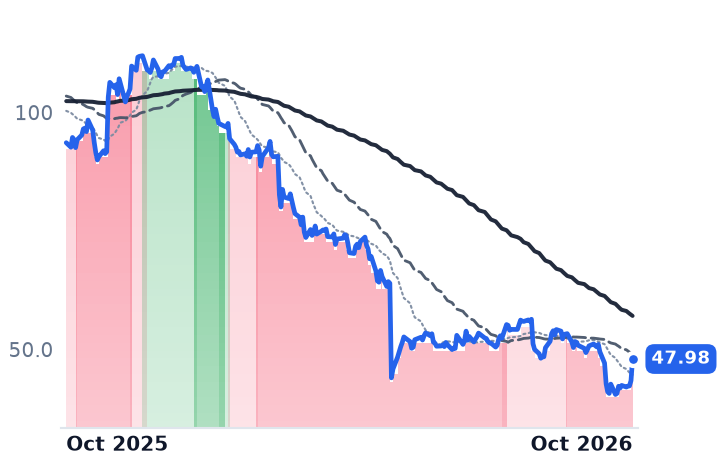
PLNT | Planet Fitness | Fitness & Wellness | 🔴 Cont. Bear | −4.0% | −48.8% |
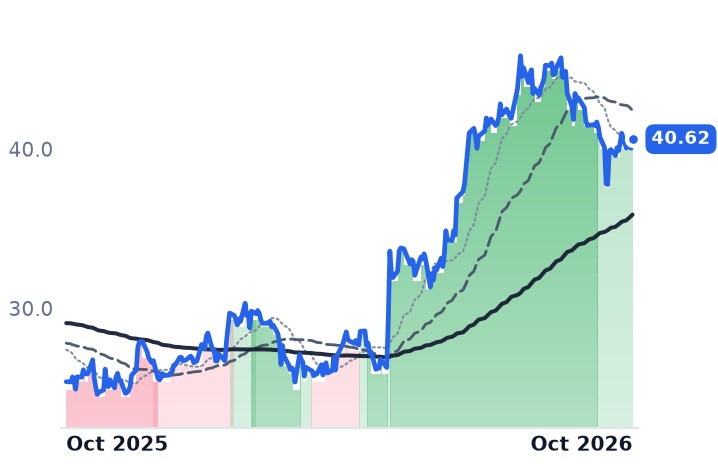
LTH | Life Time | Fitness & Wellness | 🟢 Cont. Bull | −2.1% | +60.0% |
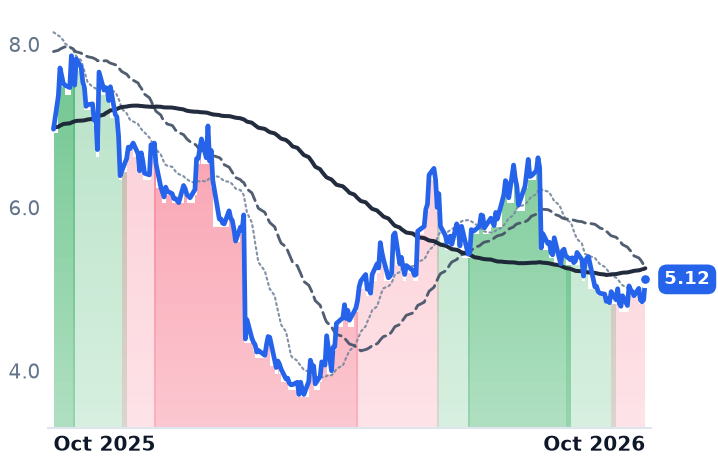
PTON | Peloton Interactive | Fitness & Wellness | 🌱 Emerging Bull | +3.0% | −26.4% |
12-month price & trend
| Ticker | Mkt cap | P/E | P/E fwd | P/S | P/S fwd | P/GP | P/GP fwd | EV/EBITDA | FCF yld |
|---|---|---|---|---|---|---|---|---|---|
PLNT | $3.8B | 16.3x | 14.8x | 2.7x | 2.7x | 5.4x | 5.3x | 10.6x | 6.9% |
LTH | $9.1B | 21.6x | 25.4x | 2.9x | 2.7x | 4.1x | 3.9x | 14.1x | -1.7% |
PTON | $2.1B | 35.8x | 15.9x | 0.9x | 0.9x | 1.7x | 1.7x | 15.5x | 18.5% |
Consensus projections
| Ticker | FY2026E | FY2027E | FY2028E | |
|---|---|---|---|---|
PLNT | Revenue | +8.2% | +6.9% | +8.4% |
| EPS | +6.9% | +12.5% | +15.5% | |
LTH | Revenue | +12.6% | +12.0% | +10.9% |
| EPS | +17.6% | +14.3% | +9.8% | |
PTON | Revenue | −1.1% | −2.8% | −0.9% |
| EPS | −131.8% | +143.7% | +2.0% |
Forward fiscal years only. Blank means no analyst coverage for that year.
Planet Fitness reported rising profit through a year in which its shares lost roughly half their value, and the gap sits in what its revenue line actually measures. Of the $16.1m increase in franchise-segment revenue in the second quarter, $10.1m came from raising franchisees' national advertising fund contribution to 3% of sales from 2%, money that passes through to media buying. Busier clubs contributed $1.7m.
The shares are held as a claim on 21.5 million gym memberships paying monthly dues. What the company is paid is narrower: a royalty on franchisees' dues, an advertising levy it is obliged to spend, the takings of the clubs it owns outright, and the exercise machinery it resells to its own franchisees. That last line came to $85.6m in the quarter, or 23.4% of group revenue, and what it tracks is franchisee borrowing.
Eighty-five percent of it was replacement equipment for clubs already open, bought by franchisees borrowing at Small Business Administration 7(a) rates that ran from 9.75% to 13.25% variable in May.
The franchise segment itself, the royalty annuity most owners of the stock think they are buying, came to $135.8m, or 37.2% of revenue. Royalties within it rose $4.7m, and $2.5m of that was simply clubs opened since April 2025 entering the base, with another $0.5m from higher royalties on annual fees. The 1.7% gain in franchise same-club sales produced $1.7m.
The markdown landed on dues the company has not collected yet
The quarter was good. Revenue rose 7.1% to $365.2m, operating income 20.9% to $123.8m, and diluted earnings per share reached $0.87 against $0.69 a year earlier. System membership hit 21.5 million, up 3.6%, with Black Card penetration around 68%, up 210 basis points. Part of the earnings gain was bought: diluted shares fell 8.4% year on year after about $200m of stock was retired in the quarter, funded partly by a $75m note drawdown that adds $4m of annual interest.
What the market marked down was the future dues line. On May 7 the shares fell 31.19% in a session, from $63.96 to $44.01, after the company cut same-club sales guidance to roughly 1% from 4-5% and adjusted net income to a decline of about 2% from growth of 4-5%, having added just over 700,000 net members in the first quarter against roughly a million a year before. Management blamed messaging that missed its audiences, competition in select markets, weather and the macro backdrop; shelving a national Black Card price increase cost about 150 basis points of the comp outlook by itself. A securities fraud class action followed the drop.
The answer was price. From August 31 through September 10 the company ran a $1-down, $10-a-month Classic Card offer, with that rate protected for the member's lifetime.
"As we evaluate any pricing decisions in our architecture, whether they're tiers, regional nuance, or something with Black Card, we're going to evaluate the price elasticity in conjunction with join mix, as well as total sustainable net member growth, and impact on churn," chief executive Colleen Keating told investors on August 6.
On October 9 the shares rose 10.5% to $47.98, their best day of the year, after UBS reiterated a Buy rating with a target of $80, citing September and early-October membership strength and the $10 promotion. The same day RBC Capital cut its target to $60 from $65 and Baird to $60 from $72, both keeping Outperform.
The rival bid for the same ten-dollar member is better funded now
Planet Fitness accounts for roughly 27% of all US gym memberships, and its four nearest low-price rivals together hold about 5m members. The pressure comes through amenities: Crunch Fitness, with about 3m members across some 516 clubs, and EoS Fitness, with about 1m across 127, are opening large-format clubs with infrared saunas and heated group classes. Crunch grew its club count 17% in 2024 and took a majority investment from Leonard Green & Partners in April 2025.
Life Time charges $245 a month and barely adds members
Life Time, which builds and runs resort-style athletic clubs with pools, courts, cafes and childcare, collects its dues directly and is really a property developer. Revenue rose 13.7% to $866.0m in the second quarter and operating income 38.0% to $149.7m, on average monthly dues of $245, up about 12.3%, with centre memberships up 1.2% to roughly 860,000. Adjusted EBITDA margin widened 80 basis points to 28.5% and net leverage fell to 1.4x. The buildings pay for the buildings: about $400m of sale-leasebacks closed in 2026, first-quarter rent rose 10.7% to $89.9m, and $33m to $35m of interest was expected to be capitalized this year. "Even after $400 million of sale-leasebacks each year, we will continue to grow our owned real estate portfolio as well as grow positive free cash flow," founder and chief executive Bahram Akradi said. Equity holders pay 14.1x trailing EV/EBITDA for that, a third more than Planet Fitness's 10.6x, on a trailing free-cash-flow yield of minus 1.7%.
Peloton, which sells connected bikes and treadmills with class subscriptions, operates no clubs. Subscription revenue rose 7% to $437m in its fiscal fourth quarter while hardware fell 14% to $171m, lifting recurring revenue to 72% of the total; subscription adjusted gross margin reached 73.6% against 13.4% on the machines. Subscriptions themselves fell 8.8% to 2.553m and churn rose to 2.2%. Fiscal 2026 brought $378m of free cash flow against a $2.14bn market value, and chief executive Peter Stern attributed guided revenue weakness to "churn created by subscription price hikes implemented last year."
One shelf, three different payers
Filed in one classification, these three share nothing on the demand side. Over twelve months to October 9 Life Time gained 57.5%, Peloton lost 30.3% and Planet Fitness lost 49.1%, a spread of 107 points under one interest-rate backdrop. Since January only one session saw two of them move more than 9% on the same day, August 6, and that was two separate earnings reports landing the same morning.
The split runs on income. US gym membership reached a record 81 million in 2025 with low-price brands taking above-average growth, yet members earning over $75,000 a year hold just over half of all memberships and the heaviest users earn more than $150,000. Life Time can price families up 12% a year on that base. Planet Fitness went to $10 to defend volume.
So the halving is not explained by what Planet Fitness reported, and only partly by what it will report. Consensus now has 2026 EBITDA falling 2.1% to $611.1m, the first forecast contraction in the series, which makes part of the de-rating from roughly 40.8x trailing earnings in January to 16.3x today rational work. The rest rides on whether a $10 join price buys back the member growth the dues architecture was supposed to deliver.
Meanwhile the revenue line will keep misleading. Both of the company's 2026 cadences, system openings and equipment placements, are weighted to the fourth quarter, so the year's closing revenue print will be decided largely by how much franchisees are willing to borrow at double-digit rates. It will be read as a verdict on how many people joined a gym.