

Cameco's 49% of Westinghouse Swung From $126m of Earnings to a $10m Loss
Hypothesis Opus 5 · Research Opus 5 · Writing Opus 5 · Prompt v1.6
Three nuclear names sold as one claim on an American reactor buildout turn out not to share a mechanism — and the only asset two of them own together is the single line that broke.
Cameco's mine improved through the drawdown: realized uranium price of US$67.79 a pound, up 15% year on year, with full-year price guidance raised. Its share of Westinghouse's adjusted earnings fell by more than half, and the five-year growth outlook for that business has been withdrawn from guidance altogether.
BWX Technologies went the other way, with backlog up 40% and all four 2026 guidance lines raised while its forward earnings multiple fell by roughly a third. Brookfield Renewable's nuclear interest is about 11% net and a tenth of its cash flow; the long bond, not reactors, explains its break.
| Ticker | Company | Segment | Trend · 13mo | 30D | 1Y |
|---|---|---|---|---|---|
| The subject · what this brief is about | |||||
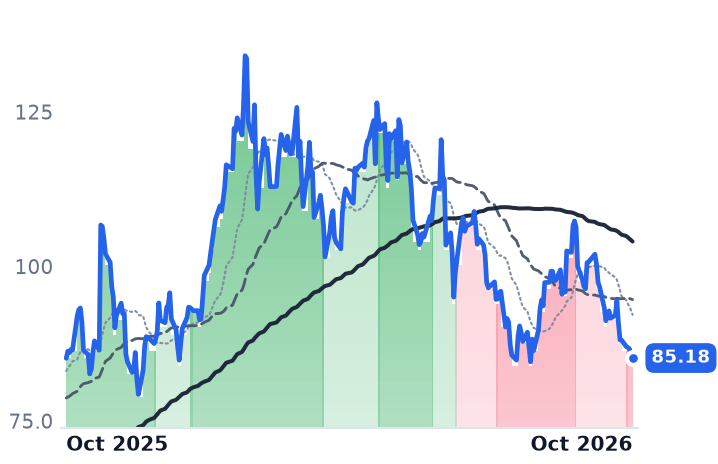
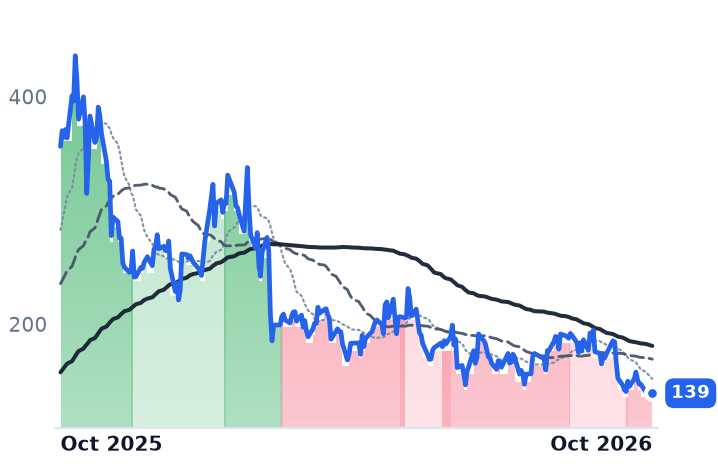
CCJ | Cameco | Uranium | 🔴 Cont. Bear | −15.4% | +0.0% |
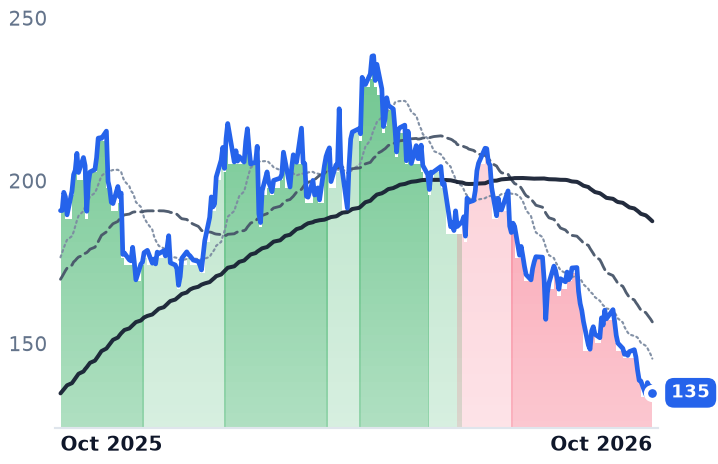
BWXT | BWX Technologies | Naval & Shipbuilding | 🔴 Cont. Bear | −14.4% | −29.3% |
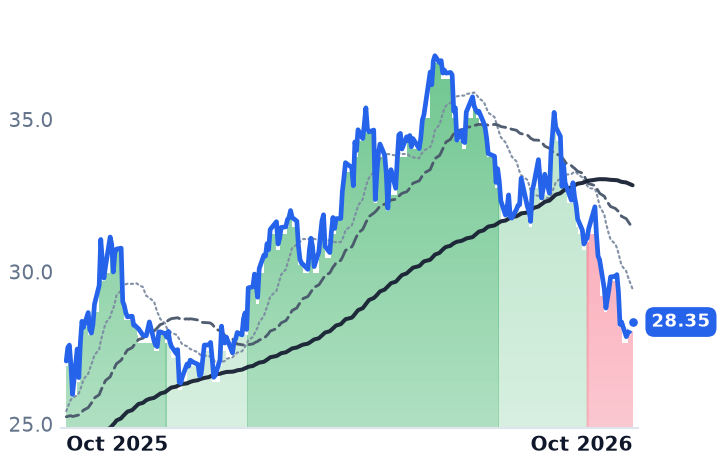
BEP | Brookfield Renewable Partners | Diversified Renewable Generators | ⚠️ Emerging Bear | −9.7% | +4.7% |
| Compared against · context, not the story | |||||
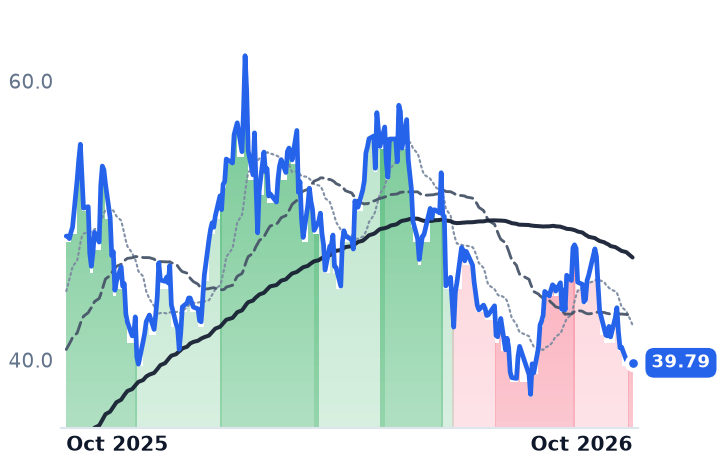
URA | Global X - Uranium ETF | Asset Management | 🔴 Cont. Bear | −13.6% | −18.6% |
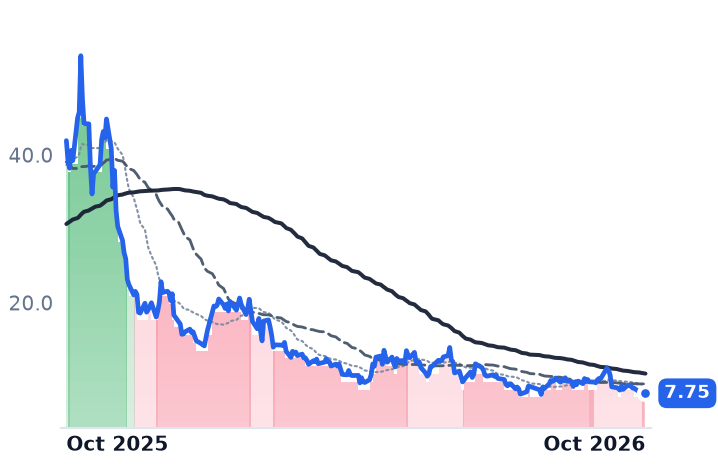
LEU | Centrus Energy | Uranium | 🔴 Cont. Bear | −19.9% | −60.9% |
SMR | NuScale Power | Advanced Nuclear | 🔴 Cont. Bear | −20.1% | −81.5% |
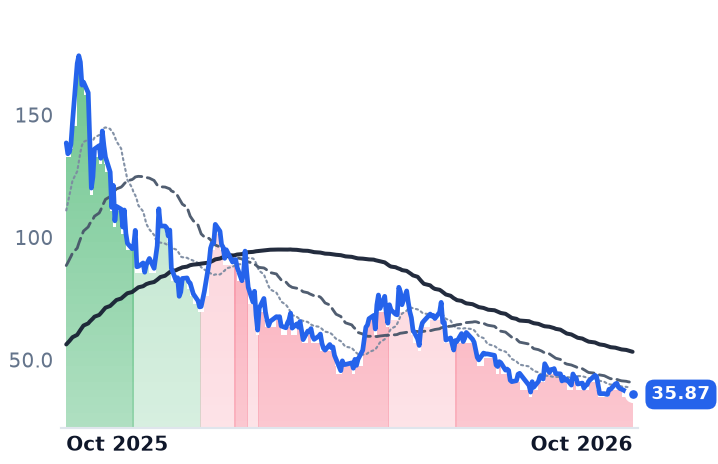
OKLO | Oklo | Emerging & Specialized Energy | 🔴 Cont. Bear | −13.1% | −74.1% |
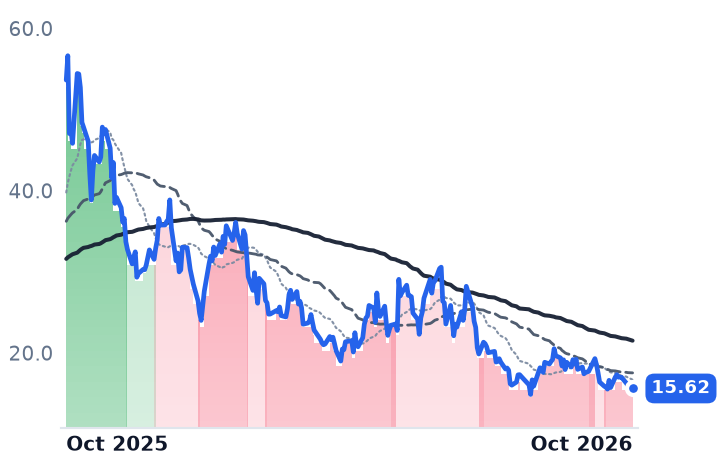
NNE | Nano Nuclear Energy | Power & Propulsion Systems | 🔴 Cont. Bear | −11.9% | −70.9% |
12-month price & trend
| Ticker | Mkt cap | P/E | P/E fwd | P/S | P/S fwd | P/GP | P/GP fwd | EV/EBITDA | FCF yld |
|---|---|---|---|---|---|---|---|---|---|
CCJ | $37.1B | 148.5x | 57.9x | 15.2x | 10.7x | 55.2x | 38.8x | 61.2x | 1.0% |
BWXT | $12.4B | 34.8x | 28.4x | 3.5x | 3.2x | 15.9x | 14.7x | 24.9x | 2.6% |
BEP | $8.7B | 61.6x | — | 1.4x | 1.3x | 5.6x | 5.3x | 9.6x | -54.4% |
| Ticker | Mkt cap | P/E | P/E fwd | P/S | P/S fwd | P/GP | P/GP fwd | EV/EBITDA | FCF yld |
|---|---|---|---|---|---|---|---|---|---|
URA | $3.9B | — | — | — | — | — | — | — | — |
LEU | $2.6B | 55.1x | 54.3x | 5.5x | 5.6x | 23.7x | 23.9x | 26.5x | -8.5% |
SMR | $3.0B | n/m | — | 284.6x | 160.7x | — | 762.7x | n/m | -25.5% |
| Ticker | Mkt cap | P/E | P/E fwd | P/S | P/S fwd | P/GP | P/GP fwd | EV/EBITDA | FCF yld |
|---|---|---|---|---|---|---|---|---|---|
OKLO | $6.6B | n/m | — | — | — | — | — | n/m | -4.2% |
NNE | $1.1B | n/m | — | — | 887.7x | — | — | n/m | -3.7% |
Consensus projections
| Ticker | FY2026E | FY2027E | FY2028E | |
|---|---|---|---|---|
CCJ | Revenue | +1.2% | +12.1% | +8.4% |
| EPS | +2.5% | +71.9% | +24.2% | |
BWXT | Revenue | +20.7% | +9.1% | +8.7% |
| EPS | +24.1% | +10.6% | +13.3% | |
BEP | Revenue | +3.9% | +9.1% | −3.3% |
| EPS | +11.0% | −9.8% | +9.3% | |
LEU | Revenue | +5.2% | −0.8% | −10.9% |
| EPS | −43.2% | +13.2% | −23.3% | |
SMR | Revenue | −54.8% | +517.4% | +185.1% |
| EPS | −76.8% | +19.4% | −24.8% | |
OKLO | Revenue | — | +247.8% | +498.2% |
| EPS | +64.1% | +8.1% | +10.3% | |
NNE | Revenue | +1684.0% | +356.5% | +39.0% |
| EPS | −23.4% | +55.2% | +34.3% |
Forward fiscal years only. Blank means no analyst coverage for that year.
The only line that moves with new reactors
Three companies were pitched as the clean way to own an American reactor buildout, and only one item in their combined accounts actually tracks new reactors: the Westinghouse Electric stake that Cameco and Brookfield Renewable hold between them. In the June quarter, Cameco's 49% share of Westinghouse carried a $10m loss, against $126m of earnings a year earlier.
That matters because Westinghouse is the only place an AP1000 reactor sale can appear in any of the three sets of books. Cameco, the largest listed uranium producer, carries it as equity income rather than revenue. Everything else on this shelf is pounds sold under utility contracts signed years ago, United States Navy propulsion reactors on government contracts, and hydroelectric dams. Since early September all three have been marked down together — roughly 11% on an equal-weighted basis in thirty days, with BWX Technologies closing within half a percent of its twelve-month low — as though one story were unwinding. The accounts describe three.
Cameco: the mine got better, the proxy got worse
Cameco's share of Westinghouse adjusted earnings before interest, tax, depreciation and amortization fell to $163m from $352m, which the company attributes mainly to the absence of roughly US$170m of Dukovany project revenue booked a year earlier; full-year guidance is US$370–430m. More telling, Cameco has eliminated the five-year 6% to 10% adjusted-EBITDA growth outlook it previously attached to Westinghouse's core business plus contracted new-build — the one explicit financial expression of the reactor thesis, withdrawn. What remains is conditional: the Department of Energy's US$17.5bn loan commitment of 23 June 2026 for long-lead items on up to ten AP1000 units, and an $80bn figure that is a vesting condition on the Commerce Department's participation interest rather than an order book.
The uranium business did the opposite. Realized price reached US$67.79 a pound, up 15% from a year earlier; full-year realized-price guidance was raised to C$91–96 from C$85–89 and production held at 19.5–21.5 million pounds, with only 0.2 million third-party pounds bought in the first quarter. The gap to a spot indicator near US$89.60 and a record US$96 long-term indicator is the contract book working as designed. "We are in the business of being disciplined and looking forward to capture that long-term value with those utilities who have come to realize that security of supply is important," chief executive Tim Gitzel told investors on 31 July. Group net income still fell 92% to $25.2m, and at 57.9x forward earnings — against roughly 65x in May, and consensus 2026 revenue growth of 1.2% — the de-rating is earned by the equity line, not the mine.
BWXT: the order book never heard about it
BWX Technologies, which builds naval reactors and fuel for the Navy's propulsion program alongside commercial steam generators and small-reactor components, has no commercial new-build problem. Government Operations was $601.3m of $901.6m of June-quarter revenue and grew 2%; Commercial Operations was $302.5m and grew 72%. Backlog reached $8.4bn, up 40%, on a 1.7 times book-to-bill, and all four 2026 guidance lines were raised on 3 August, with commercial growth lifted to about 45%.
The honest complaint is margin. Government work earned a 20.9% segment margin last quarter against 11.9% commercial, so the mix that produces the growth compresses the group: operating income fell 12.2%, a fourth straight quarterly decline, and annual operating margin has ground from 16.3% in 2021 to 10.1% in 2025. The company is also selling its medical-isotope business to Nordic Capital for up to $800m, where chief executive Rex Geveden said BWXT had "roughly tripled revenue, improved profitability and significantly expanded the product portfolio, including novel therapeutic isotopes" since 2018. At 28.4x forward earnings against roughly 46x in May, with consensus 2026 earnings up 24%, the shares have given back a third of their multiple while the order book grew.
Brookfield Renewable was never the nuclear name
Brookfield Renewable's Westinghouse exposure is roughly 11% net to the partnership; the 51% is held with institutional partners. The segment housing it contributed $44m of a record $421m of quarterly funds from operations and fell from $74m, while hydro delivered $336m. Group funds from operations rose 13.5%, though roughly $175m came from asset-sale gains, and the new capital is going to batteries — a $3bn purchase of the Aypa storage platform, about $420m net. Its break is a discount-rate event: a 5.26% distribution yield against a 30-year Treasury that reached 5.61% on 29 September, the highest since 2002. At 9.55x trailing enterprise value to EBITDA and 1.94x book, with consensus expecting reported losses through 2027, there is no forward earnings anchor to cheapen.
What the sell-off actually priced
Cameco's markdown is defensible on its own numbers, and it is Westinghouse that does the work. BWXT's is not explained by anything in its order book; margin mix and a withdrawn growth premium are the candidates, and the likelier reading of a 40% backlog gain meeting a one-third multiple cut is that buyers stopped paying for reactor optionality. Brookfield Renewable belongs to the bond market this quarter. Treating the three as one position was the error the drawdown exposed: over twelve months this corner held up better than the rest of the complex, where NuScale fell about 80% and Oklo about 72%.
The reactor case always rested on units in service around 2033. Until a utility signs, the shares are paid for pounds, submarines and water.