

GitLab's Paid Accounts Grew 8% While Its Metered AI Line More Than Doubled to $40m
Hypothesis Opus 5 · Research Opus 5 · Writing Opus 5 · Prompt v1.6
The seat meter that pays for developer tools has nearly stopped growing at GitLab, and the company has spent this year building a second one next to it. Revenue rose 21.3% in the July quarter while accounts worth more than $5,000 a year grew a fraction of that; the gap was filled by tier upgrades — Ultimate is now 59% of annual recurring revenue — and by a usage-priced artificial-intelligence line.
The bill for that second meter arrives immediately: gross margin fell to 84.1% from 87.9%. Atlassian runs the same seat meter at ten times the scale but bundles its AI into higher-priced editions rather than metering it, so its gross margin rose last quarter — and its own fiscal 2027 guidance takes the margin back out. Both have re-rated to roughly 7.5 times sales on guided growth well below that.
| Ticker | Company | Segment | Trend · 13mo | 30D | 1Y |
|---|---|---|---|---|---|
| The subject · what this brief is about | |||||
GTLB | GitLab | Developer Tools & DevOps | 🌱 Emerging Bull | −0.1% | +5.6% |
TEAM | Atlassian | Developer Tools & DevOps | 🌱 Emerging Bull | −0.9% | +25.1% |
| Compared against · context, not the story | |||||
FIG | Figma | Design & Content Creation | 🔴 Cont. Bear | −11.4% | −62.5% |
SNPS | Synopsys | EDA & Design Tools | 🔴 Cont. Bear | +24.4% | +2.4% |
CDNS | Cadence Design Systems | Developer Tools & DevOps | 🔴 Cont. Bear | +20.0% | −0.6% |
ADBE | Adobe | Design & Content Creation | 🌱 Emerging Bull | −10.8% | −32.1% |
ADSK | Autodesk | Design & Content Creation | 🔴 Cont. Bear | −2.7% | −34.5% |
PTC | PTC | Specialized Enterprise Solutions | 🔴 Cont. Bear | +2.1% | −29.7% |
U | Unity Software | Design & Content Creation | 🌱 Emerging Bull | +4.7% | +16.2% |
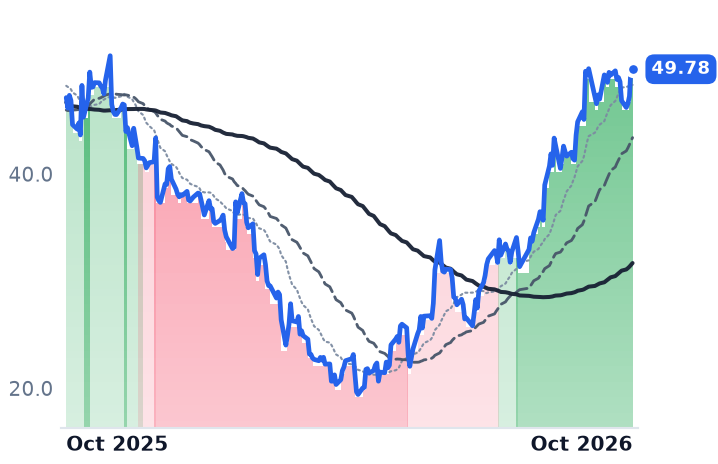
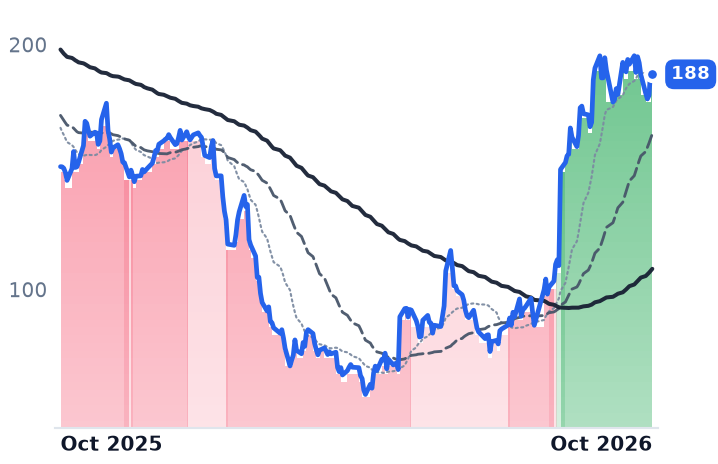
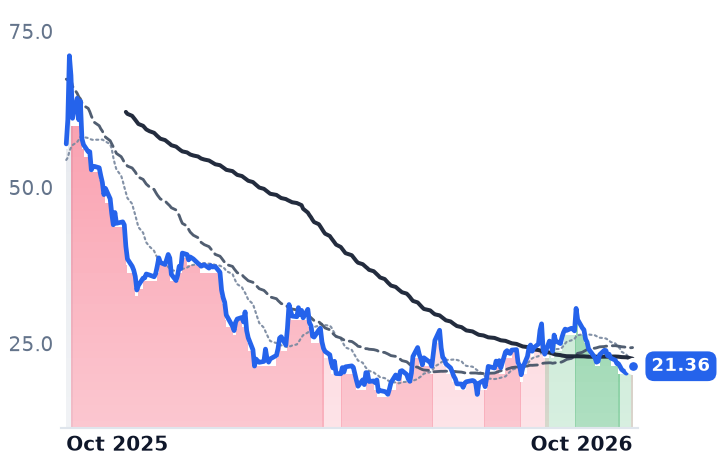
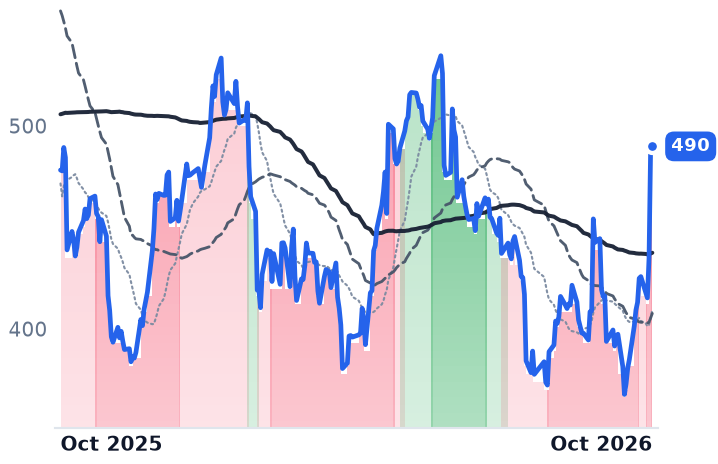
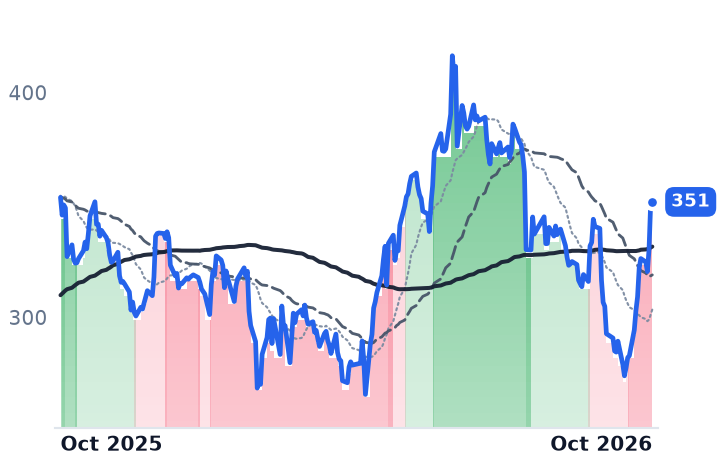
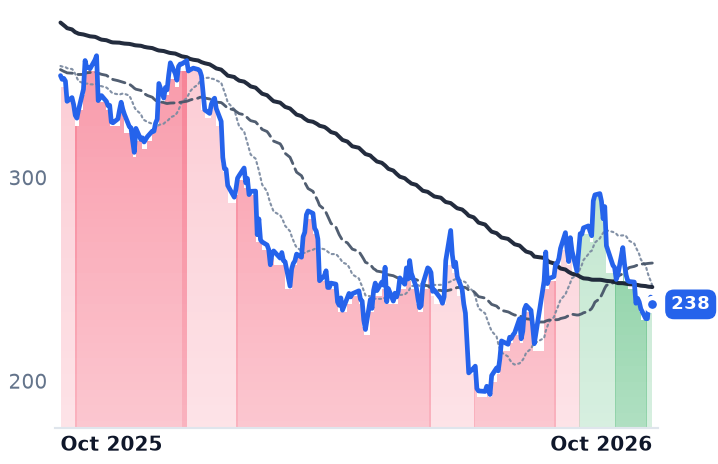
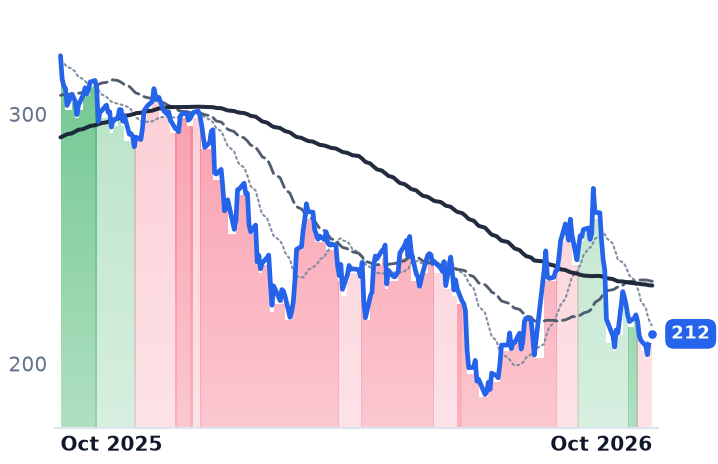
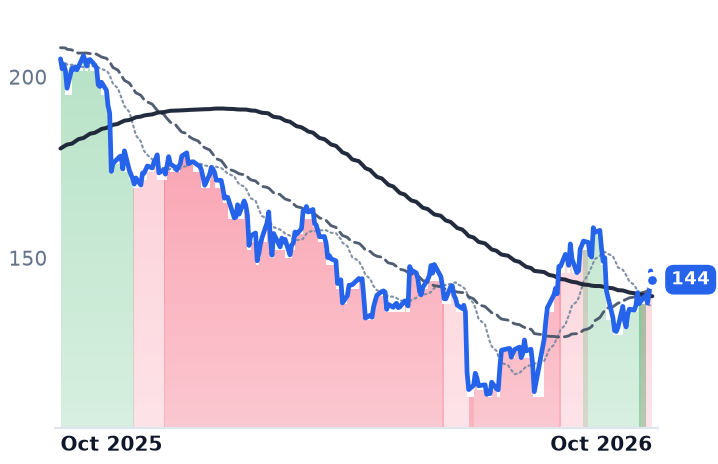
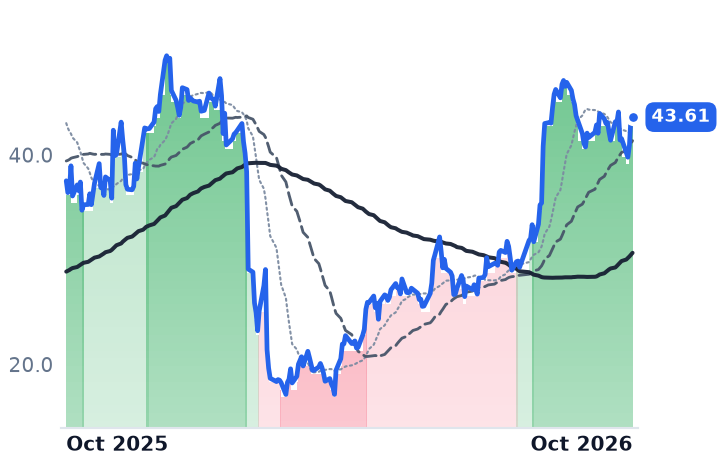
12-month price & trend
| Ticker | Mkt cap | P/E | P/E fwd | P/S | P/S fwd | P/GP | P/GP fwd | EV/EBITDA | FCF yld |
|---|---|---|---|---|---|---|---|---|---|
GTLB | $8.4B | n/m | 57.5x | 8.0x | 7.4x | 9.3x | 8.7x | n/m | 2.5% |
TEAM | $49.4B | n/m | 34.2x | 7.5x | 6.6x | 8.9x | 7.8x | 232.7x | 2.7% |
FIG | $10.4B | n/m | 74.7x | 8.1x | 7.1x | 10.3x | 9.0x | n/m | 2.2% |
| Ticker | Mkt cap | P/E | P/E fwd | P/S | P/S fwd | P/GP | P/GP fwd | EV/EBITDA | FCF yld |
|---|---|---|---|---|---|---|---|---|---|
SNPS | $87.1B | 187.9x | 30.8x | 9.2x | 9.0x | 12.8x | 12.4x | 30.7x | 3.2% |
CDNS | $94.6B | 67.9x | 42.2x | 16.2x | 15.0x | 18.3x | 16.9x | 43.8x | 1.8% |
ADBE | $93.6B | 13.1x | 9.6x | 3.6x | 3.5x | 4.0x | 3.9x | 9.4x | 11.7% |
| Ticker | Mkt cap | P/E | P/E fwd | P/S | P/S fwd | P/GP | P/GP fwd | EV/EBITDA | FCF yld |
|---|---|---|---|---|---|---|---|---|---|
ADSK | $44.8B | 27.3x | 16.8x | 5.7x | 5.4x | 6.3x | 5.9x | 19.2x | 6.3% |
PTC | $15.7B | 13.1x | 16.6x | 5.3x | 5.8x | 6.3x | 6.9x | 10.1x | 6.0% |
U | $19.8B | n/m | — | 9.8x | 9.3x | 15.9x | 15.1x | n/m | 2.7% |
Consensus projections
| Ticker | FY2026E | FY2027E | FY2028E | |
|---|---|---|---|---|
GTLB | Revenue | +25.6% | +19.5% | +15.5% |
| EPS | +40.9% | −2.9% | +19.9% | |
TEAM | Revenue | +24.7% | +15.4% | +14.7% |
| EPS | +55.5% | −0.2% | +21.6% | |
FIG | Revenue | +40.4% | +23.8% | +24.0% |
| EPS | −24.5% | +24.8% | +32.1% | |
SNPS | Revenue | +37.4% | +10.9% | +11.9% |
| EPS | +15.2% | +16.9% | +18.0% | |
CDNS | Revenue | +19.7% | +13.6% | +11.7% |
| EPS | +15.3% | +17.0% | +14.3% | |
ADBE | Revenue | +12.3% | +9.3% | +8.7% |
| EPS | +17.6% | +13.4% | +14.0% | |
ADSK | Revenue | +17.0% | +16.1% | +11.0% |
| EPS | +23.0% | +23.0% | +12.5% | |
PTC | Revenue | +4.9% | +6.4% | +7.5% |
| EPS | +20.4% | +8.8% | +10.2% | |
U | Revenue | +16.1% | +14.5% | +15.8% |
| EPS | −211.3% | −157.9% | +88.3% |
Forward fiscal years only. Blank means no analyst coverage for that year.
GitLab, which sells a single software-development platform — source control, build automation and security scanning — licensed per paid seat per tier, added paying accounts last quarter at barely a third of the rate its revenue grew. Customers worth more than $5,000 a year reached 11,114, up 8%, while revenue in the quarter ended July 31 rose 21.3% to $286.3m. Accounts above $100,000 grew 17%.
That gap is the whole question hanging over per-seat software: when a customer's engineering headcount stops growing, where does the next dollar come from? GitLab's answer has two parts, and only one of them is free. The first is tier uplift — Ultimate annual recurring revenue grew 35% and now accounts for 59% of the total, and deals above $500,000 jumped 150% year on year. The second is a meter. Paid consumption on the Duo Agent Platform grew about 50% sequentially to more than $40m of run rate, from $15m three months earlier, against a target above $100m by the end of this fiscal year.
"We started the year with a business monetized entirely through seat subscriptions," chief executive Bill Staples told investors on September 1. "And we now expect to exit it with seats continuing to grow alongside a meaningful and scaling consumption business." Bain, writing on the 2026 software selloff, describes the same pattern across the industry: companies moving past seats are "layering new meters on top of seats rather than replacing them outright".
The second meter has a cost of goods
Inference is a cash cost. GitLab's gross margin fell 3.9 percentage points to 84.1% from 87.9%, so gross profit grew 16.0% while revenue grew 21.3% — negative leverage at the gross line, in a quarter the sales force called its largest ever for gross bookings. Management attributes its 86.5% non-GAAP gross margin and its 85-87% full-year guide to cloud mix rather than AI adoption, and says Duo is deployed model-agnostically so token cost is not written into customer contracts. Both readings can be true; what is not in dispute is the direction.
Underneath, usage is running far ahead of seats: secure repositories up 60%, code pushes 50%, pipelines 40%. GitLab also launched Flex, a single dollar commitment a customer can spread across seats, credits and usage products without renegotiating — more than 130 customers committed over $20m in six weeks, which shifts some revenue recognition forward and sits outside current remaining performance obligations. Total obligations were about $1.2bn, with 65% due within twelve months. Dollar-based net retention of 117% accelerated for the first time since early fiscal 2024 — but GitLab's own definition folds seats, price and upgrades into one ratio, so the split the number would settle is not disclosed.
Atlassian defers the same bill
Atlassian — Jira, Confluence, Bitbucket, also sold per seat per edition — bundles its Rovo AI into higher editions and reports engagement for it, not revenue. Its June-quarter cloud revenue rose 31% and gross margin went the other way from GitLab's, up 3.8 percentage points to 86.9%. Chief financial officer James Chuong told the August 6 call the beat came from cross-sell and seat expansion rather than Data Center migrations — notable for a company whose shares fell 35% earlier in 2026 on its first reported decline in enterprise seats. The cost appears in guidance instead: fiscal 2027 revenue growth of about 13%, half the year just closed, non-GAAP operating margin down to 25% from 36%, and gross margin guided lower on rising Rovo usage. "Organizations can hire intelligence by the token," co-founder Mike Cannon-Brookes wrote on August 6. "Context is much harder for organizations to build."
What the prices now assume
Both shares have already made the move: Atlassian is up 175% over six months, GitLab 121%, and both were flat over the last thirty days while the September gain in this corner of software came from the chip-design tool vendors Synopsys and Cadence. GitLab trades at 7.97 times trailing sales against roughly 5.5 times in May, and 57.5 times forward earnings against consensus revenue growth of 19.5% this year slowing to 15.5% next. Atlassian is at 7.51 times trailing sales against roughly 3.3 times in May, and 34.2 times forward earnings on that 13% guide. Figma, growing revenue 48.2% with net dollar retention of 136%, fell 17% in thirty days and trades for less on forward sales than either — its gross margin dropped 5.2 points to 83.7% as inference landed in cost of revenue.
The verdict the numbers support is narrow. The seat meter is not being retired — the metered AI line is additive, as Bain says and as GitLab's bookings show — but it has stopped being the growth engine, and the replacement is sold at a lower gross margin or given away inside a more expensive edition. What re-rated this summer was pricing power, not developer demand. At 7.5 times sales on guided growth of 13% to 19%, both companies are now priced as though the upgrade cycle runs for years and the inference bill stays small.
Figma is the warning on the second point: fastest growth in the group, strongest expansion, and the only one whose multiple is still falling. The seat disclosure is what broke Atlassian in May. The line to watch now is the one labeled cost of revenue.