

Comfort Systems' Backlog Is Growing Three Times Faster Than Its Headcount
Hypothesis Opus 5 · Research Opus 5 · Writing Opus 5 · Prompt v1.6
The binding limit on America's data-center buildout is no longer demand — it is the supply of foremen, and the contractors who have them are being paid for it. Comfort Systems lifted its payroll 24% last year and its backlog still reached $14.06bn by the end of June, with gross margin at a record 25.9% and technology work at 58% of first-half revenue. EMCOR's order book grew far faster than its workforce, and 95% of that growth was organic.
The constraint sorts this group rather than lifting all of it. Limbach's gross profit fell in absolute dollars on revenue up 21.9%, absorbing wage inflation it could not price into the work, and Dycom surrendered margin while spending to add crews. All four trade below their spring multiples; only two are converting labor into widening margins.
| Ticker | Company | Segment | Trend · 13mo | 30D | 1Y |
|---|---|---|---|---|---|
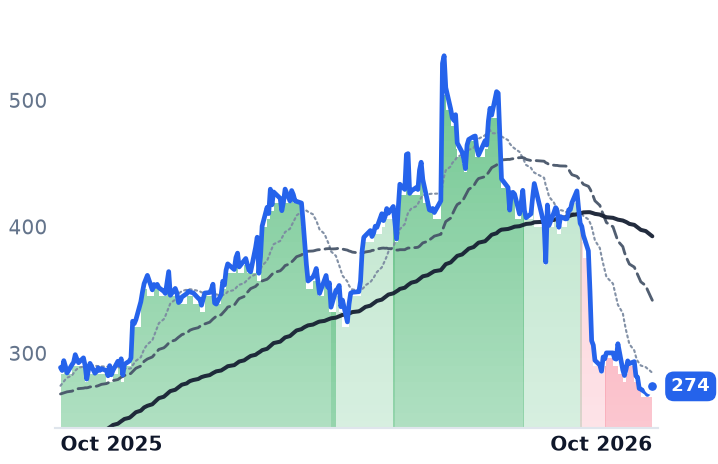
FIX | Comfort Systems USA | MEP & Building Systems | ⚠️ Emerging Bear | +7.3% | +109.6% |
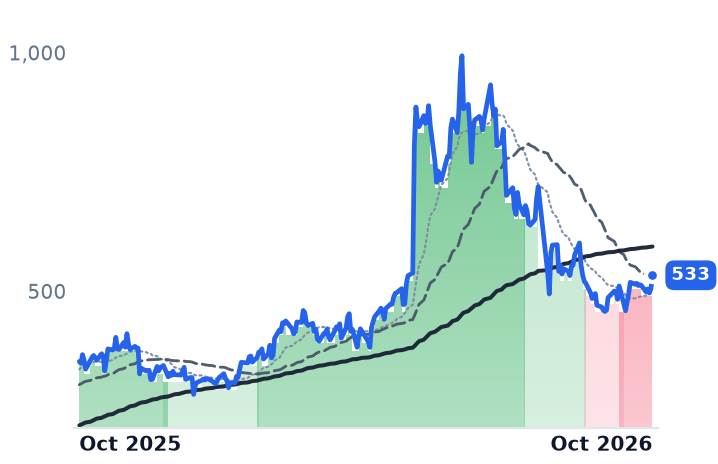
EME | EMCOR | Electrical & Power Infrastructure | ⚠️ Emerging Bear | +4.3% | +17.6% |
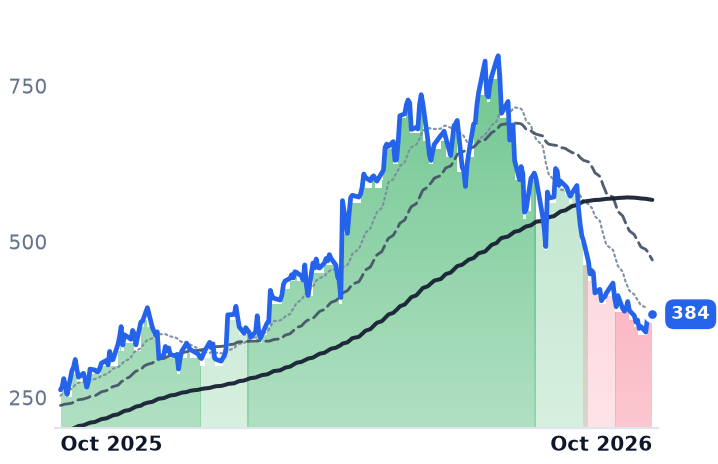
IESC | IES | MEP & Building Systems | ⚠️ Emerging Bear | +5.2% | −15.0% |
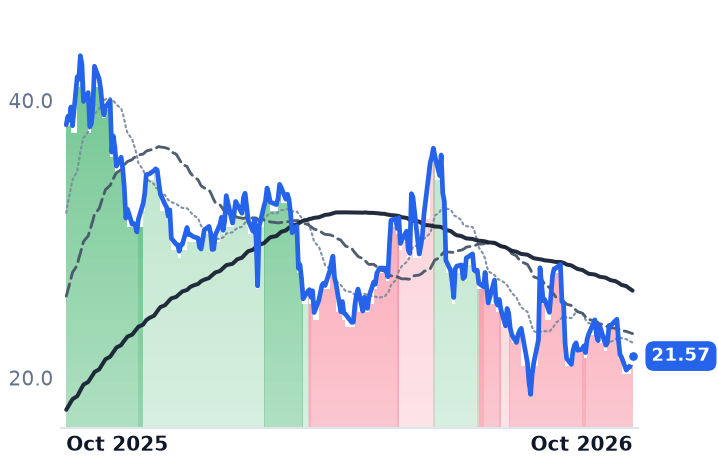
LMB | Limbach | MEP & Building Systems | 🔴 Cont. Bear | −1.5% | −47.4% |
DY | Dycom Industries | Electrical & Power Infrastructure | ⚠️ Emerging Bear | −8.8% | −5.2% |
STRL | Sterling Infrastructure | Infrastructure & Civil Construction | ⚠️ Emerging Bear | +9.6% | +51.2% |
AGX | Argan | Energy & Power Project Solutions | ⚠️ Emerging Bear | −8.2% | +46.2% |
AMRC | Ameresco | Energy & Power Project Solutions | 🔴 Cont. Bear | −6.8% | −43.6% |
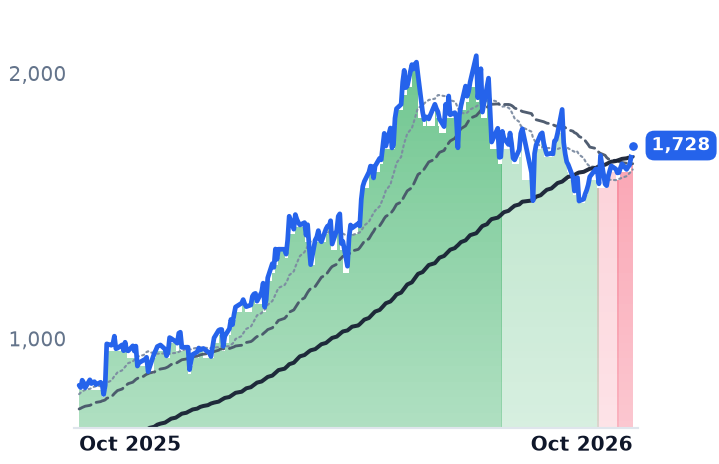
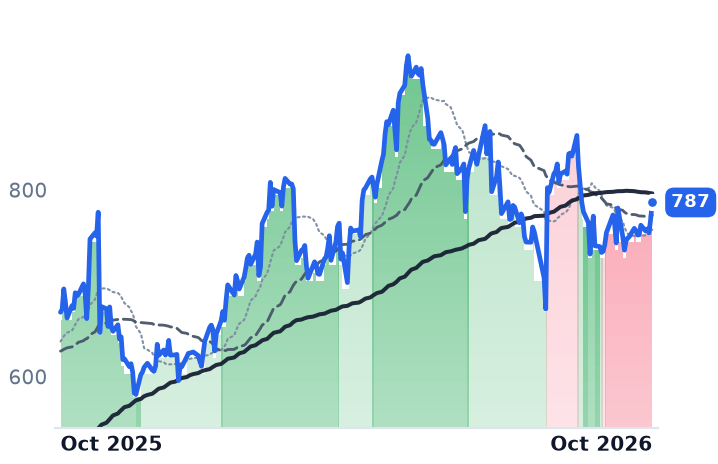
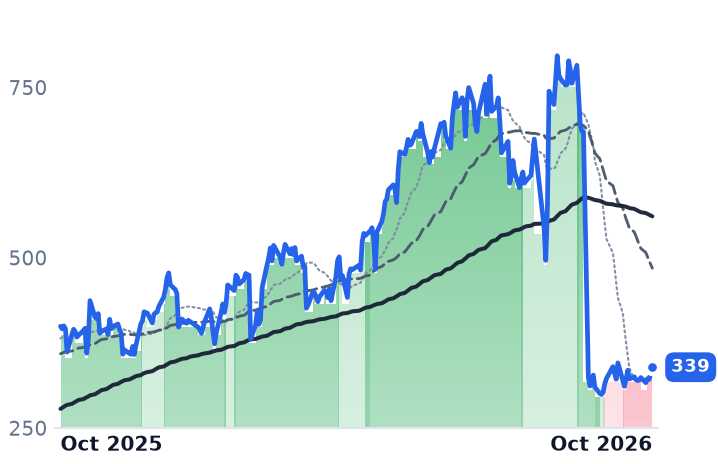
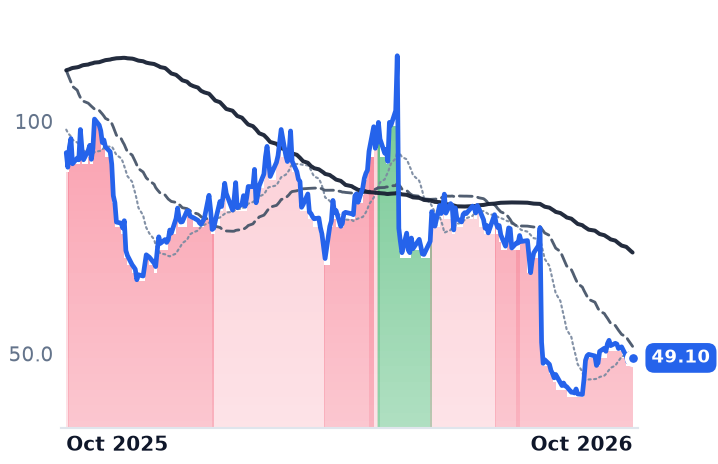
12-month price & trend
| Ticker | Mkt cap | P/E | P/E fwd | P/S | P/S fwd | P/GP | P/GP fwd | EV/EBITDA | FCF yld |
|---|---|---|---|---|---|---|---|---|---|
FIX | $60.9B | 42.5x | 35.3x | 5.4x | 4.7x | 21.1x | 18.3x | 30.3x | 3.5% |
EME | $34.7B | 24.6x | 23.9x | 1.9x | 1.7x | 9.5x | 8.7x | 15.4x | 3.4% |
IESC | $13.5B | 29.7x | 25.1x | 3.4x | 2.2x | 13.1x | 8.3x | 22.5x | 1.7% |
| Ticker | Mkt cap | P/E | P/E fwd | P/S | P/S fwd | P/GP | P/GP fwd | EV/EBITDA | FCF yld |
|---|---|---|---|---|---|---|---|---|---|
LMB | $585.3M | 19.0x | 12.3x | 0.9x | 0.7x | 3.6x | 3.1x | 10.5x | 8.6% |
DY | $8.2B | 24.7x | 16.1x | 1.2x | 1.1x | 6.3x | 5.7x | 9.4x | 5.7% |
STRL | $16.4B | 38.0x | 26.9x | 4.8x | 4.0x | 20.2x | 17.0x | 22.6x | 2.9% |
| Ticker | Mkt cap | P/E | P/E fwd | P/S | P/S fwd | P/GP | P/GP fwd | EV/EBITDA | FCF yld |
|---|---|---|---|---|---|---|---|---|---|
AGX | $5.4B | 29.8x | 29.0x | 4.5x | 3.8x | 21.7x | 18.4x | 23.0x | 10.1% |
AMRC | $1.1B | 40.7x | 17.4x | 0.6x | 0.5x | 3.5x | 3.3x | 12.1x | -46.0% |
Consensus projections
| Ticker | FY2026E | FY2027E | FY2028E | |
|---|---|---|---|---|
FIX | Revenue | +47.7% | +19.0% | +14.1% |
| EPS | +86.6% | +22.8% | +23.4% | |
EME | Revenue | +21.4% | +10.9% | +8.3% |
| EPS | +30.1% | +13.0% | +13.2% | |
IESC | Revenue | +27.7% | +48.1% | +18.8% |
| EPS | +76.1% | +16.8% | +17.2% | |
LMB | Revenue | +19.9% | +14.4% | +15.2% |
| EPS | −4.2% | +16.6% | +13.1% | |
DY | Revenue | +17.1% | +39.6% | +12.7% |
| EPS | +39.5% | +51.2% | +19.7% | |
STRL | Revenue | +71.5% | +21.2% | +17.3% |
| EPS | +91.2% | +28.0% | +20.6% | |
AGX | Revenue | +12.1% | +48.9% | +20.4% |
| EPS | +65.8% | +57.7% | +19.4% | |
AMRC | Revenue | +11.9% | +8.4% | +18.9% |
| EPS | +54.6% | +34.9% | +50.1% |
Forward fiscal years only. Blank means no analyst coverage for that year.
Comfort Systems USA added roughly 4,400 workers last year, lifting its payroll about 24%. It was not close to enough.
The company, which installs and maintains heating, cooling, piping, controls and electrical systems for building owners and, increasingly, for data-center developers, ended 2025 with about 22,700 employees against roughly 18,300 a year earlier, per its annual report, which notes that skilled labor in the building and service trades has become scarce and valuable. Over the same stretch its backlog climbed 73% to $14.06bn at 30 June. Signed work per employee rose about 40% to $619k. That gap is the whole story of the mechanical and electrical trades right now: hyperscaler capital spending that Goldman Sachs strategists said on 25 September will rise more than half next year to $1.2 trillion arrives at these firms as order books, and order books become earnings only at the speed a contractor can recruit, badge and supervise pipefitters, sheet-metal workers and electricians.
The constraint is being monetized, not absorbed
Comfort Systems is converting the scarcity into price. Second-quarter revenue grew 50% to $3.27bn, gross margin reached a record 25.9% against 23.5% a year earlier, and operating income rose 86% — profit growing faster than revenue, which in turn grew faster than the payroll. Annualized revenue per employee is up about a fifth to $575k; gross profit per employee is up a third to $149k. Technology work including data centers was 58% of first-half revenue, against 40% a year earlier.
The discipline is deliberate. "We only take work that we know we can perform," chief executive Brian Lane told investors on the July 24 earnings call. "We don't out-kick our coverage." On the same call he described customers prepaying: "advanced cash reflects the strength of our counterparties and also how much they value locking up our capacity right now." Customers are buying crew availability forward.
EMCOR Group, the larger electrical and mechanical contractor with about 44,000 US employees, shows the same arithmetic with a flatter slope: headcount up 8.9% last year against remaining performance obligations up 43.9% to a record $17.14bn, 95% of that organic, which lifted signed work per head roughly a third to $389k. Second-quarter operating margin was a record 10.62%. Chief executive Anthony Guzzi has named the pinch point more precisely than anyone in the group, telling analysts on the first-quarter call: "Our bottleneck is field leadership, and it gets to the frontline leaders, foremen, general foremen, and project managers or project executives." Tradespeople can be hired; a general foreman takes years. IES Holdings, which does electrical and network work for data centers out of Houston, chose the other route — a $650m purchase of DBM Global buys 3,400 employees outright — while its own backlog rose 91% to $4.5bn at a record 27.4% gross margin.
Where the same labor market goes the other way
Scarcity is only a franchise if you can price it. Limbach Holdings, a small owner-direct building-systems contractor serving hospitals, universities and data centers, grew second-quarter revenue 21.9% to $173.5m and watched gross profit fall 6.4% in absolute dollars, with margin down to 21.5% from 28.0%; in its owner-direct business, three-quarters of revenue, margin went from 29% to 24% on labor and materials inflation, and the company raised revenue guidance while cutting profit guidance 11%. Dycom Industries, which places fiber for telecom and utility clients, grew revenue 45.6% last quarter and lost margin doing it — 16.2% gross against 17.9% — citing higher investments to scale operations. Dycom generates about $66k of annualized gross profit per employee. Comfort Systems generates more than twice that.
What the shares earn and what they don't
Comfort Systems stands about 16% below its 22 June high, EMCOR about 17% below its May peak, and both have bounced since — Comfort Systems rose 6.3% on 11 September after Oracle reaffirmed fiscal 2027 capital spending of $90bn to $95bn, with DA Davidson initiating coverage at Buy. Comfort Systems now costs 42x trailing and 35x forward earnings, down from nearly 57x trailing in May; EMCOR costs 25x trailing and 24x forward. Because gross margins across these contractors differ by up to nine percentage points, the comparison that travels is price against gross profit: EMCOR trades at 9.5x, Comfort Systems at 21.1x, down from 12.1x and 27.2x respectively in May.
The de-rating is not a demand break — Oppenheimer notes Comfort Systems' data-center clients show no sign of pausing, and the order books are at records. The likelier reading is duration meeting the bond-market rout the paper has been tracking: EMCOR now converts only 75% to 76% of signed work within twelve months, against 85% historically, so more of this cash lands in 2028 and gets discounted at a 30-year yield above 5.6%. What labor explains is not the simultaneous repricing but the dispersion inside it: the same wage inflation that widened Comfort Systems' margin destroyed Limbach's, and the same hiring that lifted EMCOR's output per head cost Dycom its operating leverage.
Which is why the most consequential number here is square footage. Comfort Systems' modular plants, already 17% of revenue, are on track for 4m square feet of capacity by the end of this year and roughly 5m by late summer 2027. A factory hour needs fewer general foremen than a rooftop hour, and the foreman is the thing nobody can hire fast.