

GRAIL Won a 6-4 Panel Vote for a Medicare Payment That Cannot Start Before 2028
Hypothesis Opus 5 · Research Opus 5 · Writing Opus 5 · Prompt v1.6
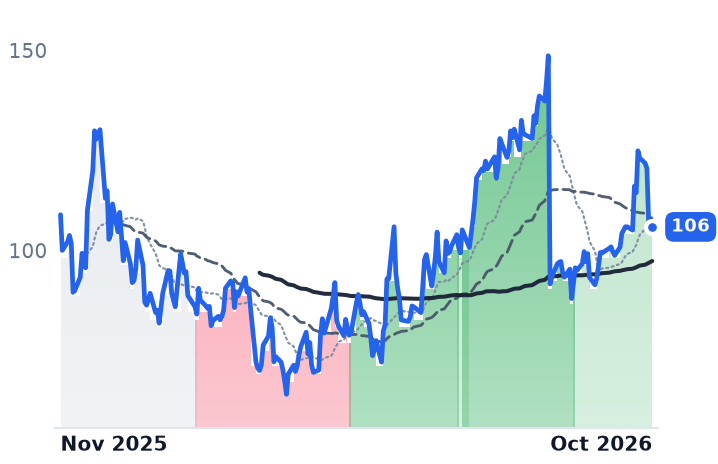
The biggest move in cancer testing last month came from a federal advisory committee rather than from a paid test. GRAIL's Galleri won a split effectiveness recommendation on September 23 despite missing the primary endpoint of the NHS-Galleri trial, and the shares rose 78% over thirty days, most of it in two sessions.
What approval unlocks is narrower than the move implies: the law signed in February permits Medicare payment for approved multi-cancer screens only from 2028. The money side is moving the other way. Galleri realized roughly $698 a test against a $949 list price, down from about $761 a year earlier, on a negative 28.1% gross margin. Guardant Health and Castle Biosciences, the two names here that actually collect from payers, were flat through the vote.
| Ticker | Company | Segment | Trend · 13mo | 30D | 1Y |
|---|---|---|---|---|---|
| The subject · what this brief is about | |||||
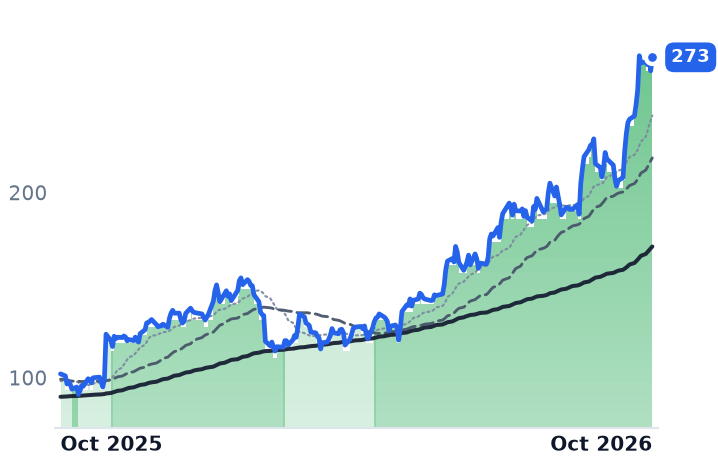
GH | Guardant Health | Oncology & Cancer Diagnostics | 🟢 Cont. Bull | +10.4% | +182.9% |
GRAL | GRAIL | Oncology & Cancer Diagnostics | 🟢 Cont. Bull | +77.7% | +118.6% |
CSTL | Castle Biosciences | Oncology & Cancer Diagnostics | 🟢 Cont. Bull | +8.9% | +56.5% |
| Compared against · context, not the story | |||||
PSNL | Personalis | Oncology & Cancer Diagnostics | 🟢 Cont. Bull | −3.3% | +121.8% |
BLLN | BillionToOne | Oncology & Cancer Diagnostics | 🟢 Cont. Bull | +6.4% | −2.8% |
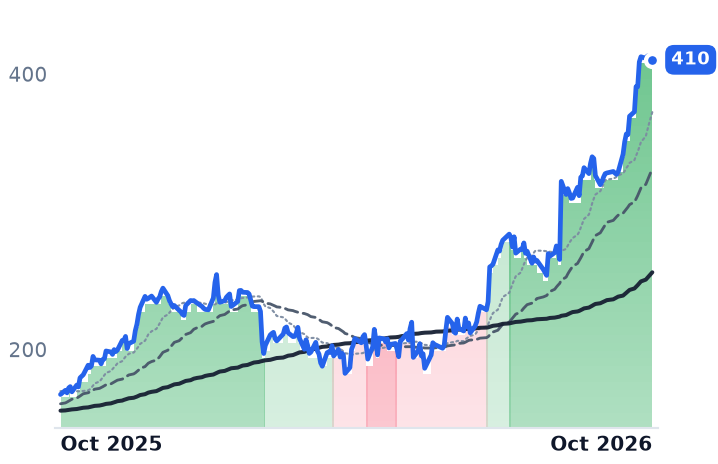
ILMN | Illumina | Genomic & Molecular Sequencing | 🟢 Cont. Bull | +23.2% | +167.4% |
NTRA | Natera | Prenatal & Reproductive Diagnostics | 🟢 Cont. Bull | +25.2% | +145.2% |
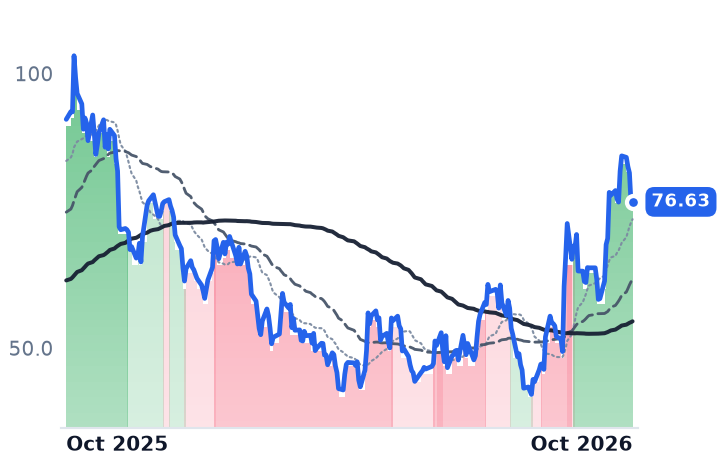
TEM | Tempus AI | Genomics & Molecular Testing | 🌱 Emerging Bull | +18.5% | −16.4% |
12-month price & trend
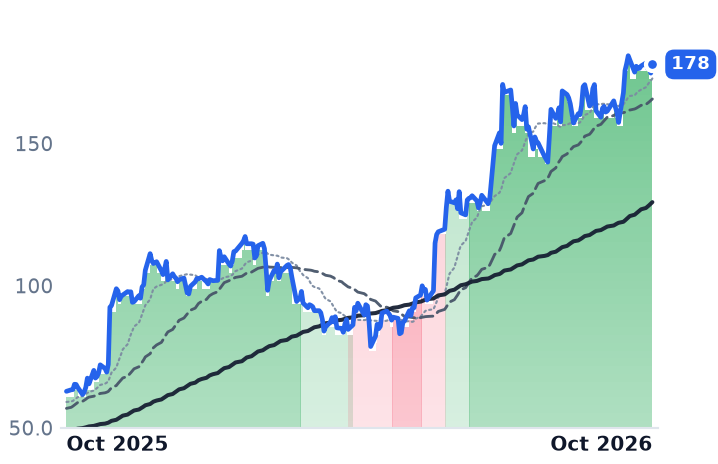
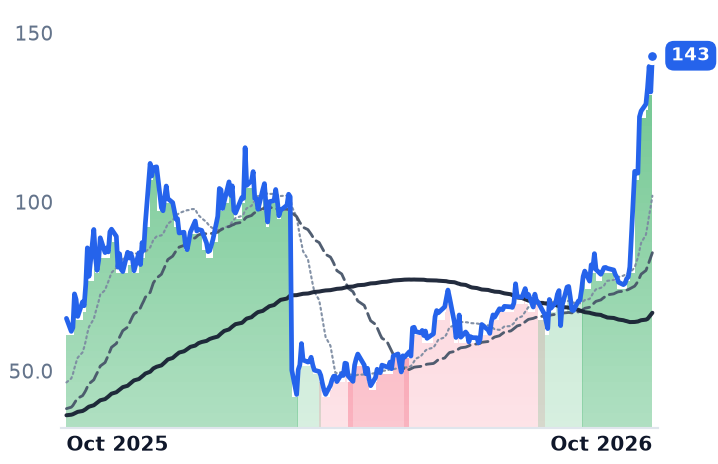
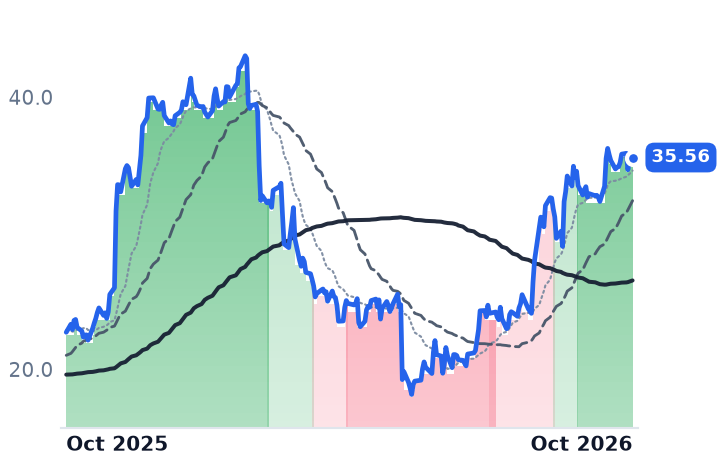
| Ticker | Mkt cap | P/E | P/E fwd | P/S | P/S fwd | P/GP | P/GP fwd | EV/EBITDA | FCF yld |
|---|---|---|---|---|---|---|---|---|---|
GH | $23.9B | n/m | — | 20.2x | 17.6x | 31.0x | 27.0x | n/m | -1.0% |
GRAL | $6.1B | n/m | — | 37.2x | 34.0x | — | — | n/m | -4.8% |
CSTL | $1.1B | n/m | — | 3.0x | 2.9x | 3.9x | 3.8x | n/m | -0.0% |
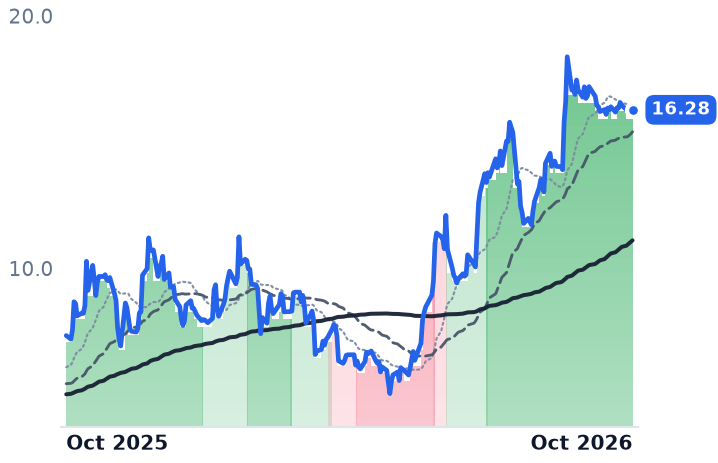
| Ticker | Mkt cap | P/E | P/E fwd | P/S | P/S fwd | P/GP | P/GP fwd | EV/EBITDA | FCF yld |
|---|---|---|---|---|---|---|---|---|---|
PSNL | $1.7B | n/m | — | 24.9x | 21.5x | 196.6x | 169.4x | n/m | -5.8% |
BLLN | $4.9B | 153.5x | 133.3x | 12.3x | 10.7x | 17.2x | 15.0x | 88.9x | 0.7% |
ILMN | $21.6B | 25.6x | 27.4x | 4.9x | 4.7x | 7.3x | 7.0x | 18.9x | 4.6% |
| Ticker | Mkt cap | P/E | P/E fwd | P/S | P/S fwd | P/GP | P/GP fwd | EV/EBITDA | FCF yld |
|---|---|---|---|---|---|---|---|---|---|
NTRA | $59.0B | n/m | — | 21.8x | 20.3x | 33.4x | 31.0x | n/m | 0.1% |
TEM | $7.7B | n/m | — | 5.6x | 4.8x | 8.1x | 6.9x | n/m | -2.8% |
Consensus projections
| Ticker | FY2026E | FY2027E | FY2028E | |
|---|---|---|---|---|
GH | Revenue | +39.5% | +35.2% | +35.5% |
| EPS | +5.5% | −37.6% | −88.4% | |
GRAL | Revenue | +23.0% | +25.3% | +27.4% |
| EPS | −15.7% | +6.1% | −4.8% | |
CSTL | Revenue | +10.9% | +10.7% | +11.4% |
| EPS | +21.9% | −25.9% | −57.9% | |
PSNL | Revenue | +16.3% | +35.9% | +41.5% |
| EPS | +15.0% | −13.0% | −30.2% | |
BLLN | Revenue | +53.5% | +26.1% | +26.2% |
| EPS | +639.1% | +29.0% | +73.0% | |
ILMN | Revenue | +6.2% | +5.5% | +6.6% |
| EPS | +10.2% | +13.1% | +14.5% | |
NTRA | Revenue | +29.7% | +19.9% | +21.0% |
| EPS | −43.8% | −90.0% | −1293.6% | |
TEM | Revenue | +25.8% | +21.9% | +18.4% |
| EPS | −38.6% | −75.3% | −569.5% |
Forward fiscal years only. Blank means no analyst coverage for that year.
On September 23 a US Food and Drug Administration advisory panel recommended GRAIL's Galleri blood screen, sold to asymptomatic adults over 50 as a multi-cancer early detection test, as effective by six votes to four, alongside a 10-0 vote on safety and 7-2 with one abstention on benefits outweighing risks. The split on effectiveness reflects a documented gap: Galleri missed the NHS-Galleri trial's primary endpoint of a statistically significant reduction in late-stage diagnoses, delivering a 14% reduction in stage 4 cases alone.
What a favorable FDA decision actually buys is a date. The Nancy Gardner Sewell Medicare Multi-Cancer Early Detection Screening Coverage Act, signed into law on February 3, permits Medicare to pay for these tests only if they are FDA-approved, only from 2028, and only if the Centers for Medicare and Medicaid Services decides coverage is appropriate. The statute then caps what coverage is worth: eligibility is limited to beneficiaries under 68 in 2028, rising a year annually, and to one test every 11 months.
What Galleri collects today
Galleri is a cash-pay product. Volumes rose 35% to more than 61,000 tests in the June quarter while test revenue grew 24% to $42.6m — about $698 realized per test, down from roughly $761 a year earlier against a $949 list price discounted by employers and carriers. Gross margin was minus 28.1%: GRAIL is selling below cash cost. It held $861.6m of cash at quarter-end, including a $110m Samsung investment, against a quarterly adjusted loss near $90m. Consensus shows no profit through 2030. The equity trades at 37.2x trailing and 34.0x forward sales; price to gross profit cannot be computed because gross profit is negative.
"Today's vote reinforces the strength of Galleri's clinical evidence," chief executive Joshua Ofman said of the panel. "We believe the panel's recommendations reaffirm a high evidence bar that Grail has set for a multi-cancer early detection test."
The names that bill payers did not move
GRAIL supplied roughly 77 of the 101 equal-weighted percentage points the five-name cancer-testing group added over the thirty sessions to October 2, and two sessions — September 18 to 21, then 23 to 24, on volumes near 3m shares against a typical 300,000 — carried most of it. Guardant Health held between $179.38 and $176.45 across the same window and Castle Biosciences between $35.34 and $35.19. There was no read-across. Guardant's own 9% month landed in the first fortnight, around its September 1 Carelon coverage decision for Shield, effective November 15 and taking covered lives toward 94 million. Illumina, up 28% on raised full-year guidance, and Natera, up 26% on recurrence-detection data, both beat the group on their own news.
Guardant, which sells Guardant360 for therapy selection in advanced cancer and Shield for colorectal screening in primary care, is the one name here growing fast and getting paid: revenue rose 44.3% to $334.98m in the June quarter at a 65.4% gross margin. But its screening price is not improving. Shield earned $52.9m on about 66,000 tests, roughly $801 each, against $925 a year earlier and against a Medicare advanced diagnostic laboratory test rate of $1,495 — a rate CMS reset from January using the median of private-payer data Guardant itself had to collect. Full-year screening guidance of $218-230m on 270,000-285,000 tests implies $765-852 a test: flat. The margin plan is cost, not price — about $410 a test today, targeted at $350 by year-end and $200 by 2028. Co-founder Helmy Eltoukhy called it "a business that's really firing on all cylinders" on the July 30 call. It is also priced at 31.0x trailing and 27.0x forward gross profit, with consensus net income not arriving until 2029.
Castle Biosciences, which sells prognostic gene-expression tests to dermatologists and gastroenterologists — DecisionDx-Melanoma, DecisionDx-SCC and TissueCypher in Barrett's esophagus — has no screening product and no coverage campaign. Core test reports rose 32% in the June quarter, revenue 20.1% to $103.55m at a 77.1% gross margin, adjusted earnings before interest, taxes, depreciation and amortization reached $12.4m, and guidance went to $365-375m from $345-355m. The flat first quarter was mechanical: IDgenetix, a pharmacogenomics test, was discontinued in May 2025. "The Castle Biosciences team delivered another outstanding quarter," chief executive Derek Maetzold told investors on July 30. The shares trade at 3.9x trailing gross profit — about an eighth of Guardant's reading, on a higher gross margin and roughly breakeven cash flow.
What the month priced
Guardant earns its advance in collected dollars, though not in the way the screening story is usually told: volume is quadrupling at a falling realized price, and the gross margin depends on getting cost per test down. GRAIL's month is an option on a regulatory sequence — approval, then a separate CMS judgment, then a capped benefit from 2028 — bought at 34x forward sales on a product that loses money on every draw. That Castle, the one protagonist paid at established rates from its own cash flow, lagged both is the measure of what changed hands in September: a future reimbursement decision, priced ahead of the tests it would pay for.
GRAIL's $861.6m of cash reaches the year Medicare is first permitted to write the check. Whether it chooses to is a question no vote on safety or effectiveness answers.