

Fair Isaac Now Earns 42% of Revenue From One Mortgage Fee Washington Is Repricing
Hypothesis Opus 5 · Research Opus 5 · Writing Opus 5 · Prompt v1.6
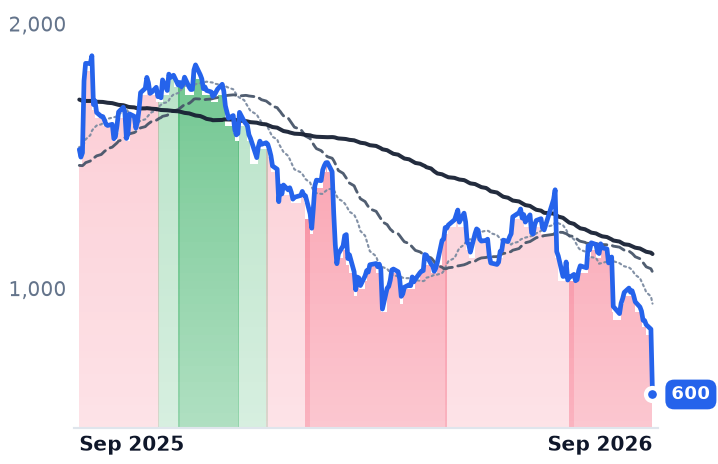
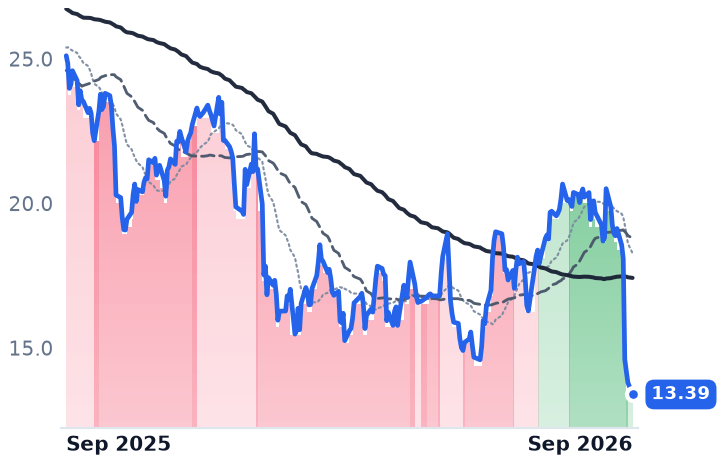
Fair Isaac spent fiscal 2026 collecting a wholesale price increase in full: mortgage-origination revenue rose 97% year over year in the June quarter against a list-price step from $4.95 to $10 a score, meaning essentially nothing came from loan units. That single toll has grown from roughly a quarter of company revenue to about 42% in twelve months.
Then the buyer of last resort moved. The Federal Housing Finance Agency's director said on September 28 that Fannie Mae and Freddie Mac are going to one mortgage pricing grid incorporating VantageScore, and TransUnion locked $0.99 standalone VantageScore 4.0 pricing through 2028 the next morning.
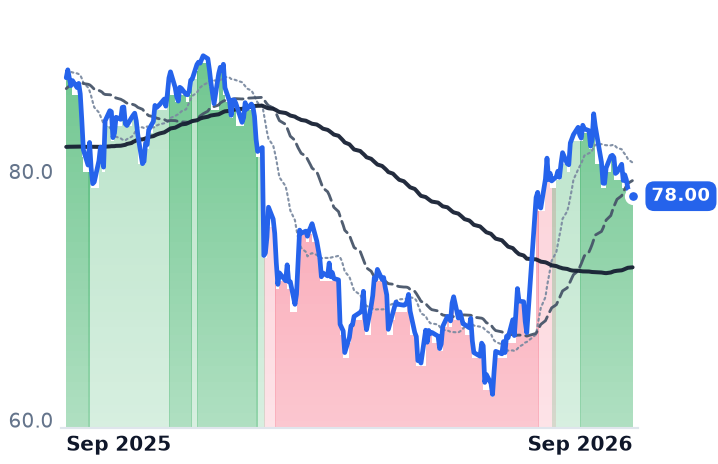
The shares now trade at 17.2x trailing and 14.0x forward earnings, against roughly 62x in January. The rest of the financial-software shelf fell as hard on nothing comparable: Q2 Holdings grew revenue 12.6% with operating margin up 8.3 points and Tyler grew 8.2%, both without a pricing dispute. Fair Isaac is the exception on that shelf, not its representative.
| Ticker | Company | Segment | Trend · 13mo | 30D | 1Y |
|---|---|---|---|---|---|
| The subject · what this brief is about | |||||
FICO | Fair Isaac | Financial Services Software | 🔴 Cont. Bear | −47.9% | −60.7% |
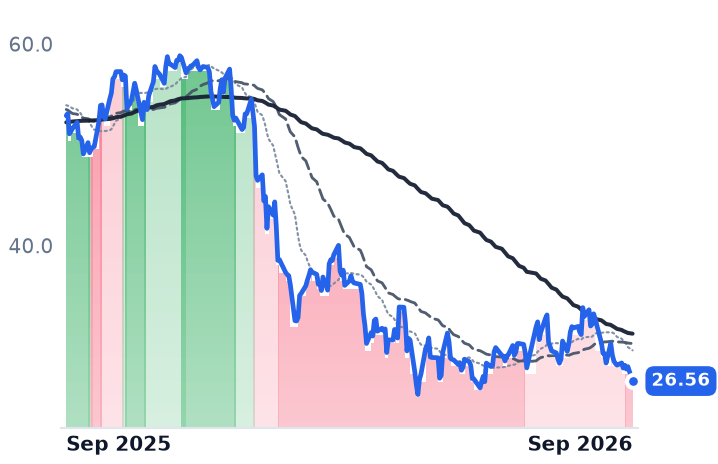
VERX | Vertex | Financial Services Software | 🔴 Cont. Bear | −22.2% | −56.2% |
| Compared against · context, not the story | |||||
QTWO | Q2 | Financial Services Software | 🌱 Emerging Bull | −15.5% | −25.5% |
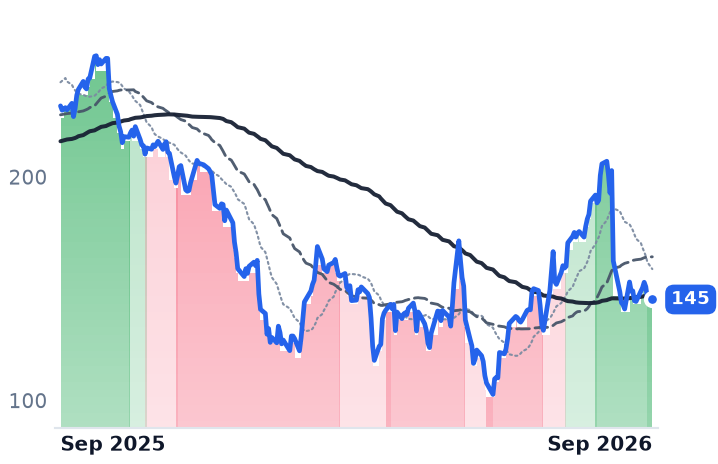
TYL | Tyler Technologies | Financial Services Software | 🌱 Emerging Bull | −14.6% | −38.8% |
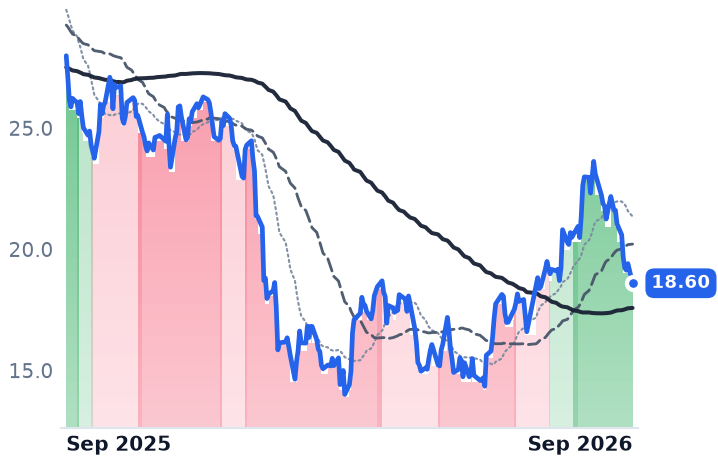
ALKT | Alkami Technology | Financial Services Software | 🌱 Emerging Bull | −34.3% | −46.7% |
BL | BlackLine | Financial Services Software | 🔴 Cont. Bear | −21.0% | −49.8% |
GWRE | Guidewire Software | Financial Services Software | 🌱 Emerging Bull | −29.9% | −37.4% |
NCNO | nCino | Financial Services Software | 🌱 Emerging Bull | −19.0% | −33.5% |
SSNC | SS&C Technologies | Financial Services Software | 🌱 Emerging Bull | −6.3% | −10.9% |
12-month price & trend
| Ticker | Mkt cap | P/E | P/E fwd | P/S | P/S fwd | P/GP | P/GP fwd | EV/EBITDA | FCF yld |
|---|---|---|---|---|---|---|---|---|---|
FICO | $12.9B | 17.2x | 14.0x | 5.4x | 5.1x | 6.4x | 6.0x | 14.4x | 7.7% |
VERX | $1.8B | 363.1x | 13.6x | 2.3x | 2.2x | 3.7x | 3.5x | 56.3x | 3.2% |
QTWO | $3.5B | 37.6x | 19.2x | 4.1x | 3.9x | 7.2x | 6.9x | 23.5x | 5.8% |
| Ticker | Mkt cap | P/E | P/E fwd | P/S | P/S fwd | P/GP | P/GP fwd | EV/EBITDA | FCF yld |
|---|---|---|---|---|---|---|---|---|---|
TYL | $13.6B | 43.6x | 25.4x | 5.6x | 5.3x | 12.0x | 11.4x | 29.7x | 5.2% |
ALKT | $1.6B | n/m | 18.6x | 3.2x | 2.9x | 5.6x | 5.2x | n/m | 4.2% |
BL | $1.6B | 45.1x | 10.7x | 2.1x | 2.0x | 2.8x | 2.7x | 20.0x | 10.9% |
| Ticker | Mkt cap | P/E | P/E fwd | P/S | P/S fwd | P/GP | P/GP fwd | EV/EBITDA | FCF yld |
|---|---|---|---|---|---|---|---|---|---|
GWRE | $12.7B | 92.7x | 36.5x | 8.6x | 7.4x | 13.4x | 11.5x | 61.1x | 2.3% |
NCNO | $2.1B | 62.0x | 14.7x | 3.4x | 3.3x | 5.5x | 5.3x | 28.6x | 6.3% |
SSNC | $18.7B | 22.3x | 11.2x | 2.8x | 2.8x | 5.9x | 5.7x | 11.7x | 9.4% |
Consensus projections
| Ticker | FY2026E | FY2027E | FY2028E | |
|---|---|---|---|---|
FICO | Revenue | +27.8% | +14.0% | +11.9% |
| EPS | +45.6% | +22.5% | +19.9% | |
VERX | Revenue | +10.6% | +10.5% | +11.6% |
| EPS | +28.4% | +24.0% | +21.0% | |
QTWO | Revenue | +11.8% | +10.1% | +10.6% |
| EPS | +22.1% | +19.5% | +32.6% | |
TYL | Revenue | +8.8% | +9.9% | +8.9% |
| EPS | +14.7% | +17.5% | +14.3% | |
ALKT | Revenue | +19.6% | +16.7% | +14.5% |
| EPS | +51.0% | +38.2% | +25.0% | |
BL | Revenue | +9.5% | +10.5% | +10.2% |
| EPS | +19.5% | +11.9% | +17.2% | |
GWRE | Revenue | +23.8% | +17.2% | +15.7% |
| EPS | +41.5% | +20.8% | +27.4% | |
NCNO | Revenue | +9.8% | +9.0% | +8.5% |
| EPS | +25.2% | +44.5% | +20.0% | |
SSNC | Revenue | +8.6% | +5.0% | +4.8% |
| EPS | +17.2% | +9.6% | +7.4% |
Forward fiscal years only. Blank means no analyst coverage for that year.
Fair Isaac's mortgage score fee is no longer merely being undercut. It is being written into the pricing machinery of the companies that buy most American mortgages. On the night of Monday, September 28, Federal Housing Finance Agency Director Bill Pulte said Fannie Mae and Freddie Mac are moving to a single mortgage pricing grid that incorporates VantageScore alongside Classic FICO — reaching into the framework used to set upfront fees on the loans they acquire, with no effective date and no replacement matrix published. The next morning TransUnion extended 99-cent standalone pricing for VantageScore 4.0 through the end of 2028. Fair Isaac closed Tuesday at $599.51, down 29% from Monday, on roughly 36 times its normal share turnover.
What is at stake is not software demand. Fair Isaac, which sells credit scores and decision software from Bozeman, Montana, is paid a royalty every time a score is pulled, at a wholesale price it sets by itself and collects through the three credit bureaus and the resellers who assemble tri-merge reports. That mortgage-origination royalty was roughly $284m of the $674.19m the company booked in the June quarter — about 42% of the whole company, against roughly 27% a year earlier.
The price step was collected, essentially in full
Fair Isaac more than doubled the wholesale mortgage price for 2026, from $4.95 to $10 per score, after taking it from $0.60 to $4.95 over the preceding five years. The arithmetic of what followed is unusually clean: mortgage-origination revenues rose 97% year over year in the June quarter, against a list-price increase of about 102%. Units and mix contributed close to nothing. Scores revenue reached $458.9m, up 41%, with the business-to-business line up 49% and the company attributing that primarily to the higher mortgage score unit price.
Chief executive William Lansing said as much about volumes on the July 29 call, and about the policy: "we're not crazy about lenders choice as a policy. We think it's bad policy because it encourages gaming," he told analysts, adding that Fair Isaac was not seeing volume loss "which suggests that they're pulling both scores." He also described rates and affordability as keeping originations below historical norms. The Mortgage Bankers Association's forecast has 30-year rates stuck in a 6% to 6.5% range for several years, which caps the unit leg regardless of who wins the pricing fight.
The company has its own counter-lever. Through its Mortgage Direct License Program it licenses resellers to generate and deliver scores directly, bypassing the bureau markup; Informative Research joined on August 13, and management said on the July call it had signed partners representing about 60% of mortgage volume, with negotiations under way that would take it near 90%. Meanwhile Senator Josh Hawley asked the Federal Trade Commission on March 23 to investigate the increases.
A 14x multiple on an accelerating business
The operating record through June is the opposite of distress: revenue up 25.7%, operating margin 53.8% against 48.9% a year earlier, diluted earnings of $10.45 a share. Fiscal 2025 revenue was $1.991bn with margins that have widened every year since 2021. The stock nonetheless trades at 17.2x trailing and 14.0x forward earnings, against roughly 62x trailing in early January and around 94x at the October 2024 peak. Enterprise value is 14.4x trailing EBITDA and the trailing free-cash-flow yield is 7.7%. Book value is meaningless here — equity is negative, the product of $5.58bn of debt and $7.54bn of treasury stock, including a June term loan of $1.50bn that funded an accelerated repurchase.
The forward figure is where the dispute actually lives. Fiscal 2026 is three quarters reported and close to locked at consensus revenue of $2.541bn. The fiscal 2027 consensus of $52.62 a share, which is what makes the stock look like 11x, still embeds the $10 price.
The shelf fell for a different reason
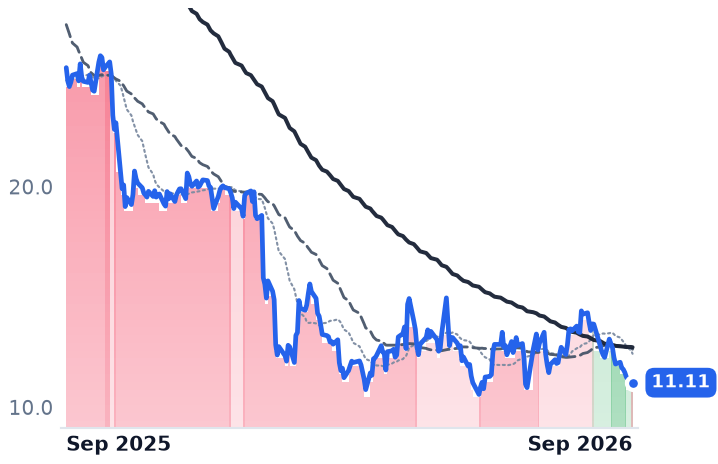
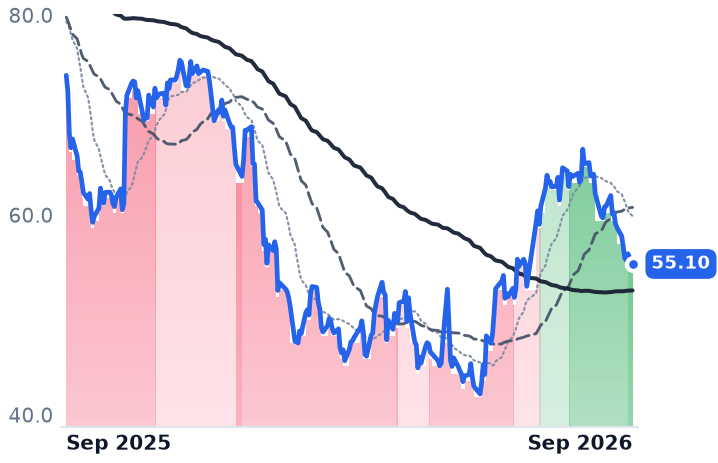
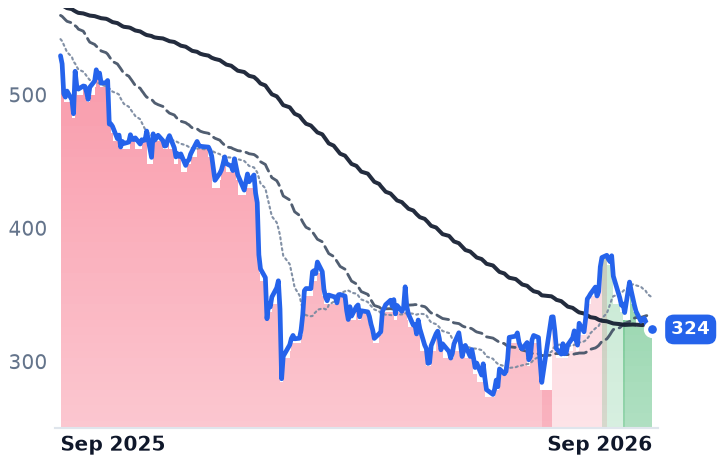
Nine financial-services software names dropped an equal-weighted 38% over twelve months, and almost none of it is about scores. Q2 Holdings, which sells digital banking platforms to community banks, grew June-quarter revenue 12.6% and widened operating margin by 8.3 points to 13.4%, and is down 25.5%. Tyler Technologies, the public-sector software supplier, grew 8.2% with no pricing controversy at all and is down 38.8% at 25.4x forward earnings. Vertex, which sells sales-tax determination software to retailers and manufacturers and has no lending exposure, grew annual recurring revenue 10.5% to $703.4m with adjusted EBITDA up 33%, yet fell 56.3%; its stumble was the pace of on-premise-to-cloud migration, which forced cloud growth guidance down from 25% to 18%. It now trades at 2.18x forward sales and 3.51x forward gross profit, roughly half Q2 Holdings' 3.92x and 6.88x on similar growth. The common cause is a sector reset: software price-to-sales has compressed from 9x to 6x on fears that AI agents cut licence counts.
So the verdict splits. The shelf's decline is a multiple reset applied to businesses that are mostly still compounding, and Vertex's is closer to a migration-timing problem than a demand one. Fair Isaac's is the only one with a named mechanism pointed at a named line, and the business has not yet felt it — the toll was collected in full in the year just ending. What the market is repricing is fiscal 2027 and beyond: not the count of scores pulled, but whether the seller still sets the price.
That right has never been tested in public. The grid has no effective date, no published fee matrix, and a rival score sitting at 99 cents with a contract that runs to 2028. Fair Isaac's September quarter is not yet reported, and it will describe a year in which none of this had happened.