

Intuitive Surgical Will Extend Instrument Life in 2027 and Earn Less per Procedure
Hypothesis Opus 5 · Research Opus 5 · Writing Opus 5 · Prompt v1.6
The company whose entire equity case rests on collecting a toll for every robotic operation has decided to collect less. Intuitive Surgical told investors in July it will release longer-lived EndoWrist instruments for its da Vinci robots in the first half of next year, deliberately lowering what hospitals pay per use in cheaper benign cases. The last time it ran that playbook, in 2020, instrument revenue per procedure fell about 7%.
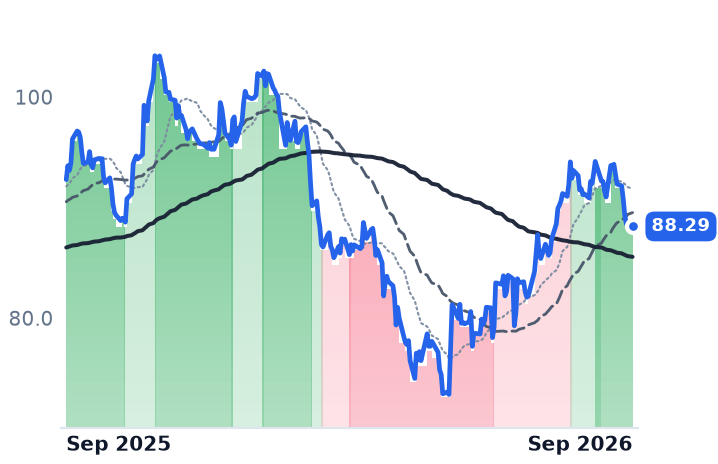
Nothing in the reported numbers is broken: June-quarter revenue grew 18.5%, operating margin reached 33.6%, and full-year da Vinci procedure guidance was reaffirmed at 13.5% to 15.5%. What shrank is the rating — 46.9x trailing earnings against roughly 58x a year ago.
Procept BioRobotics is the cautionary case in the same business: its consumable meter turned out to include more than 10,000 handpieces sitting unused in customers' storerooms.
| Ticker | Company | Segment | Trend · 13mo | 30D | 1Y |
|---|---|---|---|---|---|
| The subject · what this brief is about | |||||
ISRG | Intuitive Surgical | Surgical Robotics & Minimally Invasive Surgery | 🔴 Cont. Bear | +11.0% | −5.5% |
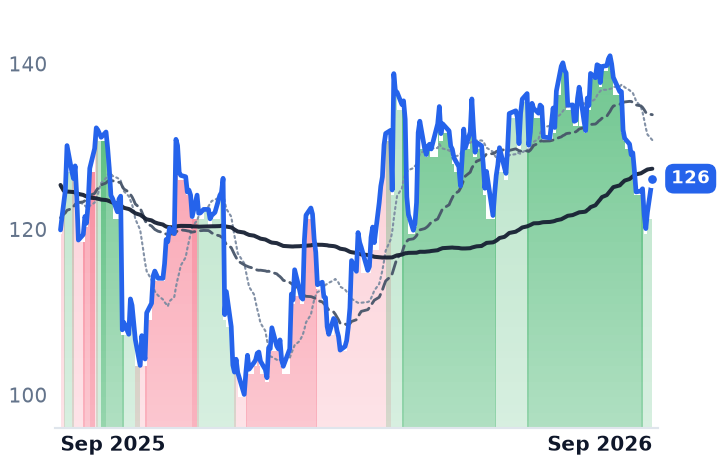
PRCT | PROCEPT BioRobotics | Surgical Robotics & Minimally Invasive Surgery | 🔴 Cont. Bear | −17.3% | −52.8% |
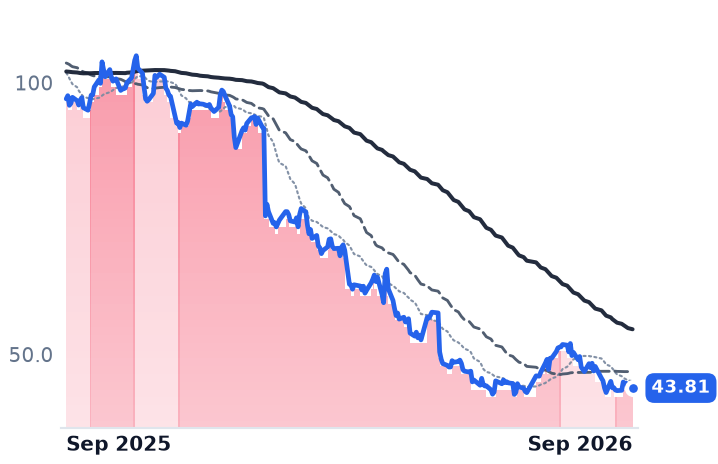
SSII | SS Innovations International | Surgical Robotics & Minimally Invasive Surgery | 🔴 Cont. Bear | −16.8% | −49.2% |
| Compared against · context, not the story | |||||
JNJ | Johnson & Johnson | Oncology | 🟢 Cont. Bull | +2.6% | +52.1% |
MDT | Medtronic | Spinal Surgery & Neuromodulation | 🟢 Cont. Bull | −2.8% | −4.6% |
TFX | Teleflex Incorporated | IV & Vascular Access | 🟢 Cont. Bull | −9.8% | +5.2% |
BSX | Boston Scientific | Spinal Surgery & Neuromodulation | 🔴 Cont. Bear | −9.3% | −54.8% |
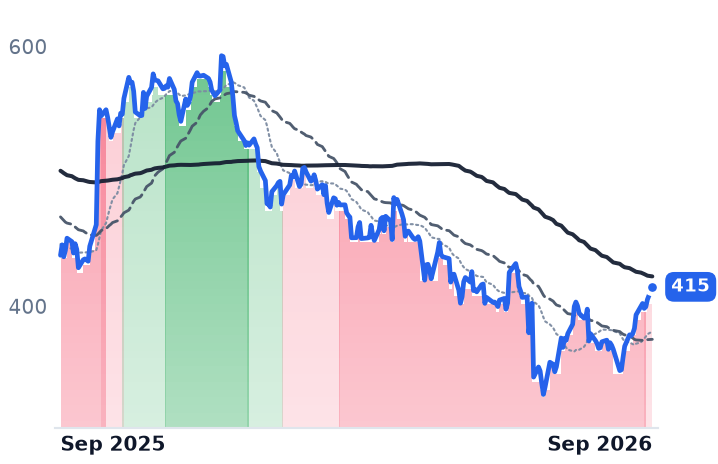
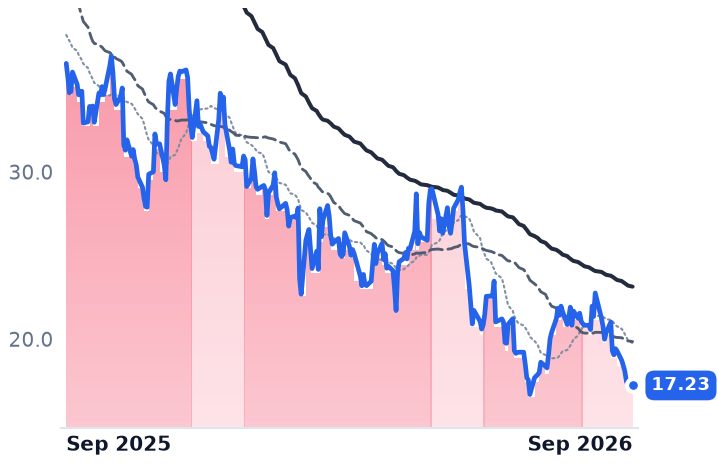
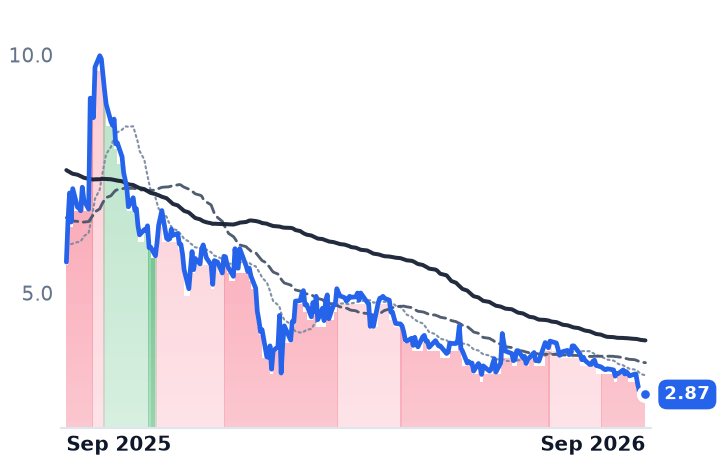
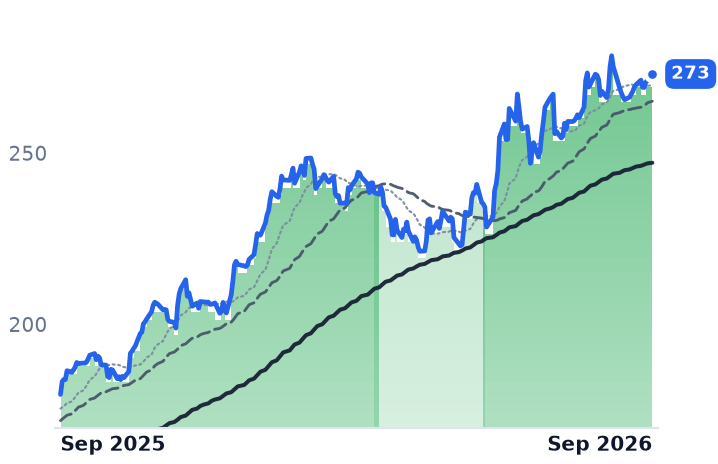
12-month price & trend
| Ticker | Mkt cap | P/E | P/E fwd | P/S | P/S fwd | P/GP | P/GP fwd | EV/EBITDA | FCF yld |
|---|---|---|---|---|---|---|---|---|---|
ISRG | $146.5B | 46.9x | 38.4x | 13.3x | 12.5x | 19.9x | 18.7x | 31.9x | 2.2% |
PRCT | $981.9M | n/m | — | 2.9x | 2.5x | 4.6x | 3.9x | n/m | -12.8% |
SSII | $578.4M | n/m | — | 11.0x | 9.7x | 23.5x | 20.6x | n/m | -3.1% |
| Ticker | Mkt cap | P/E | P/E fwd | P/S | P/S fwd | P/GP | P/GP fwd | EV/EBITDA | FCF yld |
|---|---|---|---|---|---|---|---|---|---|
JNJ | $545.7B | 26.3x | 19.6x | 5.7x | 5.4x | 8.2x | 7.8x | 17.1x | 3.3% |
MDT | $116.4B | 22.2x | 15.2x | 3.1x | 3.0x | 4.7x | 4.5x | 15.1x | 5.3% |
TFX | $5.8B | n/m | 18.3x | 2.2x | 2.6x | 4.2x | 4.8x | n/m | 6.7% |
| Ticker | Mkt cap | P/E | P/E fwd | P/S | P/S fwd | P/GP | P/GP fwd | EV/EBITDA | FCF yld |
|---|---|---|---|---|---|---|---|---|---|
BSX | $63.9B | 17.3x | 13.1x | 3.0x | 3.0x | 4.3x | 4.2x | 13.4x | 5.7% |
Consensus projections
| Ticker | FY2026E | FY2027E | FY2028E | |
|---|---|---|---|---|
ISRG | Revenue | +18.2% | +12.9% | +13.2% |
| EPS | +24.4% | +11.9% | +12.6% | |
PRCT | Revenue | +21.1% | +20.6% | +17.6% |
| EPS | +9.5% | −32.0% | −28.9% | |
SSII | Revenue | — | +27.9% | +35.7% |
| EPS | — | +0.0% | −83.3% | |
JNJ | Revenue | +7.6% | +6.7% | +6.7% |
| EPS | +7.2% | +10.2% | +10.3% | |
MDT | Revenue | +7.9% | +8.0% | +3.5% |
| EPS | +1.1% | +8.3% | +7.1% | |
TFX | Revenue | −31.2% | +4.3% | +4.6% |
| EPS | −48.6% | +52.0% | +10.6% | |
BSX | Revenue | +6.2% | +4.4% | +7.0% |
| EPS | +8.3% | +3.9% | +10.8% |
Forward fiscal years only. Blank means no analyst coverage for that year.
The instruments that grasp, cut and suture inside a patient on a da Vinci robot run on a counter. When the counter is exhausted the hospital buys another set, and that recurring purchase — not the robot — is where Intuitive Surgical, which sells the da Vinci surgical system, the Ion lung-biopsy platform and everything consumed on both, earns the larger part of its revenue. In the first half of 2027 the company will slow the counter down.
Intuitive will introduce a subset of EndoWrist instruments for its fourth- and fifth-generation robots with increased useful lives and lower customer cost per use, aimed at benign procedures where price decides whether an operation is done robotically at all. It has done this before: in the comparable 2020 extended-use cycle, instrument-and-accessory revenue per procedure took a hit of roughly 7%. The size of this one is not public. Asked by Wolfe Research's Mike Polark whether pricier da Vinci 5 and force-feedback instruments could hold revenue per procedure flat, chief financial officer Jamie Samath declined to quantify it on the 16 July call: "When there is an opportunity to drive incremental growth by reducing customer costs through innovation, we are willing to do that." The figure is promised for the third-quarter report on 20 October.
The numbers got better
Everything else points the other way. June-quarter revenue rose 19% to $2.89bn — 18.5% precisely — with worldwide procedures up about 16%. Gross margin widened to 67.8% from 66.3% a year earlier and operating margin to 33.6% from 30.5%. Full-year da Vinci procedure guidance was reaffirmed at 13.5% to 15.5%, and non-GAAP gross-margin guidance was raised to 68–69% after a $36m refund of tariffs already paid. Instrument-and-accessory revenue grew 18% — still slightly ahead of volume.
The soft spot is American. US da Vinci procedure growth slowed to 12%, which management ties to the 1 January expiry of enhanced Affordable Care Act premium tax credits; marketplace premiums for roughly 22 million enrollees more than doubled on average, deferring elective benign cases while urgent after-hours procedures grew 26%. The attribution is contested: BTIG's annual hospital capital-equipment survey found most executives had seen no impact on procedure volumes.
The shares did not walk down, they gapped: a 14.1% fall on 17 July, the session after the print, a low of $332.02 on 23 July, then a 25% recovery helped by an Oppenheimer upgrade to Outperform with a $500 target. Intuitive still sits 26.2% below where it began the year. It trades at 46.9x trailing earnings against roughly 58x twelve months ago, while trailing earnings per share grew 16.3%; on gross profit, 19.9x against about 25x, with gross profit up 15.3%. Forward, 38.4x is not cheap against consensus earnings growth decelerating to 11.9% in 2027.
Some of the rating change lives outside the income statement. On 22 July the Food and Drug Administration granted Johnson & Johnson authorization for Ottava, the first soft-tissue robot with arms integrated into the operating table, six days after Intuitive's print and months after Medtronic's Hugo cleared. In China, domestic laparoscopic robots outsold imports through public tenders for the first time in 2025.
Where the meter actually broke
Procept BioRobotics, which sells the HYDROS robot and the single-use handpiece that performs Aquablation therapy on enlarged prostates, shows what a broken consumable meter looks like. On 25 February it disclosed that handpiece sales had exceeded procedures performed by 8% to 16% in every quarter since early 2023, leaving more than 10,000 units of excess field inventory, and scrapped the quarter-end discount program that encouraged the stockpiling. US handpiece units fell from 13,225 to 9,400 in a single quarter, and full-year revenue guidance came down to $390m–$410m from $410m–$430m. Price to trailing gross profit has compressed from about 10.7x to 4.6x. The underlying franchise is not dead — US procedures topped 13,100 in the June quarter, up 21%, on an installed base of 816 systems — but with roughly $41m of quarterly cash burn against about $194m of net cash, the promised fourth-quarter adjusted-EBITDA inflection is not optional. Chief executive Larry Wood could not fully account for the weakness in older accounts on the 4 August call: "Aquabeam, it's an older system now. It doesn't offer all the features and benefits of Hydros."
The cheap-console threat is real on price and small on scale. SS Innovations' SSi Mantra sells in India for roughly a third of a da Vinci's price, and its installed base reached 238 systems across twelve countries by early September with revenue up 39%. But gross margin fell 8.2 points to 50.9%, its FDA submission is not expected to clear before the first quarter of 2027, and at 23.5x trailing gross profit it is priced above the incumbent it is meant to undercut.
The verdict
One label covers three different stories, and only one is about demand for robotic surgery. Procept's de-rating is earned — it sold consumables into storerooms and is now working through them. SS Innovations' is dilution and the margin cost of a one-third price point. Intuitive's is the hard case, because the operating numbers improved while the multiple contracted by a fifth. What the current results cannot settle is what a trained surgeon's console is worth now that four rivals can be bought in the United States, and now that Intuitive has decided the charge per operation should come down.
Extending instrument life is the move of a company confident enough in volume to give up price. On 20 October it has to say how much price.