

Fewer Crashes, Record Write-Offs: Copart's Units Fell 5.5% as RB Global's Rose 11%
Hypothesis Opus 5 · Research Opus 5 · Writing Opus 5 · Prompt v1.6
North American salvage auctions are a two-company market, and for the first time in Copart's listed history the bigger of the two shrank. Its fiscal year to 31 July brought revenue of $4.666bn, up 0.4%, with diluted earnings per share of $1.55 against $1.59. RB Global's automotive arm, which owns Insurance Auto Auctions, sold 658,800 lots in the June quarter and raised full-year guidance.
The catch is what RB Global paid for them: its take rate on gross transaction value fell 110 basis points to 20.0%, and the shares fell 13.2% in one session after the print. Copart's slide from roughly 28x trailing earnings a year ago to 17.7x is rational work against consensus earnings growth of 2.9%. RB Global's repricing, against double-digit consensus growth and no deterioration in reported results, is the harder one to explain.
| Ticker | Company | Segment | Trend · 13mo | 30D | 1Y |
|---|---|---|---|---|---|
| The subject · what this brief is about | |||||
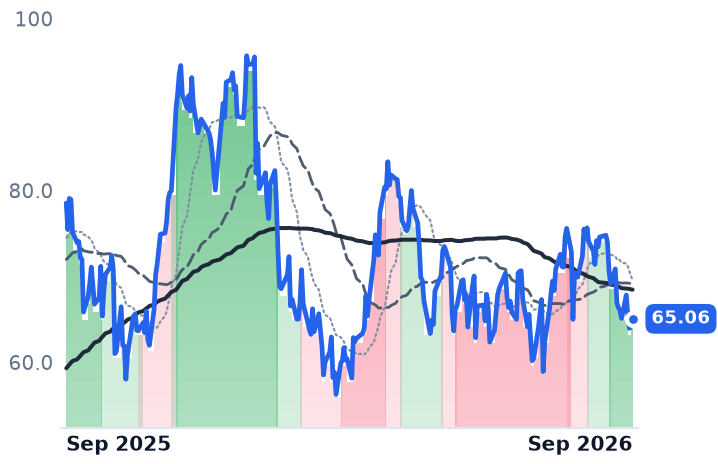
CPRT | Copart | Vehicle & Asset Auctions | 🔴 Cont. Bear | −16.4% | −38.1% |
RBA | RB Global | Vehicle & Asset Auctions | 🔴 Cont. Bear | −4.1% | −23.3% |
| Compared against · context, not the story | |||||
KMX | CarMax | Used Vehicle Specialists | 🟢 Cont. Bull | −7.9% | +26.4% |
OPLN | OPENLANE | Used Vehicle Specialists | 🟢 Cont. Bull | −0.8% | +23.6% |
CVNA | Carvana | E-Commerce Platforms | 🟢 Cont. Bull | −12.1% | −17.2% |
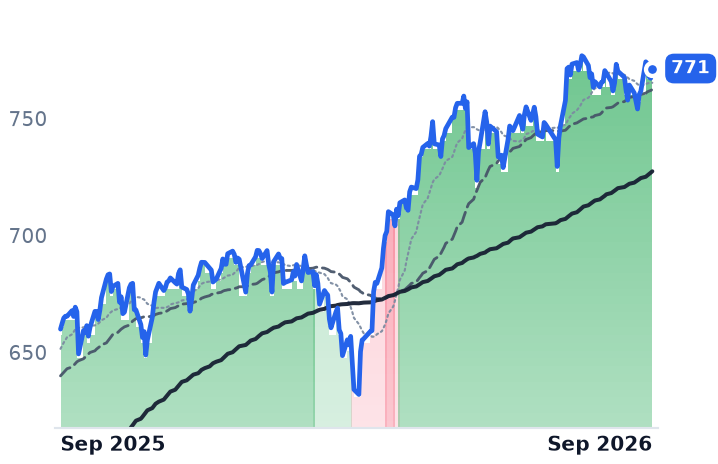
SPY | State Street SPDR S&P 500 ETF Trust | Asset Management | 🟢 Cont. Bull | +0.3% | +16.9% |
12-month price & trend
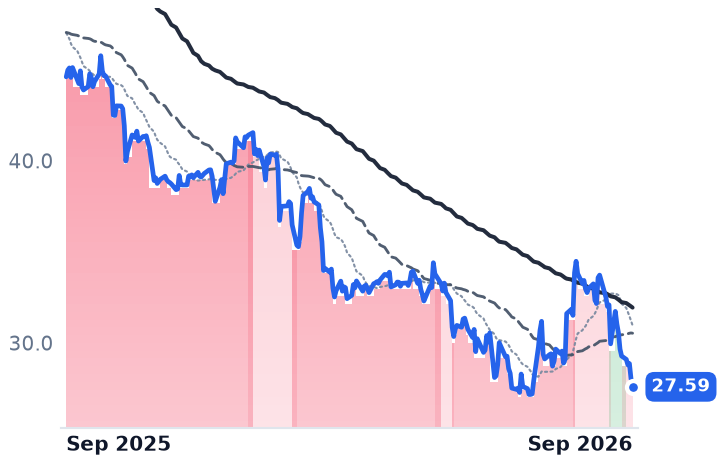
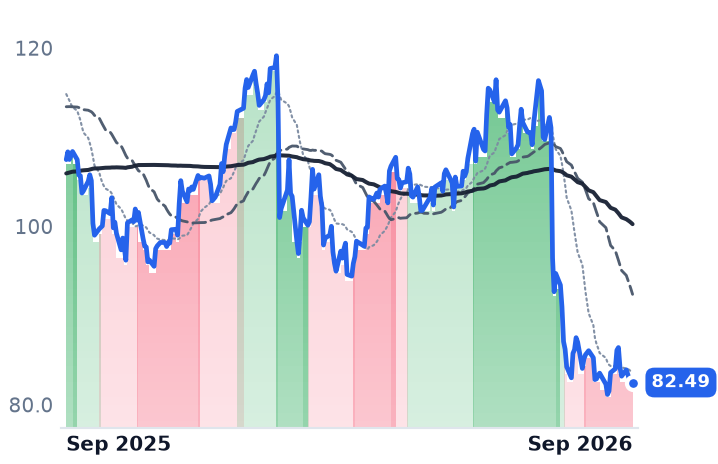
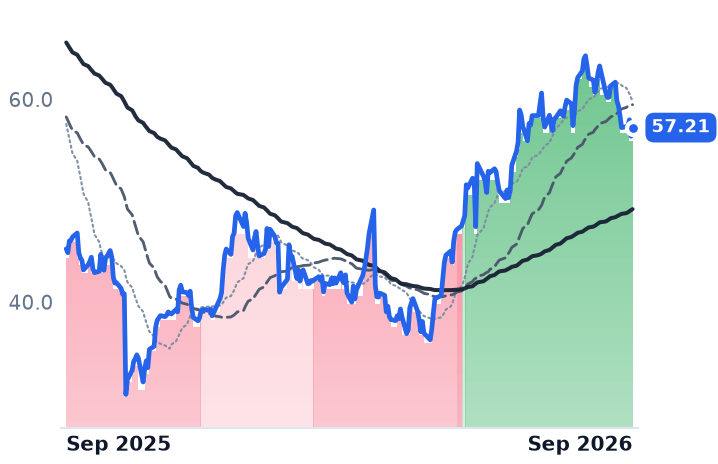
| Ticker | Mkt cap | P/E | P/E fwd | P/S | P/S fwd | P/GP | P/GP fwd | EV/EBITDA | FCF yld |
|---|---|---|---|---|---|---|---|---|---|
CPRT | $25.5B | 17.7x | 16.9x | 5.5x | 5.3x | 12.3x | 11.8x | 11.5x | 5.0% |
RBA | $15.4B | 35.1x | 19.3x | 3.2x | 3.1x | 7.5x | 7.4x | 13.7x | 3.8% |
KMX | $8.5B | 37.0x | 22.0x | 0.3x | 0.3x | 3.1x | 3.0x | 23.9x | 11.8% |
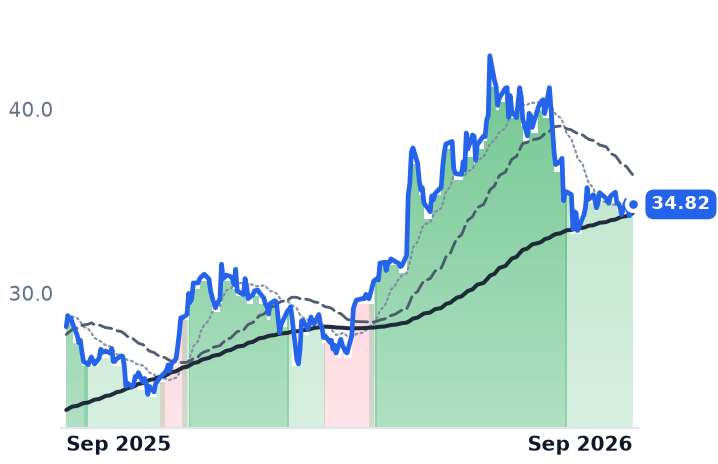
| Ticker | Mkt cap | P/E | P/E fwd | P/S | P/S fwd | P/GP | P/GP fwd | EV/EBITDA | FCF yld |
|---|---|---|---|---|---|---|---|---|---|
OPLN | $3.7B | 103.6x | 24.4x | 1.8x | 1.7x | 4.4x | 4.1x | 9.9x | 9.3% |
CVNA | $72.8B | 30.0x | 44.4x | 3.2x | 2.6x | 16.2x | 13.1x | n/m | 1.0% |
SPY | $773.0B | — | — | — | — | — | — | — | — |
Consensus projections
| Ticker | FY2026E | FY2027E | FY2028E | |
|---|---|---|---|---|
CPRT | Revenue | −0.0% | +4.1% | +5.5% |
| EPS | +2.3% | +2.9% | +8.7% | |
RBA | Revenue | +8.6% | +5.3% | +2.1% |
| EPS | +10.3% | +10.2% | +6.9% | |
KMX | Revenue | −2.7% | +5.8% | +2.1% |
| EPS | −17.8% | +0.5% | +14.7% | |
OPLN | Revenue | +14.5% | +8.0% | +8.3% |
| EPS | +15.7% | +20.0% | +53.1% | |
CVNA | Revenue | +38.8% | +25.6% | +20.9% |
| EPS | +50.1% | +37.0% | +33.9% |
Forward fiscal years only. Blank means no analyst coverage for that year.
A totalled car only reaches an auction lane if somebody crashes it first, and Americans are crashing fewer of them. Copart, which auctions written-off vehicles on consignment for insurers and collects a fee from both the insurer and the buyer, closed its fiscal year on 31 July having sold 5.5% fewer vehicles worldwide than a year earlier — revenue of $4.666bn, up 0.4%, after three consecutive years of roughly 10% growth. Over the same stretch the owner of its only scaled competitor sold more cars, not fewer.
That is the fresh ground since Copart's $1.9bn purchase of ACV Auctions was announced on 10 September. Copart and Insurance Auto Auctions, owned by RB Global, together handle over 80% of the North American salvage market, split roughly 65/35 in Copart's favor after decades nearer an even share. Both are paid per damaged car, but on different meters: Copart bills a fee schedule per unit, RB Global a percentage of the gross value transacted. The pool they divide is set by two things neither controls — how many crashes happen, and how often an insurer writes the car off instead of repairing it.
The pool is shrinking for the unglamorous reason
The write-off decision has never been more favorable. CCC Intelligent Solutions put industry total-loss frequency at a record 23.1% of claims for 2025, and Copart cited 23.3% for the second calendar quarter of 2026, its highest second quarter on record, with collision severity up 8.8% year on year and repair costs half again above 2019 levels. Cars that once got fixed now get auctioned.
What vanished is the accidents. CCC found repairable claim volume fell 9.7% in 2025. Copart told investors miles travelled rose 0.27% while the US vehicle fleet grew 1.6%. A record share of a smaller number is still a smaller number.
Copart lost units and raised price
Domestic insurance volumes fell 7.5% in Copart's July quarter and 8% for the year, a fourth straight quarterly decline. Management's explanation was one account: excluding the loss of a single large insurance customer, domestic insurance assignments would have risen 2.3%. Price did the rest of the work — revenue per unit rose 5.7% for the year and average selling prices 5.5%.
Underneath, the mix moved the wrong way. High-margin service revenue grew $13m, or 1.4%, while lower-margin purchased-vehicle sales grew 8.3%. July-quarter gross margin came in at 41.8% against 45.3%, operating income fell 2.6% for the year, and operating expense per car rose 12.7% — spending management ties to a long-haul delivery service, title processing and 25 dedicated wholesale facilities. Copart did not retrench: capital expenditure on land runs near $500m a year, it repurchased more than 43m shares for over $1.6bn, and it paid cash for ACV with no debt. "Every car that is not damaged or lightly damaged is gonna be put in front of thousands of dealers," chief executive A. Jayson Adair — back in the job since 31 July — told investors on 10 September. "That alone gets me excited." International units rose 10% in the quarter and dealer and fleet channels inflected upward.
At $27.59 the shares trade at 17.7x trailing and 16.9x forward earnings, against roughly 28x a year ago on an earnings base that fell 2.5%. Consensus has fiscal 2027 earnings per share at $1.63, up 2.9%. HSBC's Wesley Brooks cut the stock to hold on 15 September, trimming his target to $36, expressly contrasting Copart's volumes with RB Global's.
RB Global bought the units, and got marked down for it
RB Global sold 658,800 automotive lots in the June quarter, up 11%, a sixth consecutive quarter of growing faster than the market, after extending its relationship with its largest insurance partner to all 50 states. Trade coverage describes that partner as Progressive and puts IAA's share of its salvage volume at roughly 90%, up from about 75%, won on cycle times and commercial terms. Group revenue rose 11.1% to $1.317bn, operating income 19.2%, net income 30.7%, and guidance went up.
The shares fell 13.2% the next session and are down 28.6% in three months, to a 52-week low on 9 September. The objection is visible in the filing: service revenue grew only 5% to $933.4m while the value transacted grew 11%, because the take rate fell 110 basis points to 20.0% on acquisition mix and automotive pricing incentives. "Trajectory is what matters," chief executive Jim Kessler said on 4 August. Its heavy-equipment book grew only through acquisitions, organic volumes down on cautious customers. Forward earnings of 19.3x and 13.75x trailing enterprise value to earnings before interest, tax, depreciation and amortisation sit against consensus growth above 10% in each of the next two years; the trailing price-to-earnings figure of 35x is inflated by IAA purchase accounting.
What the two prices now assert
Copart's de-rating is almost entirely multiple, and defensible: a business that grows units is worth more than one whose revenue line depends on fee increases and a customer it no longer serves. RB Global's is not a reaction to results — it is the market deciding that units bought with discounts are worth less than units held at full price, which is an argument about the next contract renewal rather than the last quarter. Both cannot be a share-shift story alone; the shrinking accident pool takes something from each, and the record write-off rate that has been offsetting it has limited room left to rise.
The other prop just slipped. The Manheim used-vehicle index fell to 206.2 in early September, down 0.4% from a year earlier — the first negative annual comparison of 2026. Selling price is the multiplier under both companies' fees, and for the first time this year it is working against them.