

Fiserv, Jack Henry and FIS Run 72% of US Bank Core Systems; Only Fiserv Is Shrinking
Hypothesis Opus 5 · Research Opus 5 · Writing Opus 5 · Prompt v1.6
Seven of the eight companies in financial-services technology fell together over the past month while the broad market edged up — and the businesses underneath disagree about why. Fiserv's June-quarter revenue shrank 4.1% year on year, its operating margin fell to 19.2% from 30.7%, and it has now reset 2026 guidance twice, ending at adjusted earnings of $7.20-7.40 a share against $8.00-8.30.
Jack Henry did the opposite: a record 58 competitive core wins in the year to June, and fiscal 2027 guidance raised. FIS, which swapped its Worldpay stake for a card-issuing book, grew recurring sales 14% and lifted its free-cash-flow guide. One selloff, three ways of getting paid — Fiserv's de-rating has operating evidence behind it, and the other two do not.
| Ticker | Company | Segment | Trend · 13mo | 30D | 1Y |
|---|---|---|---|---|---|
| The subject · what this brief is about | |||||
FISV | Fiserv | Financial Services Technology | 🔴 Cont. Bear | −12.6% | −64.4% |
JKHY | Jack Henry & Associates | Financial Services Technology | 🌱 Emerging Bull | −12.9% | −1.6% |
FIS | Fidelity National Information Services | Financial Services Technology | 🔴 Cont. Bear | −14.6% | −45.4% |
| Compared against · context, not the story | |||||
BR | Broadridge Financial Solutions | Financial Services Technology | 🌱 Emerging Bull | −10.8% | −30.4% |
FLYW | Flywire | Financial Services Technology | 🟢 Cont. Bull | −7.4% | +28.7% |
PAY | Paymentus | Financial Services Technology | 🌱 Emerging Bull | −16.2% | −2.9% |
VYX | NCR Voyix | Financial Services Technology | 🌱 Emerging Bull | −19.5% | −45.1% |
WAY | Waystar | Financial Services Technology | 🌱 Emerging Bull | −5.9% | −34.1% |
SPY | State Street SPDR S&P 500 ETF Trust | Asset Management | 🟢 Cont. Bull | +0.3% | +16.9% |
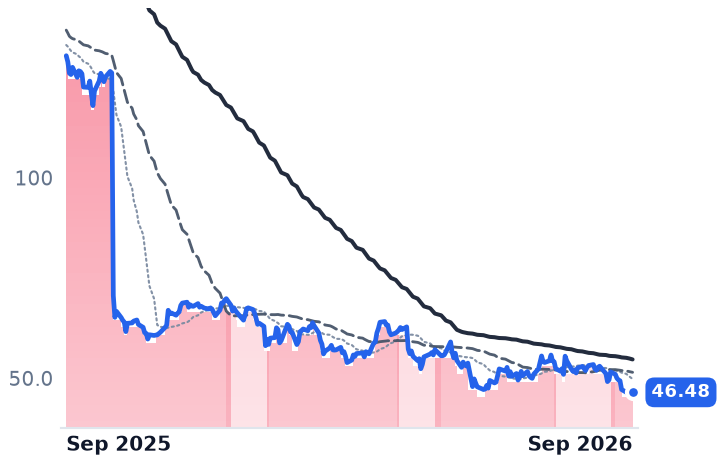
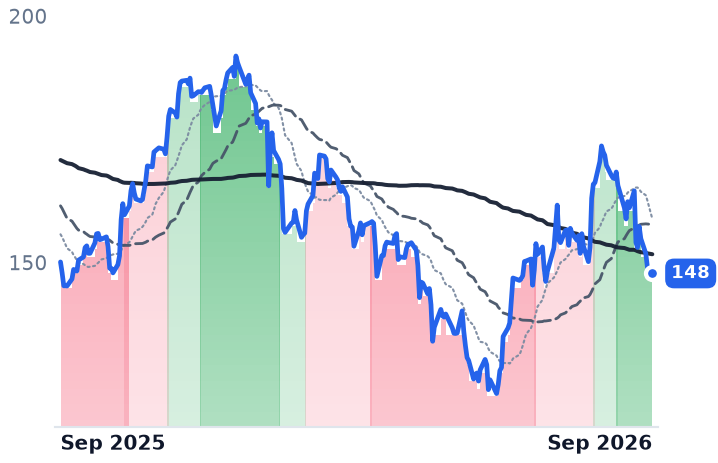
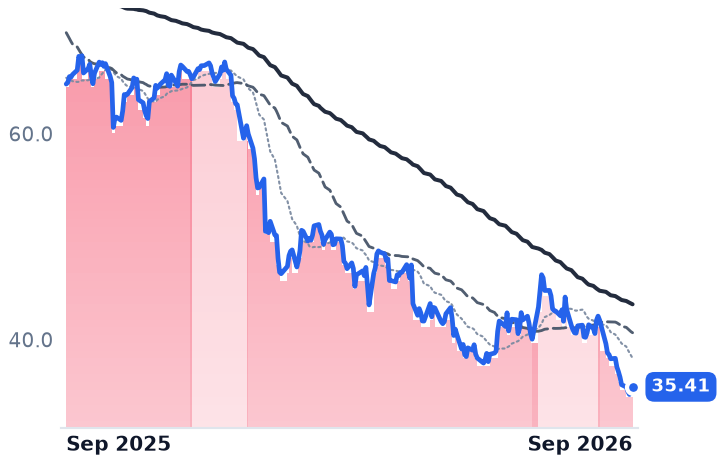
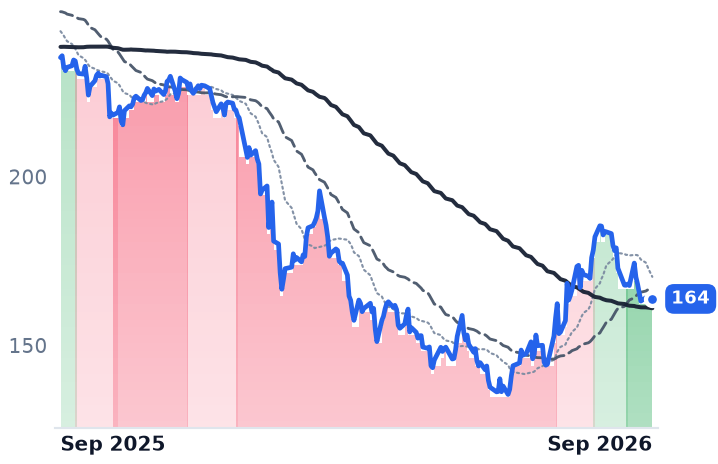
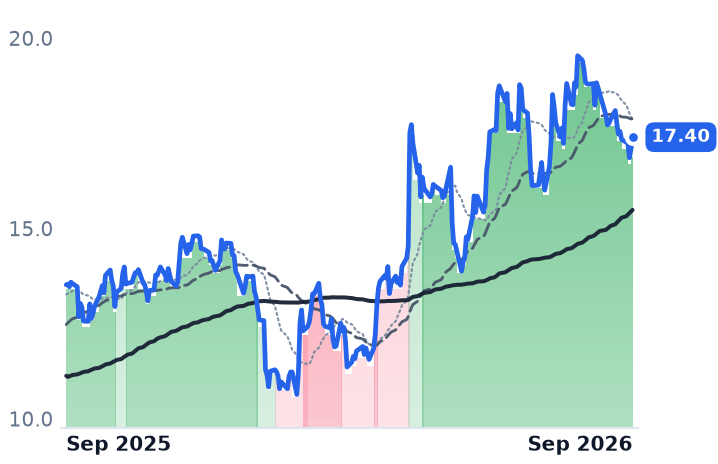
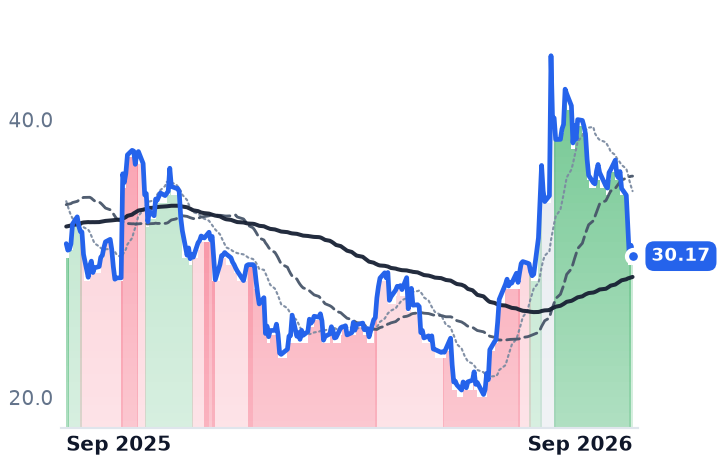
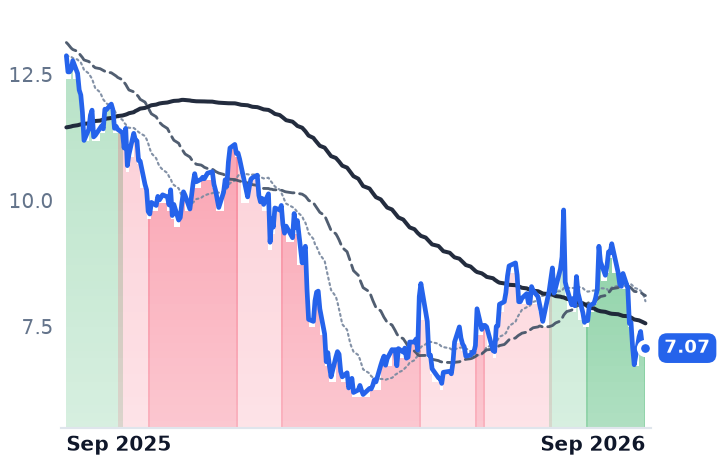
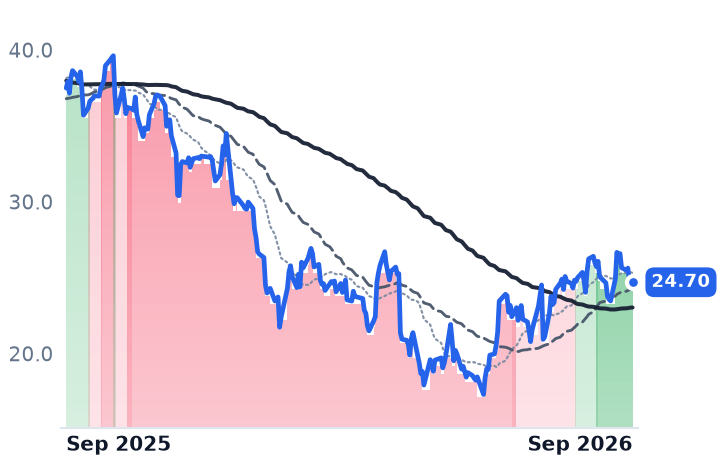
12-month price & trend
| Ticker | Mkt cap | P/E | P/E fwd | P/S | P/S fwd | P/GP | P/GP fwd | EV/EBITDA | FCF yld |
|---|---|---|---|---|---|---|---|---|---|
FISV | $24.8B | 8.9x | 6.4x | 1.2x | 1.3x | 2.5x | 2.7x | 7.6x | 15.8% |
JKHY | $10.5B | 21.2x | 20.1x | 4.1x | 3.9x | 9.5x | 8.9x | 12.2x | 6.6% |
FIS | $18.3B | 5.4x | 5.7x | 1.5x | 1.3x | 4.0x | 3.6x | 6.3x | 14.8% |
| Ticker | Mkt cap | P/E | P/E fwd | P/S | P/S fwd | P/GP | P/GP fwd | EV/EBITDA | FCF yld |
|---|---|---|---|---|---|---|---|---|---|
BR | $19.3B | 17.2x | 15.8x | 2.6x | 2.4x | 8.1x | 7.7x | 11.8x | 6.8% |
FLYW | $2.2B | 65.8x | 43.1x | 3.0x | 2.8x | 5.3x | 5.0x | 24.5x | 7.1% |
PAY | $4.8B | 57.6x | 42.9x | 3.6x | 3.3x | 14.3x | 13.4x | 31.2x | 3.3% |
| Ticker | Mkt cap | P/E | P/E fwd | P/S | P/S fwd | P/GP | P/GP fwd | EV/EBITDA | FCF yld |
|---|---|---|---|---|---|---|---|---|---|
VYX | $1.1B | 19.9x | 9.0x | 0.4x | 0.5x | 1.8x | 2.1x | 7.0x | -9.4% |
WAY | $4.6B | 33.7x | 14.6x | 3.9x | 3.6x | 5.6x | 5.2x | 14.1x | 5.3% |
SPY | $773.0B | — | — | — | — | — | — | — | — |
Consensus projections
| Ticker | FY2026E | FY2027E | FY2028E | |
|---|---|---|---|---|
FISV | Revenue | −1.3% | +3.5% | +3.5% |
| EPS | −15.3% | +9.8% | +13.2% | |
JKHY | Revenue | +7.0% | +6.4% | +6.9% |
| EPS | +12.6% | +7.7% | +9.5% | |
FIS | Revenue | +28.8% | +4.4% | +3.4% |
| EPS | +7.4% | +8.0% | +10.4% | |
BR | Revenue | +8.0% | +5.8% | +4.8% |
| EPS | +12.5% | +10.5% | +9.5% | |
FLYW | Revenue | +26.7% | +15.3% | +15.4% |
| EPS | +291.8% | +60.0% | +38.5% | |
PAY | Revenue | +22.9% | +17.5% | +18.0% |
| EPS | +37.5% | +19.0% | +29.1% | |
VYX | Revenue | −17.1% | −1.3% | +1.3% |
| EPS | +4.7% | +12.0% | +0.0% | |
WAY | Revenue | +17.9% | +10.7% | +11.8% |
| EPS | +14.0% | +12.6% | +15.7% |
Forward fiscal years only. Blank means no analyst coverage for that year.
Fiserv's revenue is going backwards. The Brookfield, Wisconsin group, which sells card acceptance to small merchants through its Clover point-of-sale system and deposit and loan processing to banks, reported June-quarter revenue of $5.29bn, down 4.1% from a year earlier — the end of a four-quarter walk from growth into decline. Operating margin came in at 19.2%, against 30.7% in the same quarter last year.
That matters past one company because Fiserv, Jack Henry and Fidelity National Information Services, which trades as FIS, between them run 72% of the American bank core-processing market — Fiserv 42%, Jack Henry 21%, FIS 9% — and are paid in three incompatible ways for what gets described as the same trend. Over the past month the market priced them as one animal: seven of the eight companies in this corner of technology fell, averaging 11.1%, while the broad US market rose 0.7%.
The merchant's spread
Fiserv takes a spread on volume it re-wins quarter by quarter, and that meter is still running. Clover gross payment volume rose 9% in the June quarter, 11% excluding a gateway conversion, with value-added services revenue up 10% and penetration at 25% of Clover revenue from 24%. Reported Clover revenue rose only 2%, because weaker hardware and data revenue cost roughly nine points of growth. Merchant Solutions organic revenue fell 1%.
So the damage is not, on management's account, merchants walking. The 6 August reset — organic revenue to -1% to 0% from 1% to 3%, adjusted earnings to $7.20-7.40 a share from $8.00-8.30 — was attributed in sized pieces: about two points from delayed contracted revenue and slower enterprise launches, a point from product and hardware, roughly a point each from Argentina and planned business sales. Takis Georgakopoulos, who became chief executive on 15 June after Mike Lyons left for Truist Securities, says he has seen no material change in new merchant acquisition and treats the hardware slowdown as temporary.
It was the second reset in ten months. The first, on 29 October 2025, took 44% out of the shares in a session, the worst day in the company's history. "Our current performance is not where we want it to be nor where our stakeholders expect it to be," Lyons told investors that day, five months into the job. Fiserv now trades at 6.4x consensus 2026 earnings of $7.25 a share against roughly 12.6x the guidance it carried a year ago: the multiple has halved while expectations came down about 28%. Clover is still the leader in small-restaurant card processing, at about 20% of that market with 175,000 locations, against Toast's 17%.
The renewal cycle
Jack Henry, founded in Monett, Missouri in 1976, is paid under multi-year core contracts that community banks and credit unions renew on long cycles whatever cards do. Its year to 30 June brought revenue of $2.50bn, up 5.1%, with operating income up 6.6% to $606m — and 58 competitive core wins, the most in more than two decades, 59% of them bundling core, digital and card against 39% a year earlier. "We signed the largest new bank client in our company's history in Q4, Woodforest National Bank with $9.2 billion in assets," Gregory Adelson, president and chief executive, said on the 19 August call. Fiscal 2027 guidance was raised: non-GAAP revenue growth of 6.3-7.3%, earnings of $7.33-7.38 a share, 58 to 65 core wins.
What fell was the pace. The shares dropped 6.4% on 15 September, its Investor Day, when management put organic growth at 7.5% at the midpoint in fiscal 2029 against 6.8% in fiscal 2027 and flagged margin pressure from cyber, infrastructure and artificial-intelligence spending. Its June quarter on reported measures also decelerated, to 2.9% growth with operating income down 14.8%. At 20.1x forward earnings the stock sits near last year's 21.7x — but two years ago that multiple was about 28x, so the compounder premium was taken back well before this month.
The issuer's book
FIS is the reason this is one story. On 9 January it closed the $13.5bn purchase of Global Payments' Issuer Solutions business, the former TSYS, and sold its remaining 45% of Worldpay to the same buyer, guiding the swap to add about $500m of adjusted free cash flow this year. Jacksonville is now levered to card issuance and bank accounts rather than to merchant volume at all. June-quarter revenue of $3.38bn grew 5.3% pro forma, adjusted earnings per share 8.8%, recurring revenue 5% and recurring sales 14%, with free cash flow of $525m. "Our first half reflects the strength of the business we have built defined by durable recurring growth, expanding margins, and accelerating cash generation," chief executive Stephanie Ferris said on 4 August. FIS trimmed pro forma revenue growth guidance to 4.5-5.0% from 5.1-5.7%, kept adjusted earnings growth at 7.0-8.5% and raised its free-cash-flow growth guide to 33-39%.
The shares are down 45% over twelve months while consensus 2026 earnings rose 7.4% to $6.20 a share. That is 5.7x forward, against roughly 11.1x a year ago. The trailing 5.4x is unusable: March-quarter net income includes the gain on the Worldpay sale.
What each part earns
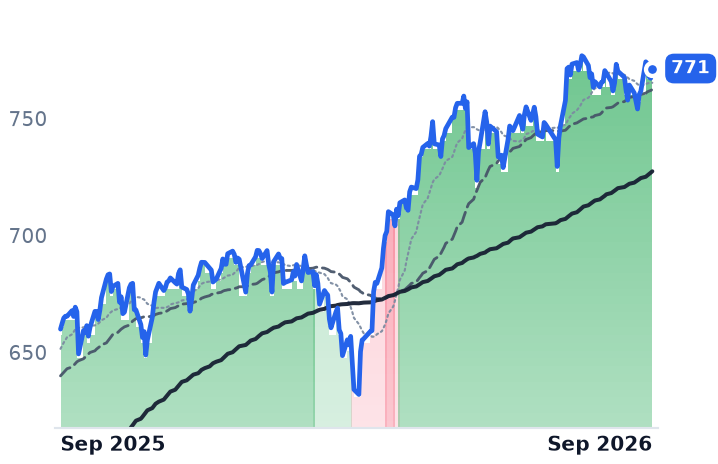
The twelve-month damage was never shared — Fiserv lost 64%, FIS 45%, Jack Henry 2.4%, and Flywire, in the same heading, rose 32%. September was the month they moved as a bloc, and it was a grind: none of the three recorded a 7.5% session in the 26 trading days to 25 September. Fiserv and FIS now have their 50-day averages below their 200-day; Jack Henry's is still above.
Fiserv's de-rating is earned, though the price has travelled further than the estimates. Jack Henry's is a repricing of how fast a working franchise compounds, with volumes, wins and guidance all pointing up. FIS's is the one nothing in the reported numbers explains. What the three genuinely share is a renewal table: the Office of the Comptroller of the Currency asked community banks about their core providers and heard of "lopsided commercial negotiating power", which is a pricing risk to all three at once — and the only fact so far that argues for treating them as one security.
Fiserv's third-quarter results are expected on or about 27-28 October, a year on from the print that made its name a warning to the whole heading. FIS reports its third quarter and Jack Henry its fiscal first in early November, close enough behind to settle whether one company's contraction was ever the industry's.