

HSBC Cut Twilio to Reduce, Saying Agent Traffic Need Not Become Twilio Revenue
Hypothesis Opus 5 · Research Opus 5 · Writing Opus 5 · Prompt v1.6
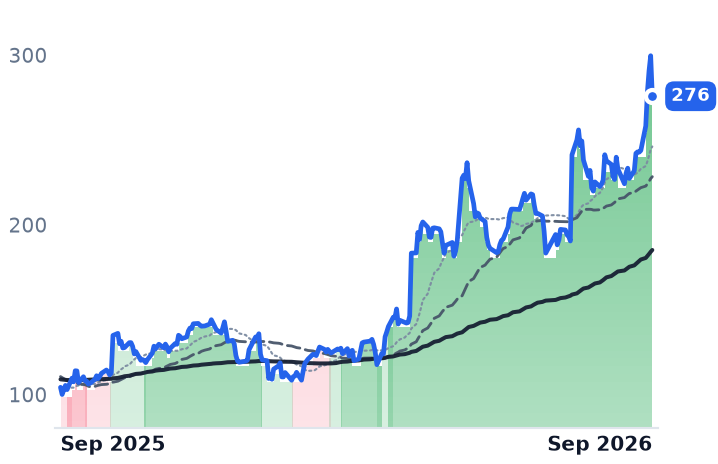
A cloud communications company whose last financial disclosure was on 6 August has been repriced twice in three weeks on things other companies did. Meta's consumer AI agent launched on 8 September; four sell-side desks decided the resulting text, voice and WhatsApp traffic would run over Twilio's rails and lifted targets to as high as $300; HSBC then argued the opposite on 25 September and took 8% off in a session.
The business is accelerating — revenue growth went 14.3% to 20.0% to 22.0% across three quarters, and existing customers now spend 116% of what they did a year ago. But gross profit grew slower than revenue on carrier fees Twilio collects at no margin, and management's own September-quarter guide is organic growth of 11–12% after posting 17%. Salesforce, on the seat-billed side, also rose — on flat operating income and a smaller share count.
| Ticker | Company | Segment | Trend · 13mo | 30D | 1Y |
|---|---|---|---|---|---|
| The subject · what this brief is about | |||||
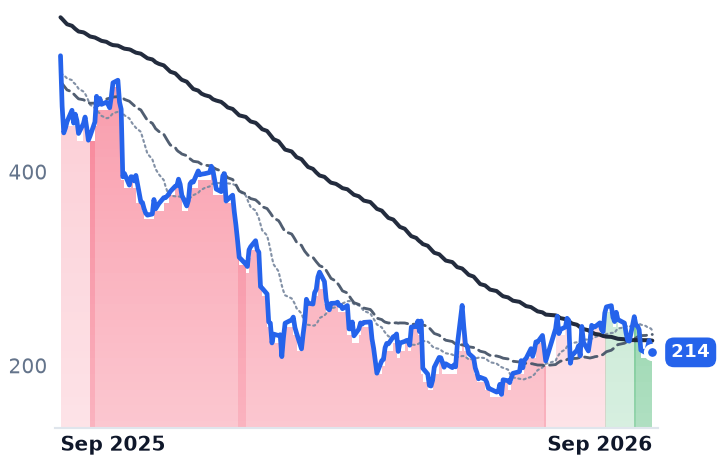
TWLO | Twilio | Communications & Messaging Platforms | 🟢 Cont. Bull | +16.0% | +164.5% |
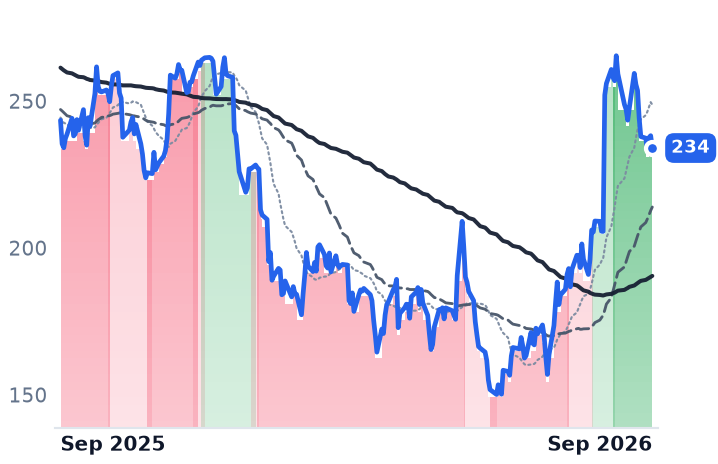
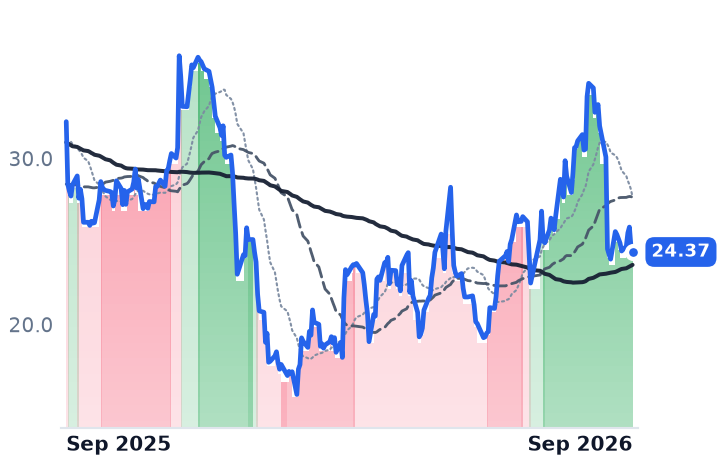
CRM | Salesforce | Customer Experience & CRM | 🌱 Emerging Bull | −8.6% | −3.9% |
| Compared against · context, not the story | |||||
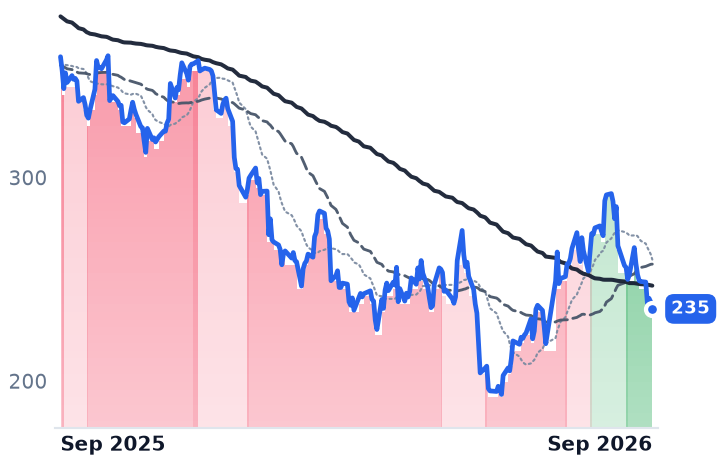
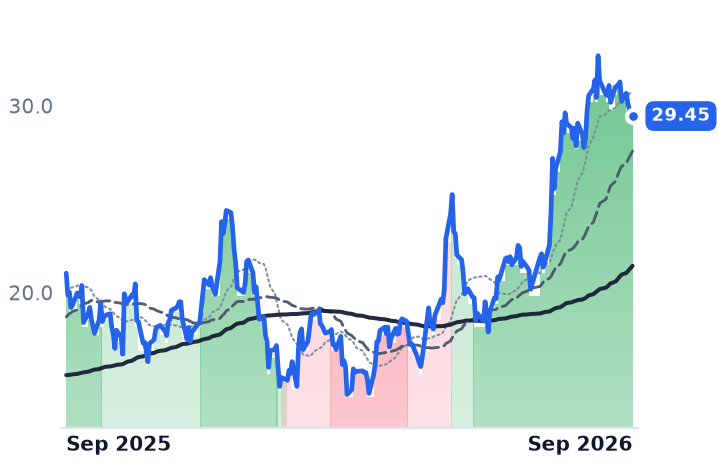
ADBE | Adobe | Design & Content Creation | 🌱 Emerging Bull | −19.2% | −34.5% |
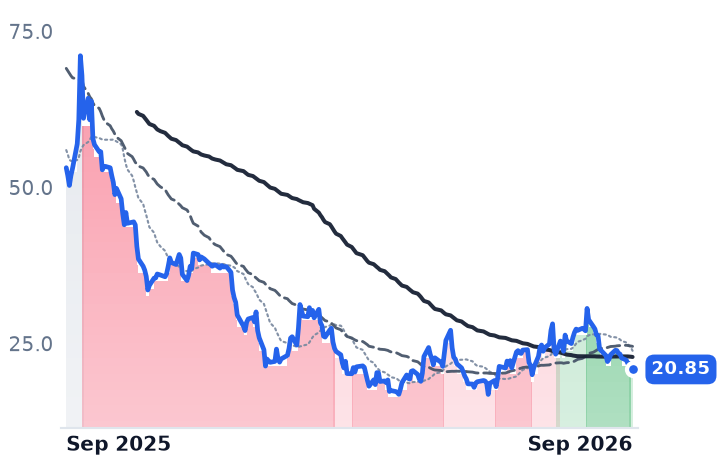
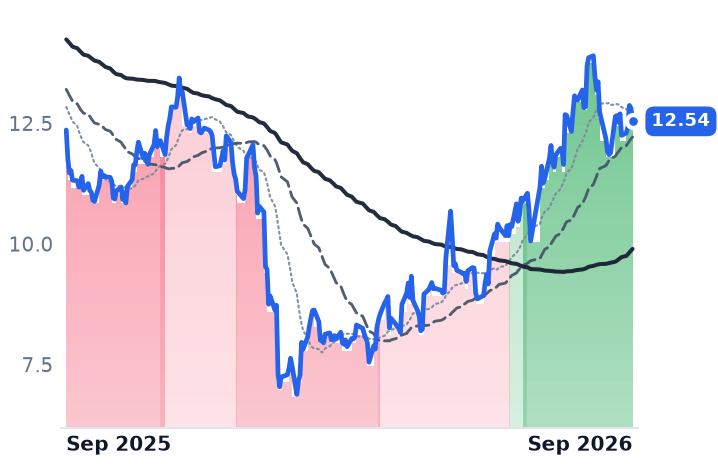
FIG | Figma | Design & Content Creation | 🌱 Emerging Bull | −27.7% | −60.8% |
HUBS | HubSpot | Customer Experience & CRM | 🌱 Emerging Bull | −18.0% | −58.9% |
BRZE | Braze | Customer Experience & CRM | 🌱 Emerging Bull | −29.4% | −24.4% |
ZETA | Zeta Global | Marketing & Advertising Technology | 🟢 Cont. Bull | −3.6% | +40.0% |
FRSH | Freshworks | Security & Compliance | 🌱 Emerging Bull | −9.5% | +1.5% |
PEGA | Pegasystems | Low-Code & Process Automation | 🔴 Cont. Bear | −6.7% | −42.3% |
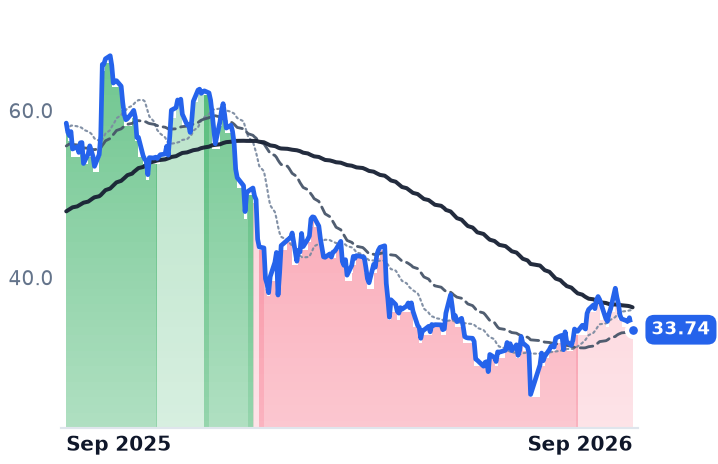
12-month price & trend
| Ticker | Mkt cap | P/E | P/E fwd | P/S | P/S fwd | P/GP | P/GP fwd | EV/EBITDA | FCF yld |
|---|---|---|---|---|---|---|---|---|---|
TWLO | $41.9B | 36.7x | 46.5x | 7.5x | 7.0x | 15.5x | 14.4x | 114.9x | 2.7% |
CRM | $191.7B | 21.3x | 14.0x | 4.4x | 4.1x | 5.6x | 5.4x | 14.2x | 7.9% |
ADBE | $93.6B | 13.1x | 9.6x | 3.6x | 3.5x | 4.0x | 3.9x | 9.4x | 11.7% |
| Ticker | Mkt cap | P/E | P/E fwd | P/S | P/S fwd | P/GP | P/GP fwd | EV/EBITDA | FCF yld |
|---|---|---|---|---|---|---|---|---|---|
FIG | $10.2B | n/m | 72.9x | 7.9x | 6.9x | 10.0x | 8.7x | n/m | 2.3% |
HUBS | $11.4B | 78.3x | 16.7x | 3.3x | 3.1x | 4.0x | 3.7x | 37.5x | 6.8% |
BRZE | $2.8B | n/m | 38.4x | 3.3x | 3.0x | 5.0x | 4.6x | n/m | 3.0% |
| Ticker | Mkt cap | P/E | P/E fwd | P/S | P/S fwd | P/GP | P/GP fwd | EV/EBITDA | FCF yld |
|---|---|---|---|---|---|---|---|---|---|
ZETA | $7.1B | n/m | 29.2x | 4.5x | 3.9x | 7.3x | 6.3x | 92.2x | 3.2% |
FRSH | $3.4B | 18.7x | 18.3x | 3.7x | 3.5x | 4.4x | 4.1x | 37.6x | 7.4% |
PEGA | $6.1B | 19.7x | 15.2x | 3.5x | 3.3x | 4.7x | 4.3x | 30.6x | 8.2% |
Consensus projections
| Ticker | FY2026E | FY2027E | FY2028E | |
|---|---|---|---|---|
TWLO | Revenue | +19.6% | +11.4% | +10.4% |
| EPS | +23.5% | +14.3% | +14.2% | |
CRM | Revenue | +9.3% | +11.5% | +9.9% |
| EPS | +17.4% | +42.3% | −4.1% | |
ADBE | Revenue | +12.3% | +9.3% | +8.7% |
| EPS | +17.6% | +13.4% | +14.0% | |
FIG | Revenue | +40.4% | +23.8% | +23.8% |
| EPS | −24.5% | +24.8% | +30.8% | |
HUBS | Revenue | +18.3% | +14.1% | +13.8% |
| EPS | +38.3% | +26.9% | +19.5% | |
BRZE | Revenue | +24.3% | +24.7% | +16.8% |
| EPS | +281.2% | +52.5% | +52.0% | |
ZETA | Revenue | +41.0% | +16.1% | +14.0% |
| EPS | +47.2% | +23.7% | +18.6% | |
FRSH | Revenue | +15.6% | +14.2% | +15.4% |
| EPS | +5.4% | +24.0% | +18.4% | |
PEGA | Revenue | +8.8% | +9.2% | +8.7% |
| EPS | +18.0% | +7.8% | +6.2% |
Forward fiscal years only. Blank means no analyst coverage for that year.
A downgrade about someone else's product
Twilio, whose roughly 1,800 programming interfaces let developers embed text messages, voice calls and email inside their own applications and which bills per message sent and per minute of voice, closed at $275.80 on 25 September after falling 7.96% in a session. The cause was a rating change. HSBC's Sameer Lam moved the stock to Reduce from Hold while keeping a $211 price target, arguing that rising AI-agent activity "does not necessarily translate into a larger share of the resulting revenue for Twilio."
That sentence is the argument of Twilio's entire September. The company has published no financial figure since 6 August. Everything that moved the shares since happened elsewhere: Meta launched Muse, its consumer AI agent, on 8 September, built so that talking to it works like messaging another person, either standalone or inside WhatsApp. Desks then repriced Twilio as the toll road for agent chatter — TD Cowen's Derrick Wood to $300, Wells Fargo to $275 and Rosenblatt's Catherine Trebnick to $290 — and the stock ran 22.9% in four sessions to a $299.66 close on 24 September. Price to trailing gross profit went from 12.97x on 22 August to 15.48x on 25 September, against 14.37x forward, on no company disclosure in between.
What Twilio can actually show
The business underneath is accelerating. Revenue growth ran 14.3% in the December quarter, 20.0% in March and 22.0% in June, to $1,499m. Dollar-based net expansion — what existing customers spend against a year ago — went 108%, then 114%, then 116%. Free cash flow grew 34% to $353m, and June-quarter messaging revenue grew 28%.
Two facts cut the other way. Gross profit grew 20.4% while revenue grew 22.0%, because US carriers raised application-to-person messaging fees three times this year and Twilio books those surcharges in revenue at no margin: roughly $190m of incremental pass-through in 2026, of which $71m explained about a quarter of the June-quarter revenue increase. Gross margin slipped to 48.42% from 49.07%. And Twilio's own guide for the September quarter is organic growth of 11–12%, after posting 17%. Consensus has revenue growth falling to 11.4% next year.
The seat-billed side rose too, on arithmetic
Salesforce, which sells sales, service, marketing and analytics software to enterprises on multi-year per-seat subscriptions, gained 13.8% over the same thirty days. Its June quarter grew revenue 10.8% to $11,345m — about 6% excluding Informatica, the data-management business absent from the year-ago base. Gross margin fell to 76.65% from 78.10% and GAAP operating income was flat at $2,331m. Diluted earnings per share nonetheless rose 119% to $4.29, because the share count fell from 962m to 821m under a $25bn accelerated repurchase struck at an average of about $176.
One meter genuinely confirms: current remaining performance obligation, the contracted work due within a year, reached $33.5bn, up 14% in constant currency and a point ahead of guidance. Marc Benioff, chief executive, spent the 26 August call on the partnership behind it: "The number one AI in the world, Anthropic, and the number one CRM, Salesforce, coming together for the first time in an incredibly powerful way to build a new product called Claudeforce." Agentforce annual recurring revenue is $1.5bn.
Investors gave much of it back anyway. Salesforce fell 8.5% from 15 to 25 September, across a global outage on 16 September that struck during its own Dreamforce conference, even as Guggenheim raised its target to $300 and Mizuho to $280. At 13.97x forward earnings against 21.27x trailing and a 7.9% free-cash-flow yield, it is the cheapest large-cap in software on earnings. Measured against gross profit it is 5.64x — dearer than HubSpot, the mid-market customer-management vendor, at 3.96x, and Adobe at 4.05x, while growing organically slower than either.
The per-seat control is not clean
Adobe, which sells Creative Cloud and marketing software by subscription, fell 14.0% in the month on a record $6.76bn quarter and raised guidance — undone by net new recurring revenue down 36–37% and remaining performance obligation up just 8%. Figma, the browser-based design subscription, grew 48.2% to $370.1m, the fastest in the group, and fell 23.5%, though 77.7m lock-up shares came free on 8 August. Braze, which bills on messages sent rather than seats, fell 20.1% with revenue accelerating to 30.2%.
The verdict
Consumption-billed vendors did beat per-seat ones this month, but not because the market found evidence of usage. Twilio's re-rating is an inference about a Meta product, and Twilio has disclosed nothing that tests it; HSBC's objection is that traffic and revenue share are separate questions. Salesforce's rise is accounting: flat operating income converted into 119% earnings growth by retiring stock. Both moves are financed by things outside the reported quarter.
Twilio's September quarter will be the first disclosure that can show whether agent traffic arrived. Management has already told investors to expect organic growth of 11–12%.