

Planet Fitness Says Its Strength Campaign "Pivoted Too Far"; $10 Memberships Are Back
Hypothesis Opus 5 · Research Opus 5 · Writing Opus 5 · Prompt v1.6
A franchisor that earns a royalty on other people's membership dues has spent the summer discounting the base that royalty is calculated on. Planet Fitness's June-quarter system-wide same-club sales grew 1.7%, and the company says the increase came entirely from rate — the member-volume contribution was nil. In May it cut full-year comparable sales guidance to about 1% from 4-5%, paused a national Black Card price increase and withdrew the three-year growth targets it had set six months earlier.
The assumed villain, weight-loss drugs, is not the one the evidence finds: both chief executives call GLP-1 adoption a tailwind. The damage traces to an ad campaign that intimidated beginners and to rivals selling memberships at $9.99. Life Time, running owned athletic resorts at $245 average monthly dues, grew revenue 13.7% and raised guidance — and fell anyway.
| Ticker | Company | Segment | Trend · 13mo | 30D | 1Y |
|---|---|---|---|---|---|
| The subject · what this brief is about | |||||
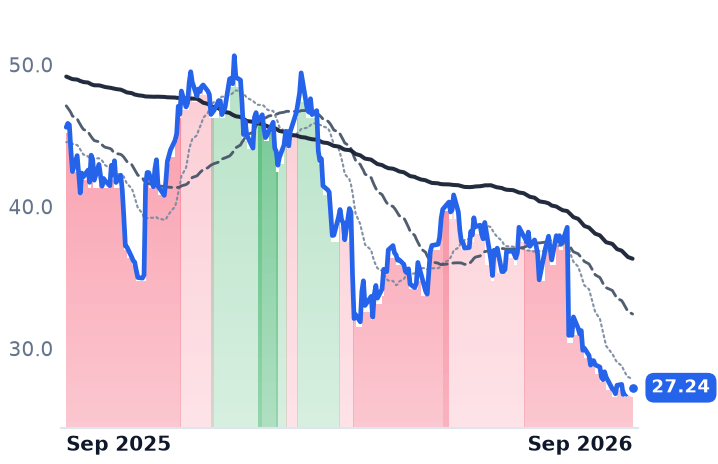
PLNT | Planet Fitness | Fitness & Wellness | 🔴 Cont. Bear | −20.6% | −58.0% |
LTH | Life Time | Fitness & Wellness | 🟢 Cont. Bull | −17.3% | +33.6% |
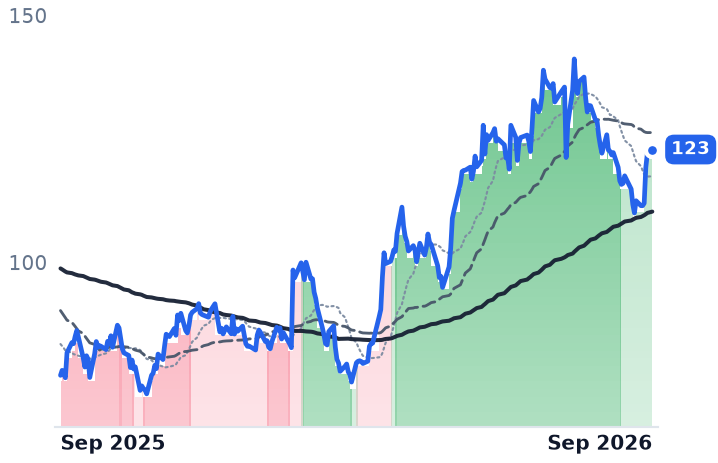
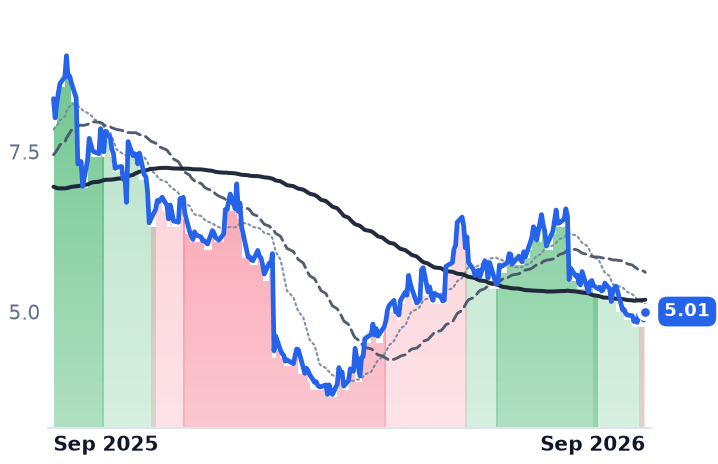
PTON | Peloton Interactive | Fitness & Wellness | 🌱 Emerging Bull | −6.6% | −39.9% |
| Compared against · context, not the story | |||||
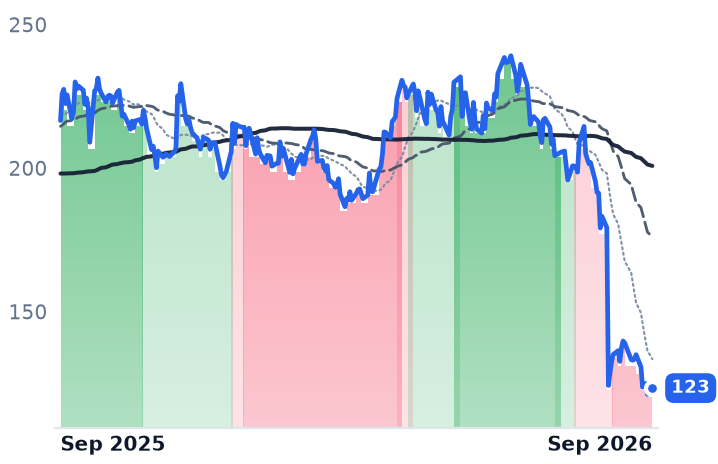
NKE | NIKE | Athletic & Performance | 🔴 Cont. Bear | −11.4% | −48.7% |
LULU | Lululemon Athletica | Athletic & Activewear | 🔴 Cont. Bear | −17.7% | −41.7% |
ONON | On | Athletic & Activewear | 🔴 Cont. Bear | −7.7% | −40.3% |
DKS | DICK'S Sporting Goods | Sporting Goods & Outdoor | ⚠️ Emerging Bear | −31.2% | −43.0% |
CROX | Crocs | Casual Lifestyle & Comfort | 🟢 Cont. Bull | −2.4% | +59.3% |
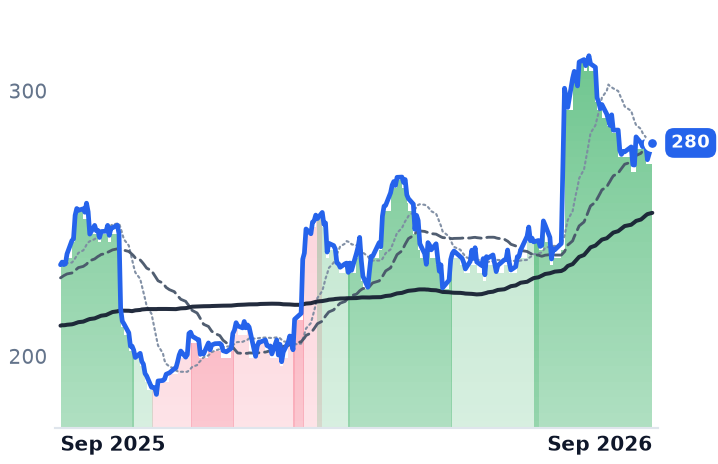
GRMN | Garmin | Other | 🟢 Cont. Bull | −3.7% | +19.6% |
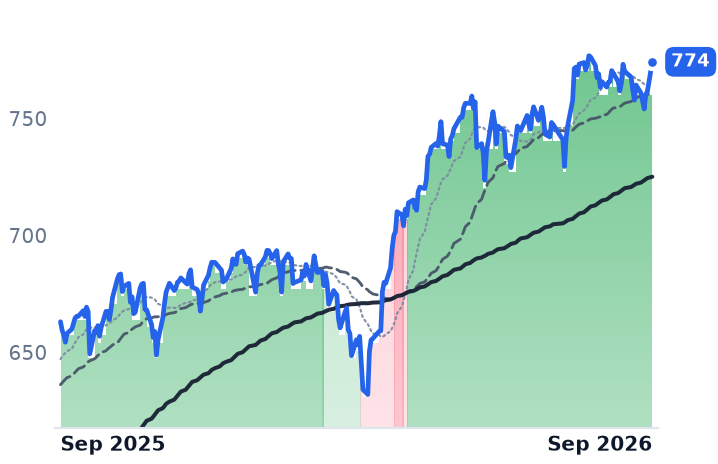
SPY | State Street SPDR S&P 500 ETF Trust | Asset Management | 🟢 Cont. Bull | +1.4% | +16.8% |
12-month price & trend
| Ticker | Mkt cap | P/E | P/E fwd | P/S | P/S fwd | P/GP | P/GP fwd | EV/EBITDA | FCF yld |
|---|---|---|---|---|---|---|---|---|---|
PLNT | $3.4B | 14.5x | 13.2x | 2.4x | 2.4x | 4.8x | 4.7x | 9.9x | 7.7% |
LTH | $8.5B | 20.1x | 23.7x | 2.7x | 2.5x | 3.8x | 3.6x | 13.4x | -1.8% |
NKE | $61.9B | 27.5x | 28.1x | 1.3x | 1.3x | 3.3x | 3.3x | 19.9x | 1.7% |
| Ticker | Mkt cap | P/E | P/E fwd | P/S | P/S fwd | P/GP | P/GP fwd | EV/EBITDA | FCF yld |
|---|---|---|---|---|---|---|---|---|---|
LULU | $14.0B | 9.0x | 9.7x | 1.3x | 1.2x | 2.2x | 2.2x | 5.1x | 6.6% |
ONON | $12.4B | 38.5x | 26.1x | 3.1x | 3.4x | 4.9x | 5.3x | 22.1x | 3.1% |
DKS | $18.0B | 22.7x | 15.2x | 1.0x | 0.8x | 3.2x | 2.4x | 17.1x | 3.0% |
| Ticker | Mkt cap | P/E | P/E fwd | P/S | P/S fwd | P/GP | P/GP fwd | EV/EBITDA | FCF yld |
|---|---|---|---|---|---|---|---|---|---|
CROX | $4.7B | n/m | 7.0x | 1.2x | 1.2x | 2.0x | 2.0x | 6.7x | 14.2% |
GRMN | $43.5B | 25.1x | 23.6x | 5.8x | 5.4x | 9.9x | 9.2x | 18.3x | 3.3% |
SPY | $773.0B | — | — | — | — | — | — | — | — |
| Ticker | Mkt cap | P/E | P/E fwd | P/S | P/S fwd | P/GP | P/GP fwd | EV/EBITDA | FCF yld |
|---|---|---|---|---|---|---|---|---|---|
PTON | $2.1B | 35.0x | 15.5x | 0.9x | 0.9x | 1.6x | 1.7x | 15.9x | 18.9% |
Consensus projections
| Ticker | FY2026E | FY2027E | FY2028E | |
|---|---|---|---|---|
PLNT | Revenue | +8.2% | +6.9% | +8.4% |
| EPS | +6.9% | +12.5% | +15.5% | |
LTH | Revenue | +12.6% | +12.0% | +10.9% |
| EPS | +17.6% | +14.3% | +9.8% | |
NKE | Revenue | +0.7% | +0.6% | +4.4% |
| EPS | −30.5% | +22.1% | +28.6% | |
LULU | Revenue | +4.7% | +3.9% | +4.5% |
| EPS | −9.1% | −5.7% | +7.7% | |
ONON | Revenue | +21.3% | +20.3% | +23.9% |
| EPS | +101.7% | +23.3% | +26.4% | |
DKS | Revenue | +28.0% | +30.9% | +3.4% |
| EPS | −8.8% | +12.3% | +13.1% | |
CROX | Revenue | +1.7% | +2.5% | −0.9% |
| EPS | +12.4% | +6.4% | +0.2% | |
GRMN | Revenue | +12.0% | +9.5% | +13.7% |
| EPS | +16.4% | +7.4% | +9.9% | |
PTON | Revenue | −1.1% | −2.8% | −0.9% |
| EPS | −131.8% | +143.7% | +2.0% |
Forward fiscal years only. Blank means no analyst coverage for that year.
Planet Fitness told investors in May that its own advertising had driven off the beginners its business is built on, and it has spent the summer trying to buy them back at ten dollars a month. A national promotion now runs at $1 down and $10 a month, reinstating the price point the company had spent two years trying to move customers off.
That matters more here than at an ordinary retailer, because Planet Fitness is not paid by gym-goers. It licenses its brand to franchisees who bill roughly 21.5m members, collects a royalty on those dues, and sells replacement machinery into franchisees' re-equip cycles; corporate-owned clubs are the third leg. June-quarter revenue of $365.2m works out to about $5.66 a month per system member reaching the franchisor's own income statement. Discount the dues base and the royalty shrinks with it.
Rate, with no volume behind it
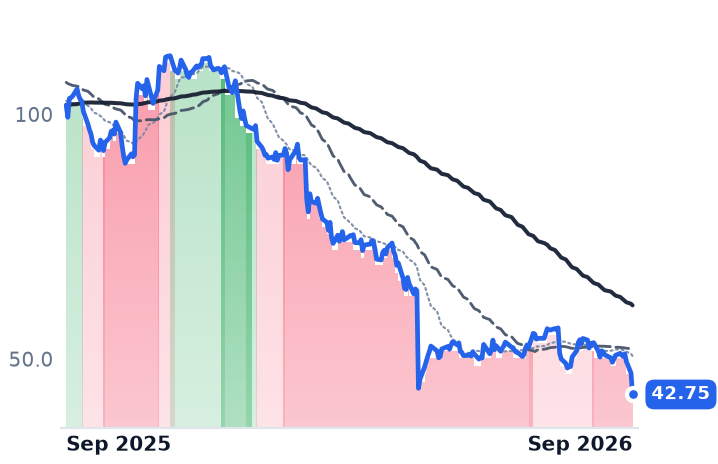
The June quarter showed system-wide same-club sales up 1.7%, which the company said was entirely driven by rate growth — members joining and staying contributed nothing. Full-year guidance is for about 1% comparable sales growth and 180 to 190 new club openings. On May 7 the company cut that comp guide from 4-5%, paused a planned national Black Card price increase, and withdrew the 2026-28 algorithm — low-double-digit revenue growth, 6-7% unit growth, mid-teens earnings growth — it had presented at its November 2025 investor day. "2026 is off to a slower than expected start from a net member growth perspective," chief executive Colleen Keating told investors that day.
The cause the company named was itself. Brand-health research showed its "We're All Strong on This Planet" strength-training messaging had "pivoted too far" and read as intimidating to the roughly 70% of the population without a gym membership — the exact pool Planet Fitness exists to convert. A securities class action filed on behalf of buyers between November 6, 2025 and May 6, 2026 alleges the campaign's damage was concealed. Meanwhile Crunch, EoS, Vasa and Chuze all sell memberships starting at $9.99; in captured-market analysis of US gym visits, Crunch held 35.8% share against Planet Fitness's 35.2%. Costs are not the problem — operating margin expanded to 33.9% from 30.0% and net income rose 15.6% to $67.1m. The royalty base is.
The mirror that kept growing
Life Time, which builds and operates resort-scale athletic centers with pools, courts, spas and cafés in affluent metros, is the counterweight that removes the industry-wide explanation. Second-quarter revenue rose 13.7% to $866.0m, comparable-center revenue 9.1%, average monthly dues 12.3% to $245, and adjusted EBITDA 16.8%. It raised 2026 comparable-center guidance on July 30. Net debt leverage improved to 1.4x from 1.8x while roughly $400m of sale-leasebacks fund new clubs from a de-levering balance sheet.
And the drug everyone blames is, per both operators, demand. Life Time founder Bahram Akradi called GLP-1s "a home run" for gyms on the first-quarter call; Keating cites survey work showing about half of users consider a membership and has signed a partnership with telehealth prescriber Ro. Gallup puts US adult GLP-1 use at 13.2% as of July, still rising.
What the prices have and have not earned
Planet Fitness fell 31.2% on May 7 and closed September 22 at $42.75, below that crash-day close and a twelve-month low, four days after KeyBanc reiterated Overweight at $65. Against unchanged consensus earnings of $3.25 for this year, the shares now fetch 13.2x, versus 31.3x a year ago — a halving that a withdrawn growth algorithm and a 1% comp earned honestly. Book equity is negative, so enterprise value against EBITDA is the workable measure: 9.9x trailing, against Life Time's 13.4x.
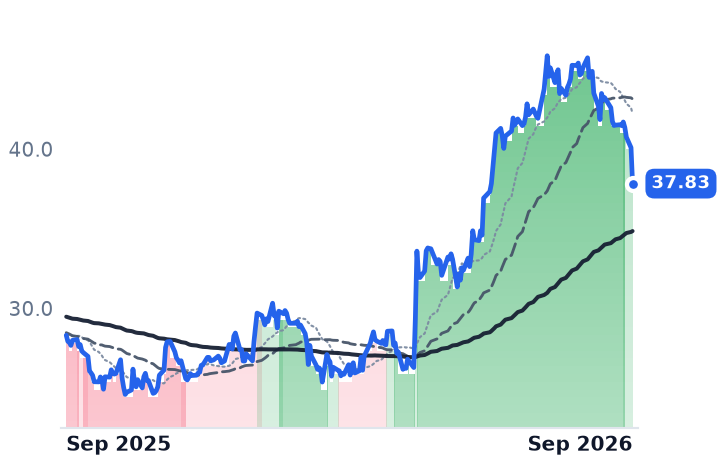
Life Time's year is the opposite and its last five weeks are not. Up 33.6% over twelve months, it has given back 16.1% since August 21 with no company-level cause discoverable; its forward enterprise value to EBITDA moved only from roughly 7.8x to 9.8x over the year while EBITDA compounded in the mid-teens. Consensus has Planet Fitness troughing this year and growing EBITDA 12.8% in 2027, and Life Time growing 18.4% — one of those forecasts rests on a promotion working.
The fitness trade has split into a high-income operator collecting $245 a month from members who show up and a franchisor collecting a slice of $10 from members who mostly do not. Planet Fitness must now prove that the customers its advertising chased away will come back at a price that pays its franchisees less.