

Falling Insurance Rates Lifted Travelers' Operating Profit 53.1% and Cut Aon's Margin
Hypothesis Opus 5 · Research Opus 5 · Writing Opus 5 · Prompt v1.6
One price cycle is producing two opposite income statements, and the market is paying more for the side whose revenue is shrinking. Commercial insurance rates have now fallen for eight consecutive quarters — global rates down 6% in the June quarter, property off 12%.
That reaches a broker directly, because its commission is a share of the premium, and reaches an underwriter only through the top line, where mild losses and investment income have more than covered it. Aon's revenue grew 2.2% in the June quarter and its operating income fell; Travelers' operating income rose on revenue that barely moved.
Organic growth at the brokers has not broken: Aon and Willis Towers Watson each grew 5%, Gallagher 6%. What broke is the price of it — 15.7x forward earnings for Aon against 11.0x for Travelers, whose 2026 consensus earnings are rising a third on a falling premium base.
| Ticker | Company | Segment | Trend · 13mo | 30D | 1Y |
|---|---|---|---|---|---|
| The subject · what this brief is about | |||||
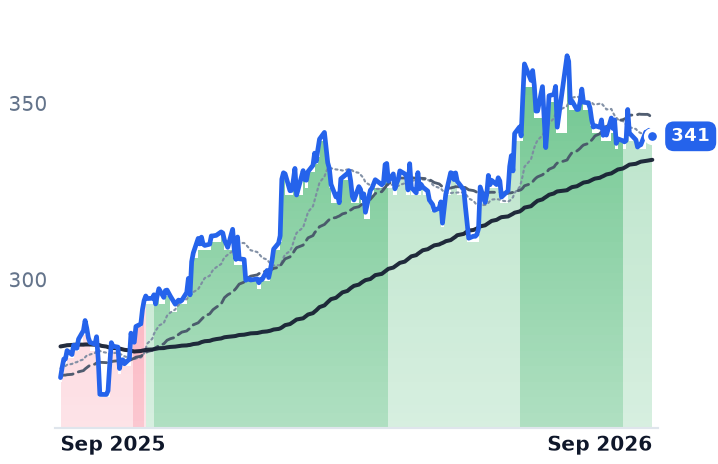
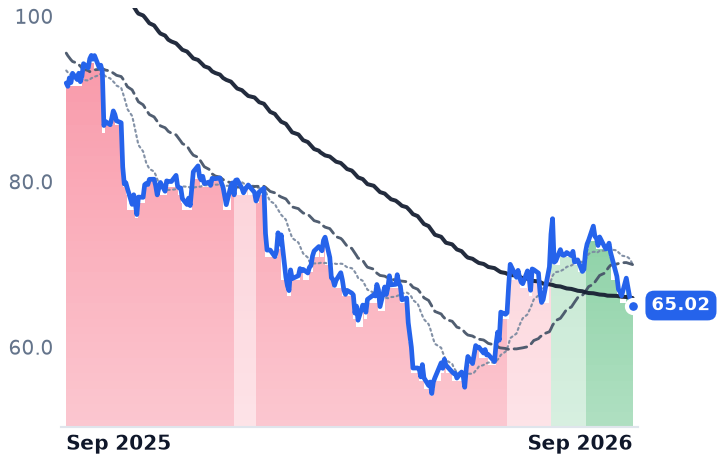
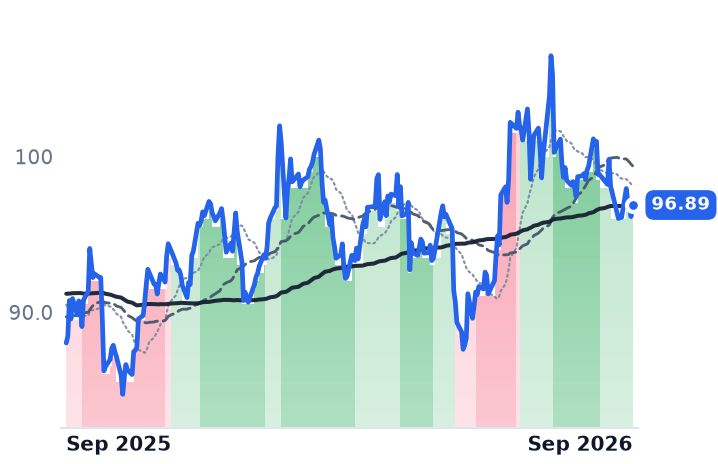
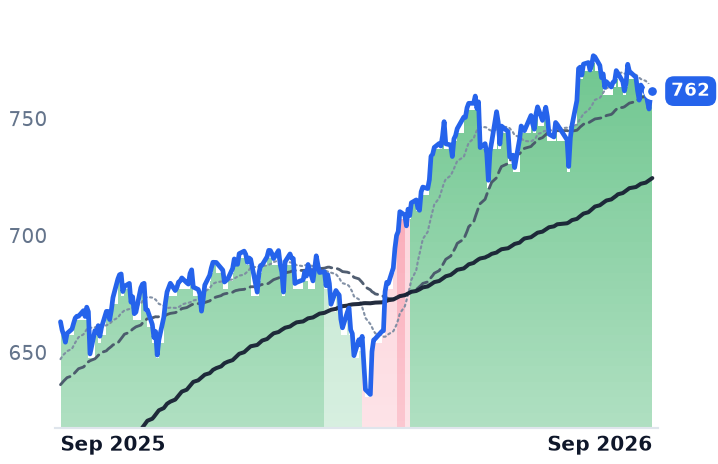
AON | Aon | Global Risk & Insurance Brokers | 🌱 Emerging Bull | −16.7% | −16.1% |
AJG | Arthur J. Gallagher | Global Risk & Insurance Brokers | 🌱 Emerging Bull | −9.2% | −19.7% |
WTW | Willis Towers Watson Public | Global Risk & Insurance Brokers | ⚠️ Emerging Bear | −9.4% | −7.7% |
| Compared against · context, not the story | |||||
TRV | The Travelers Companies | Commercial Lines | 🟢 Cont. Bull | +3.0% | +36.7% |
CB | Chubb | Commercial Lines | 🟢 Cont. Bull | −0.1% | +25.1% |
BRO | Brown & Brown | Retail & Specialty Brokers | 🌱 Emerging Bull | −10.8% | −29.3% |
ACGL | Arch Capital | Commercial & Specialty Insurance | 🟢 Cont. Bull | −2.5% | +10.1% |
SPY | State Street SPDR S&P 500 ETF Trust | Asset Management | 🟢 Cont. Bull | −0.5% | +14.9% |
12-month price & trend
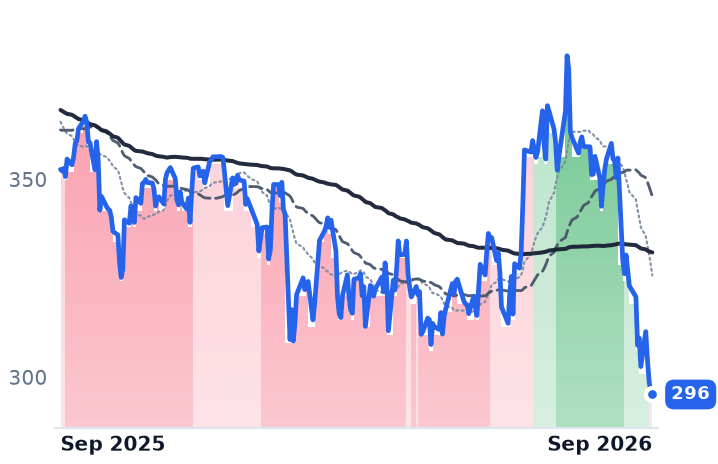
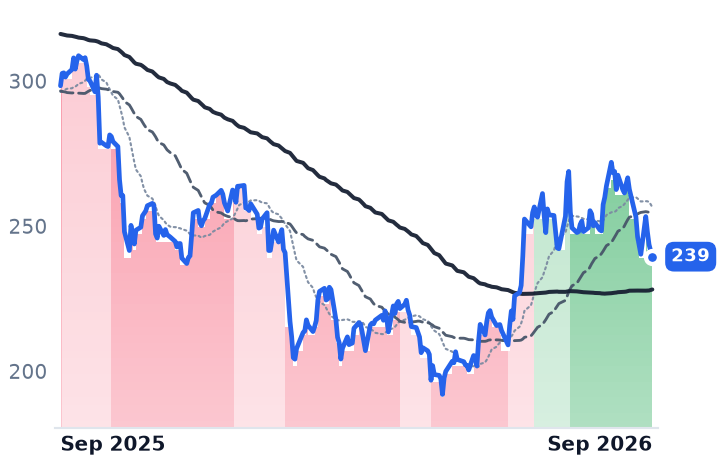
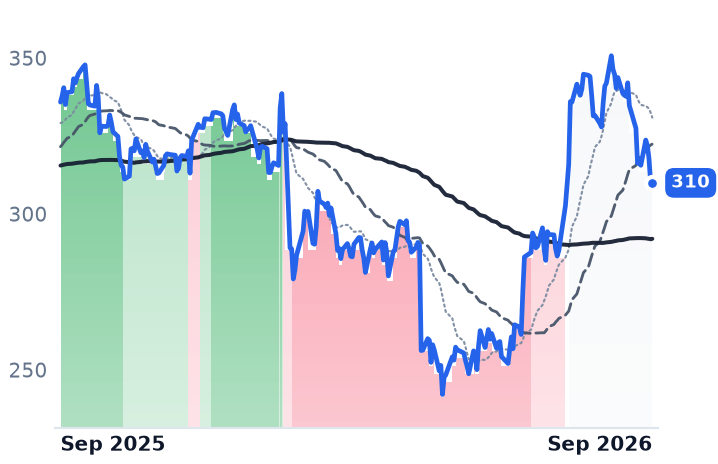
| Ticker | Mkt cap | P/E | P/E fwd | P/S | P/S fwd | P/GP | P/GP fwd | EV/EBITDA | FCF yld |
|---|---|---|---|---|---|---|---|---|---|
AON | $62.7B | 16.2x | 15.7x | 3.6x | 3.5x | 4.3x | 4.2x | 12.3x | 5.2% |
AJG | $61.5B | 39.3x | 18.1x | 3.9x | 3.7x | 5.2x | 4.9x | 15.7x | 3.7% |
WTW | $28.8B | 19.0x | 15.6x | 2.8x | 2.8x | 5.3x | 5.1x | 12.8x | 5.9% |
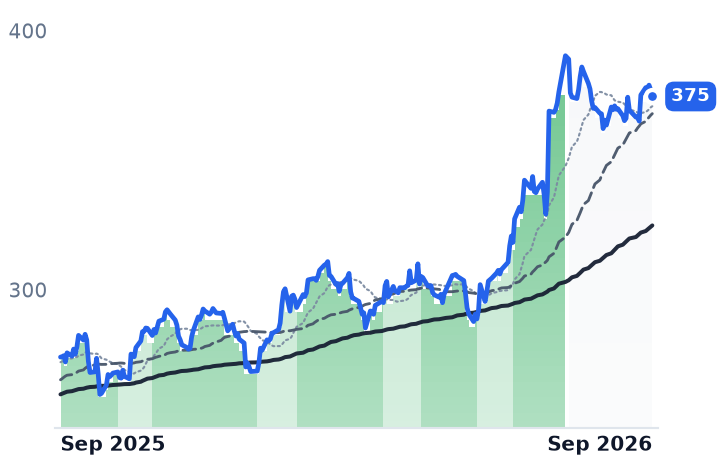
| Ticker | Mkt cap | P/E | P/E fwd | P/S | P/S fwd | P/GP | P/GP fwd | EV/EBITDA | FCF yld |
|---|---|---|---|---|---|---|---|---|---|
TRV | $78.1B | 9.9x | 11.0x | 1.6x | 1.8x | 4.6x | 5.1x | 7.7x | 14.1% |
CB | $131.4B | 12.0x | 12.3x | 2.1x | 2.2x | 5.3x | 5.6x | 12.0x | 12.2% |
BRO | $21.8B | 18.0x | 14.5x | 3.2x | 3.1x | 5.4x | 5.3x | 11.9x | 6.9% |
| Ticker | Mkt cap | P/E | P/E fwd | P/S | P/S fwd | P/GP | P/GP fwd | EV/EBITDA | FCF yld |
|---|---|---|---|---|---|---|---|---|---|
ACGL | $32.8B | 6.9x | 10.1x | 1.7x | 1.9x | 3.9x | 4.5x | 6.0x | 17.8% |
SPY | $773.0B | — | — | — | — | — | — | — | — |
Consensus projections
| Ticker | FY2026E | FY2027E | FY2028E | |
|---|---|---|---|---|
AON | Revenue | +3.8% | +15.5% | +6.8% |
| EPS | +10.8% | +9.6% | +15.5% | |
AJG | Revenue | +20.4% | +8.8% | +8.9% |
| EPS | +23.9% | +12.7% | +12.8% | |
WTW | Revenue | +8.7% | +5.3% | +5.6% |
| EPS | +16.8% | +15.4% | +18.6% | |
TRV | Revenue | −1.7% | +2.9% | +3.2% |
| EPS | +33.9% | −11.2% | +1.1% | |
CB | Revenue | +8.6% | +8.4% | +8.3% |
| EPS | +15.1% | +5.2% | +8.5% | |
BRO | Revenue | +17.6% | +4.3% | +5.9% |
| EPS | +5.7% | +7.8% | +9.0% | |
ACGL | Revenue | −3.3% | +2.3% | +6.4% |
| EPS | −1.6% | +7.1% | +7.5% |
Forward fiscal years only. Blank means no analyst coverage for that year.
Commercial insurance has been getting cheaper for eight straight quarters, and the two halves of the industry that live off the premium have gone in opposite directions. Travelers, which underwrites commercial, personal and specialty property-casualty policies, lifted June-quarter operating income 53.1% to $2.88bn on revenue growth of 0.3%. Aon, the Dublin-headquartered broker that arranges coverage of the kind Travelers writes, grew revenue 2.2% in the same quarter, watched operating income fall 4.2%, and saw its reported operating margin narrow to 19.4% from 20.7%.
The two are paid in different currencies. A broker collects a commission set as a share of the premium its client pays, so a softer rate cuts its revenue on identical exposure and identical work. An underwriter is paid the premium minus the losses, and losses have been mild while the invested float earns more. Marsh's Global Insurance Market Index logged its eighth consecutive quarterly decline in June, global commercial rates down 6% and property down 12%; broker-reported account data showed average commercial premiums falling in the first quarter for the first time in nearly nine years. Fitch expects further softening at the January 2027 renewals as reinsurance capital of about $785bn outruns demand. This is a forecast, not only a history.
The brokers are still growing; the market stopped paying for it
Organic growth has held. Aon and Willis Towers Watson each grew 5% organically in the June quarter and Arthur J. Gallagher 6%, with retention in the mid-90s and Aon putting the net effect of falling rates at zero to two points of growth. The exception is Brown & Brown, the Florida retail broker, where organic revenue excluding contingent commissions ran at -0.7% and management guided catastrophe property rates down a further 15% to 35% in the second half; its shares are down 29.2% over twelve months.
What the June quarter does confirm is the cost of buying growth. Gallagher's reported revenue rose 24.3% to $4.0bn on its purchase of AssuredPartners while operating income fell 5.8% and the reported operating margin dropped to 14.7% from 19.4%, with 15.5% more diluted shares outstanding than two years ago. Its sturdiest business is the one that is not a commission at all: Gallagher Bassett, paid per claim handled for self-insured employers, grew 12% organically on a 22.3% adjusted margin. Willis Towers Watson, whose Health, Wealth and Career book is billed per project and per participant, is the only one accelerating — revenue up 9.1% year on year after 8.5% — and consensus has its 2026 earnings up 16.8% to $19.82 a share. Its stock is down 6.5% over the year.
Aon's own complication is the balance sheet. It agreed on August 30 to buy USI Insurance Services from KKR for $17.0bn in cash, funded entirely with debt, raising $13.5bn of bonds in mid-September into as much as $65bn of orders. Buybacks are suspended, S&P moved the outlook to negative on pro-forma leverage of 4.3x to 4.5x against 2.7x at end-June, and the deal is dilutive to 2027 earnings. Aon paid 14.5x EBITDA after identified synergies against the 11.3x Gallagher paid for AssuredPartners. Chief executive J. Patrick Gallagher Jr., asked on the July 30 call whether private prices for middle-market brokers had adjusted, said: "It ain't happening. Multiples are coming down."
Where the money now sits
Aon trades at 15.7x forward earnings against 20.2x at last September's high, on 2026 consensus of $18.79 a share that has not moved — compression in the multiple rather than in the estimates. Willis sits at 15.6x forward and throws off more cash against its market value than the others, a 5.9% free-cash-flow yield; Gallagher is the group's most expensive on enterprise value and thinnest on cash, at 15.7x trailing EBITDA and a 3.7% yield.
The underwriters sit a full tier below. Travelers is priced at 11.0x forward earnings with consensus 2026 earnings up 33.9% to $34.08 a share on revenue falling 1.7%, and a 14.1% trailing free-cash-flow yield. Chubb, the Zurich-headquartered global insurer that distributes mainly through brokers, grew revenue 6.3% while operating income slipped 2.4%, and trades at 12.3x. Over twelve months Travelers rose 34.8%, Chubb 24.2% and Arch Capital 9.9%; the brokers fell between 6.5% and 29.2%, against a 15.0% gain in the S&P 500.
The carriers have earned their move, but they earned it on the cycle's timing: reserve comfort and investment income arriving faster than the premium base erodes. That gap closes with a bad catastrophe year or another twelve months of rate declines. The brokers' de-rating is only partly earned — Gallagher's margin collapse and Aon's leverage are real charges against the equity, while Willis's accelerating, fee-weighted book has nothing in its accounts to explain the fall. Aon's 50-day average slipped below its 200-day on September 16, its first such reading since June, the day the Federal Reserve raised rates for the first time since 2023 — which happens to reverse the headwind on the brokers' fiduciary income, $58m at Aon in the June quarter and down 12% year on year.
The January renewals set the premium base both sides are paid from for 2027. One side needs it to stop falling; the other has spent two years proving it does not.