

Aon Sold $13.5bn of USI Bonds Into $65bn of Orders and the Broker Group Fell 9%
Hypothesis Opus 5 · Research Opus 5 · Writing Opus 5 · Prompt v1.6
The five listed insurance brokers were sold together over eleven sessions in September, and four of them had no news to sell on. What splits the group is how each one gets paid.
A retail broker earns a percentage of the premium it places, and that premium base has now shrunk for eight straight quarters — global commercial rates fell 6% in the June quarter, property 12%. Yet organic growth barely moved: Aon, Marsh and Willis Towers Watson each grew 5% and Gallagher 6%, and consensus 2026 earnings for Aon sit unchanged at $18.79. Gallagher Bassett, the claims arm paid a fee per file rather than a share of premium, grew 12%.
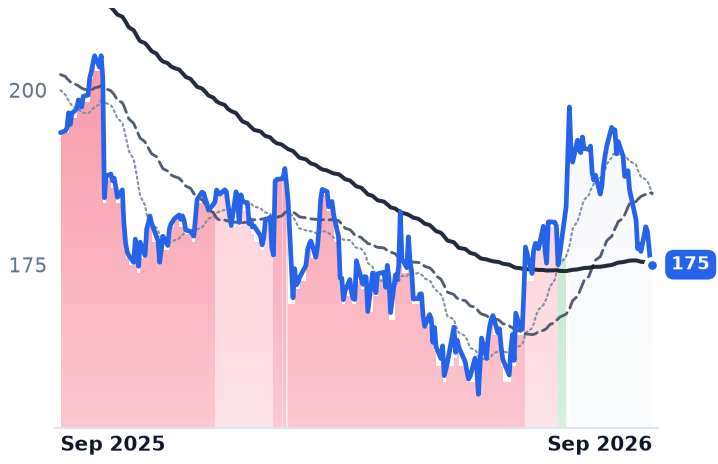
The twelve-month losses rank almost exactly by premium linkage, from Brown & Brown at the bottom to fee-heavy Willis at the top. The de-rating is price, not estimates.
| Ticker | Company | Segment | Trend · 13mo | 30D | 1Y |
|---|---|---|---|---|---|
| The subject · what this brief is about | |||||
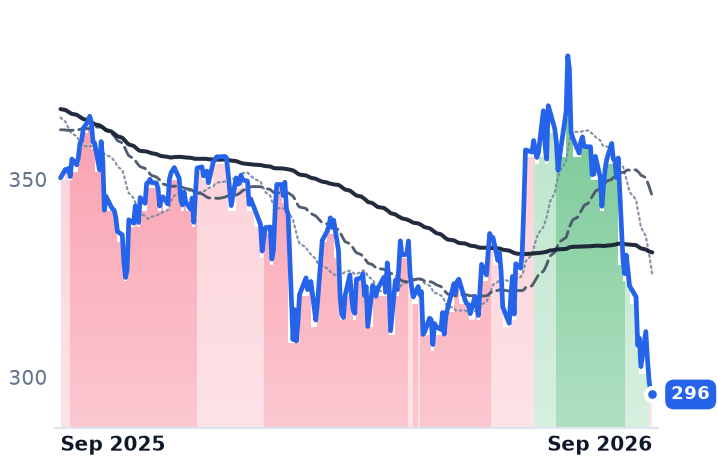
AON | Aon | Global Risk & Insurance Brokers | 🌱 Emerging Bull | −16.2% | −15.6% |
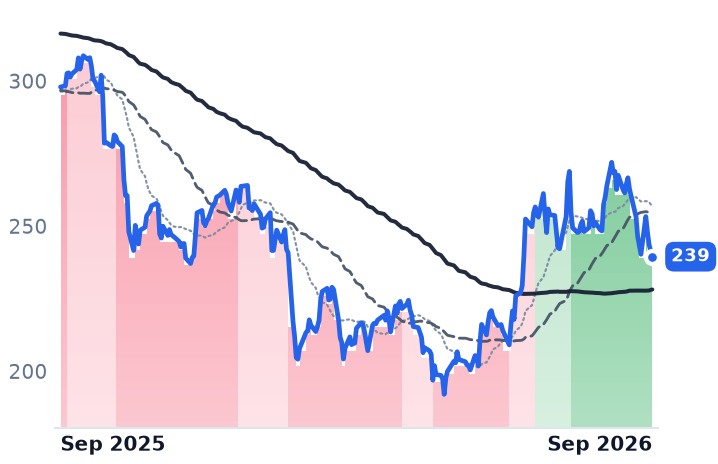
AJG | Arthur J. Gallagher | Global Risk & Insurance Brokers | 🌱 Emerging Bull | −7.9% | −19.6% |
| Compared against · context, not the story | |||||
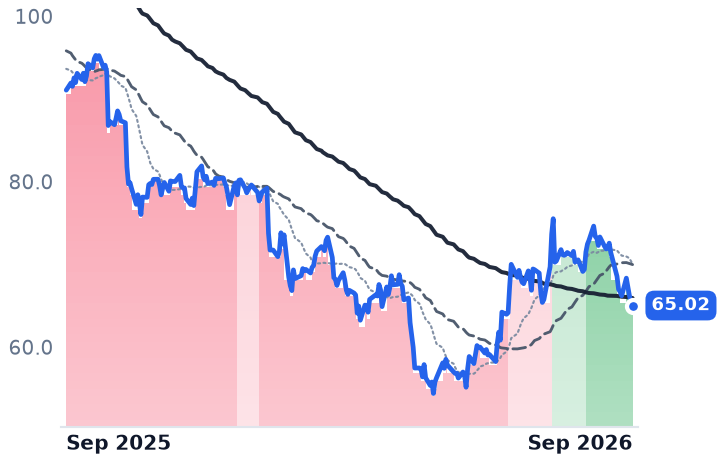
BRO | Brown & Brown | Retail & Specialty Brokers | 🌱 Emerging Bull | −10.3% | −28.6% |
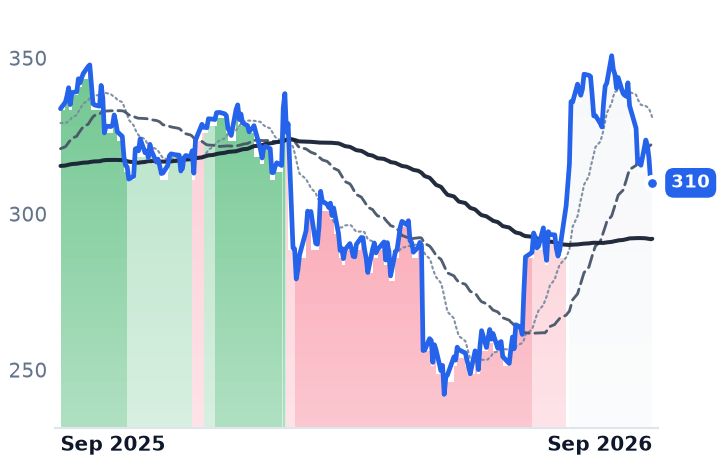
WTW | Willis Towers Watson Public | Global Risk & Insurance Brokers | ⚠️ Emerging Bear | −9.1% | −7.1% |
MRSH | Marsh & McLennan Companies | Global Risk & Insurance Brokers | 🔴 Cont. Bear | −8.2% | −9.7% |
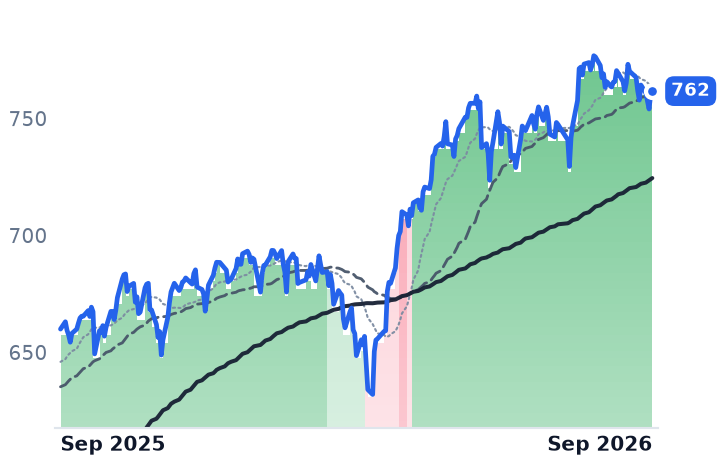
SPY | State Street SPDR S&P 500 ETF Trust | Asset Management | 🟢 Cont. Bull | −0.2% | +15.4% |
12-month price & trend
| Ticker | Mkt cap | P/E | P/E fwd | P/S | P/S fwd | P/GP | P/GP fwd | EV/EBITDA | FCF yld |
|---|---|---|---|---|---|---|---|---|---|
AON | $62.7B | 16.2x | 15.7x | 3.6x | 3.5x | 4.3x | 4.2x | 12.3x | 5.2% |
AJG | $61.5B | 39.3x | 18.1x | 3.9x | 3.7x | 5.2x | 4.9x | 15.7x | 3.7% |
BRO | $21.8B | 18.0x | 14.5x | 3.2x | 3.1x | 5.4x | 5.3x | 11.9x | 6.9% |
| Ticker | Mkt cap | P/E | P/E fwd | P/S | P/S fwd | P/GP | P/GP fwd | EV/EBITDA | FCF yld |
|---|---|---|---|---|---|---|---|---|---|
WTW | $28.8B | 19.0x | 15.6x | 2.8x | 2.8x | 5.3x | 5.1x | 12.8x | 5.9% |
MRSH | $77.6B | 19.9x | 15.5x | 2.8x | 2.7x | 6.7x | 6.4x | 14.7x | 6.4% |
SPY | $773.0B | — | — | — | — | — | — | — | — |
Consensus projections
| Ticker | FY2026E | FY2027E | FY2028E | |
|---|---|---|---|---|
AON | Revenue | +3.8% | +15.5% | +6.8% |
| EPS | +10.8% | +9.7% | +15.5% | |
AJG | Revenue | +20.4% | +8.8% | +8.9% |
| EPS | +23.9% | +12.7% | +12.8% | |
BRO | Revenue | +17.6% | +4.3% | +5.9% |
| EPS | +5.7% | +7.8% | +9.0% | |
WTW | Revenue | +8.7% | +5.3% | +5.6% |
| EPS | +16.9% | +15.4% | +18.6% | |
MRSH | Revenue | +5.5% | +5.0% | +5.1% |
| EPS | +8.4% | +8.8% | +8.9% |
Forward fiscal years only. Blank means no analyst coverage for that year.
Aon completed the borrowing for its $17bn purchase of USI Insurance Services in the middle of September, raising $13.5bn across seven tranches of dollar bonds and drawing as much as $65bn of orders — enough demand to tighten price talk on the 30-year piece by 0.35 percentage points, to 1.15 points over Treasuries. A roughly $4bn term loan is expected to finish the package. The equity went the other way: Aon's shares closed at $295.64 on 18 September against $327.00 on 3 September.
And not only Aon's. Over the same eleven sessions Gallagher fell 10.2%, Brown & Brown 10.4%, Willis Towers Watson 9.4% and Marsh & McLennan 7.1% — an equal-weight 9.1% against 1.5% for the S&P 500 ETF. No company-specific news for the other four was discoverable in that window; the likelier reading is a sector de-rating rather than anything issued by these companies, and there is no positioning data to say more. What is being repriced is the unit of revenue itself. A retail broker is paid a percentage of the premium it places, so when property-and-casualty rates soften, the same policy on the same risk pays less next year without a single client lost.
Eight quarters of a shrinking base
That base has been shrinking. Marsh's own index of global commercial insurance rates showed them down 6% in the second quarter after a 5% fall in the first, with property off 12% while casualty rose 2%. Broker-reported account data says the same: average commercial premiums declined in the first quarter for the first time in nearly nine years, ending a 33-quarter run of increases, with commercial property down 7.1%.
The revenue lines have absorbed it so far. Aon, Marsh and Willis Towers Watson each grew 5% organically in the June quarter and Gallagher 6%; Aon put the net market impact at zero to two points of growth against roughly ten points from new business for nine consecutive quarters, with retention in the mid-90s. Softening rates have cost a point or two of price, not a client base.
The part that does not reprice
Gallagher is the clean test, because half its identity is not a commission at all. Gallagher Bassett, its claims-administration arm, is paid a fee per claim handled for self-insured employers and public entities, and it competes with Sedgwick and Crawford rather than with Aon. That book grew 12% organically in the second quarter on a 22.3% adjusted margin, 1.4 points wider, with management guiding the segment to stay above 22% — roughly double the 5.5% to 6% pace of the premium-linked brokerage arm, and ahead of the 9% the company had guided to.
"Every other past soft market, the market has dropped like a brick across every line all at once," chairman and chief executive J. Patrick Gallagher Jr. said on the 30 July call. "This is a property reset." On the same call, asked whether private-market prices for middle-market brokers had adjusted, he said of rivals claiming otherwise: "It ain't happening. Multiples are coming down." Chief financial officer Doug Howell put Gallagher's tuck-in price at around nine times earnings for US retail and benefits businesses — against the 14.5 times post-synergy Aon agreed to pay for USI.
The market has ranked them by exposure
Over twelve months the losses line up almost exactly with premium linkage. Brown & Brown, the Daytona Beach broker most exposed to catastrophe property and to commission, posted organic revenue of -0.7% excluding contingent commissions and is down 29.2%. Then Gallagher at -19.3%, Aon at -16.2%, Marsh at -10.8%, and Willis Towers Watson — whose Health, Wealth and Career half bills per project and per participant — down 6.5%, the least of the five.
The second income line moved too, and is about to move back. Fiduciary investment income, the yield a broker earns on client premium held in trust, fell 12% at Aon to $58m in the June quarter; Marsh's interest income was $19m for the half against $24m, which it attributed to lower average rates. The Federal Reserve's 25 basis-point increase on 16 September, its first since 2023, reverses that headwind — while raising the discount rate applied to capital-light compounders and the coupon Aon pays on its new debt.
What the business earns and what it does not
Aon now trades at 15.7 times forward earnings, against 17.6 times on 2 September and 20.2 times at last September's high, on consensus 2026 earnings of $18.79 that have not moved — compression of the multiple, not cuts to the numbers, on a 12.3 times enterprise-value-to-earnings-before-interest-tax-depreciation-and-amortization and a 5.2% free-cash-flow yield. Some of that discount is earned: leverage reaches 4.8 times at closing, buybacks are suspended, and the deal dilutes 2027 earnings before adding to 2028. Gallagher is the opposite case — the group's most expensive at 18.1 times forward and its thinnest cash yield at 3.7%, with consensus revenue growth halving from 20.4% this year to 8.8% next as AssuredPartners anniversaries. Brown & Brown is cheapest at 14.5 times, Willis 15.6 times with the best cash yield of the five, Marsh about 17 times at its 18 September close.
So the soft market is real and the ordering of the selling is rational. What nothing in the reported numbers explains is the eleven sessions themselves: organic growth held, estimates held, and the only fee stream genuinely indifferent to premium pricing is growing at twice the brokerage rate — yet it sits inside the most expensive name in the group. In February the same four brokers gapped down together on an artificial-intelligence shopping app; the market has now marked this segment twice in a year for two unrelated reasons, and neither showed up in a revenue line.
The next reading is the third-quarter prints in late October, where the split between rate and new business inside that 5% is disclosed. Aon's lenders got nearly five times the book they needed; its shareholders are waiting on a smaller number.