

CBRE Guided 2026 Core Earnings Up 23% as the Ten-Year Treasury Topped 5%
Hypothesis Opus 5 · Research Opus 5 · Writing Opus 5 · Prompt v1.6
A month of selling has taken every listed commercial property services firm down together, and the reported numbers went the other way. CBRE raised its full-year forecast in late July, with each of its four segments growing operating profit by more than a quarter and data-center services revenue up nearly 30% to more than $700m. US investment sales volume rose 11.8% in the first half.
What changed was the price of money: the ten-year Treasury yield reached its highest level since October 2023 and the Federal Reserve raised rates on September 16. One company-level crack exists. Newmark declined to raise guidance on tougher second-half comparisons, its operating margin fell to 4.55% on 17% revenue growth, and it is the only one of the five that sold off on its own results.
| Ticker | Company | Segment | Trend · 13mo | 30D | 1Y |
|---|---|---|---|---|---|
| The subject · what this brief is about | |||||
CBRE | CBRE | Commercial Real Estate Services | 🟢 Cont. Bull | −8.8% | −15.0% |
NMRK | Newmark | Commercial Real Estate Services | ⚠️ Emerging Bear | −13.9% | −26.9% |
| Compared against · context, not the story | |||||
JLL | Jones Lang LaSalle Incorporated | Commercial Real Estate Services | 🟢 Cont. Bull | −13.2% | +5.6% |
CWK | Cushman & Wakefield | Commercial Real Estate Services | ⚠️ Emerging Bear | −16.4% | −25.5% |
CIGI | Colliers International | Commercial Real Estate Services | 🔴 Cont. Bear | −16.2% | −45.4% |
12-month price & trend
| Ticker | Mkt cap | P/E | P/E fwd | P/S | P/S fwd | P/GP | P/GP fwd | EV/EBITDA | FCF yld |
|---|---|---|---|---|---|---|---|---|---|
CBRE | $40.4B | 31.8x | 17.8x | 0.9x | 0.9x | 5.2x | 4.9x | 18.3x | 2.3% |
NMRK | $2.2B | 16.8x | 7.1x | 0.6x | 0.6x | 0.6x | 0.6x | 8.2x | 36.6% |
JLL | $15.5B | 15.8x | 13.5x | 0.6x | 0.5x | 0.6x | 0.6x | 11.5x | 8.0% |
| Ticker | Mkt cap | P/E | P/E fwd | P/S | P/S fwd | P/GP | P/GP fwd | EV/EBITDA | FCF yld |
|---|---|---|---|---|---|---|---|---|---|
CWK | $2.9B | 42.5x | 8.4x | 0.3x | 0.3x | 1.6x | 1.6x | 12.8x | 10.4% |
CIGI | $4.5B | 41.5x | 11.9x | 0.7x | 0.7x | 2.7x | 2.6x | 11.1x | 4.5% |
Consensus projections
| Ticker | FY2026E | FY2027E | FY2028E | |
|---|---|---|---|---|
CBRE | Revenue | +15.4% | +11.3% | +9.7% |
| EPS | +23.7% | +14.8% | +13.0% | |
NMRK | Revenue | +16.8% | +9.2% | +8.4% |
| EPS | +22.2% | +13.0% | +9.7% | |
JLL | Revenue | +11.9% | +7.5% | +6.8% |
| EPS | +43.4% | +12.2% | +14.0% | |
CWK | Revenue | +58.6% | +6.5% | +6.1% |
| EPS | +20.5% | +17.4% | +15.4% | |
CIGI | Revenue | +16.1% | +8.6% | +3.0% |
| EPS | +12.8% | +13.5% | +11.1% |
Forward fiscal years only. Blank means no analyst coverage for that year.
The forecast went up
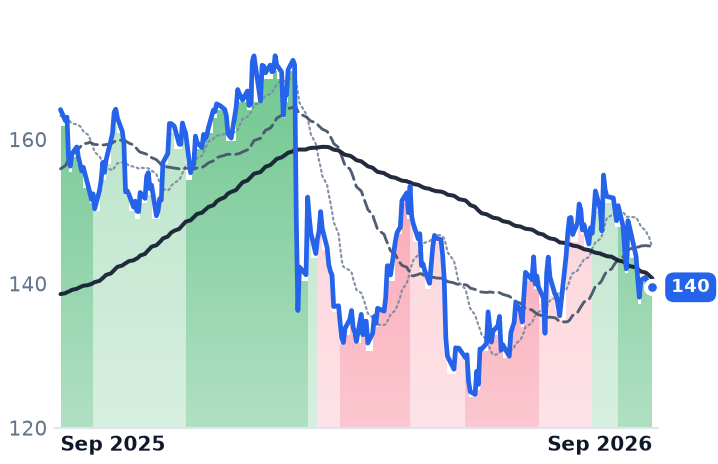
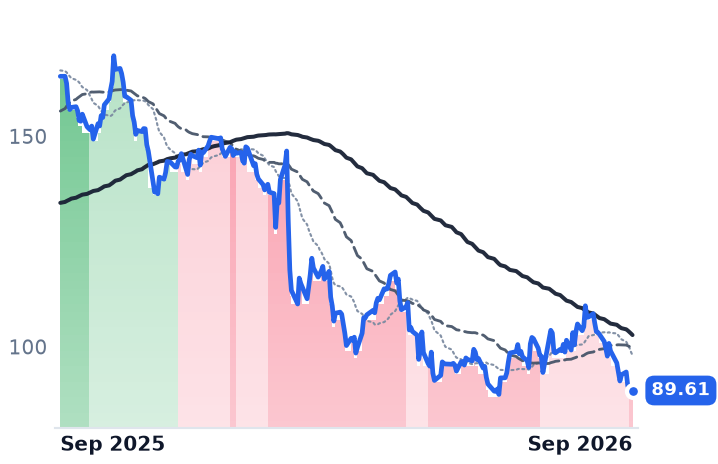
CBRE Group, the Dallas firm that brokers leases, arranges mortgages and runs buildings for corporate occupiers, told investors on July 29 that it would earn more this year than it had previously said. It raised core earnings guidance to $7.80–$7.90 a share from $7.60–$7.80 — about 23% growth at the midpoint on its adjusted measure, which strips out items management treats as non-operating. The stock rose the day of the print, reached $155.07 by August 19, and has since fallen to $139.50.
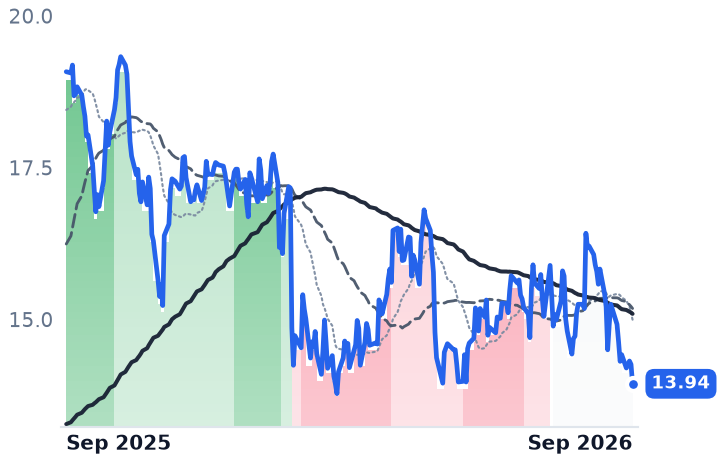
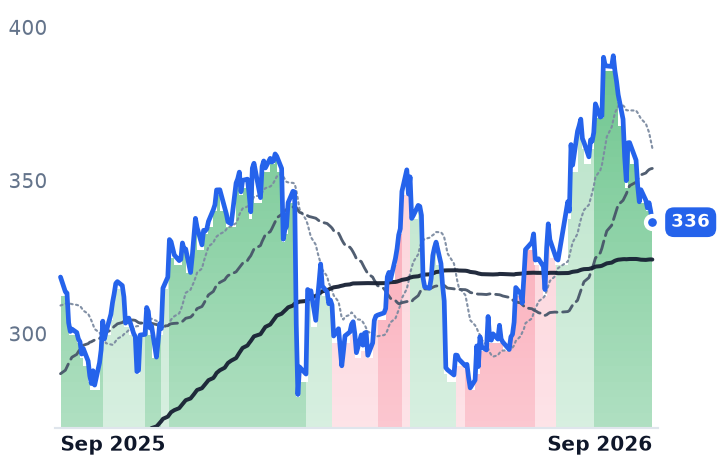
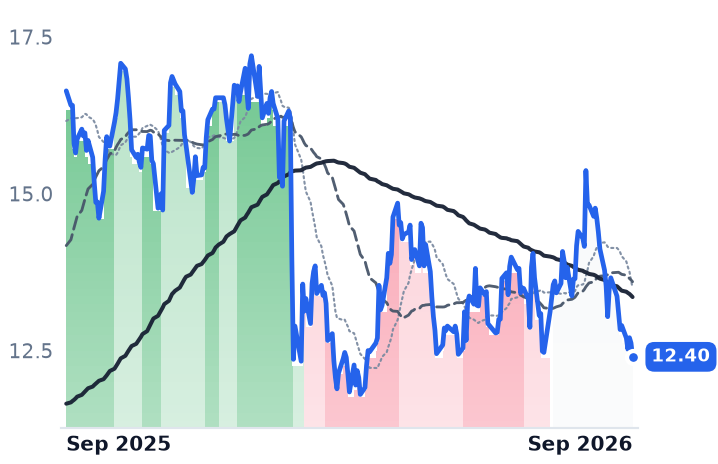
That decline is not CBRE's alone, and it is not old. Measured from the August 19 close, the five listed commercial real estate services firms fell between 10% and 19% to September 18. But August 19 was itself a single-session jump — CBRE up 5.3%, Cushman & Wakefield 8.5% — after the Treasury said it would at least double its buybacks of ten- to thirty-year debt, knocking the ten-year yield to 4.637%. From the day before that spike, the declines run 5% to 15%. The month begins and ends with the bond market: the ten-year topped 5.04% in the week to September 14, its highest since October 2023, and the Federal Reserve then raised its target range 25 basis points to 3.75%–4.00%, its first increase since 2023. Every fee attached to a building is being discounted at a higher rate.
What the fees actually are
Half of CBRE's work is not a commission. Building Operations & Experience and Project Management, which houses the Turner & Townsend consultancy, bill per facility and per square foot under multi-year contracts; Advisory holds the transactional half, where a fee exists only if a lease is signed or a building trades. In the June quarter the contracted side grew 15% and the transactional side 19% — the recurring revenue is growing slightly slower than the deal revenue, so the selling cannot be read as a markdown of per-square-foot operations specifically. All four segments grew operating profit by more than 25% on 16% revenue growth.
The growth engine is increasingly a machine room rather than an office tower. Data-center services revenue rose nearly 30% to more than $700m and infrastructure work more than 45% to nearly $1.2bn. Chair and chief executive Robert Sulentic told the July 29 call that more than half of data-center revenue is now downstream work — managing and refitting operating facilities — and that he expects roughly 25% annual growth there for five years. On office, he said: "We generated our highest U.S. office leasing revenue for any second quarter, driven by large deals in gateway markets."
One caveat belongs beside the core number. On US accounting rules CBRE's second-quarter operating income fell 2.4% to $365m even as revenue rose 15.1%; across the first half, the same line rose 34.8%. The quarter is a distortion, but the gap between reported and core is real, and it runs through the valuation too: CBRE's 17.8x forward multiple is built on consensus core earnings while its 31.8x trailing figure uses reported earnings of about $4.36. The apparent compression is largely definitional.
The one that fell on its own numbers
Newmark, the New York brokerage that earns investment-sales and debt fees plus a government-sponsored-enterprise origination and loan-servicing annuity, is the exception worth isolating. It reported an eighth straight quarter of double-digit revenue growth — $888m, up 17%, with management and servicing revenue up 18% — and its shares fell 6.3% over the print. It held 2026 guidance rather than raising it, citing tougher second-half comparisons and transaction timing, and its operating margin compressed to 4.55% from 5.63%: producer compensation absorbed the entire revenue gain. Raymond James downgraded it to Market Perform on "greater sensitivity to investment sales revenue relative to its peers". Against that, net leverage is one times, and the shares sit at 8.2x trailing enterprise value to earnings before interest, tax, depreciation and amortization.
The rest went the other way on results. Jones Lang LaSalle rose 6.4% the day it reported, with operating income up 33% and the group's cheapest-relative-to-growth rating at 13.5x forward earnings. Cushman & Wakefield raised adjusted earnings growth guidance to 18%–23% and cut net leverage to three times, though its capital markets revenue slipped 1% on what chief executive Michelle MacKay called an air pocket in institutional portfolio trades; it trades at 8.4x. Colliers, at 11.9x, grew revenue 14.7% but carries a share-count discontinuity in its reported history that makes per-share comparisons unreliable.
What the fall does and does not earn
Demand is not the problem. US investment sales reached $122.4bn in the first half, up 11.8%, with first-quarter office volume up 39%, and private-label commercial mortgage-backed issuance passed $76.2bn through July. The twelve-month de-rating is not a grind either: all five dropped 11% to 14% in the single session of February 11–12 on fears that artificial intelligence erodes the information asymmetry commissions are paid for — the steepest one-day falls since 2020 for CBRE and Cushman & Wakefield.
So the market has priced two things the reported numbers do not yet show: cheaper information destroying brokerage economics, and dearer money shrinking what any fee stream is worth today. The rates half is defensible arithmetic and applies to contracted revenue as much as to commissions. The artificial-intelligence half remains a forecast, and CBRE's premium — the most expensive of the five on forward earnings — is where it costs most if it proves right. Newmark's decision not to raise guidance is the only company-level evidence on the bears' side of either argument, and it concerns deal timing rather than fee rates.
Most Federal Reserve participants expect another increase before year-end. Buildings will still need leasing, managing and refinancing at any funds rate; what has changed is the price the market will pay today for the right to bill for it.