

Star Bulk Cleared $17,944 a Ship Each Day in the June Quarter and Paid Out $0.90 a Share
Hypothesis Opus 5 · Research Opus 5 · Writing Opus 5 · Prompt v1.6
Five dry bulk shipowners have climbed for a year without a single headline session, and the reason is an arithmetic almost no freight index shows: a vessel earns a daily rate that has roughly doubled against a daily operating cost that barely moves. Star Bulk earned $24,486 per ship per day in the June quarter against $5,180 of running cost; Genco told investors every $1,000 of fleet-wide rate is worth $16m of annualized EBITDA.
Pangaea Logistics is the exception that proves how the meter works. It charters in third-party ships to cover cargo it has already sold, and that cost rose 24% year over year to about $16,816 a day — a rising spot market is its expense as much as its revenue.
The supply story behind the rally is aging ships and full shipyards, not an empty orderbook: bulker orders on the water rose to 11.0% of the fleet from 9.5% a year earlier.
| Ticker | Company | Segment | Trend · 13mo | 30D | 1Y |
|---|---|---|---|---|---|
| The subject · what this brief is about | |||||
SBLK | Star Bulk Carriers | Dry Bulk Carriers | 🟢 Cont. Bull | +7.3% | +68.4% |
GNK | Genco Shipping & Trading | Dry Bulk Carriers | 🟢 Cont. Bull | +6.8% | +54.2% |
PANL | Pangaea Logistics Solutions | Dry Bulk Carriers | ⚠️ Emerging Bear | +6.1% | +56.6% |
| Compared against · context, not the story | |||||
HSHP | Himalaya Shipping | Dry Bulk Carriers | 🟢 Cont. Bull | +18.3% | +123.1% |
SB | Safe Bulkers | Dry Bulk Carriers | 🟢 Cont. Bull | +10.3% | +104.2% |
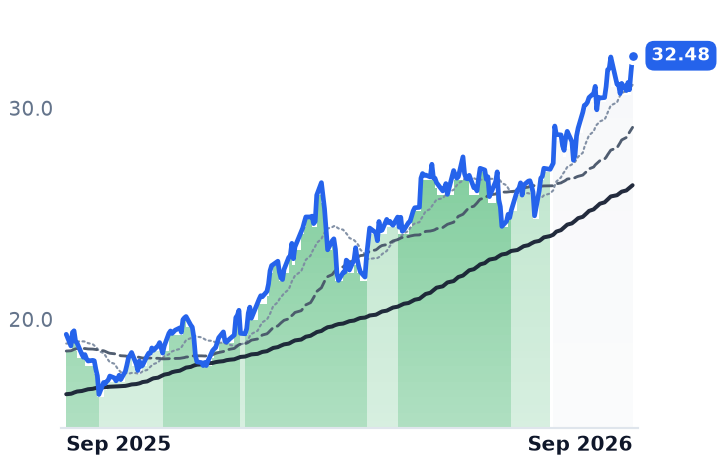
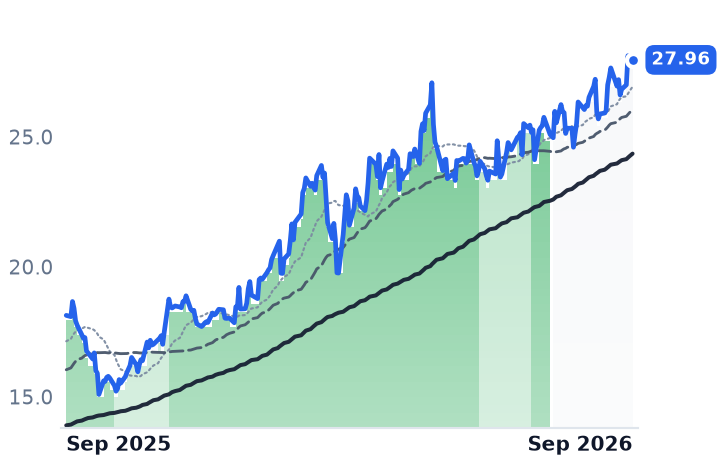
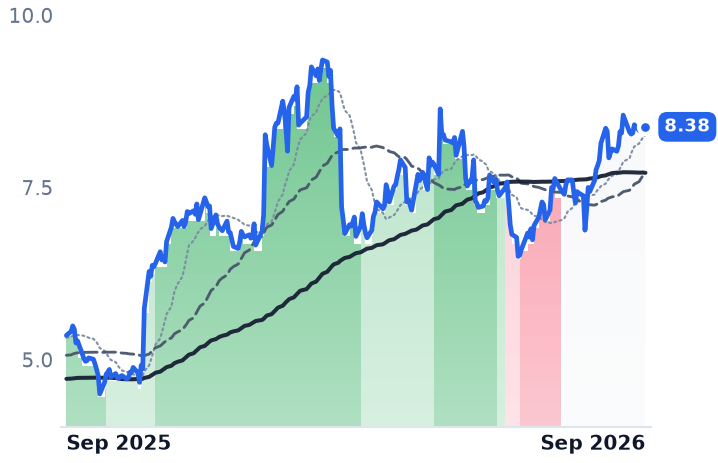
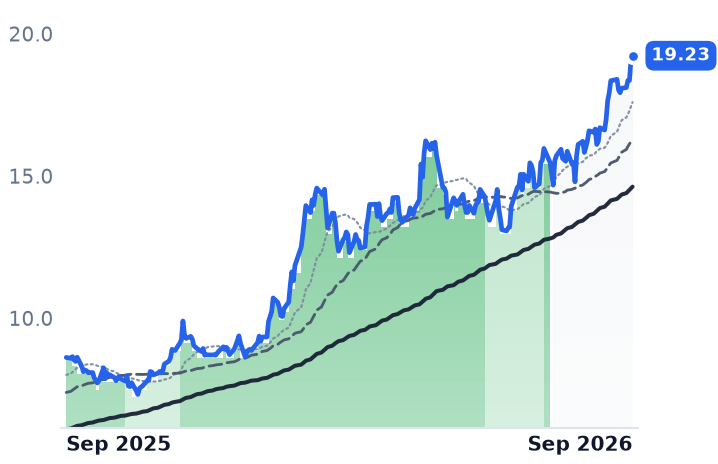
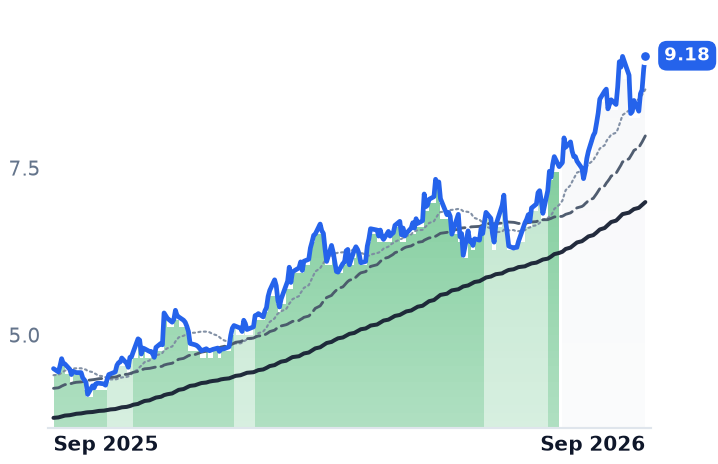
12-month price & trend
| Ticker | Mkt cap | P/E | P/E fwd | P/S | P/S fwd | P/GP | P/GP fwd | EV/EBITDA | FCF yld |
|---|---|---|---|---|---|---|---|---|---|
SBLK | $3.6B | 12.7x | 7.1x | 3.0x | 3.0x | 7.2x | 7.3x | 8.3x | 7.9% |
GNK | $1.2B | 30.5x | 10.2x | 2.8x | 3.2x | 8.1x | 9.4x | 10.4x | -12.8% |
PANL | $548.2M | 11.2x | 6.9x | 0.8x | 0.7x | 4.9x | 4.7x | 6.6x | 11.6% |
| Ticker | Mkt cap | P/E | P/E fwd | P/S | P/S fwd | P/GP | P/GP fwd | EV/EBITDA | FCF yld |
|---|---|---|---|---|---|---|---|---|---|
HSHP | $906.6M | 17.0x | 9.6x | 5.4x | 4.4x | 7.0x | 5.7x | 11.7x | 9.6% |
SB | $934.8M | 11.8x | 9.2x | 3.0x | 3.0x | 6.9x | 6.7x | 7.8x | 9.5% |
Consensus projections
| Ticker | FY2026E | FY2027E | FY2028E | |
|---|---|---|---|---|
SBLK | Revenue | +40.1% | −5.2% | +4.2% |
| EPS | +486.7% | −9.4% | +7.4% | |
GNK | Revenue | +70.3% | −6.6% | +11.1% |
| EPS | −5211.1% | −28.9% | +17.8% | |
PANL | Revenue | +42.1% | +1.1% | — |
| EPS | +247.1% | −33.0% | — | |
HSHP | Revenue | +59.3% | −4.7% | −2.0% |
| EPS | +412.9% | −11.1% | +0.2% | |
SB | Revenue | +19.7% | −11.1% | +2.9% |
| EPS | +210.9% | −41.7% | −3.4% |
Forward fiscal years only. Blank means no analyst coverage for that year.
Star Bulk Carriers, the Greek owner whose 138 ships carry iron ore, bauxite, grain and coal, is paid a daily rate that has nearly doubled in a year against a daily cost that has hardly moved at all. In the June quarter the fleet earned a time-charter-equivalent rate of $24,486 per vessel per day and spent $5,180 per vessel on crew, stores, insurance and maintenance. After cash overhead, roughly $17,944 a day per ship was left before interest and capital spending.
That subtraction, multiplied by available vessel-days, is close to the whole of a dry bulk owner's earnings. It is why Star Bulk's revenue rose 44.5% to $357.4m in the quarter while operating income rose more than tenfold, lifting the operating margin from 5.3% to 43.4%, and why the segment's shares have risen all year without a single dramatic session. Over the twelve months to September 18, Himalaya Shipping gained 119.5% and Safe Bulkers 98.7%; Star Bulk rose 63.7%, Genco and Pangaea 48.6% each. For four of the five, the largest single day of the year was under 10%.
The leverage, spelled out by the people who own it
Genco Shipping & Trading, a New York owner chartering Capesize and geared vessels to traders and steelmakers, publishes the sensitivity directly. "Every $1,000 fleet-wide TCE increase equates to $16 million of incremental annualized EBITDA or $0.36 per share," chairman and chief executive John Wobensmith told investors on August 6. Genco's cash breakeven is $10,000 a day against a realized $24,273 in the quarter; its dividend rose to $0.80 a share, and Wobensmith projected "another dividend north of $1 per share" for the fourth quarter based on the forward freight curve.
Himalaya Shipping, a Bermuda owner of twelve dual-fuel Newcastlemaxes run by three employees, is the undiluted version: ten of its twelve ships sit on spot exposure. It earned $50,600 a day in the quarter against operating costs steady at $6,500. "The all-in cash breakeven equivalent to the Baltic Capesize Index is about $17,500 per day," chief executive Lars-Christian Svensen said on August 11. Safe Bulkers, a Monaco owner of 40 Panamax and Post-Panamax ships, made the same trade quietly — revenue up 33% to $87.5m, operating margin of 41.1% against 16.0% a year earlier.
The name paid by a different meter
Pangaea Logistics Solutions, a Rhode Island operator that moves grain, bauxite and cement clinker under long-term contracts and runs port terminals in Tampa and Lake Charles, sells cargo first and finds ships after. Its chartered-in day cost rose 24% year over year to roughly $16,816 while its own vessel operating cost was flat. It has locked September-quarter revenue at $20,258 a day across 4,873 booked days against chartered-in days at $17,537 — a spread of about $2,721, capped, at the moment the Capesize spot rate printed $54,791 on September 4. Its terminals added about $4m of revenue, under 3% of the quarter's top line. Pangaea raised its dividend to $0.10; the owners pay out whatever the board does not reserve.
Class mix compounds it. The Baltic Capesize Index averaged $36,000 a day in the quarter, its best since 2021; Supramax averaged $17,000.
What is actually short
The supply case is not an empty orderbook. Bulker orders rose to 11.0% of the active fleet from 9.5% a year earlier, with 285 contracts placed in the first half against 172 a year before, and the Newcastlemax ratio nearly doubling to 34.2%. What is short is delivery slots — Star Bulk says yard availability is limited until late 2029 — and young ships: roughly half the fleet passes fifteen years by the end of 2027. Demand is tonne-miles rather than Chinese steel, which is running about 4% below last year even as Chinese iron ore imports rose 6.3% to 628.9m tonnes in the first half, with Guinea's Simandou adding a haul roughly twice the length of Australia's.
The verdict
The businesses earn the move. Revenue grew between 19% and 80% across the five, margins expanded, and the dividends were declared and paid rather than promised. What the shares also embed is duration, and that is where the evidence thins: consensus already has 2027 earnings below 2026 for every name — Genco 29% lower, Pangaea 33% — which turns headline forward multiples of 7x into something closer to 8x to 14x on 2027 numbers. Genco is the dearest at 10.2x forward earnings with a negative trailing free cash flow yield of -12.8% as it renews its fleet, and at $27.96 it trades above the $27.34 Diana Shipping bid its board rejected in July, so part of its year is a lapsed tender rather than freight. Star Bulk is at 7.1x forward against 12.7x trailing and 1.44x book; Pangaea, whose upside is contracted away, is cheapest at 6.9x; Safe Bulkers carries the lowest price-to-book at 1.07x.
Seventy percent of this year's scheduled Capesize dry-dockings were still pending in August, holding ships off the water into the fourth quarter. Tightness that comes from a maintenance calendar expires when the calendar does.