

SailPoint Named $70m of AI-Driven Revenue; Its Reported Gross Profit Grew 2.4%
Hypothesis Opus 5 · Research Opus 5 · Writing Opus 5 · Prompt v1.6
For a year the agent-identity story has been a claim without an invoice. SailPoint has now attached one: on its 9 September call it said artificial-intelligence products drive more than 30% of net new annual recurring revenue, out of total ARR of $1.231bn.
None of it reaches the reported income statement yet. Revenue growth slowed to 16.8% as SaaS accounting pushed billings into future periods, and gross margin fell to 59.0%, leaving gross profit almost where it was a year ago. Okta, whose larger half is still billed per employee per month, grew 10.6% and its finance chief called agent revenue immaterial for this year. SailPoint's meter counts identities; Okta's counts people — and SailPoint is the more expensive of the two against trailing gross profit.
| Ticker | Company | Segment | Trend · 13mo | 30D | 1Y |
|---|---|---|---|---|---|
| The subject · what this brief is about | |||||
SAIL | SailPoint | Identity & Access Management | 🌱 Emerging Bull | +8.2% | −6.0% |
OKTA | Okta | Identity & Access Management | 🌱 Emerging Bull | +31.8% | +109.9% |
| Compared against · context, not the story | |||||
PANW | Palo Alto Networks | Cybersecurity & Threat Protection | 🌱 Emerging Bull | −0.2% | +86.3% |
12-month price & trend
| Ticker | Mkt cap | P/E | P/E fwd | P/S | P/S fwd | P/GP | P/GP fwd | EV/EBITDA | FCF yld |
|---|---|---|---|---|---|---|---|---|---|
SAIL | $11.3B | n/m | — | 9.7x | — | 15.1x | — | n/m | 1.6% |
OKTA | $31.4B | 111.7x | 48.0x | 10.2x | 9.7x | 13.1x | 12.4x | 77.8x | 3.1% |
PANW | $271.6B | 724.5x | 79.6x | 23.7x | 19.2x | 33.6x | 27.3x | 506.7x | 1.6% |
Consensus projections
| Ticker | FY2026E | FY2027E | FY2028E | |
|---|---|---|---|---|
OKTA | Revenue | +12.0% | +10.9% | +9.9% |
| EPS | +24.3% | +14.1% | +10.6% | |
PANW | Revenue | +24.3% | +23.8% | +14.3% |
| EPS | +15.5% | +10.7% | +16.7% |
Forward fiscal years only. Blank means no analyst coverage for that year.
SailPoint, whose Identity Security Cloud decides which employees, contractors and machines may open which applications, finally put a dollar figure on agent identity. On its September 9 results call the company said artificial-intelligence products now carry more than $70m of annual recurring revenue, better than 30% of the net new ARR it booked in the quarter, against a $100m target for this fiscal year and $800m by fiscal 2029.
That matters because identity software is sold on two incompatible meters. Okta, which runs corporate single sign-on and owns the Auth0 login service developers embed in their own apps, bills Workforce Identity per employee per month — the meter that shrinks if software agents replace headcount. SailPoint charges per identity governed, and sells machine identities, non-employee identities and agent identities as distinct governed types inside one platform. Which meter the agent era pays is the difference between identity as a steady low-double-digit business and something faster.
The meter that counts non-humans
SailPoint's booked numbers behave the way the per-identity theory predicts. ARR reached $1.231bn, up 25%, with the SaaS portion at $847m and up 36%. Net revenue retention was 113%, and average ARR per SaaS customer rose 17% to more than $400,000 on 16% growth in SaaS customers — existing accounts buying more per customer, not merely more customers. Remaining performance obligations reached $1.9bn, up 30%, which management attributed to larger deals rather than longer contracts. Full-year ARR guidance went up to $1.38bn.
The demand story management tells is regulatory as much as technical. "The EU AI Act contains specific human oversight and audit logging requirements, which are scheduled to become enforceable as early as 2027," chief executive Mark McClain told investors on September 9. "We believe regulators will increasingly ask who is accountable for this agent and its actions." The pending Entro Security acquisition, expected to close this quarter, extends discovery to more than 1,200 non-human identity types.
What the income statement says instead
None of that shows up cleanly in reported results. Revenue was $308.8m, up 16.8%, a deceleration from 21.6% the prior quarter, because 97% of net new ARR landed as SaaS: each $5m shifted out of term licence costs roughly $10m of recognised revenue, about a $5m headwind in the quarter alone. Gross margin fell to 59.0% from 67.3% — purchase-accounting amortisation and SaaS mix — so gross profit of $182.1m grew 2.4% while revenue grew nearly seven times that. The company remains GAAP loss-making, with a $57.3m operating loss.
Okta's problem is the opposite. Its per-seat Workforce half was 59% of annual contract value and grew 11%; the per-monthly-active-user and per-token Customer Identity half was 41% and grew 13%. Auth0's plans meter monthly active users and include only 1,000 machine-to-machine tokens a month before extra charges — exactly the counter agents should inflate — and the mix still did not move. Net retention is 107%; customers above $100,000 of contract value grew 6%. Chief financial officer Brett Tighe, on the August 26 call, called agent revenue "Still immaterial. Still very small. We're very early innings." What did move was profit: current remaining performance obligations rose 14% and total RPO 17% against 10.6% revenue growth, GAAP operating margin doubled to 13.3%, and $125m of stock was repurchased.
What the price has paid for
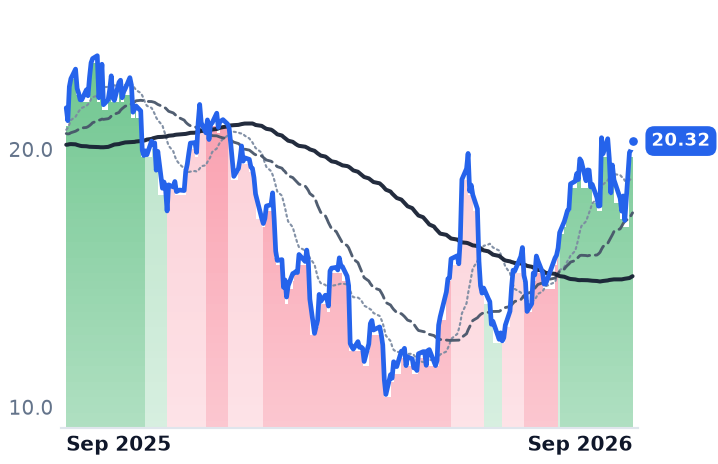
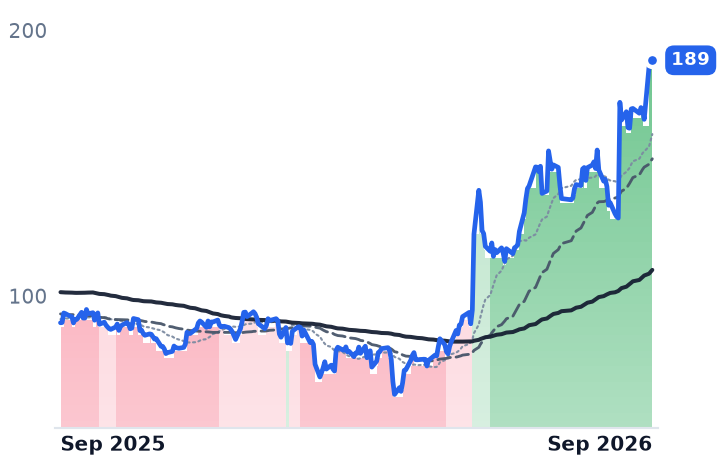
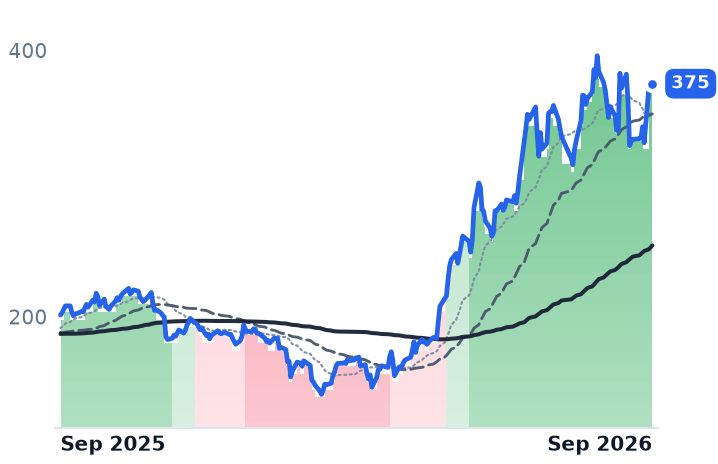
Okta has more than doubled in twelve months, gapping 33.7% the day after August results in a sector-wide cyber rally that also gave CrowdStrike its best session ever, then adding 12% on September 14 on a broad identity and AI-security bid with no company news. Its price-to-trailing-gross-profit has gone from 5.97x in early May to 13.06x, with forward gross profit at 12.45x offering almost no relief and forward earnings at 48x. SailPoint, up 44% over ninety days but still down 6% over twelve months, trades at 15.10x trailing gross profit — dearer than Okta on the measure that normalises for their 59% and 80% gross margins, and marginally cheaper on sales at 9.70x against 10.20x. No forward consensus is published for it.
So the honest split: Okta's re-rating is earned by operating leverage and one quarter of faster bookings, and management has guided the bookings acceleration to end immediately, with third-quarter current RPO growth back to 11-12%. Nothing in its disclosure yet shows agents paying. SailPoint has the evidence on the meter that should catch them first, and none of it in its reported gross profit. Chief executive Todd McKinnon described one customer evaluation where "we detected 50 instances of a Claude agent in the environment… we came back a few weeks and there was 1,500 Claude agents."
At Okta, agent single sign-on is still bundled into the standard product with a consumption cap built in and switched off — the meter exists in the software and not yet on the invoice. SailPoint is already sending the bill; what it has not yet shown is that anyone recognises the revenue this year.