

The Fee Business That Was Half of Marathon Petroleum's Earnings Now Supplies a Fifth
Hypothesis Opus 5 · Research Opus 5 · Writing Opus 5 · Prompt v1.6
Marathon Petroleum's midstream partnership was supposed to be the ballast that made a refiner ownable: contracted, fee-based, indifferent to margins. In the June quarter it supplied roughly $85m of a $5.2bn jump in consolidated earnings before interest, tax, depreciation and amortization — under 2% of the growth.
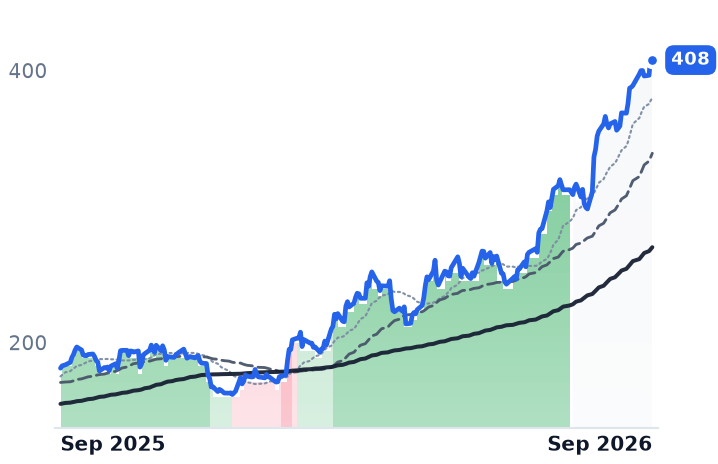
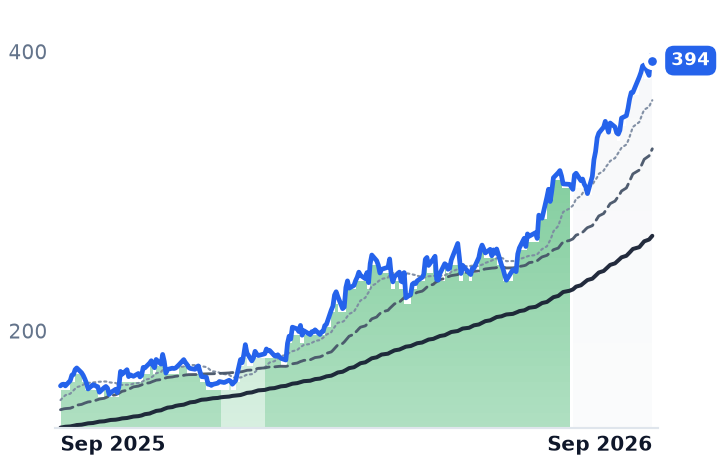
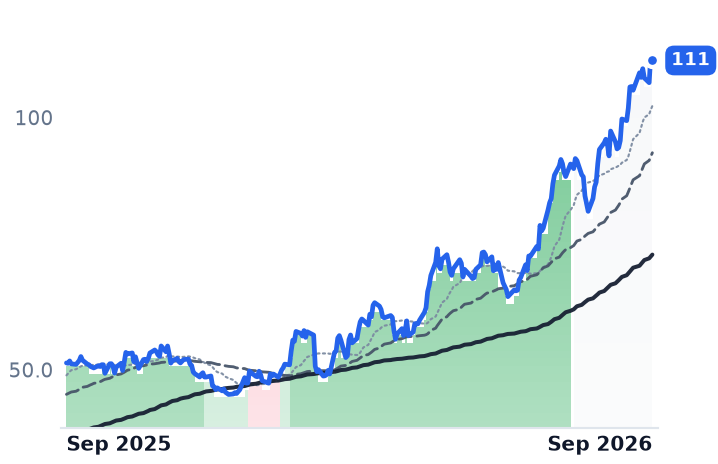
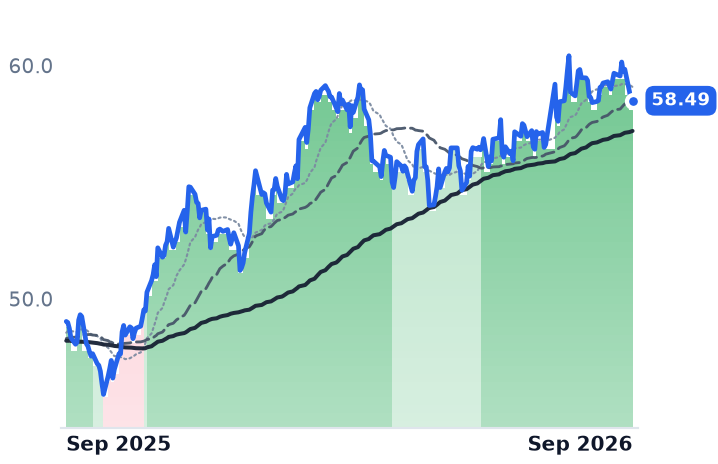
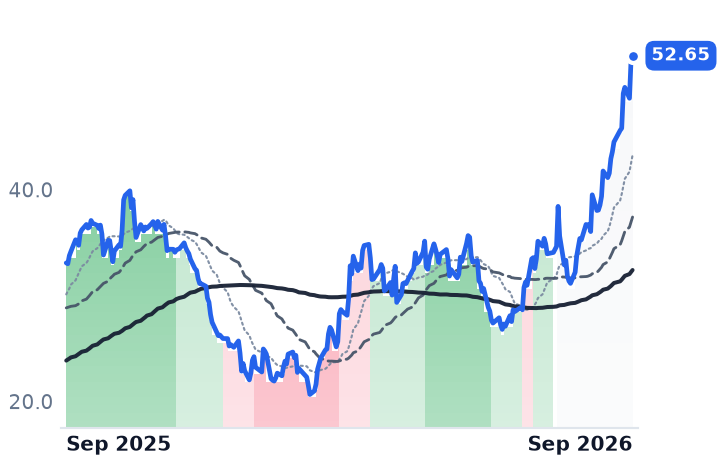
So the year-long re-rating of refining shares is being paid for the crack spread itself, not the toll booth beside it. Marathon's refining and marketing segment earned $24.84 of adjusted EBITDA per barrel against $6.79 a year earlier, on a capture rate of 112% of the posted benchmark, and the diesel crack set a fresh record on 10 September.
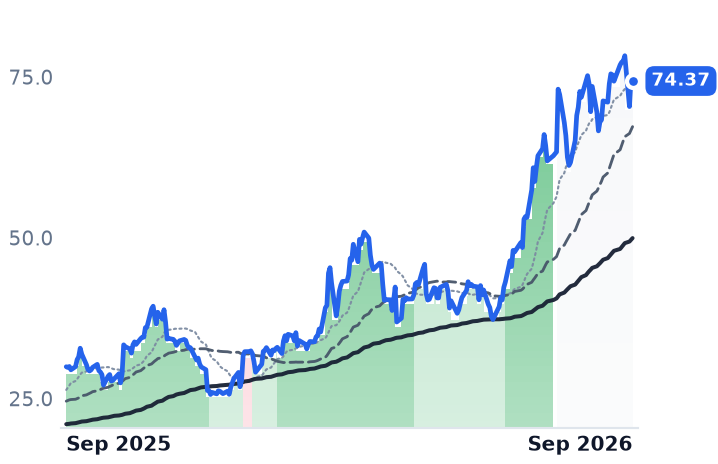
That leaves the group's earnings base resting on capacity offline for military and political reasons. PBF Energy, the one member with no fee income at all, sat out the last thirty days while peers gained 12% to 20%, and is the only large refiner still priced near asset value at 1.4 times book.
| Ticker | Company | Segment | Trend · 13mo | 30D | 1Y |
|---|---|---|---|---|---|
| The subject · what this brief is about | |||||
MPC | Marathon Petroleum | Integrated Refiners | 🟢 Cont. Bull | +13.0% | +125.0% |
PBF | PBF Energy | Integrated Refiners | 🟢 Cont. Bull | +0.0% | +148.3% |
| Compared against · context, not the story | |||||
PSX | Phillips 66 | Integrated Refiners | 🟢 Cont. Bull | +10.2% | +100.6% |
DK | Delek US | Integrated Refiners | 🟢 Cont. Bull | +18.4% | +153.8% |
VLO | Valero Energy | Integrated Refiners | 🟢 Cont. Bull | +13.8% | +145.0% |
DINO | HF Sinclair | Integrated Refiners | 🟢 Cont. Bull | +17.2% | +116.7% |
MPLX | MPLX | Natural Gas Gathering & Processing | 🟢 Cont. Bull | −1.6% | +19.3% |
CVI | CVR Energy | Specialty Refining | 🟢 Cont. Bull | +43.4% | +59.1% |
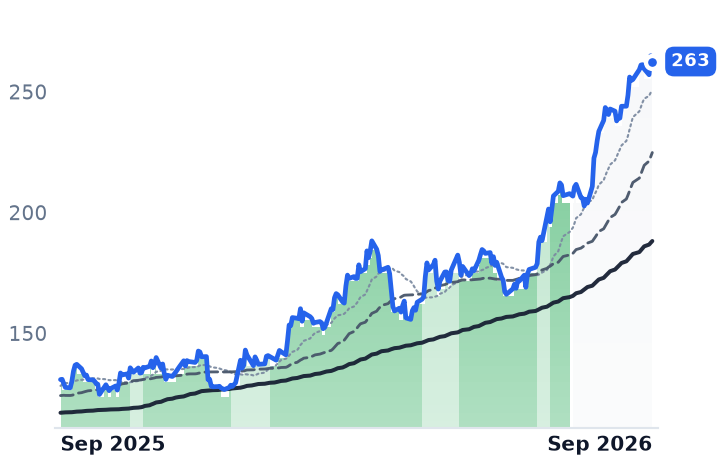
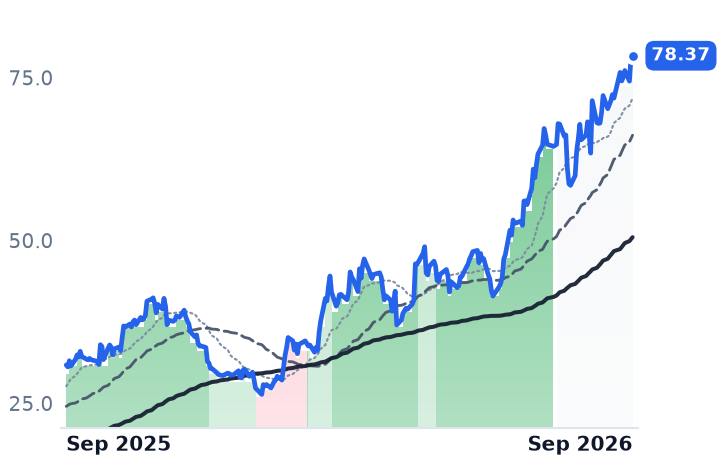
12-month price & trend
| Ticker | Mkt cap | P/E | P/E fwd | P/S | P/S fwd | P/GP | P/GP fwd | EV/EBITDA | FCF yld |
|---|---|---|---|---|---|---|---|---|---|
MPC | $120.8B | 14.2x | 7.4x | 0.8x | 0.7x | 6.8x | 5.9x | 8.4x | 10.7% |
PBF | $9.0B | 6.6x | 3.8x | 0.3x | 0.2x | 5.9x | 5.2x | 5.0x | 8.3% |
PSX | $106.1B | 15.0x | 9.4x | 0.7x | 0.6x | 7.1x | 6.5x | 9.5x | 6.0% |
| Ticker | Mkt cap | P/E | P/E fwd | P/S | P/S fwd | P/GP | P/GP fwd | EV/EBITDA | FCF yld |
|---|---|---|---|---|---|---|---|---|---|
DK | $4.9B | 21.7x | 5.2x | 0.4x | 0.4x | 4.7x | 4.2x | 6.0x | 14.1% |
VLO | $116.1B | 16.7x | 8.6x | 0.9x | 0.8x | 7.7x | 6.8x | 9.0x | 8.7% |
DINO | $20.3B | 10.8x | 7.1x | 0.6x | 0.6x | 5.1x | 4.7x | 5.8x | 12.6% |
| Ticker | Mkt cap | P/E | P/E fwd | P/S | P/S fwd | P/GP | P/GP fwd | EV/EBITDA | FCF yld |
|---|---|---|---|---|---|---|---|---|---|
MPLX | $59.7B | 12.6x | 13.6x | 4.6x | 4.7x | 8.9x | 8.9x | 11.5x | 7.4% |
CVI | $4.9B | 70.4x | 128.3x | 0.6x | 0.6x | 17.0x | 16.5x | 8.0x | 7.1% |
Consensus projections
| Ticker | FY2026E | FY2027E | FY2028E | |
|---|---|---|---|---|
MPC | Revenue | +31.9% | −8.6% | −2.0% |
| EPS | +479.5% | −23.6% | −45.7% | |
PBF | Revenue | +31.8% | −10.6% | −1.3% |
| EPS | −528.9% | −27.7% | −58.2% | |
PSX | Revenue | +26.0% | −7.5% | +1.7% |
| EPS | +365.3% | −9.2% | −23.0% | |
DK | Revenue | +27.1% | −8.0% | −6.2% |
| EPS | +276.9% | −44.9% | −86.6% | |
VLO | Revenue | +25.0% | −12.9% | −12.1% |
| EPS | +367.5% | −18.8% | −30.7% | |
DINO | Revenue | +29.0% | −9.8% | −2.8% |
| EPS | +280.3% | −27.4% | −32.2% | |
MPLX | Revenue | −1.0% | +6.7% | +5.0% |
| EPS | −6.7% | +11.9% | +6.5% | |
CVI | Revenue | +22.8% | −12.0% | −2.6% |
| EPS | −130.1% | +477.9% | −20.6% |
Forward fiscal years only. Blank means no analyst coverage for that year.
Marathon Petroleum controls MPLX, a pipeline, terminal and gas-processing partnership paid per barrel gathered and moved under long-term contracts, and for a decade that fee stream was the argument for owning a refiner at all. In the June quarter it stopped being the argument. MPLX reported $1,775m of adjusted earnings before interest, tax, depreciation and amortization attributable to the partnership, against $1,690m a year earlier, while Marathon's consolidated figure went from $3.3bn to $8.5bn.
That arithmetic leaves the toll booth at roughly a fifth of consolidated earnings, against roughly half a year earlier, and credits it with about $85m of a $5.2bn increase. It matters because the six large US refiners have roughly doubled in twelve months and added another leg since mid-August — Marathon up 14.7% in thirty days, Valero 15.2%, Delek US 19.7% — and the segment disclosure now says plainly what that money is. It is cyclical refining margin, earned barrel by barrel, with no contracted cash flow underneath it. MPLX's distributions to its parent are set to exceed $3.5bn a year over the next two years; Marathon returned $2.8bn to shareholders in the June quarter alone.
The meter that is actually paying
A refiner buys crude and sells product, so its profit is the margin per barrel it captures against a posted regional benchmark, times throughput, minus a cost stack it does not set. Marathon's refining and marketing segment earned $24.84 of adjusted EBITDA per barrel against $6.79 a year earlier, on a record 112% capture rate achieved by running advantaged barrels from the Strategic Petroleum Reserve alongside Canadian heavy and Venezuelan crude. Capture above 100% means beating the benchmark, which is the honest measure of commercial skill: Phillips 66 captured 98% of its own market indicator in the same quarter at an operating cost of $5.57 a barrel excluding turnarounds.
"We remain constructive on the outlook for both U.S. refining and midstream," chief executive Maryann Mannen told investors on the August 4 call. "While volatility will persist, our priorities remain consistent: capture upside, protect the downside, and lead in the return of capital to our shareholders."
The upside is supply destruction. The diesel crack closed at a record $107.72 a barrel on 10 September with US distillate stocks at their lowest August level since 1951, about 12% under the five-year average. Phillips 66 management told analysts on 5 August that roughly 7m barrels a day of Asian and Middle Eastern capacity was down, plus 1.4m barrels a day in Russia, where the International Energy Agency counts a successful drone strike on a refinery every three days through the first eight months of the year. None of that is fuel demand, and none of it is in refiners' hands.
The pure play, and the cost stack
PBF Energy runs six refineries and sells gasoline, ultra-low-sulfur diesel, jet fuel and asphalt with no fee-based segment beside them, and it lost money in both 2024 and 2025 — a $533.8m net loss then a $158.5m one. Its operating margin has now widened for four straight quarters to 10.9% from 0.6% a year ago, with quarterly net income of $906.4m against a small loss, and gross refining margin of $18.67 a barrel across the first half against $7.26. Throughput reached 887,300 barrels a day after the fire-damaged Martinez refinery in California restarted in May, and the West Coast margin printed $30.16 a barrel. Chief executive Matt Lucey called the disruption "one of, if not the largest dislocation the oil markets have ever seen" on the July 30 call, arguing crude normalises in "weeks to months" while rebuilding product inventories takes "months to quarters." PBF then deferred its Toledo catalytic cracker and Chalmette turnarounds into 2027, cutting 2026 capital spending by about $75m to a midpoint of $850m and leaving units in service through the strongest margin environment on record.
Two lines run the other way. Analysts expect the cost of complying with federal renewable-fuel blending mandates to roughly double to $10.24 a barrel in 2026 from $5.42 in early 2025, a regulator-set purchase made regardless of where cracks sit; Delek US disclosed its own 2025 obligation at $468.4m under one price assumption. Delek also told analysts on 5 August that crude backwardation had compressed from $6 or $7 to about $1.50, flowing into third-quarter cracks one-for-one.
What the price already assumes
Marathon at 6.3 times book value is the richest of the six on the anchor that survives a margin peak; PBF at 1.4 times is the only large member near asset value. Forward earnings flatter everyone — Marathon on 7.4 times this year's consensus — but the same analysts model $23.07 for 2028, which is 17.9 times today's price. PBF's 2028 estimate of $6.09 puts it at 12.5 times. The futures market agrees with the analysts: the Nymex three-to-two-to-one spread prices about $69.92 for September against $44.38 for August 2027, itself still double the $21.68 ten-year average.
PBF is the odd one out in the market as well as on the balance sheet, up 3.5% in thirty days against double-digit gains everywhere else, including a 10.1% single-session fall on 14 September on about four times normal volume, the day it announced a $500m exchangeable note offering. No filing explaining the drop was discoverable, and the likelier reading is the financing.
The business earns this. Capture, throughput and a lighter maintenance calendar are all moving the right way, and the profits are real cash. What no operating fact explains is the composition: buying Marathon at six times book is buying the crack spread at a record, with the fee stream too small to matter and consumed this year by a $2.9bn midstream growth budget. PBF is the same bet with the discount and none of the cushion — two loss-making years prove it has nothing to absorb a trough.
The refineries that were bombed can be rebuilt, and the ones that were closed cannot. Which category holds the missing 7m barrels a day is the only question in these share prices.