

Alignment Healthcare Cut Its Medical Cost Ratio to 86.3%, Then Spent the Upside on 2027
Hypothesis Opus 5 · Research Opus 5 · Writing Opus 5 · Prompt v1.6
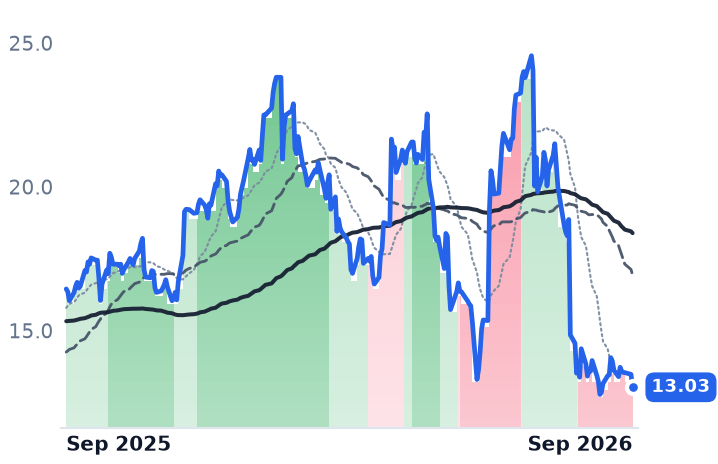
Alignment Healthcare's shares have lost roughly a third of their value in three months while every operating number the company reports got better — and the two sessions that did the damage had nothing to do with medical costs. Revenue grew 31.6% in the June quarter, net income reached $36.6m, and the full-year outlook went up.
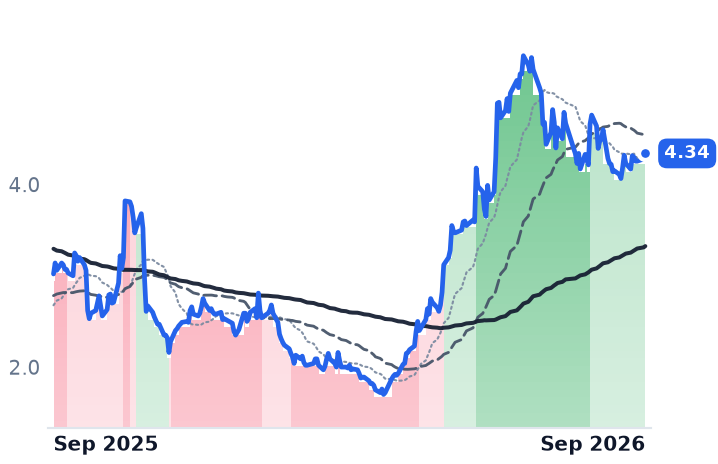
What broke the chart was a whistleblower suit alleging $8m–$10m of 2024 operating expense was booked as capital spending, followed a day after results by management's decision to reinvest the beat rather than bank it. Clover Health, the other pure-play Medicare Advantage insurer, improved its own cost ratio and has doubled over six months. The market now pays roughly 4.1x forward gross profit for each of them.
| Ticker | Company | Segment | Trend · 13mo | 30D | 1Y |
|---|---|---|---|---|---|
| The subject · what this brief is about | |||||
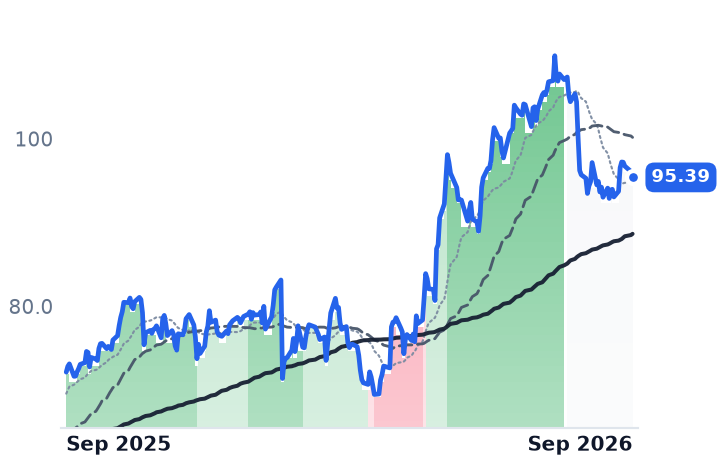
ALHC | Alignment Healthcare | Medicare Advantage Specialists | ⚠️ Emerging Bear | −2.9% | −20.8% |
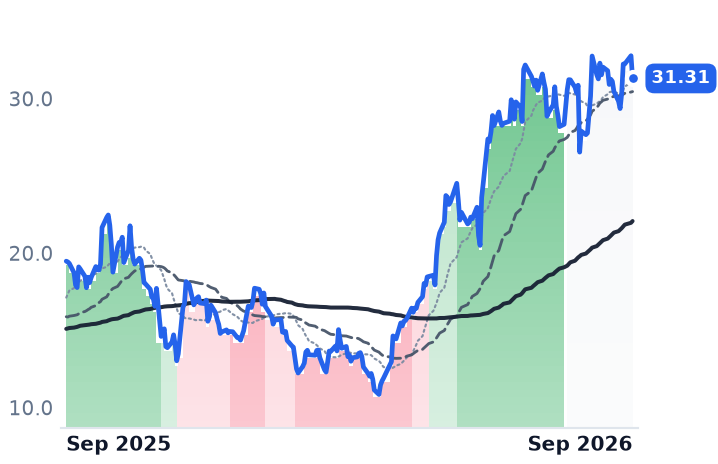
CLOV | Clover Health Investments | Medicare Advantage Specialists | 🌱 Emerging Bull | −1.3% | +43.7% |
| Compared against · context, not the story | |||||
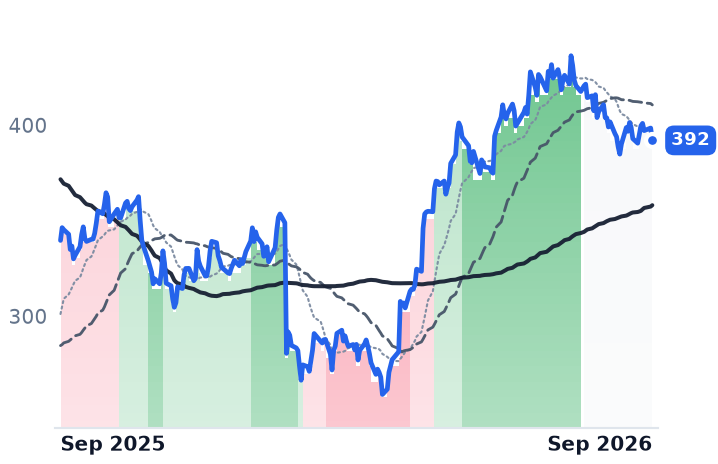
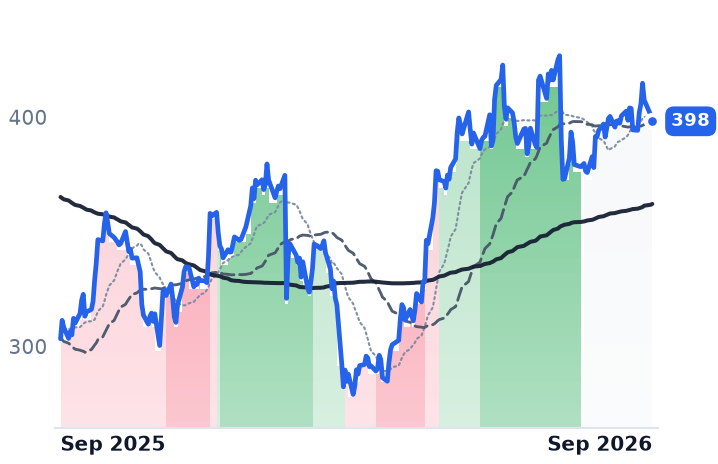
UNH | UnitedHealth Group Incorporated | Large Integrated Health Plans | 🌱 Emerging Bull | −3.0% | +15.4% |
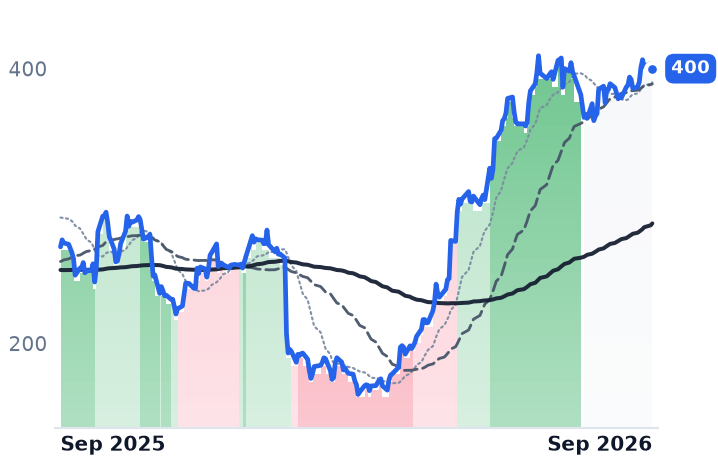
HUM | Humana | Large Integrated Health Plans | 🌱 Emerging Bull | +6.6% | +48.0% |
CVS | CVS Health | Large Integrated Health Plans | 🟢 Cont. Bull | +2.0% | +32.2% |
ELV | Elevance Health | Large Integrated Health Plans | 🌱 Emerging Bull | +1.8% | +31.3% |
OSCR | Oscar Health | Individual & Small Group Plans | 🌱 Emerging Bull | +12.7% | +60.7% |
12-month price & trend
| Ticker | Mkt cap | P/E | P/E fwd | P/S | P/S fwd | P/GP | P/GP fwd | EV/EBITDA | FCF yld |
|---|---|---|---|---|---|---|---|---|---|
ALHC | $2.7B | 65.3x | 72.1x | 0.6x | 0.5x | 4.7x | 4.1x | 27.0x | 7.6% |
CLOV | $2.2B | n/m | 79.0x | 0.9x | 0.8x | 4.9x | 4.1x | n/m | 3.3% |
UNH | $357.7B | 29.8x | 21.4x | 0.8x | 0.8x | 4.2x | 4.3x | 17.7x | 5.5% |
| Ticker | Mkt cap | P/E | P/E fwd | P/S | P/S fwd | P/GP | P/GP fwd | EV/EBITDA | FCF yld |
|---|---|---|---|---|---|---|---|---|---|
HUM | $36.6B | 32.5x | 34.2x | 0.3x | 0.2x | 1.9x | 1.6x | 16.0x | 3.5% |
CVS | $122.3B | 41.6x | 13.0x | 0.3x | 0.3x | 2.2x | 2.2x | 17.2x | 6.0% |
ELV | $85.3B | 16.5x | 14.7x | 0.4x | 0.4x | 1.8x | 1.9x | 12.1x | 7.6% |
| Ticker | Mkt cap | P/E | P/E fwd | P/S | P/S fwd | P/GP | P/GP fwd | EV/EBITDA | FCF yld |
|---|---|---|---|---|---|---|---|---|---|
OSCR | $6.0B | n/m | 27.4x | 0.5x | 0.3x | 2.6x | 1.9x | 86.9x | 46.3% |
Consensus projections
| Ticker | FY2026E | FY2027E | FY2028E | |
|---|---|---|---|---|
ALHC | Revenue | +32.3% | +24.7% | +24.1% |
| EPS | −276.9% | +139.1% | +73.8% | |
CLOV | Revenue | +55.2% | +21.0% | +11.3% |
| EPS | −131.8% | +42.4% | +52.5% | |
UNH | Revenue | −0.9% | +2.9% | +5.7% |
| EPS | +12.5% | +13.1% | +18.8% | |
HUM | Revenue | +25.7% | +4.9% | +6.5% |
| EPS | −47.7% | +72.1% | +71.1% | |
CVS | Revenue | +1.8% | +4.4% | +5.5% |
| EPS | +10.8% | +13.0% | +15.4% | |
ELV | Revenue | −1.9% | +2.4% | +5.2% |
| EPS | −10.7% | +9.1% | +16.7% | |
OSCR | Revenue | +56.2% | +6.6% | +11.6% |
| EPS | −167.0% | +50.8% | +54.0% |
Forward fiscal years only. Blank means no analyst coverage for that year.
Alignment Healthcare spent less of every premium dollar on medical care in the June quarter than in any quarter since it listed, raised its full-year outlook, and then told investors it intends to spend the difference. The company, which runs Medicare Advantage plans in California, North Carolina and Nevada and also delivers care to members of unaffiliated health maintenance organizations, reported an adjusted medical benefits ratio of 86.3%, about 40 basis points better than a year earlier and the lowest of its public life. The same measure computed from reported gross margin ran between 86.9% and 88.3% across the four preceding quarters.
That matters because Alignment has no other lever. It has no employer book and no commercial business; close to all of its revenue is a per-member-per-month price set by the Centers for Medicare and Medicaid Services through county benchmarks and risk scores — roughly $1,514 a member a month on about 294,100 members last quarter. The plan cannot raise its price. It bids a benefit package each June and then manages what the members cost. A record-low cost ratio should have been the whole story. Instead the shares closed at $13.03 on September 9, down 32.1% in three months.
Two sessions, both dated
The decline was not a drift. On July 8 the stock fell 16.7%, from $24.05 to $20.03 on 15.4m shares against 4.2m the session before, after a former executive, ex-chief data and transformation officer Hakan Kardes, sued in California alleging the company misclassified roughly $8m–$10m of operating expenses as capital expenditures in 2024. Correcting that would have turned 2024's first positive adjusted EBITDA of $1.3m into a loss of $7m–$9m — and adjusted EBITDA carried a 35% weight in the incentive plan that funded a $1.3m bonus for chief executive John Kao. Alignment says its audit committee retained outside counsel and a national accounting firm and concluded the concerns were unfounded. Kao sold 298,000 shares for about $5.92m on July 10 under a trading plan adopted the previous November.
On July 31 the shares fell another 21.3% — the day after a quarter that beat the high end of guidance on every metric. Revenue was $1,335.6m, up 31.6%, with operating income of $42.1m and net income of $36.6m. Management lifted the low end of full-year adjusted EBITDA to $145m and guided membership to 298,000–301,000. What investors sold was the phasing: with the company reinvesting the outperformance in clinical infrastructure and 2027–2028 market entry, only about 30% of full-year adjusted EBITDA now falls in the second half, against 40% last year. Third-quarter adjusted EBITDA was guided to $20m–$30m.
Nobody else moved on either day. Humana went from $394.62 to $396.29 on July 8. Over the three months in which Alignment fell 32.1%, Humana gained 10.1% and Oscar Health 15.0%.
What the company says it is buying
Alignment's case rests on member tenure. A first-year member runs a medical benefits ratio near 93%, falling to roughly 82.1% by year five, and about half of current members are in their first or second year with the plan — which is why the company puts the embedded gross profit inside its existing book at $880m, against $600m disclosed in early 2025. "We are making these investments now in a year in which we are meeting high end expectations," Kao told investors on the July 30 call.
The pressures are real but named. About half of 2026's new members are chronic-condition, dual-eligible or special-needs enrollees, who cost more early. The Inflation Reduction Act's Part D redesign raised plan liability above the $2,000 out-of-pocket cap from 20% to 60%, the flatter drug-benefit earnings slope management flagged for the second half. The full-weight risk model CMS phased in for 2026 cut payable diagnosis codes from 9,797 to 7,770, compressing industry risk scores. And Alignment kept 100% of members in plans rated four stars or better for a second year, so the quality bonus that funds 2027 revenue is intact.
The other pure-play went the other way
Clover Health, a Tennessee insurer whose book is roughly 98% preferred-provider-organization plans built around its Clover Assistant physician software, reported the same direction of travel: an insurance benefits expense ratio of 87.6%, 80 basis points better year over year, revenue up 55.6% and net income of $28.0m against a loss a year earlier. It guided to its first full year of profit under generally accepted accounting principles. Its shares are up 117% over six months.
Clover also has something Alignment does not: a judge. Judge Lisa Godbey Wood's May 27 opinion found CMS had improperly included 20 star-ratings measures and ordered recalculation, lifting the contract covering more than 97% of Clover's members from 3.5 to 4.5 stars and roughly $120m of 2027 payments with it. CMS appealed on July 21 to the Eleventh Circuit. "Four and a half stars matters. It gives us more room to reinvest in members, maintain a highly competitive product, support growth, and expand profitability. It does not create the economics of our model," chief executive Andrew Toy said on the August 5 call.
The verdict
The operating case against Alignment — utilization running above what the June bid assumed — is not supported by anything the company has reported. The cost ratio improved, the guidance went up. What the de-rating fairly prices is an unresolved accounting allegation and a management team that has now shown it will convert a beat into spending rather than into second-half earnings.
That repricing has been severe on revenue-based measures: Alignment trades at 0.59x trailing and 0.52x forward sales, against roughly 1.09x trailing at the July 7 close, a compression of about 46% in nine weeks. On earnings it is not cheap at all — 72x forward, on a consensus 2026 margin before interest, tax and depreciation of 2.0%. Clover, after doubling, sits at 79x forward earnings.
And on forward gross profit, which is the only measure that compares two insurers carrying very different gross margins, Clover at 4.10x and Alignment at 4.13x are priced almost identically. Buyers are paying the same for the falling chart and the rising one.
Both are now bidding into the same fall. Humana plans to close plans covering roughly 600,000 members in 2027, and UnitedHealth is protecting margin through benefit cuts and market exits in its own 2027 bids. Those members learn by letter this autumn that their plan is going away, and they get seven weeks to choose a new one. Alignment and Clover filed their bids in June; neither can change a benefit now. Whatever each wins in December it carries, at the price the government has already set, for the whole of 2027.