

Brookfield's One-for-One Conversion Erased a 32% Premium on Its Infrastructure Shares
Hypothesis Opus 5 · Research Opus 5 · Writing Opus 5 · Prompt v1.6
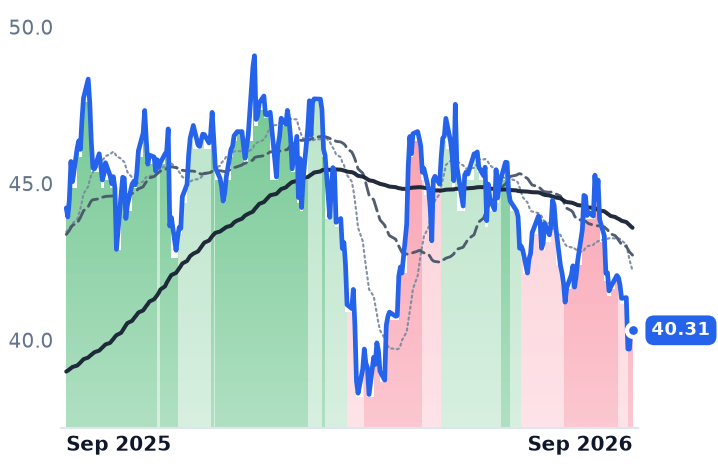
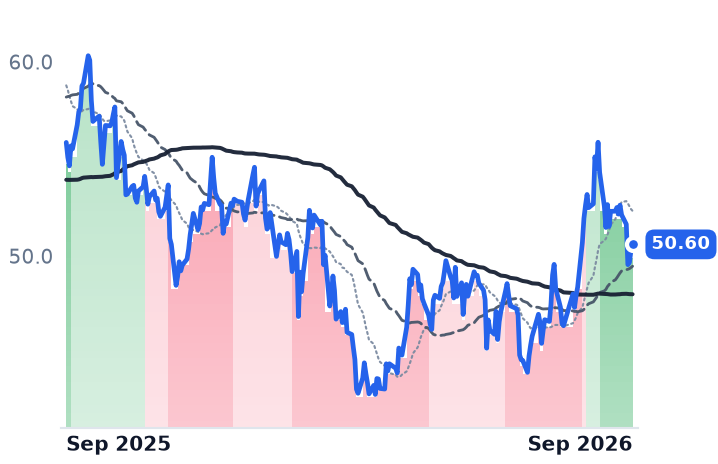
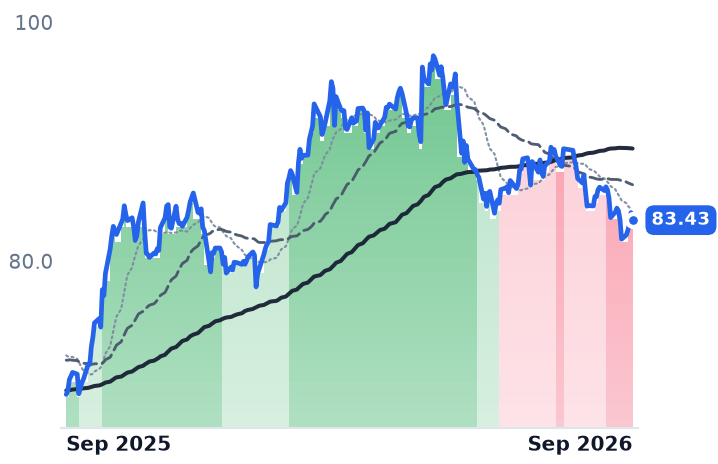
Three Brookfield-family securities are grinding lower at once, and the cause differs for each — none of them a failure of the underlying cash flows. On July 21 Brookfield Renewable and Brookfield Infrastructure each agreed to fold their paired corporate share into a single company at one share per unit, which removes whatever the corporate wrapper was ever worth. That premium is now gone: BIPC trades at 1.006 times BIP, against 1.320 in early January.
Underneath the structure the businesses grew. Brookfield Renewable raised its quarterly distribution more than 5% on funds from operations of $2.14 per unit over the last twelve months, a payout near 73%. Its units fell anyway, because a 4.99% distribution yield offers no spread against a 30-year Treasury at 5.25%. Holders vote October 14.
| Ticker | Company | Segment | Trend · 13mo | 30D | 1Y |
|---|---|---|---|---|---|
| The subject · what this brief is about | |||||
BEP | Brookfield Renewable Partners | Diversified Renewable Generators | ⚠️ Emerging Bear | −3.6% | +27.1% |
BIPC | Brookfield Infrastructure | International Gas Infrastructure | ⚠️ Emerging Bear | −4.1% | −6.3% |
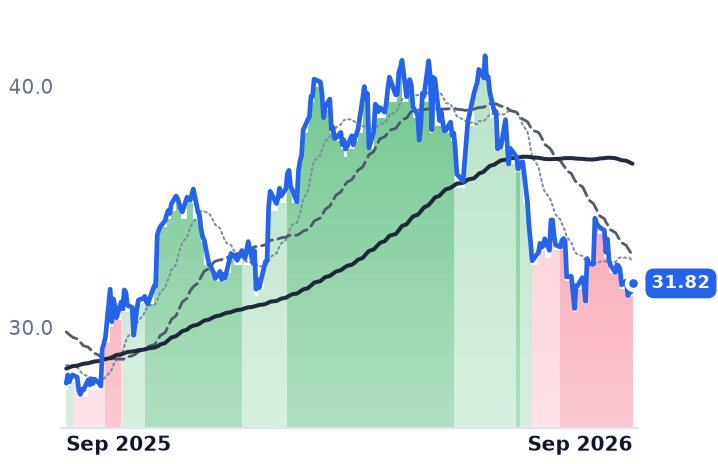
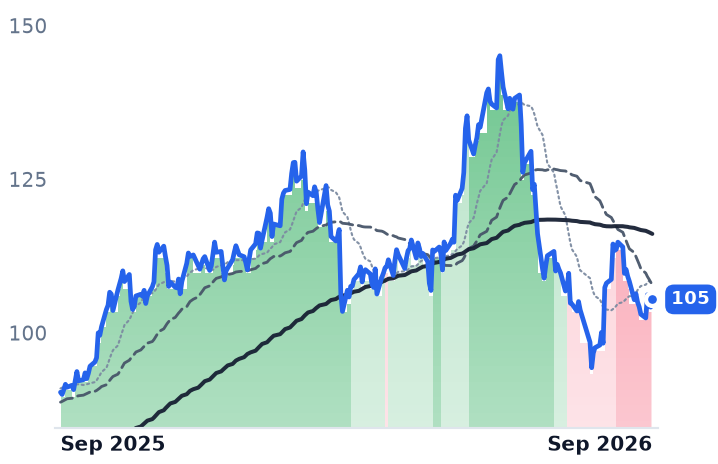
BN | Brookfield | Real Estate & Infrastructure | ⚠️ Emerging Bear | −8.3% | −8.8% |
| Compared against · context, not the story | |||||
BEPC | Brookfield Renewable | Diversified Renewable Generators | ⚠️ Emerging Bear | −4.1% | −3.2% |
BIP | Brookfield Infrastructure Partners | Infrastructure & Transport Conglomerates | 🟢 Cont. Bull | −3.0% | +20.8% |
BAM | Brookfield Asset Management | Real Estate & Infrastructure | 🌱 Emerging Bull | −4.0% | −9.4% |
CWEN | Clearway Energy | Wind & Solar Developers | ⚠️ Emerging Bear | −2.4% | +14.9% |
ORA | Ormat Technologies | Geothermal & Specialized | ⚠️ Emerging Bear | −3.0% | +16.7% |
NEE | NextEra Energy | Vertically Integrated Utilities | ⚠️ Emerging Bear | −1.4% | +21.2% |
12-month price & trend
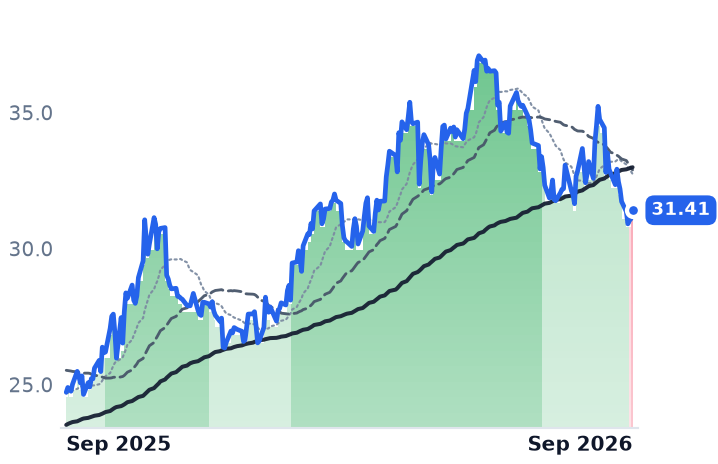
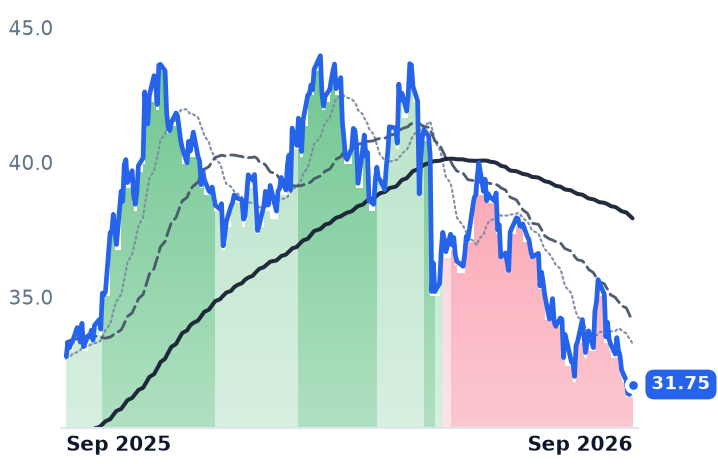
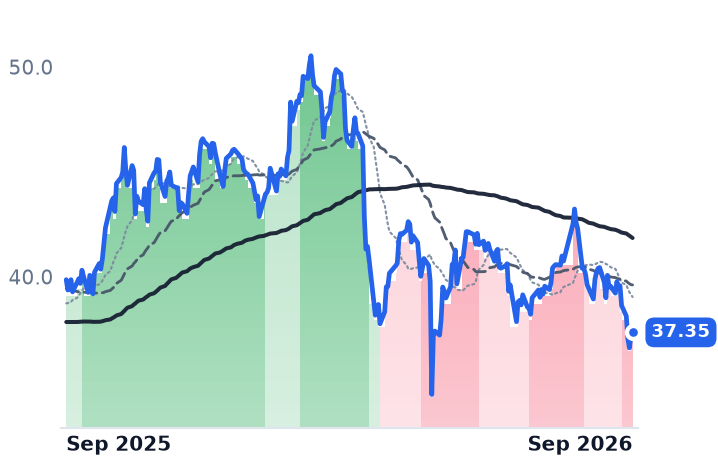
| Ticker | Mkt cap | P/E | P/E fwd | P/S | P/S fwd | P/GP | P/GP fwd | EV/EBITDA | FCF yld |
|---|---|---|---|---|---|---|---|---|---|
BEP | $9.6B | 68.3x | — | 1.5x | 1.4x | 6.2x | 5.9x | 9.8x | -49.1% |
BEPC | $4.7B | n/m | — | 1.1x | 0.8x | 2.4x | 1.7x | n/m | -11.8% |
BIPC | $4.6B | n/m | — | 1.2x | 1.2x | 2.0x | 1.9x | 4.3x | -4.6% |
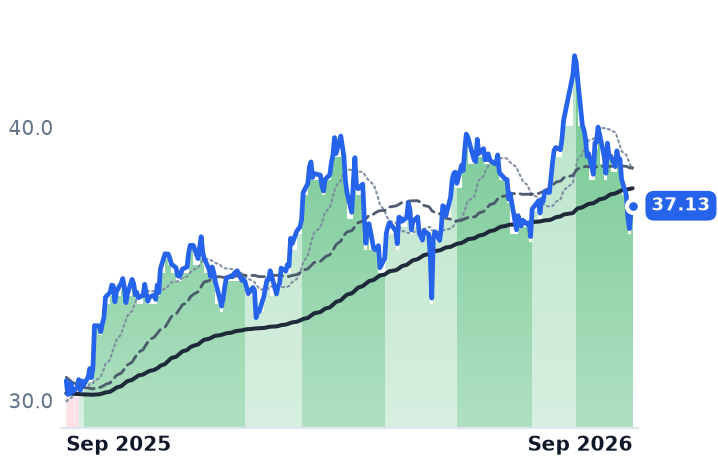
| Ticker | Mkt cap | P/E | P/E fwd | P/S | P/S fwd | P/GP | P/GP fwd | EV/EBITDA | FCF yld |
|---|---|---|---|---|---|---|---|---|---|
BIP | $17.1B | 51.7x | 61.4x | 0.7x | 1.0x | 2.6x | 3.7x | 7.1x | -3.4% |
BN | $90.0B | 71.8x | 14.5x | 1.2x | 11.9x | 4.0x | 41.2x | 10.2x | -9.2% |
BAM | $86.7B | 31.2x | 29.5x | 16.0x | 14.2x | 20.0x | 17.8x | 90.0x | 2.5% |
| Ticker | Mkt cap | P/E | P/E fwd | P/S | P/S fwd | P/GP | P/GP fwd | EV/EBITDA | FCF yld |
|---|---|---|---|---|---|---|---|---|---|
CWEN | $6.5B | 41.4x | — | 4.1x | 3.9x | 7.8x | 7.4x | 14.4x | 10.4% |
ORA | $6.5B | 50.7x | 41.4x | 5.5x | 5.5x | 19.5x | 19.7x | 21.6x | -4.1% |
NEE | $175.3B | 18.8x | 20.9x | 6.0x | 5.7x | 8.4x | 7.9x | 16.0x | -5.8% |
Consensus projections
| Ticker | FY2026E | FY2027E | FY2028E | |
|---|---|---|---|---|
BEP | Revenue | +3.8% | +9.0% | −3.4% |
| EPS | +14.0% | −11.7% | +9.4% | |
BEPC | Revenue | +4.6% | +16.3% | +5.7% |
| EPS | +280.9% | −93.3% | +455.5% | |
BIPC | Revenue | +3.7% | +6.4% | +6.3% |
| EPS | −120.4% | −553.3% | +14.2% | |
BIP | Revenue | +112.0% | −44.9% | +8.3% |
| EPS | −43.1% | +9.6% | +13.0% | |
BN | Revenue | −7.3% | +23.6% | +22.3% |
| EPS | +14.3% | +23.1% | +12.0% | |
BAM | Revenue | +12.2% | +16.1% | +12.9% |
| EPS | +12.9% | +17.8% | +16.8% | |
CWEN | Revenue | +14.8% | +10.8% | +13.4% |
| EPS | −133.6% | −152.5% | +132.7% | |
ORA | Revenue | +21.4% | −1.1% | +12.1% |
| EPS | +16.4% | −3.5% | +25.9% | |
NEE | Revenue | +9.4% | +9.7% | +8.9% |
| EPS | +9.0% | +9.0% | +8.5% |
Forward fiscal years only. Blank means no analyst coverage for that year.
Brookfield is dismantling the share class that made its two listed infrastructure vehicles awkward. On July 21 the boards of Brookfield Renewable, which owns contracted hydro, wind, solar and storage across the Americas and Europe, and of Brookfield Infrastructure, which owns regulated utilities, transport, midstream and data infrastructure, each agreed to convert their paired corporate share into a single publicly traded corporation, exchanging one share for one unit. Special meetings are set for October 14 and closing is expected in the fourth quarter.
A one-for-one exchange makes the arithmetic unavoidable: any premium the corporate share carried over the partnership has to go to zero. It has. Brookfield Infrastructure Corporation, whose economics are a claim on the same cash flows as Brookfield Infrastructure Partners, closed at 1.320 times the partnership on January 2 — a 32% premium — and at 1.006 times on September 4. Brookfield Renewable Corporation has run the same course, from 1.428 times to 1.011 times. Over six months each corporate share underperformed its own partnership by roughly 19 percentage points: the infrastructure share fell 23.4% against the partnership's 4.7%, and the renewable share fell 22.3% while its partnership rose.
The same cash flows, two trends
The cleanest proof that this is not a business event is that the paired securities moved in opposite directions for months. Brookfield Renewable Corporation has been in a sustained downtrend since May 11 — two months before the announcement — while the partnership was simultaneously in a strong uptrend, its shorter average above its longer. Brookfield Infrastructure Partners held that uptrend through September 3 while its corporate twin was falling. Two securities entitled to identical earnings cannot be telling two stories about the business.
And the business is not the problem. Brookfield Renewable reported second-quarter funds from operations of $421m, a record, at $0.62 per unit, up 11% per unit from a year earlier. It raised the quarterly distribution to $0.392, an annualized $1.57, against $2.14 of funds from operations per unit over the last twelve months — a payout near 73%, nowhere near the strain a levered yield vehicle shows when it is funding a dividend out of sales. Corporate debt is $3.5bn at an average 4.6% over 13 years and entirely fixed; 96% of the $32bn of non-recourse project debt is fixed too, leaving only a sliver floating into higher coupons. Brookfield Infrastructure grew funds from operations 10% per unit and raised its distribution 6%, at a 66% payout.
One number does support the worry. Roughly $175m of that $421m quarter — about 42% — sat in the hydro segment as other income, gains on developed and noncore assets rather than electricity sold, and management said it expects that line to scale as recycling becomes systematic. Chief executive Connor Teskey framed the growth on the first-quarter call as capturing development margin: building wind and solar in-house and selling them down to buyers with a lower cost of capital. Some $2.2bn of sale proceeds were agreed or closed in the quarter, $630m of it net to Brookfield Renewable, at or above target returns.
What actually re-rated the units
Brookfield Renewable's own trend broke only in the first days of September, after a 14.2% three-month decline that took the units to 14.7 times trailing funds from operations and a 4.99% distribution yield. Against a 30-year Treasury that stood at 5.25% on September 4 — having reached its highest level since 2007 in mid-August on government-spending and inflation worries — that spread is gone. The whole category went with it: Ormat, the geothermal operator, fell 26.0% over three months and Clearway Energy 21.2%. NextEra Energy fell 2.6%.
At the parent, Brookfield Corporation is down 10.5% over three months on 14.5 times forward earnings while distributable earnings before realizations grew 15% per share, fee-bearing capital rose 19% to $672bn and fee-related earnings rose 20%. "We were active through the first six months of the year—raising $98 billion of capital, deploying $100 billion into large-scale opportunities, and monetizing $40 billion of assets at attractive returns," president Nick Goodman said on August 13. Brookfield Asset Management, the pure fee vehicle, rose 8.3% over the same three months. Whatever is being marked down at the parent sits in its balance-sheet, insurance and carried-interest half rather than the fee engine.
The verdict
Three declines, three causes, none of them the funding mechanism the structure was supposed to hide. The corporate shares lost a premium by design, and that loss is complete rather than ongoing. The partnerships lost a valuation cushion to the long bond, a discount-rate move applied to contracted cash flows that grew through it. The parent lost ground its own operating disclosure does not explain. The residual worry is the composition of Brookfield Renewable's earnings: a recycling program running at record volume is a real profit stream, but it is lumpier than a power purchase agreement, and the more of the distribution it covers, the less the payout ratio tells you.
The conversions leave Brookfield's ownership, the preferred units, the public debt and the management fees exactly where they were. What they remove is the second price. After October 14, holders of the same assets stop arguing about which wrapper they are worth more in — and start arguing about the assets.