

Grand Canyon Education Locked In 60% of Tuition for 15 Years as Grad PLUS Loans Ended
Hypothesis Opus 5 · Research Opus 5 · Writing Opus 5 · Prompt v1.6
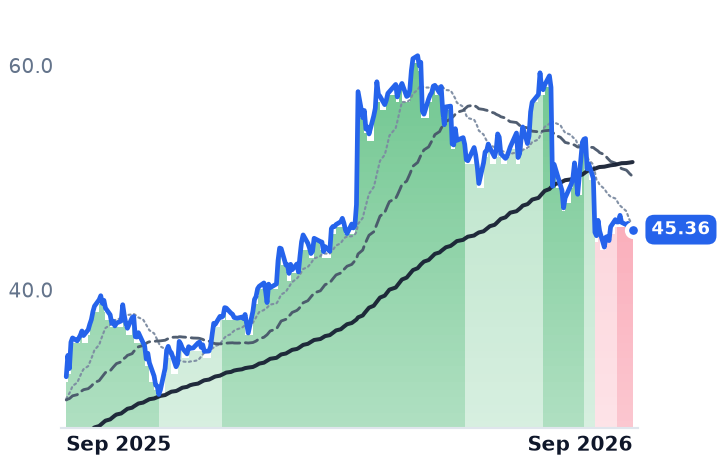
Two companies sell higher education to Americans without either one being priced on how well its schools are doing. Grand Canyon Education takes a contractual cut of one university's tuition and has fallen a quarter over twelve months on trailing earnings that are flat — $8.27 a share against $8.26 — while American Public Education, which owns its schools, rose 43% over the same year and then dropped 15.2% in thirty days after raising guidance.
What did move the group was two career schools: Lincoln Educational's new student starts slowed to 1% growth, and Universal Technical Institute cut its full-year adjusted earnings guide to above $135m from above $155m. Neither is a tuition-share business.
The unpriced risk sits in Washington, not in the enrollment reports. Grad PLUS lending ended for new graduate borrowers on July 1 with a $100,000 lifetime cap, and the ratio governing how much of American Public Education's military school can come from federal money has sat at 89% for two straight years.
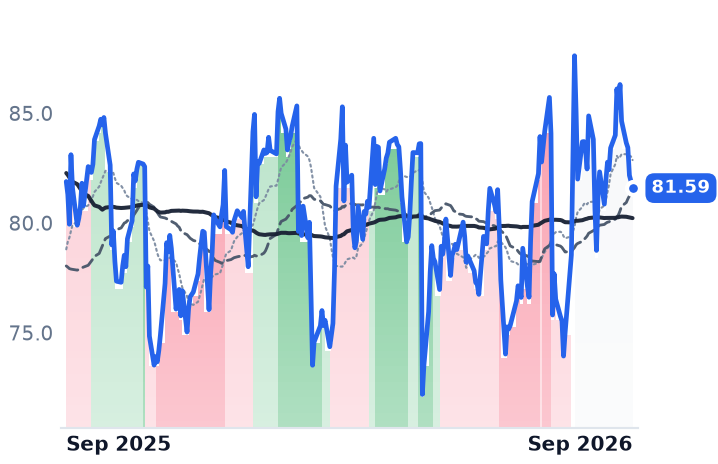
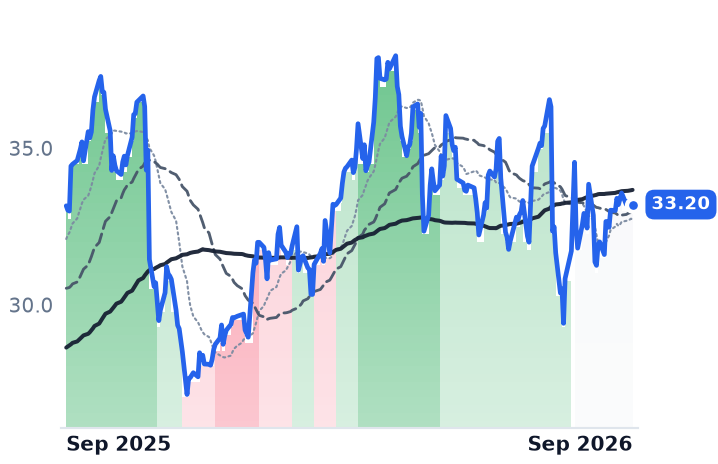
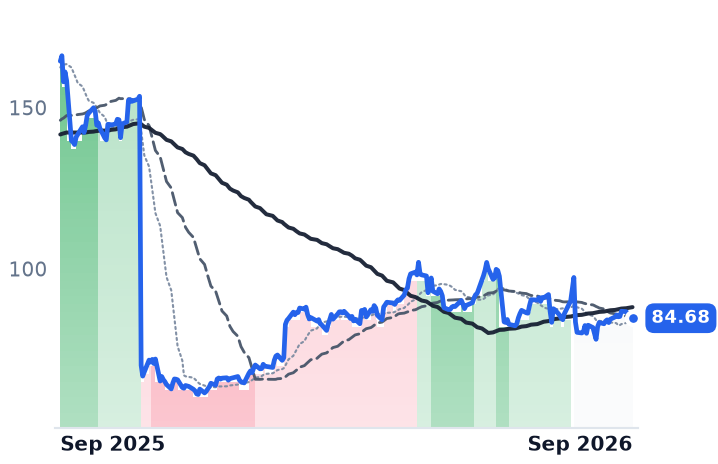
| Ticker | Company | Segment | Trend · 13mo | 30D | 1Y |
|---|---|---|---|---|---|
| The subject · what this brief is about | |||||
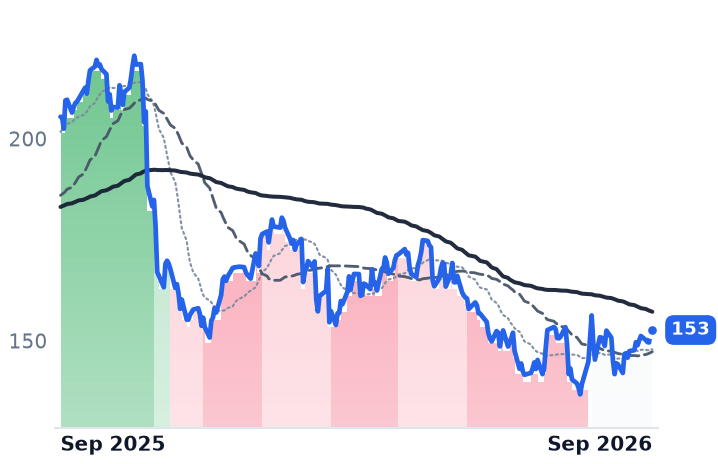
LOPE | Grand Canyon Education | Higher Ed Services & Operations | 🔴 Cont. Bear | +1.3% | −25.7% |
APEI | American Public Education | Higher Ed Services & Operations | ⚠️ Emerging Bear | −9.2% | +40.7% |
| Compared against · context, not the story | |||||
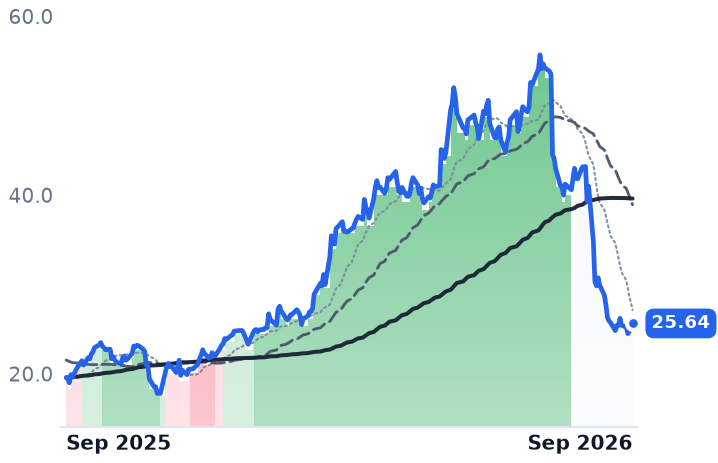
LINC | Lincoln Educational Services | Career & Technical Training | 🟢 Cont. Bull | −26.3% | +30.9% |
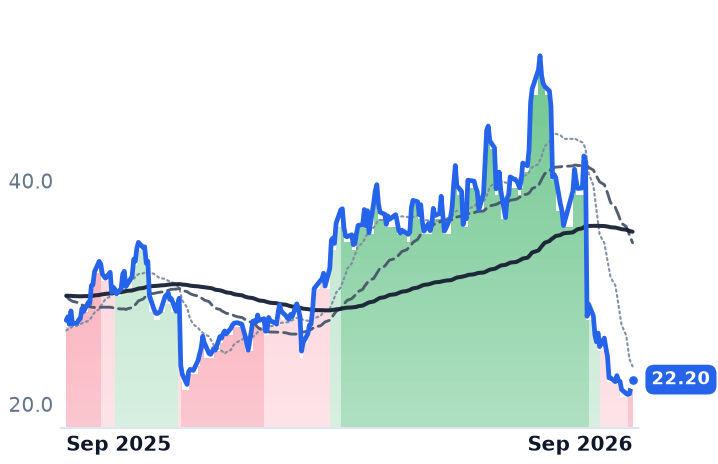
UTI | Universal Technical Institute | Career & Technical Training | 🟢 Cont. Bull | −20.5% | −19.3% |
STRA | Strategic Education | Higher Education Institutions | 🔴 Cont. Bear | −2.6% | −0.4% |
PRDO | Perdoceo Education | Career & Technical Training | 🟢 Cont. Bull | +1.0% | +0.1% |
LRN | Stride | K-12 Online & Curriculum | 🌱 Emerging Bull | +3.5% | −48.5% |
12-month price & trend
| Ticker | Mkt cap | P/E | P/E fwd | P/S | P/S fwd | P/GP | P/GP fwd | EV/EBITDA | FCF yld |
|---|---|---|---|---|---|---|---|---|---|
LOPE | $4.0B | 18.3x | 14.9x | 3.5x | 3.4x | 6.5x | 6.4x | 11.9x | 6.1% |
APEI | $832.1M | 18.1x | 17.3x | 1.2x | 1.2x | 2.3x | 2.2x | 11.8x | 8.4% |
LINC | $1.6B | 68.2x | 62.4x | 2.9x | 2.6x | 4.7x | 4.3x | 30.2x | -0.6% |
| Ticker | Mkt cap | P/E | P/E fwd | P/S | P/S fwd | P/GP | P/GP fwd | EV/EBITDA | FCF yld |
|---|---|---|---|---|---|---|---|---|---|
UTI | $1.2B | 35.6x | 37.0x | 1.4x | 1.4x | 2.3x | 2.2x | 14.0x | -1.9% |
STRA | $1.8B | 13.1x | 11.0x | 1.4x | 1.4x | 2.9x | 2.8x | 7.6x | 9.7% |
PRDO | $2.1B | 12.5x | 11.6x | 2.5x | 2.5x | 3.5x | 3.5x | 5.1x | 10.4% |
| Ticker | Mkt cap | P/E | P/E fwd | P/S | P/S fwd | P/GP | P/GP fwd | EV/EBITDA | FCF yld |
|---|---|---|---|---|---|---|---|---|---|
LRN | $3.8B | 12.3x | 12.5x | 1.5x | 1.5x | 3.9x | 3.9x | 6.9x | 10.0% |
Consensus projections
| Ticker | FY2026E | FY2027E | FY2028E | |
|---|---|---|---|---|
LOPE | Revenue | +5.6% | +6.1% | +5.8% |
| EPS | +12.4% | +10.8% | +9.2% | |
APEI | Revenue | +8.0% | +5.9% | +6.7% |
| EPS | +140.4% | +16.7% | +19.6% | |
LINC | Revenue | +17.1% | +9.0% | +9.4% |
| EPS | −4.1% | +50.2% | +20.2% | |
UTI | Revenue | +7.7% | +8.5% | +10.9% |
| EPS | −42.9% | +22.9% | +70.5% | |
STRA | Revenue | +1.8% | +4.0% | +5.6% |
| EPS | +22.5% | +12.6% | +20.0% | |
PRDO | Revenue | +2.6% | +2.8% | — |
| EPS | +23.7% | +7.9% | — | |
LRN | Revenue | +5.5% | +5.5% | +4.0% |
| EPS | +2.3% | +5.6% | +8.8% |
Forward fiscal years only. Blank means no analyst coverage for that year.
Grand Canyon Education signed a new fifteen-year contract in July with the single university that supplies almost all of its revenue, restructuring its fee to 60% of tuition and academic-related charges. The agreement took effect on July 1 — the same day the federal government stopped issuing Grad PLUS loans to new graduate borrowers.
That coincidence is the story of this corner of the market. Neither listed company here is a university in the way its label suggests, and both are meters on federal student aid rather than on classroom demand. What the meters register, and what can turn them off, has almost nothing to do with the enrollment headlines that have been moving the share prices.
A fee, not a school
Grand Canyon Education stopped owning a school in 2018. It now sells learning-management technology, curriculum design, admissions, marketing and back-office work to universities, and through its Orbis Education arm supports healthcare programs at 27 of them. But 89.4% of its service revenue in the first half of 2026 came from Grand Canyon University alone, the same share as a year earlier.
The amended master services agreement runs through June 2041 with up to three automatic five-year renewals and removes the university's right to terminate for convenience. It also narrows the fee base: 60% of tuition and academic fees, with ancillary revenue staying with the university. Management put the revenue cost at roughly $20m a year and the operating-income cost at under $1m a quarter, because a reimbursement the company had been paying the university disappears alongside it.
The operating base underneath is not deteriorating. Second-quarter service revenue was $264.0m, up 6.7%, with operating margin of 22.0% against 20.9% a year earlier. Operating income has outgrown revenue in each of the last four quarters, and the diluted share count is down 6.8% year on year. Hybrid campus enrollment grew 8.5% across 47 locations. "The revenue per student of these students is more than three times that of an online student," chairman and chief executive Brian Mueller told investors on July 30 — though 22 of those sites will not add new students this autumn because of state regulatory caps.
The rule that actually bites
The legal basis for the whole arrangement is the Department of Education's 2011 bundled-services exception, which permits paying a third party a share of tuition per enrolled student when recruitment is bundled with other services; without it, federal law bars compensation tied to securing enrollment. The department has been reviewing that exception, and separately proposed a rule holding programs accountable for graduates' earnings. More immediate is the end of Grad PLUS for new borrowers, with lifetime federal graduate borrowing capped at $100,000 — a hard ceiling on what the university's large master's and doctoral base can finance, and therefore on the 60% of it that gets booked as service revenue.
American Public Education runs the mirror image: it owns American Public University System, Rasmussen University and Hondros College of Nursing outright. Its military school's 90/10 ratio was 89% in both 2024 and 2025 — one point of headroom under the federal cap, after tuition assistance and GI Bill money were moved to the federal side of the calculation. The business itself is repairing: second-quarter operating income rose 92.5% to $13.5m, the nursing segment grew revenue 11% on 7% enrollment growth, and on August 10 the company raised full-year guidance to $690–698m of revenue and $2.48–2.79 in earnings per share.
What the group was actually selling
The July and August declines came from elsewhere. Lincoln Educational reported new student starts up just 1% against 19.5% a quarter earlier, and on August 6 Universal Technical Institute cut its full-year adjusted earnings guide to above $135m from above $155m, blaming roughly 70% of it on its high-school recruiting channel. Over the last thirty days those two fell 40.6% and 46.9%. Grand Canyon Education rose 1.9%; Perdoceo and Strategic Education, the other obvious read-across names, barely moved.
So the verdict splits. Grand Canyon Education's twelve-month fall from $205.14 is multiple compression and nothing else — trailing earnings of $8.27 a share are within a cent of a year ago, and the stock trades at 18.3x trailing and 14.9x forward against roughly 25x last September. Part of that is earned: a $35.0m litigation reserve blew up the third quarter of 2025, and the shares gapped 8.9% lower on October 31. But the Education Department rescinded its $37.7m proposed fine with prejudice in May 2025, and the fee contract is now locked for fifteen years. American Public Education's thirty-day drop is harder to defend at all: it came after a beat and a raise, and nets against $133.9m of cash above debt, about 16% of the market value, leaving under 7x guided adjusted earnings on an enterprise basis.
What neither price reflects, in either direction, is the federal plumbing. A graduate borrowing cap that took effect in July shows up in autumn applications, not in a June income statement; a 90/10 ratio at 89% is a compliance line, not a demand signal. Both businesses are running well on rules that changed nine weeks ago.