

Mexico Sets the Price Its Airports May Charge; GAP Is Billing 90% of It, OMA 93%
Hypothesis Opus 5 · Research Opus 5 · Writing Opus 5 · Prompt v1.6
Passenger traffic fell at all three of Mexico's listed airport groups in the second quarter, and two of them grew profits regardless. The reason is a regulated price that none of them is fully charging: the transport ministry fixes a maximum tariff per unit of airport work for five years alongside the capital spending each group must commit, and GAP told investors it had billed about 90% of that ceiling in the first half, OMA 93% to 95%.
That unexercised headroom is why GAP lifted second-quarter EBITDA 8.4% while traffic dropped 5.6%, and why OMA's adjusted margin reached 75.2%. ASUR is the exception: Cancún international traffic fell 13.1% in June, Mexican EBITDA fell 9%, and its adjusted margin lost 5.6 points to 62%. All three trade within a few percent of their 2026 lows; only one has the earnings to justify it.
| Ticker | Company | Segment | Trend · 13mo | 30D | 1Y |
|---|---|---|---|---|---|
| The subject · what this brief is about | |||||
ASR | Grupo Aeroportuario del Sureste, S. A. B. de C. V | Airport Operators | ⚠️ Emerging Bear | −7.0% | −22.5% |
PAC | Grupo Aeroportuario del Pacífico, S.A.B. de C.V | Airport Operators | ⚠️ Emerging Bear | −5.6% | −14.1% |
OMAB | Grupo Aeroportuario del Centro Norte, S.A.B. de C.V | Airport Operators | ⚠️ Emerging Bear | −10.6% | −0.4% |
| Compared against · context, not the story | |||||
VLRS | Controladora Vuela Compañía de Aviación, S.A.B. de C.V | Latin American Airlines | ⚠️ Emerging Bear | −20.0% | +7.6% |
EWW | iShares MSCI Mexico ETF | Asset Management - Global | ⚠️ Emerging Bear | −0.1% | +24.9% |
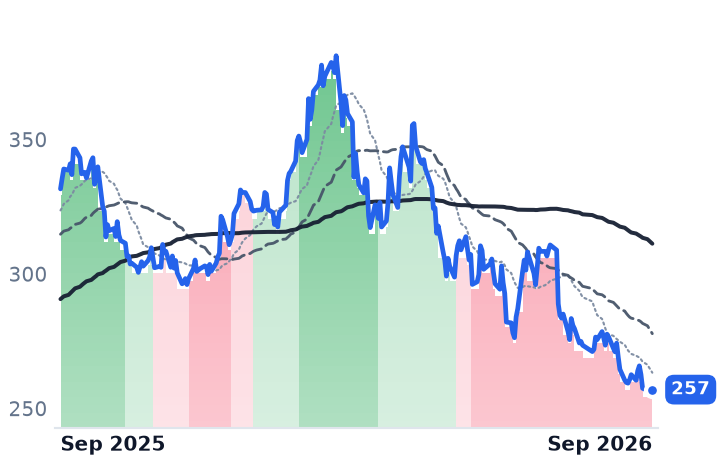
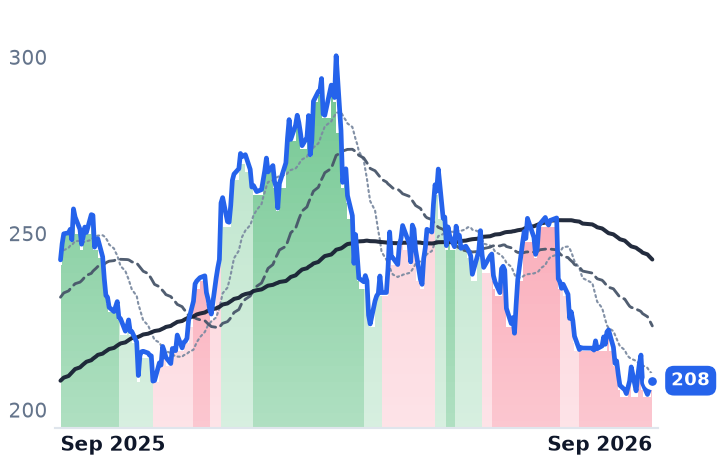
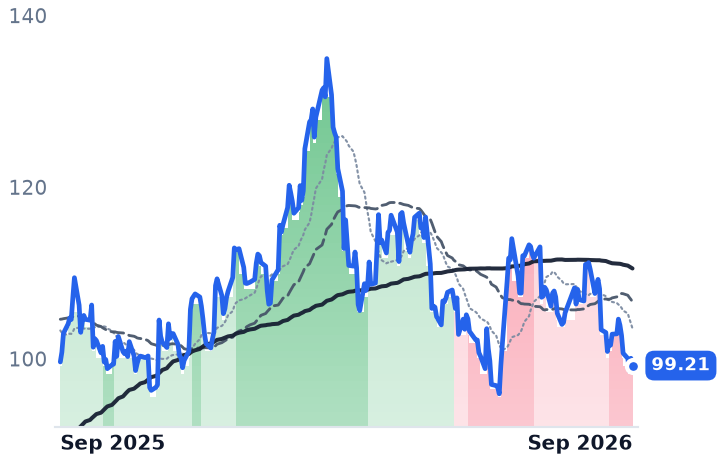
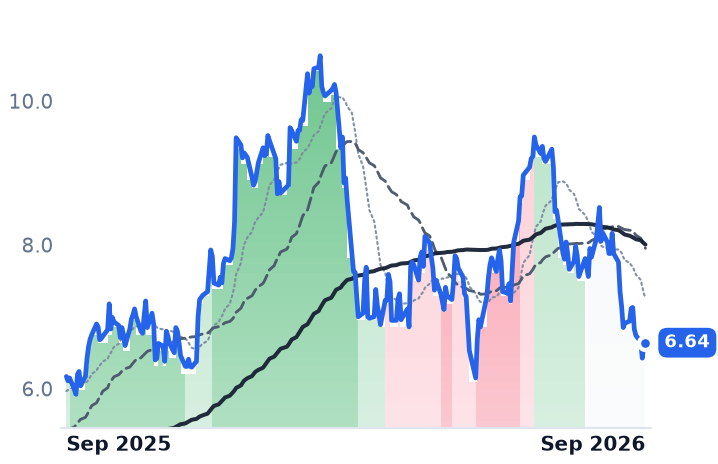
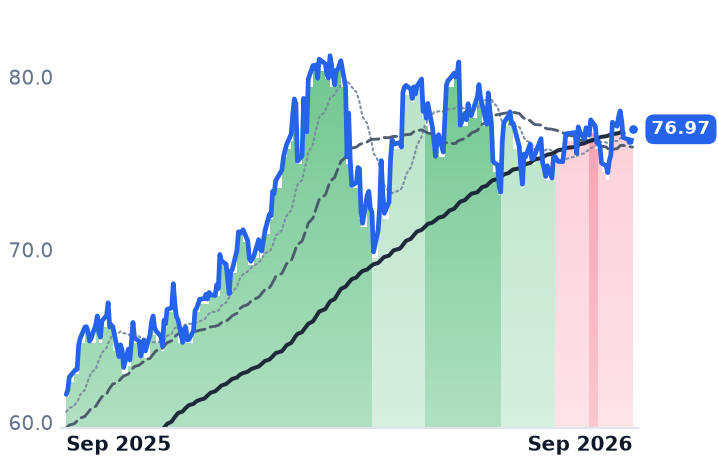
12-month price & trend
| Ticker | Mkt cap | P/E | P/E fwd | P/S | P/S fwd | P/GP | P/GP fwd | EV/EBITDA | FCF yld |
|---|---|---|---|---|---|---|---|---|---|
ASR | $7.7B | 13.1x | — | 3.4x | — | 13.4x | — | 7.9x | 1.3% |
PAC | $10.8B | 17.6x | — | 4.3x | — | 7.9x | — | 10.2x | 2.0% |
OMAB | $4.8B | 15.0x | — | 5.0x | — | 7.4x | — | 9.2x | 6.0% |
| Ticker | Mkt cap | P/E | P/E fwd | P/S | P/S fwd | P/GP | P/GP fwd | EV/EBITDA | FCF yld |
|---|---|---|---|---|---|---|---|---|---|
VLRS | $750.0M | n/m | — | 0.2x | 0.2x | 4.3x | 3.7x | 21.9x | 57.1% |
EWW | $2.0B | — | — | — | — | — | — | — | — |
Consensus projections
| Ticker | FY2026E | FY2027E | FY2028E | |
|---|---|---|---|---|
ASR | Revenue | +8.6% | +13.2% | +5.2% |
| EPS | −2.9% | +16.1% | +8.0% | |
PAC | Revenue | +6.4% | +14.0% | +9.3% |
| EPS | −0.8% | +17.1% | +19.4% | |
OMAB | Revenue | +6.9% | +11.2% | +13.4% |
| EPS | +8.1% | +17.4% | +14.7% | |
VLRS | Revenue | +15.8% | +8.6% | +8.8% |
| EPS | +82.1% | −97.2% | −3701.0% |
Forward fiscal years only. Blank means no analyst coverage for that year.
Mexico's civil aviation authority tells the country's three listed airport groups what they may charge per passenger and how much concrete they must pour, and it fixes both together for five years. In the second quarter, traffic fell at all three groups. Two of them grew earnings.
The reason that is possible, and the reason it matters beyond one quarter, is that the regulated tariff is a ceiling rather than a price. Under Annex 7 of the concessions, the aviation agency AFAC sets a maximum tariff per workload unit — a passenger-equivalent measure of airport activity — from projections of traffic, operating cost and the capital expenditure written into a five-year Master Development Program. The groups may charge up to that number. None of them currently does.
The contracted half of the equation
The capex side is not in doubt. ASUR's 2024-2028 Mexican plan, approved in December 2023, commits Ps.28.5bn in December-2022 pesos, roughly three-quarters of it on expanding Cancún, against maximum tariffs cut by an annual real efficiency factor of 0.80%. OMA's 2026-2030 program, approved last December, commits Ps.16.0bn on the same 0.8% efficiency haircut. GAP's Mexican tariffs and program run 2025 through 2029. These resets followed the October 2023 shock in which AFAC rewrote the tariff-base rules without notice, switching the allowed discount rate to weighted average cost of capital and taking as much as 26% off OMA in a session. The concession fee on gross revenue was separately raised to 9% from 5% from January 2024.
What the market appears to have missed is the other half. GAP chief executive Raúl Revuelta told investors the group reached 90% fulfilment of its maximum tariff in the first six months of 2026 and expects around 95% by year-end. "We are expecting around 93% to 95% compliance with the maximum tariff for the full year," OMA chief executive Ricardo Dueñas Espriu said on the July 28 call, adding the group would "probably be reaching the maximum tariff by the end of 2027, mid-2028." That is contracted price increase that arrives whether or not a single extra passenger does.
Where the three split
GAP, which runs twelve Mexican airports including Guadalajara and Tijuana plus Montego Bay and Kingston in Jamaica, is the clean demonstration. "Passengers traffic declined by 5.6%," Revuelta said of the second quarter. "Revenue, excluding construction services, increased by 4.9%, EBITDA grew by 8.4%, and EBITDA margin expanded by 230 basis points to 69.3%." Per-share optics are muddier: GAP issued 89.7m new shares completing the Cross Border Xpress merger, and diluted earnings per share fell to Ps.46.8 from Ps.52.6 even as net income rose.
OMA, thirteen concessions anchored on Monterrey with VINCI Airports holding 29.99%, did not need the trick: traffic rose 0.4% in the quarter and 3.9% in July, adjusted EBITDA rose 6.6% to a 75.2% margin, and commercial revenue per passenger reached Ps.66.4, up 6.3%, at 96% occupancy. Cargo, hotels and its Monterrey industrial park grew 17% combined — revenue outside the tariff entirely.
ASUR is the one where the shares are describing the business. Cancún, its franchise asset, handled 2.11m passengers in June, down 11.5%, international down 13.1%, as American and Delta trimmed beach routes and jet fuel spiked. Consolidated EBITDA rose 9%, but that is acquisitions: Mexican EBITDA fell 9%, Puerto Rico's 17%, and the adjusted margin lost 5.6 points to 62% on administrative costs up about 30%. Mexican commercial revenue per passenger fell to Ps.145.7. The group's new US concessions business earns roughly a 9% EBITDA margin. "The summer is lost, and we are expecting the recuperation process up to the end of the summer season," chief executive Adolfo Castro said on the July 24 call.
What the shares have done with it
Over twelve months ASUR is down 22.5%, GAP 14.1% and OMA 2.8%, all within a few percent of their 2026 lows and 26% to 33% below their highs — while the iShares MSCI Mexico ETF rose 22.6%. This is a sector de-rating, and a slow one: no session in the year took more than about 7% off any of the three. ASUR trades at 7.9 times trailing EBITDA, OMA 9.2 and GAP 10.2, with derived forward earnings multiples of 12.5, 12.8 and 16.5 times 2026 consensus.
The honest split: ASUR's decline is earned, and consensus already models its 2026 EBITDA down 2%. GAP's is not obviously earned on EBITDA, though the share issuance genuinely halves the per-share improvement. OMA's is not earned at all — no company-specific catalyst was discoverable for its 10.6% slide over the past thirty days, and the likelier reading is that it was sold as a Mexican travel proxy rather than for anything it reported. The regulatory cost these groups are being marked down for is contracted, dated and finite; the demand shortfall is not.
The piece nobody controls is seats. Volaris and Viva Aerobus, whose merger is still before Mexico's competition commission, supply most of the domestic traffic, and Pratt & Whitney engine inspections keep roughly 25 Volaris aircraft on the ground with two more years of work expected. The tariff ceiling will still be there when the planes come back.