

Two-Thirds of Expand Energy's 2026 Gas Is Pre-Sold at $3.91, Above Today's $3.00 Market
Hypothesis Opus 5 · Research Opus 5 · Writing Opus 5 · Prompt v1.6
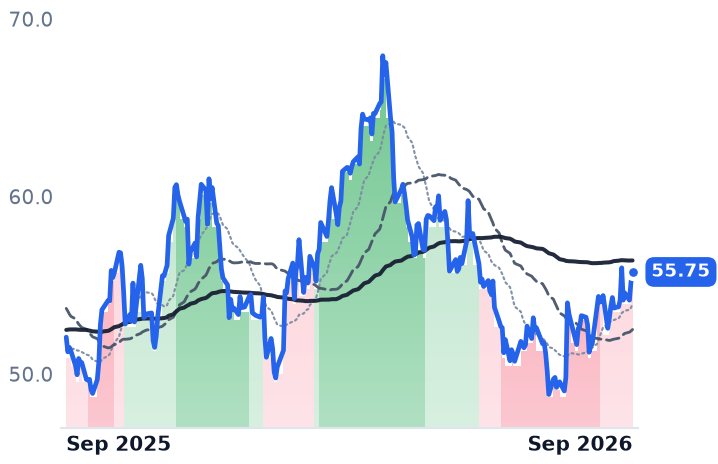
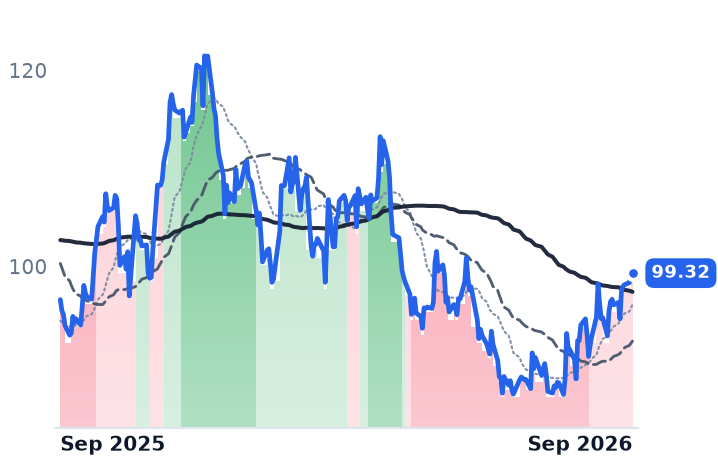
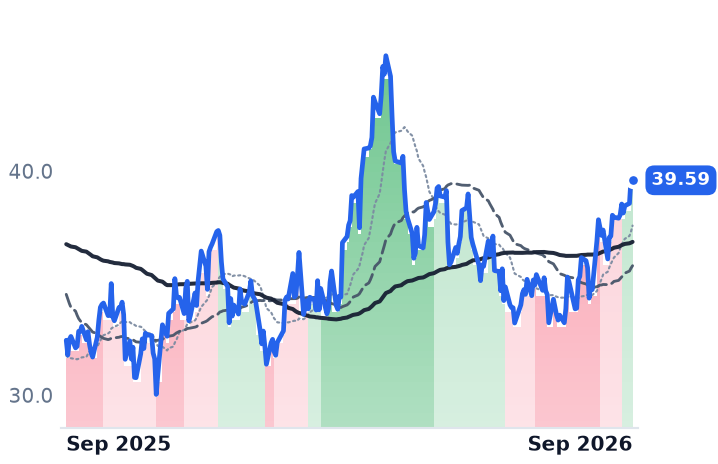
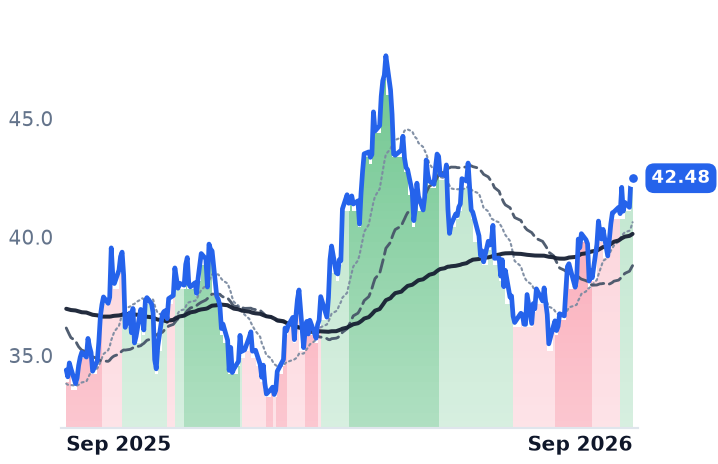
Front-month natural gas rose 8.8% over the past month and reached the two biggest producers in the Appalachian gas group least of all: EQT gained 5.6% and Expand Energy 6.7%, and neither disclosed anything material in the window. The month belonged to storage prints and export flows.
Underneath, the two names are not one trade. Expand's swaps and collar floors are struck above the current market, so its hedge book is adding to realizations, and 42.6% of its June-quarter gas came from Louisiana's Haynesville rather than Appalachia. EQT trades at 6.53x trailing enterprise value to EBITDA against Expand's 3.91x on nearly identical free-cash-flow yields, while consensus models its 2027 earnings down 5.2%.
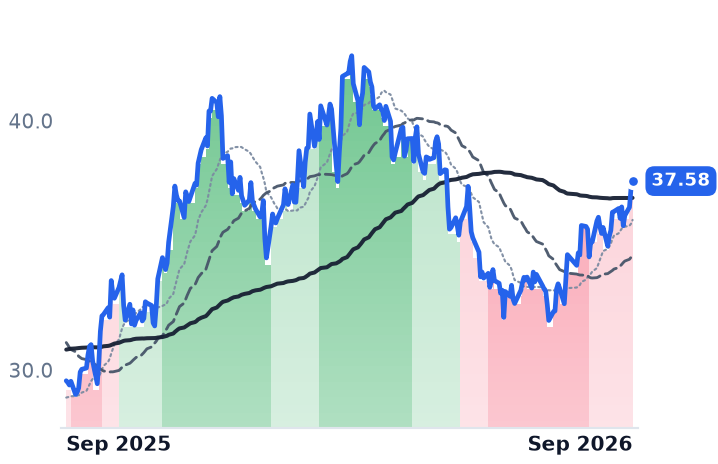
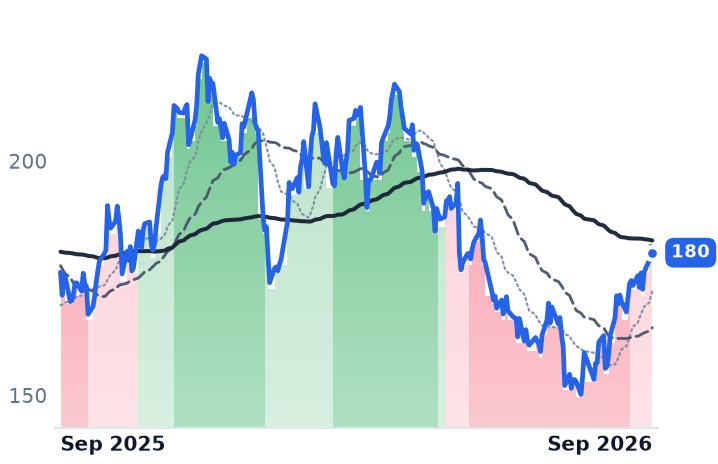
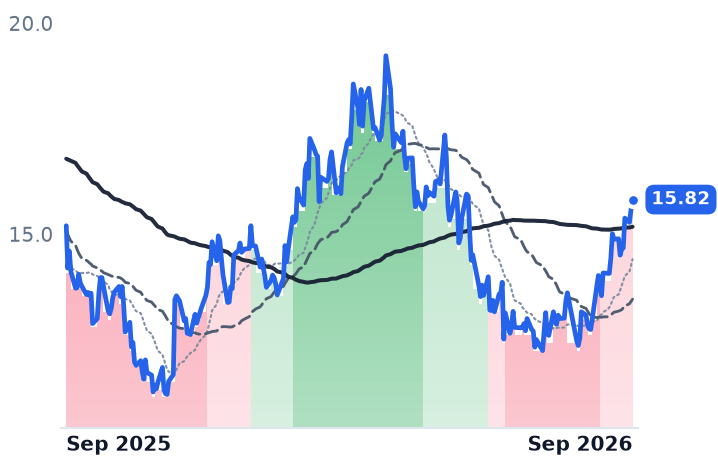
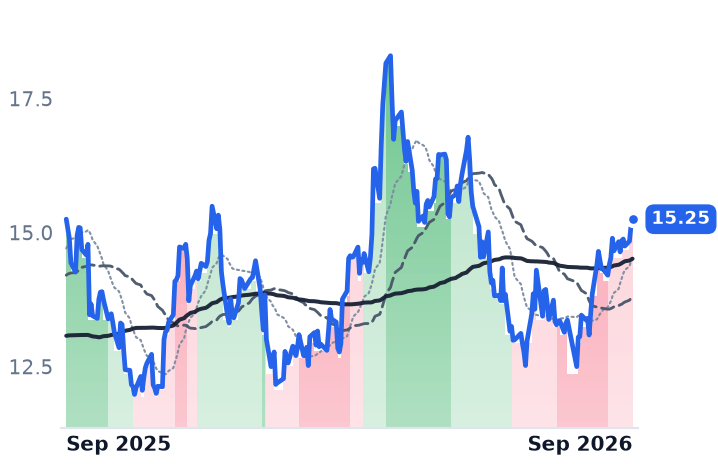
| Ticker | Company | Segment | Trend · 13mo | 30D | 1Y |
|---|---|---|---|---|---|
| The subject · what this brief is about | |||||
EQT | EQT | Appalachian Shale Gas | ⚠️ Emerging Bear | +4.8% | +7.1% |
EXE | Expand Energy | Appalachian Shale Gas | 🔴 Cont. Bear | +4.9% | +2.8% |
| Compared against · context, not the story | |||||
AR | Antero Resources | Appalachian Shale Gas | 🔴 Cont. Bear | +10.0% | +22.0% |
RRC | Range Resources | Appalachian Shale Gas | 🔴 Cont. Bear | +6.5% | +23.5% |
CNX | CNX Resources | Appalachian Shale Gas | ⚠️ Emerging Bear | +5.1% | +27.1% |
GPOR | Gulfport Energy | Appalachian Shale Gas | ⚠️ Emerging Bear | +10.9% | +2.4% |
INR | Infinity Natural Resources | Oil & Gas Exploration & Production | ⚠️ Emerging Bear | +20.9% | +4.1% |
DEC | Diversified Energy | Diversified Onshore & Conventional | ⚠️ Emerging Bear | +14.1% | −0.0% |
NG=F | NG=F | — | 🔴 Cont. Bear | +8.8% | −0.3% |
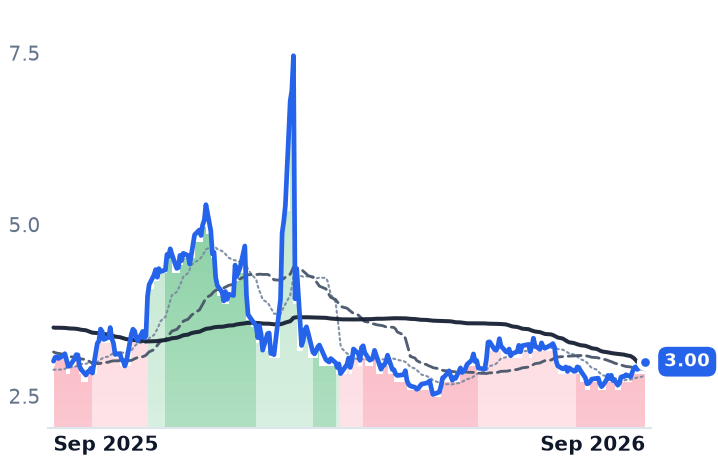
12-month price & trend
| Ticker | Mkt cap | P/E | P/E fwd | P/S | P/S fwd | P/GP | P/GP fwd | EV/EBITDA | FCF yld |
|---|---|---|---|---|---|---|---|---|---|
EQT | $34.9B | 12.3x | 13.5x | 3.8x | 3.7x | 5.5x | 5.4x | 6.5x | 10.8% |
EXE | $23.0B | 8.5x | 10.9x | 1.7x | 1.7x | 2.7x | 2.7x | 3.9x | 11.1% |
AR | $11.4B | 10.6x | 8.9x | 2.0x | 1.7x | 4.3x | 3.7x | 6.7x | 12.4% |
| Ticker | Mkt cap | P/E | P/E fwd | P/S | P/S fwd | P/GP | P/GP fwd | EV/EBITDA | FCF yld |
|---|---|---|---|---|---|---|---|---|---|
RRC | $9.4B | 11.1x | 9.8x | 2.8x | 2.7x | 5.9x | 5.6x | 7.3x | 12.5% |
CNX | $5.3B | 5.2x | 11.5x | 2.2x | 2.4x | 4.4x | 4.8x | 4.1x | 9.9% |
GPOR | $3.1B | 6.9x | 7.4x | 2.1x | 2.0x | 3.5x | 3.4x | 4.3x | 8.0% |
| Ticker | Mkt cap | P/E | P/E fwd | P/S | P/S fwd | P/GP | P/GP fwd | EV/EBITDA | FCF yld |
|---|---|---|---|---|---|---|---|---|---|
INR | $270.6M | 4.7x | 4.5x | 0.5x | 0.4x | 0.9x | 0.7x | n/m | -295.8% |
DEC | $1.0B | 1.7x | 5.3x | 0.6x | 0.5x | 1.3x | 1.1x | 3.0x | 25.9% |
NG=F | — | — | — | — | — | — | — | — | — |
Consensus projections
| Ticker | FY2026E | FY2027E | FY2028E | |
|---|---|---|---|---|
EQT | Revenue | +11.4% | −1.0% | +11.1% |
| EPS | +40.6% | −5.2% | +36.0% | |
EXE | Revenue | +16.4% | −3.7% | +6.3% |
| EPS | +51.7% | −4.8% | +22.7% | |
AR | Revenue | +30.3% | +0.3% | +7.0% |
| EPS | +130.9% | +1.8% | +26.1% | |
RRC | Revenue | +17.7% | +2.8% | +7.2% |
| EPS | +41.8% | −3.5% | +16.8% | |
CNX | Revenue | +6.9% | +0.7% | +5.8% |
| EPS | +42.1% | +37.2% | +18.2% | |
GPOR | Revenue | +10.7% | +1.2% | +5.4% |
| EPS | +8.7% | +18.6% | +31.9% | |
INR | Revenue | +93.3% | +14.3% | +16.3% |
| EPS | +53.5% | +19.5% | +18.7% | |
DEC | Revenue | +19.4% | −5.9% | −0.9% |
| EPS | −28.8% | −16.8% | +10.1% |
Forward fiscal years only. Blank means no analyst coverage for that year.
Sold before it was produced
Expand Energy, the former Chesapeake Energy renamed after its 2024 combination with Southwestern, has already sold most of next year's output. As of late July the company had 66% of 2026 volumes and 41% of 2027 volumes hedged: 500.4 billion cubic feet of swaps struck at $3.91 per thousand cubic feet, and 878.9 Bcf of costless collars floored at $3.49 and capped at $4.75. Front-month Henry Hub settled at $3.001 on 2 September. Those positions are currently adding to what Expand gets paid; the only constraint is the $4.75 ceiling, which binds only in a rally.
That is the mechanism worth holding onto, because a gas producer's revenue is not the futures price. It is Henry Hub, minus a basin discount set by pipeline capacity, plus or minus whatever was pre-sold. Over the past month the commodity did all the work — front-month gas rose from $2.758 on 3 August — and the two largest members of the Appalachian gas group captured less of it than the smaller ones: Infinity Natural Resources gained 23.2%, Gulfport 15.9%, Diversified 13.8% and Antero 10.9%, against EQT's 5.6% and Expand's 6.7%. No company-specific disclosure from either large name fell inside the window; the last material events were the July second-quarter releases and Expand's 27 July acquisition agreement.
What the basin actually pays
EQT, the largest US natural gas producer, holds roughly 2.0 million gross acres with 1.7 million in the Marcellus. Its June-quarter realized pricing differential was -$0.67 per unit, better than guidance even though basis widened during the quarter, which the company credited to marketing optimization and its curtailment strategy. Since then the discount has been closing: the September Texas Eastern M2 basis contract printed -$0.95 in early August after touching an all-time high of -$0.90, with winter 2026/27 and 2027/28 basis trading about 15 cents above May levels. The physical relief is dated: FERC has authorized construction of Transco's 1.6 Bcf/d Southeast Supply Enhancement for late 2027. Takeaway, not geology, has been the binding constraint — one interstate pipeline has been completed out of Appalachia in roughly twelve years.
EQT's quarter showed the split between price and performance clearly. Revenue fell 29.2% year over year to $1.81bn and operating margin compressed to 25.1% from 44.3%, with gas averaging $2.89 per million British thermal units. Volumes went the other way: 634 Bcfe beat guidance, full-year output was raised about 90 Bcfe, capital spending was cut $25m, and free cash flow attributable to EQT was $330m. The demand it has contracted is real and late — a ten-year, 325 million cubic feet a day agreement with Competitive Power Ventures for a West Virginia power facility starting as early as 2031, priced off PJM power rather than a gas index and sized by management at roughly $100m of annual free cash flow, plus a five-year liquefied natural gas offtake beginning 2028 worth about $45m.
Louisiana gas in an Appalachian basket
Expand produced 7.48 Bcf/d in the June quarter, and 42.6% of it came from the Haynesville, where its Gen3 completion design has pushed asset breakevens below $2.75/Mcf. It holds roughly 70% of remaining core Haynesville inventory, the swing supply for Gulf Coast export terminals. Its $1.25bn purchase of gas marketer Twin Eagle Holdings, agreed 27 July and expected to close this quarter, adds more than $200m of annual EBITDA and cuts a corporate breakeven of roughly $2.70/Mcf by another 5 to 10 cents before synergies.
Management has been buying its own stock against that math. "Prop-month natural gas prices dipped after the first quarter, and we were prepared to act decisively when our stock price dislocated from our mid-cycle price view of $3.50 to $4," interim chief executive Michael Wichterich told investors on 28 July. Expand repurchased $850m of shares in the quarter, about 4% of the float, with a further $1bn authorized.
What the move earned and what it did not
The rally was the commodity's, and neither large producer kept pace with it. What the businesses earned is narrower and more durable: Expand's realizations are being lifted by a hedge book struck above the market and by Haynesville costs falling, and EQT's volume beat and differential defense are its own doing. What nothing in the accounts explains is the price of the two relative to each other. EQT carries a 67% premium on trailing enterprise value to EBITDA — 6.53x against 3.91x — on almost identical free-cash-flow yields of 10.8% and 11.1%, and its forward price-to-earnings of 13.47x sits above its trailing 12.26x because consensus models 2026 earnings below the last twelve months and 2027 earnings down 5.2%. Its trailing multiple was 11.28x in early May; the share price fell and the multiple did not.
The grouping itself is the last casualty. The largest name in an Appalachian pure-play basket takes most of its gas from Louisiana and sells it toward export demand; the other is a Marcellus producer whose upside is written into power contracts that begin in 2028 and 2031. They move together because the same futures curve prices them, and that is the only thing they share.
Expand's own view is that 3.5 Bcf/d of new Permian associated-gas egress by year-end keeps the market oversupplied through at least the first half of 2027. The Energy Information Administration expects end-October inventories at a record 3,985 Bcf. Everything both companies have contracted arrives after that overhang has to clear.