

Bandwidth's 59.4% Gross Margin Is 40.9% Once Carrier Surcharges Go Back In
Hypothesis Opus 5 · Research Opus 5 · Writing Opus 5 · Prompt v1.6
Bandwidth and Twilio both grew June-quarter revenue about 22%, and the market treated the two prints as opposite events. The reason is what sits inside the revenue: US carriers raised application-to-person messaging fees three times this year, and both companies bill those fees on and book them at no margin.
At Bandwidth the surcharges were $68m of $219.9m of revenue — 31% — and its own ex-surcharge measure, cloud communications, grew 12%. Its headline 59.4% non-GAAP gross margin is struck on that smaller base; on total revenue it is 40.9%, against Twilio's 49.1%. Twilio's $71m of incremental fees explain roughly a quarter of its revenue increase, and its gross profit still grew 18% with operating income up 29%.
Owning the carrier network is not currently producing better economics than reselling one.
| Ticker | Company | Segment | Trend · 13mo | 30D | 1Y |
|---|---|---|---|---|---|
| The subject · what this brief is about | |||||
TWLO | Twilio | Communications & Messaging Platforms | 🟢 Cont. Bull | +20.5% | +128.2% |
BAND | Bandwidth | Communications & Messaging Platforms | 🌱 Emerging Bull | +25.2% | +221.3% |
| Compared against · context, not the story | |||||
RNG | RingCentral | Communications & Collaboration | 🟢 Cont. Bull | +24.7% | +129.4% |
FIVN | Five9 | Communications & Collaboration | 🌱 Emerging Bull | +23.8% | +29.3% |
VG | Venture Global | LNG Export & Infrastructure | 🌱 Emerging Bull | +6.0% | +9.7% |
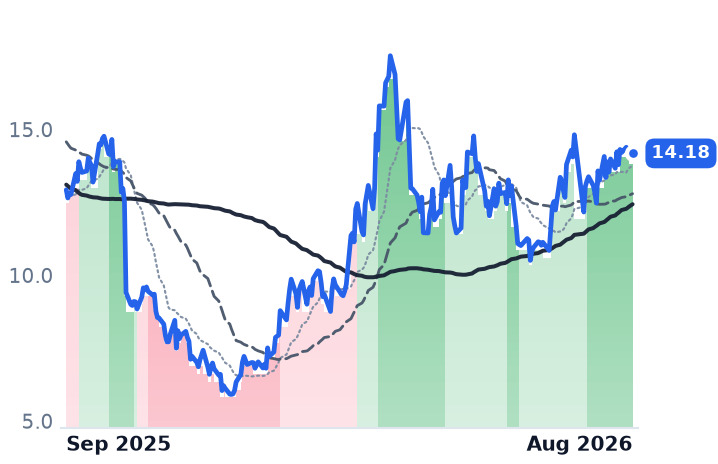
12-month price & trend
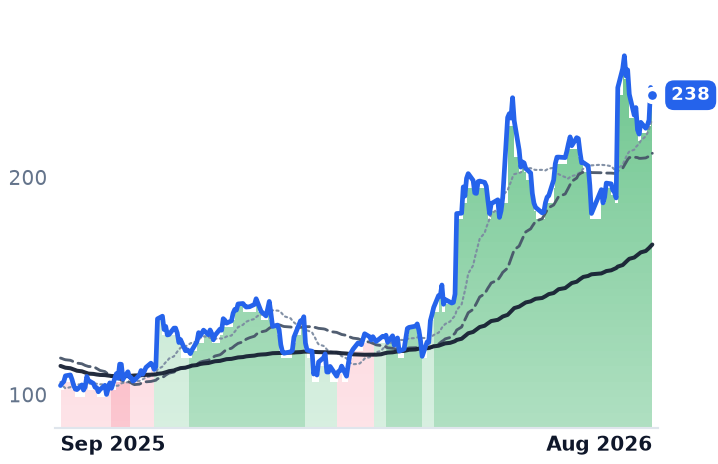
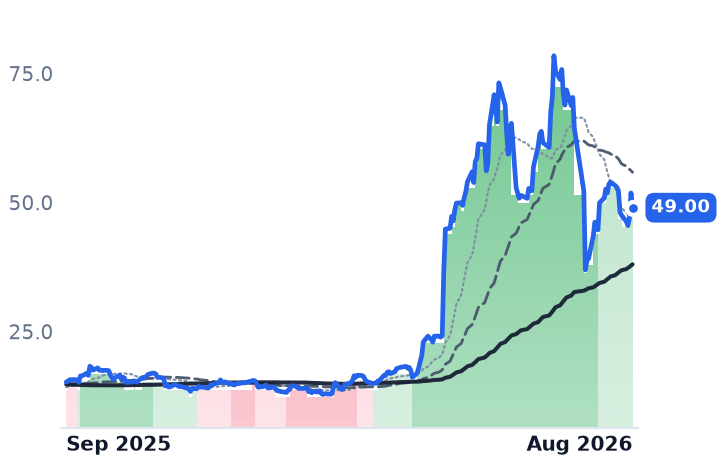
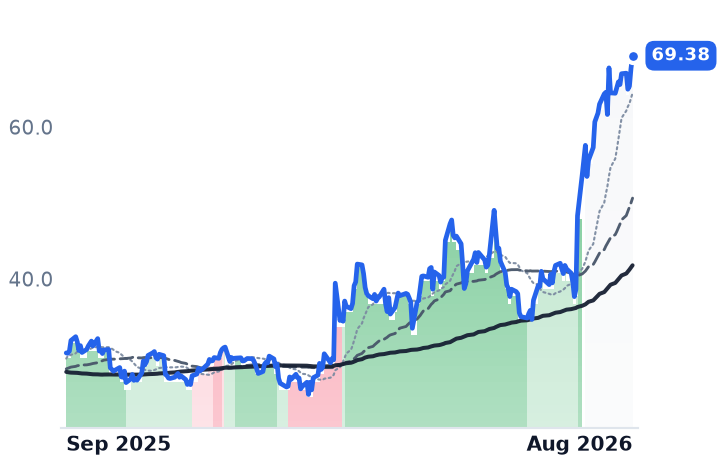
| Ticker | Mkt cap | P/E | P/E fwd | P/S | P/S fwd | P/GP | P/GP fwd | EV/EBITDA | FCF yld |
|---|---|---|---|---|---|---|---|---|---|
TWLO | $36.1B | 31.6x | 40.1x | 6.5x | 6.0x | 13.3x | 12.4x | 99.1x | 3.1% |
BAND | $1.6B | n/m | 28.0x | 1.9x | 1.7x | 5.1x | 4.7x | — | 4.6% |
RNG | $6.0B | 53.8x | 13.8x | 2.3x | 2.3x | 3.2x | 3.2x | 21.4x | 11.2% |
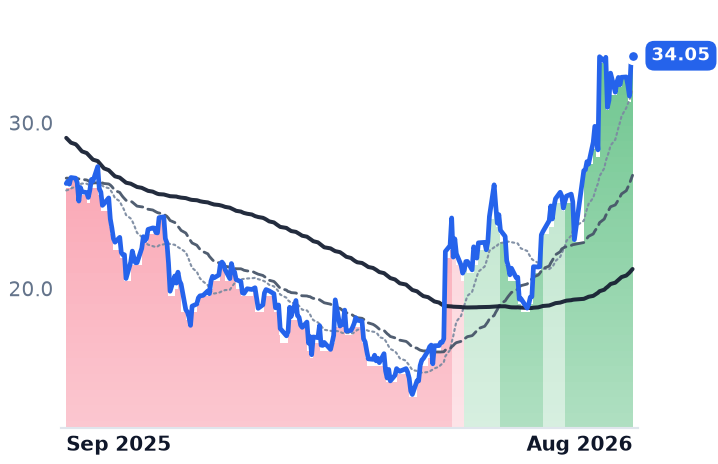
| Ticker | Mkt cap | P/E | P/E fwd | P/S | P/S fwd | P/GP | P/GP fwd | EV/EBITDA | FCF yld |
|---|---|---|---|---|---|---|---|---|---|
FIVN | $2.6B | 44.8x | 10.5x | 2.2x | 2.1x | 4.0x | 3.8x | 15.7x | 7.6% |
VG | $34.2B | 10.3x | 9.2x | 2.0x | 1.9x | 4.2x | 3.9x | 4.4x | -27.5% |
Consensus projections
| Ticker | FY2026E | FY2027E | FY2028E | |
|---|---|---|---|---|
TWLO | Revenue | +19.4% | +11.6% | +10.5% |
| EPS | +23.5% | +14.5% | +14.2% | |
BAND | Revenue | +20.0% | +4.3% | +20.2% |
| EPS | +22.2% | +9.9% | +41.0% | |
RNG | Revenue | +5.1% | +4.6% | +4.4% |
| EPS | +16.4% | +11.1% | +10.8% | |
FIVN | Revenue | +9.5% | +9.9% | +10.6% |
| EPS | +10.5% | +18.0% | +16.6% | |
VG | Revenue | +33.3% | −12.6% | +29.6% |
| EPS | +83.8% | −52.8% | +75.1% |
Forward fiscal years only. Blank means no analyst coverage for that year.
Two cloud-communications companies reported June quarters with revenue up about 22%, and investors read them as opposite events. Bandwidth, which sells voice and messaging programming interfaces over a carrier network it owns and operates, fell 29.3% in the session after its July 29 print. Twilio, whose roughly 1,800 interfaces embed calls, texts and email into other companies' software, gapped 26.6% higher on August 7, from $190.52 to $241.28.
The difference is not in the growth rate. It is in what the growth rate is made of. American carriers raised the per-message fees they charge to deliver application-to-person text traffic three separate times this year — T-Mobile on January 19, AT&T on April 1 and Verizon on May 1 — and both companies bill those fees to customers and record them as revenue at no margin at all. The June quarter was the first with all three in force. Fees of this kind inflate the sales line, depress every margin percentage struck against it, and add nothing to gross profit.
The smaller denominator
Bandwidth's messaging surcharges were $68m in the quarter — 31% of $219.9m of revenue — and $126.7m across the first half, up 49%. Cloud communications revenue, the company's own measure of everything except surcharges, was $152m, up 12%. Against the year-ago comparison the surcharge line implies roughly $23.7m of the $39.9m revenue increase, a majority of it, though Bandwidth does not publish that split directly. Cost of revenue grew 30.5%, well ahead of the top line; reported gross margin fell to 35.7% from 39.8%, and gross profit rose 9.6%.
Which brings up the number the company leads with. Bandwidth's non-GAAP gross margin of 59.4% is computed on cloud communications revenue, not on total revenue: $90m of non-GAAP gross profit against a base of roughly $151.5m. Twilio's 49.1% is computed on its entire $1.499bn, pass-throughs included. Put both on total revenue and Bandwidth is at 40.9% against Twilio's 49.1%. On reported figures the gap is wider still, 35.7% against 48.4%.
That matters because Bandwidth's stated case is the network. The July 29 release credited "the structural advantages of our owned-and-operated global network" for record revenue and adjusted EBITDA. The profit engine is genuinely improving — adjusted EBITDA up 27% to a record 18.3% margin — but the gross-profit engine underneath it is smaller and slower than the reseller's. Chief financial officer Daryl Raiford was explicit about the loop on the call: "since commercial messaging is increasing, the increasing in what we expect to be messaging surcharges as well." Volume growth mechanically manufactures more zero-margin revenue.
What Twilio's fees did not eat
Twilio absorbed about $71m of incremental carrier fees, equal to 26% of its $270.7m revenue increase. Management said the fees cost 160 basis points of non-GAAP gross margin, which would otherwise have risen by 60. Messaging revenue grew 28% reported and 18% excluding the fees. Underneath, non-GAAP gross profit reached $736m, up 18% and accelerating for a fifth straight quarter; non-GAAP operating income rose 29%, faster than revenue; the dollar-based net expansion rate reached 116% from roughly 108% a year earlier; free cash flow of $353m was up 34%. Diluted shares were 159.708m against 159.692m — flat, despite about $319m of buybacks — so none of the earnings growth is share-count arithmetic. Bandwidth's diluted count rose 11.2%.
One disclosure went the other way. Twilio stopped reporting active customer accounts in the first quarter, calling the metric "less informative now than it has been in prior periods." The last published figure was more than 402,000. Whether the paying base is widening can no longer be checked.
What each price earns
Twilio's business earns a re-rating; the size of the one it got is another matter. The shares cost 12.4x forward gross profit against roughly 7.2x six months ago, and its trailing price-to-earnings ratio is unusable because reported profit contains a one-time $944m tax valuation-allowance release worth $5.91 a share. Guidance calls for third-quarter organic growth of 11–12%, down from 17%. RingCentral and Five9, growing about 6% and 10%, rose roughly as much over the same six months — the repricing was not Twilio's alone.
Bandwidth's decline is doing rational work. At 4.7x forward gross profit it is the cheaper asset, and the market has simply marked down a top line that is nearly a third pass-through. The verdict on the hypothesis that owning the rails beats renting them is, for now, against the owner: it produces a smaller gross-profit base at lower margin, funded by a share count that keeps growing.
The carrier increases lap in January. Consensus has Bandwidth's revenue growing 4.3% in 2027, which is the market's estimate of what is left when the fees stop being growth.