

monday.com's $100k Accounts Grew 37%; Asana's Existing Customers Spent 4% Less
Hypothesis Opus 5 · Research Opus 5 · Writing Opus 5 · Prompt v1.6
Two vendors bill for the same thing — a human being with a login — and only one has found a way to charge for something else. monday.com's paid accounts above $100,000 of annual recurring revenue rose 37% to 2,019, and it now sells artificial-intelligence credits on top of seats. Asana's dollar-based net retention was 96%, and 96% again among customers paying more than $100,000 a year, meaning existing accounts spend less than they did a year ago; its flagship AI product is priced at $15 per user per month, back on the seat meter.
The businesses have diverged and the prices have converged. Asana has grown revenue about 9% for four straight quarters and guides to 8.2–9.2% this year; monday.com grew 21.9% last quarter. Yet Asana costs 27.3x forward earnings against monday.com's 18.4x. Nothing Asana has disclosed since May explains that. It reports Thursday.
| Ticker | Company | Segment | Trend · 13mo | 30D | 1Y |
|---|---|---|---|---|---|
| The subject · what this brief is about | |||||
MNDY | monday.com | Other | 🌱 Emerging Bull | +15.6% | −46.2% |
ASAN | Asana | Other | 🌱 Emerging Bull | +22.5% | −26.8% |
| Compared against · context, not the story | |||||
TEAM | Atlassian | Developer Tools & DevOps | 🌱 Emerging Bull | +88.5% | +10.3% |
WDAY | Workday | Enterprise Resource Planning | 🌱 Emerging Bull | +27.7% | −10.6% |
CRM | Salesforce | Customer Experience & CRM | 🔴 Cont. Bear | +39.1% | +2.1% |
NOW | ServiceNow | Specialized Enterprise Solutions | 🌱 Emerging Bull | +30.1% | −20.6% |
APPN | Appian | Low-Code & Process Automation | 🌱 Emerging Bull | +57.7% | +38.6% |
ADP | Automatic Data Processing | HCM Software & Payroll | 🌱 Emerging Bull | +7.9% | −2.2% |
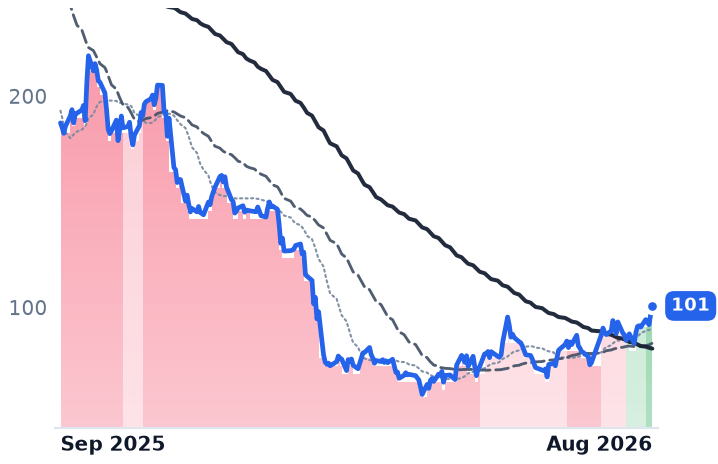
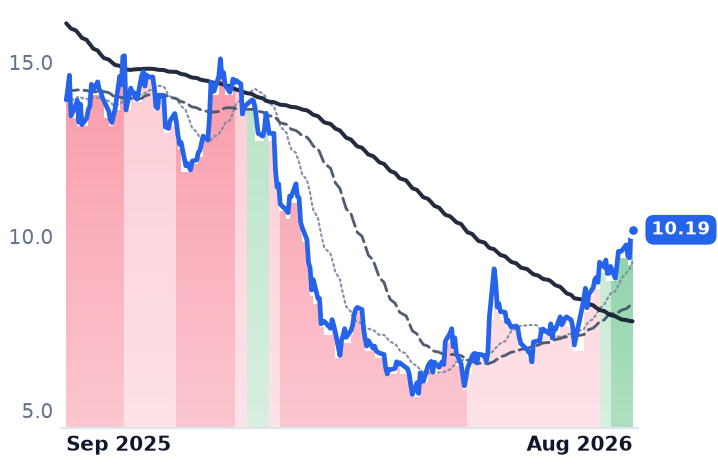
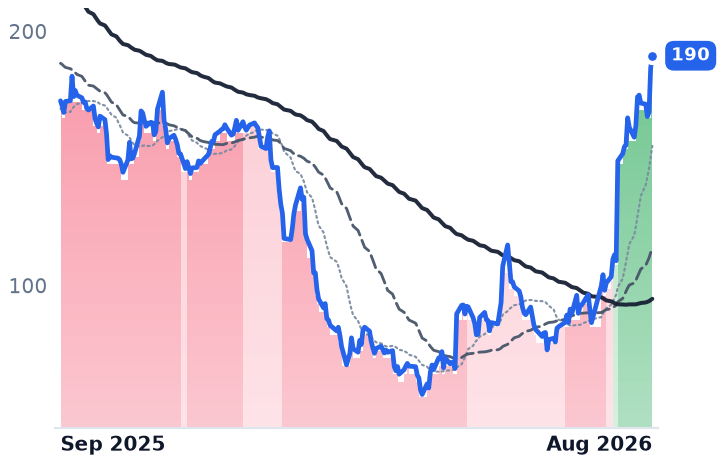
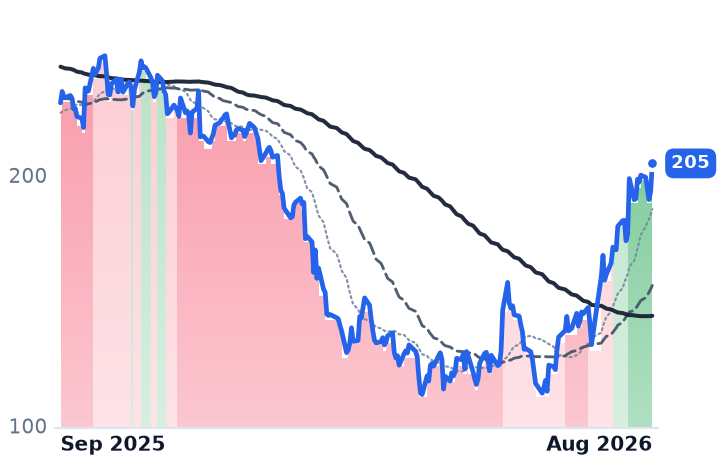
12-month price & trend
| Ticker | Mkt cap | P/E | P/E fwd | P/S | P/S fwd | P/GP | P/GP fwd | EV/EBITDA | FCF yld |
|---|---|---|---|---|---|---|---|---|---|
MNDY | $4.3B | 42.2x | 18.4x | 3.1x | 2.9x | 3.5x | 3.3x | 38.6x | 7.0% |
ASAN | $2.4B | n/m | 27.3x | 3.0x | 2.8x | 3.4x | 3.2x | n/m | 4.7% |
TEAM | $50.0B | n/m | 34.6x | 7.6x | 6.7x | 9.0x | 7.9x | 331.1x | 2.6% |
| Ticker | Mkt cap | P/E | P/E fwd | P/S | P/S fwd | P/GP | P/GP fwd | EV/EBITDA | FCF yld |
|---|---|---|---|---|---|---|---|---|---|
WDAY | $53.6B | 41.6x | 18.5x | 5.3x | 5.0x | 6.6x | 6.3x | 32.8x | 5.3% |
CRM | $209.7B | 23.3x | 15.8x | 4.8x | 4.5x | 6.2x | 5.9x | 15.4x | 7.2% |
NOW | $132.8B | 79.8x | 31.6x | 9.0x | 8.2x | 12.1x | 11.0x | 39.8x | 3.4% |
| Ticker | Mkt cap | P/E | P/E fwd | P/S | P/S fwd | P/GP | P/GP fwd | EV/EBITDA | FCF yld |
|---|---|---|---|---|---|---|---|---|---|
APPN | $3.1B | n/m | 39.3x | 4.0x | 3.7x | 5.4x | 5.1x | 135.0x | 2.4% |
ADP | $113.8B | 26.0x | 23.2x | 5.2x | 4.9x | 10.8x | 10.2x | 18.1x | 4.4% |
Consensus projections
| Ticker | FY2026E | FY2027E | FY2028E | |
|---|---|---|---|---|
MNDY | Revenue | +19.8% | +15.1% | +14.6% |
| EPS | +27.8% | +22.3% | +19.1% | |
ASAN | Revenue | +9.2% | +8.9% | +7.9% |
| EPS | −272.8% | +45.4% | +26.1% | |
TEAM | Revenue | +24.7% | +15.4% | +14.7% |
| EPS | +55.5% | −0.1% | +21.6% | |
WDAY | Revenue | +13.4% | +11.8% | +10.5% |
| EPS | +26.5% | +21.9% | +19.5% | |
CRM | Revenue | +9.3% | +11.4% | +9.6% |
| EPS | +17.4% | +37.6% | −1.6% | |
NOW | Revenue | +22.4% | +18.7% | +18.6% |
| EPS | +17.1% | +23.2% | +21.4% | |
APPN | Revenue | +19.1% | +10.8% | +7.4% |
| EPS | +104.0% | +31.1% | +11.4% | |
ADP | Revenue | +7.0% | +5.9% | +5.7% |
| EPS | +11.0% | +10.7% | +9.2% |
Forward fiscal years only. Blank means no analyst coverage for that year.
Asana's most recent operating figures are three months old, and they describe a business whose existing customers are spending less than they did a year earlier. Dollar-based net retention was 96% in the quarter ended April at the San Francisco company, whose platform coordinates projects, campaigns and company goals — and 96% again among customers paying more than $100,000 a year, the accounts that are meant to be expanding. Asana reports again after the close on Thursday, September 3.
That matters because of what both Asana and monday.com — the Tel Aviv vendor whose Work OS lets customers assemble their own work-management apps out of configurable modules — actually meter: the number of employees with a login. The population of logins is barely growing. ADP's count of employees on its clients' US payrolls rose 1% in fiscal 2026 and is guided to between zero and 1% this year. Growth for a per-seat vendor therefore has to come from a price increase, a tier upgrade, or something billed that is not a seat. The two have taken opposite routes, and the market has begun pricing them as though they had not.
monday.com sold something that isn't a seat
monday.com's June-quarter revenue of $364.6m grew 21.9%, the fourth consecutive quarter of deceleration from 26.2% a year ago, and net dollar retention fell to 109% with full-year guidance of about 108% — a record low, which the company attributes to lapping the list-price increases it took in 2024 and 2025. Underneath that, the large-account counts are unambiguous: customers above $50,000 of annual recurring revenue reached 4,834, up 31%, those above $500,000 rose 68% to 114, and the quarter added a record 175 net accounts above $100,000. Retention among those larger accounts runs 113% to 115%, well above the company-wide figure. "We are still seeing a double-digit seat growth year-over-year in enterprise," chief financial officer Eliran Glazer told analysts on the August 10 call.
In May the company launched seat-plus-credit pricing, the first expansion vector it has that is not a headcount. Revenue from AI products doubled quarter on quarter to 17% of net new annual recurring revenue, though still only about 1% of the total. Customers "are actively choosing AI features and are willing to pay more when they see value," co-chief executive Eran Zinman said on the same call, citing accounts that exhaust their credit packs and buy more. The build is expensive — research and development ran at 23% of revenue against 20% a year earlier — and on July 22 the company cut roughly 20% of its workforce, about 620 people, taking $45–55m of charges while reaffirming 19–20% growth.
Asana put its AI back on the seat
Asana's April quarter grew 9.5% to $205.1m, the fourth straight quarter near 9%, and the full year is guided to 8.2–9.2% including about half a point from the acquired StackAI. Core customers spending $5,000 or more grew 7% to 26,103; those above $100,000 grew 12% to 817. AI annual recurring revenue exiting fiscal 2026 was over $6m against $790.8m of revenue, and the flagship AI Teammates product is priced at $15 per user per month — the upsell reattached to the meter that isn't growing.
The profit improvement is real and it is cost-led: non-GAAP operating income of $23.6m, or 11.5% of revenue, against $8.1m and 4% a year earlier, on unchanged revenue growth. Gross margin fell to 87.6% from 89.7%, so gross profit grew 6.9% while revenue grew 9.5%. Chief executive Dan Rogers gave the fair counterpoint on the May 28 call: exposure to the technology vertical is now under a quarter of revenue and returned to year-over-year growth for the first time in eight quarters. And in-quarter net retention has improved for four consecutive quarters, to 97%.
What the shares did
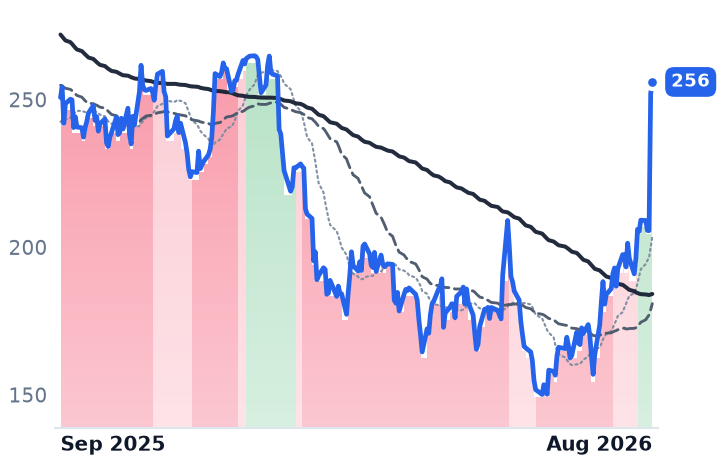
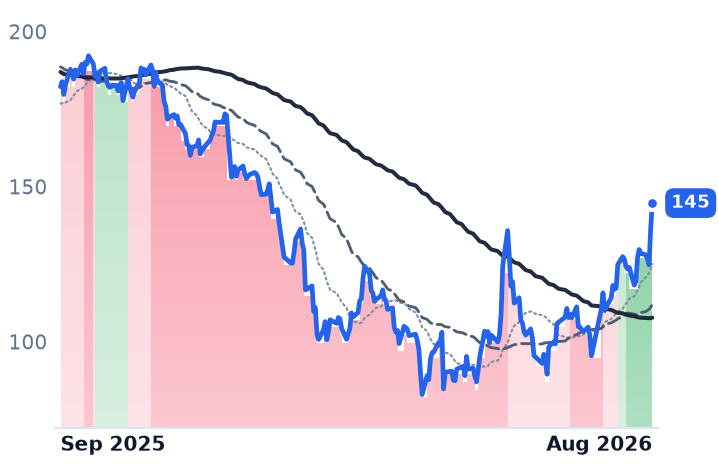
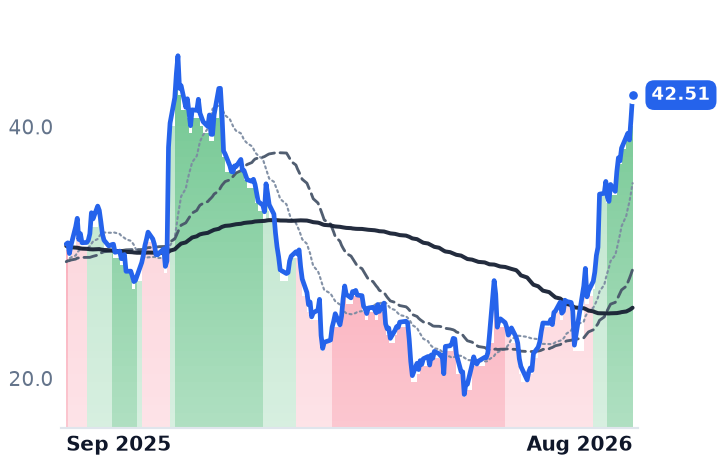
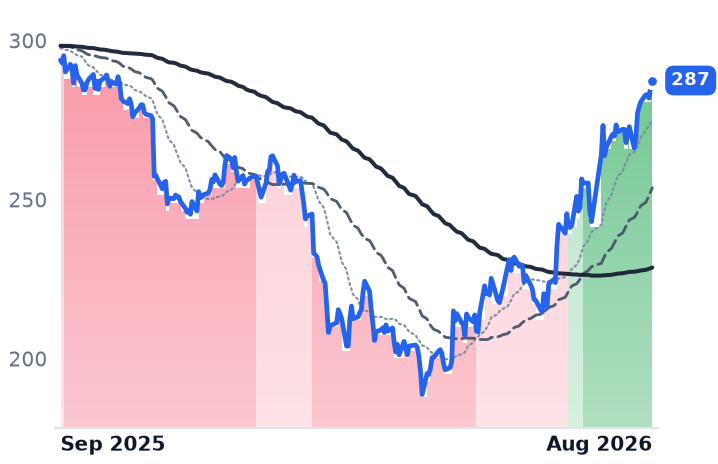
Asana has risen 53% in three months and monday.com 30%, both laggards inside a software advance that carried Atlassian up 104%, Workday 57% and Salesforce 45% over the same window. The sharpest single sessions belong to no company disclosure: both jumped hard in late July, and on August 27 Nvidia's results reignited the AI trade across software. monday.com fell 5.6% on its own earnings day.
On valuation the two have nearly met. monday.com trades at 18.4x forward earnings against 42.2x trailing, and roughly 15x 2027 consensus — against about 13x when Abby Cohen picked it in Barron's July roundtable, after a 74% fall from the 2025 peak. Asana, with no meaningful trailing earnings multiple because it loses money under generally accepted accounting principles, trades at 27.3x forward. Because their gross margins are within a point of each other, the comparison is direct at the gross-profit line: 3.38x for Asana against 3.51x for monday.com, near parity for a business growing at less than half the rate.
monday.com's advance is largely earned — the rising large-account counts, the record enterprise adds and a metered AI line are what a per-seat vendor looks like when it escapes the seat, even as decelerating revenue says the price-increase engine has run its course. Asana's advance rests on cost discipline, a buyback that did not shrink the float — diluted shares rose to 238.2m — and three-month-old metrics showing existing customers renewing smaller at every disclosed size.
Thursday afternoon supplies the first new evidence since May, and one number settles most of it: whether 96% has finally turned.