

DoubleVerify's Fee Per Impression Fell 4%, and It Sold Itself to Nielsen for $2.15bn
Hypothesis Opus 5 · Research Opus 5 · Writing Opus 5 · Prompt v1.6
Ad verification was supposed to be the safe seat in ad software: a vendor billed per impression measured, indifferent to which buying platform wins the media. Both listed verifiers have now left the public market inside eight months.
DoubleVerify reported second-quarter revenue of $193.8m on August 6, 2.5% higher than a year earlier and below its own $199m–$205m guide, with Activation — the pre-bid layer that runs inside demand-side platforms — down 1%. The same morning it agreed to an all-cash sale to Nielsen at $13.60 a share, withdrew guidance and cancelled its earnings call. Integral Ad Science went private with Novacap in December at $10.30.
The mechanism is unit price, and it is the same one hurting The Trade Desk: DoubleVerify measured 12% more transactions in the first quarter while collecting 4% less per transaction.
| Ticker | Company | Segment | Trend · 13mo | 30D | 1Y |
|---|---|---|---|---|---|
| The subject · what this brief is about | |||||
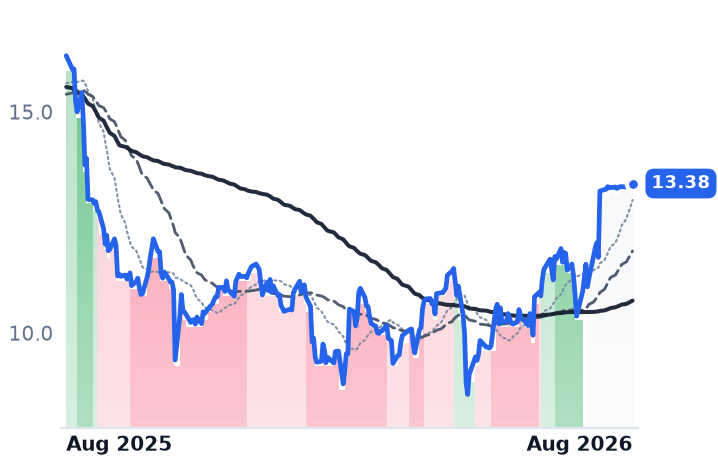
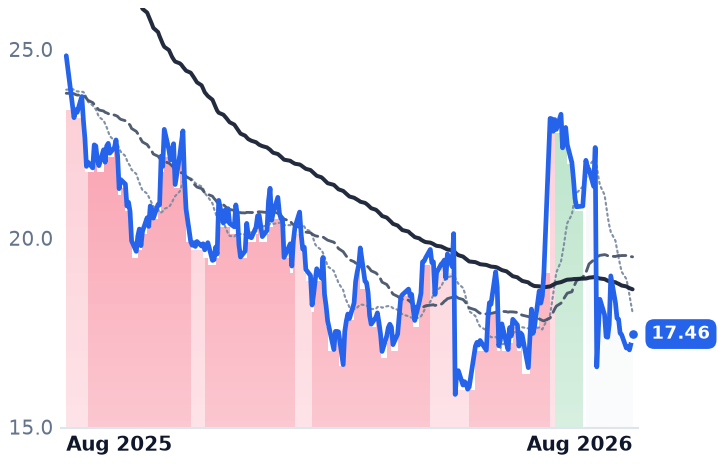
DV | DoubleVerify | Marketing & Advertising Technology | 🔴 Cont. Bear | +21.1% | −17.8% |
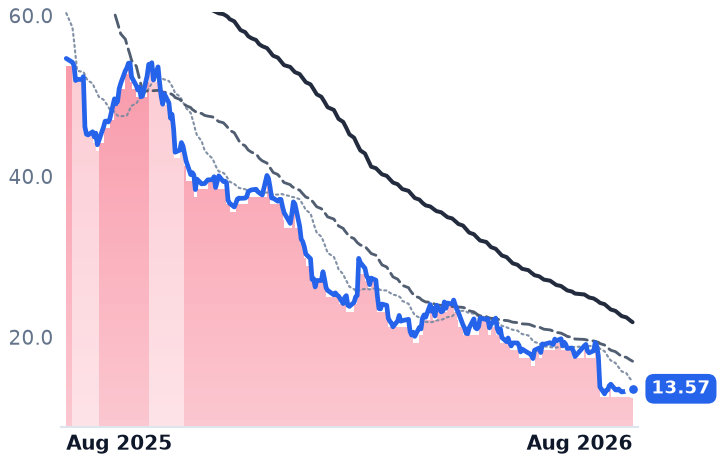
TTD | The Trade Desk | Programmatic Ad Platforms | 🔴 Cont. Bear | −25.8% | −75.2% |
| Compared against · context, not the story | |||||
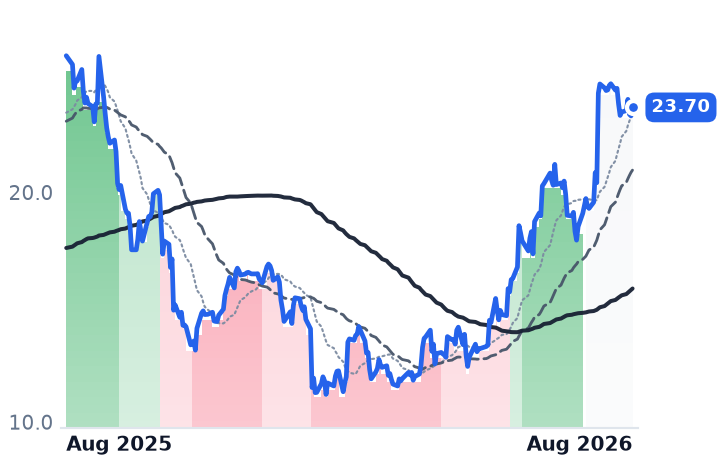
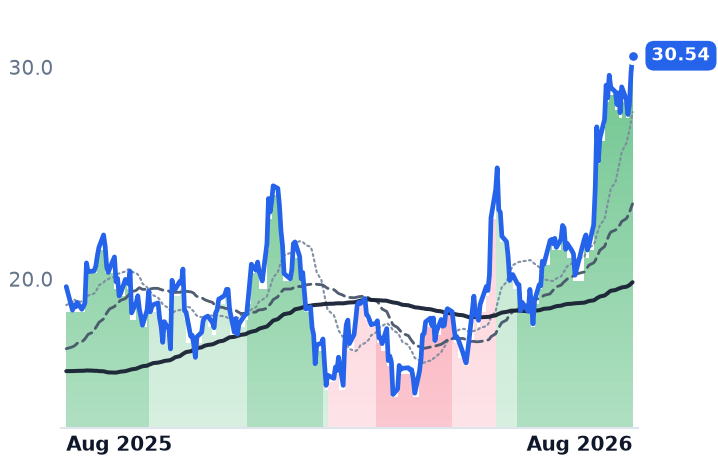
MGNI | Magnite | Programmatic Ad Platforms | 🌱 Emerging Bull | +22.2% | −8.7% |
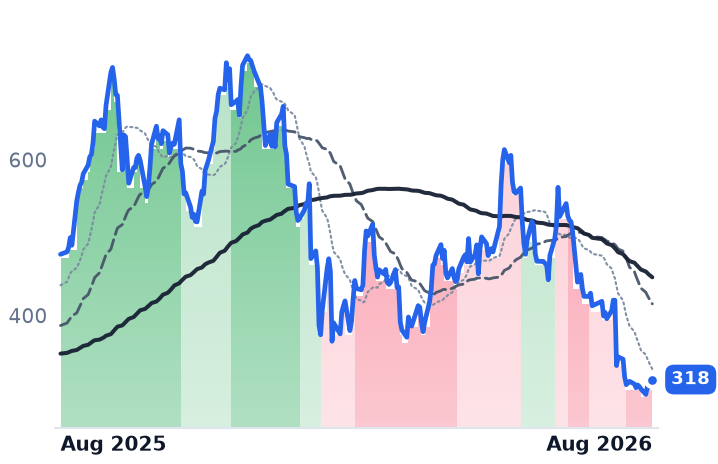
APP | AppLovin | Marketing & Advertising Technology | ⚠️ Emerging Bear | −21.3% | −33.6% |
CRTO | Criteo | Programmatic Ad Platforms | 🔴 Cont. Bear | −20.2% | −29.7% |
ZETA | Zeta Global | Marketing & Advertising Technology | 🟢 Cont. Bull | +42.9% | +55.5% |
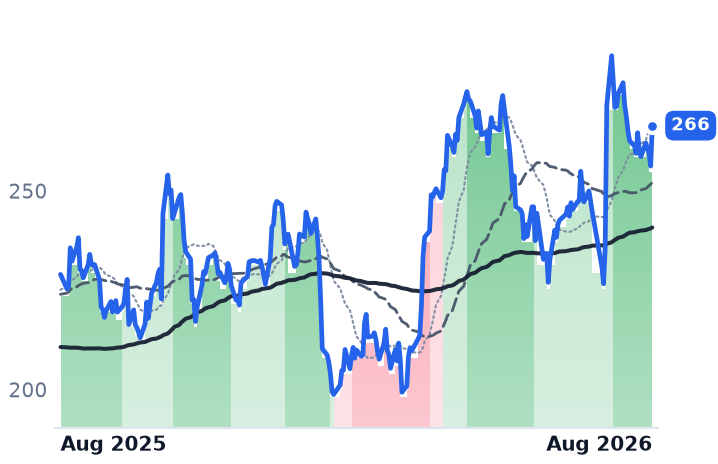
AMZN | Amazon.com | Online Marketplaces | 🟢 Cont. Bull | +13.1% | +16.3% |
12-month price & trend
| Ticker | Mkt cap | P/E | P/E fwd | P/S | P/S fwd | P/GP | P/GP fwd | EV/EBITDA | FCF yld |
|---|---|---|---|---|---|---|---|---|---|
DV | $2.1B | 36.2x | 30.7x | 2.7x | 2.5x | 3.3x | 3.2x | 12.4x | 7.5% |
TTD | $6.4B | 16.2x | 33.8x | 2.1x | 2.3x | 2.6x | 2.8x | 7.1x | 13.5% |
MGNI | $3.4B | 20.3x | 20.9x | 4.6x | 4.5x | 7.1x | 6.9x | 22.3x | 6.3% |
| Ticker | Mkt cap | P/E | P/E fwd | P/S | P/S fwd | P/GP | P/GP fwd | EV/EBITDA | FCF yld |
|---|---|---|---|---|---|---|---|---|---|
APP | $103.5B | 23.6x | 19.5x | 15.2x | 12.7x | 17.1x | 14.3x | 18.8x | 4.3% |
CRTO | $877.3M | 8.6x | 4.8x | 0.5x | 0.8x | 0.9x | 1.6x | 3.1x | 20.2% |
ZETA | $7.1B | n/m | 29.2x | 4.5x | 3.9x | 7.3x | 6.3x | 92.2x | 3.2% |
| Ticker | Mkt cap | P/E | P/E fwd | P/S | P/S fwd | P/GP | P/GP fwd | EV/EBITDA | FCF yld |
|---|---|---|---|---|---|---|---|---|---|
AMZN | $2.9T | 21.2x | 21.1x | 3.7x | 3.5x | 7.3x | 6.8x | 11.9x | -0.4% |
Consensus projections
| Ticker | FY2026E | FY2027E | FY2028E | |
|---|---|---|---|---|
DV | Revenue | +7.4% | +8.6% | +6.1% |
| EPS | +50.1% | +30.5% | +6.0% | |
TTD | Revenue | −4.6% | −4.5% | +9.5% |
| EPS | −52.9% | −41.3% | +87.1% | |
MGNI | Revenue | +13.7% | +10.7% | +13.6% |
| EPS | +29.5% | +18.5% | +11.0% | |
APP | Revenue | +43.9% | +27.9% | +24.9% |
| EPS | +68.4% | +29.4% | +28.5% | |
CRTO | Revenue | −10.3% | +2.3% | +6.6% |
| EPS | −22.2% | +14.0% | +10.4% | |
ZETA | Revenue | +41.0% | +16.1% | +14.0% |
| EPS | +47.2% | +23.7% | +18.6% | |
AMZN | Revenue | +15.9% | +14.6% | +16.0% |
| EPS | +76.8% | −16.1% | +30.8% |
Forward fiscal years only. Blank means no analyst coverage for that year.
DoubleVerify, the New York company that checks whether digital advertisements were seen by real people in safe places and bills its customers per impression measured, told investors on August 6 that its largest business had shrunk. Activation revenue — the pre-bid targeting layer that runs inside demand-side platforms — fell 1% year on year to $107.7m, while Measurement rose 6% to $66.8m and the supply-side unit rose 13% to $19.3m. Total revenue of $193.8m landed under the company's own $199m–$205m guide.
The same morning it agreed to sell itself. Nielsen is paying $13.60 a share in cash, an enterprise value of about $2.15bn and a 30% premium to the prior sixty trading days' volume-weighted average, with closing expected by the first quarter of 2027. DoubleVerify suspended investor calls for the duration of the deal and withdrew all outstanding guidance. Eight months earlier its only listed peer, Integral Ad Science — the same viewability, fraud and brand-suitability product set — completed an all-cash take-private by Novacap at $10.30 a share, around $1.9bn, and left Nasdaq. Independent verification, the layer paid regardless of who buys the media, no longer trades.
Volume grew, price fell
DoubleVerify itself supplied the arithmetic. In the first quarter, advertiser revenue rose 9% on 12% growth in measured media transactions, offset by a 4% decline in the fee per transaction. More impressions, less money each. A verifier's meter and a demand-side platform's percentage-of-spend meter both run on the price of the underlying impression, and connected-television inventory has been getting cheaper as supply expands.
That is why the other side of the trade offers no relief. The Trade Desk, whose platform buys media for agencies and is the biggest single home for DoubleVerify's Activation product, watched revenue growth decay from 17.7% to 14.3%, 11.8% and then 3.0% across four quarters, and has guided the September quarter to at least $650m — roughly 12% below a year earlier. "These numbers are not a reflection of our company or the long-term opportunity in front of us," chief executive Jeff Green told investors on the August 6 call. Management's position is that the take rate has been flat for a decade. The squeeze is arriving through what impressions cost: Amazon's demand-side platform charges nothing on its own inventory and has gone from under 10% to just under 20% of global programmatic share in about fifteen months, while connected-TV advertising overall grew 13% in 2025 to $26.6bn.
What the profit line was doing
DoubleVerify's earnings improved as its revenue stalled. Second-quarter operating income rose 70% to $23.0m and the operating margin nearly doubled to 11.9%; adjusted earnings before interest, tax, depreciation and amortization reached $65.3m at a 34% margin. That is cost control. Full-year 2025 revenue of $748.3m grew 13.9% while operating income fell 3.9% — the second consecutive annual decline in operating profit before the revenue stall arrived.
Where growth exists, it is inside the walled gardens rather than the open web DoubleVerify was built to police: first-quarter social measurement revenue rose 23% and reached 49% of measurement revenue, and social activation rose 92% — off a Meta product with 87 advertisers and roughly $12m of annualized run rate.
What the two meters are worth
At $13.38 on August 28, DoubleVerify sits 1.6% under the cash consideration and has traded between $13.245 and $13.380 for fifteen sessions; the 37.2m shares that changed hands on August 7, against a normal one to three million, were the repricing. Standalone, the shares carry 36.2 times trailing and 30.7 times forward earnings, and 3.3 times trailing gross profit, for a business consensus has growing 7.4% this year. Nielsen's $2.15bn clears at roughly 3.5 times the same gross profit — barely a premium to the public price, and the buyer expects the combined company to exceed $4bn of annual revenue, making DoubleVerify about a fifth of it. The Trade Desk, meanwhile, trades at 2.6 times trailing gross profit and 16.2 times trailing earnings, but 33.8 times forward, because consensus earnings per share drop from $0.91 in 2025 to $0.402 this year. One of those two readings is wrong.
So the tempting symmetry — the verifier collecting what the buying platform loses — does not hold. Both are metered on the same shrinking unit, and the verifier's owners took a fixed price rather than wait for the unit to recover. The deal also retires the word DoubleVerify sold hardest: a neutral third party will now sit inside the dominant audience-measurement business, which Adweek notes puts that independence to the test. "Joining forces with DoubleVerify will extend our capabilities deeper into the digital media industry," Nielsen chief executive Karthik Rao said on August 6; DoubleVerify's Mark Zagorski called it "an exciting milestone".
When the vote closes, public investors lose their last direct read on what an advertising impression is actually worth per unit — leaving one listed meter on open-internet ad pricing, and it is guiding down.