

Insight Booked 39% More Cloud Profit on Software Sales That Fell 6%
Hypothesis Opus 5 · Research Opus 5 · Writing Opus 5 · Prompt v1.6
A reseller that sells a cloud subscription as an agent books only its own margin as revenue, so its fastest-growing line shrinks its reported sales. Applying that meter to the two mid-cap corporate resellers splits them.
Insight's cloud and services gross profit supplied roughly 81% of the $79.3m of gross-profit growth in its June quarter, with gross margin reaching 21.7%. Connection's gross billings rose 14% against net sales up 12.4% — the share booked net barely moved — and endpoint device units grew 3% while device revenue grew 19%, a memory-driven price wave rather than subscription throughput.
The name that passed the software test trades at 12.4x forward earnings; the one selling costlier laptops trades at 19.1x.
| Ticker | Company | Segment | Trend · 13mo | 30D | 1Y |
|---|---|---|---|---|---|
| The subject · what this brief is about | |||||
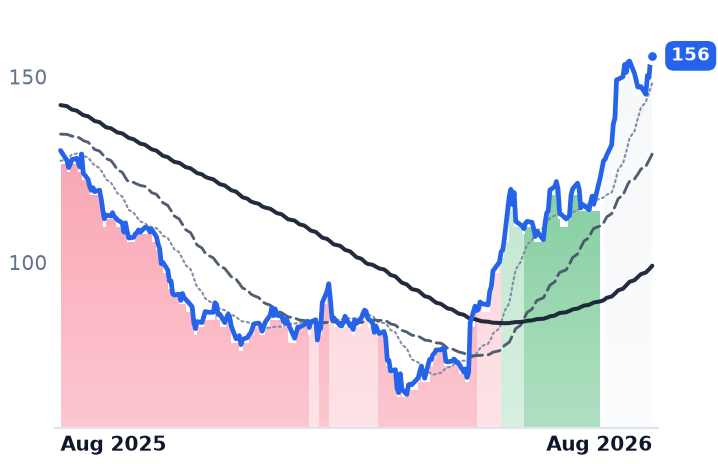
NSIT | Insight Enterprises | Enterprise IT Solutions | 🌱 Emerging Bull | +21.8% | +19.6% |
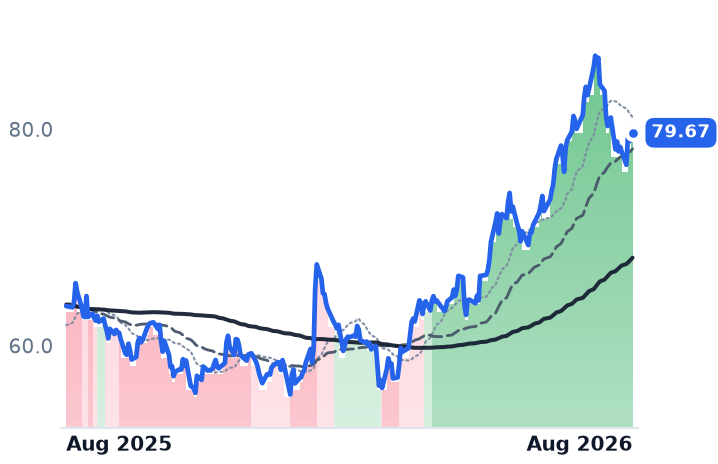
CNXN | PC Connection | Enterprise IT Solutions | 🌱 Emerging Bull | −4.2% | +25.2% |
| Compared against · context, not the story | |||||
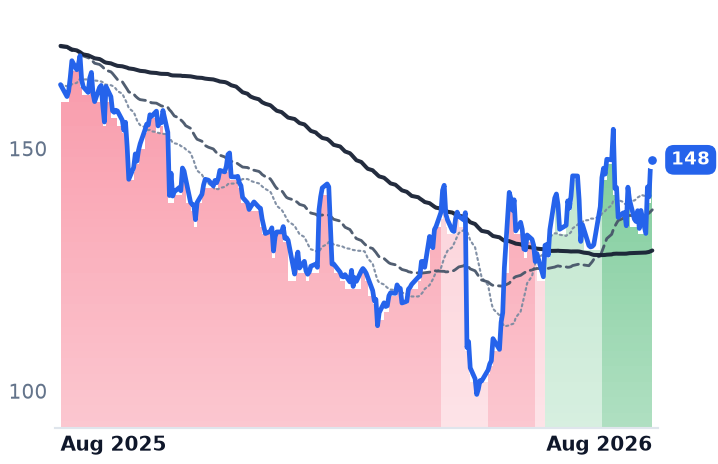
CDW | CDW | IT Infrastructure & Operations | 🌱 Emerging Bull | +2.0% | −9.5% |
12-month price & trend
| Ticker | Mkt cap | P/E | P/E fwd | P/S | P/S fwd | P/GP | P/GP fwd | EV/EBITDA | FCF yld |
|---|---|---|---|---|---|---|---|---|---|
NSIT | $4.7B | 22.7x | 12.4x | 0.5x | 0.5x | 2.5x | 2.4x | 12.8x | 9.0% |
CNXN | $2.0B | 21.0x | 19.1x | 0.7x | 0.6x | 3.6x | 3.4x | 13.2x | 1.7% |
CDW | $18.9B | 17.7x | 13.5x | 0.8x | 0.8x | 3.8x | 3.6x | 13.4x | 5.9% |
Consensus projections
| Ticker | FY2026E | FY2027E | FY2028E | |
|---|---|---|---|---|
NSIT | Revenue | +6.7% | +3.8% | +6.2% |
| EPS | +28.5% | +6.0% | +16.6% | |
CNXN | Revenue | +7.0% | +2.4% | — |
| EPS | +22.8% | +6.9% | — | |
CDW | Revenue | +8.9% | +3.7% | +2.8% |
| EPS | +10.5% | +9.2% | +8.9% |
Forward fiscal years only. Blank means no analyst coverage for that year.
When a corporate IT reseller signs a customer up to a cloud subscription, it often books none of the customer's money as its own revenue — only the sliver it keeps. Insight Enterprises, the Tempe, Arizona firm that sources, configures and finances hardware, software and cloud licences for corporate IT departments, reported software net sales down 6% in its June quarter while cloud gross profit rose 39% to $171m. Both facts describe the same shift.
That makes reported revenue nearly useless as a growth meter for this rung of the industry. Insight's own filing states that software delivered as a service is presented net, inside agent services revenue, rather than gross — so a subscription that wins share shrinks the top line and shows up only in gross profit. Run the meter across the channel and it separates the companies whose profit growth is software being consumed from those whose profit growth is a hardware price wave.
Insight passes the test, with a caveat it named itself
Cloud gross profit of $171m and core services gross profit of $95m, up 21%, together supplied about 81% of the $79.3m by which Insight's gross profit grew. Software fell to 16% of net sales from 21%. Gross margin reached 21.74% from 21.15%, operating expenses ran at 65% of gross profit against a 67% first-half average, and net income rose 65% to $77.6m on a diluted share count down 6.1% — leverage on a growing base, with buybacks a minor contributor. Revenue growth over four quarters ran from minus 4.0% to plus 14.7%, and gross profit outgrew it every quarter. Management raised full-year guidance to gross-profit growth of 8-10% and adjusted diluted earnings of $12.20 to $12.70 a share.
"Our pivot to become the leading solution integrator for the age of AI is working," chief executive Jack Azagury told investors on the August 6 call, before conceding that acquisitions and support functions "have not yet been fully integrated into a common operating model." Two caveats sit under the cloud line. Hardware net sales grew 21%, with infrastructure servers, storage and networking up more than 20% on both units and prices, at 110 basis points of lower hardware gross margin. And a year earlier, vendor partner-program changes held cloud gross-profit growth to 11%. Insight has flagged "Google Partner program compares" as a fourth-quarter headwind. Part of this annuity is repriceable by the vendors who fund it.
Connection sold the same number of laptops for more money
Connection, the Merrimack, New Hampshire reseller serving small and mid-sized businesses, government and education, publishes gross billings — the full value billed, including amounts never recognized in sales. Those rose 14% to $1.2bn against net sales up 12.4% to a record $854m. The netted share barely budged, the same near-parallel movement as the March quarter. Endpoint device units grew 3%; endpoint device revenue grew 19%. Business Solutions, its largest division, set a sales record with gross margin 50 basis points lower at 23.0%. Chief executive Tim McGrath described customers moving from "AI experimentation to enterprise-wide adoption" on the second-quarter call, with backlog at a three-year high — but the quarter's earnings leverage came from selling costs falling to 13.4% of sales, and inventory rose $61.5m and receivables $80.6m behind the record profit.
The macro fits exactly. IDC forecasts global personal-computer shipments down 11.3% in 2026 with average selling prices up 18.3%, driven by a memory shortage with no relief expected before the end of 2027. A reseller books more revenue on fewer machines.
CDW, the largest US corporate reseller, discloses the meter outright: netted-down revenues grew 16.1% and reached 35.9% of gross profit, up 300 basis points. It still turned 10.0% revenue growth into 6.3% gross-profit growth, gross margin 70 basis points lower on large infrastructure deals. Its shares fell 11.0% over the twelve months to August 28. The re-rating has been selective.
What the prices pay for
Insight rose 22.2% in the thirty days to August 28 and 86.3% over six months, closing August 27 at $155.68 against a twelve-month low of $64.43 — through violent sessions, including 19.07% on May 8 and 7.46% on results day, with brokers marking targets up sharply afterwards, Raymond James to $175 from $100. Connection fell 5.1% over the same month after peaking on August 4.
On price to gross profit — the comparison that survives the netting distortion — Insight is the cheapest of the three at 2.48x trailing, against Connection's 3.56x and CDW's 3.76x. The discount shrinks to roughly 5% on enterprise value to earnings before interest, tax, depreciation and amortization, because Insight carries $1.5bn of net debt while Connection holds $340.7m of cash and investments. Insight's 22.7x trailing earnings compresses to 12.4x forward; Connection's 21.0x compresses only to 19.1x.
So the mix test and the price disagree. Insight's advance is earned by the part of its book that grows gross profit while shrinking sales, and what its discount pays for is leverage plus a cloud line that a vendor program can cut in half. Connection has the cleaner balance sheet and a record quarter, but nothing in its numbers shows software displacing hardware — its margin moved the wrong way, on the mix its customers actually bought. Pricing it for perfection requires the device wave to keep paying.
And that wave has two sides. The memory shortage inflating Connection's device revenue is the same cost pressure Insight named as a headwind for its own second half. One of these companies is being paid by the shortage; the other has told investors it expects to absorb it.