

HubSpot Guided Customer Adds Down 40% While Revenue Per Customer Rose Just 4%
Hypothesis Opus 5 · Research Opus 5 · Writing Opus 5 · Prompt v1.6
HubSpot ended June with 306,446 customers, up 14%, and average subscription revenue per customer of $11,800, up 4%. The mid-market CRM vendor's growth is almost entirely new logos — and it is the logo count management just cut, from a 9,000–10,000 quarterly pace to 5,000–6,000 through year-end, with net revenue retention of 102% guided flat for the year.
The shares have gone the other way: up 31% over three months, with the last two sessions supplying the whole of the thirty-day gain after Salesforce's quarter lifted application software. Klaviyo, billed on stored consumer profiles rather than seats, is the counter-case — retention of 109% and customers above $50,000 of annual recurring revenue up 36% to 4,477 — which is why these two are not one trade.
| Ticker | Company | Segment | Trend · 13mo | 30D | 1Y |
|---|---|---|---|---|---|
| The subject · what this brief is about | |||||
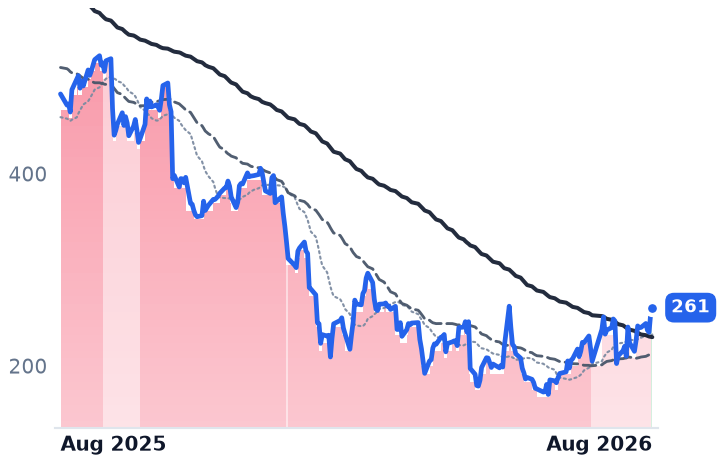
HUBS | HubSpot | Customer Experience & CRM | 🔴 Cont. Bear | +11.8% | −46.0% |
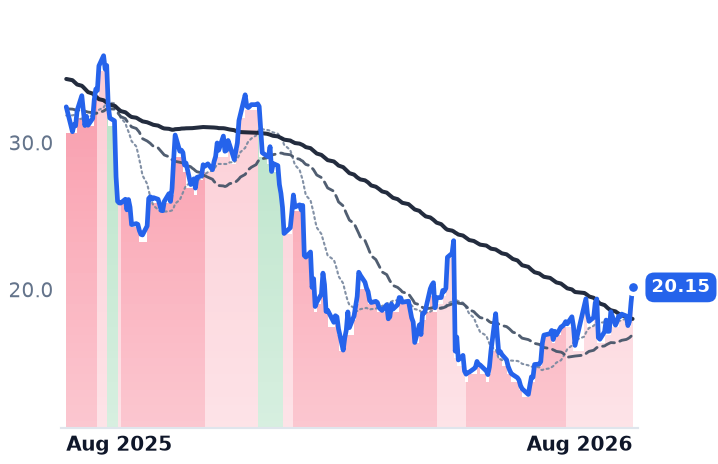
KVYO | Klaviyo | Marketing Automation | 🔴 Cont. Bear | +9.8% | −37.9% |
| Compared against · context, not the story | |||||
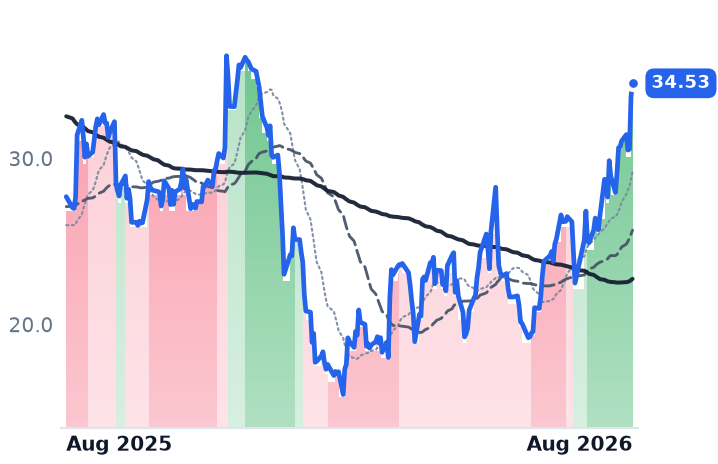
BRZE | Braze | Customer Experience & CRM | 🌱 Emerging Bull | +37.8% | +24.7% |
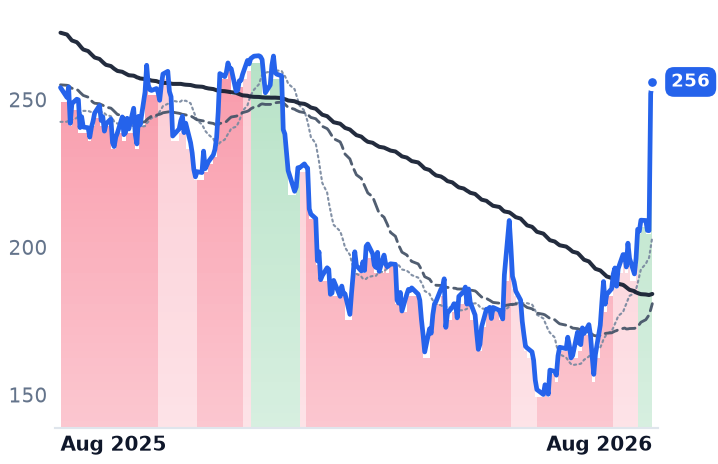
CRM | Salesforce | Customer Experience & CRM | 🔴 Cont. Bear | +41.7% | +0.7% |
12-month price & trend
| Ticker | Mkt cap | P/E | P/E fwd | P/S | P/S fwd | P/GP | P/GP fwd | EV/EBITDA | FCF yld |
|---|---|---|---|---|---|---|---|---|---|
HUBS | $13.4B | 92.2x | 19.6x | 3.9x | 3.6x | 4.7x | 4.4x | 44.5x | 5.7% |
KVYO | $6.0B | 937.2x | 24.4x | 4.3x | 3.9x | 5.9x | 5.3x | 197.1x | 4.1% |
BRZE | $3.9B | n/m | 54.5x | 4.9x | 4.3x | 7.4x | 6.5x | n/m | 1.7% |
| Ticker | Mkt cap | P/E | P/E fwd | P/S | P/S fwd | P/GP | P/GP fwd | EV/EBITDA | FCF yld |
|---|---|---|---|---|---|---|---|---|---|
CRM | $209.7B | 23.3x | 15.8x | 4.8x | 4.5x | 6.2x | 5.9x | 15.4x | 7.2% |
Consensus projections
| Ticker | FY2026E | FY2027E | FY2028E | |
|---|---|---|---|---|
HUBS | Revenue | +18.2% | +14.2% | +14.0% |
| EPS | +38.2% | +25.9% | +18.4% | |
KVYO | Revenue | +25.7% | +19.6% | +18.9% |
| EPS | +27.3% | +28.3% | +25.3% | |
BRZE | Revenue | +24.3% | +22.8% | +16.6% |
| EPS | +281.2% | +50.3% | +52.1% | |
CRM | Revenue | +9.3% | +11.4% | +9.6% |
| EPS | +17.4% | +37.6% | −1.6% |
Forward fiscal years only. Blank means no analyst coverage for that year.
Units carried it; price barely moved
HubSpot — which sells a bundled cloud customer-relationship platform (marketing email, chatbots, lead scoring, sales and service modules) mostly to mid-market business-to-business companies — ended June with 306,446 customers, 14% more than a year earlier, and collected an average of $11,800 of annual subscription revenue from each. That per-customer figure rose 4%. Decompose the subscription line and roughly fourteen points of it are new logos and about four are anything the company managed to charge an existing customer more for.
Which is the problem with what management said next. HubSpot added 7,000 net customers in the June quarter against an internal expectation of 9,000–10,000, and guided second-half quarterly additions to 5,000–6,000 — a cut of about 40% to the engine doing nearly all the work, with the headwinds expected to persist through year-end. Net revenue retention was 102% and is guided flat for the full year; customer dollar retention sits in the high 80s, with downgrade pressure as customers optimize spend.
Some of that is self-inflicted and deliberate. In April HubSpot lowered entry prices, opened free trials on its AI agents and moved agent pricing to outcomes rather than tokens. "Scaling companies want real outcomes and predictable pricing when adopting AI, and we are evolving our product, pricing, and go-to-market to meet those needs," chief executive Yamini Rangan said in the results release. Some of it was not planned: "April got off to a slow start and the quarter we expected did not fully materialize," Rangan told investors on the August 5 call, describing approvals pushed to the C-suite and board and sales cycles stretching one to two weeks. The shares fell 18% the following session on 8.6m shares, more than four times their recent daily average — the worst day in the company's history.
The offset is margin, and it is real
Revenue of $911.7m grew 19.8%, down from 23.4% in the March quarter, and gross margin slipped to 82.4% from 83.9%. Below that line the picture inverts: GAAP operating margin swung to 4.75% from minus 3.23%, non-GAAP operating margin reached about 20%, and adjusted earnings per share of $3.26 rose 49%. The board added $1bn of buyback capacity and more than $500m was spent in the quarter, shrinking the diluted share count 3.7% in three months. Full-year revenue is guided to $3.678–3.686bn with roughly $750m of free cash flow. Consensus has earnings growing at about double the revenue rate next year — all of it margin and share count.
Klaviyo's meter is a different meter
Klaviyo, which stores consumer profiles and sends email and text campaigns for more than 205,000 e-commerce brands, bills on the audience rather than the seat, and that meter is turning. Net revenue retention was 109% while absorbing a three-point headwind from lapping last year's active-profile billing enforcement; customers above $50,000 of annual recurring revenue rose 36% to 4,477 and now supply about 40% of annual recurring revenue. Full-year guidance went up, to $1.526–1.534bn. The catch is the near term: the September-quarter guide of $377–381m implies 21.5–22.5% growth against 26.4% just reported. The two companies rarely bid for the same socket — inbound business-to-business versus Shopify-based retail — and their disclosures now say opposite things about expansion.
What the price is paying for
HubSpot is up 31% over three months. But through August 26 it was down 1.3% over the trailing thirty days; the entire 9.5% thirty-day gain arrived in two sessions, after Salesforce beat earnings estimates by 80% and rose 22% in its biggest session since 2020, dragging application software with it. Klaviyo's thirty-day gain was built the same way. HubSpot's price-to-gross-profit went from 4.20x to 4.65x across those two days with nothing company-specific in between; the same measure was 3.79x in late May and about 10.4x a year ago. Morgan Stanley named both as favored ideas in August on a sentiment recovery in application software — a view about the group, not a change in either company's operating numbers.
The business earns part of this. Operating leverage of eight points of GAAP margin and a 3.7% share count reduction in one quarter are worth a higher multiple on a de-rated stock. What nothing in the June quarter earns is the re-rating that arrived on another company's earnings, into a unit meter management had just cut and a per-customer price line that moved 4%. Klaviyo's expansion is doing work; HubSpot's is not, and the two have been repriced as though they were the same instrument.
The honest test is a countable one. HubSpot has published the number it must beat — 5,000 to 6,000 net additions a quarter — and told investors why it will be low. If April's cheaper entry price and free agent trials were an investment rather than a leak, the September quarter is where it shows up.