

Harbin Electric Lifted Half-Year Profit 63.5% While Its Shares Fell a Third
Hypothesis Opus 5 · Research Opus 5 · Writing Opus 5 · Prompt v1.6
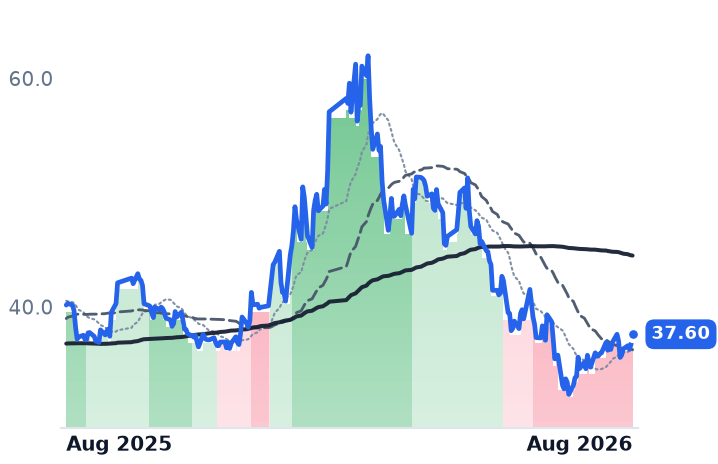
Three Chinese power-equipment makers were re-rated through 2025 as challengers to the Western gas-turbine oligopoly, and all three have handed the gains back this year. The disclosures suggest gas turbines were never large enough to justify either leg. Harbin Electric's gas-fired equipment revenue was RMB873m in 2025 — 1.9% of the group — and it fell more than half, while coal-fired equipment at RMB18.5bn grew 16% and coal order intake rose 39%.
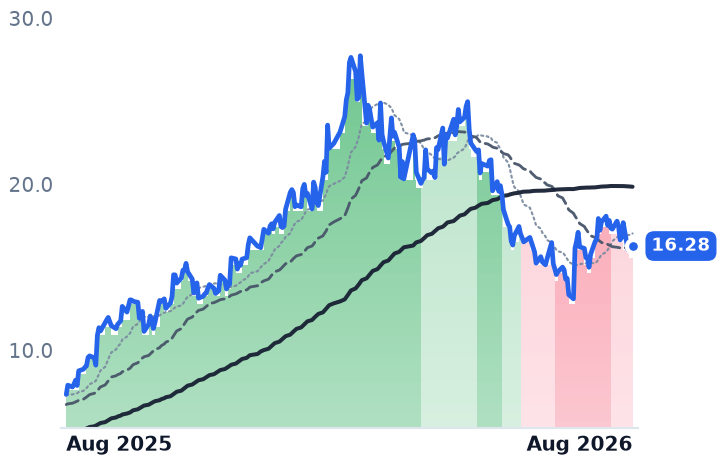
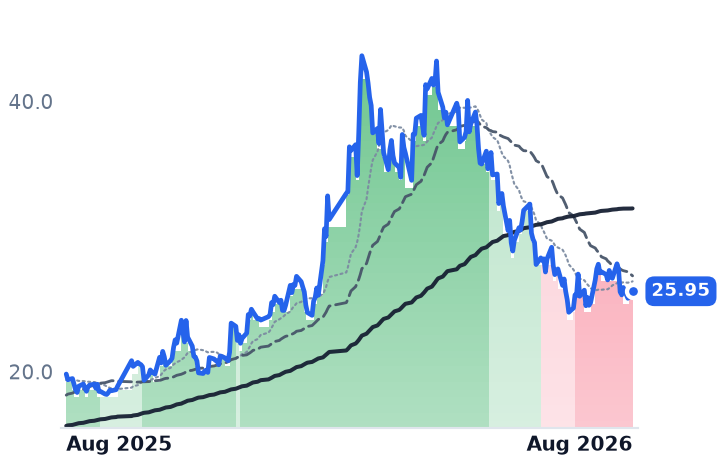
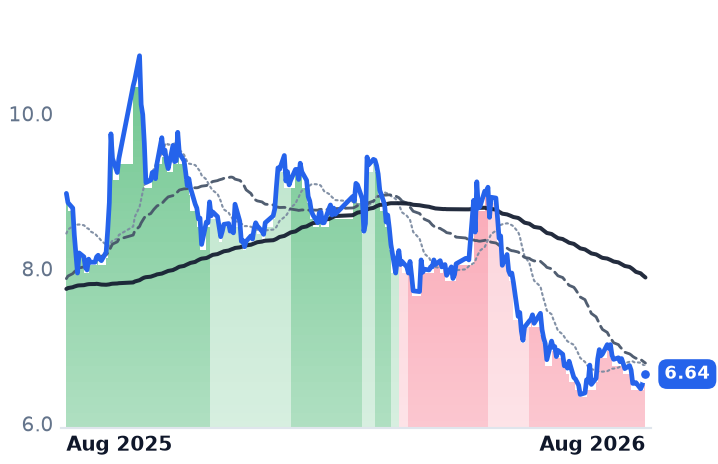
The three split. Harbin's first-half revenue grew 10.1% and gross margin widened 3.75 percentage points, against a share down 34% in six months and 9.6x trailing earnings. Dongfang Electric's first-half revenue grew 1.24% and second-quarter gross profit fell, at roughly double Harbin's multiple; Shanghai Electric's profit guidance leans on subsidies and asset disposals. Two of the three de-ratings look earned.
| Ticker | Company | Segment | Trend · 13mo | 30D | 1Y |
|---|---|---|---|---|---|
| The subject · what this brief is about | |||||
1133.HK | Harbin Electric | Industrial - Machinery | ⚠️ Emerging Bear | — | — |
600875.SS | Dongfang Electric | Industrial - Machinery | ⚠️ Emerging Bear | — | — |
601727.SS | Shanghai Electric | Industrial - Machinery | ⚠️ Emerging Bear | — | — |
600893.SS | AECC Aviation Power Co.,Ltd | Aerospace & Defense | ⚠️ Emerging Bear | — | — |
| Compared against · context, not the story | |||||
GEV | GE Vernova | GE Vernova Integrated | 🟢 Cont. Bull | +1.3% | +44.2% |
ENR.DE | Siemens Energy | Industrial - Machinery | ⚠️ Emerging Bear | — | — |
7011.T | Mitsubishi Heavy Industries | Industrial - Machinery | ⚠️ Emerging Bear | +7.6% | +6.5% |
12-month price & trend
| Ticker | Mkt cap | P/E | P/E fwd | P/S | P/S fwd | P/GP | P/GP fwd | EV/EBITDA | FCF yld |
|---|---|---|---|---|---|---|---|---|---|
1133.HK | $37.1B | 9.6x | 10.1x | 0.7x | 0.7x | 4.4x | 4.5x | 4.6x | 19.2% |
600875.SS | $77.0B | 18.6x | 17.5x | 1.0x | 0.9x | 5.7x | 5.1x | 12.9x | -4.5% |
601727.SS | $103.3B | 79.9x | 65.0x | 0.8x | 0.8x | 4.5x | 4.2x | 13.7x | 8.5% |
| Ticker | Mkt cap | P/E | P/E fwd | P/S | P/S fwd | P/GP | P/GP fwd | EV/EBITDA | FCF yld |
|---|---|---|---|---|---|---|---|---|---|
GEV | $242.9B | 25.9x | 29.7x | 5.9x | 5.2x | 29.0x | 26.0x | 27.0x | 5.1% |
600893.SS | $101.0B | 145.2x | 137.8x | 1.9x | 2.0x | 22.8x | 23.9x | 41.3x | -6.2% |
ENR.DE | $128.0B | 47.5x | 33.6x | 3.1x | 2.9x | 14.7x | 14.0x | 21.2x | 6.0% |
| Ticker | Mkt cap | P/E | P/E fwd | P/S | P/S fwd | P/GP | P/GP fwd | EV/EBITDA | FCF yld |
|---|---|---|---|---|---|---|---|---|---|
7011.T | $13.5T | 33.9x | 31.3x | 2.7x | 2.4x | 12.3x | 11.0x | 18.2x | 7.1% |
Consensus projections
| Ticker | FY2026E | FY2027E | FY2028E | |
|---|---|---|---|---|
1133.HK | Revenue | +12.3% | +10.5% | +6.1% |
| EPS | +36.0% | +18.8% | +8.1% | |
600875.SS | Revenue | +11.3% | +12.6% | +8.3% |
| EPS | +24.3% | +16.1% | +11.5% | |
601727.SS | Revenue | +15.2% | +7.3% | +6.9% |
| EPS | +104.7% | +34.1% | +18.4% | |
GEV | Revenue | +23.9% | +14.8% | +15.0% |
| EPS | +321.7% | −19.5% | +40.7% | |
600893.SS | Revenue | +0.1% | +8.0% | +7.0% |
| EPS | +10.0% | +27.3% | +0.0% | |
ENR.DE | Revenue | +13.1% | +14.3% | +12.7% |
| EPS | +173.1% | +40.2% | +29.7% | |
7011.T | Revenue | −2.5% | +13.6% | +8.1% |
| EPS | +5.1% | +52.4% | +16.9% |
Forward fiscal years only. Blank means no analyst coverage for that year.
Harbin Electric, which builds boilers, steam turbines, hydro sets and nuclear island components for Chinese power stations, sold RMB873m of gas-fired equipment last year. That was 1.9% of group revenue of RMB45.70bn, and it fell 55.3% from the prior year. Over the same period the shares behaved as though the company were levered to the global scramble for gas turbines: up more than double over twelve months, then down 34% in six.
The stake is what investors thought they owned. Artificial-intelligence data centers have made heavy-duty gas turbines the scarcest capital good in power, and anything with a turbine attached was marked up through 2025. In China the money is somewhere else entirely, and the sell-off since March has not distinguished between a company whose earnings are compounding on coal and nuclear and companies whose earnings have stalled.
What the Chinese order books actually contain
Harbin is the only one of the three that breaks gas out. Coal-fired equipment was RMB18.53bn of 2025 revenue, 40.5% of the group and up 16.2%; nuclear grew 3.5%, hydro fell 8.1%. The gas line had been RMB1.95bn in 2024, so 2025 more than halved something already small. New power-equipment order intake rose 26% to RMB44.0bn, with coal orders up 39.4% and nuclear up 81.6%.
That mix follows the country's construction schedule. China commissioned a record 22.4 GW of gas-fired capacity in 2025, a third of the world's total, yet gas is still only about 4.5% of the national fleet. Meanwhile China is due to commission 85 of the 104 coal units starting up worldwide in 2026, roughly 55 GW, after 30 GW came online in the first half alone.
Shanghai Electric's RMB172.8bn of 2025 new orders itemizes coal at RMB26.59bn, wind at RMB22.97bn, storage and nuclear — and no gas line at all. Elevators, motors and intelligent manufacturing took RMB44.48bn, a quarter of the book. Dongfang buries turbines inside an "energy equipment manufacturing" segment that was RMB58.0bn, or 73.8%, of 2025 revenue.
The technology is borrowed, and one route just closed
Dongfang has been a Mitsubishi licensee since 2003; the Japanese company marked cumulative orders of 150 units through Dongfang Turbine in October 2024 and runs a Guangzhou aftermarket joint venture with it. Its indigenous G50 is a 50MW F-class machine with about ten units booked. At the annual meeting in Chengdu on 29 May, Dongfang disclosed an export agreement signed 30 April with a North American customer for a first phase of ten G50s, and a target of 20 to 30 indigenous turbines a year by early 2028. Management attributed the group's thin margin to fierce wind-power competition and described gas turbines as a business where the long money is earned in service.
Scale the ambition. "We almost doubled the number of gas turbines sold globally, from 100 units in 2024 to 194 units in 2025," Siemens Energy chief executive Christian Bruch said of his own company. Shanghai Electric's window into advanced frames was its 40% stake in Ansaldo Energia, a former Siemens licensee; Ansaldo is now 99.6% owned by Italy's state investor CDP Equity.
Which de-rating is earned
Harbin's numbers went the other way from its share price: first-half revenue up 10.1% to RMB25.0bn and attributable profit up 63.5% to RMB1.718bn, gross margin 15.66% against 11.91%. It trades at 9.6x trailing and 10.1x forward earnings, 1.69x book, with a 19.2% trailing free-cash-flow yield; GE Vernova trades at 25.9x trailing. Huatai keeps a buy with a HK$24.94 target, about 13.6x estimated 2026 earnings.
Dongfang's case is different. First-half revenue grew 1.24% while profit rose 42%; second-quarter gross profit fell 6.4% and margin slipped to 14.95%. Consensus still models full-year revenue growth of 11.3%, which needs about 22% growth in the second half. The stock is down 38% from its March peak and still near 18.6x trailing earnings, roughly double Harbin's. Shanghai Electric guided first-half profit up 12% to 22% and credited government subsidies and gains on disposing of subsidiary equity; at a net margin near 1%, its 80x earnings multiple says little, and on price to gross profit it is no cheaper than Harbin.
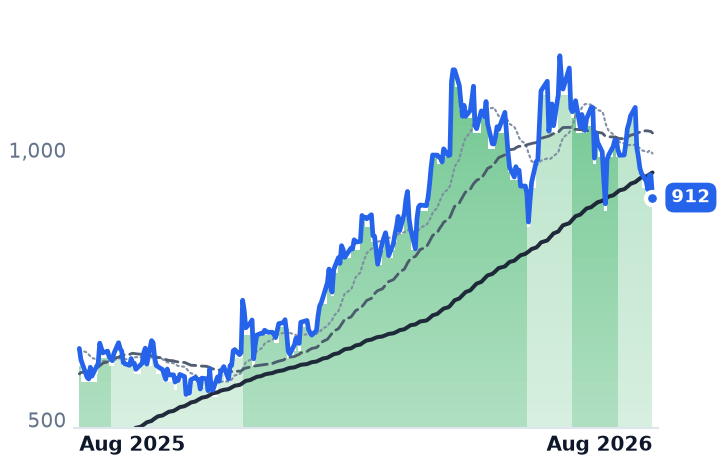
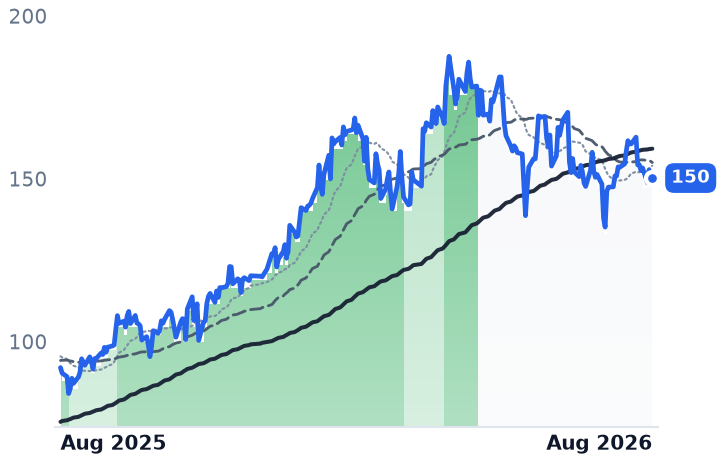
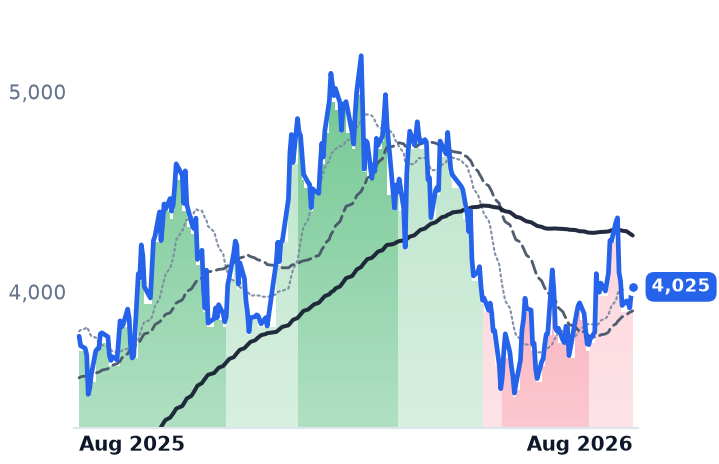
The move was not orderly. Harbin rose 23% on 21 July and fell 9% on 24 August; one Hong Kong session saw power-equipment shares lead declines on the view that higher oil and gas prices would suppress turbine demand, with Dongfang's H-shares off almost 10%. GE Vernova, Siemens Energy and Mitsubishi Heavy Industries did not participate in the de-rating, which makes this a China-specific repricing of a China-specific story.
Two of the three de-ratings are earned by the accounts: Dongfang's top line has stopped growing and Shanghai Electric's profit is partly borrowed from disposals. Harbin's is not — but the reason is uncomfortable for bulls too. What came out of the price was an artificial-intelligence gas narrative that never appeared in its revenue. What is left is a coal and nuclear equipment business growing faster than the multiple implies, priced as though Chinese coal boilers have no future in a year when China is building most of the world's new ones.