

INNIO Booked a $6.6bn Backlog by Self-Funding It, and Equipment Margin Fell to 13.8%
Hypothesis Opus 5 · Research Opus 5 · Writing Opus 5 · Prompt v1.6
Three companies sell into the same behind-the-meter socket at data centers — reciprocating engines and fuel cells bought because heavy-duty turbine slots are sold out — and their July results say they are not one trade. INNIO's equipment orders more than quadrupled to $2.3bn in the second quarter, but the money was made in its service book, at a 29.8% segment margin, while the equipment side that ships those megawatts lost nearly five points of margin funding its own ramp.
Wärtsilä has the opposite shape: a record €9.0bn order book and a 14% comparable operating margin, against reported sales down 9.3% after it sold eleven businesses. Bloom Energy alone had margins rise with volume, and it costs roughly four times what INNIO does for a dollar of gross profit at nearly identical gross margins.
| Ticker | Company | Segment | Trend · 13mo | 30D | 1Y |
|---|---|---|---|---|---|
| The subject · what this brief is about | |||||
INIO | INNIO N.V. Ordinary Shares | Industrial - Machinery | 🔴 Cont. Bear | −4.3% | −38.2% |
WRT1V.HE | Wärtsilä Oyj Abp | Industrial - Machinery | 🟢 Cont. Bull | +0.3% | +21.7% |
BE | Bloom Energy | Fuel Cell & Hydrogen | 🟢 Cont. Bull | +32.4% | +295.6% |
| Compared against · context, not the story | |||||
GEV | GE Vernova | GE Vernova Integrated | 🟢 Cont. Bull | +1.3% | +44.2% |
CAT | Caterpillar | Heavy Construction & Mining | 🟢 Cont. Bull | +3.0% | +86.6% |
CMI | Cummins | Power & Propulsion Systems | 🟢 Cont. Bull | −6.3% | +42.4% |
MHVYF | Mitsubishi Heavy Industries | Industrial - Machinery | ⚠️ Emerging Bear | +5.4% | −3.0% |
12-month price & trend
| Ticker | Mkt cap | P/E | P/E fwd | P/S | P/S fwd | P/GP | P/GP fwd | EV/EBITDA | FCF yld |
|---|---|---|---|---|---|---|---|---|---|
INIO | $15.6B | n/m | 86.8x | 9.7x | 4.0x | 28.8x | 12.0x | 85.6x | 2.2% |
WRT1V.HE | $17.3B | 25.9x | 25.8x | 2.6x | 2.7x | 17.5x | 18.4x | 14.7x | 7.7% |
BE | $62.1B | 252.2x | 79.3x | 19.9x | 15.3x | 63.8x | 48.8x | 177.9x | 1.0% |
| Ticker | Mkt cap | P/E | P/E fwd | P/S | P/S fwd | P/GP | P/GP fwd | EV/EBITDA | FCF yld |
|---|---|---|---|---|---|---|---|---|---|
GEV | $242.9B | 25.9x | 29.7x | 5.9x | 5.2x | 29.0x | 26.0x | 27.0x | 5.1% |
CAT | $368.6B | 34.3x | 29.4x | 4.9x | 4.6x | 14.6x | 13.7x | 23.4x | 2.4% |
CMI | $81.1B | 29.9x | 19.9x | 2.3x | 2.2x | 9.2x | 8.5x | 17.4x | 4.2% |
| Ticker | Mkt cap | P/E | P/E fwd | P/S | P/S fwd | P/GP | P/GP fwd | EV/EBITDA | FCF yld |
|---|---|---|---|---|---|---|---|---|---|
MHVYF | $90.8B | 49.2x | — | 2.9x | — | 14.0x | — | 23.5x | 4.2% |
Consensus projections
| Ticker | FY2026E | FY2027E | FY2028E | |
|---|---|---|---|---|
INIO | Revenue | +37.3% | +33.7% | +17.0% |
| EPS | −100.0% | +220.8% | +32.6% | |
WRT1V.HE | Revenue | −7.3% | +6.7% | +11.8% |
| EPS | +9.8% | +14.3% | +15.8% | |
BE | Revenue | +113.6% | +65.9% | +44.7% |
| EPS | +381.8% | +83.2% | +58.0% | |
GEV | Revenue | +23.9% | +14.8% | +15.0% |
| EPS | +321.7% | −19.5% | +40.7% | |
CAT | Revenue | +19.8% | +11.1% | +11.0% |
| EPS | +46.0% | +18.8% | +19.6% | |
CMI | Revenue | +13.1% | +8.9% | +8.0% |
| EPS | +29.6% | +16.9% | +16.9% | |
MHVYF | Revenue | −1.7% | +11.4% | +8.8% |
| EPS | +6.1% | +37.1% | +20.6% |
Forward fiscal years only. Blank means no analyst coverage for that year.
INNIO, the Munich maker of Jenbacher and Waukesha gas engines carved out of General Electric, told investors on July 28 that its equipment order intake had more than quadrupled from a year earlier, to $2.3bn. Its shares fell 17.0% the next session.
What the market read was not the order line but the margin underneath it. Engines and fuel cells are being bought at all because heavy-duty gas turbine slots are sold out into the end of the decade, and buyers are paying for delivery dates. The question that separates these three suppliers is whether a megawatt sold today is paid for on shipment, on a service contract years later, or not really paid for at all.
INNIO is buying its backlog
The orders are genuinely incremental. Data-center equipment order intake went from $27m in 2023 to $2.28bn in 2025, which is not a relabelled European cogeneration replacement cycle. Backlog reached $6.6bn, up 279%, including a 1.1 GW behind-the-meter prime-power order. "Combining our equipment order backlog with our slot reservations, we have more than 15 GW of committed business as of Q2 2026," chief executive Olaf Berlien said on the July 28 call; roughly 64% of it is data-center work.
The cost shows up one line down. Equipment adjusted segment margin fell from 18.7% a year ago to 13.8%, management attributing the drop to self-funded capacity and ramp-up cost, while Services earned 29.8% on 39% of the quarter's $937.7m of revenue. Every incremental data-center megawatt currently dilutes group profitability. This is not balance-sheet stress — net leverage improved to 2.7x from 3.6x at end-2025 — and consensus rebuilds EBITDA margin to 21.0% next year on the assumption that ramp costs anniversary. Q2 put that assumption in question.
Wärtsilä is paid, but not yet for this
Wärtsilä, the Finnish engine and power-plant group, is the only one of the three whose profit is already annuitized: a €9.0bn order book, a record €2.6bn combined service order book, and a rolling 14% comparable operating margin that met its own financial target — "which is our financial target," chief financial officer Arjen Berends told investors on the July 21 call. Second-quarter orders rose 33% to €2.8bn, with Energy up 82% on 1.2 GW of firm data-center orders across two projects. "The gross margin of the energy equipment order book has improved by more than 500 basis points," chief executive Håkan Agnevall said on the same call.
Reported sales, meanwhile, fell 9.3% in the quarter, because eleven divested business units dropped out of the base, and management flags roughly four years — deployment plus ramp — before engines shipped now generate material service revenue. Half-year service order intake actually fell 4%. The annuity is real and flat; the growth is booked and unshipped.
Bloom converts, expensively
Bloom Energy, whose solid-oxide fuel cells convert gas to electricity without combustion, is the only one whose margins moved with its volumes: revenue up 166% to $1.065bn, product gross margin of 37.2%, operating income up 737%, and full-year revenue guidance raised to $3.9–4.2bn. Its service segment, historically dilutive, earned 22%. The offsetting entry is the stack-replacement obligation: warranty and product-performance liabilities built $71.6m in the first half against $13.8m of spending.
Pricing is where they part. Bloom trades at 48.8 times forward gross profit against INNIO's 12.0 times — roughly four times as much for a dollar of gross profit, at gross margins within a point of each other. Wärtsilä, whose gross-profit reporting is not comparable, is the cheapest on every other measure: 25.9 times trailing and 25.8 times forward earnings, 14.7 times EV/EBITDA, and a 7.7% trailing free-cash-flow yield. A forward multiple equal to the trailing one means the market has priced in essentially no earnings growth.
What the shares did
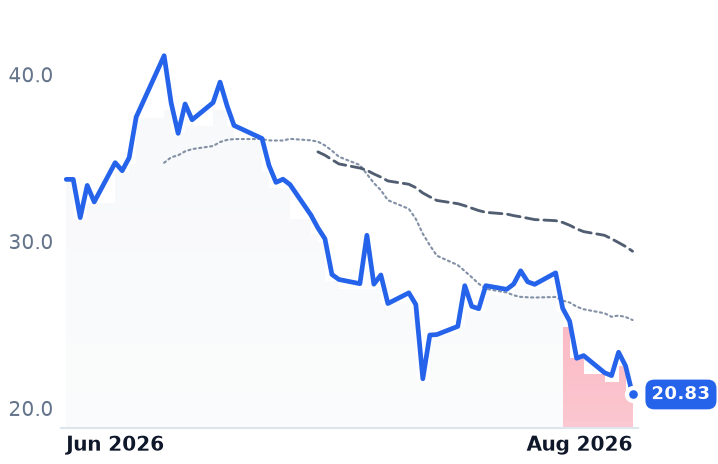
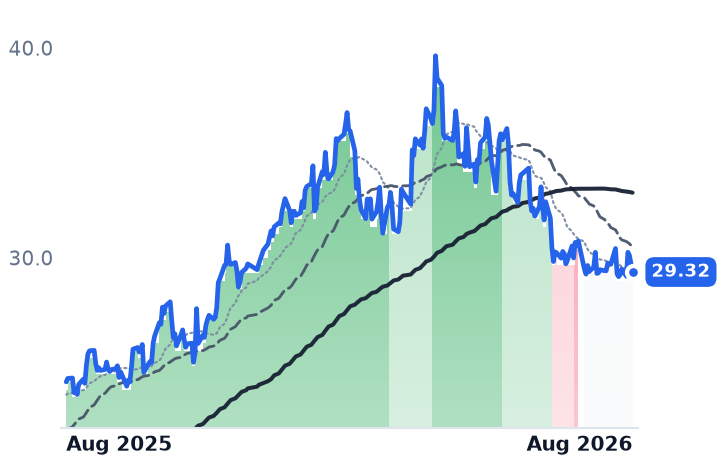
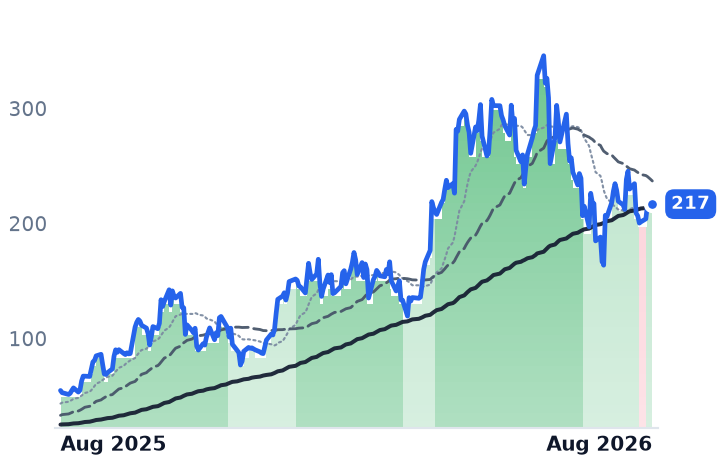
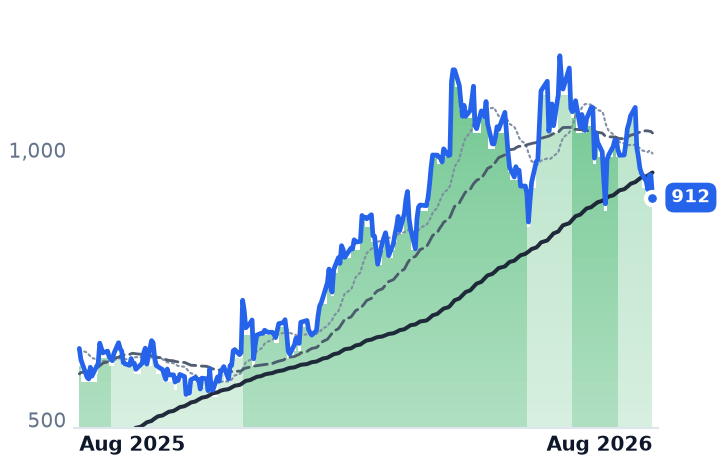
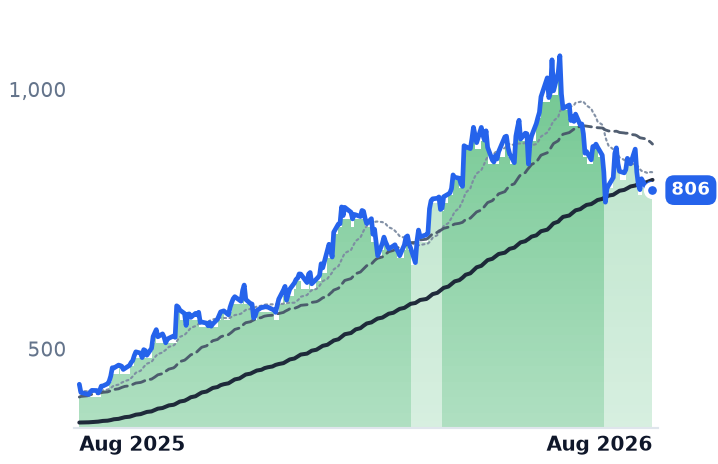
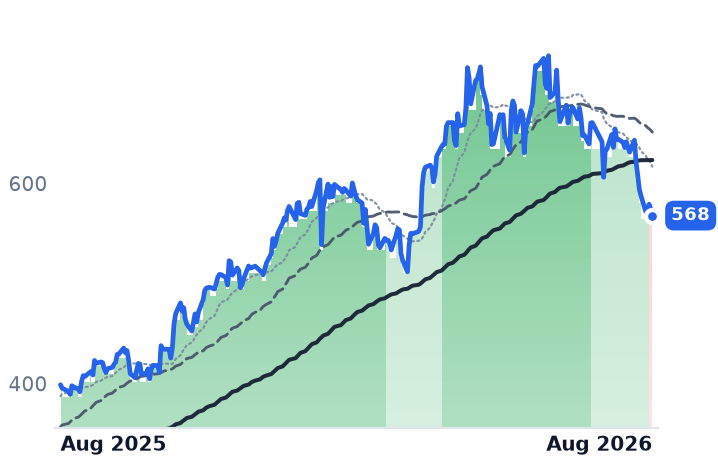
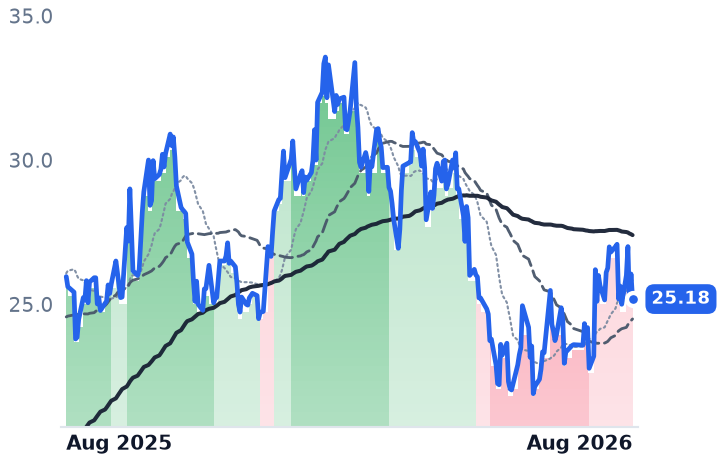
Between August 17 and 28 the whole listed data-center power complex sold off together — GE Vernova down 15.5%, Cummins 11.7%, Bloom 7.6% — while INNIO fell 25.9%, to $20.83, some 22.9% below its June IPO price of $27.00. No company-specific INNIO disclosure was discoverable in that window; the likelier reading is a sector de-risking that hit the least-seasoned name, one still 86.2% owned by an Advent- and ADIA-led group, hardest. Wärtsilä is down 17.5% over three months and up 17.9% over a year.
The verdict divides cleanly. INNIO's de-rating is earned by its own accounts: the orders are real, and so is the five-point margin cost of winning them. Wärtsilä's is not earned by anything in its P&L except a divestiture it disclosed in advance. Bloom's decline from May is the one case where the business improved and the price still had further to fall, because 48.8 times forward gross profit was pricing more than a doubling of revenue.
Wärtsilä says the engines it ships to a data center today start paying service revenue about four years out. Whoever is still buying megawatt scarcity then will find out which of these three was selling a product and which was selling a delivery slot.