

Amkor's Phone Packaging, Not Its AI Business, Explains a 42% Fall ASE Escaped
Hypothesis Opus 5 · Research Opus 5 · Writing Opus 5 · Prompt v1.5
Amkor Technology and ASE Technology do much the same job — bolting artificial-intelligence accelerator chips to their memory stacks for designers who own no factories — and both are growing fast. Only one has been repriced, and the reason has nothing to do with AI.
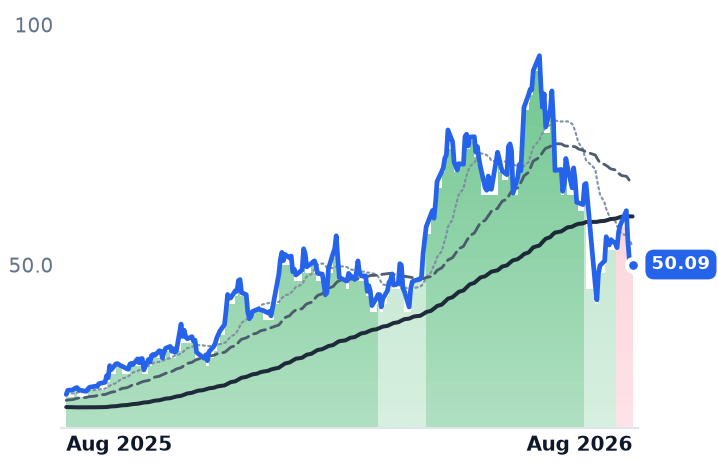
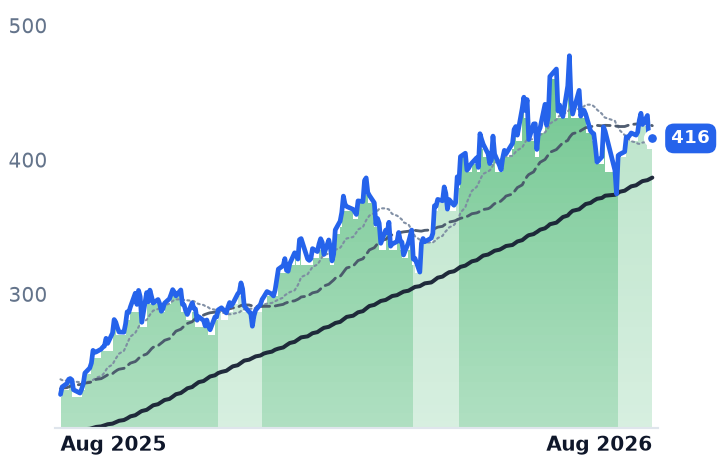
Amkor's second-quarter revenue rose 25.6% and its gross margin reached 16.8%, from 12.0% a year earlier, yet the shares are down 42% from a June peak. Each dollar of its trailing gross profit now costs 10.8 times, against 16.1 times in May, on 23% more gross profit. The trigger was narrow: third-quarter sales guided below consensus because packaging for smartphones, its largest end market, is migrating from Korea to Vietnam and running into memory shortages.
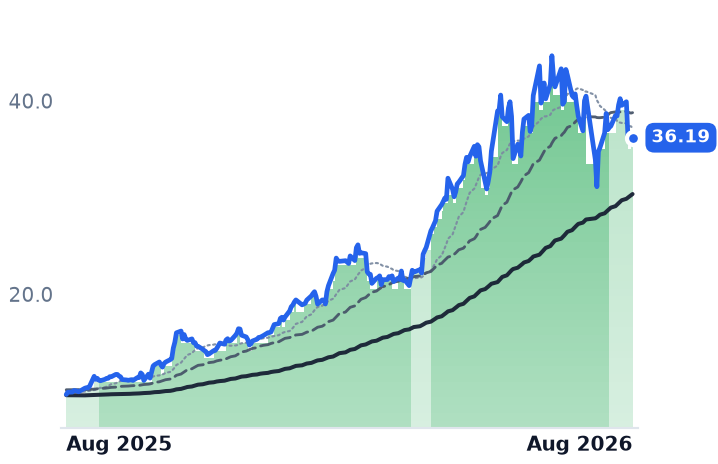
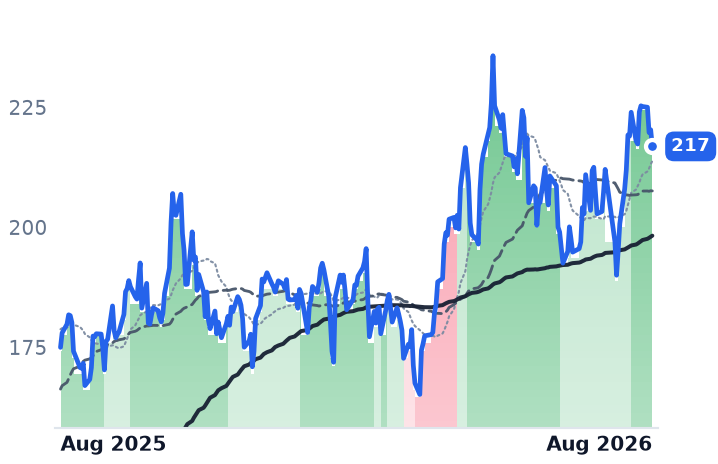
ASE, whose packaging arm earns 94% of operating profit, has not de-rated at all — 42 times trailing earnings, with free cash flow guided negative into 2027.
| Ticker | Company | Segment | Trend · 13mo | 30D | 1Y |
|---|---|---|---|---|---|
| The subject · what this brief is about | |||||
AMKR | Amkor Technology | Packaging & Assembly | 🟢 Cont. Bull | −25.2% | +117.4% |
ASX | ASE Technology | Packaging & Assembly | 🟢 Cont. Bull | −10.6% | +275.8% |
IMOS | ChipMOS TECHNOLOGIES | Packaging & Assembly | 🟢 Cont. Bull | −16.8% | +244.1% |
| Compared against · context, not the story | |||||
6239.TW | Powertech Technology | Semiconductors | 🟢 Cont. Bull | −9.0% | +123.8% |
TSM | Taiwan Semiconductor Manufacturing | Logic Foundries | 🟢 Cont. Bull | −1.2% | +84.6% |
NVDA | NVIDIA | AI & Data Center GPUs | 🟢 Cont. Bull | +2.3% | +23.9% |
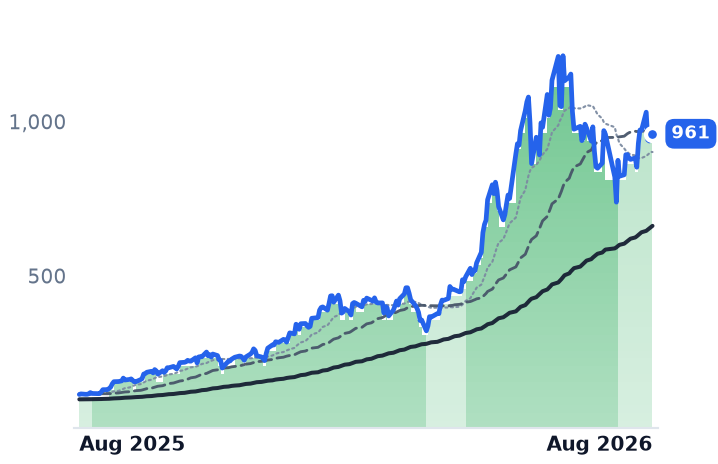
MU | Micron Technology | Memory (DRAM/NAND) | 🟢 Cont. Bull | +0.1% | +730.8% |
12-month price & trend
| Ticker | Mkt cap | P/E | P/E fwd | P/S | P/S fwd | P/GP | P/GP fwd | EV/EBITDA | FCF yld |
|---|---|---|---|---|---|---|---|---|---|
AMKR | $12.4B | 22.4x | 19.8x | 1.7x | 1.6x | 10.8x | 10.5x | 9.7x | 4.1% |
ASX | $79.8B | 42.2x | — | 3.6x | — | 18.6x | — | 18.1x | -1.2% |
IMOS | $1.9B | 27.1x | — | 2.2x | — | 15.2x | — | 8.2x | -0.8% |
| Ticker | Mkt cap | P/E | P/E fwd | P/S | P/S fwd | P/GP | P/GP fwd | EV/EBITDA | FCF yld |
|---|---|---|---|---|---|---|---|---|---|
6239.TW | $198.4B | 26.6x | 21.1x | 2.3x | 2.1x | 12.3x | 11.2x | 8.8x | -5.5% |
TSM | $2.1T | 27.5x | — | 13.9x | — | 21.6x | — | 18.2x | 1.8% |
NVDA | $5.5T | 34.3x | 25.0x | 21.5x | 13.9x | 29.0x | 18.7x | 28.3x | 2.2% |
| Ticker | Mkt cap | P/E | P/E fwd | P/S | P/S fwd | P/GP | P/GP fwd | EV/EBITDA | FCF yld |
|---|---|---|---|---|---|---|---|---|---|
MU | $1.0T | 19.9x | 12.2x | 11.2x | 7.8x | 15.4x | 10.7x | 14.5x | 2.6% |
Consensus projections
| Ticker | FY2026E | FY2027E | FY2028E | |
|---|---|---|---|---|
AMKR | Revenue | +14.7% | +12.5% | +10.4% |
| EPS | +100.3% | +8.8% | +21.4% | |
ASX | Revenue | +26.9% | +25.0% | +19.3% |
| EPS | +106.7% | +51.3% | +33.7% | |
IMOS | Revenue | +27.1% | +15.5% | +15.6% |
| EPS | +798.7% | +42.8% | +19.7% | |
6239.TW | Revenue | +26.5% | +21.5% | +11.9% |
| EPS | +75.7% | +45.6% | +12.2% | |
TSM | Revenue | +42.0% | +34.4% | +26.0% |
| EPS | +65.3% | +30.6% | +26.2% | |
NVDA | Revenue | +65.1% | +84.2% | +43.2% |
| EPS | +59.0% | +91.7% | +42.0% | |
MU | Revenue | +248.0% | +92.8% | +11.4% |
| EPS | +804.9% | +111.2% | +7.9% |
Forward fiscal years only. Blank means no analyst coverage for that year.
When Amkor Technology told investors on 27 July that its biggest end market would shrink in the third quarter, it also told them its data-center business would grow about 30% sequentially off a record quarter. The market took the first half of that sentence. The shares have since fallen to $50.09, some 42% below their 30 June peak of $86.23, including an 18.3% slide in the four sessions to 21 August. ASE Technology, which does more of the same work than anyone in the world, has barely moved.
Both are outsourced assembly and test houses — the rung of the supply chain where a finished silicon die is bumped, joined to its memory, encased and tested. Amkor, based in Tempe, Arizona, is the largest US-listed one, with about 30,800 employees and a $12.4bn market value. ASE, of Kaohsiung, is the global leader at $79.8bn, and also runs a large contract-electronics arm that dilutes its packaging economics. ChipMOS Technologies, a $1.9bn Hsinchu company, is the useful control: it tests and assembles memory and display-driver chips and almost nothing else.
The business did not deteriorate
Amkor's second quarter was the best in its recent history. Revenue reached $1.9bn, gross profit rose 75% to $318.6m, and operating income more than doubled. Factory utilization went from the low 50s to the high 70s in percentage terms, and management guided third-quarter gross margin to 18.5–19.5%. Its computing segment set a record, up 20% sequentially, on data-center demand and a new high-density fan-out processor ramp.
The damage came from communications — chips for phones. Amkor guided that book down by a high single-digit percentage against normal seasonality, on the migration of system-in-package work from Korea to Vietnam, changed customer build patterns and a shortage of memory components, and said the drag runs into the first half of 2027. Third-quarter revenue was guided to $1.95–2.05bn against consensus near $2.12bn. The stock fell roughly a quarter that day.
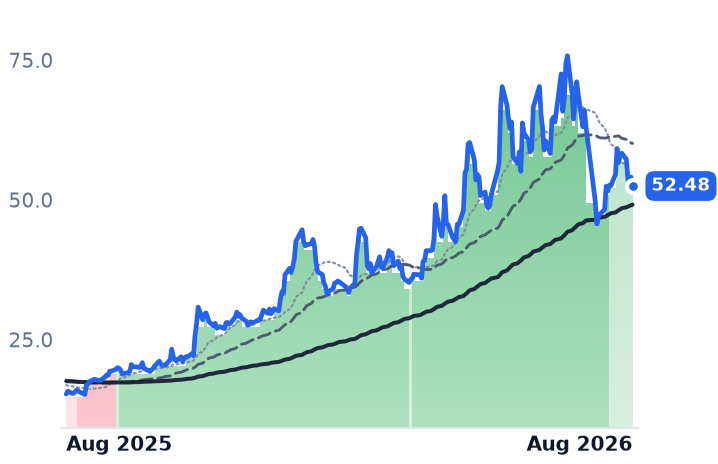
The memory shortage doing the damage is the same force reflating the rest of the industry. Standard DRAM contract prices rose 90–95% quarter on quarter in the first quarter of 2026 as Samsung, SK Hynix and Micron converted lines to high-bandwidth memory, where revenue per wafer is several times that of conventional DDR5. ChipMOS is what that looks like on the income statement: gross margin has risen every quarter for a year, from 6.6% to 18.0%, and operating margin from 0.4% to 12.8%.
Two prices for the same capacity
Amkor's trailing gross profit is 23% higher than six months ago, at $1.16bn. Its price per dollar of that profit has gone the other way — 12.7 times in February, 16.1 times in May, 10.8 times now. It trades at 22.4 times trailing and 19.8 times forward earnings, 9.7 times EV/EBITDA, and yields 4.1% on trailing free cash flow. The one genuine forward problem is Arizona: management expects depreciation and underutilization there to dilute margins, and consensus has it, with earnings per share of $2.52 this year but only $2.75 next.
ASE has not been repriced at all. Its multiple of trailing gross profit was 15.5 times in February, 19.1 times in May and 18.6 times today — roughly 1.7 times Amkor's — on 42 times trailing earnings and 6.6 times book. The business supports a lot of that. Its assembly, test and materials segment produced 66% of revenue but 94% of operating profit last quarter at a 27.3% gross margin, up 5.4 points, while the contract-electronics arm earned a 2.4% operating margin. Leading-edge packaging revenue is tracking above its $3.5bn guide and is targeted to double next year, and ASE raised advanced-packaging quotes by more than 20% in July. What it does not have is cash generation: capex was raised three times this year to a record $10.5bn, and free cash flow is guided negative into 2027.
The volume is being outsourced
The fear that foundries would keep advanced packaging for themselves is running the wrong way. Nvidia has reserved roughly 800,000 to 850,000 wafers of TSMC's chip-on-wafer-on-substrate (CoWoS) capacity for 2026, more than half the total, so overflow has to go outside. TSMC signed a ten-year agreement in June to buy packaging and test from Amkor's Peoria, Arizona campus; Nvidia widened its own Amkor deal in July with a prepayment to fund US capacity; and TrendForce reported on 5 August that TSMC is expanding outsourcing of the chip-on-wafer front-end step to outside assemblers.
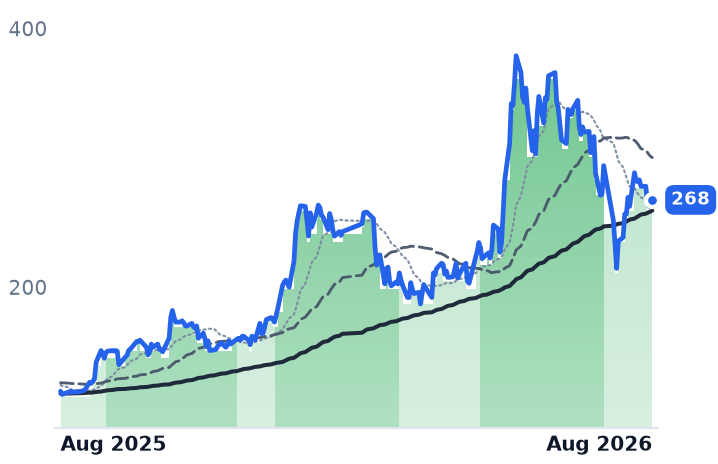
The selling is also not an industry verdict. Amkor's 50-day average slipped below its 200-day on 10 August, the only one of the group to turn down; ASE and ChipMOS merely cooled, and Taiwan-listed Powertech fell 1.3% in a month. What sets Amkor apart is a phone book that shrinks while it borrows — $1.15bn of zero-coupon convertibles — to build American capacity that earns nothing until 2027 or 2028.
The setup
Where it stands — Amkor's AI and automotive packaging set records while its phone business shrank, and the shares carry the phone outcome. Would confirm — Third-quarter gross margin printing inside the guided 18.5–19.5% range with computing revenue up about 30% sequentially. Would invalidate — Computing growth stalling, or fourth-quarter guidance extending the communications decline beyond the flagged first half of 2027. Watch next — Amkor's third-quarter report in late October; ASE's fourth-quarter guide on whether packaging gross margin clears 30%. Valuation — Amkor at 22.4 times trailing and 19.8 times forward earnings, 10.8 times trailing gross profit against 16.1 times in May; ASE 18.6 times.