

Dave Raised Guidance and Cut Delinquencies. Investors Sold It 26% for Growing Only 30%.
Hypothesis Opus 5 · Research Opus 5 · Writing Opus 5 · Prompt v1.5
Dave Inc. reported on 5 August with delinquencies down, advance volume up 27% to $2.3bn and full-year revenue, profit and earnings guidance all raised — and the shares fell 26% over the next two sessions. The reason was not credit. Revenue growth had halved to 29.6% from 63% a year earlier, and at 8.56 times trailing gross profit the price had no room for that.
The same mechanism hit Sezzle, down 33.9% the day after it beat and raised, and Klarna, whose plunge traced to currency and weak German demand rather than loan losses. Affirm and Upstart, with no earnings in the window, barely moved. OppFi is the one name with genuine credit pressure, charge-offs at 52% of receivables, yet its guidance cut was pinned on a delayed product launch. Bill Holdings, the only true software business of the three, widened its take rate and rose.
| Ticker | Company | Segment | Trend · 13mo | 30D | 1Y |
|---|---|---|---|---|---|
| The subject · what this brief is about | |||||
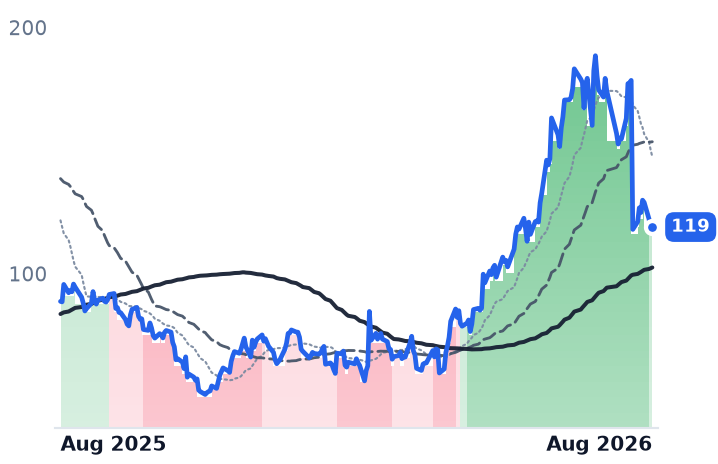
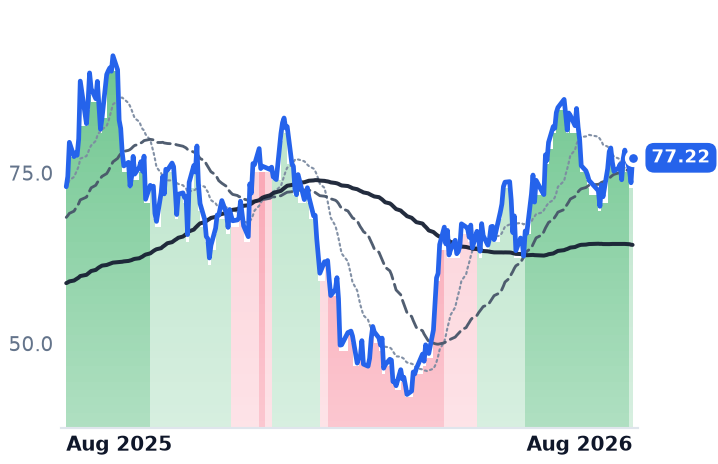
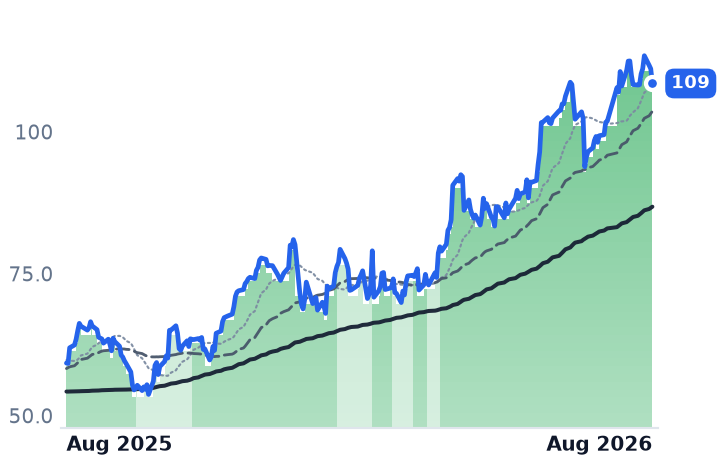
BILL | Bill.com | Fintech & Digital Finance | ⚠️ Emerging Bear | +8.4% | +15.2% |
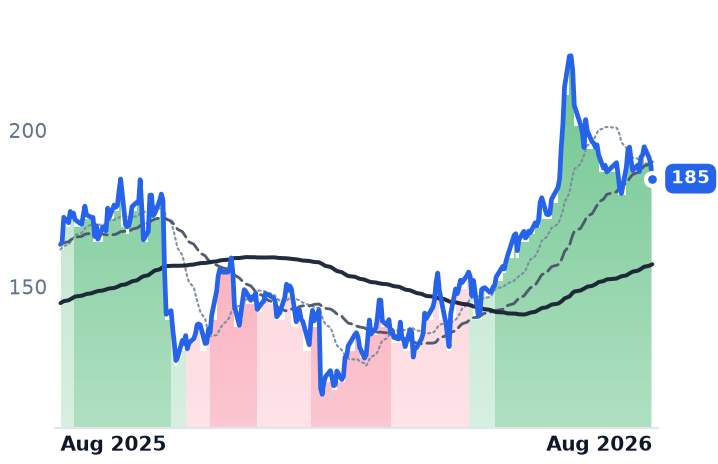
DAVE | Dave | Fintech & Digital Finance | 🌱 Emerging Bull | −22.3% | +81.1% |
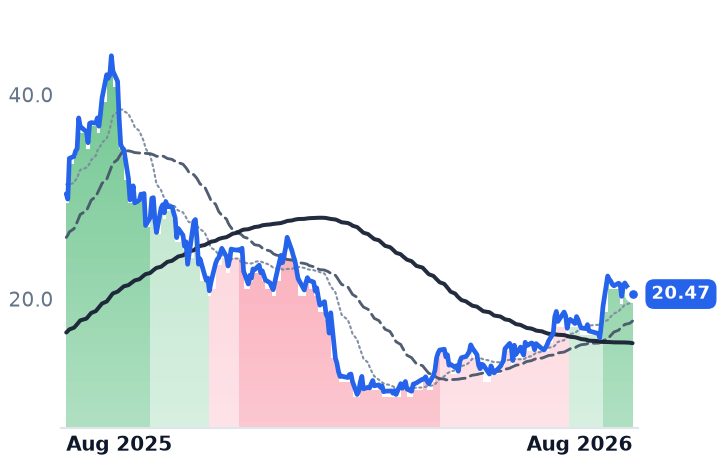
OPFI | OppFi | Fintech & Digital Finance | 🔴 Cont. Bear | −24.3% | −25.3% |
| Compared against · context, not the story | |||||
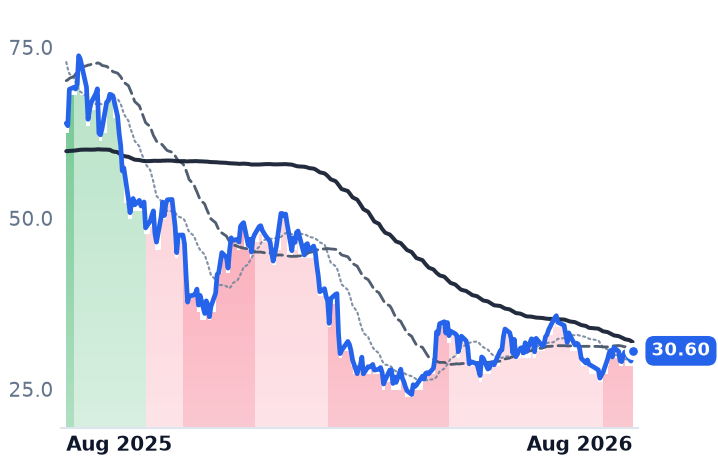
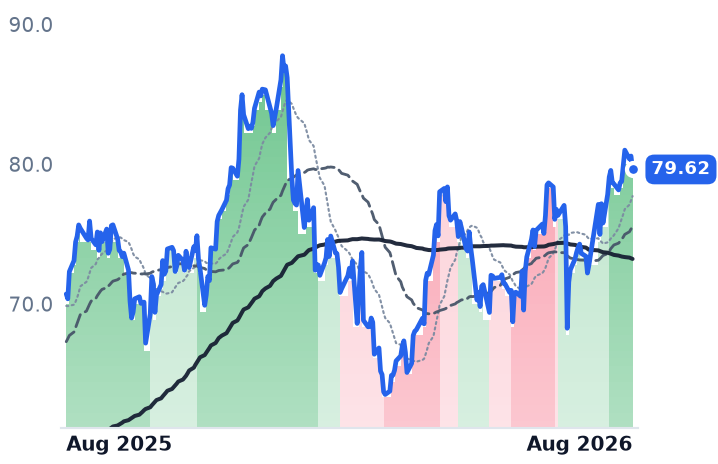
KLAR | Klarna | Consumer Fintech & Lending | 🔴 Cont. Bear | −23.3% | −65.8% |
SEZL | Sezzle | Digital Payments & Fintech Platforms | 🌱 Emerging Bull | −33.7% | +34.0% |
AFRM | Affirm | Consumer Fintech & Lending | 🌱 Emerging Bull | +3.3% | +5.8% |
UPST | Upstart | Digital Payments & Fintech Platforms | 🔴 Cont. Bear | +4.5% | −52.1% |
SYF | Synchrony Financial | Consumer Credit & Cards | 🟢 Cont. Bull | +10.3% | +12.6% |
BFH | Bread Financial | Consumer Credit & Cards | 🟢 Cont. Bull | +6.7% | +83.1% |
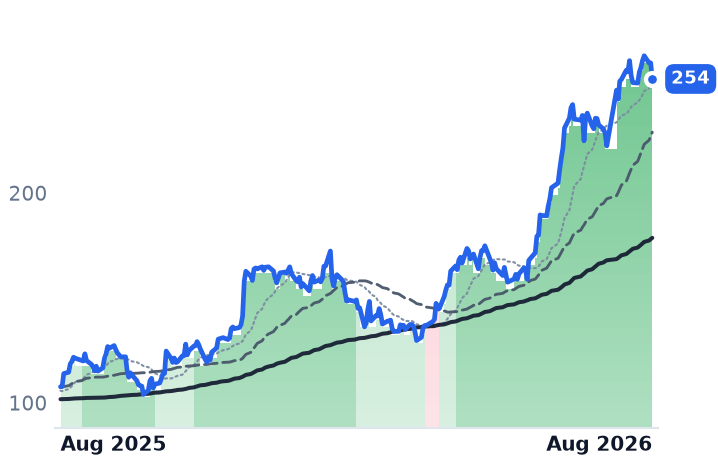
ENVA | Enova International | Other | 🟢 Cont. Bull | +11.3% | +136.2% |
WRLD | World Acceptance | Alternative Credit & Lending | 🌱 Emerging Bull | −2.3% | +12.9% |
PGY | Pagaya Technologies | Fintech Data & AI | 🌱 Emerging Bull | +17.1% | −32.4% |
12-month price & trend
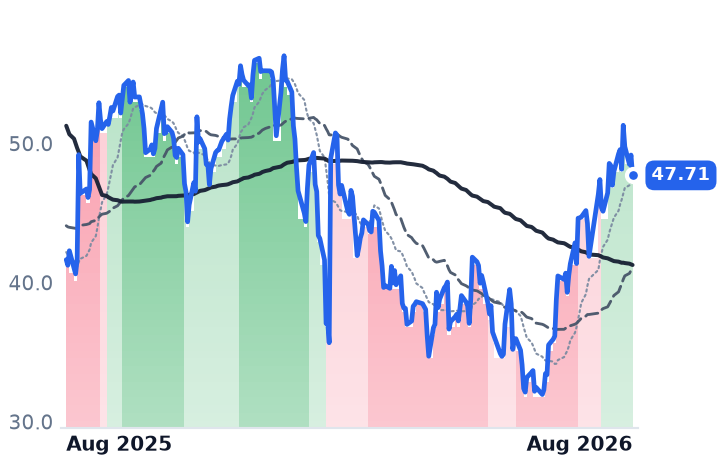
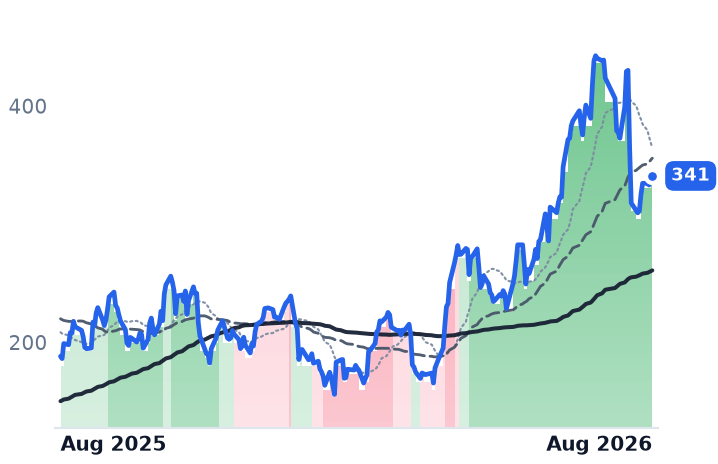
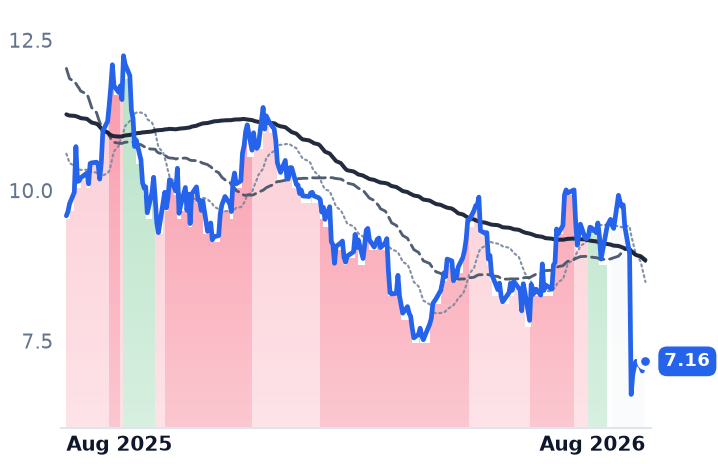
| Ticker | Mkt cap | P/E | P/E fwd | P/S | P/S fwd | P/GP | P/GP fwd | EV/EBITDA | FCF yld |
|---|---|---|---|---|---|---|---|---|---|
BILL | $4.8B | n/m | 13.4x | 2.9x | 2.7x | 3.6x | 3.3x | 50.1x | 8.9% |
DAVE | $4.6B | 20.6x | 25.2x | 7.1x | 6.3x | 8.6x | 7.6x | 15.8x | 7.1% |
OPFI | $611.4M | 2.1x | 5.1x | 1.1x | 1.0x | 1.0x | 0.9x | 7.0x | 63.6% |
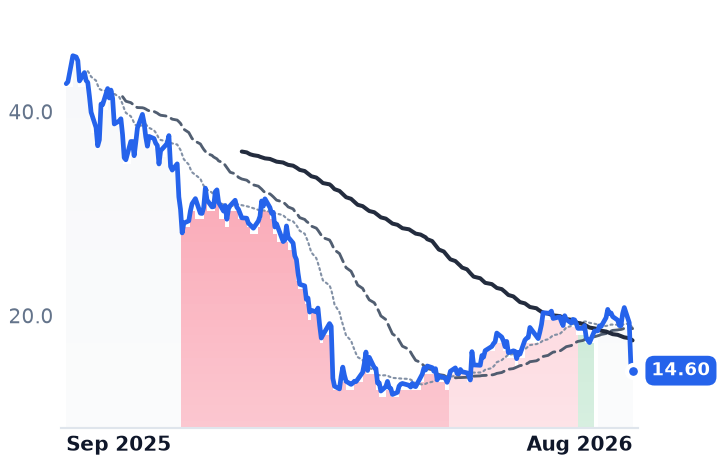
| Ticker | Mkt cap | P/E | P/E fwd | P/S | P/S fwd | P/GP | P/GP fwd | EV/EBITDA | FCF yld |
|---|---|---|---|---|---|---|---|---|---|
KLAR | $5.6B | n/m | 70.6x | 1.4x | 1.3x | 3.0x | 2.7x | 3.4x | -47.0% |
SEZL | $3.3B | 22.5x | 19.4x | 6.9x | 5.6x | 7.8x | 6.3x | 17.3x | 7.2% |
AFRM | $25.9B | 67.2x | 43.0x | 6.5x | 4.9x | 9.6x | 7.2x | 29.0x | 3.0% |
| Ticker | Mkt cap | P/E | P/E fwd | P/S | P/S fwd | P/GP | P/GP fwd | EV/EBITDA | FCF yld |
|---|---|---|---|---|---|---|---|---|---|
UPST | $2.8B | 57.9x | 13.0x | 2.4x | 2.0x | 2.5x | 2.1x | 52.7x | -10.2% |
SYF | $24.1B | 6.8x | 7.7x | 1.2x | 1.6x | 2.0x | 2.6x | 4.0x | 40.9% |
BFH | $3.5B | 6.6x | 7.8x | 0.7x | 0.9x | 1.2x | 1.4x | 5.2x | 62.1% |
| Ticker | Mkt cap | P/E | P/E fwd | P/S | P/S fwd | P/GP | P/GP fwd | EV/EBITDA | FCF yld |
|---|---|---|---|---|---|---|---|---|---|
ENVA | $4.1B | 12.5x | 10.0x | 1.2x | 1.1x | 1.9x | 1.7x | 13.7x | 45.5% |
WRLD | $756.2M | 20.8x | 13.9x | 1.3x | 1.2x | 1.8x | 1.7x | 22.4x | 33.3% |
PGY | $1.1B | 12.2x | 9.9x | 0.9x | 0.8x | 2.1x | 1.8x | 9.4x | 20.9% |
Consensus projections
| Ticker | FY2026E | FY2027E | FY2028E | |
|---|---|---|---|---|
BILL | Revenue | +13.2% | +8.9% | +10.1% |
| EPS | +26.1% | +35.2% | +19.3% | |
DAVE | Revenue | +32.5% | +21.9% | +27.1% |
| EPS | +8.9% | +46.5% | +38.8% | |
OPFI | Revenue | +2.5% | +16.8% | +30.3% |
| EPS | −10.2% | +35.6% | +38.4% | |
KLAR | Revenue | +26.1% | +19.6% | +18.1% |
| EPS | −127.5% | +292.7% | +63.2% | |
SEZL | Revenue | +32.4% | +27.0% | — |
| EPS | +51.5% | +27.4% | — | |
AFRM | Revenue | +32.0% | +25.5% | +24.8% |
| EPS | +2239.1% | +43.9% | +43.6% | |
UPST | Revenue | +36.1% | +31.3% | +26.0% |
| EPS | +35.9% | +46.6% | +40.7% | |
SYF | Revenue | +2.0% | +5.5% | +3.9% |
| EPS | −0.3% | +13.2% | +11.1% | |
BFH | Revenue | +3.5% | +4.0% | +3.1% |
| EPS | +8.8% | +13.9% | +13.5% | |
ENVA | Revenue | +19.9% | +17.3% | +25.1% |
| EPS | +28.4% | +21.5% | +32.5% | |
WRLD | Revenue | +7.1% | +9.6% | +6.0% |
| EPS | −49.5% | +55.4% | +28.5% | |
PGY | Revenue | +11.8% | +13.4% | +11.9% |
| EPS | +53.5% | +38.6% | +48.1% |
Forward fiscal years only. Blank means no analyst coverage for that year.
A beat that read as a warning
Dave Inc., a consumer app that fronts members cash against their next paycheck for a flat fee instead of an interest charge, told investors on 5 August that its 28-day past-due rate had improved to 2.12%, fourteen basis points better than a year earlier. Volume on the ExtraCash advance grew 27% to $2.3bn over the quarter, with the average advance at a record $215. Monthly transacting members reached 3.08m, up 17%, and the company lifted full-year revenue guidance to $725-735m, adjusted cash profit to $315-325m and adjusted earnings to $17.00-17.50 a share. Over the following two sessions the shares lost 26% — more than the entire month's decline.
One number explains it. June-quarter revenue of $170.8m was up 29.6% year over year, after 46.7%, 62.4% and 63.0% in the three quarters before it. Growth halved in a year, and the reaction was read at the time as a valuation reset rather than a credit one. Dave's pricing power is thin — rivals including EarnIn, Chime's MyPay and MoneyLion's Instacash charge no subscription and no mandatory advance fee, while Dave takes up to $5 a month plus roughly 5% per advance — so what it sells is underwriting and limit size. Its CashAI V6 model, live with about a third of users, is meant to push maximum advances well above $500. The regulatory overhang has eased: the Consumer Financial Protection Bureau (CFPB) withdrew its proposal to treat paycheck advances as credit under the Truth in Lending Act, replacing it with an advisory opinion in December. A 2024 Federal Trade Commission suit over Dave's "tip" disclosures and separate Justice Department litigation remain open.
Deceleration, not defaults
The pattern repeats across consumer fintech. Sezzle, a buy-now-pay-later provider, fell 33.9% on 7 August after beating on revenue and raising full-year guidance to 35% growth — punished solely for guiding second-half growth down toward 30%. Klarna's 22% single-session drop on 18 August came from a revenue guidance cut driven by about $600m of currency headwinds and softer German demand, with credit provisions running at 0.52% of goods volume. The control is the two large US consumer lenders with no results in the window: Affirm rose 2.1% and Upstart 4.0% between 3 and 19 August. Nor was it rates — the 30-year Treasury yield touched 5.33%, a 19-year high, on 18 August, and Dave rose 3.1% across that session and the next.
OppFi is the exception that proves the rule. The Chicago lender enables partner banks to write subprime installment loans and is a credit business, not a software one. Revenue of $145m grew 1.9%, originations fell 9% on deliberate tightening, adjusted net income dropped 27%, and net charge-offs reached 52% of receivables from 43% — though management attributes about 500 basis points of that to shrinking the loan book itself, and calls the consumer environment stable. Its guidance cut was pinned on a line-of-credit launch slipping to September; 2027 and 2028 targets, including roughly $3 of earnings by end-2028, were left alone. Shares fell about 25% in one session anyway. OppFi has applied to the Office of the Comptroller of the Currency to buy BNC National Bank, which would remove its dependence on wholesale funding, and started a $40m buyback.
The software name went the other way
Bill Holdings, which runs the largest bill-payment network for small businesses in the US and reaches most customers through their accountants, processed $98bn of payments in the June quarter, up 14%, while transaction fees grew 17%. That gap widened the take rate to roughly 33.1 basis points from 32.3 — the direct rebuttal to the long-standing worry that competition from Ramp, Brex and Melio would compress B2B payment fees. Float income on customer money in transit, at $35.7m, was about 8% of revenue and slightly lower than a year ago: the software business is carrying the growth, not the interest-rate position. The catch is fiscal 2027 core revenue guidance of 11-14%, below the 16% just delivered. Shares rose 8.4% over the month.
What the prices leave is uneven. Dave at 8.56 times trailing gross profit, down from about 11 times at its July high, is still above the 6.7 times it fetched in May and roughly 7.3 times a year ago — the drawdown has not returned it to its own anchors. Bill trades at 3.57 times trailing and 3.29 times forward gross profit, against 3.04 times in May and 3.58 times a year ago, with 13.4 times forward earnings and an 8.9% free-cash-flow yield; its trailing price-to-earnings ratio of -384 is noise on a small accounting loss. OppFi sits at 1.17 times book and 5.1 times forward earnings.
The setup
Where it stands — Three fintechs fell on slowing growth and one guidance delay, not on deteriorating loan books.
Would confirm — Dave's third-quarter loss rates hold near the second quarter's 2.12% past-due level with revenue growth still near 30%.
Would invalidate — Dave's or OppFi's delinquencies rising while origination volumes also grow, indicating looser underwriting.
Watch next — OppFi's line-of-credit launch in September and its OCC decision on BNC National Bank, targeted to close in the fourth quarter.
Valuation — Dave 8.56x trailing gross profit versus 6.7x in May; Bill 3.57x trailing and 3.29x forward against 3.58x a year ago.