

Celestica Raised Its 2026 Outlook, Then Sold $3bn of Stock 15% Below Market
Hypothesis Opus 5 · Research Opus 5 · Writing Opus 5 · Prompt v1.5
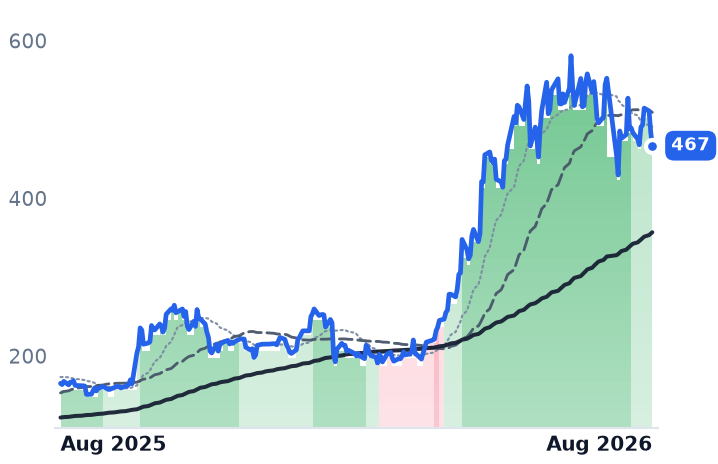
The companies that physically assemble artificial-intelligence server racks are growing faster than at any point in their history, and their shares have fallen since the end of June. Celestica lifted full-year revenue guidance to $20.5bn from $19bn on 28 July and named OpenAI and AMD as new 2027 rack customers; its stock is down 17% from its June peak, and it now trades at 19.15x trailing gross profit against 26.26x in mid-May.
The obvious explanation — that Taiwanese contract manufacturers are taking rack programs away — fails. Hon Hai's July revenue rose 54.2% and Wistron's 60.8%, roughly Celestica's own 62.4% growth rate. All are growing together.
Celestica, Flex and Jabil show accelerating revenue and expanding margins. Sanmina is the ambiguous one: its 69.7% growth is an acquisition, and the core business grew 14.1%.
| Ticker | Company | Segment | Trend · 13mo | 30D | 1Y |
|---|---|---|---|---|---|
| The subject · what this brief is about | |||||
CLS | Celestica | Electronic Manufacturing Services | 🟢 Cont. Bull | −11.3% | +64.8% |
FLEX | Flex | Electronic Manufacturing Services | 🟢 Cont. Bull | −11.3% | +130.2% |
SANM | Sanmina | Electronic Manufacturing Services | 🟢 Cont. Bull | −11.3% | +77.5% |
| Compared against · context, not the story | |||||
JBL | Jabil | Electronic Manufacturing Services | 🟢 Cont. Bull | +1.2% | +58.3% |
AMD | Advanced Micro Devices | AI & Data Center GPUs | 🟢 Cont. Bull | −14.3% | +182.5% |
NVDA | NVIDIA | AI & Data Center GPUs | 🟢 Cont. Bull | +6.3% | +25.6% |
DELL | Dell Technologies | Enterprise Storage & Software | 🟢 Cont. Bull | +8.3% | +244.3% |
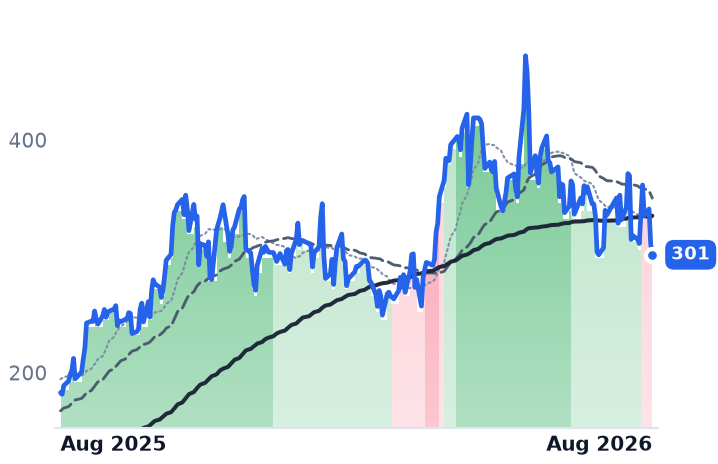
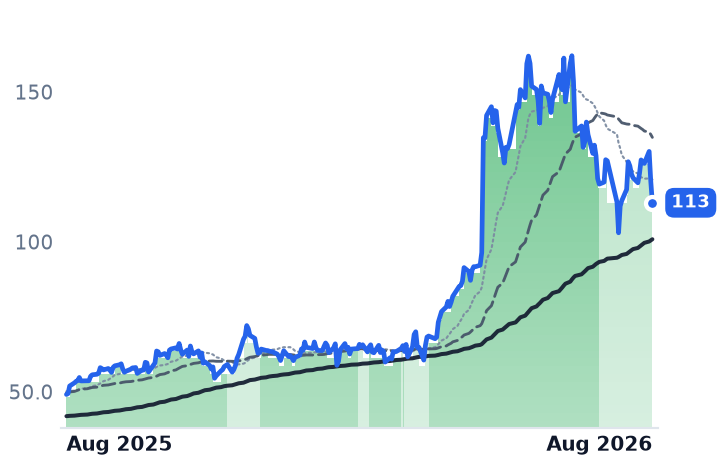
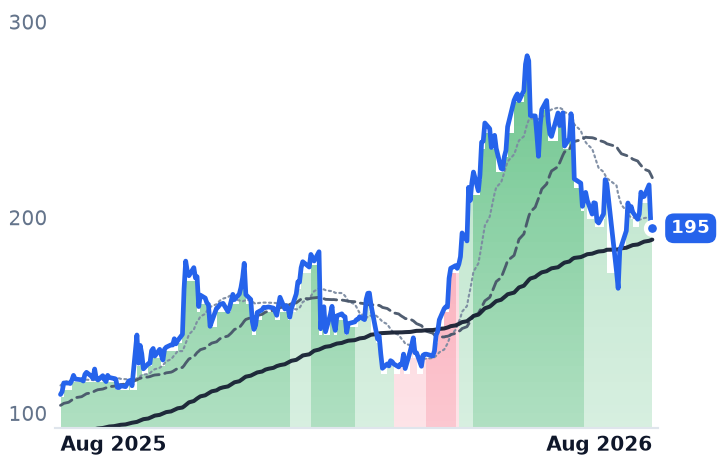
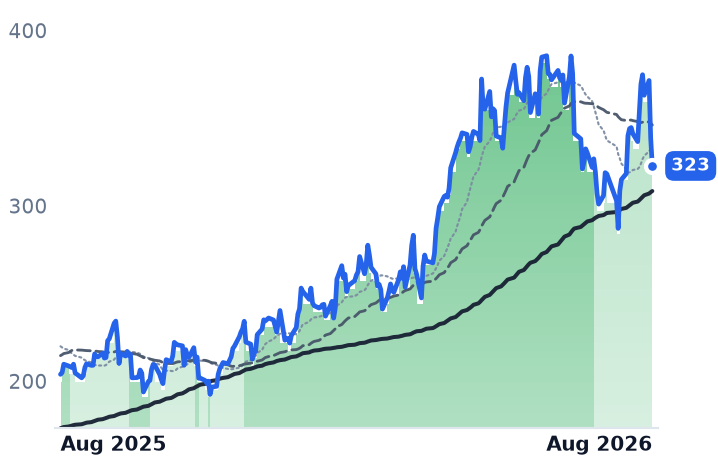
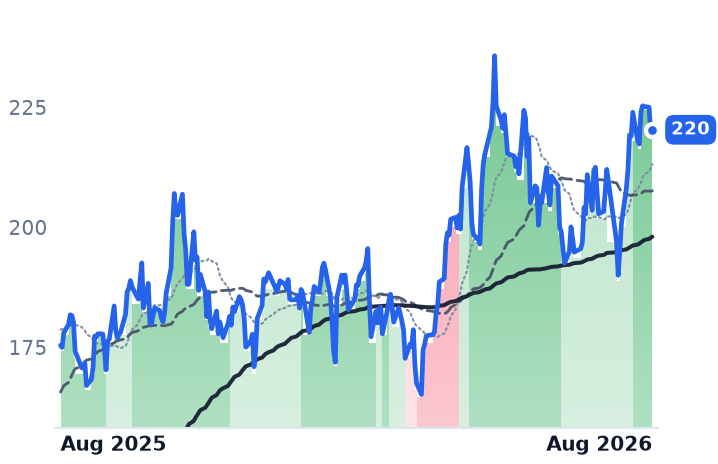
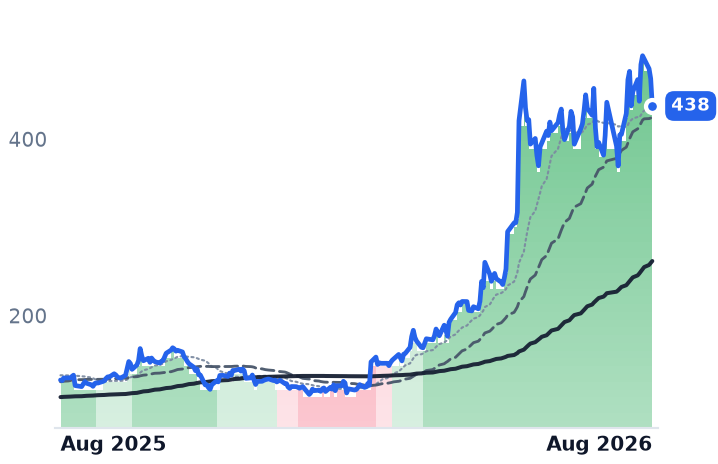
12-month price & trend
| Ticker | Mkt cap | P/E | P/E fwd | P/S | P/S fwd | P/GP | P/GP fwd | EV/EBITDA | FCF yld |
|---|---|---|---|---|---|---|---|---|---|
CLS | $34.7B | 31.0x | 26.5x | 2.2x | 1.7x | 19.1x | 14.5x | 23.2x | 1.5% |
FLEX | $41.8B | 43.6x | 24.1x | 1.4x | 1.2x | 15.0x | 12.7x | 23.6x | 2.6% |
SANM | $10.4B | 34.1x | 16.1x | 0.8x | 0.7x | 9.1x | 8.2x | 16.5x | 5.7% |
| Ticker | Mkt cap | P/E | P/E fwd | P/S | P/S fwd | P/GP | P/GP fwd | EV/EBITDA | FCF yld |
|---|---|---|---|---|---|---|---|---|---|
JBL | $38.8B | 45.7x | 29.0x | 1.2x | 1.1x | 12.5x | 12.0x | 19.4x | 3.9% |
AMD | $760.5B | 118.4x | 61.3x | 18.4x | 14.9x | 34.6x | 28.0x | 70.9x | 1.1% |
NVDA | $5.5T | 34.3x | 25.0x | 21.5x | 13.9x | 29.0x | 18.7x | 28.3x | 2.2% |
| Ticker | Mkt cap | P/E | P/E fwd | P/S | P/S fwd | P/GP | P/GP fwd | EV/EBITDA | FCF yld |
|---|---|---|---|---|---|---|---|---|---|
DELL | $287.3B | 33.8x | 23.4x | 2.1x | 1.7x | 11.2x | 8.8x | 20.8x | 3.3% |
Consensus projections
| Ticker | FY2026E | FY2027E | FY2028E | |
|---|---|---|---|---|
CLS | Revenue | +67.0% | +69.3% | +32.3% |
| EPS | +90.2% | +74.7% | +34.3% | |
FLEX | Revenue | +6.8% | +26.3% | +30.0% |
| EPS | +24.2% | +44.7% | +51.5% | |
SANM | Revenue | +74.9% | +15.8% | +11.8% |
| EPS | +103.4% | +15.2% | +12.7% | |
JBL | Revenue | +20.2% | +21.2% | +12.1% |
| EPS | +35.9% | +31.0% | +20.3% | |
AMD | Revenue | +49.6% | +68.8% | +37.0% |
| EPS | +91.9% | +98.7% | +42.7% | |
NVDA | Revenue | +65.1% | +84.2% | +43.2% |
| EPS | +59.0% | +91.7% | +42.0% | |
DELL | Revenue | +16.2% | +53.6% | +14.2% |
| EPS | +27.3% | +85.4% | +21.0% |
Forward fiscal years only. Blank means no analyst coverage for that year.
Celestica, the Toronto-based contract manufacturer that designs and assembles switches, storage and complete data-center racks for cloud operators, raised its full-year revenue target on 28 July to $20.5bn from $19bn. It lifted adjusted earnings guidance to $11.30 a share from $10.15, and named two new programs: custom racks for OpenAI, with mass production in 2027, and interconnect for AMD's Helios system, sampling at the end of this year.
Since the end of June the shares have lost 17%. Flex is down 30% over the same weeks, Sanmina 23% and Jabil 16%. These four companies do the physical work of the AI build — integrating accelerators, power shelves, busway and liquid cooling into racks that hyperscale operators once bought as branded servers from Dell or Hewlett Packard Enterprise. Their order books accelerated all summer. Their valuations went the other way.
The share-loss theory does not survive contact with the numbers
The cleanest bear case for a Western rack builder is that hyperscalers pull custom design toward the Taiwanese original design manufacturers, where the scale sits. That is testable monthly, because those companies report revenue every month. Hon Hai, better known as Foxconn, posted record July revenue of NT$946.5bn, up 54.2% year on year, crediting its cloud and networking division. Wistron reported July revenue up 60.8% and guided AI server growth to strengthen into the fourth quarter. Quanta booked its second-highest month on record.
Celestica's June quarter grew 62.4%. That is the same rate. Nobody is taking share from anybody; the market is growing faster than any of them can build.
Underneath the top line, Celestica's operating income rose 68.2% to $458.3m — faster than revenue, which is what operating leverage looks like. Its Connectivity and Cloud Solutions segment grew 84%, and the Hardware Platform Solutions line of custom rack and switch builds, now 41% of company revenue, grew 58%. Management said the binding constraint is material availability, with lead times past 52 weeks and customers placing non-cancellable orders for long-lead silicon.
The durable risk is concentration, and it is real. Celestica's annual report disclosed that three customers accounted for 32%, 14% and 12% of 2025 revenue. A single design loss resets a large share of the revenue line. But concentration is a standing condition, not a July event.
Flex is a power business wearing an assembler's clothes
Flex, the Singapore-founded manufacturer whose Anord Mardix unit makes switchgear and power distribution for data centers and whose JetCool line does microconvective chip cooling, grew its Cloud and Power Infrastructure segment 35% to $2.2bn at a 9.7% operating margin, with the power business up more than 70%. It guided that segment to 65-75% growth this fiscal year and says more than 90% of the next three quarters is booked. A tax-free spin-off of the segment is targeted for early 2027.
The premise that Flex's other end markets are dragging is wrong too: Reliability Solutions, its industrial, energy and medical arm, grew 12% to $2.7bn with operating margin up 130 basis points. Group gross margin expanded to 9.42% from 8.70%.
Sanmina is the genuinely ambiguous name. The San Jose company's heritage is defense, medical and industrial electronics; it bought ZT Systems' data-center manufacturing arm from AMD. Revenue rose 69.7% year on year — and fell 13.7% sequentially, as legacy ZT programs wind toward zero. Core Sanmina, excluding the acquisition, grew 14.1%. Gross margin went up rather than down, to 10.49% from 8.87%, but management attributes part of that to non-recurring engineering fees it expects to fade. Jabil, the slowest grower at 11.8%, is also the least de-rated.
What the price now assumes
For businesses converting 9-12% gross margins, price against gross profit is the honest lens; net income at Sanmina is distorted by acquisition amortization. Celestica trades at 19.15x trailing gross profit against 26.26x in mid-May, a 27% compression while gross profit grew 55.7%. Flex sits at 15.04x against 21.42x. Sanmina is at 9.07x against 11.55x in early May. On forward gross profit the three sit at 14.53x, 12.72x and 8.19x against Jabil's 11.99x — the group has converged toward its least AI-exposed member. Celestica's forward price/earnings ratio of 26.5x rests on consensus earnings of $11.37 this year and $19.87 next.
Two dated events carry most of the damage. Celestica priced a $3bn share offering at $310 against a $362.76 close, a 14.5% discount and roughly 8% dilution; the stock fell 14.8% the next session. Then on 18 August the 30-year Treasury yield hit a 19-year high of 5.32% and the Philadelphia Semiconductor Index fell 4.96%; all four assemblers dropped between 7.6% and 8.9% that day. Strip those three sessions and Celestica is up roughly 18% over a 90-day window that otherwise shows a decline. Over twelve months Flex is still up 127% and Celestica 63%.
The setup
Where it stands — Revenue and margins are accelerating at Celestica and Flex while their gross-profit multiples have compressed roughly 27-30% since mid-May. Would confirm — Celestica's third-quarter revenue printing inside the $5.25-5.55bn guided range, near 69% growth. Would invalidate — A named program loss, or Taiwanese monthly revenue growth pulling durably ahead of Celestica's. Watch next — Foxconn, Wistron and Quanta report August revenue in early September; Sanmina's fiscal fourth quarter follows in October. Valuation — Celestica 19.15x trailing gross profit, 14.53x forward, against 26.26x in mid-May and 28.71x on 7 May.