

Roblox Guided to Its First-Ever Bookings Decline After Checking Its Users' Ages
Hypothesis Opus 5 · Research Opus 5 · Writing Opus 5 · Prompt v1.5
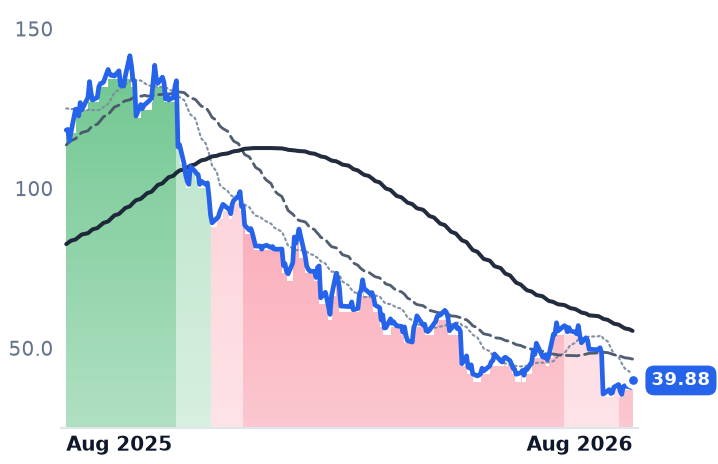
Roblox shares have lost two-thirds of their value in a year, and the unresolved question is whether that is a broken business or a repriced one. The platform still generated $1.64bn of free cash flow over the last twelve months, a yield of 5.76% on its market value — while telling investors that bookings, the money players spend inside it, will shrink this quarter for the first time ever.
Roblox made facial age checks mandatory worldwide in January and simultaneously rebuilt the algorithm that decides which games players see. Daily users have fallen for three straight quarters, from 152m to 123m, and spending per user is falling too. Full-year guidance was withdrawn.
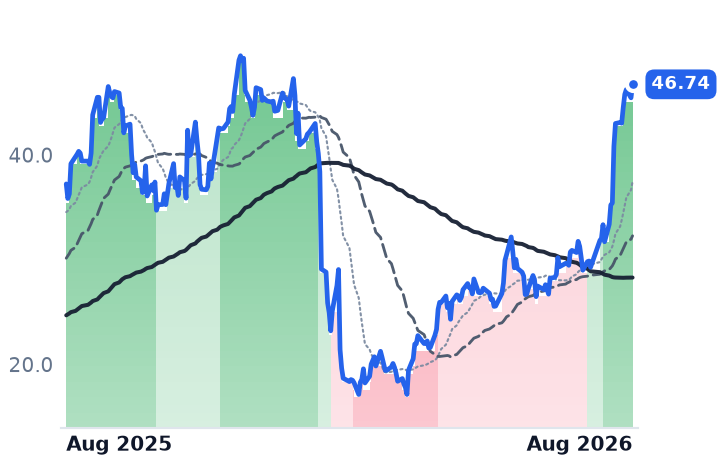
This is not a genre-wide de-rating. Unity, which monetizes the same play time through advertising, rose 25% over the year and crossed a $1bn run rate. Bilibili's decline is a separate Chinese story about stalled growth, not regulation.
| Ticker | Company | Segment | Trend · 13mo | 30D | 1Y |
|---|---|---|---|---|---|
| The subject · what this brief is about | |||||
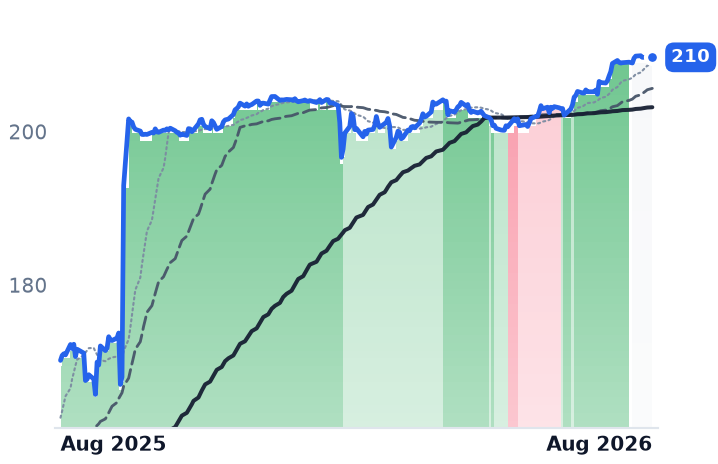
RBLX | Roblox | Platform & Creator Ecosystem | 🔴 Cont. Bear | −25.1% | −66.3% |
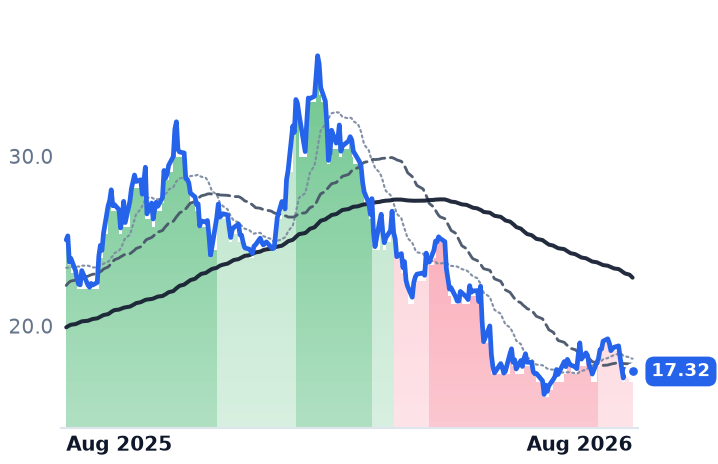
BILI | Bilibili | Platform & Creator Ecosystem | ⚠️ Emerging Bear | −5.9% | −30.9% |
| Compared against · context, not the story | |||||
U | Unity Software | Design & Content Creation | 🟢 Cont. Bull | +56.8% | +25.5% |
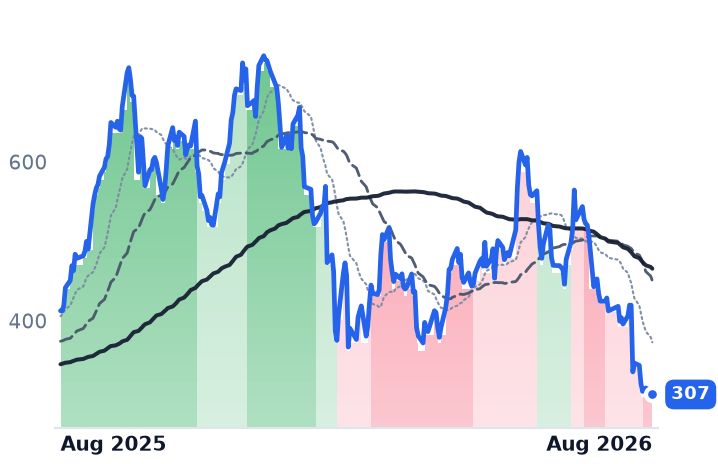
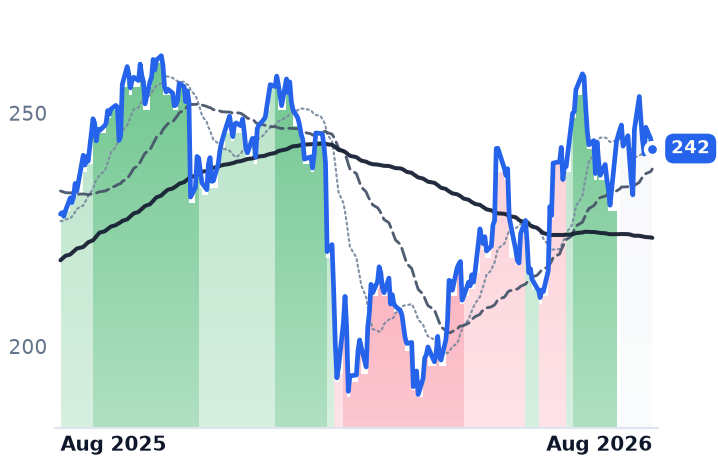
APP | AppLovin | Marketing & Advertising Technology | ⚠️ Emerging Bear | −27.6% | −25.5% |
EA | Electronic Arts | Electronic Gaming & Multimedia | 🟢 Cont. Bull | +0.2% | +23.2% |
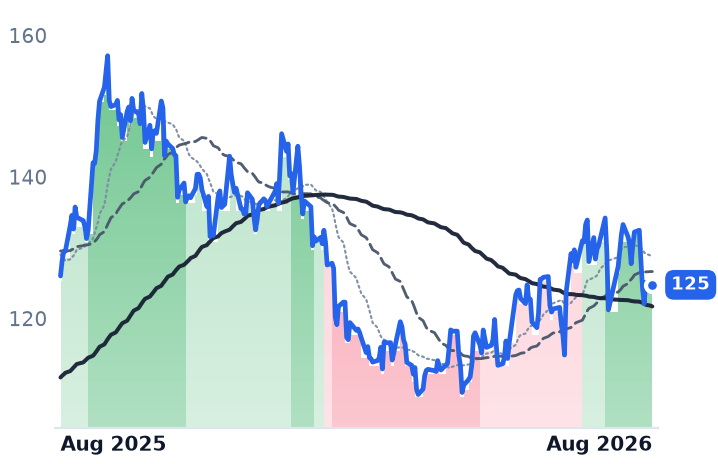
TTWO | Take-Two Interactive Software | Electronic Gaming & Multimedia | 🟢 Cont. Bull | +1.4% | +6.1% |
NTES | NetEase | Diversified Gaming & Services | 🟢 Cont. Bull | −7.0% | −1.0% |
12-month price & trend
| Ticker | Mkt cap | P/E | P/E fwd | P/S | P/S fwd | P/GP | P/GP fwd | EV/EBITDA | FCF yld |
|---|---|---|---|---|---|---|---|---|---|
RBLX | $28.5B | n/m | — | 5.0x | 4.0x | 6.3x | 5.0x | n/m | 5.8% |
BILI | $7.3B | 34.4x | — | 1.6x | — | 4.3x | — | 34.6x | 4.2% |
U | $19.8B | n/m | — | 9.8x | 9.3x | 15.9x | 15.1x | n/m | 2.7% |
| Ticker | Mkt cap | P/E | P/E fwd | P/S | P/S fwd | P/GP | P/GP fwd | EV/EBITDA | FCF yld |
|---|---|---|---|---|---|---|---|---|---|
APP | $103.2B | 23.5x | 19.2x | 15.1x | 12.6x | 17.1x | 14.3x | 18.8x | 4.4% |
EA | $50.3B | 56.6x | 22.5x | 6.7x | 6.1x | 8.5x | 7.7x | 39.8x | 4.6% |
TTWO | $44.9B | n/m | 30.6x | 6.8x | 4.9x | 12.2x | 8.8x | n/m | 1.1% |
| Ticker | Mkt cap | P/E | P/E fwd | P/S | P/S fwd | P/GP | P/GP fwd | EV/EBITDA | FCF yld |
|---|---|---|---|---|---|---|---|---|---|
NTES | $72.4B | 14.7x | — | 4.4x | — | 6.9x | — | 11.9x | 9.8% |
Consensus projections
| Ticker | FY2026E | FY2027E | FY2028E | |
|---|---|---|---|---|
RBLX | Revenue | +8.2% | +14.7% | +18.0% |
| EPS | −6.1% | −20.9% | −19.0% | |
BILI | Revenue | +10.0% | +10.1% | +9.2% |
| EPS | +23.7% | +27.1% | +30.2% | |
U | Revenue | +16.1% | +14.5% | +15.8% |
| EPS | −211.3% | −157.9% | +88.3% | |
APP | Revenue | +44.1% | +30.2% | +28.7% |
| EPS | +69.9% | +33.0% | +32.2% | |
EA | Revenue | +14.5% | +1.6% | +5.4% |
| EPS | +31.2% | +3.7% | +7.4% | |
TTWO | Revenue | +19.1% | +36.5% | +2.9% |
| EPS | +55.5% | +103.3% | +33.1% | |
NTES | Revenue | +7.0% | +8.2% | +8.0% |
| EPS | +3.6% | +10.3% | +9.1% |
Forward fiscal years only. Blank means no analyst coverage for that year.
On July 30, Roblox told investors that bookings — the cash players spend on Robux, the currency used inside experiences that other people build — would fall between 14% and 18% this quarter. It would be the first decline in the company's history. Management also withdrew full-year guidance, citing "increasing variability" from safety, discovery and new-product changes.
Roblox runs a user-generated 3D platform: creators build the games, players buy currency to spend inside them, and Roblox takes a cut. That model depends on two inputs — how many people show up, and how much each one spends. Both are now going the wrong way at once. Daily active users have fallen for three consecutive quarters, from 152m in the third quarter of 2025 to 123m in the second quarter of 2026. Hours engaged dropped from a peak of 40bn to 29bn. Average bookings per daily user slid from $15.97 in late 2024 to $12.66.
The deceleration is startling in its speed. Bookings grew 43% year over year in the first quarter of 2026. One quarter later they grew 8%. The quarter after that, they are guided to shrink — and that is despite Russia being reinstated late in the second quarter, giving the third a full-quarter benefit from a reopened market.
Two causes, one self-inflicted
The first cause is regulation, and it is compounding rather than one-off. Roblox began voluntary age estimation — a video selfie processed by a third-party vendor into age bands — in November 2025, made it mandatory in Australia, New Zealand and the Netherlands from December, and went global in January. That bracket lines up exactly with the quarters in which users began leaving. The company settled with Alabama for $12m and Nevada for $12.5m over child safety, agreeing in both cases to mandate face scans or government-ID checks; Oklahoma became at least the tenth state to sue. Meanwhile Texas's App Store Accountability Act is in force after the Fifth Circuit stayed an injunction against it in June, and Utah's law requiring explicit parental permission for minors on user-generated-content apps took effect July 1. Age-check penetration is already 57% globally and roughly 70% in the United States.
The second cause Roblox chose. Management attributed the miss to a collapse in monetization among under-13s plus a deliberate overhaul of its discovery algorithm, which now surfaces games that keep players engaged longer but extract less money from them. Asked when that trade pays off, management declined to give a timeline.
Costs are moving the other way. Roblox told investors third-quarter margin pressure splits roughly evenly between fixed-cost deleverage and artificial-intelligence infrastructure spending, and that infrastructure cost is shifting from variable per-hour to fixed. Cost per hour rises as hours fall. Gross margin is 80.1%, but the operating margin in the second quarter was -15.6% on revenue of $1.469bn.
What is left is cash
The bull case is the cash statement. Free cash flow rose 66% year over year in the quarter, to $294m, and reached $1.64bn over twelve months against a market value of $28.49bn. But bookings are recognized as revenue over time, so today's cash is the tail of yesterday's spending — the part already sold. The multiple has done the adjusting: 5.01x trailing sales and 3.98x forward, against roughly 21x a year ago. Consensus still models $7.16bn of 2026 revenue and no positive net income before 2030, estimates that predate the withdrawn guidance. Benchmark, cutting to a sell rating, called it "platform lifecycle decline".
The hours are contested, too. Epic Games' creator-built Fortnite islands took 47% of that game's playtime in May, up from 38% a year earlier. Roblox's answers are diversification — the top ten games now account for 20% of hours versus 30% three years ago — and demographics, with users aged 18 to 34 in the United States up 40% and a 50% payout premium offered to creators of adult content. Its advertising pivot, a partnership routing rewarded video and immersive ads through Google's ad systems, is real but unquantified in the company's own disclosure; the widely cited $1.2bn 2026 figure is a Morgan Stanley estimate, not a Roblox one.
Nobody else is falling
If this were engagement monetization de-rating as a category, the neighbors would show it. They don't. Unity, which sells both the game engine developers build on and the advertising network they use to acquire and monetize players, is up about 25% over twelve months and 61% in the past month. Its second quarter was Roblox's mirror image: strategic revenue of $486m, up 38%, with its Vector advertising platform crossing a $1bn annual run rate two quarters early and free cash flow of $202m. Electronic Arts rose 23% over the year, Take-Two 6%, NetEase was roughly flat. Roblox is alone.
Bilibili, the Chinese video community whose users skew young and whose content centers on animation, comics and games, is down about a third over the year — but for unrelated reasons and without a single violent session. Its problem is growth, not profitability: revenue rose 6.0% in the first quarter, to about $1.04bn, while gross margin reached 37.1% and 2025 became its first profitable year. Advertising grew 30%, offset by mobile games falling 12% against a strong prior-year title. Its games business is gated on Beijing's licence approvals, not American child-safety law. It trades at 34.4x trailing earnings that only just crossed zero, and reports second-quarter results on August 27.
The setup
Where it stands — Roblox is guided to its first bookings decline ever, with users, hours and spending per user all falling together. Would confirm — Third-quarter bookings land at or below the $1.58bn low end, with daily users below 123m. Would invalidate — Daily users and hours stabilize sequentially and bookings per user turns up from $12.66. Watch next — Roblox third-quarter results, late October; Bilibili second-quarter results on August 27. Valuation — Roblox at 5.01x trailing sales and 3.98x forward, against roughly 21x trailing a year ago; free cash flow yield 5.76%.