

Atlassian Says Seats Are Growing Again; PagerDuty's Revenue Has Stopped Growing Entirely
Hypothesis Opus 5 · Research Opus 5 · Writing Opus 5 · Prompt v1.4
The clearest test of whether AI coding agents destroy per-seat software billing is being run right now by four companies that charge by the developer, the user or the on-call responder. Three of them just said the model is holding. One said nothing at all, and rallied anyway.
Atlassian, which sells Jira and Confluence, grew revenue 27.6% in the June quarter and told investors seat counts in its core products are expanding again — a year after it disclosed its first-ever enterprise seat decline. JFrog reported net dollar retention of 121%, arguing AI agents push more code through its pipelines, not less. GitLab and PagerDuty have reported nothing since early June and late May respectively, yet rose 30% and 11% over the past month; PagerDuty's annual recurring revenue is flat at $496m.
Every one of them is now more expensive than in spring. Cadence, the odd name out, is the only one falling — with a record backlog.
| Ticker | Company | Segment | Trend · 13mo | 30D | 1Y |
|---|---|---|---|---|---|
| The subject · what this brief is about | |||||
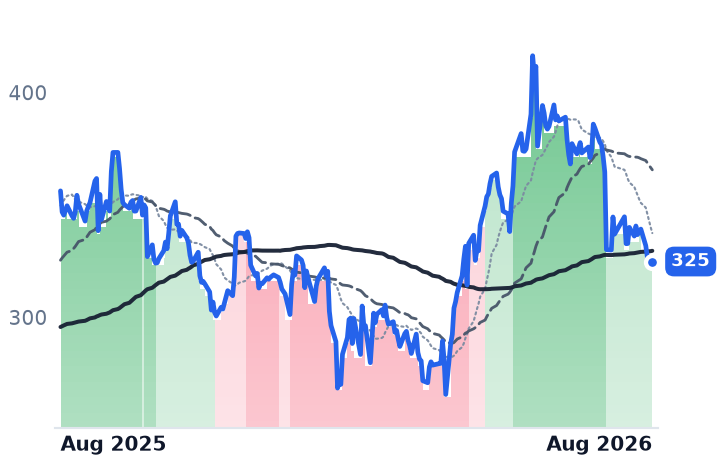
TEAM | Atlassian | Developer Tools & DevOps | 🔴 Cont. Bear | +73.9% | −4.1% |
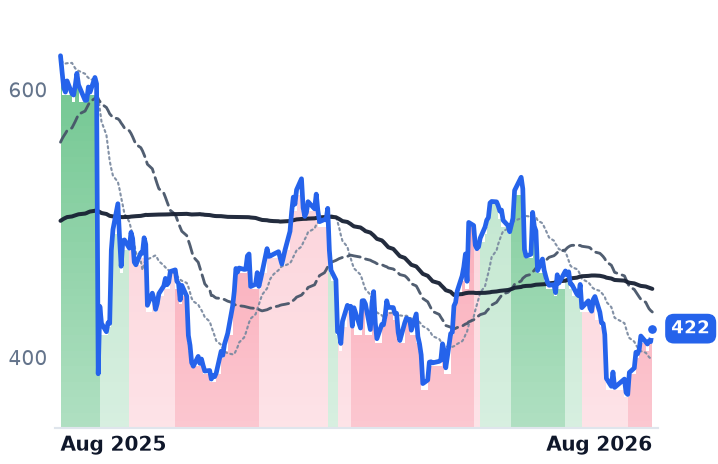
FROG | JFrog | Developer Tools & DevOps | 🟢 Cont. Bull | +8.6% | +114.3% |
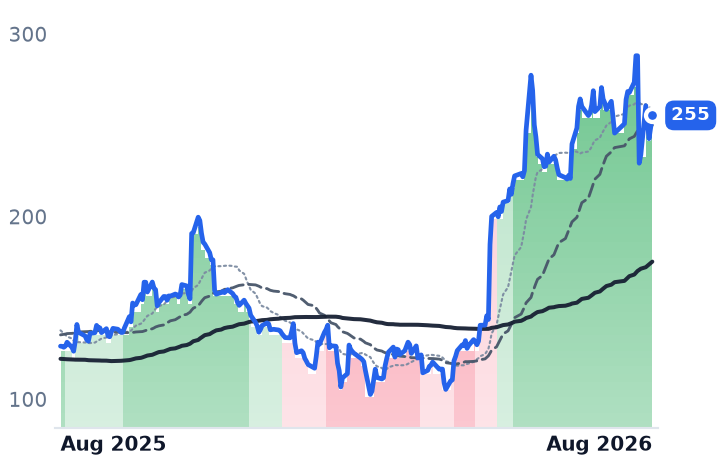
GTLB | GitLab | Developer Tools & DevOps | 🌱 Emerging Bull | +30.3% | −6.0% |
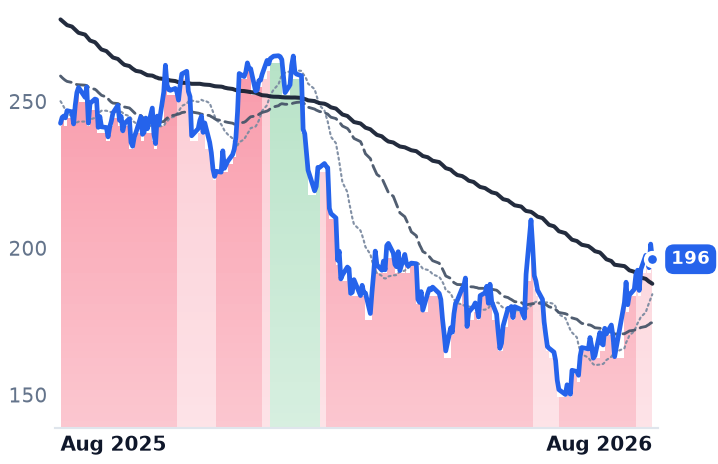
PD | PagerDuty | Developer Tools & DevOps | 🌱 Emerging Bull | +15.5% | −25.5% |
CDNS | Cadence Design Systems | Developer Tools & DevOps | 🌱 Emerging Bull | −1.6% | −8.8% |
| Compared against · context, not the story | |||||
SNPS | Synopsys | EDA & Design Tools | 🔴 Cont. Bear | +9.7% | −32.6% |
DDOG | Datadog | Data & Analytics Platforms | 🌱 Emerging Bull | −1.2% | +97.9% |
CRM | Salesforce | Customer Experience & CRM | 🔴 Cont. Bear | +14.9% | −19.1% |
NOW | ServiceNow | Specialized Enterprise Solutions | 🔴 Cont. Bear | +20.1% | −30.5% |
MSFT | Microsoft | Cloud Infrastructure & Platforms | 🔴 Cont. Bear | +25.8% | −3.6% |
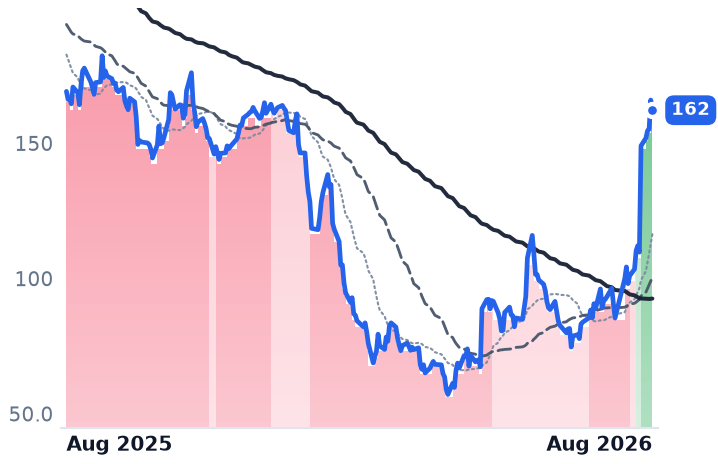
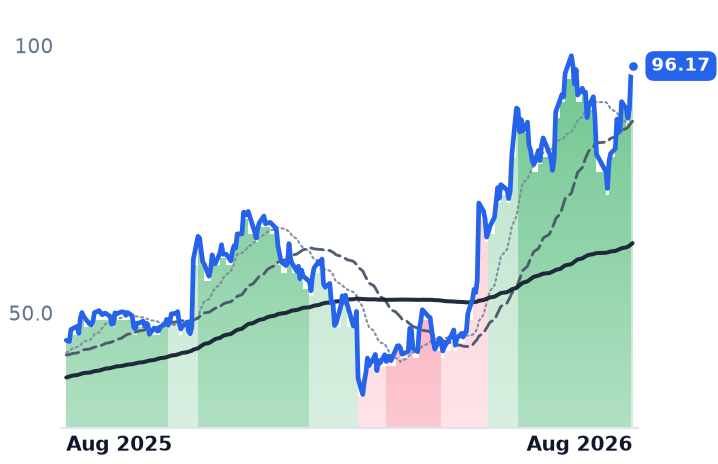
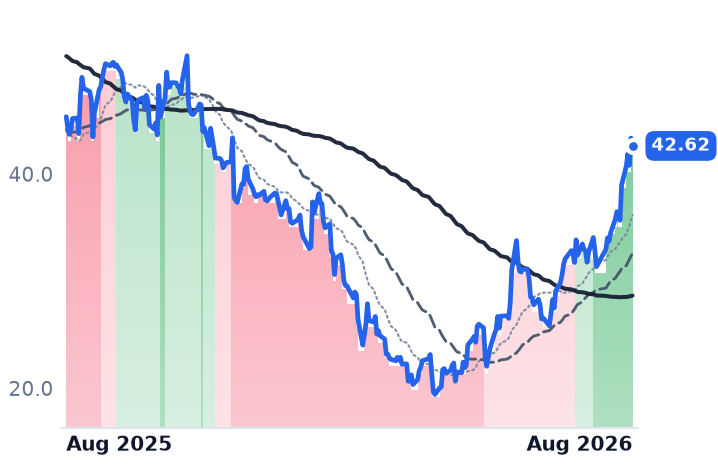
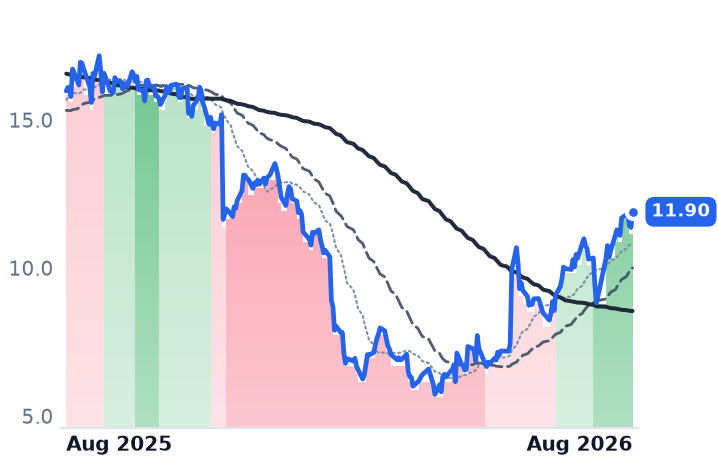
12-month price & trend
| Ticker | Mkt cap | P/E | P/E fwd | P/S | P/S fwd | P/GP | P/GP fwd | EV/EBITDA | FCF yld |
|---|---|---|---|---|---|---|---|---|---|
TEAM | $42.6B | n/m | 26.7x | 6.5x | 5.8x | 7.6x | 6.8x | 282.1x | 3.1% |
FROG | $11.6B | n/m | 100.8x | 19.4x | 18.4x | 24.9x | 23.6x | n/m | 1.5% |
GTLB | $7.2B | n/m | 52.5x | 7.2x | 6.5x | 8.3x | 7.4x | n/m | 3.7% |
| Ticker | Mkt cap | P/E | P/E fwd | P/S | P/S fwd | P/GP | P/GP fwd | EV/EBITDA | FCF yld |
|---|---|---|---|---|---|---|---|---|---|
PD | $1.1B | 5.7x | 9.0x | 2.2x | 2.2x | 2.6x | 2.6x | 23.0x | 11.5% |
CDNS | $89.5B | 64.2x | 39.9x | 15.3x | 14.2x | 17.3x | 16.0x | 41.5x | 1.9% |
SNPS | $79.0B | 93.3x | 27.9x | 9.1x | 8.2x | 12.4x | 11.1x | 32.2x | 3.4% |
| Ticker | Mkt cap | P/E | P/E fwd | P/S | P/S fwd | P/GP | P/GP fwd | EV/EBITDA | FCF yld |
|---|---|---|---|---|---|---|---|---|---|
DDOG | $90.9B | 513.8x | 104.6x | 22.9x | 20.8x | 28.8x | 26.1x | 348.6x | 1.3% |
CRM | $160.7B | 22.6x | 13.9x | 3.8x | 3.5x | 4.8x | 4.5x | 13.8x | 9.1% |
NOW | $128.2B | 77.0x | 30.5x | 8.7x | 7.9x | 11.6x | 10.6x | 38.4x | 3.6% |
| Ticker | Mkt cap | P/E | P/E fwd | P/S | P/S fwd | P/GP | P/GP fwd | EV/EBITDA | FCF yld |
|---|---|---|---|---|---|---|---|---|---|
MSFT | $3.7T | 27.5x | 25.2x | 11.1x | 9.4x | 16.3x | 13.9x | 18.2x | 1.8% |
Consensus projections
| Ticker | FY2026E | FY2027E | FY2028E | |
|---|---|---|---|---|
TEAM | Revenue | +24.7% | +13.4% | +15.9% |
| EPS | +55.5% | +10.5% | +18.0% | |
FROG | Revenue | +20.6% | +17.5% | +19.4% |
| EPS | +20.4% | +17.6% | +27.4% | |
GTLB | Revenue | +25.6% | +17.8% | +15.3% |
| EPS | +40.9% | −8.9% | +25.2% | |
PD | Revenue | +5.4% | +0.7% | +2.8% |
| EPS | +42.1% | +16.9% | +7.1% | |
CDNS | Revenue | +19.7% | +13.6% | +11.7% |
| EPS | +15.3% | +17.0% | +14.3% | |
SNPS | Revenue | +37.4% | +10.9% | +11.9% |
| EPS | +15.3% | +17.2% | +18.6% | |
DDOG | Revenue | +28.9% | +21.5% | +23.5% |
| EPS | +20.9% | +17.3% | +23.1% | |
CRM | Revenue | +9.3% | +11.1% | +9.4% |
| EPS | +17.4% | +20.2% | +10.4% | |
NOW | Revenue | +22.4% | +18.7% | +18.6% |
| EPS | +17.1% | +23.2% | +21.4% | |
MSFT | Revenue | +18.0% | +18.2% | +19.6% |
| EPS | +26.7% | +15.4% | +18.5% |
Forward fiscal years only. Blank means no analyst coverage for that year.
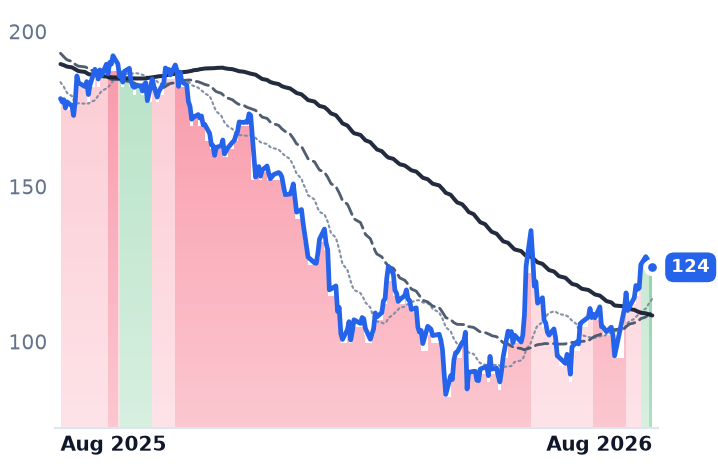
Roughly a year ago, Atlassian did something the rest of the software industry had been dreading. The Sydney-based maker of Jira, Confluence and Trello — project-tracking and collaboration tools billed largely per named user — disclosed a decline in enterprise seat counts, the first in its history. If artificial-intelligence agents were going to write code and file tickets in place of people, this was what it would look like on an income statement. The shares lost about a third of their value.
On 6 August, Atlassian reversed the narrative. Revenue for the June quarter came in at $1.77bn, up 27.6%, against consensus of $1.66bn. Cloud revenue accelerated to 31% growth. Gross margin reached 86.9%, and operating income swung to a positive $211.7m from a small loss. Management said seat expansion in core Jira and Confluence was strong and that AI adoption was increasing demand for planning and coordination — its Model Context Protocol server, the plumbing that lets outside agents act inside Jira, passed 1m monthly active users. The stock rose 35.8% in one session.
That single day is the largest fact in this story, but it is not the whole of it.
Three defenses, one capitulation
JFrog, which runs Artifactory — the repository every binary and container passes through between source control and production — reported the same week. Revenue grew 28.7% to $163.8m, cloud revenue rose 53%, and net dollar retention reached 121%, three points better than a year earlier. Customers paying more than $1m a year went from 61 to 97. Management's explanation is the mirror image of the bear case: AI tools generate more builds, so more artifacts flow through the toll booth. It also announced integrations with Anthropic's Claude Code and the Cursor editor.
GitLab, whose single-application DevSecOps platform bundles source control, continuous integration and security scanning at a per-developer price, is the ambiguous one. Its first-quarter results on 2 June showed revenue up 23% and net retention of 117% — decent numbers, but the fourth straight quarter of deceleration from 29.2%. Gross margin has compressed about 250 basis points. Alongside those results the company disclosed a 14% workforce reduction and guided the year to roughly 17.8% growth. Consensus earnings for the year have fallen, not risen. GitLab has reported nothing since; the past month's 29.8% gain rests on an expanded Google Cloud partnership and a broad rotation back into enterprise software that also lifted Salesforce, ServiceNow and Workday sharply on 27 July.
PagerDuty is the capitulation. It routes software alerts to on-call engineers and charges per responder. Annual recurring revenue was flat at $496m in the April quarter, revenue grew 1.0%, and the company guided the full year to 0.7% growth. Consensus has revenue declining by fiscal 2029. The shares are up 10.7% on the month and 75.8% over three, on speculation about activist involvement and a possible sale rather than anything the business did.
The one that fell
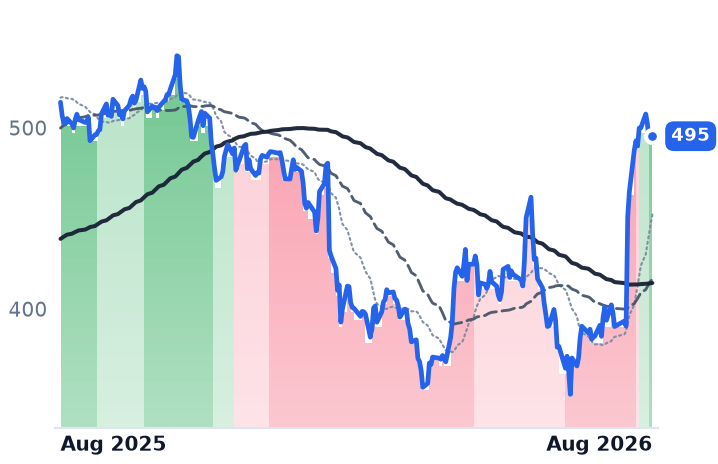
Cadence Design Systems is not a DevOps vendor at all — it licenses the electronic-design-automation software chipmakers use to lay out and verify silicon — but it is the only name here going down, and it is the most interesting workup. June-quarter revenue grew 24.2% to $1.584bn at a 28.4% GAAP operating margin. Backlog hit a record $8.1bn, first-half bookings rose about 55%, and management delivered what it called the largest single-quarter guidance raise in company history. The shares are down 12.6% over the month, dating to 17 July, when Moonshot AI said its Kimi K3 model completed a full chip-design flow using only open-source tools. Its forward multiple has compressed to 39.9x earnings from 64.2x trailing — the only compression among these five.
What the prices now assume
Everyone else has re-rated hard. Measured against gross profit, Atlassian has gone from 4.46x in May to 7.64x; GitLab from 4.57x to 8.26x; JFrog from 13.50x to 24.93x; PagerDuty from 1.36x to 2.59x. So the advance is not purely delivered earnings. Atlassian is the cheapest of the four on 26.7x forward earnings and 6.85x forward gross profit, and it has guided next year to roughly 13% growth as legacy Data Center revenue falls about 17%. JFrog at 100.8x forward earnings and GitLab at 52.5x on declining forward earnings leave the least room. PagerDuty, at 9.05x forward earnings and an 11.5% trailing free-cash-flow yield, is priced as an asset rather than a growth business.
All four DevOps names have held rising trends since spring, with GitLab and PagerDuty crossing into clear uptrends in mid-August. Two of them earned it with results. Two have not yet been asked.
The setup
Where it stands — Three of four seat-billed vendors reported evidence that AI is expanding their billable units; PagerDuty reported the opposite and rallied regardless.
Would confirm — Atlassian holding cloud growth near 25% and continued core seat expansion in the September quarter.
Would invalidate — GitLab net retention slipping below 115%, or Atlassian conceding renewed seat contraction at any point in fiscal 2027.
Watch next — PagerDuty reports second-quarter results on 27 August 2026; guidance midpoint currently implies flat revenue.
Valuation — Atlassian 26.7x forward earnings and 6.85x forward gross profit, against 4.46x gross profit in May; JFrog 100.8x forward earnings.