

Payroll and HR Software Stocks Rebound — But Not Where AI Fears Hit Hardest
Hypothesis Opus 5 · Research Sonnet 5 · Writing Sonnet 5 · Prompt v1.1
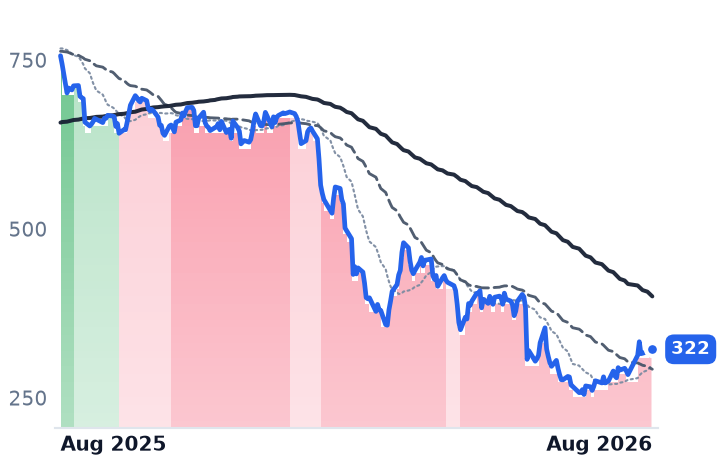
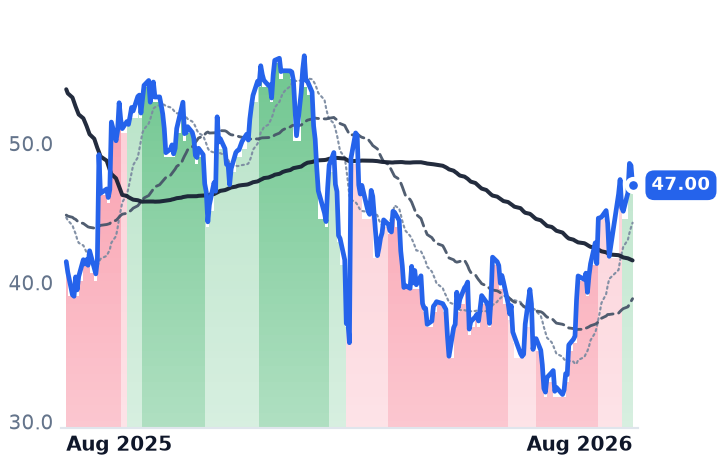
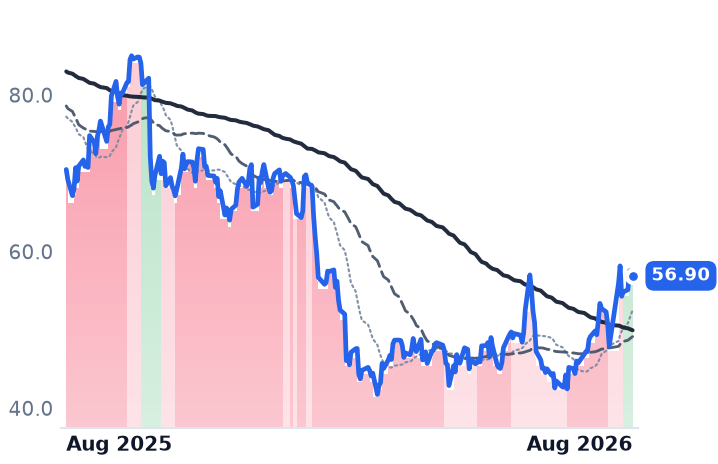
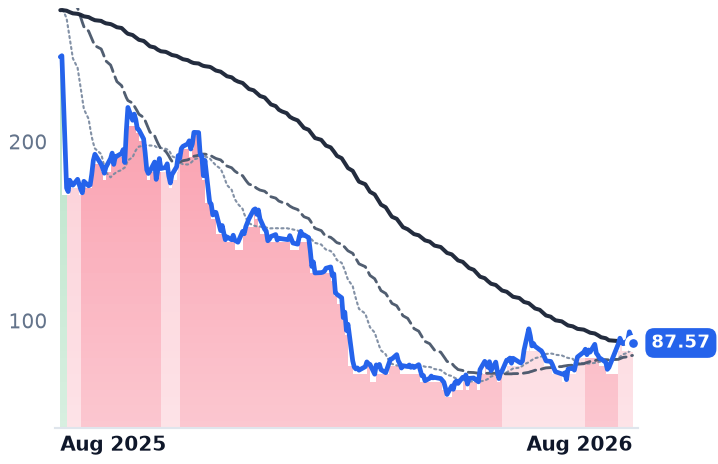
Nine back-office software makers that bill by the employee or the seat have bounced 8%-56% in a month after a year of AI-replacement fears cut their stocks by up to two-thirds — but the smaller payroll processors are leading the recovery while the two largest AI-native names, ServiceNow and Intuit, are still stuck in downtrends.
| Ticker | Company | Segment | Trend | 30D | 1Y |
|---|---|---|---|---|---|
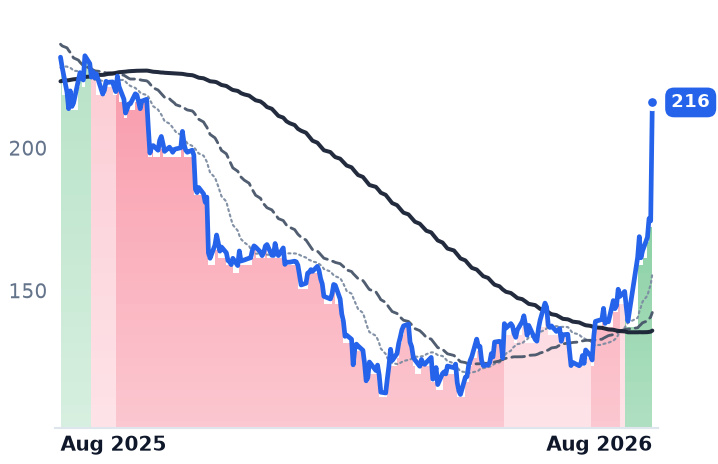
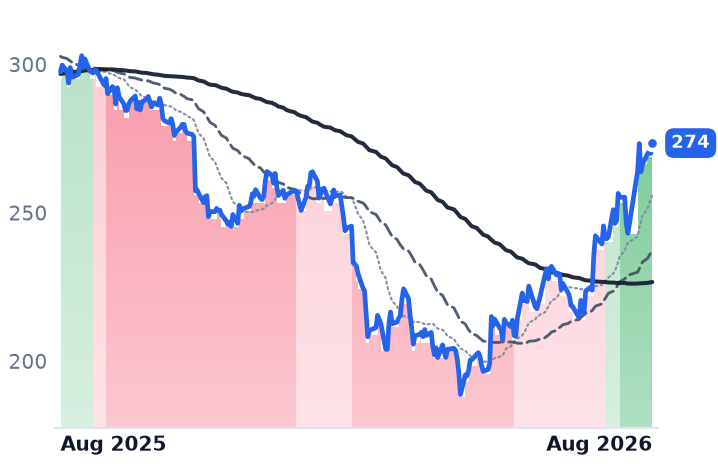
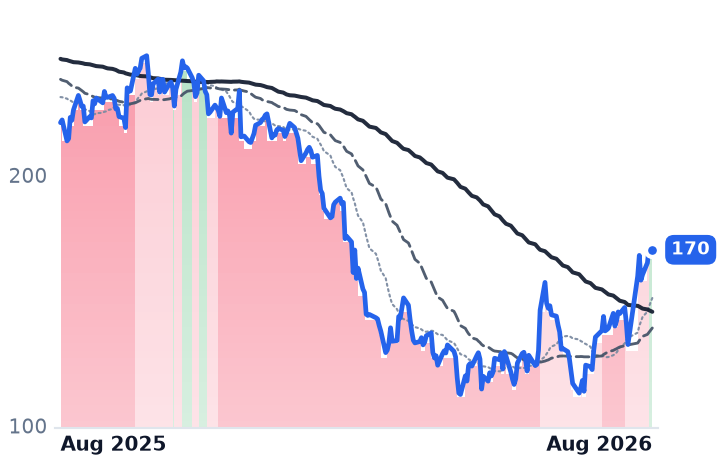
PAYC | Paycom Software | HR & Workforce Management | 🔴 Cont. Bear | +55.9% | −6.8% |
ADP | Automatic Data Processing | HCM Software & Payroll | 🌱 Emerging Bull | +13.3% | −8.1% |
WDAY | Workday | Enterprise Resource Planning | 🔴 Cont. Bear | +23.5% | −23.0% |
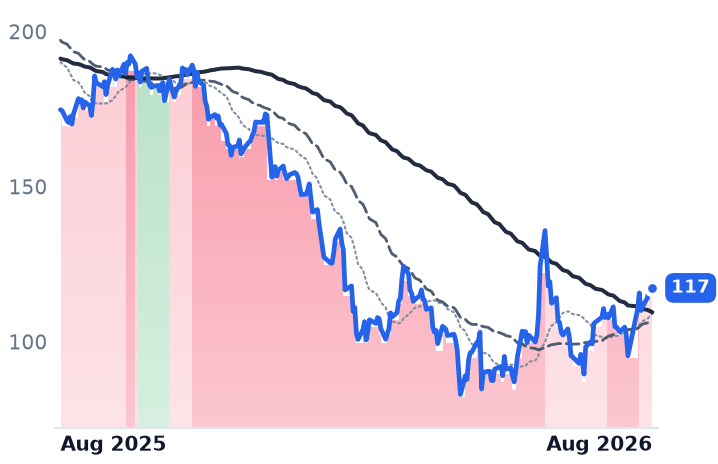
NOW | ServiceNow | Specialized Enterprise Solutions | 🔴 Cont. Bear | +8.9% | −32.9% |
INTU | Intuit | Enterprise Resource Planning | 🔴 Cont. Bear | +18.3% | −57.4% |
BILL | Bill.com | Fintech & Digital Finance | 🔴 Cont. Bear | +19.6% | +13.2% |
DOCU | DocuSign | Specialized Enterprise Solutions | 🔴 Cont. Bear | +20.5% | −19.3% |
MNDY | monday.com | Other | 🔴 Cont. Bear | +8.1% | −64.6% |
VEEV | Veeva Systems | Life Sciences Software & Data | 🔴 Cont. Bear | +15.7% | −22.1% |
12-month price & trend
| Ticker | Mkt cap | P/E | P/E fwd | P/S | P/S fwd | P/GP | P/GP fwd | EV/EBITDA | FCF yld |
|---|---|---|---|---|---|---|---|---|---|
PAYC | $11.8B | 22.9x | 19.8x | 5.5x | 5.4x | 6.9x | 6.7x | 14.0x | 6.4% |
ADP | $109.3B | 24.9x | 22.3x | 5.0x | 4.7x | 10.4x | 9.8x | 17.4x | 4.6% |
WDAY | $44.6B | 52.9x | 15.8x | 4.5x | 4.2x | 5.9x | 5.5x | 28.6x | 6.7% |
| Ticker | Mkt cap | P/E | P/E fwd | P/S | P/S fwd | P/GP | P/GP fwd | EV/EBITDA | FCF yld |
|---|---|---|---|---|---|---|---|---|---|
NOW | $121.3B | 72.9x | 28.8x | 8.2x | 7.5x | 11.0x | 10.0x | 36.5x | 3.8% |
INTU | $88.1B | 19.5x | 11.8x | 4.2x | 3.7x | 5.2x | 4.6x | 12.8x | 8.8% |
BILL | $4.7B | n/m | 14.0x | 2.9x | 2.5x | 3.6x | 3.1x | 40.7x | 8.2% |
| Ticker | Mkt cap | P/E | P/E fwd | P/S | P/S fwd | P/GP | P/GP fwd | EV/EBITDA | FCF yld |
|---|---|---|---|---|---|---|---|---|---|
DOCU | $10.9B | 36.2x | 12.6x | 3.3x | 3.1x | 4.2x | 3.9x | 16.2x | 10.3% |
MNDY | $4.4B | 37.4x | 19.1x | 3.4x | 3.0x | 3.8x | 3.4x | 47.4x | 6.9% |
VEEV | $35.4B | 37.8x | 24.0x | 10.7x | 9.7x | 14.3x | 12.9x | 25.8x | 4.6% |
Valuation & fundamentals
Consensus projections
| Ticker | FY2026E | FY2027E | FY2028E | |
|---|---|---|---|---|
PAYC | Revenue | +6.7% | +7.1% | +7.9% |
| EPS | +17.9% | +12.6% | +6.5% | |
ADP | Revenue | +7.0% | +5.9% | +5.7% |
| EPS | +11.0% | +10.6% | +9.3% | |
WDAY | Revenue | +13.4% | +11.8% | +11.0% |
| EPS | +26.5% | +18.5% | +17.3% | |
NOW | Revenue | +22.4% | +18.7% | +18.5% |
| EPS | +17.1% | +23.2% | +21.5% | |
INTU | Revenue | +13.9% | +11.3% | +10.8% |
| EPS | +18.5% | +14.9% | +12.7% | |
BILL | Revenue | +13.2% | +12.2% | +12.0% |
| EPS | +26.0% | +27.2% | +20.5% | |
DOCU | Revenue | +8.4% | +8.9% | +7.6% |
| EPS | +6.9% | +19.5% | +12.6% | |
MNDY | Revenue | +19.8% | +16.1% | +16.1% |
| EPS | +7.0% | +21.4% | +10.9% | |
VEEV | Revenue | +16.3% | +15.1% | +12.0% |
| EPS | +22.7% | +14.1% | +10.7% |
Forward fiscal years only. Blank means no analyst coverage for that year.
A group of software companies that charge businesses by the head — payroll processors, human-resources platforms, e-signature tools and work-tracking apps — spent the past year getting priced as if artificial intelligence agents were about to shrink the workforces they bill against. Now several of them are reporting the opposite: employee counts, contract renewals and revenue guidance that are holding up, not collapsing. The stocks have followed, rising 8% to 56% over the past 30 days. But the rebound is not landing where the AI-disruption story was loudest.
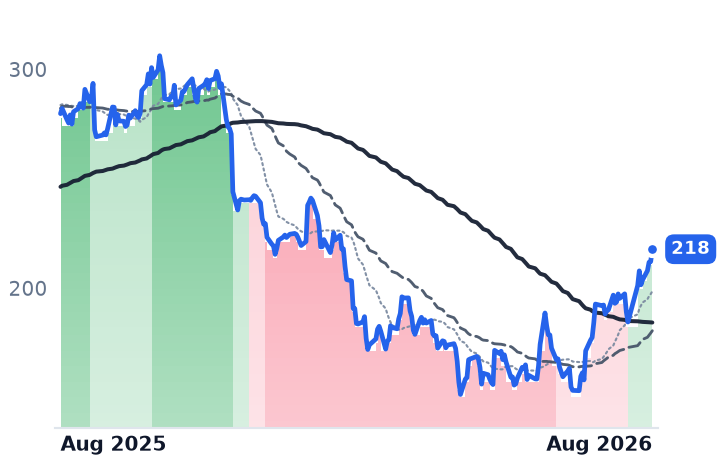
The clearest catalyst. Paycom (PAYC), an Oklahoma City-based payroll and human-capital-management platform for small and midsize U.S. employers, jumped roughly 24% in a single session on August 6 after reporting adjusted earnings of $2.78 a share against a $2.38 estimate, revenue of $531.2 million versus $513.1 million expected, and a raised full-year guide to $2.197 billion-$2.212 billion, up from $2.175 billion-$2.195 billion. Operating income rose 50% year over year as margin expanded to 31.7% from 23.2%. Management credited its automation strategy and disciplined execution — a dated, recurring-revenue beat, not a low-bar pop. Paycom now trades in a strong uptrend and is up just 55.9% over 30 days but down only 7.5% over 12 months, meaning most of its bear-market discount has already closed.
The surprise is who else is leading. Automatic Data Processing (ADP), the largest payroll processor and HR outsourcer, which also runs a professional-employer-organization business handling payroll for client companies' worksite employees, is up 13.3% in 30 days and trades in a strong uptrend, down just 9.9% over 12 months — a far milder decline than the cohort's -26% framing suggests. Workday (WDAY), whose cloud software helps large enterprises manage employee records, payroll and corporate spending, has bounced 23.5% in a month to a mild uptrend; its subscription backlog grew and operating margin jumped to 13.3% from 1.7% a year earlier, while activist investor Elliott Management's more-than-$2-billion stake and a $5 billion buyback authorization have underpinned the stock. DocuSign (DOCU), the e-signature company expanding into broader contract-management software, is up 20.5% in 30 days on steadily rising operating margin (7.9% to 13.4% over four quarters) and a forward price-to-sales ratio near 3.1x that has not caught up to the bounce. Bill.com (BILL), which automates bill payment for small businesses and earns interest on customer cash it holds, turned operating-margin-positive last quarter and is already up 13.2% over 12 months — it was never really part of the bear cohort.
The two biggest names are lagging. ServiceNow (NOW), a $121 billion workflow-automation platform used by IT and HR departments to route internal requests, and Intuit (INTU), maker of QuickBooks small-business accounting software, TurboTax and the Credit Karma app, are the group's two largest companies by market value — and both remain in mild downtrends despite stronger underlying numbers than the tape implies. ServiceNow's backlog (cRPO) grew 21.5% in constant currency, its AI-linked bookings crossed $1 billion, and it disclosed that renewal rates remain 98% even as half its new business shifts to non-seat pricing — evidence against the seat-destruction narrative inside its own book, yet its stock is still down nearly 33% over 12 months. Intuit's revenue growth has decelerated to 10.4% amid a roughly 17% workforce reduction the company says was not AI-driven and a weaker tax-filing season, and its forward price-to-earnings ratio of 11.8x is unusually cheap for a historically premium compounder — a divergence a prior desk note flagged as needing filing-season evidence before it resolves.
The starkest gap. monday.com (MNDY), a Tel Aviv-based work-management platform companies use to assign and track tasks per employee seat, has fallen 64.6% over 12 months even though revenue grew 24.5% last quarter, net dollar retention sits at 116%, and 2026 guidance still calls for 19%-20% growth — even as the company cuts 20% of its workforce to fund its own AI build-out. Its 30-day bounce of just 8.1% is the weakest in the group, and its forward price-to-sales ratio of roughly 3.0x is among the cheapest here relative to its growth rate — the sharpest fundamentals-versus-price gap in the cohort. Veeva Systems (VEEV), which sells software exclusively to pharmaceutical and life-sciences companies for regulatory and sales-data workflows, carries the richest multiple in the group (forward P/E near 24x) but also the steadiest growth, at 16%-17% every quarter for a year — a business the desk's own research notes describe as structurally shielded from AI substitution because of FDA-linked switching costs.
What could still derail it. ADP's own July payroll report showed private employers added just 44,000 jobs, well below the 70,000 forecast, with the three-month average falling to its lowest since April — a direct read on the per-employee revenue base this entire group bills against, regardless of AI. And the rebound is not purely company-specific: the same week saw Salesforce, ServiceNow and Workday all jump 7%-10% in single sessions on a broader "AI rotation" narrative lifting software stocks generally, meaning some of the move reflects sector sentiment rather than any one company's numbers.
Verdict. On the business: CONFIRMS for Paycom, ADP, Workday, DocuSign, Bill.com and Veeva, where growth, margin and backlog data support the bounce; CONTRADICTS for monday.com, where the stock's decline has vastly outrun any deterioration in its numbers; INCONCLUSIVE for ServiceNow and Intuit, where fundamentals look stronger than trend-following price bands suggest. On valuation: forward multiples across the group sit below trailing multiples and, for most names, below their own five-year ranges, indicating the 30-day bounce has not yet spent the discount built up over a bear year rooted in fears that AI agents would cut per-seat software spending — a fear the group's own recent earnings have only partly confirmed.
The setup
Where it stands — Six of nine names show growth and margins that support their 30-day bounce; ServiceNow, Intuit and monday.com show fundamentals stronger than their still-bearish price trends. Would confirm — monday.com's net dollar retention holds at or above 116% and 2026 revenue growth stays in the 19%-20% guided range through its next two quarterly reports. Would invalidate — ServiceNow's or Workday's subscription backlog (cRPO) growth decelerates below 15% year over year in the next reported quarter, signaling seat losses are spreading upmarket. Watch next — ServiceNow and Intuit next report quarterly results in late August/September 2026; a beat-and-raise there would test whether the mega-cap lag is mispricing or a warning. Valuation — Cohort forward price-to-sales multiples (2.5x-4.2x for six of nine names) sit near five-year lows despite the bounce, versus richer multiples for Veeva (9.7x) and ServiceNow (7.5x).