

IT-Services Rally Isn't One Story: IBM Crashed While a Reseller Rode a Distributor's Coattails
Hypothesis Opus 5 · Research Sonnet 5 · Writing Sonnet 5 · Prompt v1.1
Six enterprise-IT names rose together over the past month, but the move traces to a computer reseller riding a distributor's earnings beat and a Fed rate hold — not a broad hardware-refresh cycle. IBM, the group's largest name, actually crashed on a mainframe-revenue collapse.
| Ticker | Company | Segment | Trend | 30D | 1Y |
|---|---|---|---|---|---|
CDW | CDW | IT Infrastructure & Operations | 🌱 Emerging Bull | +10.1% | −13.0% |
INGM | Ingram Micro | IT Infrastructure & Operations | 🟢 Cont. Bull | +6.4% | +45.3% |
IBM | International Business Machines | IT Infrastructure & Operations | ⚠️ Emerging Bear | −23.8% | −7.2% |
KD | Kyndryl | IT Infrastructure & Operations | 🔴 Cont. Bear | +14.8% | −61.6% |
DXC | DXC Technology | IT Infrastructure & Operations | 🔴 Cont. Bear | +11.4% | −16.2% |
NABL | N-able | IT Infrastructure & Operations | 🔴 Cont. Bear | +18.5% | −37.5% |
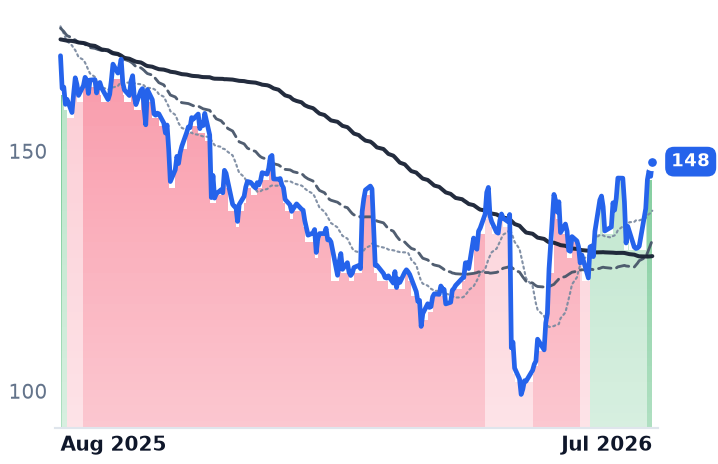
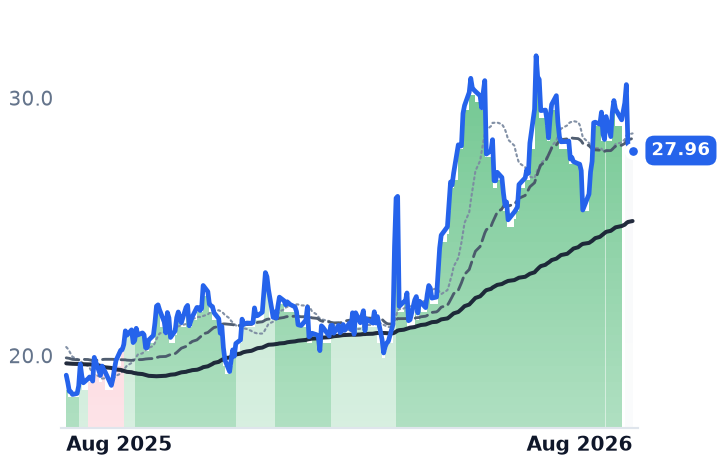
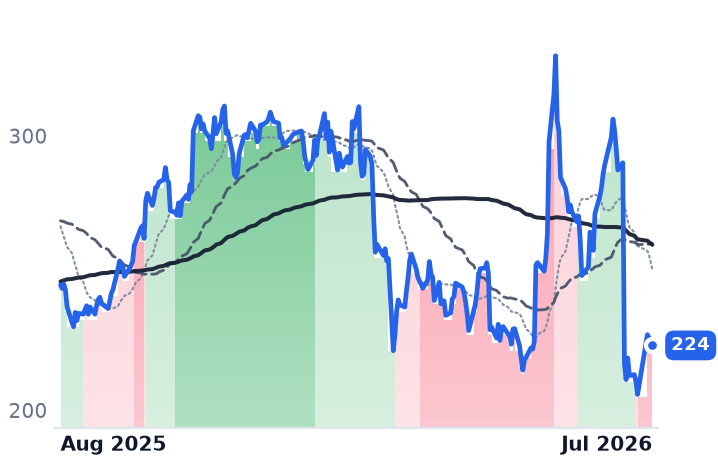
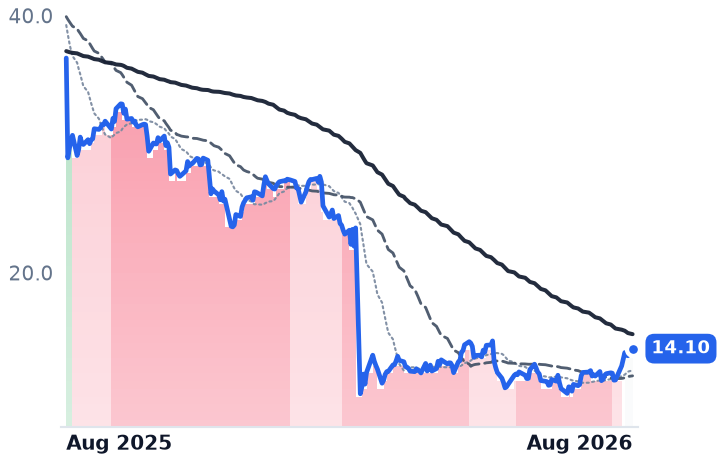
12-month price & trend
| Ticker | Mkt cap | P/E | P/E fwd | P/S | P/S fwd | P/GP | P/GP fwd | EV/EBITDA | FCF yld |
|---|---|---|---|---|---|---|---|---|---|
CDW | $18.9B | 17.9x | 13.7x | 0.8x | 0.8x | 3.7x | 3.7x | 13.2x | 5.7% |
INGM | $6.4B | 15.2x | 8.3x | 0.1x | 0.1x | 1.5x | 1.5x | 7.6x | -3.6% |
IBM | $214.3B | 19.9x | 18.4x | 3.1x | 3.0x | 5.3x | 5.1x | 16.8x | 6.8% |
| Ticker | Mkt cap | P/E | P/E fwd | P/S | P/S fwd | P/GP | P/GP fwd | EV/EBITDA | FCF yld |
|---|---|---|---|---|---|---|---|---|---|
KD | $3.1B | 16.3x | 7.7x | 0.2x | 0.2x | 0.9x | 0.9x | 2.1x | 11.1% |
DXC | $1.8B | 14.4x | 4.3x | 0.1x | 0.1x | 0.7x | 0.7x | 2.6x | 70.4% |
NABL | $953.2M | n/m | 12.2x | 1.8x | 1.7x | 2.3x | 2.2x | 17.6x | 7.5% |
Valuation & fundamentals
Consensus projections
| Ticker | FY2026E | FY2027E | FY2028E | |
|---|---|---|---|---|
CDW | Revenue | +5.9% | +3.5% | +3.3% |
| EPS | +8.7% | +9.5% | +11.5% | |
INGM | Revenue | +10.7% | +3.5% | +4.3% |
| EPS | +18.1% | +11.2% | +11.9% | |
IBM | Revenue | +5.3% | +4.0% | +5.3% |
| EPS | +8.5% | +7.0% | +8.8% | |
KD | Revenue | +0.4% | −1.2% | +0.6% |
| EPS | +49.9% | +3.7% | +43.3% | |
DXC | Revenue | −1.2% | −4.3% | −1.5% |
| EPS | −5.6% | −18.8% | +15.8% | |
NABL | Revenue | +9.4% | +8.4% | — |
| EPS | −1.8% | +15.7% | — |
Forward fiscal years only. Blank means no analyst coverage for that year.
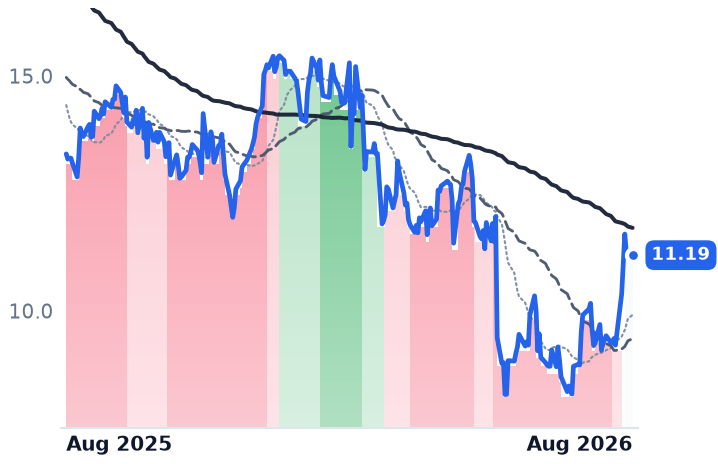
Six companies that sell, distribute, install or operate enterprise computer systems have moved together over the past month, but the businesses behind the tickers just told six different stories — one of them a genuine earnings crash. International Business Machines (IBM), the mainframe-to-consulting giant, plunged roughly 25% intraday on July 22 after reporting Z-series mainframe revenue down 42% and cutting its full-year revenue-growth outlook to 4-5% from more than 5%, a move covered by Briefs.co. Chief Executive Arvind Krishna attributed part of the mainframe collapse to customers pulling purchases forward ahead of an expected price increase, according to Forbes — a pull-forward hangover, not new competitive damage. IBM is still down about 11.7% over the trailing 30 days, the worst showing in the group, which matters because IBM's $214 billion market value is large enough to swing a cap-weighted average — as a drag, not a lift.
The name that actually led was CDW, a $19 billion reseller that sells hardware, software and integrated data-center and networking solutions to corporate and government IT buyers. Its trend signal flipped from a mild uptrend to a strong one on July 28, the only genuine bull-signal upgrade among the six — but it happened with no earnings call of its own; CDW last reported May 6. The move instead rode a broad market rally after the Federal Reserve held rates steady, when the S&P 500 rose 1.7% and the Nasdaq 2.8% on July 30, ending a six-day Nasdaq losing streak, plus a read-through from Ingram Micro's print two days earlier. On the fundamentals, CDW's own Q1 revenue grew 9.2% year-over-year to $5.68 billion, an acceleration from 6.8% growth for all of 2025, but gross margin compressed to 20.95% from 21.59% and operating margin slipped slightly — consistent with a hardware-heavy sales mix rather than higher-margin services upsell. CDW trades at 13.7 times forward earnings versus 17.9 times trailing, a gap that only closes if 2026 profit grows roughly a third from 2025's $8.08 a share.
Ingram Micro, the $6.4 billion distributor whose Xvantage platform and CloudBlue marketplace route hardware and cloud subscriptions to resellers worldwide, is the name CDW's rally leaned on — yet Ingram's own signal was already at its strongest reading for most of July, before any "turn," and was downgraded to neutral by month-end even after it beat second-quarter estimates on July 30 (revenue $14.5 billion versus $13.9 billion expected, adjusted profit $0.82 a share versus $0.78 expected), a beat detailed by Investing.com. The stock popped into the print and gave the gain back the next day. Revenue grew 13.6% and operating income 38.6%, but gross margin guidance implies roughly 6.8% — a distributor's thin, AI-hardware-pressured spread — and trailing free cash flow is negative on working-capital swings. Ingram trades at 8.3 times forward earnings versus 15.2 times trailing, and is up about 43% over the past year, the only positive one-year return in a group otherwise tagged a shared downtrend.
DXC Technology, a $1.8 billion outsourcer that runs IT infrastructure and business-process work for large enterprises, showed the most credible improvement, moving from a strong downtrend in early July to neutral by month-end. Its July 30 quarter backed that up: company-wide bookings-to-billings ran 0.99 times, the best first quarter in three years, and infrastructure-outsourcing bookings jumped 35% year-over-year even as that segment's revenue fell 11% and margin held at just 2.6%. Total revenue was still down 5.1%, and management kept guidance for a 3-5% organic decline; free cash flow of $314 million included a one-time $214 million litigation settlement.
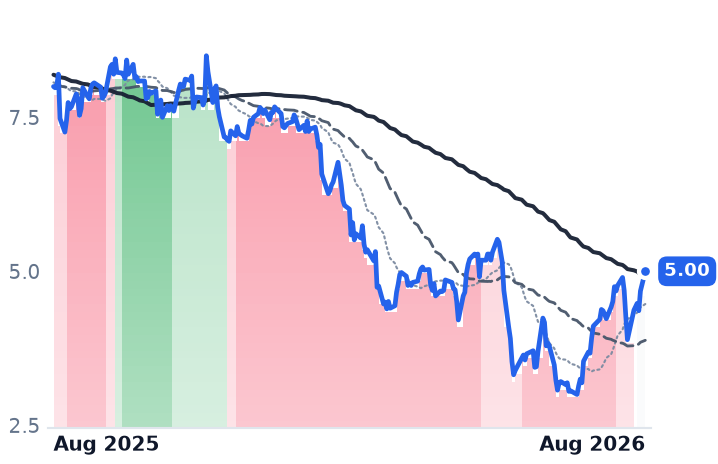
Kyndryl, the $3.1 billion managed-infrastructure provider spun off from IBM in 2020, and N-able, a $950 million maker of remote-monitoring software for IT service providers, both rallied on no fresh print of their own — Kyndryl reports August 5, and N-able last reported May 7. Kyndryl's full-year revenue was roughly flat but gross margin expanded to 21.8% from 20.9%, a genuine post-spin margin story; the stock is still down 64% over the past year, the group's steepest drawdown. N-able's stock rose the most of the six over 30 days, about 57%, while its gross margin has compressed for three straight fiscal years, from 83.8% to 76.8%, a trend one market note tied to AI substitution risk in MSP software — margin direction moving opposite the share price.
Verdict: The business case CONFIRMS for DXC (bookings genuinely improving) and partially for CDW (revenue reaccelerating, though on a lower-margin mix); it CONTRADICTS for IBM (price cratered despite still-positive, if decelerating, fundamentals) and for N-able (price up sharply while margins erode); it is INCONCLUSIVE for Kyndryl and Ingram Micro pending confirming prints. Valuation is not the constraint — every name's forward multiple sits well below its trailing one — but that gap reflects earnings expectations the smaller names haven't yet proven.
The setup
Where it stands — CDW alone carries a fresh bull signal on no earnings news; IBM, the group's largest member, is still recovering from a mainframe-driven crash. Would confirm — Kyndryl's August 5 report shows signings growth and margin expansion continuing without revenue re-accelerating. Would invalidate — CDW's next quarter shows gross margin still compressing even as revenue growth decelerates back toward its 2025 pace. Watch next — Kyndryl reports fiscal first-quarter results on August 5, 2026. Valuation — CDW trades at 13.7x forward vs. 17.9x trailing P/E; Ingram Micro 8.3x forward vs. 15.2x trailing; both below their own recent norms.