

LatAm Shock Hypothesis Debunked: SBS Split Artifact, MEG a U.S. Name, EDN Idiosyncratic
Prompt v1.0
The apparent LatAm equity collapse — SBS -81%, MEG -28%, EDN -21% — is almost entirely a data mirage. SBS's drop is a reverse stock split artifact, MEG is a U.S. company, and only EDN reflects genuine regional exposure. Brazil's macro backdrop is actually constructive, with the Ibovespa at record highs and the BRL appreciating.
| Ticker | Company | Segment | Trend · 13mo | 30D | 1Y |
|---|---|---|---|---|---|
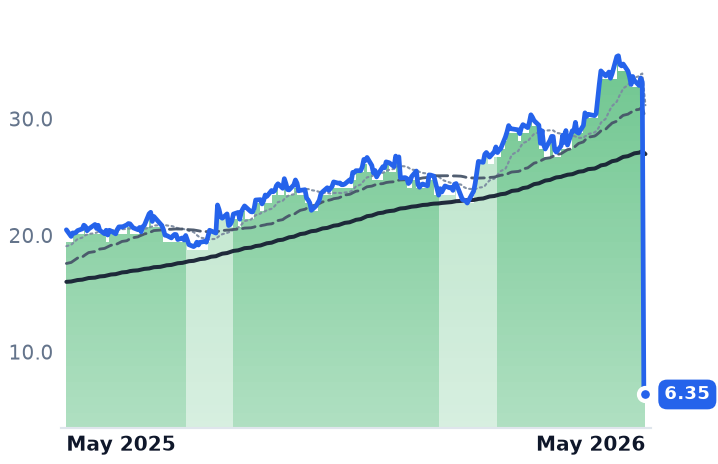
SBS | Companhia de Saneamento Básico do Estado de São Paulo - SABESP | International & Diversified Water | 🟢 Cont. Bull | −80.8% | −69.0% |
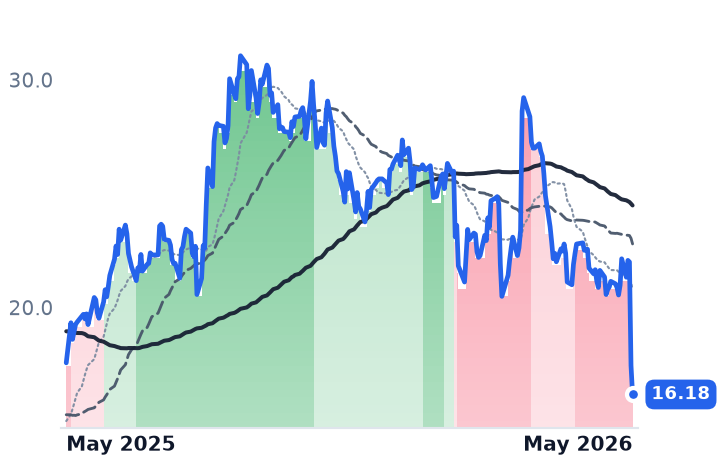
MEG | Montrose Environmental | Hazardous & Specialty Waste | ⚠️ Emerging Bear | −28.3% | −7.9% |
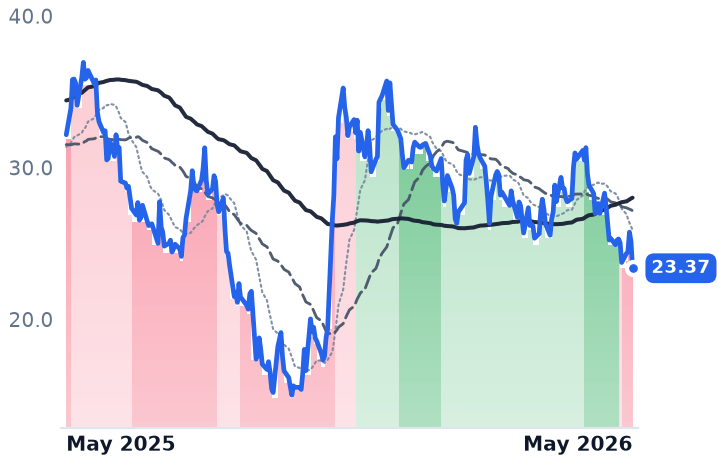
EDN | Empresa Distribuidora y Comercializadora Norte Sociedad Anónima | Regional/International Utilities | 🌱 Emerging Bull | −21.0% | −27.4% |
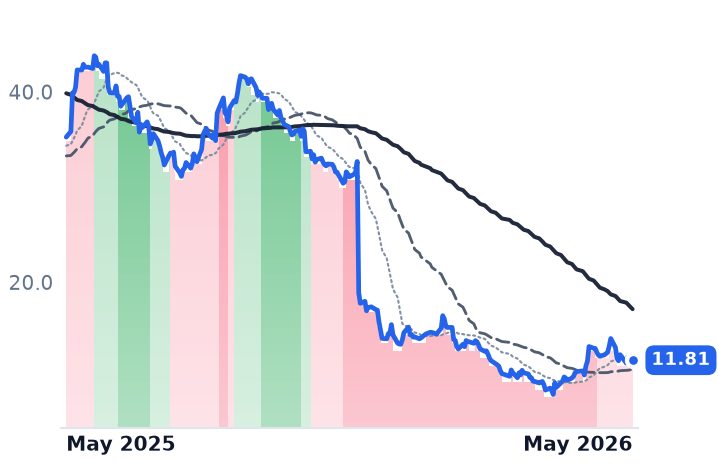
HAPV3.SA | Hapvida Participações e Investimentos | Insurance - Specialty | 🔴 Cont. Bear | +0.8% | −66.5% |
SBSP3 | SBSP3 | — | 🔴 Cont. Bear | — | — |
12-month price & trend
| Ticker | Mkt cap | P/E | P/E fwd | P/S | P/S fwd | P/GP | P/GP fwd | EV/EBITDA | FCF yld |
|---|---|---|---|---|---|---|---|---|---|
SBS | $19.5B | 11.7x | — | 2.6x | — | 7.0x | — | 9.1x | 7.6% |
MEG | $561.7M | 94.7x | 121.2x | 0.7x | 0.6x | 1.8x | 1.7x | 10.9x | 12.9% |
EDN | $981.3M | 6.3x | — | 0.5x | — | 2.2x | — | 4.6x | -2.3% |
| Ticker | Mkt cap | P/E | P/E fwd | P/S | P/S fwd | P/GP | P/GP fwd | EV/EBITDA | FCF yld |
|---|---|---|---|---|---|---|---|---|---|
HAPV3.SA | $5.6B | n/m | 13.6x | 0.2x | 0.2x | 1.7x | 1.6x | 5.8x | 4.7% |
SBSP3 | — | — | — | — | — | — | — | — | — |
Consensus projections
| Ticker | FY2026E | FY2027E | FY2028E | |
|---|---|---|---|---|
SBS | Revenue | +11.4% | +18.9% | +10.4% |
| EPS | −1.5% | +27.5% | +12.6% | |
MEG | Revenue | +5.6% | +7.2% | +5.2% |
| EPS | −1032.8% | +305.8% | +13.5% | |
EDN | Revenue | +3.6% | +15.0% | — |
| EPS | −88.2% | +1036.0% | — | |
HAPV3.SA | Revenue | +4.5% | +5.4% | +5.7% |
| EPS | −54.3% | +77.5% | +37.5% |
Forward fiscal years only. Blank means no analyst coverage for that year.
What looked like a LatAm rout
A scan of the 30-day movers flagged SBS down 81%, MEG down 28%, and EDN down 21% — a pattern that superficially resembled a region-wide de-rating across Brazilian and Argentine names. The hypothesis: a currency, rate, or political shock re-pricing LatAm equities en masse. The evidence dismantles that thesis almost entirely.
SBS: Corporate action, not a collapse
Sabesp's ADR (SBS) did not suffer a fundamental meltdown. CNBC's quote page confirms that Sabesp shareholders approved a 1-for-5 reverse stock split on April 29, 2026, effective late April, which mechanically compressed the ADR price from ~$32.86 to ~$6.35. SQL price data shows the step-down happened in a single session — May 6 to May 7 — entirely consistent with a split adjustment, not a distressed selloff. The underlying Bovespa-listed shares tell the real story: SBSP3 reached an all-time high of 141.40 BRL in December 2025, and the company's market cap sits near 92.55 billion BRL. Operationally, Sabesp deployed R$15.2 billion in capex in 2025 — a 120% increase versus 2024 — and achieved 152% of its water economy targets post-privatization. There is no distress signal here.
MEG: Not a LatAm name at all
Montrose Environmental Group (MEG) is a U.S.-based environmental services firm headquartered in North Little Rock, Arkansas, with no material Brazil or LatAm revenue exposure. More importantly, the ticker effectively ceased to exist: the company rebranded to "Onterris, Inc." effective April 17, 2026 and changed its NYSE ticker from MEG to ONT at the start of trading on May 4, 2026. The price softness from $22.00 to $16.18 over a few sessions reflects a pre-earnings small-cap repositioning cycle, with Q1 FY2026 results scheduled for May 13, 2026 — not anything tied to Latin America.
EDN: The one genuine regional signal
Edenor (EDN), Argentina's largest electricity distributor, is the only name in the screen with a real regional story. The stock pulled back roughly 21% from its April 2026 peak of ~$31.14 to ~$23.37. Edenor's 2025 annual 20-F filing (April 14, 2026) cites falling demand, hyperinflation accounting, peso depreciation, and Argentina regulatory uncertainty as core risks — the ENRE approved only a 2.5% VAD tariff increase effective March 1, 2026, far below the inflation rate. But even EDN's move looks idiosyncratic rather than sector-wide: on a recent session when EDN fell 3.14%, Argentine utility peer CEPU fell only 1.48% and GNE was actually up 0.23%. And EDN's 52-week range of $14.38–$38.10 means the current price is a pullback from highs, not a breakdown to new lows.
Brazil macro: Actually constructive
The LatAm de-rating narrative runs directly into a contradictory macro backdrop. The Ibovespa is up roughly 23.3% YTD in reais, net foreign equity inflows into Brazil have reached R$65 billion cumulative YTD through mid-April 2026 — on pace to challenge the all-year record. The BRL has appreciated approximately 9% against the USD YTD, with USD/BRL moving from R$5.47 to under R$5.00. Brazil's SELIC rate at 14.75% offers the widest carry spread in LatAm, drawing inflows rather than flight. Morgan Stanley estimates LatAm equities were trading at their lowest forward P/E in over two decades (~11x), with a bull case for the MSCI Latin America Index to gain more than 90% by 2030 — the long-term institutional narrative is re-rating up, not a systemic collapse.
The one genuine medium-term risk
None of this means Brazil is risk-free. Brazil's gross debt stands at 91.4% of GDP and is projected to rise to 98% by 2028, with the Lula administration's expansionary fiscal agenda sitting at odds with the tight monetary policy regime. And the high SELIC rate creates real sector-specific headwinds: HAPV3.SA's weakness over 12 months likely reflects rate compression on healthcare credits rather than a systemic shock. These are slow-burn risks, not acute catalysts.
Bottom line
The screen produced a false-positive cluster. Two of the four "LatAm collapse" names are corporate-action or geography mislabels. Only EDN reflects genuine regional exposure, and even there, the move is Argentina-idiosyncratic rather than a broad LatAm contagion signal. The threshold for confirming a regional shock — 3+ unrelated names down 20%+ with a shared macro driver — is not met.